Home Blog Page 7

Jim Dunn Racing – Indianapolis Advance for the NHRA U.S. Nationals

Jeff Arend

Blaze Exhaust Probes Funny Car Driver for Jim Dunn Racing
72nd Annual Cornwell Quality Tools NHRA U.S. Nationals
Sept. 2-7 | Indianapolis

Event Overview
Friday, Sept. 4 (Nitro Qualifying, streamed live on NHRA.TV)

Nitro qualifying session (Q1): 7:30 p.m. EDT

Saturday, Sept. 5 (Nitro Qualifying & Mission #2Fast2Tasty Challenge, streamed live on NHRA.TV)

Top Fuel qualifying session (Q2) & Mission #2Fast2Tasty Top Fuel Challenge – Round 1: 12:30 p.m. EDT
Funny Car qualifying session (Q2) & Mission #2Fast2Tasty Funny Car Challenge – Round 1: 1:05 p.m. EDT
Top Fuel qualifying session (Q3) & Mission #2Fast2Tasty Top Fuel Challenge – Finals: 3:30 p.m. EDT
Funny Car qualifying session (Q3) Mission #2Fast2Tasty Funny Car Challenge – Finals: 4 p.m. EDT

Sunday, Sept. 6 (NHRA Funny Car All-Star Callout and Top Fuel Qualifying, streamed live on NHRA.TV)

Top Fuel qualifying session (Q4): 12 p.m. EDT
NHRA All-Star Funny Car Callout – Round 1: 12:45 p.m. EDT
Funny Car qualifying session (Q4 – All entries not in the Callout): 1 p.m. EDT
NHRA All-Star Funny Car Callout – Semi-Finals: 2:15 p.m. EDT
Top Fuel qualifying session (Q5): 2:45 p.m. EDT
Funny car qualifying session (Q5 – All entries not in the Callout): 3:15 p.m. EDT
NHRA All-Star Funny Car Callout – Finals: 3:40 p.m. EDT

Monday, Sept. 7 (Nitro Eliminations, streamed live on NHRA.TV)

Round 1: 10 a.m. EDT
Round 2: 12:30 p.m. EDT
Semi-Finals: 2:10 p.m. EDT
Finals: 3:50 p.m. EDT

TV coverage on FS1/FOX

Sunday, Sept. 6: Qualifying show recapping Friday and Saturday’s action (3 p.m. EDT on FS1)
Sunday, Sept. 6: NHRA All-Star Funny Car Callout (7 p.m. EDT on FS1)
Sunday, Sept. 6: Qualifying show recapping Sunday’s action (10:30 p.m. EDT on FS1)
Monday, Sept. 7: Finals Round 1 (12 p.m. EDT on FS1)
Monday, Sept. 7: Finals (2 p.m. EDT on FOX)

Notes of Interest

The NHRA U.S. Nationals Sept. 2-7 at Indianapolis Raceway Park (IRP) is the NHRA Mission Foods Drag Racing Series’ regular season finale. The Big Go marks the 14th race on the 20-race calendar before the Countdown to the Championship begins Sept. 18-20 with the inaugural NHRA Great Lakes Nationals in Martin, Michigan. Jim Dunn Racing brings its one full-time entry in Funny Car for Jeff Arend. A native of Canada, Arend moved to Southern California in 1997.

As the NHRA celebrates its landmark 75th season in 2026, Jim Dunn Racing is celebrating 76 years of success in drag racing. Jim started drag racing when he was 15 years old and at 92 years old, he plans to keep going as long as he can. In 2024, Jim received the NHRA Lifetime Achievement Award. He has won some of the sport’s most significant races and has provided driving opportunities for some of the biggest names in the sport.

Coming into Indianapolis, Arend is 14th in the Funny Car standings, 688 points behind leader Matt Hagan.

Blaze Exhaust Probes is the primary partner of Arend this weekend in Indianapolis. Blaze Technical Services was founded in 1996 by Ralph and Candy Hickman in Northeast Ohio. They are a leading full-service temperature sensor manufacturer that offers solutions for even the most demanding applications. Their reputation for creating the most rugged industrial temperature sensors and high temperature thermocouple assemblies has made them a top choice in the industry. Being ISO 9001 certified since 2003 reflects their commitment to producing only the highest quality products, including their popular exhaust gas temperature probes and other industrial temperature sensors. They also specialize in high temperature thermocouple designs that perform reliably in extreme conditions, including High-temperature aerospace sensors and Soil temperature monitoring setups. They are dedicated to delivering quality products on time and at a fair price. Additionally, they document all products with CAD drawings to make future changes or reordering easy, and can provide certification on request. Their Blaze Technical Services temperature solutions are trusted by professionals across a wide range of industries.

The NHRA U.S. Nationals will mark Arend’s 261st career Funny Car appearance, and his 11th overall appearance in the NHRA U.S. Nationals. It marks his third Funny Car appearance on behalf of Jim Dunn Racing at Indianapolis. His previous appearances for the team came in 2013 and 2014. Arend’s first U.S. Nationals appearance came in 1995. It will mark his ninth appearance this season as driver of the Jim Dunn Racing Dodge.

It has been 27 years since Frank Pedregon won the U.S. Nationals for Jim Dunn Racing (1999), claiming the team’s lone victory in the world’s most prestigious event. Since then, Jim Dunn Racing has reached the quarterfinal round five times, most recently in 2024 with Buddy Hull as driver. Overall, Jim Dunn Racing has raced in the final round at Indy three times. Jim Dunn himself was runner-up to Hall of Famer Raymond Beadle in 1981and Kenji Okazaki was runner-up to John Force in 1993.

In addition to the U.S. Nationals itself, Okazaki was stellar in the Big Bud Shootout Funny Car bonus race contested in conjunction with The Big Go. After earning runner-up honors in that event in 1994 (losing to the late Al Hofmann), he won three years later (1997), beating Tony Pedregon in the final round.

The NHRA U.S. Nationals will feature legends throughout the week to honor the NHRA’s 75th Anniversary, including Don Garlits, Don “the Snake” Prudhomme, Joe Amato, Shirley Muldowney, Kenny Bernstein, and Darrell Gwynn.

There are 24 Funny Cars entered for the prestigious NHRA U.S. Nationals that will be vying for one of the 16 qualifying positions.

Jeff Arend, Driver of the Jim Dunn Racing Blaze Exhaust Probes Funny Car

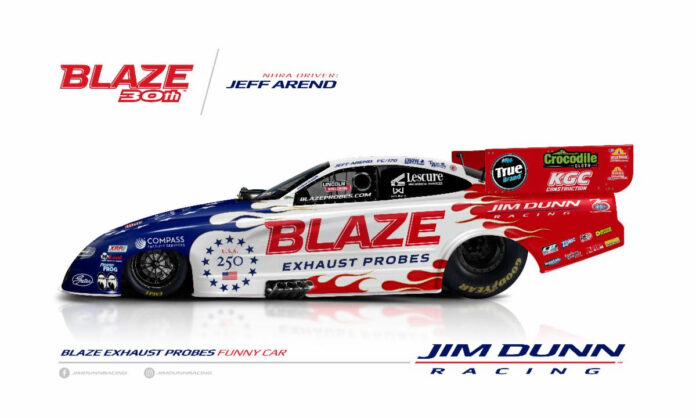
In addition to celebrating America’s 250th Anniversary on your Jim Dunn Racing Funny Car, you’ll also be representing Blaze’s 30th Anniversary. How special will that be at The Big Go?

“Indy is one of those races that everybody looks forward to, but Big Jim is at the top of the list by far. When leaving Indy to go home after the race, he is already thinking about next year’s Indy! I am really proud of how everybody on the Jim Dunn Racing team has come together and I think our results show the consistency and improvements in ET (elapsed time). We have a couple of tricks up our sleeve and can’t wait for that first run at Indy. We are celebrating 250 years of the United States of America and 30 years with our major sponsor, Blaze Exhaust Probes. Keep an eye out for us and we expect our best results of the year.”
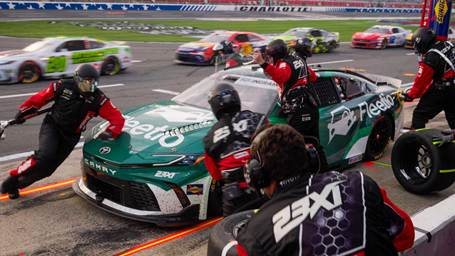
23XI Racing and Fleetio Expand Partnership with Multiyear Renewal

Fleetio to continue primary sponsorship of Corey Heim in the NASCAR Cup Series

BIRMINGHAM, AL – September 1, 2026 – Fleetio, the leading fleet maintenance and optimization platform, today announced an expanded multi-year partnership with 23XI Racing, continuing Fleetio’s primary sponsorship of Corey Heim in select NASCAR Cup Series races.

A race team and a commercial fleet look nothing alike on the surface. Underneath, they run on the same discipline: knowing the condition of every asset, catching problems before they cause downtime, and making the right call under timed pressure. Fleetio was built to support this work, bringing 14 years of maintenance data directly into the maintenance workflow. With cross-fleet benchmarks and AI-driven decision support, Fleetio provides insights into approval queues, service schedules, and repair orders, so teams can act on the data, rather than interpret it after the fact.

Powering maintenance decisions on and off the track

The maintenance impact extends beyond the completed repairs to those that are avoided altogether. In the first half of 2026, Fleetio users rejected $41.4 million in unnecessary repairs, with line items caught, questioned, and stopped before the money left the building. The value of those decisions grows with the scale of the network supporting them. Across its comprehensive ecosystem, the company supports more than 8 million vehicles, including 8,500+ fleets in 100+ countries, and processes over 80 million repair orders through a network of over 140,000 repair shops.

As we prepare for Corey’s first full-time season in the Cup Series, we look forward to Fleetio expanding and continuing their partnership with 23XI next year and beyond,” said Steve Lauletta, 23XI team president. “Similar to how Fleetio supports their customers, success for 23XI starts with the team at Airspeed, our headquarters, and continues with execution by the drivers and crew at the track on race day. These similarities in our brands make this an ideal partnership.”     

“Performance on race day is earned through thousands of good decisions before the green flag,” said Jon Meachin, CEO of Fleetio. “Fleet operations work the same way. The difference between a fleet that runs and a fleet that struggles usually isn’t the size of the budget – it’s the quality of information guiding each decision. That’s exactly what Fleetio provides, and it’s why a team like 23XI is a natural fit.”

Shifting the partnership into high gear

Earlier this year, Fleetio sponsored Heim and the No. 67 Toyota at the Coca-Cola 600, setting the stage for an expansion of the partnership. Through the expanded relationship, Heim’s Toyota Camry XSE will feature Fleetio branding in select Cup Series races starting in 2027. The activation includes branding on driver gear and team assets, as well as an associate sponsorship across the broader race schedule.

Heim enters the agreement with recent wins at two of the summer’s biggest Cup Series races, the inaugural event at Naval Base Coronado and the Brickyard 400 at Indianapolis Motor Speedway, as he moves to a full-time Cup Series schedule.

Fleetio’s expansion with 23XI comes as the brand also expands its reach into the greater NASCAR landscape by sponsoring the Fleetio 200 at Darlington Raceway. The Fleetio 200 on Saturday, September 5, serves as the opening act for Sunday’s Southern 500, one of NASCAR’s crown-jewel races and the opening event of the NASCAR Cup Series Chase.

Fleetio. The crew chief for your fleet. Get under the hood of the Fleetio and 23XI Racing partnership at fleetio.com/nascar.

About Fleetio

Fleetio is the leading fleet maintenance and optimization platform, helping fleets, repair shops, and partners efficiently manage their assets by providing resources fueled with data-driven recommendations and expert insights. Fleetio sets the industry standard as an operating system built to support real execution through embedded intelligence, automation, and connected maintenance workflows. Leveraging its comprehensive fleet ecosystem, the company supports over 8 million vehicles, including more than 8,500 fleets across 100+ countries, and processes over 80 million repair orders through a network of over 140,000 repair shops. Fleetio equips fleet professionals with the tools they need to extend asset life, reduce downtime, and confidently deliver results for their business.

About 23XI Racing

23XI Racing – pronounced twenty-three eleven – was founded by NBA legend Michael Jordan and three-time Daytona 500 winner Denny Hamlin in 2020. With rising NASCAR star Bubba Wallace selected to drive the No. 23 Toyota Camry, the team made its NASCAR Cup Series debut in the 2021 Daytona 500 at Daytona International Speedway. Wallace made history on October 4, 2021, when he captured his first career Cup Series win, becoming just the second African American to win in the Cup Series, and earning 23XI its first-ever victory. 23XI expanded to a two-car organization in 2022 with Cup Series Champion and Hall of Famer Kurt Busch driving the No. 45 Toyota Camry. With a win at Kansas Speedway in May of 2022, Busch earned 23XI the team’s first-ever playoff berth. Tyler Reddick joined the team in 2023 to drive the No. 45 car. In 2024, Reddick won the Regular Season Championship and raced to a spot in the Championship 4, a first for both the team and Reddick. In 2026, Reddick made history by winning the first three Cup Series races of the season, including the Daytona 500. 23XI currently features the lineup of Bubba Wallace in the No. 23 Toyota Camry XSE, Tyler Reddick in the No. 45 Toyota Camry XSE and Riley Herbst in the No. 35 Toyota Camry XSE. Corey Heim currently serves as the team’s development driver and races occasionally in the No. 67 Toyota Camry XSE. The team operates out of Airspeed, a state-of-the-art facility in Huntersville, N.C.

NASCAR Playoff Betting: What to Watch Across September’s First Four Races

Photo by Andrew Boyd for SpeedwayMedia.com

September immediately raises the stakes in the NASCAR Cup Series because the Chase begins and every point starts carrying greater championship significance across the final 10 races. 

It’s worth noting that NASCAR has replaced its elimination-style playoff format with a modernized version of the Chase for 2026, designed to reward greater consistency across the final 10 races while removing round-by-round eliminations.

The Chase begins at Darlington Raceway on September 6, followed by stops at World Wide Technology Raceway, Bristol Motor Speedway, and Kansas Speedway before the month ends. Each track presents a different challenge for the drivers competing for the championship.

That variety matters for bettors too. A factor that carries considerable weight at Darlington may be less important a week later at Gateway. Track characteristics, recent speed, Chase position, and race strategy all deserve attention as the postseason moves through its first four events.

Darlington Opens the Chase With Little Margin for Error 

The Southern 500 at Darlington starts the Chase on September 6. As the first postseason race, it gives every championship contender an opportunity to establish an early advantage. A difficult opening weekend, however, can immediately increase the pressure heading into the remaining nine races of the Chase. 

Darlington itself demands a lot from both driver and car. Tire wear can change performance during a run, while the narrow racing surface leaves little room for mistakes. Long-run speed and the ability to manage tires without giving away too much pace can therefore be more revealing than raw speed over a few laps.

Those demands make track history and recent performance on comparable tracks useful starting points when comparing the field. Bettors looking at race markets through FanDuel can consider those factors alongside qualifying position, practice speed, and how consistently a driver has maintained competitive pace over longer runs.

One strong recent finish shouldn’t carry the entire argument for a wager. A driver may have gained positions because of strategy, cautions, or problems elsewhere in the field. Looking at how the result developed can provide a better indication of whether that performance offers meaningful evidence for the Southern 500.

Gateway Changes What Bettors Need to Evaluate 

The postseason moves to World Wide Technology Raceway on September 13. The change of venue matters because Gateway asks different questions of drivers and teams. A strong performance at Darlington doesn’t automatically indicate that the same driver will have an advantage one week later.

Gateway’s flatter layout and different corner characteristics place greater emphasis on braking and getting through the turns efficiently. Track position can also become important when passing is difficult. Restarts, pit execution, and decisions that gain or lose positions can consequently have a major influence on the final result.

For bettors, relevant track performance deserves more attention than simply carrying the previous week’s finishing order forward. Results from tracks that require similar skills can help identify drivers whose strengths fit Gateway, while recent overall form can show whether their teams are currently providing competitive cars.

Chase position adds another layer after Darlington. Some drivers will arrive with comfortable points totals, while others may already need a stronger result. That doesn’t guarantee a particular strategy, but the standings provide useful context when considering how valuable stage points and track position could become as the Chase progresses. 

Bristol Turns the Chase Pressure Up 

Bristol Motor Speedway hosts the third Chase race on September 19, adding a demanding short-track test under the lights. By this point, two postseason races will already have separated drivers in stronger championship positions from those facing larger points deficits. 

The track also introduces a different type of uncertainty. Bristol’s short layout keeps cars in traffic, while the number of laps means leaders regularly encounter slower cars. Contact, restarts, and changing track position can all alter a race that appeared to be developing predictably.

That makes Bristol-specific performance particularly valuable when assessing the field. A driver can enter with excellent recent results while having fewer convincing performances on short tracks. Bettors can compare recent speed with previous Bristol races and other relevant short-track results rather than assuming overall momentum will transfer automatically.

The Chase standings become especially important at Bristol because every point gained or lost carries forward through the remaining seven races. Drivers separated by only a handful of points may find themselves in very different championship positions as the race develops. Understanding those circumstances can add context to strategy decisions and help bettors interpret what they see once the race is underway. 

Kansas Brings a New Test to the Chase 

Kansas Speedway hosts the fourth September Chase race on September 27, presenting another distinct test in the championship battle. The same 16 Chase drivers arrive with three postseason races already reflected in their championship totals. 

Those weekends can reveal which teams are consistently bringing competitive cars to the track. Raw finishing positions tell part of that story, while running position, qualifying speed, pit execution, and the circumstances behind each result can help explain whether a driver’s form is stronger or weaker than the final standings suggest.

Comparing those recent performances with broader NASCAR analysis and stats can help bettors separate a genuinely strong playoff trend from a result heavily influenced by the circumstances of one race. The aim is to build a fuller picture of performance rather than allowing one particularly good or poor finish to dominate the assessment.

Kansas still requires its own evaluation. Fresh playoff evidence is useful, but track fit remains important when the series changes venues again. Previous Kansas performance and results on comparable intermediate tracks can help determine whether a driver’s recent form is likely to translate to the demands of the fourth September race.

What September Reveals 

The first four Chase races make September a useful reminder that NASCAR betting analysis has to change with the schedule. Darlington emphasizes tire management and long-run performance, Gateway introduces different technical demands, Bristol combines intense short-track racing with mounting championship-points pressure, and Kansas introduces another intermediate-track challenge as the Chase reaches its fourth race.

No single statistic can capture all of those variables. Combining track-specific history with recent speed, qualifying, playoff circumstances, and race-week information can provide a more complete view of each event. Odds can then be considered within that wider context, while keeping wagers at a level that fits a planned entertainment budget.

What Car Enthusiasts Should Know About Ceramic Coating Before Track Season

Photo by depositphotos at https://depositphotos.com/

As spring rolls in across the Piedmont region and local drivers start prepping for track days at Charlotte Motor Speedway, Carolina Motorsports Park, or VIR, vehicle preservation quickly becomes a top priority. Track days are brutal on your paint. Between hot rubber marbles, heavy brake dust, and high-speed grit, your exterior takes a massive beating compared to normal street driving. We all spend weeks prepping our brakes and tires, but paint protection usually gets ignored—at least until you’re stuck trying to scrub baked-on track grime off your bumper on Sunday night. Investing in professional auto detailing Charlotte, NC before the season kicks off provides a crucial baseline of defense, but knowing exactly what modern liquid polymer formulas can and cannot withstand is essential for keeping your weekend track machine in pristine condition lap after lap.

Understanding How Ceramic Coatings Handle Thermal and Chemical Punishment

Heavy track braking turns ordinary dust into hot metallic shards that melt right into unprotected paint. This is prevented by a suitable ceramic coating, which adheres directly to your clear coat to form a smooth, hardened shell that withstands abuse. This glass-like shield delivers remarkable thermal resistance, preventing track rubber “marbles” and corrosive, hot metallic particulates from fusing directly to your body panels. When you participate in sanctioned open-track events and high-performance driver education, you subject every exterior surface to extreme environmental stress, making the slick chemical barrier of a coating indispensable for preventing paint etching from caustic track grime, acidic exhaust soot, and trackside chemical residues.

Why Ceramic Coating Needs a Partner for Heavy Impact Defense

Ceramic coatings are fantastic for locking in that shine and making track-day cleanup a breeze. Just don’t expect miracles—a thin liquid coating isn’t going to deflect high-speed rock chips or stop physical scratches. A ceramic layer is only a few microns thick, meaning it cannot absorb the severe kinetic energy of pea-sized gravel kicked up by a race car running slick tires directly in front of you down the straightaway. 

For optimal track-day protection, experienced drivers throughout the Carolinas combine a high-grade ceramic layer with paint protection film Charlotte on high-impact zones such as the front bumper, hood, side mirrors, and rear quarter flares. Applying a ceramic formula directly over your film amplifies hydrophobic self-cleaning properties while the thick urethane film underneath takes the brunt of physical impacts, giving you the best of both worlds without dulling the deep optical clarity of your vehicle’s factory paint.

Post-Session Wash Routines and Track-Ready Maintenance

The real magic of having a coated car becomes obvious the moment you pull back into the paddock or your home garage after a full weekend of hard sessions. Instead of spending hours scrubbing aggressively with abrasive clay bars or harsh bug removers—which inevitably introduces unsightly swirl marks into your clear coat—the slick surface energy of a ceramic finish allows tire rubber streaks, bugs, and brake grime to release with minimal agitation. 

To safely wash off heavy track dirt without swirling your paint, stick to a foam cannon or a two-bucket setup with pH-neutral soap. Modern clear coats scratch easily, but a ceramic layer makes the surface so slick that stubborn brake dust and grime just slide off, cutting your post-race cleanup in half.

Conclusion: Maximizing Your Vehicle’s Longevity for the Season Ahead

Entering track season with a fully protected vehicle allows you to focus purely on your apexes, braking markers, and lap times rather than stressing over the inevitable wear and tear of high-speed driving. By pairing realistic expectations of impact resistance with the formidable chemical and thermal shielding of a professionally installed nanocoating, you can preserve your car’s showroom shine through countless demanding track sessions across the Southeast. Taking the time to schedule comprehensive auto detailing Charlotte, NC ahead of your first event ensures your clear coat is thoroughly decontaminated, paint-corrected, and sealed to withstand everything the asphalt throws your way this season.

Whitening Strips vs In Office Treatment: The best teeth whitening method: Insights from Great Expressions Dental Centers

Photo by depositphotos at https://depositphotos.com/

Life gets incredibly busy. Between demanding work schedules and family commitments, personal health care often takes a back seat. A radiant smile frequently serves as your very first impression during job interviews or social gatherings. You might look in the mirror one morning and notice your smile lacks its usual brilliance. The gradual dulling of your teeth is a silent process. Stains accumulate microscopically over months or years before they become visibly obvious to you or anyone else. Many people immediately turn to retail products to fix the issue quickly because they seem highly convenient. However, choosing the right approach to brightening your smile involves understanding the science behind these products and how they interact with your unique dental anatomy. Applying random chemicals to your teeth without knowing the underlying cause of the discoloration can sometimes do more damage than good. We will explore the fundamental differences between over-the-counter solutions and professional care. Our goal is to help you find the ideal solution to safely restore your confidence and protect your long-term oral health.

Key Takeaways

  • Over-the-counter strips offer gradual changes intended strictly for minor surface stains.
  • Professional treatments penetrate deeper dental layers for dramatic and immediate brightness.
  • Consulting a dental professional ensures safe application and protects your fragile enamel from chemical damage.
  • The most effective approach depends entirely on your specific dental health history and cosmetic goals.
  • Maintaining a bright smile requires a combination of clinical care and incredibly smart daily habits.

The Core Problem and Mechanism

Tooth discoloration occurs in two distinct ways that require completely different treatments. Extrinsic stains sit directly on the outer enamel layer of your teeth. Intrinsic stains develop deep inside the dentin. The dentin is the foundational layer beneath the protective enamel. Over-the-counter strips typically use a very low concentration peroxide gel. This gel rests on the surface and slowly breaks apart superficial stain molecules over several weeks. These active ingredients undergo a slow oxidation reaction to shatter the carbon bonds that create visible yellow stains. However, retail strips are universally sized and rarely cover the entire curve of your dental arch perfectly. This universal sizing often leads to uneven results or missed spots near the gumline where stains tend to accumulate the most.

Professional clinical treatments use highly concentrated bleaching agents carefully supervised by an expert. Clinical settings often utilize hydrogen peroxide for rapid visible results while take home kits from a clinic might use carbamide peroxide which breaks down more slowly for sustained bleaching. These clinical agents easily penetrate the porous enamel to reach the dense dentin layer. The molecular breakdown of deep stains is what creates a truly brilliant and lasting transformation. The professional environment also utilizes custom-fitted trays or precise isolation barriers. These physical barriers keep the powerful whitening gel securely on your teeth and completely away from your sensitive gums. Understanding this biological and chemical reality is crucial when deciding how to upgrade your smile safely. Attempting to bleach deep intrinsic stains with weak surface strips will only lead to frustration and wasted money.

Causes and Risk Factors

Your daily habits play a massive role in the overall color of your teeth. Consuming coffee, black tea, and red wine introduces incredibly dark pigments into your mouth every single day. These microscopic pigments bind stubbornly to the enamel over time. Frequent snacking on highly acidic foods like citrus fruits or tomato sauce softens the enamel temporarily. This softening makes it even easier for dark colors to penetrate and linger deep within the microscopic pores of your teeth. Genetics also determines the natural thickness of your enamel layer. Thicker enamel hides the yellowish dentin better while naturally thin enamel appears more yellow from an early age.

Tobacco use drastically accelerates the yellowing process by exposing your teeth to sticky tar and nicotine. Beyond external diet and lifestyle choices, internal biological factors also drive discoloration. Aging naturally thins your bright white outer enamel layer over the decades. As this outer shell thins, the naturally yellowish dentin beneath becomes much more visible. Certain strong medications taken during childhood can also alter the internal structural color of your developing teeth. Excessive fluoride exposure during tooth development can cause permanent white or brown spots known as fluorosis. Even minor physical trauma to a specific tooth can cause it to darken from the inside out as the dental nerve reacts to the injury. Recognizing these specific risk factors helps you and your dental care team choose the most effective intervention.

Signs and Symptoms You Might Be Ignoring

The early stages of dental discoloration and enamel wear are completely painless and highly deceptive. You might not realize damage is occurring until the problem is severe. Pay close attention to these specific observable warning signs.

  • A subtle yellow or brown tint appearing specifically near your gumline.
  • Noticeable dullness or a grayish hue when viewing your teeth in bright natural sunlight.
  • Visible gum recession that exposes the yellowish root surface of your tooth.
  • Increased sensitivity to hot coffee or cold water after using retail bleaching products.
  • Chalky white spots developing on the smooth surface of your front teeth.
  • Gums that look unusually red or feel irritated after applying store-bought strips.

Treatment and Escalation

Delaying proper dental care always makes future treatment more complex, invasive, and costly. Ignoring minor decay or enamel degradation while simply trying to bleach the problem away can lead to disaster. The bleaching chemicals can seep into microscopic cavities and cause excruciating nerve pain. What could have been resolved easily with a simple routine filling might eventually require a complex root canal or even a full tooth extraction. When it comes to achieving a gorgeous smile safely, finding the best teeth whitening method requires professional guidance and a thorough clinical examination.

Great Expressions Dental Centers provides expert care to reverse these cosmetic and structural issues safely. Founded in 1982 and operating 250 practices across Florida, Georgia, Michigan, New York, Ohio, Connecticut, Massachusetts, New Jersey, and Texas, our highly trained clinical teams are completely dedicated to your comfort. We understand that life happens and priorities shift. If it has been many years since your last dental visit, we welcome you back with a strictly no-judgment approach. Our only goal is restoring your health and your confidence. We evaluate your unique situation to recommend treatments that will actually work without harming your delicate oral structures. You can explore our cosmetic solutions by visiting our patient online portal at Great Expressions Dental Centers to learn more about our procedures.

Prevention Tips to Protect Your Teeth

Excellent home care absolutely supports your dental health but it never replaces professional clinical care. Establishing strong daily habits is the absolute best way to maintain your results after any cosmetic procedure.

  • Drink dark beverages like iced coffee or tea exclusively through a reusable straw to bypass your front teeth entirely.
  • Rinse your mouth vigorously with plain water immediately after consuming highly acidic foods to neutralize harmful mouth acids.
  • Maintain a strict routine of brushing twice daily using a soft-bristled brush and a highly effective fluoride toothpaste.
  • Avoid highly abrasive charcoal toothpastes that can actually scratch your enamel and make your teeth appear duller over time.
  • Floss thoroughly every single night to remove the sticky biofilm that naturally attracts dark dietary pigments along the edges of your teeth.
  • Incorporate crunchy fresh vegetables like raw carrots and celery into your daily diet to naturally stimulate protective saliva production.

When to Visit a Dentist

Time is always of the essence when dealing with your oral health. If it has been more than a year since your last professional cleaning, you should schedule a comprehensive evaluation immediately. Waiting allows microscopic damage and tartar buildup to worsen significantly behind the scenes. You need an urgent dental evaluation if you experience sharp pain when biting down, constantly bleeding gums, or sudden severe sensitivity.

Do not let dental anxiety keep you away from the care you desperately deserve. Modern dental techniques prioritize your physical and emotional comfort above all else. Stepping into the clinic is the first and most important step toward regaining your vibrant smile and protecting your overall wellness. Our friendly staff will walk you through every single step of the process so you never feel confused or overwhelmed. We are here to answer all your questions and provide a customized roadmap to optimal dental health.

Conclusion

Achieving a luminous smile is about much more than just superficial aesthetics. Your oral health is deeply and permanently connected to your overall systemic health. Rampant oral bacteria and unchecked gum inflammation can severely complicate diabetes management and even contribute to dangerous heart disease. Maintaining a meticulously clean and healthy mouth actively protects your entire body from systemic stress. Finding the ideal clinical solution is a journey best taken with a trusted medical partner. Great Expressions Dental Centers offers an extensive network of highly compassionate professionals ready to help you thrive. Our decades of vast clinical experience ensure you receive the safest and most effective care available today. Let us help you reveal the bright and healthy smile you were always meant to have.

Call to Action

Your comfort and health are our top priorities. Start your dental journey right. Click Book Now and find a Great Expressions Dental Centers office near you to schedule your appointment today.

Hauling Heavy to the Drag Strip: Solving IAT and Reliability Issues on the 6.7 Cummins

There is a very specific breed of diesel truck owner who doesn’t choose between working their truck hard during the week and pushing it to its limits on the weekend, they do both, and they expect the same engine to perform reliably in both environments. 

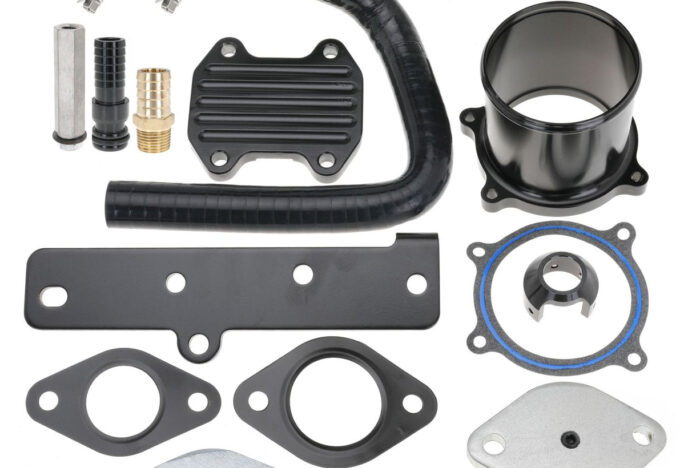
For owners running the 6.7 Cummins platform in high-demand dual-purpose applications, addressing the thermal and contamination issues that undermine engine health under load becomes a top priority, often leading conversations toward EGR system optimization or off-road 2013-2019 6.7 Cummins EGR delete kit, alongside heavy-duty 6.7 Cummins performance parts that give the engine the mechanical foundation to sustain high output. 

Understanding why these solutions matter requires a clear look at what actually happens inside this engine when you push it hard.

The 6.7 Cummins Under Pressure: A Platform Built for More

The 6.7 Cummins is, by any reasonable measure, one of the most capable diesel engine platforms ever installed in a light-duty truck application. Its inline-six architecture, robust bottom end, and high-flow head design give it a mechanical foundation that responds exceptionally well to both careful maintenance and thoughtful performance modification.

However, factory emissions systems layered on top of this foundation introduce immediate thermal challenges under high load, as well as cumulative long-term issues like intake carbon buildup as the engine ages.

The two most significant problem areas are intake air temperature management and EGR-related engine contamination. Both of these issues become dramatically more pronounced in dual-purpose applications where the engine is regularly pushed toward its performance ceiling.

Understanding Intake Air Temperature and Why It Matters

Intake air temperature, commonly referred to as IAT, is one of the most consequential variables in diesel engine performance and reliability. The principle is straightforward: cooler, denser air contains more oxygen per unit of volume, and more oxygen means more complete combustion, more power, and lower exhaust gas temperatures. 

Conversely, hot intake air is less dense, carries less oxygen, and forces the engine management system to pull back fueling to avoid dangerous thermal spikes.

While the EGR system actively recirculates hot gases during light-to-moderate loads, the thermal load under sustained heavy towing or full-throttle racing is further compounded by extreme turbocharging heat and intercooler heat soak.

As IAT climbs and air density drops, combustion efficiency decreases, leading to higher Exhaust Gas Temperatures (EGT). To prevent catastrophic thermal failure, the ECU must intervene by pulling timing and defueling, which directly reduces output, causes sluggish throttle response, and leaves the system struggling near its thermal limits. 

In a work truck that also sees drag strip action, this thermal ceiling becomes a hard wall that prevents the engine from performing consistently across runs.

The Drag Strip Reveals What Daily Driving Hides

Here’s something that drag strip testing consistently demonstrates about diesel trucks: the performance numbers on run one and run three can be dramatically different, even with identical driver inputs. This is the thermal soak problem in action. 

After the first hard pass, extreme boost pressure generates substantial heat that heat-soaks the charge air cooler (intercooler), while high engine-bay ambient temperatures prevent rapid cooling, leaving the engine at an elevated thermal baseline before the next run.

Consistent, repeatable performance, whether that means consistent quarter-mile times or consistent towing capacity under varied conditions, requires an engine that can manage its thermal environment effectively. This is precisely why addressing the root causes of IAT elevation is not just a performance upgrade; it is a reliability upgrade with direct implications for how dependably the truck performs across all operating conditions.

How EGR Optimization and Deletes Change the Thermal Equation

By removing or fully bypassing the EGR loop in off-road applications, the intake tract is freed from waste-heat contamination and carbon buildup that restricts airflow. Without hot exhaust gases cycling back into the intake during ambient operation, intake charge temperatures stay substantially more stable.

Additionally, removing the EGR cooler lowers the total heat burden on the engine’s primary cooling system, allowing the radiator and charge air cooler to manage engine and intake temperatures far more effectively under sustained load. It also eliminates the failure risk of an EGR cooler leaking coolant into the intake manifold.

For the dual-purpose owner who hauls heavy loads during the work week and makes drag strip passes on weekends, the practical effect is a more thermally stable engine that maintains performance consistency across multiple hard runs rather than fading progressively as heat soaks into the system.

It is essential to note that EGR delete modifications are intended for off-road use only, and proper engine recalibration must accompany any such modification to ensure the engine management system operates correctly without the EGR hardware present.

Building the Mechanical Foundation: Why Performance Parts Matter

Solving the IAT problem is an important step, but it is only part of the equation for an owner who wants to genuinely push the 6.7 Cummins platform in demanding applications. The engine’s stock supporting hardware, while respectable, was designed around factory power levels and factory emission system configurations. 

When power output increases through tuning and thermal efficiency improves through intake system optimization, the load on supporting components increases proportionally.

Upgraded intercooler piping and high-efficiency charge air coolers reduce pressure drops and lower air temperatures. Crucially, as cylinder pressures increase with cooler air and higher boost, structural 6.7 Cummins upgrades like head studs and transmission recalibration become essential to sustain this power reliably. The philosophy behind performance parts selection should always be systematic rather than piecemeal. 

Upgrading a single component without considering how it interacts with the rest of the system often produces disappointing results, or worse, creates new failure points by over-stressing adjacent hardware. The most successful 6.7 Cummins builds approach performance hardware as an integrated system where each component upgrade supports and enables the rest.

Before investing in any modifications, it’s worth performing a clear-eyed assessment of where your specific truck currently stands. Several diagnostic indicators point toward IAT and EGR-related performance degradation:

  • Declining performance over successive hard pulls: A truck that runs significantly slower or weaker after two or three hard acceleration events than it did on the first pass.
  • Elevated exhaust gas temperatures under standard loads: Higher EGT readings under conditions that previously generated much cooler exhaust numbers.
  • Intake manifold carbon buildup visible during inspection: A thick, dark soot coating on manifold walls that restricts clean airflow into the cylinders.
  • Power loss that correlates with ambient temperature: A truck that performs notably better on cold mornings than on warm afternoons due to excessive IAT sensitivity.
  • Abnormal boost behavior: Abnormally high boost pressure combined with reduced overall performance (indicating severe manifold restriction), or boost fluctuations caused by soot-fouled VGT turbo vanes.

The Dual-Purpose Build Philosophy

What separates a genuinely capable dual-purpose diesel build from a truck that is merely modified is the degree to which every upgrade works in harmony with every other upgrade. The 6.7 Cummins responds beautifully to a systematic approach, thermal management, fueling optimization, hardware upgrades, and electronic calibration all working together to produce an engine that is both more powerful and more reliable than its stock configuration.

The drag strip is a useful proving ground for this philosophy. The brutally honest numbers that a timing system produces don’t lie about consistency, power delivery, or thermal stability. 

A truck that delivers consistent, repeatable performance under drag strip conditions is also a truck you can trust to haul a heavy trailer over a mountain pass without thermal drama.

Final Thoughts

The 6.7 Cummins is a genuinely exceptional engine platform that rewards owners who take the time to understand its systems, address its known failure points proactively, and build it properly for demanding applications. IAT management and emissions-related reliability issues are not insurmountable problems, they are well-understood engineering challenges with clear, systematic solutions.

Owners who approach those solutions thoughtfully, with quality components, structural reinforcement, and proper supporting calibration, end up with trucks that perform consistently and reliably across every application demanded of them.

Why Automotive Businesses Lose Online Sales and How eCommerce Can Fix It

While digital commerce is a huge opportunity for automotive companies, it’s not a one-size-fits-all solution – and just putting everything online isn’t enough to drive sales. Customers can browse online look for a component, do some side-by-side shopping, and simply head for the hills when it comes time to make a purchase.

The reasons are more complex for automotive businesses than in traditional retail. Customers might have to find the proper part, verify vehicle compatibility, compare specifications, ensure that the part is available, and determine if they can believe the information received on the web.

By integrating the right product, inventory, customer experience, and commerce capabilities, a properly designed automotive eCommerce solution can help businesses overcome these challenges and create a more fluid purchase experience.

It’s not just about selling vehicles online. It’s for the purpose of making the overall buying process simpler, quicker and more dependable.

Why Automotive Businesses Lose Online Sales

There are many touch points along a customer’s path to online sale that can drop them. A visitor can be seriously challenged to find a suitable product, get a lot of irrelevant results, or see that the product is not available, or that the person is just not sure which one to choose for his vehicle.

1. Customers Cannot Find the Right Products Quickly

An automotive catalogue can include thousands – even millions – of parts, accessories and other products. There may be many products that have similar appearance but wildly different specs or compatibilities.

A customer can also be aware of his/her needs without specifying the actual technical product name or catalogue number.

If the site makes folks have to navigate through several categories and filters, the customer might become frustrated and leave.

A better product discovery can integrate search, filtering and vehicle information along with detailed product data to enable customers to get to the right product in a timely manner.

This can make the development of a complicated catalogue a lot simpler for automotive businesses.

2. Compatibility Creates Purchase Uncertainty

One of the most significant problems in automating the vehicle is vehicle compatibility.

Different engines, trims, production years and configurations can be installed on the same model. A component suitable for one version may not work with another.

This creates important questions for customers:

  • Will this part fit my vehicle?
  • Is this the correct version?
  • Is it compatible with my engine?
  • What happens if I order the wrong part?

If the website cannot answer these questions clearly, customers may postpone their purchase or look for another supplier.

Vehicle-based product discovery can support shoppers in understanding the suitability of a product before order by using modern automotive platform functionality like fitment, visualization and other tools.

This can boost confidence, minimize incorrect orders and prevent returns.

A Poor B2C Experience Drives Customers Away

Automotive companies tend to concentrate more on the product and not so much on customer experience when it comes to their website.

But now, customers want the same ease of access they get from other contemporary online retailers when buying a car online.

They wish to do a fast search, to compare products, to know specifications, to know if the products are available and to finish the checkout without going through unneeded steps.

A strong B2C eCommerce development should therefore be designed around the customer’s needs rather than simply reproducing the structure of a traditional parts catalogue.

Friction can be reduced when the site has clear navigation, is mobile friendly, has helpful information about the product, has a hassle-free checkout, or offers relevant product recommendations.

The smoother the trip the less opportunities customers have to turn around and leave.

Different Customers Need Different Buying Experiences

Automotive businesses may sell to individual vehicle owners as well as workshops, garages, dealers, distributors and fleet operators.

These customer groups often have very different requirements.

A consumer may want fast checkout and clear product information, while a workshop may need bulk ordering, account-specific pricing, order history and quick reordering.

Trying to give every customer the same experience can limit conversions and customer satisfaction.

A flexible commerce platform can support different customer journeys while maintaining a connected backend. This allows businesses to serve B2C customers while also supporting professional and trade buyers.

Outdated Technology Can Limit Growth

Many automotive businesses begin selling online with a relatively simple store. As the business grows, however, the platform may need to support larger catalogues, more customers, additional integrations and increasingly complex requirements.

An outdated platform can eventually create problems with:

  • Website performance
  • Product management
  • Inventory synchronisation
  • Customer accounts
  • Integrations
  • Scalability
  • Mobile experience

For businesses looking for a flexible commerce platform, Shopify website development can provide a strong foundation for modern online storefronts.

But automotive companies shouldn’t see Shopify as just an off-the-shelf website. Requirements of the industry (such as product data, fitment, inventory integration and custom customer journeys) may necessitate further development.

The best platform is the one that will support the business today and for the future growth.

How eCommerce Technology Can Recover Lost Sales

The solution to declining online sales is not simply adding more products. Automotive businesses need to remove friction from the complete customer journey.

Improve Product Discovery

Customers should not need specialist knowledge to navigate a complicated catalogue.

Better search, filtering, vehicle selection, product categorisation and detailed product information can help shoppers reach relevant products faster.

The objective is to reduce the distance between what the customer needs and the product they can purchase.

Build a Better Customer Experience

Every part of the website should help customers make a decision.

Product pages should provide clear specifications, images, compatibility information, pricing, availability and delivery details.

The checkout process should also be simple and transparent.

For B2C automotive businesses, improving these fundamentals can have a direct impact on conversion and repeat purchases.

Connect eCommerce With Business Systems

An online store should not operate separately from the rest of the business.

Automotive companies can require to integrate their commerce platform with ERP, CRM, WMS, inventory, payment and shipping systems.

These integrations can enhance data consistency, cut down on manual workflows and ensure customers are given accurate data.

Choose Technology Around the Business Model

There is no single platform that is right for every automotive company.

For a growing retailer, having a Shopify-powered storefront may make sense, and for an business with intricate product or inventory requirements, or integration needs, a more customised automotive commerce architecture might be applicable.

Businesses should evaluate their current requirements as well as future product volumes, customer segments, integrations and sales channels before selecting their technology.

Multiple Suppliers Can Create a New eCommerce Opportunity

Some automotive businesses work with a large network of suppliers, dealers or specialist sellers. Instead of managing every product themselves, they may benefit from creating a marketplace that brings multiple sellers together.

A multi-vendor eCommerce marketplace can connect automotive suppliers and sellers with customers through a single digital platform.

Depending on the business model, this can include:

  • Auto parts suppliers
  • Accessories sellers
  • Tyre providers
  • Dealers
  • Aftermarket brands
  • Automotive service providers

The marketplace operator can manage the digital experience while sellers contribute products and fulfil orders according to the agreed model.

This can expand product selection and create a broader automotive ecosystem without requiring the business to hold every product itself.

The Future of Automotive eCommerce

The future of automotive commerce will be about creating better connections between customers, products, suppliers and business systems.

Customers will expect faster product discovery, clearer compatibility information, accurate inventory and more convenient purchasing experiences.

At the same time, businesses will increasingly need platforms that can support multiple customer types, suppliers and sales channels.

Some businesses may focus on direct-to-consumer retail, while others may develop multi-vendor marketplaces that connect automotive suppliers and customers.

The common factor will be convenience.

Businesses that make it easier for customers to find the right product, understand their options and complete a purchase will be better positioned to compete in an increasingly digital automotive market.

Conclusion

Automotive businesses can lose online sales for many reasons. Customers may struggle to find products, understand compatibility, navigate an outdated website, confirm stock availability or choose between multiple options.

These challenges can be addressed through a stronger eCommerce strategy.

A successful automotive eCommerce solution can help centralize product discovery, customer experiences, inventory and business integrations. For retailers who have specific needs, a robust Shopify eCommerce platform can offer a scalable base on which to grow, and a rich B2C retail experience can smooth the way to more conversions. A multi-vendor marketplace can provide opportunities for companies that are connected with several suppliers to diversify their product offerings and develop a more extensive digital ecosystem.

Finally, it is not about getting more products online for the successful automotive eCommerce.

It’s all about making it easier for customers to find what they’re looking for, believe the information they’re given and complete a transaction without hesitation.

Small Size Doesn’t Mean Low Performance: How the Qronge X1 Spark M Balances Compact Size and Off-Road Capability

Electric dirt bikes do not need to follow a single size formula. Some riders prefer a larger chassis and bigger wheels, while others place more value on compact proportions, low-speed control and easier direction changes. For the latter group, the real question is not whether a bike can be made smaller, but how much performance and off-road capability can remain once the overall package becomes more compact.

The Qronge X1 Spark M was developed around that kind of need. Its 14-inch front and 12-inch rear wheels give it a smaller overall footprint, but the bike does not treat compact size as another way of saying low performance. A 4,500W peak mid-drive motor, off-road suspension and hydraulic disc brakes are still central parts of the platform.

That gives the X1 Spark M a clear position: it is not simply a scaled-down electric dirt bike, but a compact platform designed to retain meaningful off-road performance.

A 14/12-Inch Wheel Setup Defines the X1 Spark M’s Compact Proportions

The X1 Spark M’s compact positioning starts with its wheel setup and overall dimensions.

As a mini electric dirt bike, the Qronge X1 Spark M uses a 14-inch front wheel and a 12-inch rear wheel, with an overall length of about 62 inches and a wheelbase of about 43 inches. Compared with platforms built around 17/14-inch or 19/16-inch wheel setups, its proportions are noticeably more compact.

Those dimensions affect the relationship between rider and bike. During parking, low-speed adjustments, repeated direction changes and transitions between seated and standing positions, the size of the bike becomes part of how it is managed. For riders already looking for a compact platform, those measurements say more than the word “mini” on its own.

4,500W Peak Power Gives the Compact Platform a Stronger Performance Base

Once the chassis becomes smaller, power output becomes an important part of defining what the bike is actually designed to do.

The X1 Spark M uses a 4,500W peak mid-drive motor and delivers up to 283Nm of torque. Its 14/12-inch wheel setup has not been paired with a noticeably lower-output powertrain.

Climbs, loose surfaces and rebuilding momentum after slowing down can all place different demands on power delivery. The 4,500W peak output and up to 283Nm of torque show that the X1 Spark M does not sharply reduce its power specification simply because the chassis is more compact.

The X1 Spark M also uses a mid-drive layout, which makes motor placement part of the bike’s overall weight distribution and chassis design. On a compact platform, the powertrain cannot be considered in isolation; it has to be viewed alongside wheelbase, wheel size, suspension and rider position.

Off-Road Capability Also Depends on Suspension and Braking

The X1 Spark M uses 150mm of front suspension travel and 75mm at the rear, together with 200mm hydraulic disc brakes.

When the surface changes from hard-packed dirt to gravel, ruts or repeated undulations, suspension and braking take on roles that motor output alone cannot cover. Suspension travel affects how much movement the bike has available over uneven ground, while the braking setup influences how the rider manages speed before corners, slopes and changes in terrain.

For a compact off-road bike, suspension travel and braking are therefore important parts of judging the platform as a whole.

Even with its smaller chassis proportions, the X1 Spark M still retains front and rear suspension and hydraulic disc brakes intended for off-road use. Its compact positioning is not limited to wheel size and wheelbase; it extends across the overall vehicle setup.

Electric Power Gives Compact Bikes More Layout Options

An electric powertrain also provides different ways to combine a smaller chassis with stronger output.

The motor, battery and control systems used in an electric motorcycle can be arranged differently within the vehicle, which means a compact off-road bike does not have to be treated simply as a scaled-down version of a conventional motorcycle. Motor position, battery placement, wheel size and rider space can all be considered as part of the same package.

The X1 Spark M uses a 60V 28.8Ah battery with 1,728Wh of nominal energy, forming the bike’s electric drive platform alongside its 4,500W peak power system.

For riders, the more useful question is not what any one of those technologies does on its own, but whether the full combination provides the level of control they need during turning, climbing, braking and changing ground conditions.

Compact Platforms Still Depend on Rider Fit

The X1 Spark M’s compact design is not intended to suit every rider. It gives riders who need a smaller overall chassis another option.

Taller riders, those who prefer larger wheels or riders already comfortable with full-size motorcycle proportions may still prefer a larger platform. With a compact bike, the more important issue is not simply that the bike is smaller, but whether its proportions suit the rider’s build, riding position and intended use.

Qronge lists a recommended rider height range of 4’0″ to 5’5″ for the X1 Spark M. That range provides a clearer picture of the bike’s positioning than the “mini” label alone, because fit depends on how the rider relates to the handlebars, seat, footpegs and overall chassis proportions, not just wheel size.

The X1 Spark M is therefore better understood as a distinct size option rather than a simple replacement for a full-size electric dirt bike. Its compact design only makes sense when the proportions match the rider.

Once size, performance and intended use have all been considered, the buying method becomes part of the decision. If paying the full price at once would create too much pressure, electric dirt bike financing can spread the purchase over multiple payment periods, though any financing plan should still be considered within the rider’s overall budget.

Making Compact Size and Off-Road Performance Part of the Same Package

The X1 Spark M is not trying to answer whether a small bike can simply be made fast. The more relevant question is whether compact proportions and genuine off-road performance can exist on the same platform.

Its positioning comes from that combination: a more compact 14/12-inch wheel setup and chassis, while retaining a 4,500W peak mid-drive motor, suspension and hydraulic disc brakes aimed at off-road use.

For riders who fit this size range, the X1 Spark M is not a simplified substitute for a full-size bike. It represents a different product direction—one in which a smaller chassis can still retain a clearly off-road-focused powertrain and chassis setup.

5 Signs Your Growing Business Has Outgrown DIY Legal Documents

Photo by depositphotos at https://depositphotos.com/

Many small businesses begin with basic templates for contracts, policies, and agreements. In the early stages, these documents may seem sufficient because the company has fewer employees, customers, and legal obligations.

As the business grows, generic templates can leave important issues unaddressed. Working with legal counsel for small businesses can help owners review existing documents, identify legal gaps, and create agreements that better reflect the company’s current operations, responsibilities, and potential risks.

1. Your Contracts No Longer Match How You Do Business

A contract created when your company first launched may not reflect how the business operates today.

Your Services Have Expanded

If you now offer more products, services, payment plans, or delivery options, older agreements may be too limited. Contracts should clearly explain scope, payment terms, responsibilities, deadlines, and dispute procedures.

Outdated language can create confusion when a customer or vendor expects something different from what the document actually states.

2. You Are Hiring More Employees or Contractors

Growth often means bringing in new employees, freelancers, or independent contractors. Each type of working relationship may involve different legal responsibilities.

Employment agreements, contractor agreements, confidentiality clauses, and workplace policies should accurately reflect how these relationships are managed.

Classification Issues Can Become More Important

Using the same document for employees and independent contractors can create problems. Businesses should make sure their agreements match the actual working arrangement rather than simply relying on a template downloaded years ago.

3. You Are Entering Larger or More Complex Deals

A simple contract may work for smaller transactions, but higher-value deals often involve additional risks.

As your company begins working with larger clients, suppliers, distributors, or strategic partners, contracts may need more detailed provisions covering liability, termination rights, intellectual property, confidentiality, and dispute resolution.

The more money and responsibility involved, the more important it becomes to have documents tailored to the specific transaction.

4. Ownership or Management Has Changed

DIY documents can quickly become outdated when a new owner, investor, or partner joins the business.

Ownership Changes Need Clear Documentation

Operating agreements, partnership agreements, shareholder agreements, and other internal documents should clearly explain voting rights, ownership percentages, profit distribution, and decision-making authority.

Without updated documentation, disagreements can arise over who has the authority to make major business decisions or how profits should be divided.

One of the clearest signs that DIY documents are no longer enough is when legal questions become a regular part of business operations.

You may find yourself wondering whether a contract is enforceable, whether a policy complies with current requirements, or whether a new agreement protects the company adequately. Repeated uncertainty can indicate that generic documents are no longer meeting the needs of the business.

What Should Business Owners Do Next?

Growing companies should periodically review their contracts, internal policies, employment documents, and ownership agreements. This does not necessarily mean replacing every document, but it does mean checking whether existing paperwork still reflects current operations and risks.

Business owners looking for legal professionals with experience in commercial agreements and other business matters can search for lawyers by location and specific legal needs.

DIY legal documents can be useful when a business is just getting started, but growth often brings more complicated relationships, transactions, and responsibilities. Recognizing when your documents no longer match your business can help you address potential issues before they develop into larger disputes.

What New Zealand’s 15-Licence Online Casino Market Means for Racing Fans

Photo by Jayden Davies on Unsplash

Racing fans are used to following two contests at once: what happens on the track and how the odds move around it. In New Zealand, another contest is now taking shape away from the circuit as online casino operators compete for a limited place in the country’s regulated market.

The distinction matters because many international wagering apps place race markets, sports betting, and casino games within the same digital ecosystem. New Zealand regulates race and sports betting separately, but the Online Casino Gambling Act 2026 will still affect which casino brands racing audiences can access, how those brands advertise, and what safeguards users encounter when moving between gambling products.

The Act came into force on 1 May, and the first licensing round is under way for a regulated market expected to become fully operational in 2027. An industry analysis of the rollout describes the timetable as a deliberate effort to put licensing scrutiny, consumer protection, and system readiness ahead of a faster launch.

For operators, the immediate issue is scarcity. Up to 15 licences will be available, each tied to one brand and valid for as long as three years. A renewal may run for a further five years, but no person can hold or exercise significant influence over more than three licences.

Why the Licence Race Matters Beyond Casino Players

For SpeedwayMedia readers, the immediate relevance is visibility and trust. A race fan may encounter casino content through the same app, sponsorship campaign, or advertising feed used to follow wagering markets. Once the licensed system is operational, a public register, registration icon, and audio mark should make it easier to tell whether the casino side of that experience has New Zealand approval.

The rules may also change the commercial backdrop around racing coverage. Online casino advertising is prohibited during the transition, and the future regime rules out affiliate marketing and paid endorsements. That creates a clearer boundary for publishers, content creators, and audiences who regularly see gambling brands around major sporting events.

The Racing Integrity Question

The connection is not limited to advertising. New Zealand’s Racing Integrity Board has warned that online gaming and racebook products have a close relationship, particularly when offshore operators place casino games, crypto deposits, and wagering on New Zealand races inside the same platform.

An AGBrief report on the board’s work says dozens of crypto-enabled brands accept bets on New Zealand racing while operating outside the domestic system. The concerns include limited integrity-data sharing, weak reporting obligations, and operators benefiting from race products without contributing to the systems that help protect the sport.

For racing fans, that makes the casino licensing debate more than a question of which brands receive permission to operate. It sits alongside a wider effort to distinguish supervised gambling businesses from offshore services that may combine casino and racing products while remaining difficult for local authorities to monitor.

A Three-Stage Route to Market

The first expression-of-interest window closed on 14 August 2026. The DIA is assessing those submissions before an ascending-clock auction expected in September. In that format, the price rises in steps until the number of remaining bidders matches the licences available.

Winning an auction does not produce a licence automatically. It gives a bidder the right to submit a full application. The final stage requires a business plan and detailed strategies covering advertising, consumer protection, harm prevention, compliance, and other matters requested by the Secretary for Internal Affairs.

That distinction matters because commercial strength is only one part of the test. Applicants must show access to at least NZ$7.5 million in capital at the expression-of-interest stage, while ownership, key officers, compliance history, and the ability to meet New Zealand’s operating standards remain subject to scrutiny.

What a New Zealand Licence Will Change

The new regime is intended to replace the current offshore-led environment with a smaller group of identifiable operators under local supervision. For racing followers who also compare an NZ real money online casino, the practical differences will extend beyond the presence of familiar slots or live table games. A licensed brand will need verified customer accounts, approved payment and withdrawal processes, a complaints system, and auditable records. Those controls become particularly relevant when one account or app presents several types of wagering side by side.

Licensed platforms will also have to display a registration icon and play an audio mark so customers can recognise an authorised service. The regulator plans to maintain a public register, giving players a direct way to check a brand’s status rather than relying on marketing language alone.

Player Controls Become Product Requirements

The supporting regulations turn safer-gambling measures into operating requirements. Platforms must support limits on gambling time, deposits, and spend, along with breaks in play, time-outs, and pop-up alerts. Self-exclusion, problem-gambling monitoring, and trained personnel are also built into the framework.

Customer identity and age must be verified before full access is allowed. Credit contracts and specified credit-based payment methods are prohibited, and the rules cover how deposits and withdrawals are handled. The regulations also restrict inducements, autoplay, network progressive jackpots, and certain features considered likely to intensify play.

These measures will affect product design as much as compliance documentation. Operators competing for a licence must be able to demonstrate that account controls, payment systems, game configuration, and record keeping work together in a way the regulator can inspect.

Advertising Opens Later, Under Tight Limits

Online casino advertising to New Zealand customers remains prohibited during the transition. Licensed operators are expected to gain limited advertising rights after the three-stage process is complete, but affiliate marketing and paid endorsements are prohibited under the new framework. Advertising must also be identifiable, age-appropriate, and carry prescribed harm-minimisation messages.

The distinction is important for publishers and readers who follow wagering products around race weekends. SpeedwayMedia’s guide to how motorsports betting markets work focuses on odds, bankroll habits, and race-week decisions. Online casino access and promotion will sit under a separate New Zealand structure, even when both products appear on the same screen.

The commercial overlap is still relevant. Entain, which operates through a long-term partnership with TAB NZ, has indicated that it intends to compete for online casino licences. Its existing technology, customer relationships, and role in funding racing and sports show why the casino rollout will be watched beyond the traditional gaming sector, even though a casino licence would not authorise race or sports betting.

The December Deadline Will Reshape the Field

From 1 December 2026, providers that have not applied for a licence must stop offering online casino gambling in New Zealand. Successful auction bidders with applications under review may continue under an exemption, but they cannot advertise while a decision is pending. If an application is refused, the provider must exit the market.

The licensing race will therefore narrow the market before final licences are issued. Capital and auction strategy will influence who reaches the application stage, but suitability, technical controls, and readiness for local oversight will determine who can stay.

For New Zealand, the central test is whether a capped market can make offshore online casino activity easier to identify, supervise, and challenge. For racing audiences, the benefit should be a clearer line between regulated race betting and the casino products that may sit beside it, together with greater scrutiny of operators that use New Zealand racing as part of an offshore gambling offer. For operators, the next few months are less about a simple bid for access than a test of whether their brands, systems, and governance can withstand a domestic regulatory review.