Home Blog Page 6

Peter Auto’s Sixties Endurance Grid Highlights the HSR Classic Daytona 24 Hour Presented by Mission Foods

  • A Universal Celebration of the Collaboration Between HSR and Peter Auto Completes the “Handshake” Between the Leading Historic Motorsports Organizations that Sent 36 Historic NASCAR Cup Series Cars to the 2026 Le Mans Classic Legend in July
  • HSR Classic Sebring 12 Hour Presented by Mission Foods Next Up on HSR Calendar, December 2 – 6 at Sebring International Raceway

DAYTONA BEACH, Florida (November 24, 2026) – Florida is a popular destination when the weather starts to turn colder, making the HSR Daytona Classic 24 Hour Presented by Mission Foods at Daytona International Speedway an ideal late-year getaway for a contingent of 20 competitors representing France-based Peter Auto.

The Peter Auto contingent’s presence at Daytona completed an arrangement between the two organizations that saw three dozen historic NASCAR Cup Series cars participate in July’s Le Mans Classic Legend under the HSR umbrella at the 24 Hours of Le Mans circuit in France.

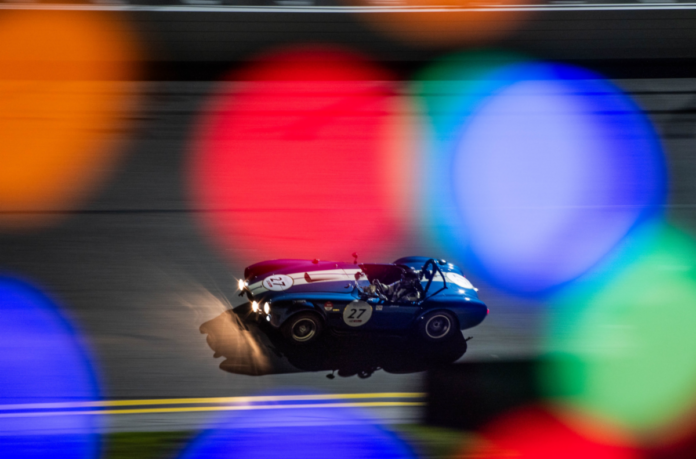
Peter Auto’s Sixties Endurance group was chosen because the cars were of the exact type that competed in the first sports car races on Daytona’s 3.56-mile road course. Cars present for the Classic 24 Hour encompassed seven Shelby Cobras, including a pair of Daytona Coupes; a handful of E-Type Jaguars; two examples of Lotus and Corvette, a Ferrari 275 GTB, an Alfa Romeo Giulietta SZ, and an Austin-Healey 3000.

“It’s an honor to be here, to see our dream that we had with John Doonan and David Hinton and HSR come to life,” said Peter Auto Managing Director/CEO Marc Ouayoun. “We had the chance to welcome the NASCAR grid to the Le Mans Classic, which was a huge success with 36 cars in total. It was a big show, which our public in France really loved. That was the biggest reaction from all the grids we had – it was so spectacular!

“Sixties Endurance is a big grid for Peter Auto,” he continued. “From 1955 to 1966 in sports cars and GT is the golden era for racing, and we wanted to bring these cars. It’s a very strong grid, with great diversity and great quality of cars. There’s an amazing level of preparation, and the driving standards are excellent – you’ve seen that throughout the weekend.”

Ouayoun believes the close working relationship between IMSA and ACO to shape and guide modern sports car racing was an inspiration for the collaboration between Peter Auto and HSR.

Doonan, who is the President of both HSR and its parent company, IMSA, echoed Ouayoun’s enthusiasm.

“We’re beyond delighted to welcome our friends from Peter Auto to Daytona,” Doonan remarked. “What we did at Le Mans in the summer earlier this year was amazing, and now to bring these cars here… this is exactly what Bill France Senior had in mind when he built the ‘World Center of Racing.’ Daytona is an amazing track, and his vision was to show the international racing world exactly what he had done here. The first Daytona Continental was staged in 1962, and many of the cars that ran were the exact types in the Sixties Endurance group.

“It’s great to see all these fans out here enjoying these cars,” Doonan added. “That’s how we do it in IMSA, and that’s how we do it in HSR. Access is number one for us, with an open garage area and of course the grid walk. It doesn’t get much better.”

Many of the regular Peter Auto competitors had never raced at Daytona, including Phil Mulacek, a Texan who drives a pair of original Shelby Cobras, No. 27 and No. 23, with direct lineage to Carroll Shelby and Shelby American.

“I’ve been to Sebring and to all the tracks around the world with Peter Auto, but I’ve never been to Daytona,” Mulacek said. “We couldn’t have picked better weather and great conditions, and we’re pleased to be here. Daytona is a top bucket list track in the United States. It’s a totally different track compared to a place like Circuit of the Americas, and you’ve just got to absorb it and enjoy it.”

“Having raced many cars in HSR for many, many years, to now have all the people that I’ve raced with in Europe also over here experiencing Daytona has been wonderful,” added versatile vintage sports car racer Nigel Greensall, who drove several cars at Daytona including a rare original factory No. 26 Jaguar E-Type Lightweight.

“It’s been lovely talking to them and offering them tips and advice from my knowledge and the experience of racing here. A lot of these guys are seeing Daytona for the very first time, so I’m trying to make sure they’re safe and that they’re enjoying it. The whole event has been really special.”

Now that Peter Auto competitors have gotten their first taste of the HSR environment, Ouayoun expects even more interest in future collaboration between the two groups.

“They are having a blast,” Ouayoun said. “They were blown away by the track, by the atmosphere, and also by the people. The people are so welcoming here, and this experience has been incredible. How can I say in English… we have been pampered by the HSR team. I think we need really to somehow officialize and announce the alliance that we are working together to bring grids from Europe to events in America and vice versa.

“To hear these engines rumbling here at Daytona…everybody loved it, and we want to be back as soon as possible,” he added. “All the drivers that came this year want to come back, and there will be more in the future. This was the first time, so some of them were a bit hesitant to put the car into shipment. But I can tell you the buzz is so positive.”

The final event of the 2026 HSR season is the HSR Sebring Classic 12 Hour presented by Mission Foods and the HSR Sebring Historics at Sebring International Raceway, December 2 – 6. For more information, please visit the HSR Classic Sebring 12 Hour event page by clicking here.

About HSR: An International Motor Sports Association (IMSA) property, Historic Sportscar Racing (HSR) was formed in the mid-1970s with an event at Road Atlanta. There was one goal then and it remains true today: to celebrate the racing cars from the past. As a “time machine” of sights and sounds, HSR provides a venue for competitors and spectators alike to share in the wonderful history and excitement created by the cars that competed at race tracks around the world. HSR currently sanctions eight vintage and historic racing events at some of the world’s most renowned race tracks, including Road Atlanta, Sebring International Raceway, Daytona International Speedway and more. The complete schedule and full event information can be found on HSR’s website at www.HSRRace.com. Look for the HSR Channel on YouTube and follow HSR on Facebook at www.Facebook.com/HSRrace/ and on Twitter X at @HSR_race and Instagram @HistoricSportscarRacing.

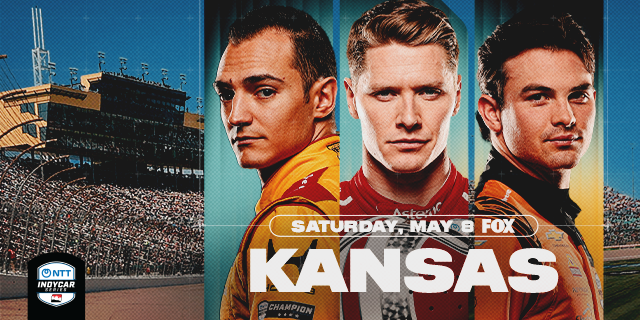
INDYCAR Announces Return to Kansas Speedway in 2027

NTT INDYCAR SERIES Joins NASCAR for Action-Packed Weekend of Racing, Massive May Kickoff in Partnership with FOX Sports

INDIANAPOLIS (Tuesday, Nov. 24, 2026) – INDYCAR has announced the addition of another prominent event to the 2027 NTT INDYCAR SERIES schedule and an exhilarating start to the Month of May, returning to the high-speed Kansas Speedway on Saturday, May 8 as part of another joint showcase weekend with NASCAR in partnership with FOX Sports.

This will be the first appearance by the NTT INDYCAR SERIES since 2010 at the action-packed 1.5-mile oval in Kansas City, Kansas. The weekend will feature the stars of North America’s premier open-wheel racing series alongside the NASCAR Cup Series and NASCAR FedEx Freight Truck Series, creating another can’t-miss weekend for motorsports fans.

“We cannot wait to bring the NTT INDYCAR SERIES back to Kansas Speedway and provide another incredible opportunity to showcase our sport alongside NASCAR through our partnership with FOX Sports,” INDYCAR President J. Douglas Boles said. “Kansas has a history of producing some of the most thrilling, wheel-to-wheel action in our sport, and we know how passionate race fans are about INDYCAR on ovals.

“As we continue to build on the tremendous momentum of the NTT INDYCAR SERIES, the opportunity to return to Kansas Speedway and add another high-speed oval to our schedule is exciting for our fans, drivers, teams and partners. It will be a spectacular way to kick off a busy and exciting Month of May.”

The INDYCAR SERIES competed annually at Kansas Speedway from 2001-10, with 1998 Indianapolis 500 winner Eddie Cheever Jr. capturing the inaugural victory. The May 8 event will mark the 11th INDYCAR SERIES race at the venue and the first at the track since Scott Dixon earned back-to-back victories with Chip Ganassi Racing April 26, 2009, and May 1, 2010.

Kansas Speedway has been the site of two of the 10 closest finishes in INDYCAR SERIES history, including in 2004 when reigning Indianapolis 500 winner Buddy Rice edged teammate Vitor Meira by just .0051 of a second. At the time, it was the second-closest finish in series history. A year later, reigning series champion Tony Kanaan defeated Indianapolis 500 winner Dan Wheldon by .012 of a second.

“This is an incredible win for race fans,” Kansas Speedway President Pat Warren said. “Adding the NTT INDYCAR SERIES to our May weekend provides a tremendous amount of excitement and value with three distinct disciplines on track the same day. The NTT INDYCAR SERIES has a rich racing history here at Kansas Speedway, so we know there will be action at every turn.”

The addition of Kansas Speedway provides a second joint partnership with NASCAR on an oval in 2027, following the highly anticipated return to Phoenix Raceway on Saturday, March 13. It also expands the 2027 NTT INDYCAR SERIES championship to 18 races for the second straight season. Following the weekend at Kansas Speedway, attention turns to Indianapolis Motor Speedway for the Sonsio Grand Prix on Saturday, May 15, leading into the 111th Running of the Indianapolis 500 presented by Gainbridge on Sunday, May 30.

The announcement follows an INDYCAR aerodynamic validation test at Kansas Speedway Friday, Nov. 20. Drivers Pato O’Ward of Arrow McLaren and Will Power of Andretti Global completed a combined 257 laps on the 1.5-mile oval. It was the first laps turned at Kansas Speedway by the INDYCAR SERIES since 2010 and the first for the current INDYCAR SERIES chassis.

“It was a really good experience,” said O’Ward, a 12-time NTT INDYCAR SERIES race winner and driver of the No. 5 Arrow McLaren Chevrolet. “We tested a lot of different aero packages, and we ended in a place where the car wasn’t really skating around and where we were in the window to make some balance changes and actually feel those changes. Overall, it reminded me of a mix between Texas Motor Speedway and Nashville (Superspeedway) – two great tracks for the INDYCAR SERIES. So, I think it will produce a really good race and a cool opportunity to have another superspeedway before the ‘500,’ which we haven’t had in a few years. It’s going to be a very busy May.”

Added Power, the two-time INDYCAR SERIES champion, 2018 Indianapolis 500 winner and driver of the No. 26 zone Premium Nicotine Pouches Honda: “It was really nice to get back on the track at Kansas Speedway. It’s a superspeedway that is known for some fantastic INDYCAR SERIES racing, and I believe it’ll also be a great way to ease into the Month of May. The test was a nice preview of what’s to come. I can’t wait to get back to Kansas and put on a great race.”

For the third consecutive season, all races will be broadcast on FOX. The NTT INDYCAR SERIES is once again the only premier motorsports series in North America with all races broadcast on network television.

Tune-in times for next season’s events will be announced in the coming weeks.

Indy 500 Open Test Update

To clear the way for the series’ return to Kansas Speedway, INDYCAR has announced an updated schedule for next year’s Indy 500 Open Test. The annual test, which provides additional track time for all teams ahead of “The Greatest Spectacle in Racing,” will be rescheduled from Tuesday-Wednesday, May 4-5 to Thursday-Friday, April 29-30. Day One of the Open Test will be reserved for rookies looking to complete the Rookie Orientation Program and for those drivers requiring a “refresher test.” Day Two of the test will be for all cars. Run times for both days will be announced at a later date.

UPDATED 2027 NTT INDYCAR SERIES SCHEDULE

DateVenueTelevision
Sunday, March 7Streets of St. PetersburgFOX
Saturday, March 13Phoenix RacewayFOX
Sunday, March 21Streets of ArlingtonFOX
Sunday, April 4Barber Motorsports ParkFOX
Sunday, April 18Streets of Long BeachFOX
Saturday, May 8Kansas SpeedwayFOX
Saturday, May 15Indianapolis Motor Speedway Road CourseFOX
Sunday, May 30The 111th Indianapolis 500FOX
Sunday, June 6Streets of DetroitFOX
Sunday, June 13World Wide Technology RacewayFOX
Sunday, June 27Road AmericaFOX
Sunday, July 4Mid-Ohio Sports Car CourseFOX
Sunday, July 18Circuit de Barcelona-CatalunyaFOX
Sunday, Aug. 1Portland International RacewayFOX
Sunday, Aug. 15Streets of MarkhamFOX
Saturday, Aug. 28Milwaukee Mile Race 1FOX
Sunday, Aug. 29Milwaukee Mile Race 2FOX
Sunday, Sept. 5WeatherTech Raceway Laguna SecaFOX

ARCA Menards Series East and West 2027 Schedules Announced; Eight Races for East, 13 for West

TEMPERANCE, Mich. – (November 24, 2026) – For the second consecutive year, the ARCA Menards Series East will feature eight races and the ARCA Menards Series West will compete in 13 races. The East slate will be evenly split, four races in combination with the ARCA Menards Series and four stand-alone races, and the West will race once with the ARCA Menards Series.

The ARCA Menards Series East will start its season at the historic Hickory Motor Speedway on March 27. From there, the series will head south for an inaugural event at Cleetus McFarland’s Freedom Factory in Bradenton, Florida on April 17.

The ARCA Menards Series West will compete in a robust slate of 13 races, with the opener returning to Phoenix Raceway on March 12. Phoenix is one of two tracks, along with Kevin Harvick’s Kern Raceway, that will host the series twice. The season finale will be at Kern for the second straight season on October 30.

“We’ve seen some real excitement around the ARCA Menards Series East the last couple of seasons,” said ARCA President Ron Drager. “Last year’s race at Hickory Motor Speedway had a big event feel to it with a near capacity crowd. We’re looking forward to recapturing that excitement in 2027 and following up with another big event at The Freedom Factory. The summer stretch looks pretty familiar but we’re going to close the East season at World Wide Technology Raceway just outside of St. Louis, which will be the biggest and fastest track the series has raced at in many years.

“We’re just as enthused with the momentum in the ARCA Menards Series West,” Drager continued. “The strong car count we’ve had the last couple of years has created some terrific racing and that’s translated into a lot of interest in a series that traces its history and legacy back to 1954. We’ve added a couple of key events at Stateline Speedway and Meridian Speedway in Idaho and will continue relationships with the majority of the tracks that have been on the schedule in recent years. The ARCA Menards Series West has been on a roll and we’re looking to carry that forward into 2027.”

The highlights:

  • The ARCA Menards Series East will open with back-to-back clashes on bullrings; for the second consecutive season it will open at Hickory Motor Speedway on March 27 and then for the first time ever will travel to Cleetus McFarland’s Freedom Factory on April 17.
  • The rest of the spring and summer schedule follows tradition, with return engagements at Nashville Fairgrounds Speedway on May 1, Toledo Speedway on May 15, and the annual visit to Iowa Speedway on July 2. A busy July wraps up with back-to-back Midwest visits at Flat Rock Speedway on July 17 and Lucas Oil Indianapolis Raceway Park on July 23.
  • The ARCA Menards East schedule will wrap up with a visit to World Wide Technology Raceway on August 20. It will be the series’ third visit to WWT Raceway and first since 2019.
  • The four ARCA Menards East combination races with the ARCA Menards Series will be at Toledo Speedway, Iowa Speedway, Lucas Oil Indianapolis Raceway Park, and the finale at WWT Raceway.
  • The ARCA Menards Series West will open at Phoenix Raceway in its only combination race with the ARCA Menards Series on March 12. The series will make a return visit to Phoenix with a stand-alone race on October 22; both races will be in conjunction with the NASCAR national series. Kevin Harvick’s Kern Raceway is the only other track to host two races, on April 10 and the finale on October 30.
  • Short tracks continue to make up the bulk of the schedule, with Shasta Speedway, Colorado National Speedway, Tri-City Raceway, All-American Speedway, Madera Speedway, and The Bullring at Las Vegas Motor Speedway all returning to the schedule.
  • The series will return to the state of Idaho for the first time since 2019 with the first-ever visit to Stateline Speedway in Post Falls on June 26 and a return to Meridian Speedway on September 11.
  • The West Series continues its long-standing tradition of road course racing when it makes its 48th appearance at Sonoma Raceway on Friday July 9.
  • Races at Phoenix Raceway, Sonoma Raceway, and The Bullring at Las Vegas Motor Speedway will be in conjunction with the NASCAR national series; the race at Phoenix in March will also feature the NTT Data IndyCar Series.
  • All four stand-alone races for the East and all 12 stand-alone races for the West will be streamed live on FloRacing; the combination races with the ARCA Menards Series for both series will be televised live on FOX Sports.

The complete 2027 ARCA Menards Series East schedule:

DateTrack, LocationTV
Sat., March 27Hickory Motor Speedway, Hickory, N.C.Flo
Sat, April 17The Freedom Factory, Bradenton, Fla.Flo
Sat. May 1Nashville Fairgrounds Speedway, Nashville, Tenn.Flo
Sat., May 15Toledo Speedway, Toledo, Oh.FS1
Fri., July 2Iowa Speedway, Newton IAFS1
Sat., July 17Flat Rock Speedway, Flat Rock, MIFlo
Fri., July 23Lucas Oil Indianapolis Raceway Park, Brownsburg, Ind.FS1
Fri., Aug. 20World Wide Technology Raceway, Madison, Ill.FS1

The complete 2027 ARCA Menards Series West schedule:

DateTrack, LocationTV
Fri., March 12Phoenix Raceway, Avondale, Ariz.FS1
Sat., April 10Kevin Harvick’s Kern Raceway, Bakersfield, Calif.Flo
Sat., May 1Shasta Speedway, Shasta, Calif.Flo
Sat., May 29Colorado National Speedway, Dacono, Colo.Flo
Sat., June 26Stateline Speedway, Post Falls, IdahoFlo
Friday, July 9Sonoma Raceway, Sonoma, Calif.Flo
Sat., Aug. 7Tri-City Raceway, West Richland, Wash.Flo
Sat., Aug. 28All American Speedway, Roseville, Calif.Flo
Sat. Sept. 11Meridian Speedway, Meridian, IdahoFlo
Sat., Sept. 25Madera Speedway, Madera, Calif.Flo
Fri., Oct. 8The Bullring at Las Vegas Motor SpeedwayFlo
Fri., Oct. 22Phoenix Raceway, Avondale, Ariz.Flo
Sat., Oct. 30Kevin Harvick’s Kern Raceway, Bakersfield, Calif.Flo

All dates are tentative and subject to change.

For further information please visit ARCARacing.com; for up-to-the-minute updates follow @ARCA_Racing on Twitter.

About ARCA

The Automobile Racing Club of America (ARCA), founded in 1953 by John and Mildred Marcum in Toledo, Ohio, and acquired by NASCAR in April 2018, is the leading grassroots stock car sanctioning body in the United States. Bridging the gap between NASCAR’s top three national touring series and weekly and regional tour racing all across the country, the organization sanctions races in the ARCA Menards Series, ARCA Menards Series East and ARCA Menards Series West, plus weekly racing at Toledo and Flat Rock Speedways. For more information about ARCA visit www.arcaracing.com, or follow ARCA on Facebook (@ARCARacing) and Twitter (@ARCA_Racing).

About Menards

A family-owned and run company started in 1958, Menards is recognized as the retail home center leader of the Midwest with 341 stores in 15 states. Menards is truly a one-stop shop for all of your home improvement needs featuring a full-service lumberyard and everything you need to plan a renovation or build a home, garage, cabin, shed, deck, fence or post frame building. You’ll find a large selection of lumber, roofing, siding, construction blocks, trusses, doors and windows, plus cabinets, appliances, countertops, flooring, lighting, paint, plumbing supplies and more. To complete the job, Menards has quality hand tools, power tools, fasteners, electrical tools plus storage options and supplies for everyone from the weekend warrior to the pro!

Menards has what you need to complete your outdoor projects and keep your yard in tip-top shape including mowers, trimmers, blowers, pressure washers and more, plus a beautiful garden center stocked with plants, shrubs, trees, landscaping tools, grass seed, fertilizer options, outdoor décor and patio furniture. Menards also has everyday essentials like health & beauty products, housewares, pet and wildlife supplies, automotive items and even groceries. And at Christmas, an Enchanted Forest display area with impressive trees, lighting, decorations, ornaments, inflatables and more.

Menards is known for friendly Customer Service and as the place to “Save Big Money” with low prices every day, and sales too! For more information, please visit Menards.com to learn about our store locations, offerings and services.

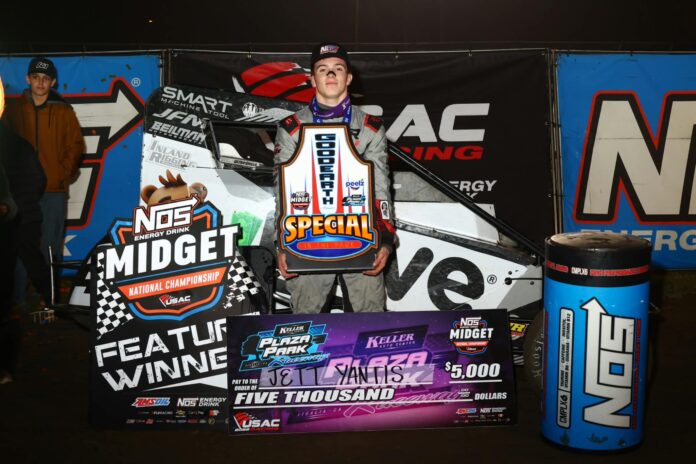
Jett Yantis Scores First Career USAC National Midget Victory at Plaza Park Raceway In Thriller Over Kevin Thomas Jr

Photo Courtsey of Rich Forman Photo

Part 2 of the USAC NOS Energy Drink National Midget Golden State Invasion of California was held tonight at Plaza Park Raceway in Visalia, California. This was the makeup date, as this race was originally scheduled last Wednesday night, but was postponed due to heavy rains impacting the California area.

The first night took place Saturday night at Merced Speedway and saw Michael Kofoid win the race with a late-race problem from Justin Grant. While Kofoid claimed the first night, he had some heavy hitters to deal with tonight, as recently crowned NASCAR Cup Series champion Kyle Larson was entered in the field along with O’Reilly Auto Parts Series regular Corey Day, who previously competed on Saturday night, finishing 19th. Larson’s most recent USAC National Midget race was last year at the season-ending race at Ventura Raceway, where he finished fourth after starting 14th.

With the USAC National Midget visiting Plaza Park for the first time ever in series history, many were looking to be the first to put their name on the trophy at the end of the night. It was only fitting that Jett Yantis was the first to put his name on the trophy following a caution-filled feature since he achieved his first-ever USAC National Midget victory over Kevin Thomas Jr. in what was a popular victory with the locals.

“I wouldn’t have wanted to win anywhere else other than Bakersfield (California, Yantis hometown), of course,” Yantis said in victory lane to Flo Racing. “That was amazing. KTJ (Kevin Thomas Jr.) kept me honest the whole time. That last corner, I got tight on the top, and I thought it was over, but we were able to muscle it to the win. Honestly, that car was so good all race, and I can’t thank my team enough. I want to thank all the fans, all the Plaza Park fans, you guys are amazing. I can see you guys flashing the lights before we go out, I think that’s pretty cool. It’s unreal.”

There were 26 midgets on the entry list for tonight’s race.

Feature Race Recap – 40-Laps – $5,000 To Win

TJ Smith started on pole position with Jett Yantis on the outside pole for the feature.

Before the green flag flew, Brecken Reese had stalled on the track due to his receiver radio not working properly. He was given his starting position back.

Smith led the first lap of the race before Yantis took the lead on the second lap off Turn 4 from Smith. The first yellow of the night flew shortly thereafter for Smith, as he was stopped up high in Turn 1. Prior to taking the lead, Yantis had a big moment with his car bouncing up the track a little bit in Turns 1 and 2.

Yantis led the field back to green once more with Grant behind him in the second position. Another yellow came out with 34 laps to go for two cars stuck together in Turns 3 and 4. The cars stuck together were Dane Culver and Broedy Graham.

The restart was short-lived after the previous yellow, however, as a car was seen on its side, bringing out the red flag. The driver was Jett Barnes, who was able to get out of his car safely after flipping off Turn 4.

Yantis had a great restart over Grant when the green flag was displayed again and got into a great rhythm. With 25 laps to go, Yantis began getting into lap traffic. Meanwhile, Cannon McIntosh took over the second position from Grant. McIntosh set his eyes on the leader and challenged for the lead a couple of times, but another caution was shown with 19 to go for the No. 94 of Hayden Wise, who was stopped in Turn 1.

A striking turn of events was seen with McIntosh, who brought out the caution flag with seven laps to go. McIntosh and Graham made contact with each other, and McIntosh was sent spinning around off Turn 2. Colton Robinson once again brought out the caution a lap later, and was turned backward on the backstretch.

The second red flag was brought out with four laps to go for Jakeb Boxell, who flipped in Turns 1 and 2. Similar to Barnes, Boxell was okay and out of the car.

Despite numerous yellow and red flags, Yantis held on to win his first career USAC National Midget victory over Thomas Jr. in a thriller at the checkered flag by 0.203 seconds. 

Heat Race Recaps – Top Six Transfer – 10 Laps A Piece

Prior to the heat races, there was a hot lap and two-lap qualifying session. Yantis was fastest with a time of 11.305 seconds during hot laps. Thomas Jr. set the quick time in qualifying with a time of 11.476 seconds.

Marvin Mitchell was the last to go out in qualifying, but unfortunately, was not able to put down a lap as his car was unable to fire after being given two chances by officials to do so.

Heat 1 – Kale Drake had pole for the first heat. Boxell, who started on the outside pole, took the lead at the start/finish line to lead the first lap over Drake. Boxell went on to win the heat with Drake, Wise, Thomas Jr, Day, and Graham rounding out the transfers.

Heat 2 – Gavin Miller started on pole for the second heat. McIntosh led the first lap after passing Miller off Turn 4 at the start/finish line, similar to what Boxell did to Drake in the first heat. However, a caution flew with four laps to go for the No. 50 of Culver, who was stopped in the middle of Turns 1 and 2. Replays later showed that Robinson piled his car in the turn and made contact with the left front tire of Culver after Robinson’s right-rear smashed into Culver’s car.

Going back to green, Yantis challenged McIntosh for the heat victory, but McIntosh held on for the heat victory. Yantis, Miller, Jack Andreotti, Reese, and Robinson were the transfers.

Heat 3 – Larson had pole for the third and final heat. At the drop of the green, Larson did not get a good start, which allowed Kofoid to grab the lead going into Turn 1. Kofoid won the heat race, with Daison Pursley, Smith, Larson, Grant, and Jade Avedisian as the final transfers from the heat races.

For those that may have missed the feature, you can watch the highlights below.

Official Race Results Following Plaza Park Raceway

  1. Jett Yantis
  2. Kevin Thomas Jr
  3. Justin Grant
  4. Kyle Larson
  5. Daison Pursley
  6. Corey Day
  7. Brecken Reese
  8. Jakeb Boxell
  9. Jacob Denney
  10. Kale Drake
  11. Michael Kofoid
  12. Jake Andreotti
  13. Dane Culver
  14. Colton Robinson
  15. Gavin Miller
  16. Mack Leopard
  17. Jade Avedisian
  18. TJ Smith
  19. Hayden Reinbold
  20. Hayden Wise
  21. Cannon McIntosh
  22. Logan Mitchell
  23. Bradley Cox
  24. Broedy Graham
  25. Jett Barnes

Up Next – Race 3 of the Golden State Invasion of California takes place Tuesday night at Bakersfield Speedway at Kern, live on Flo Racing.

How Strong 8K IPTV Streaming Is Transforming Live Sports in 2026

Photo by mahyar motebassem on Unsplash

Live sports broadcasting has always been the ultimate stress test for television and internet infrastructure. Unlike pre-recorded movies or on-demand series that can buffer several seconds ahead, live motorsports, football, basketball, and combat events demand real-time delivery, razor-sharp motion clarity, and zero-lag stability when millions of fans tune in at the exact same second. In 2026, rapid advances in ultra-high-definition codecs and distributed server networks have pushed internet-based sports viewing far beyond traditional cable and satellite broadcasts.

Why Live Sports Demand High-Bitrate 8K and 4K IPTV Architecture

Fast-paced sporting events expose every weakness in a streaming pipeline. When race cars accelerate down a straightaway at over 200 miles per hour or athletes sprint across a stadium pitch, low-bitrate streams suffer from motion blur, macro-blocking, and jarring frame drops. Traditional cable broadcasts often compress high-definition signals heavily to save bandwidth, stripping away fine track textures, crowd detail, and vibrant HDR lighting.

For sports enthusiasts and home theater fans looking to experience every split-second detail without broadcast delays, adopting a Strong 8k streaming setup delivers high-frame-rate 60fps smoothness, deeper color contrast, and ultra-low latency across large-screen smart TVs and dedicated media players. By pairing modern HEVC (H.265) and AV1 video compression with high-capacity edge servers, next-generation IPTV platforms maintain crisp visual fidelity throughout the most intense live broadcasts.

Core Engineering Behind Buffer-Free Race-Day and Match-Day Streams

Handling massive traffic spikes during major weekend sporting events requires specialized server engineering that goes far beyond standard web hosting. Five technical pillars keep live sports feeds stable from the starting grid or opening whistle to the final lap:

– Anti-Freeze Load Balancing Clusters: Automated traffic routing monitors server load and network throughput in real time, distributing viewers across redundant bare-metal nodes in milliseconds so sudden kickoff or race-start surges never cause buffering wheels.

– Low-Latency Tier-1 Backbone Peering: Direct peering with major Tier-1 internet transit providers across North America, Europe, and the UK cuts unnecessary routing hops, significantly reducing stream delay compared to conventional internet streams.

– High-Frame-Rate (60fps) Motion Processing: Live sports rely on smooth frame pacing rather than static resolution alone. Modern streaming pipelines preserve native 50fps and 60fps progressive frame rates, ensuring fast-moving balls, vehicles, and camera pans stay fluid without judder.

– Redundant Multi-Source Uplink Pipelines: Primary live broadcast feeds are backed by synchronized secondary sources. If an upstream satellite or fiber uplink encounters weather interference or a momentary signal drop, the system fails over cleanly without interrupting the viewer.

– Dynamic Adaptive Bitrate Optimization: Intelligent player protocols continuously adapt stream delivery to match each household’s real-time bandwidth, preventing sudden freezes or audio desynchronization if wireless traffic fluctuates mid-game.

Best Devices and Players for Live Sports Streaming in 2026

A high-performance IPTV backbone performs best when paired with capable living-room hardware and responsive media player software. Modern platforms support industry-standard M3U playlists and Xtream Codes API logins, giving fans full flexibility across devices:

– Android TV and Google TV Boxes: Dedicated streaming hardware such as the NVIDIA Shield TV Pro, Formuler Z11 Pro Max, and Google TV Streamer provides hardware-accelerated HEVC decoding, Gigabit Ethernet ports, and instant channel switching during multi-event weekends.

– Amazon Fire TV Stick and Fire Cube: Compact streaming sticks remain popular for secondary rooms and travel setups, running lightweight IPTV players smoothly when hardware acceleration is enabled.

– Large-Screen Smart TVs (Samsung Tizen & LG webOS): Native smart TV applications allow sports fans to stream directly on OLED and Mini-LED panels without external set-top boxes, preserving pure HDR10+ and Dolby Vision color accuracy.

– Multi-View and Catch-Up Media Players: Leading third-party players—including TiviMate, IPTV Smarters Pro, IBO Player, and Televizo—offer split-screen multi-view modes so fans can watch two live races or matches side by side, alongside full Electronic Program Guide (EPG) schedules and cloud catch-up replays.

– Apple TV 4K and Mobile Devices: High-efficiency iOS and tvOS players leverage Apple’s dedicated media engines to deliver silent, cool, and ultra-responsive live playback whether at home or on the go.

Optimizing Your Home Network Before Kickoff or Green Flag

Even the strongest server infrastructure relies on a clean connection between your router and your display. Many buffering issues that occur during peak weekend sports broadcasts stem from local wireless congestion rather than server limitations. Applying a few simple network adjustments guarantees peak race-day performance:

– Connect via Wired Cat6 Ethernet: Whenever possible, plug your primary smart TV or Android streaming box directly into the router using an Ethernet cable. A wired link eliminates packet loss caused by walls, neighboring networks, and Wi-Fi interference.

– Switch to 5GHz or Wi-Fi 6E Bands: For wireless setups, avoid crowded 2.4GHz channels and connect exclusively to a 5GHz or 6GHz Wi-Fi band capable of sustaining high-bitrate 4K and 8K video streams.

– Enable Hardware Video Decoding: Inside your IPTV player settings, make sure Hardware (HW) decoding is active so the device’s GPU handles video decompression smoothly without overheating during multi-hour broadcasts.

– Use Fast Public DNS Resolvers: Configuring Cloudflare (1.1.1.1) or Google DNS (8.8.8.8) on your router or streaming device accelerates server handshakes, playlist updates, and EPG loading times.

– Counter Peak-Hour ISP Throttling: Some internet service providers throttle high-bitrate video traffic during busy weekend evenings. Using a lightweight WireGuard-based VPN connection encrypts stream traffic and prevents automated bandwidth shaping without adding noticeable latency.

The Future of Ultra-HD Live Sports Viewing

As fiber-optic internet reaches more homes and 8K displays become the centerpiece of modern living rooms, internet-based television has firmly established itself as the premier way to watch live sports. For viewers comparing modern streaming solutions, choosing a reliable Strong iptv 8k platform ensures resilient edge servers, 60fps motion clarity, multi-screen player flexibility, and smart compression codecs—giving sports fans front-row visual precision and rock-solid reliability every time the action begins.

Mobile Mechanics: How the Shop Came to the Driveway

Photo by Angry._.Kat on Unsplash

Racing fans know the pit crew: a team that brings tools, parts and expertise to the car instead of the other way around. Everyday car owners have their own, slower version of that idea. Mobile mechanics now change brakes in office car parks, swap batteries in apartment lots and run diagnostics in driveways across the country.

The model started as a side hustle for experienced techs and has grown into a real segment of the repair market. Some mobile operators are one person with a well-stocked van. Others run fleets of ten or twenty vans under one brand. This article looks at how the model works and what separates the operators who thrive from those who burn out in a year.

Why customers like it

The pitch is simple. You don’t lose half a day sitting in a waiting room or arranging a ride back from the shop. The mechanic comes to you, does the job while you work and leaves.

For routine work this is a strong offer. Oil changes, brake pads and rotors, batteries, alternators, starters, spark plugs, sensors and pre-purchase inspections all fit in a van. Fleet customers like delivery companies and car rental branches value it even more, because a vehicle off the road costs them money every hour.

Mobile service doesn’t replace the shop. Transmission rebuilds, engine work and anything that needs a lift or alignment rack still belong in a building. Smart mobile operators know where that line sits and partner with a local shop for the jobs they can’t handle on the street.

The van is the shop

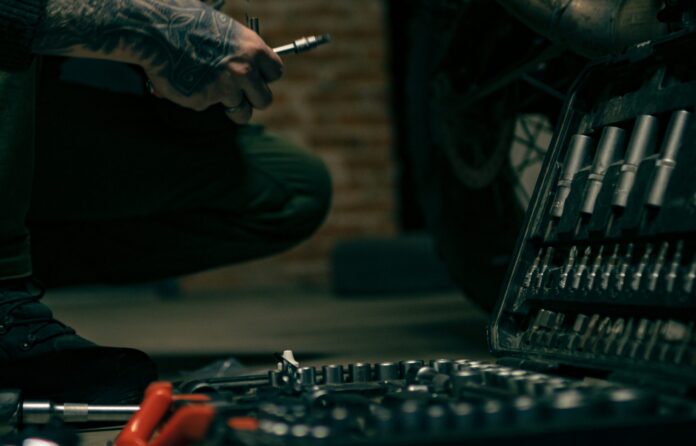
A mobile mechanic’s van has to hold most of what a bay holds, minus the lift. Typical builds include:

  • A compact air compressor or a strong set of cordless impact tools.
  • A professional scan tool with up-to-date software for the brands the operator services.
  • Floor jack, stands and wheel chocks rated for the heaviest vehicles on the menu.
  • Fluid storage and a clean way to collect used oil and coolant for disposal.
  • A parts stock tuned to local demand, such as common batteries, pads and filters.

Battery and diagnostic jobs drive a lot of first calls. Modern vehicles also need battery registration after replacement on many models, which means the scan tool matters as much as the wrench.

The real challenge is the schedule

Shop mechanics wait for cars to arrive. Mobile mechanics drive to them, and every minute on the road is a minute without billable work. A one-van operator who books jobs in the order customers call can easily spend three hours a day driving across the same city twice.

Operators who grow past a single van learn to group jobs by area and time. Morning in the business district for fleet and commuter cars, afternoon in the suburbs for residential customers. They leave buffer for the brake job that turns out to need calipers, and they keep a list of nearby flexible jobs to fill a gap when a customer cancels.

Parts logistics add another layer. If the van doesn’t carry the right pads for a particular model, the mechanic either drives to a supplier mid-day or books a return visit. Both cost time. Good operators confirm the vehicle details, ideally the VIN, at booking and check stock before the van leaves in the morning.

Software that grew up with the trade

Early mobile mechanics ran on a phone, a paper diary and a lot of text messages. Larger operations now use the same kind of field service platforms that HVAC and plumbing companies rely on. A dispatcher sees every van on a map, assigns jobs by location and skill and pushes the day’s list to each mechanic’s phone. Customers get a text when the mechanic is on the way. The mechanic records the work, attaches photos of worn parts and collects a signature on the spot.

Tools built for general field service, such as Planado, handle this well because the logic is the same: a person with a vehicle and a skill set needs to be at the right address at the right time with the right parts. The photos of old pads or a corroded battery terminal double as proof for the customer and as a record if a warranty question comes up later.

What it takes to make money

Mobile operators often charge a call-out fee or price their labor above a shop’s rate to cover drive time. Customers accept it when the service is reliable. They don’t when the mechanic arrives two hours late.

The numbers that tend to separate profitable operators from struggling ones:

  • Jobs per van per day, which depends almost entirely on routing.
  • Return visit rate, driven by parts availability and diagnostic accuracy.
  • Share of fleet and repeat customers, which smooths out seasonal swings.

Weather matters too. Working on a car in the rain or in deep cold is slow and unpleasant. Operators in harsh climates often add a covered workspace or partner with a shop for winter months.

A trend with room to run

Car owners have grown used to having everything delivered, and auto repair is following that path. The mobile model won’t replace the neighborhood shop, but it has carved out a solid place for routine and urgent work. For mechanics who want to run their own business without leasing a building, a well-equipped van and a disciplined schedule are a realistic starting point.

Wheel Alignment in UAE: Signs, Costs and When Your Car Needs It

A car that pulls to one side, wears through tyres unevenly or feels unsettled on a straight road may need attention to its wheel alignment. The problem is easy to overlook because a vehicle can remain drivable while its tires gradually wear out faster than expected. In the UAE, frequent curb contact, potholes, speed bumps and long highway journeys make it especially important to recognise the warning signs.

Wheel alignment should also be considered when evaluating a second-hand vehicle. Buyers browsing used cars may notice a car with an off-centre steering wheel or uneven tread across the front tyres. Those symptoms do not automatically mean the car has suffered a major accident, but they justify a closer inspection of its suspension, steering and alignment history before purchase.

Understanding wheel alignment helps drivers avoid unnecessary tyre replacements and misleading repair recommendations. This guide explains how alignment works, what it usually costs, when to book a check and how it differs from wheel balancing, with practical advice for UAE road conditions.

What Is Wheel Alignment?

Wheel alignment is the adjustment of a vehicle’s suspension geometry so that its wheels sit at the angles specified by the manufacturer. The technician measures the position of each wheel relative to the vehicle and the road, then adjusts the available suspension or steering components to bring the readings within the correct range.

Three angles are central to the process. Toe describes whether the wheels point slightly inward or outward when viewed from above. Camber is the inward or outward tilt of the wheel when viewed from the front. Caster relates to the steering axis and influences steering stability and self-centring. Not every vehicle permits adjustment of all three angles.

The aim is not to make every angle exactly zero. Manufacturers specify tolerances based on the suspension design, handling requirements and tyre characteristics. A competent workshop uses the correct specifications for the car’s model, year and configuration rather than applying one universal setting.

Signs Your Car May Need Wheel Alignment

One of the clearest signs is a vehicle that consistently drifts to one side on a reasonably level road. Before assuming misalignment, remember that road camber, uneven tyre pressures, braking faults and worn tyres can also create a pull. A workshop should rule out those possibilities rather than immediately adjusting the wheels.

An off-centre steering wheel is another warning sign. If the steering wheel must be held slightly left or right to keep the car travelling straight, the toe settings or steering geometry may need correction. The issue is especially noticeable after suspension repairs or a hard impact with a curb.

Uneven tyre wear deserves prompt attention. Excessive wear on the inner or outer shoulder can be associated with incorrect alignment, though underinflation, overinflation and worn suspension parts may produce different wear patterns. Feathered tread edges can be another clue. Once a tyre has worn unevenly, correcting the alignment will not restore the missing rubber.

What Causes Wheel Misalignment in the UAE?

Hitting a pothole or kerb can disturb the geometry or damage steering and suspension components. Repeated impacts may gradually contribute to a problem, while a single severe impact can produce an immediate change. Speed bumps taken too quickly also place additional stress on tyres, wheels and suspension.

Normal wear matters as well. Bushings, ball joints, tie rods and other components can develop play over time. When those parts are worn, an alignment adjustment may not hold or may be impossible to complete correctly until repairs are made.

Accident repairs, suspension modifications and replacement components can also change alignment. A vehicle with a lowered suspension, altered ride height or non-standard wheel and tyre setup may require particular care. Always tell the technician about modifications or recent repair work.

Wheel Alignment vs Wheel Balancing

Alignment and balancing solve different problems. Alignment concerns the direction and angles of the wheels. Balancing concerns how mass is distributed around the rotating tyre-and-wheel assembly. A balancing machine identifies uneven weight distribution, and the technician adds appropriate weights to reduce vibration.

If the steering wheel vibrates at a particular speed, wheel imbalance is one possible cause. A vehicle that pulls steadily to one side or shows unusual shoulder wear may have an alignment issue instead. Bent wheels, damaged tyres and worn suspension can mimic either symptom, so diagnosis matters.

A tyre shop may recommend both services after fitting new tyres, but they are not automatically required together in every situation. Ask what the inspection found and why each service is being proposed.

How Much Does Wheel Alignment Cost in the UAE?

Wheel alignment prices vary by emirate, workshop, vehicle type and whether the service covers only the front axle or all four wheels. A straightforward passenger-car alignment may cost roughly AED 80 to AED 200 at some independent workshops, while specialist work or complex suspension setups can cost more. Treat these figures as broad planning estimates, not confirmed current quotes.

A workshop may charge separately for an initial measurement, adjustment, wheel balancing or replacement of worn components. If a vehicle has seized adjustment bolts, bent suspension parts or non-adjustable geometry that falls outside specification, the repair bill can rise significantly.

Ask whether the quote includes a before-and-after alignment report and whether the technician will test-drive the car. A low advertised price is less useful if the workshop cannot explain the measurements or identify why the vehicle was pulling in the first place.

Front-Wheel Alignment or Four-Wheel Alignment?

Some vehicles permit adjustments mainly at the front axle, while others have adjustable rear suspension geometry as well. Even when the rear wheels cannot be adjusted, their measured position can influence how the front wheels should be set. This is one reason a four-wheel alignment measurement is often useful.

The correct service depends on the vehicle’s suspension design. A front-only adjustment may be sufficient for a particular car, but it should not be selected solely because it is cheaper. The technician should verify the rear thrust angle and overall geometry where appropriate.

For SUVs and vehicles that have been involved in an accident, a complete measurement can reveal problems that a basic steering adjustment would miss. Out-of-range readings may indicate damaged components rather than a simple need to turn an adjustment bolt.

How Often Should You Check Wheel Alignment?

There is no universal alignment interval that suits every vehicle. A sensible approach is to follow the manufacturer’s recommendations and arrange a check when symptoms appear, after a significant road impact, after relevant suspension or steering repairs, or when abnormal tyre wear is discovered.

Some drivers choose to have the geometry checked during periodic tyre inspections, particularly if they cover high annual mileage. That can be reasonable, but it does not mean every inspection must lead to a paid adjustment. If the readings are within specification and the car behaves normally, no correction may be necessary.

Checking tyre pressures and rotating tyres where the manufacturer permits can help reveal developing wear patterns. These habits complement alignment checks but do not replace them.

Does Wheel Alignment Improve Fuel Economy?

Incorrect toe settings can cause tyres to scrub against the road rather than rolling as intended. This increases rolling resistance and can contribute to unnecessary fuel use. The size of the effect depends on how far the alignment is out, the vehicle and driving conditions.

However, alignment should not be sold as a guaranteed way to achieve a specific fuel-saving percentage. Tyre pressure, speed, traffic, vehicle load and driving habits often have a larger day-to-day effect on consumption. The strongest reasons to correct poor alignment are tyre preservation, predictable handling and proper vehicle operation.

Can You Drive With Bad Wheel Alignment?

A mildly misaligned car may still move normally, but continuing to drive can accelerate tyre wear and make steering less predictable. If the vehicle suddenly pulls sharply, the steering feels loose, a wheel is visibly tilted or a tyre has developed severe damage, do not treat the problem as routine alignment maintenance.

Stop in a safe place and arrange professional assistance when handling feels unsafe. A broken steering or suspension component is a different and potentially serious problem that cannot be corrected with an alignment machine alone.

If the car simply shows gradual uneven tyre wear, book an inspection promptly. Delaying until the tyres need replacement can turn a relatively modest service into a much larger expense.

What Happens During a Professional Alignment Service?

A proper service begins with an inspection of tyre pressures, tyre condition and the steering and suspension system. The technician checks for obvious damage or looseness that could invalidate the measurements. Adjusting a vehicle with worn ball joints or tie rods is unlikely to provide a durable result.

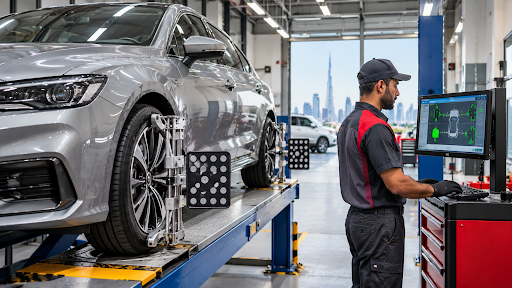
The car is then positioned on an alignment rack, and sensors or targets are attached to the wheels. The system measures geometry against manufacturer specifications. The technician makes the permitted adjustments and checks the final readings, ideally providing a printed or digital report.

A road test may follow to confirm that the steering wheel is centred and the car tracks correctly. If the readings cannot be brought into range, the workshop should explain whether additional diagnosis or component replacement is needed.

Wheel Alignment After Buying a Used Car

A used-car inspection should include tyre condition, steering feel and signs of suspension repairs. Uneven wear may point to alignment problems, but it can also reveal a more expensive underlying issue. Look for mismatched tyres, bent wheels, accident repairs and a steering wheel that sits crooked during a straight-line test.

Ask for service records and any recent alignment reports. If the seller says the car only needs a quick adjustment, have an independent workshop confirm that claim before agreeing to the price. Some damaged suspension components cannot be fixed by alignment alone You can also review comparable vehicle listings at https://licenseplate.ae to understand asking prices, although listings cannot confirm a particular car’s mechanical condition..

After purchase, address safety-related defects before spending on cosmetic upgrades. If the car needs new tyres, confirm that its steering and suspension are sound so the replacement set does not develop the same wear pattern.

How to Choose a Wheel Alignment Workshop

Choose a workshop that can measure your vehicle using the correct specifications and explain the results in plain language. Modern equipment is useful, but the technician’s ability to identify worn or damaged components is just as important as the machine.

Request a written estimate, ask whether the price covers four-wheel measurement and confirm whether repairs are charged separately. A before-and-after report provides evidence of what changed. Be cautious if a workshop promises that alignment will solve vibration, tyre noise and every steering complaint without inspecting the vehicle.

For premium vehicles, modified suspensions or unusual wheel setups, a specialist may be worth the additional cost. Correct geometry is more important than the lowest advertised service price.

Final Thoughts

Wheel alignment is a relatively simple maintenance service that can prevent costly tyre wear and help a car steer as intended. The most useful warning signs are persistent pulling, an off-centre steering wheel and unusual tyre wear, but each symptom deserves a proper diagnosis rather than an automatic adjustment.

For UAE drivers, the best approach is to inspect tyres regularly, avoid harsh impacts where possible and book a professional check when something changes. Ask for the actual measurements and repair any worn components first. Good alignment is about restoring the manufacturer’s geometry, not simply making the steering wheel look straight. For more on the mistakes that can shorten tyre life, see our guide to common tyre-damaging habits, including overlooked alignment problems.

Frequently Asked Questions

What is wheel alignment?

Wheel alignment is the measurement and adjustment of suspension and steering angles so the wheels meet the manufacturer’s geometry specifications.

How much does wheel alignment cost in Dubai?

Basic services at some independent workshops may be around AED 80 to AED 200, but prices vary by vehicle, workshop and the work required. Confirm a current quote before booking.

How do I know if my car needs wheel alignment?

Common signs include pulling to one side, an off-centre steering wheel and uneven tyre wear. Other faults can produce similar symptoms, so have the vehicle inspected.

Is wheel alignment the same as wheel balancing?

No. Alignment corrects wheel geometry, while balancing corrects uneven weight distribution in a rotating wheel-and-tyre assembly.

Should I get wheel alignment after replacing tyres?

It is worth checking alignment if the old tyres wore unevenly or the car shows handling symptoms. Replacing tyres alone does not automatically mean adjustment is required.

How long does wheel alignment take?

A straightforward check and adjustment may take around 30 to 60 minutes, but inspection, seized components or necessary repairs can extend the visit.

Can poor wheel alignment damage tyres?

Yes. Incorrect wheel angles can cause excessive scrubbing and uneven tread wear, shortening tyre life.

Onboarding Guides and Employee Handbooks That New Hires Actually Read

Photo by depositphotos at https://depositphotos.com/

The employee handbook is the one document every company owns and almost nobody finishes. New hires receive it on their first day, scroll through the table of contents, sign the acknowledgment page and never open it again. Three months later, they ask a colleague how many vacation days they have, because finding the answer in the handbook would take longer than asking.

The cost of that habit is real. Questions pile up in chat, managers answer the same five things every month, and policies that matter, such as expense rules or security practices, get learned by accident. Many companies now reach for AI drafting to rewrite these documents, and the results are mixed in a predictable way.

Why Handbooks Go Unread

Handbooks fail for reasons that have little to do with length. They are usually assembled by several departments, each writing in its own register. The legal sections sound like contracts, the benefits section sounds like a brochure, and the culture section sounds like a recruiting page. A reader moving through them feels the shifts and loses the thread.

They also answer questions in the order an organization thinks about them, not the order a new hire has them. A person in week one wants to know where to log in, who to ask and when they are paid. The handbook opens with a mission statement and a history of the company.

What New Hires Need First

A useful exercise is to sort every topic by when a reader first needs it. The result usually reshapes the whole document.

  • Day one: access, equipment, working hours, who to contact for what.
  • Week one: pay schedule, time off requests, expense basics, meeting norms.
  • Month one: benefits enrollment, performance reviews, learning budgets.
  • As needed: leave policies, conduct procedures, travel rules, offboarding.

Putting the first two groups at the front and the rest in a searchable reference section gives new hires something they can actually use. The handbook stops being a ritual document and becomes a working one.

How AI Drafting Changes the Work

Drafting tools have made it easy to rewrite a tired handbook in an afternoon. The tools help in some places and cause harm in others, and the difference is worth knowing before anyone starts.

Where it helps

A model is good at turning dense policy text into plainer sentences, producing a first outline from a pile of existing documents and suggesting clearer headings. It is also patient with repetitive work, such as rewriting thirty near-identical policy summaries in a consistent format.

Where it flattens

The same tool tends to produce warm, generic language that could belong to any company. A culture section drafted this way says the team is passionate, collaborative and committed to excellence, and gives a new hire nothing to hold on to. Real culture appears in specifics: how decisions get made, what happens when someone makes a mistake, how often the leadership team answers questions in public.

Policy Language Versus Plain Language

Many policies are written in a way that protects the company and confuses the employee. Plain rewriting does not change the rule. It changes how quickly a reader can follow it.

Before

“Employees are required to submit all reimbursable expenditures within a reasonable timeframe following the incurrence of such expenses.”

After

“Submit expense reports within 30 days of the purchase. Reports sent later may not be reimbursed.”

The second version states the number, the action and the consequence. A drafting tool can produce this kind of rewrite quickly, but only if someone gives it the actual rule. Left to guess, it will write “a reasonable timeframe” again, because that phrase is the statistical average of expense policies.

One Voice Across HR, IT and Legal

A handbook assembled from contributions by three departments will read like three documents unless someone edits it as one. A short style note covers most of the work: how the company refers to employees, whether the text speaks in the second person, how dates and amounts are written, and which terms are used for the same concept every time.

Reading the whole document aloud in one sitting exposes the joins. The place where a friendly paragraph gives way to stiff legal phrasing is usually obvious, and the editor can decide whether to smooth it or mark it as intentionally formal.

A Refinement Round for Long Documents

Documents of this size tend to carry the rhythm of automated drafting even after careful editing: sentences of similar length, repeated connectors and a uniformly polite tone. Over fifty pages, that sameness is tiring.

Some HR teams therefore run the finished text through a tool built to Humanize AI Text, working section by section so that the results are easy to compare. Phrasly AI Humanizer is one option, with three modes on a free account and paid plans that accept up to 5,000 words per request. Easy suits policy sections, since it adjusts phrasing and leaves the structure alone, and Medium can work for the more narrative parts such as the welcome and culture chapters.

A refined policy still needs to say exactly what it said before. Any change to a number, a date or an obligation should be treated as an error, and the editor should check each section against the source version.

Checking Accuracy With the People Who Own Each Policy

An editor can improve a handbook’s wording without knowing whether the content is right. Every section should go to the person responsible for it, whether that is the finance lead for expenses, the security team for device rules or the benefits administrator for enrollment dates. A short review request that names the specific lines to confirm is faster to answer than a request to read the whole chapter.

This step matters more when AI drafting is involved, because a model can state an outdated rule in perfectly confident language. A fluent sentence is not evidence that the policy is current.

Making the Handbook Findable

A handbook people can search is a handbook people use. Headings should name the question being answered, such as “How to request time off” instead of “Leave Management Overview.” Each section should open with the answer, followed by exceptions and details.

Linking sections to each other helps as well. A page about expenses can point to the travel policy, and the travel policy can point to the approval process. Readers who land in the middle of the document from a search engine or a chat link should be able to orient themselves in a few seconds.

Updating Without Drifting

Handbooks decay. A policy changes, an old page stays online and two versions contradict each other. The remedy is ownership and a calendar: each section has a named owner and a review date, and changes are recorded in a short log at the top of the document.

When AI tools are used for updates, the safest approach is to give the model only the changed section, review the result against the new rule and leave the rest untouched. Regenerating an entire handbook to change one paragraph invites small, unnoticed alterations elsewhere.

Conclusion

A handbook succeeds when a new hire can find an answer in under a minute and trust it. That takes a sensible order, plain sentences, one consistent voice and a named owner for every rule. AI drafting can speed up the rewriting, and a refinement round can ease the stiffness of machine phrasing, but the accuracy and the choices about what to include remain human work. Companies that treat the handbook as a working tool, and maintain it that way, spend fewer hours answering the same questions.

How Professional Support Can Help With Grief and Bereavement

Photo by depositphotos at https://depositphotos.com/

Bereavement is one of life’s most difficult experiences. Losing someone important can affect emotional wellbeing, relationships, everyday routines and a person’s sense of stability.

Grief is a natural response to loss, but the experience varies considerably between individuals.

Some people feel overwhelming sadness, while others experience anger, guilt, confusion or emotional numbness.

For individuals considering bereavement counselling in Worcester, professional support may provide a confidential environment in which to explore difficult emotions and adjust to life following a loss.

Counselling does not aim to remove grief or encourage people to forget someone they have lost.

Instead, it can help individuals understand their experiences and develop ways of living alongside their loss.

Why Everyone Experiences Grief Differently

There is no single correct way to grieve.

Emotional responses can be influenced by the relationship with the person who died, the circumstances of the death and previous experiences of loss.

Some individuals experience intense emotions immediately, while others feel relatively numb during the early stages.

Grief may also change over time.

Someone who initially feels able to manage everyday responsibilities may experience stronger emotions several weeks or months later.

Anniversaries, birthdays and familiar places can trigger memories and renewed sadness.

These experiences are not necessarily signs that someone is coping poorly.

Understanding that grief is highly individual can help reduce unrealistic expectations about recovery.

Common Emotional Responses to Bereavement

Grief can involve many different emotions.

Sadness is common, but individuals may also experience anger, guilt, anxiety or loneliness.

Some people repeatedly think about conversations they wish they had shared or decisions they might have made differently.

Others struggle with changes to their identity or everyday routines.

The loss of a partner, for example, may affect practical responsibilities as well as emotional companionship.

Bereavement can also influence sleep, appetite and concentration.

When emotional difficulties become persistent or significantly interfere with everyday functioning, professional assessment may be appropriate.

How Bereavement Counselling Works

Bereavement counselling provides an opportunity to discuss experiences of loss with a trained professional.

A counsellor may encourage individuals to explore memories, emotions and changes in their circumstances.

There is generally no expectation that grief must follow a particular timetable.

Some people find it helpful to discuss unresolved feelings or complicated relationships with the person who died.

Others benefit from exploring practical challenges, such as adjusting to living alone or managing changed family responsibilities.

Counselling may also help individuals recognise sources of support and develop healthier ways of responding to difficult emotions.

Coping With Sudden or Unexpected Loss

Sudden bereavement can be particularly distressing.

When someone dies unexpectedly, family members may struggle to understand what happened or feel overwhelmed by unanswered questions.

Shock, disbelief and anxiety can accompany grief.

Some individuals repeatedly revisit the circumstances surrounding the death.

Others experience difficulty accepting the sudden change in their lives.

Professional support may help people explore these reactions.

Where a loss involves traumatic circumstances, specialist trauma-informed support may also be appropriate.

Supporting Yourself During Bereavement

Grieving individuals may benefit from maintaining basic routines where possible.

Regular meals, adequate rest and opportunities for gentle physical activity can support general wellbeing.

Staying connected with trusted friends or relatives may also reduce feelings of isolation.

However, social needs vary.

Some people find comfort in talking openly about their loss, while others prefer periods of privacy.

It is important to avoid placing unrealistic expectations on emotional recovery.

Allowing space for grief while gradually adapting to changing circumstances can be part of the process.

When Should Someone Consider Counselling?

There is no fixed point at which bereavement counselling becomes necessary.

Some individuals seek support shortly after a loss, while others consider counselling months or years later.

Professional guidance may be particularly helpful when grief feels overwhelming, relationships become strained or everyday responsibilities are difficult to manage.

Counselling can also benefit people who feel unable to discuss their experiences with family members.

Finding Bereavement Counselling in Worcester

When exploring counselling services in Worcester, individuals should consider professional qualifications and experience supporting grief and loss.

It may be helpful to ask about the therapeutic approach and how sessions are structured.

Confidentiality and professional boundaries should be explained clearly.

Feeling comfortable with the counsellor is particularly important when discussing sensitive memories and emotions.

Moving Forward While Remembering

Grief does not necessarily disappear with time, but its influence on everyday life may change.

Professional counselling can provide opportunities to understand difficult emotions, preserve meaningful memories and adapt to new circumstances.

For individuals experiencing bereavement in Worcester, appropriate emotional support may help them navigate loss with greater understanding and compassion.

How Data Analytics Is Transforming Race Team Decisions in Modern Motorsports

As every fraction of a second counts in motorsports, teams increasingly rely on data analytics to inform strategy and gain an edge. Analytics is no longer just a behind-the-scenes support, it is a core factor in every race weekend.

On the grid and in the pits, the difference between victory and disappointment can come down to the slimmest of margins. At the highest levels of racing, teams seek every available advantage, with technology now reshaping how decisions are made. The widespread growth of data-driven approaches has changed not only engineering and car setup, but also how information is distributed to different audiences across the industry. Coverage of niche topics, including regulatory and analytical developments, can be found on sites such as https://betanews.com/us/new-york-online-casinos/.

Understanding data analytics within race teams

For modern motorsports teams, data analytics goes far beyond basic lap time tracking. The data comes from a range of sources: high-frequency car telemetry, detailed tire sensor readings, lap-by-lap timing and scoring, in-car video, radio communications, and even real-time weather feeds. Teams rely on complex software to collect, process, and analyze this flow of information both during and after sessions.

The key distinction is between real-time analytics, used for immediate adjustments and tactical calls during races, and post-session analysis, which informs future setup direction and driver development. Both functions demand precision, but their impact is felt at different moments of the race weekend.

Simulation tools and predictive models in strategic decisions

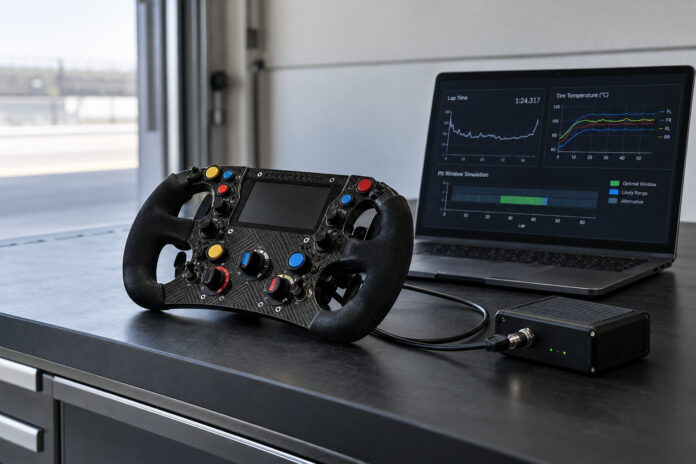
One of the most significant advances lies in simulation. Modern teams build race models that predict outcomes for variables such as pit windows, probable caution periods, track position sacrifices, and fuel strategy. These tools allow teams to test many scenarios before making a single move on track, weighing the risks and benefits of each option.

Rather than relying solely on intuition, crew chiefs and strategists use probability-based forecasts to guide real-time calls. For instance, a team can quickly model the impact of pitting for fresh tires versus staying out, factoring in current track position, likely traffic, and projected caution period lengths.

Translating data into setup and performance gains

Practice sessions generate massive datasets, but the real skill is translating that information into car setup changes. Teams monitor how variables such as tire temperatures, brake performance, and aerodynamics evolve as the track surface changes throughout the weekend. Through adaptive analytics, engineers can adjust key parameters to find optimal performance as conditions shift.

This cycle of data collection and immediate feedback allows teams to adapt to evolving grip levels, which is critical on tracks where weather or rubber build-up significantly alters handling.

Driver development and style refinement

Data analytics is not just a tool for engineers. It also shapes how drivers approach their craft. By overlaying brake traces, throttle application, and corner entry and exit patterns, drivers gain a clear comparison between their own laps, those of teammates, and sometimes benchmarking data from top competitors when publicly available or provided by the series. This helps identify areas where a few tenths of a second can be gained or lost each lap.

Coaching staff and drivers work together to translate abstract numbers into actionable adjustments, whether that means refining steering input, modifying braking zones, or smoothing throttle transitions.

Making choices under pressure: race strategy and risk

Some of the most complex decisions on the pit box are made with limited time and incomplete information. When faced with choices like two tires versus four, short-pitting to undercut rivals, or stretching a fuel run, data models help teams quantify the risks. These tools enable strategists to assign probabilities and outcomes to each option, supporting decision making when a wrong move can mean losing multiple positions or dropping off the lead lap entirely.

Live analytics provide the structure for high-speed calculations. However, the pressure of green-flag stops and mid-race cautions ensures that human judgment remains essential in motorsports.

Technology, resources, and competitive balance

The rise of data analytics has created new specialist roles within race teams. Data engineers and analysts often work in coordinated war rooms away from the track, supporting the pit box with advanced visualizations and scenario testing. The budget required to operate these systems can create a widening gap between well-funded teams and smaller outfits, raising questions about competitive balance and access to leading-edge tools.

Future directions and the role of human judgment

As technology moves forward, more automated insights and richer live data visualizations are likely for teams, broadcasters, and fans. Machine learning technologies could enhance setup recommendations or pit strategies, but these developments are likely to supplement rather than replace existing processes. Even with these advancements, motorsports continues to require human input, balancing data with experience, intuition, and the ability to adapt when something truly unpredictable happens on track.

Data analytics has transformed motorsports by sharpening strategies and optimizing performance at every level. Yet the sport’s unique excitement remains rooted in unpredictability, where data can guide, but never fully script, the drama and decisions that unfold across every lap.