
Home Blog Page 70

Right of Way Regulations for U Turns in Busy Urban Intersections

Photo by depositphotos at https://depositphotos.com/

Attempting to reverse direction on a crowded city street is one of the most unpredictable maneuvers a motorist can perform. It requires a driver to monitor multiple lanes of moving traffic simultaneously while judging the distance of oncoming vehicles in the distance ahead.

Most city layouts are not designed to accommodate wide turning radii without disrupting the natural flow of transportation. When a driver decides to spin their vehicle around, they are essentially cutting across the paths of everyone else on the road today safely.

Staying safe during these maneuvers depends on a complete knowledge of the specific rules governing regional intersections. Following Las Vegas U-turn accident laws is the only way to ensure that a quick turn does not lead to a lifetime of legal and physical consequences for drivers.

Defining Lawful Movements Under Nevada Statutes

State law provides clear guidelines on where a driver can and cannot legally perform a turn to head the opposite way. These maneuvers are permitted as long as they can be completed safely and do not interfere with other traffic flow within the immediate vicinity.

Visibility is the primary factor that determines the legality of a turn in any given situation. A driver must have a clear view of the road for several hundred feet in both directions before attempting to rotate their entire vehicle safely without causing others to brake.

Signage also plays a vital role in regulating these movements at major intersections. Many busy crossings feature permanent markers that explicitly ban turning around to maintain the efficiency of light cycles. Ignoring these signs is a form of negligence in any investigation that takes place.

Prioritizing Oncoming Traffic and Pedestrian Safety

The driver attempting to change direction carries the primary burden of ensuring the path is entirely clear. This means they must yield the right of way to every other vehicle approaching from the opposite side of the street during the entirety of the maneuver.

Pedestrians using crosswalks also have absolute priority during these scenarios. A driver must wait until every person has reached the safety of the curb before initiating their turn. Failing to account for someone walking leads to tragic results that are avoidable with a bit of patience.

Waiting for a large enough gap in the flow of cars is the only way to perform the maneuver responsibly. Many people make the mistake of trying to rush through a tight opening. This aggressive behavior is a frequent cause of vehicle pileups at the busiest intersections.

Navigating Right on Red and Turning Conflicts

A common point of contention occurs when one driver is making a right turn on a red light while another is performing a turn on a green arrow. Both individuals often believe they have the right of way, leading to an impact in the crossing.

The driver making the reversal generally has the legal priority over someone turning right on a red light. This is because a green signal provides a protected window for movement. The person turning right is still required to stop and yield first before they move.

Miscommunication between these two parties is a recipe for disaster. If neither driver is looking at the other, a crash becomes inevitable. Both motorists should remain cautious and assume that the other person might not see them while they are moving through the busy zone.

Proving Fault Through Technical and Visual Data

Determining who caused a crash during a disputed turn often requires a detailed look at the physical evidence left at the scene. The point of impact on the vehicles provides a wealth of information about the speed and angle of collision between the two cars.

Traffic camera footage is another invaluable tool for resolving these disagreements. Most modern intersections are equipped with sensors that record the timing of the signals and the movements of every car. Seeing the event as it happened removes all the guesswork from the reporting.

Skid marks and debris patterns on the pavement also tell a story about how each driver reacted. If a car shows no signs of braking, it suggests they were distracted. Combining different data points creates a comprehensive picture of the event occurring on the public road.

Final Reflections on Accountability and Damages

Recovering damages after a collision involving a turn around maneuver is often a complex and hard fought process. Insurance companies frequently try to shift the blame to avoid paying out high value claims. Having a solid foundation of evidence is the only way to win.

The legal nuances of these cases require a careful attention to detail and a deep knowledge of regional traffic laws. Every intersection has its own specific risks that must be considered. A thorough review ensures that the truth is revealed to everyone involved in the crash.

Achieving a successful resolution provides the financial support needed for a full recovery. Accountability on the road makes the entire community a safer place for everyone. Navigating these hurdles with professional guidance leads to a much clearer path forward for the injured parties in the city.
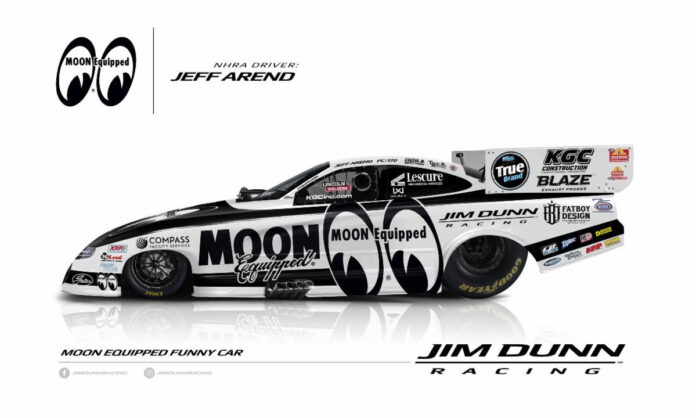
Jim Dunn Racing – Chicago Advance for the Route 66 NHRA Nationals

Jeff Arend
Mooneyes Funny Car Driver for Jim Dunn Racing
Gerber Collision & Glass Route 66 NHRA Nationals presented by PEAK
May 14-17 | Joliet, Illinois

Event Overview
Friday, May 15 (Nitro Qualifying, streamed live on NHRA.TV)

Nitro qualifying session (Q1): 2:30 p.m. CDT/3:30 p.m. EDT
Nitro qualifying session (Q2): 5 p.m. CDT/6 p.m. EDT

Saturday, May 16 (Nitro Qualifying & Mission #2Fast2Tasty Challenge, streamed live on NHRA.TV)

Nitro qualifying session (Q3) / Mission #2Fast2Tasty Challenge – Semifinals: 12 p.m. CDT/1 p.m. EDT
Nitro qualifying session (Q4) / Mission #2Fast2Tasty Challenge – Finals: 2:30 p.m. CDT/3:30 p.m. EDT

Sunday, May 17 (Nitro Eliminations, streamed live on NHRA.TV)

Round 1: 11 a.m. CDT/12 p.m. EDT
Round 2: 1:30 p.m. CDT/2:30 p.m. EDT
Semifinals: 3:15 p.m. CDT/4:15 p.m. EDT
Finals: 4:40 p.m. CDT/5:40 p.m. EDT

TV coverage on FS1

Friday, May 15: Qualifying show (6:30 p.m. CDT/7:30 p.m. EDT)
Saturday, May 16: Qualifying show (10:30 p.m. CDT/11:30 p.m. EDT)
Sunday, May 17: Finals show (4 p.m. CDT/5 p.m. EDT)

Notes of Interest

The Gerber Collision & Glass Route 66 NHRA Nationals presented by PEAK is the sixth event on the NHRA Mission Foods Drag Racing Series’ 20-race calendar in 2026. Jim Dunn Racing brings its one full-time entry in Funny Car for Jeff Arend. A native of Canada, Arend moved to Southern California in 1997.

As the NHRA celebrates its landmark 75h season in 2026, Jim Dunn Racing is celebrating 76 years of success in drag racing. Jim started drag racing when he was 15 years old and at 91 years old, he plans to keep going as long as he can. In 2024, Jim received the NHRA Lifetime Achievement Award. He has won some of the sport’s most significant races and has provided driving opportunities for some of the biggest names in the sport.

Coming into Chicago, Arend is 16th in the Funny Car standings, 338 points behind leader J.R. Todd.

Mooneyes is the primary partner of Arend this weekend in Chicago. Mooneyes products and logos are an indelible part of hot rod nostalgia, easily recognizable to gearheads and novices alike. They take pride in producing high-quality products that look great and get the job done right. Mooneyes produces Moon Fuel Blocks, Moon Tanks, Moon Discs, and Moon Valve Covers among other original parts right on site in their machine shop. They also supply various parts and accessories for hot rods and kustoms as well as an expanding like of custom motorcycle products. Located in the same place since it all started back in the 1950s, Mooneyes is located in Santa Fe Springs, California.

Arend piloted the Jim Dunn Racing Funny Car at the NHRA’s two previous events, the 4-Wide Nationals in Charlotte and the NHRA Southern Nationals in Valdosta, Georgia. He also stepped in for a portion of the weekend at the Lucas Oil NHRA Winternationals in Pomona, California. Prior to that, Arend last drove for Jim Dunn Racing in the 2013 and 2014 seasons and he has raced only sporadically in the NHRA Mission Foods Drag Racing Series. In his Funny Car career, Arend has four wins and five runner-up finishes to his credit. His last win came in July, 2012, when he beat Courtney Force in the final of the Route 66 Nationals at Chicago. He also has started twice from the No. 1 qualifying position.

The Route 66 Nationals will mark Arend’s 255th career Funny Car appearance, and his third Funny Car appearance on behalf of Jim Dunn Racing at Route 66 Raceway. His two previous appearances for the team came in 2013 and 2014.

Although Jim Dunn Racing has not advanced beyond the semifinals in 30 overall appearances at Route 66 Raceway, driver Jeff Arend has a winning record at the track (10-9) with a runner-up finish in 2011 (losing to Mike Neff in the final) and a win in 2012 (over Courtney Force).
Jeff Arend, Driver of the Jim Dunn Racing Mooneyes Funny Car
You’re returning to the track where you earned your last Funny Car win in 2012. What confidence does that give you, combined with the strong runs you and Jim Dunn Racing have accomplished in the two previous events?

“I can’t wait for Chicago. Route 66 Raceway is one of my favorite tracks! Considering we have gone down the track every run but one, Big Jim (Dunn) and I have a few ideas on how to up our performance. We were really happy with our 4.035-second Q1 run at South Georgia Motorsports Park on a tricky lane that most teams struggled with. We’re hoping to get in the three-second range at Route 66. I’m looking forward to running the Mooneyes colors. That scheme is always one of my favorites.”

INDYCAR and INDYCAR Officiating Announce Operating Update Following IMS Road Course Race Review

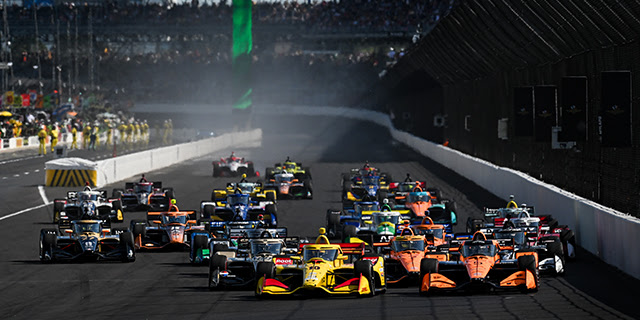
INDIANAPOLIS (Tuesday, May 12, 2026) – INDYCAR and INDYCAR Officiating have announced an operating practice and process update following a review of the on-track incident involving car No. 20 during the Saturday, May 9 race on the Indianapolis Motor Speedway road course.

On Lap 21, car No. 20 lost power and stopped on the front straightaway on drivers’ right of the track – off the racing line. Course marshals followed standard flagging protocol and deployed a standing yellow condition at Marshal Panel 14, with a corresponding waving yellow condition at Marshal Panel S/F (start-finish) to alert competitors to the stationary car. The escalation to a full course yellow (FCY) was made on Lap 22 as the driver began to exit the race car.

Following race control practice, the assessment of whether and when to escalate a local yellow to a FCY included the weighing of the following standard factors: driver egress, vehicle position, recovery vehicle access, safety team locations, laps remaining and the timing of approaching traffic to the incident. Additional factors on timing of a FCY also included pit windows and the running order of cars on track.

Effective immediately, INDYCAR Officiating will no longer take into consideration pit windows and the running order of cars on track before deploying a FCY. While there is no change to local yellow procedures, initiation of a FCY will be based primarily on: driver status, vehicle position and condition, the location and readiness of safety personnel, recovery access, and the speed differential between affected cars and approaching traffic.

“The Lap 21 incident on Saturday made clear that there needs to be a cleaner standard for how race control moves from a local to a full course yellow,” INDYCAR Officiating’s Independent Officiating Board chair Raj Nair said. “INDYCAR Officiating, with INDYCAR’s full support, has made this change of approach to ensure that the only inputs to the full course yellow escalation are safety ones. Streamlining the assessment will also save time as competitive considerations are no longer a factor.”

Added INDYCAR President J. Douglas Boles: “The most important job in race control is to ensure the safety of our drivers, crews, safety workers and fans. Saturday highlighted that we must not waver from that central mission and aligning everyone on that philosophy was critical to discuss over the last 48 hours. The Independent Officiating Board, the new managing director of officiating, race director and INDYCAR are all in agreement and the metrics used to determine when to initiate a full course yellow will now ensure that when there is any risk to driver safety that race control will initiate a full course yellow.”

The race result from Saturday’s race on the IMS road course stands as posted. The updated flag escalation standard has been communicated to teams and drivers.

The next NTT INDYCAR SERIES race is the 110th Running of the Indianapolis 500 presented by Gainbridge Sunday, May 24. Coverage begins at 10 a.m. on FOX, FOX Deportes and FOX One. Audio coverage is available via INDYCAR Radio powered by OnlyBulls on SiriusXM channel 218 and the INDYCAR App powered by NTT DATA.

KENNINGTON READY FOR CASTROL SPEEDFEST AT CTMP

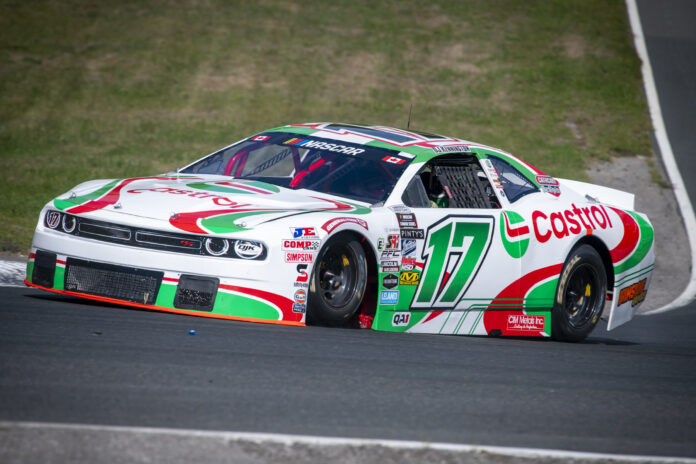
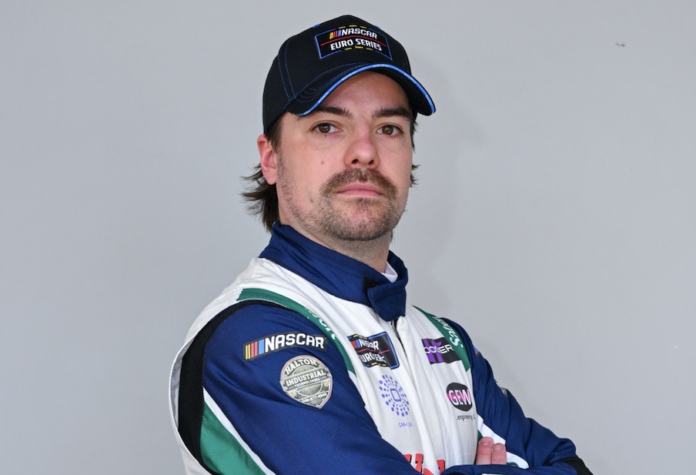
May 12, 2025. DJ Kennington and the #17 Castrol Dodge team are ready to begin another championship pursuit as the 2026 NASCAR Canada Series opens this weekend with the CarGurus 200 at Canadian Tire Motorsport Park, the headline event of the Castrol Victoria Day SpeedFest.

pion enters the new season with momentum after finishing runner-up in the championship standings a year ago. Now, Kennington has his sights firmly set on capturing a third national title.

Returning once again with longtime partner Castrol aboard the iconic #17 Dodge, Kennington and the DJK Racing team spent the off-season preparing a brand-new road course car for another demanding campaign.

“We’re excited to get the season started,” said Kennington. “The Castrol Speedfest is an incredible weekend with huge crowds and the perfect kick off for the new year. Last season showed we still have what it takes to battle for wins and championships, and everyone on this team is motivated to take that next step and bring home another title.”

The Castrol Victoria Day SpeedFest remains one of the premier motorsport weekends in Canada and provides a fitting stage for the season opener. Fans can expect plenty of action as the NASCAR Canada Series launches another exciting year of racing.

Practice and qualifying for the CarGurus 200 take place Saturday, with the feature race scheduled for Sunday at Canadian Tire Motorsport Park.

Here’s what you need to know.

CarGurus 200 Event Preview
Sunday May 17th Green Flag 2PM ET
The Track: 2.459-mile, ten turn road course (51-laps)
Race one of 14 in 2026

DJ Stat Nuggets
Winner at CTMP in 2011.
Top Finished top five in 14 of 30 races, top ten in 27 of 30 races at CTMP.
Finished in the top ten in all 12 races in 2025, only competitor to do so.
This race will be his 229th consecutive NASCAR Canada Series start, only driver to race in every series event,

Career Victories: 25

Most Recent Win: Riverside International Raceway, 2025

Television Coverage
Race fans can watch the CarGurus 200 live this Sunday afternoon beginning at 2PM ET on REV TV. Race highlights will also be shown on TSN, date and time TBD.

Race fans can follow DJ Kennington and the #17 Castrol Dodge team on their official social media platforms:

Twitter www.twitter.com/@djkracing
Instagram www.instagram.com/djkracing
Website www.djkracing.ca
Facebook https://www.facebook.com/DJKenningtonRacing/

RANSON SET FOR NASCAR CANADA DEBUT AT CTMP

May 12, 2026. Rising Canadian racer Brad Ranson is eager to begin the next challenge in his racing career this weekend as he makes his NASCAR Canada Series debut at the legendary Canadian Tire Motorsport Park during the season opening event on Sunday May 17th.

Ranson will pilot the #28 Wallace Chevrolet Camaro as part of a limited NASCAR Canada Series schedule in 2026, taking on some of the top stock car racers in the country at one of North America’s fastest and most demanding road courses.

The Rockwood, Ontario driver is no stranger to CTMP. Ranson has previous experience at the famed facility competing in the Super Production Challenge, where he earned a podium finish last season. Now, he looks to build on that momentum as he transitions into the highly competitive NASCAR Canada Series ranks.

“The goal this weekend is to keep our nose clean, finish all the laps and learn as much as possible,” said Ranson. “A top ten finish would be tremendous for our first race in the series.”
Ranson believes CTMP’s high-speed layout plays to his strengths.

“I love the speed of CTMP, it requires full commitment and focus,” he added.

The 2026 NASCAR Canada Series season also introduces a new race tire package; something expected to tighten competition throughout the field and create even more intense racing conditions.

“With the new tire this year, I think everyone is going to be learning throughout the weekend,” said Ranson. “It should make the racing very competitive.”

Practice and qualifying sessions take place Saturday at Canadian Tire Motorsport Park, with the season-opening feature event going green Sunday afternoon.

CarGurus 200 Event Info
Sunday May 17th Green flag 2:00PM
The Track: 2.459-mile/3.957-km, ten turn road course (51-laps)

Television Coverage
Race fans can watch the CarGurus 200 live this Sunday afternoon beginning at 2PM ET on REV TV. Race highlights will also be shown on TSN, date and time TBD.

Ranson’s efforts in 2026 are supported by Wallace Chevrolet in Milton, Ontario, and Best Deal Print Solutions, GMH UV and Komcan/Komori, partners who continue to play a key role in his progression through the ranks of motorsport.

Follow Brad Ranson all season long on these social platforms:

Instagram: @b.ranson.racing
Facebook: https://www.facebook.com/brad.ranson.2025

How Electric Dirt Bikes Help Children Develop Outdoor Exploration Skills

In modern life, many children spend large amounts of time using smartphones, tablets, and video games. As a result, more parents are recognizing the importance of outdoor activities. Compared with staying indoors for long periods, outdoor sports can improve physical fitness while also helping children develop independence and curiosity. As a result, products that combine fun and physical activity are becoming increasingly popular among families worldwide.

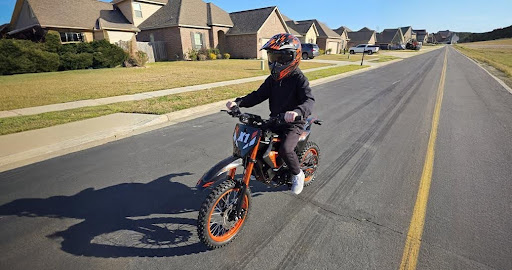
In recent years, children’s electric dirt bikes have become one of the most popular outdoor products. Many families take their children to parks, farms, or riding areas during weekends so they can enjoy outdoor experiences and connect with nature. At the same time, many consumers searching for suitable products often research kids’ dirt bikes to find models designed for children of different ages and sizes.

Electric Technology Makes Riding Easier for Children

Traditional gas-powered dirt bikes were often too noisy and complicated for children to operate safely. However, the development of electrical technology has significantly changed the industry. Compared with gas-powered models, electric dirt bikes provide smoother acceleration and simpler controls.

For children, ease of handling reduces learning difficulty and helps them master basic riding skills more quickly. Many parents believe electric models are the best way to introduce children to off-road riding because they allow them to build confidence step by step.

In addition, electric vehicles produce less noise and no obvious exhaust emissions, making them more suitable for parks, neighborhoods, and family outdoor spaces. Parents are also more willing to choose products that are both quiet and environmentally friendly.

Outdoor Riding Can Improve Confidence

Children’s riding activities are not only entertaining but also educational. During riding experiences, children learn how to control direction, maintain balance, and adapt to different types of terrain. These activities help improve focus and reaction skills.

Many educational experts believe that appropriate outdoor challenges help children strengthen problem-solving abilities. When children complete a riding challenge or overcome difficult terrain, they often gain a strong sense of achievement, which helps build confidence.

At the same time, parent-child riding activities can improve family interaction. Many families now use holidays and weekends to enjoy outdoor riding together, which not only increases physical activity but also helps children reduce dependence on electronic devices.

Safety Features Have Become a Major Concern

For children’s products, safety is always the most important issue. Today, parents no longer focus only on appearance or speed when choosing electric dirt bikes for children. Instead, they pay greater attention to overall safety performance.

Many modern children’s electric dirt bikes now include speed-limit systems, anti-slip tires, and advanced suspension systems. These features help children maintain stability on uneven terrain and reduce the risk of riding.

In addition, some brands have introduced smart control systems that allow parents to adjust riding speeds according to the child’s age and experience. Brands such as Qronge are also paying more attention to rider safety and product reliability through improved design and technology.

Online Shopping Is Expanding the Market

As online shopping continues to grow, more parents are researching children’s riding products through e-commerce platforms. Compared with traditional stores, online platforms make it easier to compare brands, prices, and technical specifications.

Before making a purchase, many consumers check customer reviews and product details to decide whether a vehicle is suitable for their children. At the same time, social media and short-video platforms are helping more families discover children’s riding culture.

Today, many buyers directly search online for electric dirt bikes for sale to find children’s models that offer better safety, performance, and value. The rapid growth of e-commerce is also helping the industry expand worldwide.

Smart Technology Is Improving Riding Experiences

As technology continues to advance, children’s electric dirt bikes are becoming smarter and more user-friendly. Some modern models already support battery monitoring, mobile app connectivity, and intelligent speed control systems.

Through smartphone applications, parents can easily check vehicle conditions and adjust riding modes according to the child’s skill level. These smart features improve convenience while also enhancing safety management.

In the future, battery improvements may provide longer riding ranges and more stable performance, giving children smoother and more enjoyable outdoor experiences.

Riding Is Becoming a New Family Activity

For many modern families, children’s electric dirt bikes are no longer considered simple toys. Instead, they are becoming a new type of outdoor family activity. More parents believe riding helps children become more active while improving social skills and confidence.

During weekends and holidays, parent-child riding activities are becoming an increasingly popular way for families to spend time together. This combination of outdoor adventure, exercise, and family interaction gives the industry strong future potential.

As environmental awareness, smart technology, and outdoor culture continue to grow, the market for children’s electric dirt bikes is expected to expand even further in the coming years.

A Parent’s Guide: Kids’ Electric Dirt Bike Questions 

What is the right age for a kid’s electric dirt bike?

Our kids’ electric dirt bikes are suitable for children ages 12 to 18, depending on the model, motor power, and seat height. Ensure your child can safely reach the handlebars and ground.

Are these electric dirt bikes safe for kids?

Yes, electric dirt bikes designed for kids are generally safe when used properly. They feature controlled speed settings, stable frames, and reliable brakes. Safety gear such as helmets, gloves, and pads is always recommended.

How fast can these kids’ e-dirt bikes go?

Top speeds vary by model, ranging from 20 to 50 mph. Many bikes include adjustable speed modes so parents can limit the speed for beginners and increase it as the child becomes more confident.

Is the bike waterproof? Can it be ridden in light rain or through puddles?

This bike has an IP5 water-resistance rating, which means it can handle light rain, splashes, and small puddles without any issues. Kids can ride safely in mildly wet conditions, but it’s still best to avoid prolonged exposure to heavy rain or deep puddles to protect the electronic components and ensure long-term reliability.

How to Remove stuck Oil Filter Safely & Easily

Photo by depositphotos at https://depositphotos.com/

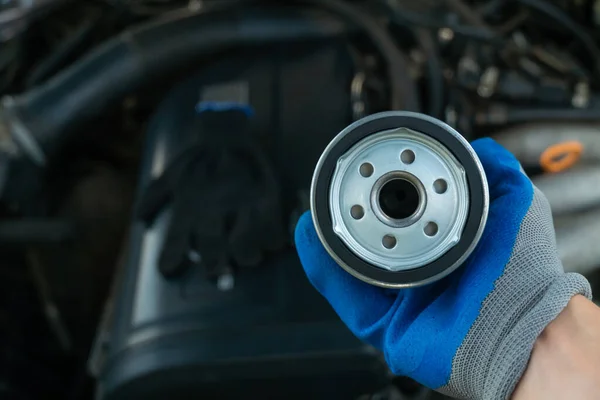
Removing an oil filter is an essential part of routine vehicle maintenance. Doing it correctly prevents oil leaks, engine damage, and unnecessary mess. If you prefer professional assistance, scheduling an oil change Houston, TX service ensures the filter is removed and replaced properly, helping you avoid complications and keep your engine running smoothly.

Oil Filter Removal Tool

Having the correct tools before starting makes the job easier and safer. Proper equipment prevents stripped threads, crushed filters, and excessive oil spills. If you’re unsure about the tools required, searching for auto repair near me can connect you with professionals who have the right equipment to handle the job efficiently.

Basic tools are required to remove an oil filter efficiently. These tools ensure better grip and help protect surrounding engine components.

  • Oil filter wrench
  • Drain pan
  • Socket wrench set
  • Clean rags
  • Safety gloves

Using the right tools reduces the risk of injury and damage.

Best Oil Filter Wrench Options

Choosing the correct oil filter wrench improves control and removal efficiency. Different vehicles may require specific wrench styles depending on space and filter size.

  • Cap-style wrench for tight access
  • Strap wrench for adjustable grip
  • Chain wrench for stubborn filters
  • Pliers-style wrench for extra leverage

Selecting the proper wrench prevents crushing or slipping during removal.

Removing a Stuck Oil Filter

Oil filters can sometimes become stuck due to overtightening or heat expansion, making removal tricky. Using excessive force can damage engine components and create costly repairs. Safe techniques help remove stubborn filters without causing harm. For step-by-step guidance on removing stuck filters, click here to schedule professional service at Eric’s Car Care, where expert technicians ensure your engine stays protected and runs smoothly.

Using a Wrench for Better Grip

A high-quality oil filter wrench provides extra leverage for filters that are difficult to turn by hand. Apply steady, even pressure rather than sudden force, which can crush or slip the filter. Controlled movement helps maintain grip and reduces the risk of damaging the filter housing or engine components. This method is usually sufficient for moderately tight filters and is a safe first approach.

Penetrating Oil Method

Applying penetrating oil around the gasket area can loosen a stuck filter by reducing friction and softening hardened residues. Let the oil sit for several minutes to allow it to work effectively before attempting removal again. This method is particularly useful for filters that have been exposed to high heat or have not been changed for a long period. It ensures the seal breaks safely without excessive force.

Safe Removal of Damaged Filters

If the filter becomes crushed, stripped, or severely stuck, specialized tools like filter pliers or strap wrenches may be required. In extreme cases, careful manual leverage can be applied, but this should be a last resort to avoid engine damage. If the filter still cannot be removed safely, seeking professional assistance is highly recommended. Proper handling prevents costly repairs and ensures the engine remains protected.

Mistakes to Avoid

Avoiding common mistakes helps protect your engine and ensures a smooth, successful oil change. Small errors during the process can result in leaks, damaged components, or costly repairs. Paying close attention to each step improves safety and long-term engine performance.

  • Allow the engine to cool before starting to prevent burns and unexpected oil spills.
  • Use steady, controlled pressure when removing the old filter to avoid damage.
  • Install the new filter carefully to protect threads and sealing surfaces.
  • Lightly coat the new gasket with oil to create a proper seal.
  • Inspect the area after completion to confirm there are no leaks.

Takeaway

  • Gather the correct oil filter removal tools
  • Always let the engine cool before starting
  • Drain the engine oil completely first
  • Remove the old gasket from the filter
  • Clean the mounting surface thoroughly
  • Use proper methods for stuck filters
  • Avoid overtightening the new filter
  • Inspect for leaks after installation

How EV Fleet Charging Technology Evolved to Eliminate Installation and Grid Upgrade Headaches

For most of the last decade, the biggest obstacle to fleet electrification wasn’t the vehicles. It was the wall behind them.

Fleet operators ready to electrify quickly discovered that plugging in a yard full of electric trucks wasn’t as simple as installing a few chargers. It meant utility coordination, transformer upgrades, switchgear, new service entrances, civil works, and permitting timelines that could stretch 12 to 24 months — sometimes longer. Capital costs ballooned into the hundreds of thousands per depot. Projects stalled. Electrification deadlines slipped.

But that picture is changing fast. A new generation of EV fleet charging technology is making it possible to deploy high-speed charging in weeks instead of years — without touching the grid. Here’s how the technology evolved, and what it means for fleet operators today.

The Old Model: Build the Grid Up to Match the Charger

Traditional DC fast charging is power-hungry by design. A single 200 kW charger pulls roughly the same instantaneous load as a small office building. Multiply that across a depot of ten, twenty, or fifty chargers, and suddenly you’re not installing equipment — you’re rebuilding the local electrical grid.

That’s why traditional depot buildouts involved so many moving parts. Every charger needed a power cabinet. Every cluster of chargers needed switchgear. Every site needed a transformer upgrade. And every transformer upgrade needed utility approval, which depended on local capacity, queue position, and a parade of other variables outside the fleet operator’s control.

The result: long timelines, unpredictable costs, and a hard ceiling on how fast any fleet could electrify.

The Breakthrough: Battery-Integrated Charging

The shift began when engineers asked a deceptively simple question: what if the charger had its own energy reservoir?

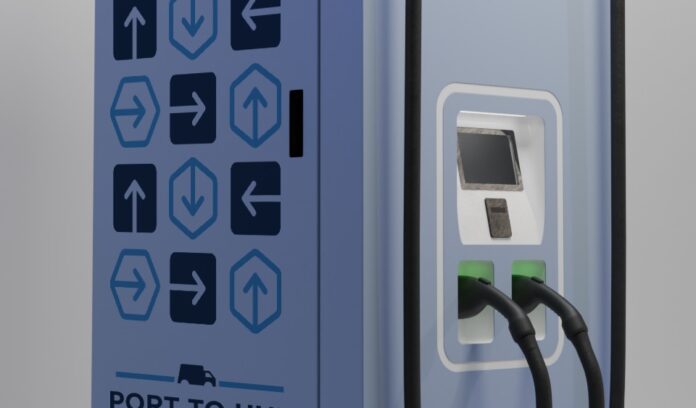
Battery-integrated DC fast chargers flip the old model on its head. Instead of pulling massive power from the grid the moment a vehicle plugs in, these systems store energy in an onboard battery during off-peak hours — slowly, gently, on whatever circuits already exist at the site. When a vehicle arrives, the charger dispatches power from its internal battery at high speed, even though the grid connection behind it is comparatively small.

The numbers tell the story. Modern battery-integrated systems can deliver 200 kW to a vehicle while drawing as little as 5 to 66 kW from the grid. That’s a workload most existing depot electrical services can already handle — no transformer upgrade, no switchgear, no utility queue.

What This Eliminates from the Project Plan

The downstream effects on a deployment timeline are dramatic. With battery-integrated EV fleet charging solutions, fleet operators can skip:

  • Utility coordination delays — no service upgrade application, no waiting for capacity studies
  • Transformer upgrades — the existing service is sufficient
  • Switchgear and power cabinets — integrated into a single all-in-one unit
  • Major civil works — compact footprints (around 43″ × 40″) fit existing yard space
  • Multi-vendor project management — one system replaces a stack of separate components

Deployments that would have taken 12 to 24 months can now go live in 4 to 6 weeks. Capital costs that ranged from $150,000 to $500,000 per site drop substantially when grid infrastructure comes off the bill of materials.

The Demand Charge Bonus

There’s a second benefit that fleet CFOs care about just as much as deployment speed. Traditional DC fast chargers create massive demand spikes whenever multiple vehicles plug in at once — and utilities charge dearly for those spikes. Demand charges routinely account for 30 to 70 percent of a fleet’s monthly electricity bill.

Battery-integrated systems flatten those spikes by design. Because the charger draws low, steady power from the grid and uses its onboard battery for high-speed dispatch, the utility never sees a peak demand event. Charging at 200 kW becomes economically equivalent to charging at 60 kW — without sacrificing speed.

Smarter, Not Just Faster

The hardware revolution is paired with a software one. Modern fleet charging platforms are OCPP-compliant out of the box, integrating with the telematics and fleet management tools operators already use. Energy management software automatically schedules charging during off-peak utility windows. Remote monitoring catches issues before they cause downtime. Analytics dashboards consolidate every charger across every depot into a single view.

Together, these technologies turn what used to be a construction project into something closer to a software deployment — fast, flexible, and centrally managed.

The Bottom Line for Fleet Operators

The single biggest risk in any fleet electrification plan used to be the grid. Today, it doesn’t have to be. Battery-integrated charging technology has effectively decoupled depot electrification from utility timelines, transforming a 24-month construction project into a 6-week installation.

For fleets racing to meet sustainability goals, regulatory deadlines, or simple operational economics, that’s not an incremental improvement. It’s the difference between electrifying now and electrifying someday.

How AI Tools Are Transforming Website Creation and Online Security

The rapid evolution of artificial intelligence has changed how businesses create websites, launch campaigns, and manage online security. From automated design systems to advanced analytics, AI now powers tools that help companies save time and improve performance. Two of the fastest-growing innovations are the AI Landing Page Builder and the AI IP Checker, both of which are becoming essential for digital marketers, entrepreneurs, and businesses of all sizes.

Whether you are launching a startup, running an online store, or promoting a service, using AI-driven platforms can significantly improve efficiency and online visibility. In this article, we will explore how AI is reshaping website creation and IP monitoring, and why modern businesses should adopt these technologies.

The Rise of AI in Website Development

Traditional website development often required coding knowledge, expensive developers, and long production cycles. Today, AI-powered solutions have simplified the entire process. Businesses can now generate attractive, responsive, and high-converting websites within minutes.

An AI Landing Page Builder uses machine learning algorithms to automate layout design, generate content suggestions, optimize call-to-action placement, and improve the user experience. These platforms analyze user behavior and industry trends to create pages that convert visitors into customers.

One platform gaining attention in this space is landing-page.io, which provides advanced AI-driven landing page solutions for businesses looking to improve online conversions quickly and efficiently.

Why Businesses Need an AI Landing Page Builder

Landing pages are one of the most important tools in digital marketing. They are specifically designed to encourage visitors to take action, whether that means subscribing to a newsletter, purchasing a product, or booking a consultation.

A modern Free AI Landing Page Tool offers several advantages over traditional design methods:

1. Faster Website Creation

AI-powered systems can generate professional page layouts instantly. Instead of spending weeks building pages manually, users can launch campaigns in hours.

2. Improved Conversion Rates

AI tools analyze visitor engagement patterns and automatically optimize page elements such as headlines, colors, and button placements to maximize conversions.

3. Mobile Optimization

Today’s users browse primarily on smartphones. AI website builders ensure every landing page is fully responsive and optimized for all screen sizes.

4. SEO-Friendly Structure

The Best AI Website Builder platforms generate SEO-friendly code structures, helping websites rank higher in search engines and attract organic traffic.

5. Cost Efficiency

Hiring web developers and designers can be expensive. AI tools reduce operational costs while maintaining professional design quality.

Because of these benefits, many startups and online businesses are now turning to AI solutions instead of traditional website development agencies.

AI and the Future of Digital Marketing

Artificial intelligence is not only changing web design but also revolutionizing marketing strategies. AI can analyze user behavior, personalize experiences, and predict customer intent with remarkable accuracy.

For example, an AI landing page platform can automatically:

  • Adjust headlines based on visitor demographics
  • Recommend optimized keywords
  • Create personalized content
  • Improve page loading speed
  • Test multiple page variations simultaneously

These features help marketers increase conversions while minimizing manual effort.

Additionally, businesses using AI-powered tools can scale their marketing campaigns much faster. Instead of creating separate pages manually, AI can generate multiple landing pages tailored for different audiences and advertising campaigns.

Understanding the Importance of AI IP Checker Tools

While AI website builders improve customer engagement, online security remains equally important. Cybersecurity threats, fraudulent traffic, and suspicious activity can negatively impact businesses.

This is where an AI IP Checker becomes valuable.

An AI-powered IP checker helps users identify, analyze, and monitor IP addresses in real time. Businesses use these tools to detect suspicious traffic, prevent fraud, and improve network security.

A useful platform in this category is myipchecker.ai, which allows users to quickly monitor and analyze IP-related information using AI-enhanced technology.

Why You Should Check IP Address Online

Many businesses underestimate the importance of IP monitoring until they encounter security issues. The ability to Check IP Address Online can help companies detect malicious visitors, identify unusual traffic patterns, and secure sensitive information.

Some major benefits include:

1. Fraud Prevention

Online stores and digital businesses often face fake traffic, bots, and suspicious login attempts. AI-powered IP tools can instantly identify risky IP addresses.

2. Better Website Analytics

Filtering suspicious or fake traffic helps businesses obtain more accurate analytics and marketing insights.

3. Enhanced Security

AI systems can recognize unusual activity patterns and alert users about potential threats before damage occurs.

4. Improved User Verification

Companies can validate user locations and detect unauthorized access attempts.

5. Smarter Network Management

Businesses can monitor traffic sources and optimize server performance using AI-based IP analysis tools.

These features make AI IP checkers essential for companies operating in today’s digital environment.

Combining AI Landing Page Builders with AI IP Checkers

The real power of AI comes when businesses combine multiple intelligent tools into a single workflow. Using an AI Landing Page Builder together with an AI IP Checker creates a more secure and efficient digital marketing strategy.

For example:

  • AI landing pages attract and convert visitors
  • AI IP monitoring protects websites from harmful traffic
  • Businesses gain better analytics accuracy
  • Campaign performance improves through cleaner data
  • Customer experiences become safer and more personalized

This combination helps businesses increase revenue while reducing security risks.

Choosing the Best AI Website Builder

When selecting the Best AI Website Builder, businesses should consider several factors:

Ease of Use

A good platform should allow users to build pages quickly without coding experience.

AI Features

Look for advanced automation features such as content generation, SEO optimization, and conversion analysis.

Speed and Performance

Fast-loading pages improve user experience and search engine rankings.

Security Integration

Modern website builders should support secure hosting and compatibility with IP monitoring tools.

Scalability

The platform should grow alongside your business needs.

Businesses that choose the right AI-powered tools gain a significant competitive advantage in today’s online marketplace.

The Future of AI in Online Business

Artificial intelligence will continue reshaping how businesses operate online. In the coming years, AI tools will become even more advanced, offering deeper personalization, predictive analytics, and automated optimization.

Future AI platforms may eventually:

  • Build complete marketing funnels automatically
  • Generate personalized user journeys in real time
  • Predict customer behavior with greater accuracy
  • Prevent cyber threats before they happen
  • Automate nearly all aspects of website management

Companies that adopt AI early will likely outperform competitors that rely on outdated systems and manual workflows.

Conclusion

Artificial intelligence is transforming both website development and online security. Businesses no longer need extensive technical knowledge to create professional websites or monitor online threats effectively.

Using an AI Landing Page Builder allows companies to launch optimized pages quickly, improve conversion rates, and reduce development costs. Meanwhile, an AI IP Checker helps organizations monitor traffic, detect fraud, and improve cybersecurity.

What Is Speedway Racing? A Beginner’s Guide

Speedway racing is one of the most intense and unique forms of motorcycle motorsport in the world. Known for its close competition, short races, and dramatic sliding corners, speedway delivers action that is easy to follow but deeply skilled once you understand what is happening on track. For beginners, the sport can look chaotic at first glance, yet it follows clear rules and traditions that make it exciting and accessible. This guide explains what speedway racing is, how it works, and why it has remained popular for generations.

The Origins of Speedway Racing

Speedway racing began in the early twentieth century as a simple form of motorcycle competition. Riders raced on oval tracks, usually dirt or shale, with the goal of finishing first rather than setting the fastest lap time. The sport quickly gained attention because it was easy to organize and thrilling for spectators. Unlike long-circuit racing, speedway races were short and intense, making them ideal for live audiences.

Over time, racing developed a strong presence in countries such as the United Kingdom, Australia, Poland, Sweden, and of course, in the United States. Although it remains more popular in certain regions, speedway has built a loyal global following due to its distinctive style and raw competitive nature.

How Speedway Racing Works

Speedway races take place on oval tracks that are typically around three hundred meters in length. Each race, known as a heat, usually features four riders competing over four laps. The races are short, often lasting less than a minute, but they demand total focus and precise control from the riders.

Points are awarded based on finishing positions, and these points contribute to individual or team scores depending on the competition format. Because the races are so short, every start and corner matters. There is very little time to recover from a mistake, which adds to the sport’s pressure and excitement.

Speedway Bikes and Their Unique Design

One of the most striking aspects of speedway racing is the motorcycles themselves. Speedway bikes are unlike standard road bikes or even other racing motorcycles. They have a single gear and no brakes, which often surprises new fans. Riders control speed by adjusting the throttle and using body position to slow the bike through corners.

The lack of brakes encourages aggressive yet controlled riding, as riders enter turns at high speed and slide the rear wheel sideways to maintain momentum. This sliding technique is central to speedway racing and is one of the main reasons the sport looks so dramatic. The bikes are lightweight and powerful, designed purely for speedway competition rather than everyday use.

The Importance of Starts and Technique

In speedway racing, the start is often the most important moment of the race, with riders lining up behind a starting tape, and when it lifts, they accelerate as hard as possible into the first corner. A good start can give a rider a crucial advantage, while a poor start can make it difficult to recover.

The cornering technique is equally important, as riders must balance speed and positioning while sliding through turns alongside their opponents. Small adjustments in body weight and throttle control can make the difference between winning and finishing last. This combination of skill and bravery is what sets top riders apart from beginners.

Team Speedway and Individual Competition

Racing can be contested in both team and individual formats, which provides more opportunities for potential riders. In team speedway, clubs compete against each other over a series of heats, with riders scoring points for their team. Team tactics play an important role, as riders may work together to block opponents or protect a teammate’s position.

Individual speedway events focus solely on personal performance; riders accumulate points across multiple heats to qualify for finals or determine overall standings. Both formats offer excitement, but team speedway often adds an extra layer of drama due to local rivalries and fan support.

Safety and Risk in Speedway Racing

Speedway racing is a high-risk sport, and safety is always a top concern for both riders and race promoters. Riders wear protective gear, including helmets, racing suits, gloves, and boots, to reduce the risk of injury. Tracks are carefully maintained to provide a consistent grip and minimize hazards, and medical teams are present at events.

Despite these measures, crashes do happen due to the close racing and high speeds involved. What makes speedway remarkable is the resilience of its riders, who often return to competition quickly after falls. The physical and mental toughness required is a key part of the sport’s identity.

Getting Started as a New Speedway Fan

For beginners, the best way to understand speedway racing is to watch a live event or follow a full meeting from start to finish. Over time, patterns emerge in how riders approach starts, choose racing lines, and adapt to track conditions. Learning the basics makes each race more enjoyable and allows fans to appreciate the skill involved. If being outside in the first, doesn’t sound like something you would want to do, there are so many other types of entertainment from nj online casino, to shopping malls.

Speedway racing may look wild at first, but beneath the sliding bikes and flying dirt is a sport built on precision and courage. Once you understand how it works, it becomes easy to see why racing has remained a favorite among motorsport fans worldwide.