AVONDALE, Arizona (Tuesday, Feb. 17, 2026) – That was quite an entrance from David Malukas.
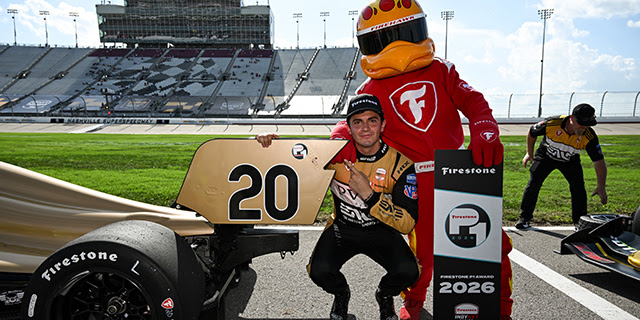
Malukas led the first day of the Unser INDYCAR Open Test at Phoenix Raceway on Tuesday, his first official NTT INDYCAR SERIES test session since joining Team Penske after the 2025 season. Malukas was fastest on the 1-mile desert oval with a lap of 172.605 mph in the No. 12 Verizon Team Penske Chevrolet.
“It feels good to be P1, but at the end of the day, we just ran through our test items,” Malukas said. “From that perspective, that’s what truly matters, and everything went very well. We’ve learned so many different things. Everything felt very clear. We got a lot of answers.”
Chicago-area native Malukas, 24, joined Team Penske after four seasons with three teams, including AJ Foyt Racing in 2025. His pace on short ovals shouldn’t come as a surprise, though, as two of his three career podium finishes have come on the 1.25-mile World Wide Technology Raceway oval near St. Louis.
Malukas paced a 1-2 result for Team Penske on the opening day of the two-day test at Phoenix Raceway as the winningest team in INDYCAR SERIES history looks to rebound from a sub-par 2025 season. Two-time series champion Josef Newgarden was second overall among 25 drivers on track at 172.201 in the No. 2 XPEL Team Penske Chevrolet.
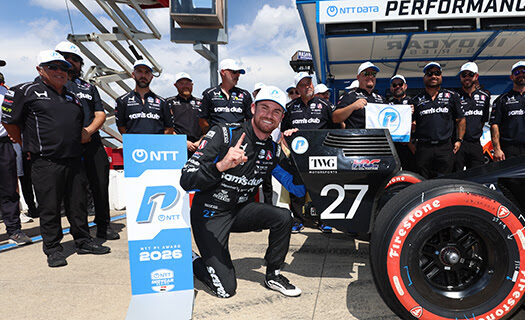
2018 series champion Will Power, who Malukas replaced at Team Penske, was third at 171.706 in the No. 26 TWG AI Honda as he begins his tenure at Andretti Global after 16 full-time seasons with the Penske team. Power’s teammate Kyle Kirkwood was fourth at 171.423 in the No. 27 Siemens Honda.
Reigning and four-time series champion Alex Palou rounded out the top five at 171.357 in the No. 10 DHL Chip Ganassi Racing Honda.
Meyer Shank Racing w/Curb Agajanian, which put two drivers in the top 10 of the final standings for the first time last season, also opened 2026 with speed. Marcus Armstrong was sixth at 170.919 in the No. 66 Meyer Shank Racing w/Curb Agajanian Honda, followed by Felix Rosenqvist at 170.489 in the team’s No. 60 Honda.
2025 INDY NXT by Firestone champion Dennis Hauger was the fastest of the three rookies on track, ending up 17th overall at 169.259 in the No. 19 Ault Block Chain Honda fielded by Dale Coyne Racing.
Another rookie, Formula One veteran Mick Schumacher, was 23rd at 164.006 in the No. 47 Rahal Letterman Lanigan Honda. Schumacher, son of Formula One legend Michael Schumacher, was turning oval laps for just the second time in his career after his first circle-track test Feb. 4 at Homestead-Miami Speedway. His 109 laps completed were the third-highest total today, behind ECR teammates Christian Rasmussen (128 laps) and Alexander Rossi (118).
The other rookie, 2025 INDY NXT runner-up Caio Collet, was involved in the only incident of the day. Collet made slight contact in Turn 4 in his No. 4 COMBITRANS AMAZONIA Chevrolet fielded by AJ Foyt Racing. He climbed from the car without help and was unhurt.
Testing will continue Wednesday in the final dress rehearsal for the 2026 NTT INDYCAR SERIES season. Cars will be on track from 11 a.m.-2 p.m. ET and 3:30-6:30 p.m. ET.
The 2026 season starts with the Firestone Grand Prix of St. Petersburg on Sunday, March 1 on the streets of St. Petersburg (noon on FOX, FOX One, FOX Deportes, FOX Sports app, INDYCAR Radio Network), followed by the Good Ranchers 250 on Saturday, March 7 at Phoenix. It’s the first INDYCAR SERIES race at Phoenix since 2018.
A crash is loud, fast, and unfairly efficient at turning a normal day into a long week. One second, it’s errands, podcasts, maybe a coffee. Next second, it’s airbags, that burnt-plastic smell, and the kind of quiet that hits right after adrenaline decides to take a seat.
And here’s the part people don’t expect: the impact is often the easiest moment to understand. After that, everything gets fuzzy. Who’s paying for what? Should a doctor be seen if “mostly fine”? Why does the insurance adjuster sound friendly but ask questions that feel like a pop quiz?
So, let’s walk through it as a real person would. A little messy. A little human. But clear enough to keep you from stepping into the same traps that catch a lot of smart, capable drivers.
First minutes: safety first, but also… future-you first
Right after a wreck, the brain does this hilarious thing where it tries to act normal. “It’s not that bad.” “Everyone looks okay.” “No big deal.” Meanwhile, your body is busy pumping stress hormones like it’s getting paid per gallon.
Start with the basics:
Get safe. If vehicles can move and it’s safe to do so, get out of traffic. Hazards on. Check on people. Call 911 if there’s an injury, heavy damage, or any doubt.
Let professionals document the scene. A police report isn’t perfect, but it creates a timestamp and a neutral-ish record. That matters later.
Take photos like a paranoid tourist. Wide shots, close-ups, skid marks, traffic lights, weather, road signs, debris, injuries, everything. If you think “that’s probably irrelevant,” snap it anyway.
Collect names and contact info. Drivers, passengers, witnesses. Yes, witnesses. The person who “saw everything” tends to vanish right after the tow truck shows up.
And here’s a small but important mindset shift: don’t narrate the crash in real-time. Apologies and offhand comments can get twisted. It’s possible to be kind without taking blame. “Hope everyone’s okay” is safe. “That was totally my fault” is a legal headache, even when it isn’t accurate.
Also, if you feel fine, great. But keep an eye out for delayed pain. Neck and back issues, headaches, dizziness, and numbness. The body sometimes cashes the check a day or two later.
The next few days: the “paperwork chess match” begins
This is where people get blindsided. Not by the crash, but by the system.
The phone rings. The insurance rep sounds warm, calm, and helpful. They ask for a “quick statement.” Quick. Easy. Just to “move things along.”
Tempting, right?
But those early statements can become the backbone of how your claim gets framed. If a detail is wrong, incomplete, or casually minimized, it’s hard to rewind. And people minimize all the time because they’re polite, because they’re in shock, because they just want it over with.
This is the phase where it can make sense to talk with someone who understands how claims actually get evaluated. Sometimes that means speaking with an attorney for auto accident early, not because lawsuits are exciting (they’re not), but because timing and documentation are everything.
A few practical moves that help a lot in this window:
Get medical care and follow through. Not just to “build a case,” but because untreated injuries linger. Also, gaps in care are a favorite excuse for insurers to argue you weren’t really hurt.
Keep a simple daily log. Pain levels, sleep, missed work, what you can’t do. Short notes. Honest notes. These add up.
Save every receipt. Meds, co-pays, physical therapy, Uber rides to appointments, and even mileage if you’re driving to treatment. People forget how fast these costs stack.
Don’t repair the vehicle too quickly if major damage is involved. Photos and inspections matter. Once it’s fixed, the evidence is basically… gone.
Be careful on social media. Yes, it’s annoying to hear. But a single smiling photo can be spun into “seems totally fine.” Even if it was taken during a five-minute good moment in a brutal week.
And watch for the sneaky question: “Are you feeling better?” It sounds harmless. But if the answer is “yeah, a bit,” that can become “injuries resolved.” Even when they aren’t.
Liability, injuries, and the stuff nobody explains at the scene
A lot of wrecks aren’t clean-cut. It’s not always “Driver A smashed into Driver B.” Sometimes it’s a chain reaction. Sometimes the road design is part of it. Sometimes a distracted driver triggers everything, then claims they “never even saw you.” Sometimes the other driver is underinsured, uninsured, or driving for work, and suddenly you’re dealing with a whole different category of coverage.
Also, injury math is weird.
There’s the obvious stuff: broken bones, stitches, totaled cars. But there’s also the slow stuff:
Soft tissue injuries that don’t show up dramatically on day one
Concussions that look like “just a headache” until concentration disappears
Back injuries that turn ordinary tasks into a constant negotiation
Anxiety behind the wheel that no one warned you about
And then there’s the “pre-existing condition” conversation. If you’ve ever had back pain, migraines, a shoulder problem, anything at all, insurers may try to frame new pain as old pain. The key isn’t pretending the past didn’t exist. The key is showing what changed, when it changed, and how the crash aggravated it.
This is where documentation becomes your best friend. Not the dramatic kind. The boring kind. Appointment notes. Imaging. Physical therapy records. Work restrictions. A clean timeline.
The money part: what claims really try to cover
Most people think “compensation” just means medical bills and car repairs. That’s part of it, sure. But the real cost of a serious crash is usually broader:
Medical treatment now and later (follow-up care, rehab, specialists, future procedures)
Lost income (including missed opportunities, not just missed hours)
Reduced earning capacity if the injury changes what work is possible
Pain and suffering, which sounds vague until you’re living it
Out-of-pocket expenses that never feel big until they’re constant
Property loss beyond the vehicle (car seats, phones, glasses, laptops, tools)
And it’s not uncommon for the first offer to be… low. Not always malicious. Often strategic. It tests whether you’ll accept quick money to make the hassle disappear.
Question worth asking: Is the offer based on the full picture, or just the first week?
Because if symptoms worsen, treatment changes, or missed work drags on, a fast settlement can become a regret. Final means final.
Real-world chaos: closures, rollovers, and why context matters
Crashes don’t happen in tidy little bubbles. Sometimes they shut down a highway, snarl traffic, and create a whole secondary storyline. If you’ve ever sat in a line of cars behind flashing lights, wondering what happened up ahead, you know the feeling.
Stories like this report on an Interstate 80 rollover near Bushnell are a good reminder that even “one vehicle” incidents can turn into a big deal fast. Road conditions, speed, visibility, the angle of a shoulder, and the surprise of black ice. A simple moment can become a complicated investigation.
And that context matters for claims, too. Weather records. Road maintenance. Visibility. Lighting. Commercial vehicles nearby. Construction zones. Even the layout of an intersection can shape how a fault gets argued.
Not to get dramatic, but… the environment is often a silent witness.
So when does legal help actually matter?
Not every fender-bender needs a legal fight. If there are no injuries, damage is minor, and both insurers are behaving reasonably, it can stay simple.
But certain situations tend to get complicated fast:
Injuries that require ongoing treatment
A dispute about who caused the crash
Multiple vehicles involved
A commercial driver or company vehicle in the mix
An uninsured or underinsured driver
Pressure to give recorded statements early
A settlement offer that arrives suspiciously quickly
Any hint that your injuries are being minimized or blamed on “something else”
The point isn’t to escalate. It’s to protect the story of what actually happened, using evidence instead of vibes.
And yes, it can feel awkward. Nobody wakes up hoping to learn new vocabulary like “liability,” “damages,” “policy limits,” or “comparative negligence.” But once you’re in it, you’re in it.
A simple checklist for future-you
If nothing else, keep this short list in your back pocket:
Get medical care if anything feels off, even later.
Keep a running file. Receipts, notes, missed work, symptoms.
Be cautious with recorded statements and quick settlements.
If the situation is serious or getting weird, talk to a professional sooner rather than later.
Because after a crash, it’s easy to drift into reactive mode. Answer calls. Sign things. Agree to whatever sounds simplest. But simple is not always safe.
And honestly, wouldn’t it be nice if the system rewarded people for being truthful and hurt? Sure. But the system rewards documentation.
So be that person. The one who stays calm. Takes pictures. Writes things down. Asks the annoying questions. Even if it feels a little extra.
The rise of experiential travel has changed the way we define “travel” and, as such, how we think of it in terms of comfort and elegance. The role of luxury chauffeur services in providing an emotional, personalised, and caring chauffeur experience for demanding travellers, business professionals, families, and VIPs is what premium chauffeur services are all about. It is important to be aware of the key differences that make their service distinct from other chauffeur companies.
Traveling in style to any destination should be worry-free and memorable. If you want a quality chauffeur service, this is what you should expect.
Professional Driving
Luxury chauffeur services for corporate events are recognized by the presence of high-end vehicles operated by highly trained professionals. Professional drivers who have spent years perfecting their craft will always have a clean appearance, provide timely service, and treat their customers with respect.
Chauffeurs are also well-versed in identifying the best routes through congested cities; therefore, you can be confident that your guests will arrive on time. Additionally, your guests’ luggage will be handled carefully, and premium items will be continually stocked in the vehicle to ensure your guests’ comfort.
Tailored Travel Experiences
Luxury chauffeur services offer a diverse array of premium vehicles, including high-end cars, SUVs, and limousines. Regardless of whether the client requires the luxury and comfort of a large vehicle for an extended period of time or the elegance of an upscale vehicle for a formal event, you will be able to meet your clients’ needs.
Given that many chauffeur services use larger vehicles like vans, this versatility can also be advantageous for companies that need to transport multiple customers at once. A quality chauffeur service will also provide maximum personalisation throughout the trip and enable clients to select from a wide range of luxury onboard amenities, child seats, gifts, and more, making their overall experience truly unforgettable and aligned with modern business and luxury travel insights.
Seamless Airport Transfers
Tight schedules, long security checks, and large bags can lead to lots of stress while travelling through the airport. Thankfully, many luxury airport chauffeur services provide reliable and straightforward airport transfers. Many of these services are able to track flights and adjust their pickup times automatically to accommodate changing flight arrival times in real-time.
If you or your clients frequently travel to and from the airport, utilising a business transport service will make your travel effortless. Having a professional chauffeur greet you at the airport, help you with your bags, and drive you in luxury will make your trip much more pleasant and stress-free.
Productivity on the Go
Business trips often have packed schedules, leaving little room for rest. With a chauffeur service, a CEO can continue working while en route to a destination. Luxury chauffeured cars are often roomy and comfy, providing a great place to concentrate on paperwork, make phone calls, or even have impromptu meetings.
If you need to do confidential business without worrying about prying eyes, executive transportation is the way to go. Professionals with full schedules who are always looking for ways to save time will find this benefit indispensable.
Conclusion
Chauffeurs provide not only an elegant, professional service, but also a level of comfort that is second to none. Chauffeurs represent the highest level of refinement, professionalism, and safety in transportation. They are far more than just drivers; they provide comfort and style while transporting their clients and carry the primary responsibility for getting clients to their destinations on time and safely. When you have a chauffeur drive you, you are being driven by a representative of elite transportation.
There is something unmistakable about a car that looks brand new. The paint has depth and clarity, the interior feels clean and refined, and every surface reflects proper care. Achieving that showroom-fresh appearance is not about shortcuts or overly aggressive cleaning. It comes down to using the right automotive detailing products that clean, restore, and protect your vehicle at every stage. When quality products are paired with proper technique, even daily-driven cars can regain that just-off-the-lot look.
Premium Washing and Surface Preparation Products
The foundation of any great detail starts with a thorough and safe wash. High-quality pH-balanced car shampoos are designed to remove dirt and road grime without stripping wax or damaging the clear coat. These soaps produce a rich lubrication that allows contaminants to glide off the surface rather than being dragged across the paint, helping prevent swirl marks and micro-scratches. When combined with microfiber wash mitts, the washing process becomes both effective and paint-safe. Surface preparation products take things a step further. Iron removers and clay-based decontamination products remove embedded particles that standard washing cannot eliminate. These contaminants dull the paint and prevent protective products from bonding properly. Once removed, the surface becomes smooth to the touch and noticeably brighter. This step alone can dramatically improve a vehicle’s overall appearance and set the stage for long-lasting shine.
Paint Correction and Protection for Long-Lasting Gloss
After the paint is clean and smooth, polishing products are what truly bring out a showroom-level finish. Paint correction polishes are formulated to remove light scratches, oxidation, and haziness that accumulate over time. Even a single-stage polish can restore clarity and depth, making colors appear richer and more reflective under sunlight. To maintain those results, paint sealants and ceramic spray coatings provide durable protection while enhancing gloss. These products create a protective layer that repels water, dirt, and UV rays, helping the car stay cleaner longer. Unlike traditional waxes that fade quickly, modern sealants offer extended durability with minimal upkeep. The result is a finish that looks freshly detailed weeks after application, even with regular driving.
Interior and Finishing Products that Complete the Look
A truly fresh car does not stop at the exterior. High-quality interior detailing products are essential for restoring comfort and cleanliness inside the cabin. Interior cleaners safely remove dust, oils, and stains from leather, vinyl, plastic, and fabric without leaving behind greasy residue. This keeps surfaces looking natural rather than overly shiny or artificial. Conditioners and protectants play an equally important role. Leather conditioners keep seats soft and prevent cracking, while UV-protective interior dressings help dashboards and trim resist fading. Finishing products such as glass cleaners, trim restorers, and tire dressings add the final touch. Clean glass improves visibility, restored trim enhances contrast, and properly dressed tires give the vehicle a polished, professional appearance that ties everything together.
Maintaining a showroom-fresh look is about more than appearance; it is about protecting your vehicle and preserving its value over time. With the right automotive detailing products working together to clean, restore, and protect both the interior and exterior, your car can look professionally detailed long after each wash. Consistent care delivers long-lasting shine, comfort, and confidence behind the wheel, so if you want to upgrade your detailing routine, check out Marine Detail Supply Co. for automotive detailing supplies.
For the past few years, lip enhancement has become one of the most common aesthetic treatments. Natural lip augmentation without surgery is what most people have today. We offer advanced non-surgical techniques that are both effective and safe, with minimal downtime. In this guest post, we examine these modern techniques and how they can enhance your appearance naturally.
Cosmetic enhancement options include lip enhancement in Las Vegas, NV, using non-invasive aesthetic technology. In contemporary beauty standards, achieving natural-looking results is a top priority. Surgical options usually come with some pain and risk, so non-surgical ones appeal to many.
These procedures offer discreet improvements that enable people to achieve a fresher appearance without looking different. It’s also contributed to the rise of injectable fillers and soft contouring procedures. Individuals tend to love it because it is simple and does not take much time to recover from.
Overview of Non-Surgical Lip Enhancement
Injectable fillers (novel materials that are compatible with the body) are the standard for most non-surgical lip enhancements. They are injected for volume, contour, and symmetry. Most treatments can be completed in a short office visit with minimal preparation. Generally, candidates return to their daily routine straight after the clinic. The results look natural and can be reversed in future appointments if desired.
Types of Fillers Used
Hyaluronic acid fillers are now the most popular lip fillers. It is a natural component of the skin, helps retain moisture, and provides a level of plumpness. These fillers provide significant control over the final product’s shape and volume. And while some can be softer with a more diffused effect, others deliver a more defined look. The best option depends on the patient’s goals and the practitioner’s recommendations.
Procedure and Comfort
Sessions typically last less than an hour. The filler is injected by practitioners using tiny needles or cannulas, resulting in minimal pain. Pain will likely be managed with numbing creams or mild anesthetics beforehand. There may be some swelling or superficial bruising; however, these effects generally subside within a few days. The instant results mean patients can see how they look and request minor adjustments if necessary.
Safety and Side Effects
The procedures generally have a favorable safety record when performed by trained practitioners. Common side effects are mild and temporary, including some swelling, tenderness, or bruising. When the practitioner does everything right, serious complications occur very infrequently. Selecting a trustworthy provider minimizes the risk of receiving an unwanted result. Discuss allergies or recent reactions with patients before carrying out treatment.
Longevity and Maintenance
The results of a non-surgical lip enhancement are long-lasting but not permanent. Except for Bella filler, which lasts up to 1 year or more, most fillers have a longevity of between six and twelve months. The body slowly metabolizes the material introduced. Your follow-up treatments can maintain the same appearance. Many women schedule touch-up appointments every few months to keep their lips fresh and symmetrical. Consistent care leads to a comfortable, high-quality result.
Natural Results and Personalization
Modern techniques focus on enhancing the natural features of each individual. Facial proportions are assessed; therefore, a treatment option will be recommended. That way, it doesn’t look overly filled or overdone. Each face is unique, so customization is central to the concept. The objective remains to improve, not change. Everyone loves minor improvements to their appearance that give them the confidence to go about their day without the nagging sensation of unwanted attention.
Why Choose Non-Surgical Options
Many people opt for advanced non-surgical procedures because they are less restrictive and seem more manageable. With little to no downtime, you can return to your everyday routine after these treatments. Those who prefer a more cautious approach find the concept of taking small steps appealing. They are also a popular first choice among clients because non-surgical options have less risk than surgery.
Conclusion
Lip augmentation without surgery is a safe, effective treatment that delivers fuller, more defined lips. Advanced methods favor the preferences of natural consequences and individuals. If intended and done properly, it allows people to achieve beautiful results without surgery, with no costly downtime. To ensure safety and satisfaction with the final look, work with a qualified provider.
Like many truck owners in Calgary, you may decide to sell your truck after a specific period. The reasons can be numerous, but you must be prepared. Putting an ad online or in newspapers is not tough. However, once the ad is on, you must know what to do. This will help you attract the right buyers and get a suitable price.
Let’s have a look at some valuable tips on things to do after you decide to sell used trucks in Calgary.
Stop driving it so much
This is basic but important. The more you drive, the smaller the scope of price negotiation gets. The truck may also get dents or scratches. You can take it out a little, but avoid longer trips.
Gather your documents
Another basic but important step you must take after posting your truck-selling ad is to gather all the documents. Serious buyers will ask for your registration and insurance papers. If you made any customizations or repairs, keep those papers as well. You should keep all those papers in a folder. If it is a digital bill, keep it ready as well.
Take photos without delay
Don’t wait for a sunny day or the next truck wash to take the images. The more you wait, the greater the chance that something will mar its appearance. That may include scratches, dust, and bird droppings, etc. Take a lot of photos, and some will have that appeal.
Cleanup without overspending
Give your truck a basic clean after removing all personal stuff. That lets you find hidden stains and dents inside the cabin, too. It is a must if you want to impress the serious buyers. They will not like to see a truck with a messy interior. Of course, you may not have to hire a costly cleaning agency for the job.
Look for any issues
Sometimes you may overlook minor issues in your truck, because you have gotten used to those over the years. It can be a minor glitch in the truck audio system or a malfunctioning cabin lamp. But these apparently minor issues may put off some potential buyers. They may think you are not being honest about the nuances you are hiding. So, look for minor problems in the truck and fix them quickly.
Choose the right platform
You must choose the right platform to sell your used vehicles in Calgary, whether they are a truck or a family car. Compare the available online platforms and check what their customers have to say. Top entities in this sector make their terms clear, and their support is also pretty good. Before you sign up with any such player, ensure you understand everything. Their websites and social profiles will reveal a lot in this regard.
Summing it up
To ease the process of selling a used truck, set a timeline. This will help you prepare and get a good deal. There is an element of uncertainty, but keeping enough time in hand does help. Moreover, when you contact a reliable dealer who purchases used trucks, you can expect to get a good amount.
For Australian players, trust in an online casino Australia is established through operational performance rather than positioning. Deposit handling, withdrawal processing, and overall platform stability become clear very early in use and directly influence whether a platform is considered viable. In this context, CrownPlay Australia is assessed on how consistently its systems operate once real-money activity begins.
Within the Australian online gambling market, players typically prioritise platforms that demonstrate reliability from the outset. Payment processing, withdrawal execution, and predictable platform behaviour carry significantly more weight than promotional messaging. CrownPlay online casino is structured around these expectations, with a focus on functional consistency rather than surface-level claims.
CrownPlay Australia: a trusted online casino and sportsbook for Australian players
Crown Play Casino is a multi-geo online casino and sportsbook launched on December 26, 2023. The platform combines casino games and sports betting under a single account and wallet system, avoiding the fragmentation that often complicates user experience on offshore sites.
The platform’s reputation is shaped more by its structure. CrownPlay keeps its focus on a limited set of practical elements: market-level localisation, a stable mix of software providers, and payment options that align with how players in each region actually transact. For Australian users, this directly addresses the uncertainty that often surrounds offshore casinos, particularly around payments and ongoing access.
Scale is applied selectively. CrownPlay provides a collection of over 10,000 games across over 100 gaming providers although continuity is the focus, not continuous rotation. The library is constructed with well-established studios that mostly have a lasting title which forms a more predictive experience to those players who prefer consistency.
CrownPlay and the trust factors players typically assess
Trust in offshore gambling platforms rarely comes from a single element. Instead, it is built through a combination of signals that become visible during real use. In the case of CrownPlay online casino, several structural signals align with what Australian players typically expect:
a clearly identified operating company
a unified casino and sportsbook environment
casino payment methods Australia players already use
bonuses accessible directly inside the platform
consistent rules for Australian casino deposits and withdrawals
Individually, none of these factors guarantees trust. Together, they form the baseline many experienced players associate with a trusted online casino Australia.
CrownPlay bonuses for Australian players: reliable welcome offers, cashback, and reloads
At CrownPlay, bonuses are treated as part of the core product rather than short-term acquisition tools. For Australian players, this means a bonus structure that remains visible, repeatable, and consistent across both casino and sportsbook activity.
The CrownPlay bonus model relies on fixed promotions instead of launch-only campaigns. All offers are managed directly inside the user account, allowing players to review eligibility, wagering requirements, and limits without external pages. This approach reflects how casino bonuses Australia are typically evaluated: by clarity, availability, and long-term consistency.
Current CrownPlay bonuses for Australian players include:
Welcome bonus (casino) New Australian players receive a multi-stage welcome package with a total value of 250% up to $3,000 plus 300 Free Spins. The bonus is spread across several deposits, allowing players to unlock rewards gradually instead of clearing one large balance at once. Free Spins are credited on selected slot titles and follow standard wagering rules.
Sportsbook welcome bonus CrownPlay offers a separate sportsbook bonus within the same unified account. New sports bettors can claim a 100% first-deposit bonus up to $200, keeping casino and sports rewards clearly separated while using one wallet.
Reload bonuses Returning players have access to regular reload promotions, including weekly and weekend offers. These typically come in the form of percentage-based reload bonuses, sometimes combined with Free Spins, and are designed for ongoing play rather than short-term activation.
Casino cashback Loss-based cashback is available for casino players, currently set at 15%, with a defined weekly cap. This promotion applies to net losses and is credited automatically when conditions are met.
Live casino cashback Live dealer games are covered by a separate cashback offer. Players can receive 25% cashback on live casino losses, reflecting the different wagering dynamics compared to slots.
Long-term reward mechanics Beyond bonuses, CrownPlay integrates ongoing engagement features such as casino tournaments with large prize pools, mission-based challenges, and internal reward mechanics. Players earn coins through gameplay, which can later be exchanged for Free Spins, bonus funds, or other in-platform rewards.
All CrownPlay casino bonuses are tracked in real time within the platform, supporting transparency and informed play.
Payment methods as a core trust factor for Australian casinos
In Australia, payment infrastructure is one of the strongest trust signals players rely on when choosing an offshore casino. Because local online casinos are restricted, Australian players tend to be cautious and pragmatic. They expect platforms to reflect how payments are handled in everyday digital life, not to introduce unfamiliar or inconvenient flows.
Fast cashouts Australia players expect are directly linked to how well deposits and withdrawals are aligned. Platforms that introduce delays or method switching during withdrawals typically lose trust quickly.
From an analytical perspective, payment systems matter for several reasons:
Speed sets expectations Australian players are accustomed to fast transactions. Delays at the deposit stage often translate into distrust, regardless of how strong the product itself may be.
Familiarity reduces perceived risk Locally recognised methods signal that the platform understands the market. Unknown or overly complex payment options tend to increase hesitation.
Consistency between deposits and withdrawals builds confidence Trusted casinos usually allow players to withdraw using the same methods they deposited with. Forced switches at payout stage are one of the most common trust breakers.
Payment diversity supports different player profiles Some players prefer cards, others instant transfers, prepaid solutions, or alternative services. A narrow cashier often signals a short-term approach.
Transparency matters more than novelty Australian players tend to value clear limits, predictable processing, and visible transaction history over experimental payment tools.
For this reason, trusted offshore casinos targeting Australia usually support a core set of payment categories rather than focusing on volume alone.
Trusted casinos for Australia typically include:
Card payments
Instant or near-instant local transfers
Prepaid or voucher-based methods
Alternative payment services
Cryptocurrencies as an optional layer
When most of these elements are present and integrated consistently, payment infrastructure becomes a stabilising factor rather than a source of friction.
Payment methods available on CrownPlay
CrownPlay’s payment setup reflects these expectations and includes a range of methods commonly used by Australian players:
Mastercard
Neosurf
Cash2Code
Skrill
Neteller
Jeton
MiFinity
Cryptocurrencies (available as an optional payment route)
All payment methods are integrated into a single cashier system and apply across both casino and sportsbook activity. From a usability standpoint, this reduces friction at two critical stages: making the first deposit and requesting a withdrawal.
Platforms considered trustworthy tend to minimize surprises during these moments. By aligning its payment infrastructure with Australian usage patterns and maintaining consistency across deposits and payouts, CrownPlay follows the same logic commonly seen among trusted gaming platforms in Australia.
Fast cashouts Australia: what players expect and how CrownPlay delivers
Australian players expect withdrawals to work the same way every time. Not “fast sometimes”, not “after extra checks”, and not differently for casino and sportsbook winnings.
What players expect
predictable withdrawal rules
the same payment method for deposits and withdrawals
no difference between casino and sportsbook cashouts
CrownPlay Australia processes withdrawals using the same infrastructure as deposits. This allows fast cashouts Australia without forcing players to switch methods at payout stage. Casino and sportsbook winnings follow identical withdrawal rules, giving players a clear and repeatable process they can rely on.
For players using an online casino Australia platform, this consistency is one of the strongest trust signals in real use.
CrownPlay casino game library Australia: pokies, live casino, and long-term availability
The CrownPlay online casino offers a full-scale game portfolio designed to cover the main preferences of players in the Australian online gambling market. Instead of focusing on narrow niches or short-term releases, the platform provides access to core casino categories that remain available over time.
Slot games (pokies)
Pokies form the largest part of the CrownPlay casino library. Players can choose from thousands of slot titles across different volatility levels, including:
classic 3-reel and 5-reel pokies
modern video slots with bonus features
Megaways-style mechanics
jackpot slots with progressive prize pools
These games come from established providers and are intended for long-term availability rather than temporary rotation.
Live casino games
CrownPlay also offers a comprehensive live casino section with real dealers. Live games are streamed in real time and include:
Live Blackjack
Live Roulette
Live Baccarat
Game shows and interactive live formats
Live casino games operate under the same account and wallet system as standard casino play, which simplifies balance management and withdrawals.
Table games
For players who prefer traditional formats, the platform includes a range of classic table games, such as:
Blackjack variants
Roulette variants
Baccarat tables
Card-based casino games
These games are available in both digital and live dealer versions, depending on player preference.
Game shows and interactive formats
In addition to standard casino titles, the CrownPlay online casino Australia section includes interactive game shows designed for faster sessions and real-time engagement. These formats combine casino mechanics with live-hosted gameplay and are part of the regular casino offering.
Conclusion
In the Australian online gambling market, trust is built through consistency rather than promises. Players rely on a practical checklist shaped by experience: clear ownership, familiar payment methods, stable bonuses, and predictable withdrawal behaviour.
CrownPlay Australia fits this framework by maintaining structural consistency across payments, bonuses, and product access. By operating a unified casino and sportsbook Australia platform with reliable payment systems and transparent bonus mechanics, CrownPlay positions itself as a practical option for players who value stability over experimentation.
When someone suffers a serious injury, the first wave of costs is obvious. Ambulance. Surgery. Hospital stay. What is harder to see is the long tail. The years of follow-up care. The equipment that needs replacing. The therapy that never fully ends. Long-term care costs are not dramatic in one single moment. They accumulate quietly.
In Katy, TX, families often build their lives around stability. That stability shows up in mortgages, small businesses, school districts, and long-term planning. A serious injury can interrupt that structure in ways that are not visible at the start of a claim. Evaluating long-term care is not about inflating numbers. It is about recognizing what daily life will realistically cost from now on.
Start With Legal Groundwork That Looks Forward
Many injury claims begin with a focus on what has already happened. Medical bills are gathered. Insurance paperwork is reviewed. That is necessary, but it is not enough. A serious injury changes the future. If that future is not calculated early, it is easy to underestimate it.
In Katy, many injured individuals seek early guidance from car accident lawyers in Katy at Trust Guss because projecting future care requires structure. This means reviewing medical opinions, consulting specialists, and mapping out how the injury is expected to progress. The goal is not just compensation for today. It is protection for what the next twenty or thirty years may require.
The Cost of Care Does Not Stop After Discharge
Leaving the hospital does not mean recovery is complete. Specialist appointments continue. Imaging scans are scheduled. Follow-up evaluations become routine. Some injuries require lifelong monitoring, especially those involving the spine, brain, or major joints.
When evaluating long-term costs, those recurring visits must be projected realistically. A neurologist twice a year for decades adds up. So does ongoing pain management or cardiac monitoring. These are not optional appointments. They are part of living with the injury.
Therapy Is Often Long-Term, Not Temporary
Rehabilitation is commonly viewed as a short phase. In reality, many serious injuries require continued therapy to maintain function. Physical therapy may shift from intensive sessions to maintenance care. Occupational therapy may be needed whenever new challenges arise.
Even if sessions become less frequent, they rarely disappear entirely. Over the years, those visits can represent a significant expense. Evaluating long-term care means acknowledging that therapy may stretch across seasons of life rather than ending neatly after initial recovery.
Future Surgeries Are Not Hypothetical
Certain injuries come with built-in expectations. Joint replacements may need revision, hardware may loosen, and degenerative conditions may develop. Doctors often note that additional procedures are likely, even if dates are not fixed.
Those possibilities must be treated as probable, not speculative. Each projected surgery carries hospital costs, surgical fees, anesthesia, recovery time, and renewed rehabilitation. Ignoring that cycle understates the financial impact of the injury.
Equipment Has a Lifespan
Mobility aids, braces, prosthetics, or specialized devices are not permanent purchases. They wear down and require repair or replacement. Technology also evolves, which can create necessary upgrades over time.
Calculating long-term care includes estimating how often equipment will need to be replaced and serviced. A wheelchair replaced every five to seven years over a lifetime becomes a major line item. So do maintenance and adjustments. These are not luxury expenses but are essential to daily function.
Factoring in Prescription Medication Over a Lifetime
For many serious injuries, medication becomes a permanent part of daily management. Pain control, anti-inflammatory drugs, nerve stabilizers, anticoagulants, or other condition-specific prescriptions may continue indefinitely. Dosages can shift over time, and new medications may be introduced as the body adapts or complications arise.
Evaluating long-term medication costs requires reviewing current prescriptions and consulting treating physicians about anticipated adjustments. Some medications increase in cost over time, particularly specialty drugs. A comprehensive projection must estimate annual prescription expenses and extend them across the injured individual’s expected lifespan. What seems manageable month to month can become significant when calculated over decades.
Evaluating the Financial Impact on Family Caregivers
When professional care is limited or supplemented by family members, the economic impact often shifts quietly into the household. A spouse or parent may reduce working hours or leave employment entirely to provide support. That lost income is a measurable consequence of the injury.
Assessing this impact requires reviewing prior earnings, projected career advancement, and long-term earning capacity that may be interrupted. Caregiving responsibilities can also affect retirement contributions and professional growth. Including these indirect financial losses ensures that the claim reflects the broader economic consequences experienced by the family, not just the injured individual.
Adjusting for Inflation in Long-Term Medical Care
Healthcare costs do not remain static. Medical inflation has historically outpaced general inflation, and long-term projections must account for this reality. Failing to apply reasonable inflation adjustments can significantly undervalue future care needs.
Life-care planners and financial experts often apply structured inflation models to projected expenses. This ensures that a cost estimated today remains realistic ten or twenty years from now. Without these adjustments, compensation intended to support lifelong care may lose purchasing power over time, creating financial gaps later in life.
Projecting Assistive Technology and Adaptive Devices
Advances in technology continue to reshape long-term care. Individuals with serious injuries may require adaptive devices such as communication aids, mobility enhancements, or home automation systems that improve accessibility. These tools evolve, and periodic upgrades may be necessary to maintain functionality.
Long-term evaluation must include not only the initial purchase of assistive devices but also software updates, hardware replacements, and compatibility adjustments. As technology changes, so do care standards. Accounting for these evolving needs ensures that injured individuals maintain access to tools that support independence and quality of life.
Evaluating long-term care costs in serious injury claims requires disciplined forecasting rather than short-term accounting. Immediate medical bills represent only a fraction of the true financial impact. Ongoing treatment, therapy, medication, personal assistance, equipment, inflation, and secondary conditions all shape the long-term picture.
If you’ve owned a home in Colorado Springs for more than one winter, you’ve probably had at least one moment where you wondered why one room is freezing while the rest of the house feels fine. That’s one of the most common signs that your HVAC installation was never set up for how homes in Colorado Springs actually behave.
Our winters are dry, our temperatures swing hard, and our housing stock ranges from older homes with leaky ductwork to newer builds with tight envelopes. The heating systems that perform best here aren’t generic. They’re sized, designed, and installed by a local heating company that understands the climate.
If you’re beginning to research HVAC installation in Colorado Springs, spending a few minutes on https://mycomfortbydesign.com/ gives you a good sense of how a local heating and HVAC company approaches system design for homes in this area.
Here’s what actually matters when choosing a heating company and planning a heating or HVAC installation in 2026.
Cold Rooms Are a Sign of a Poor HVAC Installation
Homeowners often assume cold bedrooms, drafty hallways, and chilly basements are just quirks of the house. In reality, these are signs of a poorly designed heating installation or an outdated HVAC system.
Common causes include:
HVAC systems sized only by square footage
poor airflow design
unbalanced ductwork
rooms added after the original HVAC installation
A quality heating company in Colorado Springs will start by identifying where your home struggles to stay warm before recommending new HVAC equipment.
HVAC Installation in Colorado Springs Requires Proper System Sizing
One-size-fits-all HVAC installs fail here. Proper HVAC installation requires real heat load calculations, not shortcuts.
A professional heating company should evaluate:
insulation levels
window efficiency
duct layout and leakage
ceiling height and floor plan
sun exposure and wind exposure
This is how you avoid oversized furnaces that short-cycle and undersized systems that never quite keep up during cold Colorado Springs winters.
Ductwork Makes or Breaks Your Heating System
Even the best furnace can’t perform well if the ductwork is wrong. In many Colorado Springs homes, the duct system is the weak link in the HVAC setup.
Poor duct design leads to:
uneven heating
noisy airflow
higher energy bills
unnecessary wear on HVAC equipment
A reputable heating company will inspect ductwork as part of any HVAC installation or heating system replacement.
High-efficiency furnaces and modern HVAC systems are more common in 2026, but they require precise installation.
Proper heating installation includes:
correct venting
condensate drainage
airflow balancing
system calibration
This is where experienced HVAC installers separate themselves from companies that only swap equipment. Comfort By Design’s approach to heating installation focuses on full-system performance, not just furnace replacement. You can see how their heating installation services in Colorado Springs work here: https://mycomfortbydesign.com/services/heating/heating-installation/
The Best Heating Company Designs HVAC Systems Around How You Live
A good heating company doesn’t just install equipment. They design HVAC systems around how homeowners actually use their space.
Questions a quality HVAC installer should ask:
Which rooms feel coldest in winter?
Is the basement finished?
Do you work from home?
Are doors usually open or closed?
Do temperatures vary by floor?
This information shapes how the HVAC system is configured and how the heating installation is performed.
Timing Your HVAC Installation Matters
Emergency HVAC installs during winter breakdowns put homeowners at a disadvantage. Planning your HVAC installation before your system fails gives you better options, better scheduling, and better system design.
Colorado Springs homeowners who plan heating system upgrades in advance typically end up with more comfortable homes and fewer surprises.
What a Great HVAC Installation Looks Like in Real Life
When heating installation is done right:
Your home heats evenly
Your energy bills stabilize
Your HVAC system runs quieter
You stop thinking about your furnace
That’s the real goal of working with a professional heating company.
If you’re comparing heating companies in Colorado Springs for HVAC installation or furnace replacement, starting with a local team that understands this climate makes the process much smoother. Comfort By Design is one of the HVAC companies homeowners here work with for full-system heating solutions: https://mycomfortbydesign.com/
Imagine two traders with identical capital of $10,000. The first one analyzes charts every day, catches trends, and tries to predict Bitcoin’s movements. The second launched an automated arbitrage system and checks the results once a week over a cup of coffee. After a month, their results are radically different — and it’s not just about the numbers on their accounts.
This article is an honest comparison of two approaches to earning with cryptocurrencies. Without embellishment, with real numbers and explanations of why one method provides stability while the other turns life into an emotional rollercoaster.
The Problem with Traditional Trading: Why 95% of Traders Lose Money
If you’ve ever tried trading cryptocurrency yourself, you know this feeling. You buy Bitcoin at $67,000, confident it will rise. Two hours later, the price drops to $64,500 — minus $375 on your $10,000 deposit. You hold on, hoping for a bounce. The price falls to $63,000. Panic. You lock in a $600 loss.
The next day Bitcoin shoots up to $69,000. You enter again — right at the peak. And history repeats itself.
Here’s the brutal truth about manual trading:
The market works 24/7 — you can’t track all movements. While you sleep, your position can go negative by 15%.
Emotions kill — fear and greed force you to buy at highs and sell at lows. Even professionals with 10 years of experience admit they struggle with this.
Fees eat profits — each trade costs 0.05-0.1%. With active trading (10-15 trades per day), you’re giving exchanges $50-100 daily.
Directional uncertainty — nobody knows where the market will go tomorrow. Even the most accurate analysts are wrong 40-50% of the time.
The statistics are merciless: 95% of retail traders lose money in their first year. Of the remaining 5%, most earn less than they could at a regular job, considering the time spent.
But is there a way to earn from cryptocurrencies that doesn’t depend on guessing market direction?
What is Futures Arbitrage: Earning from Math, Not Luck
Imagine an iPhone sells for $900 in one store and $950 in the next one. You buy in the first, sell in the second, and pocket $50 in pure profit. It doesn’t matter if the iPhone price rises to $1,000 or falls to $800 tomorrow — you’ve already earned from the difference right now.
Cryptocurrency futures arbitrage works on the same principle, except instead of stores — exchanges, and instead of iPhones — contracts on Bitcoin, Ethereum, and other assets.
How Do Price Differences Between Exchanges Occur?
The cryptocurrency market is young and fragmented. Unlike traditional stock exchanges that are synchronized to milliseconds, crypto exchanges operate independently. This creates temporary inefficiencies:
Different liquidity — on Binance, trading volume is 10 times higher than on MEXC. A large purchase on MEXC can move the price by 2-3%.
Geographic specifics — Asian exchanges (Bybit, Gate.io) sometimes trade $100-200 higher than European ones during moments of high Asian trader activity.
Reaction time — important news reaches different exchanges with a 2-30 second delay. Algorithms are first to catch this discrepancy.
Technical features — different exchanges use different price indices, creating constant micro-discrepancies.
Example of a real arbitrage situation:
January 16, 2026 at 14:37 UTC:
ZEC/USDT futures on Bybit: $43.85
ZEC/USDT futures on Bitget: $40.78
Spread: 7.5%
The PrimeARB system automatically:
Sells (short) on Bybit at $43.85
Buys (long) on Bitget at $40.78
Waits for prices to converge
Six hours later, prices aligned at $42.10. Result:
Profit on Bybit: $43.85 – $42.10 = $1.75
Profit on Bitget: $42.10 – $40.78 = $1.32
Total profit per 1 contract: $3.07
With a position of 50 contracts ($2,000 capital), net profit was $153 in 6 hours. It didn’t matter that ZEC price fell from $43 to $42 — both positions protected each other.
Why This Isn’t Speculation?
The key difference between arbitrage and trading is market neutrality:
Parameter
Regular Trading
Futures Arbitrage
Market direction
Critically important
Doesn’t matter
Risk
Unlimited
Limited by spread
Emotions
Affect decisions
Not involved
Holding time
Days/weeks
Hours/days
Mathematical expectation
Negative for 95%
Positive
Professional arbitrage funds on Wall Street (like Citadel, Renaissance Technologies) use similar strategies and consistently show 20-40% annually for 30 years straight. Their secret isn’t in forecasting, but in exploiting market inefficiencies.
PrimeARB AI: Automating What Previously Required a Team of Programmers
Now the interesting part: arbitrage used to be available only to professional funds with development budgets starting at $500,000. You needed to write code to connect to 8 exchanges via API, create spread-finding algorithms, set up risk management systems, ensure fault tolerance.
PrimeARB AI does all this automatically, providing retail investors with institutional-level tools.
How the System Works (in Simple Terms)
Step 1: Scanning The system checks prices on 8 exchanges (Binance, Bybit, MEXC, Gate.io, Bitget, BingX, OKX, WEEX) across 50+ trading pairs every second. That’s 400+ price comparisons every second.
Step 2: Filtering The algorithm selects only those spreads exceeding 3% — this is the profitability threshold accounting for fees (0.05% × 4 operations = 0.20%) and slippage.
Step 3: Liquidity Analysis The system checks if there’s enough volume in the order book on both exchanges to open a position without significant slippage. If liquidity is low — the trade is skipped.
Step 4: Automatic Opening Via API, two opposite positions are simultaneously opened:
Long (buy) on the exchange with low price
Short (sell) on the exchange with high price
Execution speed — 50-200 milliseconds. This is critically important because spreads live for seconds.
Step 5: Position Management The system tracks price convergence. When the spread narrows to 0.5-1%, both positions close with profit locked in. Stop-losses are set on exchanges for force majeure cases (internet disconnection, API failure).
Step 6: Reinvestment Profit is automatically added to capital for next trades. With 10% monthly return and reinvestment, $10,000 becomes $31,384 in a year.
Main Advantage: Unified Deposit and Automation
Here’s what distinguishes PrimeARB from manual arbitrage attempts:
No Need to Register on 8 Exchanges The system automatically creates sub-accounts on connected exchanges via API. You fund one main account, and PrimeARB distributes capital between exchanges in optimal proportions.
Single Management Point Instead of logging into Binance, then Bybit, then Gate.io and manually transferring funds, you see all operations in one interface. One “Start” button — and the system works.
High-Speed Execution A human physically cannot open two positions on different exchanges in 100 milliseconds. API does this instantly, which is critical for catching short-term spreads.
Error Protection The system doesn’t experience fatigue, doesn’t forget to set stop-loss, doesn’t confuse trade direction. 93% of trades close successfully precisely due to disciplined algorithm adherence.
Security: Your Money Stays in Your Accounts
Many fear sharing API keys. Let’s understand how this works:
API Keys Without Withdrawal Rights When creating keys, you only check “Trading” and “Balance Reading.” The “Withdraw Funds” function remains disabled. This means even if someone gets access to the key (which itself is extremely unlikely), they physically cannot withdraw your money from the exchange.
Funds on Regulated Exchanges Your capital is stored on Binance, Bybit, and other major exchanges that have licenses and undergo audits. PrimeARB does not accept or store client funds — we only transmit trading commands via API.
KYC User Verification To activate the system, you must pass identity verification (KYC). This protects against fraudsters and complies with financial regulation requirements.
Stop-Losses at Exchange Level Protective orders are set not in a program on your computer, but on the exchanges’ servers themselves. Even if your internet disconnects or PrimeARB server temporarily goes down, stop-losses will trigger and limit loss to 2-3% of the position.
Real Comparison: 30 Days of Manual Trading vs PrimeARB AI
Now for specifics. Let’s take two real members of our community (names changed):
Trader A: Manual Trading
Capital: $10,000 Strategy: Scalping and swing trading on Bitcoin and Ethereum Time: 3-5 hours of daily analysis and trading
Results for 30 days (January 2026):
Number of trades: 127
Profitable: 58 (45.7%)
Unprofitable: 69 (54.3%)
Total profit from profitable trades: $3,420
Total loss from unprofitable trades: -$3,890
Exchange fees (0.05% × 254 operations): -$127
Net result: -$597 (-5.97%)
Emotional state: “The first 10 days went well — caught two good BTC movements and was up $1,200. Felt like the Wolf of Wall Street. Then the swings started — the market rose and fell without logic. I started increasing position sizes to recover. On January 22nd, I opened a $4,000 long before the Fed meeting — and Powell crashed the market with one phrase. Minus $680 in 20 minutes. After that, I traded emotionally and lost another $300. The last week of the month, I didn’t even open the terminal — burned out.”
Emotional state: “Honestly, the first three days I was worried — nothing happened, thought the system froze. Wrote to support, they explained the algorithm waits for quality spreads above 3%. On day four, I saw the first closed trade with $31 profit — got excited like a kid. Then just observed: every 2-3 days a new pair of positions opens, closes in profit after a few hours. Biggest profit was $87 on ETH pair between Binance and Gate. Had a couple losing trades at -$12 and -$8, but overall trend — stable growth. Main thing — I’m calm. Check stats over morning coffee, and that’s it.”
What Do the Numbers Show?
Difference in results: +18.51% in favor of automation
But it’s not just about numbers:
Criterion
Manual Trading
PrimeARB AI
Time spent
90-150 hours
2 hours
Emotional stress
High
Absent
Success rate
45.7%
93%
Market direction dependency
Complete
Zero
Scalability
Limited
Unlimited
Main conclusion: During those 148 hours Trader A spent analyzing charts and trading, he could have earned $4,440 at a regular job with $30/hour salary. Final result: -$597 (trading) + $4,440 (lost wages) = -$5,037 in real losses.
Trader B spent 2 hours and earned $1,254. Opportunity cost: $60 in lost wages. Net result: +$1,194.
Difference between approaches: $6,231 in one month.
Debunking Myths and Addressing Doubts
“This is too good to be true — probably a get-rich-quick scheme?”
Let’s be honest: this is not a get-rich-quick scheme. If someone promises you 10% daily or “guaranteed profit without risks” — run.
PrimeARB AI is a tool for systematic earnings on real market inefficiency. Returns of 8-15% monthly (balanced mode) correspond to results of professional arbitrage funds. This isn’t magic — it’s mathematics, automation, and discipline.
There are months when the result will be 6-7% (low volatility = fewer spreads). There are months with 18-20% (high volatility = more opportunities). Average per year: 50-150% with reinvestment.
For comparison: S&P 500 index gives 10-12% annually on average. US bonds — 4-5%. PrimeARB shows results 5-10 times higher, but risks are higher too (crypto market volatility).
“What if my internet disconnects during a trade?”
This is a common fear, and it’s justified. Here’s how the system protects you:
Stop-Losses Set on Exchange Servers When PrimeARB opens a position, it simultaneously places a protective stop-loss order via API at 2-3% from entry price. This order lives on Binance/Bybit server, not on your computer.
Even if:
Your electricity is cut off
Internet provider goes down for a day
PrimeARB server is temporarily unavailable
…the stop-loss will trigger automatically and close the position with limited loss.
Redundant Monitoring Systems PrimeARB servers operate in distributed infrastructure (AWS + backup data centers). If one server fails, another picks up position management in 30-60 seconds.
Real case: In December 2025, one user’s router burned out in the middle of an open arbitrage trade. Internet was gone for 4 hours. The system continued managing the position, closed it with $42 profit. The user learned about this when internet was restored.
“How much capital do I need to start?”
Technical minimum: $500-1,000 The system allows starting with $500, but this gives very limited number of trades (1-2 pairs simultaneously). Exchange margin requirements + need for distribution among 8 platforms = $500 is only enough for conservative mode with micro-positions.
Recommended start: $3,000-5,000 With this capital you can:
Hold 3-5 pairs simultaneously
Enable balanced mode (60-70% of deposit working)
Really feel the system’s profitability
Average profit: $240-750 per month.
Comfortable operation: $10,000+ With this capital, the system fully unfolds:
6-10 simultaneous pairs
Aggressive mode available without critical risks
Diversification between different assets
Average profit: $800-2,500 per month.
Important: Only invest money you’re ready to freeze for 3-6 months. Short-term speculation with arbitrage doesn’t work — this is a medium-term profit accumulation strategy.
“Is this safe? How can I trust you with my API keys?”
We understand the concerns. Here are the facts:
API Keys Without Withdrawal Rights You create keys with limited permissions:
✅ Balance and trade history reading
✅ Placing and canceling orders
❌ Withdrawing funds
❌ Changing security settings
It’s technically impossible to withdraw your money through such a key. Maximum that can be done — open/close trades. And even this is controlled:
IP Whitelisting Most exchanges allow binding an API key to specific IP addresses of PrimeARB servers. If someone tries to use the key from another address — the exchange blocks the request.
Mandatory KYC Verification To activate the system, you pass identity verification (passport + selfie). This complies with AML (Anti-Money Laundering) requirements and protects against fraudsters. If the system is used for illegal operations — there’s legal liability.
Funds in Your Exchange Accounts PrimeARB is not a broker and doesn’t hold client funds. Your capital is always on Binance, Bybit, Gate.io, and other exchanges. We only send trading commands — as if you were pressing buttons in the terminal manually.
If PrimeARB closes tomorrow (which is extremely unlikely), your $10,000 will remain on exchanges. You’ll just revoke API keys and continue trading manually.
“Why wouldn’t I do arbitrage manually and save on system fees?”
Great question! Let’s calculate:
What’s needed for manual arbitrage:
Register and pass KYC on 8 exchanges — 4-6 hours
Fund each exchange and wait for deposits — 1-2 days
Write or buy a script for spread scanning — $500-2,000 or 40+ programming hours
Manually open positions when spread detected — 2-5 minutes per trade
Monitor price convergence 24/7 — sleepless nights
Manually transfer capital between exchanges as needed — 0.5-1% fees on each transfer
Problems:
Speed — while you’re opening a position on the first exchange (30 seconds), the spread already narrowed on the second
Errors — easy to confuse direction (long instead of short) and get double loss
Transfer fees — eat 0.5-1% of capital with each rebalancing between exchanges
Real example: Reddit user u/cryptoarb_manual (November 2025) shared manual arbitrage experience:
“Spent 3 weeks on setup. Caught 12 spreads in the first month, earned $430 on $8,000 capital (5.4%). But:
Transfer fees between exchanges: -$78
Missed spreads due to slow reaction: ~$200 (calculated in hindsight)
One error (opened two longs instead of long+short): -$95
Net profit $257 for 40 hours work = $6.42/hour. McDonald’s pays more. After two months I gave up and bought a bot subscription.”
Conclusion: Automation pays for itself from the first month if your capital is over $3,000.
How to Start: Step-by-Step Plan for First 30 Days
If you’ve read this far and decided to try, here’s a realistic action plan:
Study training materials in personal cabinet — there are video instructions for API setup
Day 3-4: Creating API Keys If you already have accounts on Binance and Bybit (most liquid exchanges):
Go to API Management section
Create keys with “Trading” and “Reading” permissions, WITHOUT withdrawal rights
Set IP whitelist (PrimeARB server addresses specified in instructions)
Copy keys to PrimeARB personal cabinet
The system will automatically create sub-accounts on remaining 6 exchanges.
Day 5-7: First Deposit
Fund main account on Binance or Bybit (recommended USDT via TRC-20 network — $1 fee)
PrimeARB automatically distributes capital between exchanges within 2-6 hours
While distribution is ongoing, set up risk parameters
Week 2: Conservative Start
Recommended settings for beginners:
Mode: Conservative
Percentage of deposit working: 30-40%
Minimum spread: 3.5% (above threshold = fewer trades, but more reliable)
Maximum position: 5% of capital
Stop-loss: 2%
What to expect:
First trade usually opens within 24-48 hours
With conservative settings there will be 2-4 trades per week
Don’t panic if nothing happens for two days — system waits for quality spreads
First result: By end of second week you’ll see 4-8 closed trades. Expected profit on $5,000 capital: $80-150.
Week 3: Analysis and Adjustment
What to check:
Success rate (should be 85-95%)
Average entry spread (optimal 3.5-5%)
Average holding time (6-12 hours — normal)
Which exchange pairs are most profitable
Possible adjustments:
If success rate below 85% — increase minimum spread to 4%
If too few trades (less than 2 per week) — decrease minimum spread to 3%
If comfortable — increase working deposit percentage to 50%
Week 4: Scaling
If everything goes according to plan:
Switch to balanced mode (60-70% of deposit working)
Add capital if you have free funds
Enable profit reinvestment
Expected result for first month:
On $5,000 capital with conservative settings: +$180-300 (3.6-6%)
On $10,000 capital with transition to balanced mode: +$600-1,200 (6-12%)
Important: What NOT to Do
❌ Don’t change settings every day — let the system work for at least a week before adjustments
❌ Don’t set aggressive mode from day one — even professionals start conservatively
❌ Don’t withdraw profit for first 2-3 months — reinvestment gives compound interest (your $5,000 can become $8,000 in 6 months instead of $6,500 without reinvestment)
❌ Don’t panic at first losing trade — 7% of trades close at a loss, this is normal. Main thing — overall trend
Conclusion: Mathematics vs Emotions
Let’s go back to the beginning. Two traders, $10,000, one month. The first lost 6% and burned out emotionally. The second earned 12.5% and slept soundly.
The difference isn’t in luck. The difference is in approach.
Manual trading is an attempt to predict the future. You’re fighting millions of other traders, many smarter, faster, using algorithms. You’re trading against professionals with $24,000/year Bloomberg terminals. This is a game with negative mathematical expectation.
Arbitrage is exploitation of the present. You don’t forecast where Bitcoin will go. You simply pick up $100 from the ground that others didn’t notice due to market fragmentation. This is a game with positive mathematical expectation.
PrimeARB AI is not a magic “get rich quick” button. This is a professional tool that turns a complex technical strategy into a simple system with three buttons: Start, Pause, Settings.
Realistic expectations:
First 2-3 months: 3-8% monthly (conservative mode)
After 6 months experience: 8-15% monthly (balanced mode)
After a year with reinvestment: +50-150% of initial capital
This won’t make you a millionaire in a week. But it can turn $10,000 into $18,000-25,000 in a year without daily stress, without following news, without burnout.
Next Step
If you’re tired of losing money on speculative trading, if you want to earn from cryptocurrencies without emotional swings — try the approach professionals use.
Start with conservative mode on $3,000-5,000 capital. Let the system work for one month. Look at statistics: 93% successful trades, average 4% spread, real profit numbers without embellishment.
If you’re not satisfied with the result — disable the system and revoke API keys. Your funds remain on exchanges, you lose nothing except a month of time.
But if you see stable 6-12% growth in the first month, imagine what will happen after a year of systematic work.
Register on PrimeARB AI and get access to technology that was previously available only to institutional investors.
Disclaimer: Cryptocurrency trading involves risks. Past results do not guarantee future profits. Only invest funds you can afford to lose. PrimeARB AI is not a financial advisor. This article is for educational purposes only.