Shipping a vehicle doesn’t always come down to price or availability. In some situations, distance, weather shifts, and road conditions introduce a level of exposure that starts to matter more than convenience.
As all those factors start to add up, the kind of carrier you choose starts to get a lot of weight. We’ve seen cases where a standard open shipment worked out till a last-minute change of route threw in some extra delays and exposure.
For some vehicles and routes, leaving a vehicle out in the open is just asking for trouble. At that point, enclosed car transport starts to be a very practical consideration – not so much a luxury, especially when timing and protection are on the line.
What Actually Changes With Enclosed Transport?
The real difference comes down to how the vehicle gets moved, and from there on out everything else falls into place. Enclosed carriers use fully covered trailers so the vehicle stays sheltered from start to finish – not left exposed along the way like it would be with an open carrier.
And that brings in the issue of load size, which affects how the transport gets handled from start to finish. Since enclosed trailers can only carry a handful of vehicles the whole process gets a lot more controlled – loading, positioning, and adjusting during the trip. The driver isn’t dealing with huge tightly packed loads; that means they can handle the vehicles a lot more precisely.
It all comes down to managing the journey versus leaving it up to chance. Exposure is no longer such an issue. The weather can change, the road can get bumpy, and conditions can shift, but they’re all filtered out by the transport setup.
When Open Transport Starts Creating Risk
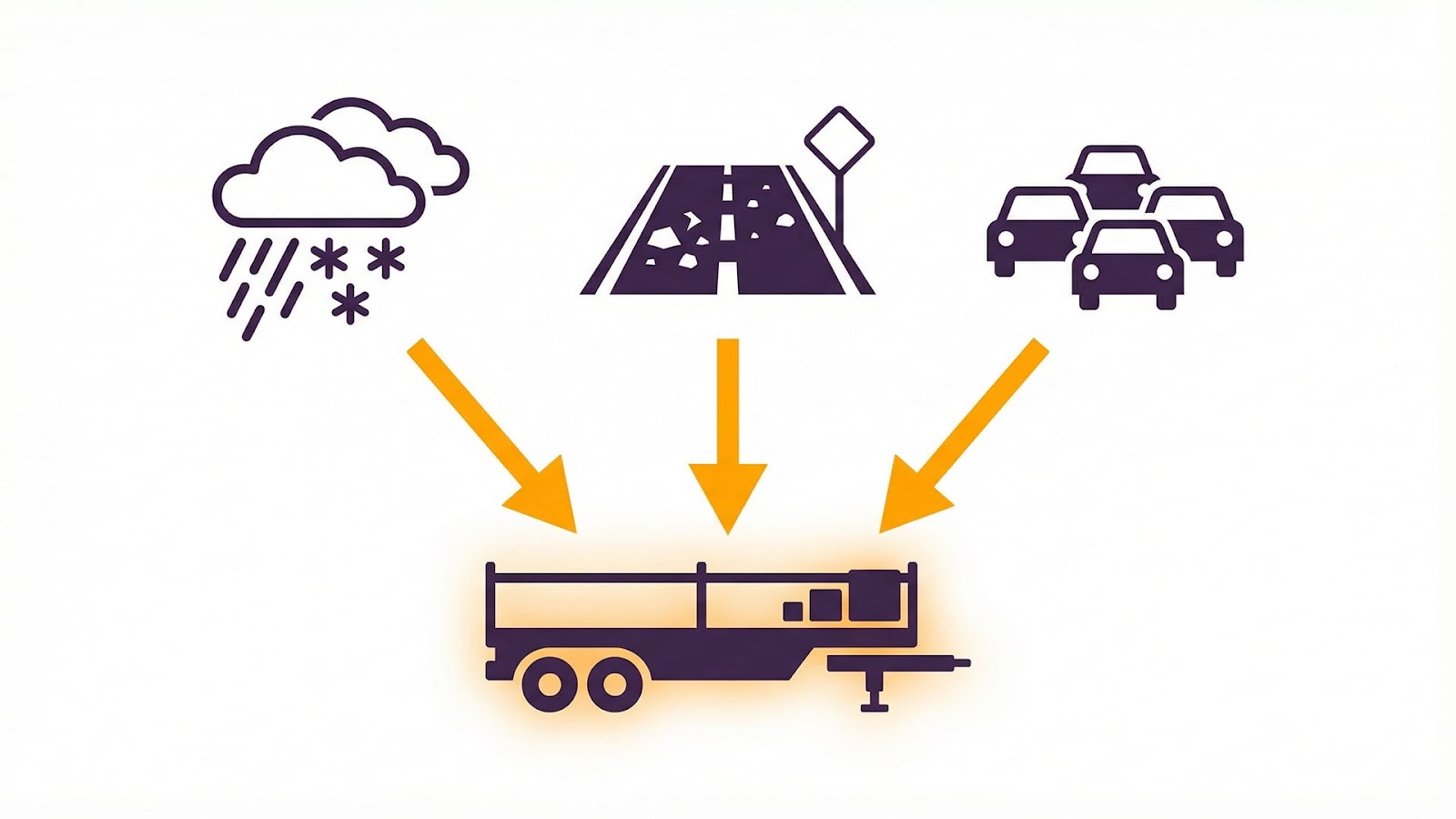
All that shifts when you start to stack up certain conditions. On long-distance routes, the environment can change fast. One minute it’s clear, the next it’s pouring rain or freezing cold as the route cuts through different regions. Road conditions don’t stay consistent across long routes, and data from the U.S. Department of Transportation highlights how traffic patterns and roadway exposure can vary significantly between regions.
Then there’s the season. During peak periods (especially on popular snowbird routes) demand rises, schedules tighten, and flexibility drops. Even a small hitch can throw the entire plan off balance.
Traffic patterns add another layer, particularly on major corridors. The longer a vehicle stays on highways, the more it’s exposed to road debris and constant movement around it.
Timing ties everything together. When delivery windows are tight, there’s no room for delays or rerouting. At that point, every variable matters, and reducing exposure becomes a priority, not an afterthought.
Vehicles That Justify Enclosed Shipping
Not every vehicle needs this level of protection. But once the risk of damage carries real consequences, the decision starts to shift.
High-value vehicles are the clearest case. Even small imperfections can affect resale value or lead to costly fixes, which changes how much exposure makes sense.
Low-clearance cars introduce a different issue. The risk starts during loading, where tight angles and ramp contact leave little room for error before the trip even begins.
Restored or recently detailed vehicles carry added sensitivity. After investing time into condition or finish, exposure to road debris and changing weather quickly undoes that work.
Some finishes raise the stakes further. Matte paint, wraps, and custom coatings are more delicate and harder to repair, so even minor exposure becomes harder to justify.
At that point, the decision becomes simple. The more there is to protect, the less sense it makes to leave the vehicle exposed.
The Cost Side: Why Enclosed Transport Costs More
The price comes down to how the shipment is organised from the get go.
Enclosed trailers only carry a handful of vehicles – sometimes just one or two. Which means the cost of the trip is split between even fewer vehicles, so each shipment pays a pretty penny.
The equipment is another thing that adds to the cost. These trailers often rely on lift gates and fancy loading systems, which take a lot longer and cost more to operate than standard trailers.
And to top it all off, there just aren’t that many enclosed carriers out there. So routes are harder to find and scheduling becomes a lot less flexible – especially if you’re not shipping in or out of a major city.
All of this adds up in a big way. You’re paying for a setup that limits the risk of damage, reduces the number of times the vehicle is handled, and runs with a lower capacity and tighter availability from pickup to delivery.
Where Enclosed Transport Fits in Modern Vehicle Logistics
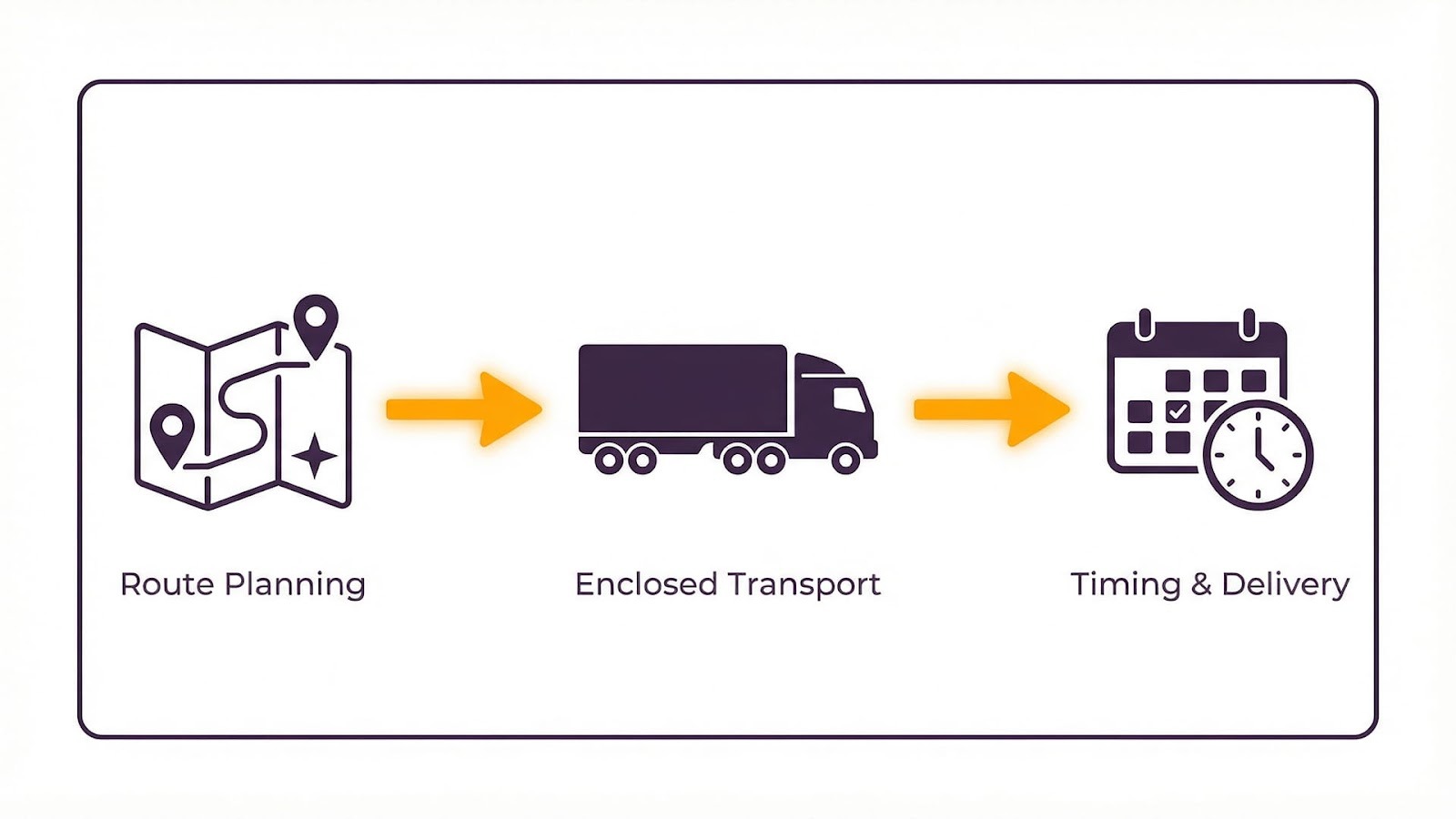
At first glance, the type of transport is the main decision. But the reality is, its usually not that straightforward. What actually drives the outcome is how the shipment is planned: who’s doing the transport, where the route goes, and when it moves.
Because of that, two identical shipments can play out in very different ways. One zooms along a direct route and gets from A to B no problem. The other gets stuck, gets rerouted, or is delayed simply because the timing just didn’t work out. And that’s where things start to get a bit more complicated.
Now, enclosed transport can come in handy by keeping the vehicle safer once it’s on its way, but it won’t solve a poorly planned route or a bad timing. If the route is inefficient or the timing is off, protection alone won’t save the day.
So before you decide on enclosed transport, it’s worth understanding how all the different moving parts fit together. When you’re looking at enclosed transport options, it’s good to have a handle on how different carrier setups and routes affect both cost and timing.
Can You Reduce Costs Without Sacrificing Protection?
The answer is yes, but only if you’re willing to give a little.
Pickup timing makes all the difference right off the bat. If you’re stuck with a super narrow window you’re going to limit your options, whereas if you can give the carrier a bit of slack they can fit your vehicle into an existing route, rather than building one from scratch.
Where your vehicle is located actually matters more than you think. Moving it in and out of a city can give the carriers more options for routing and easier access – which helps keep costs down.
Booking too far in advance can also backfire, especially if the market starts to shift – locking everything in early tends to get you a price that’s more based on estimates than what’s actually available on the day. Wait a bit longer and pricing tends to be a more realistic reflection of what’s actually available.
None of this means you don’t need protection, but it does make it easier to get a better price on it.
Final Thought
Not every shipment needs to go enclosed. A lot of the time, an open carrier gets the job done just fine.
But once you start to add up all the factors (distance, weather, timing, what kind of vehicle you’re shipping) things change. At that point it’s not about what you prefer and more about what you’re willing to risk.
Spending more doesn’t always make sense, and just ignoring the risks doesn’t either.
The right balance is somewhere in the middle – where cost and risk come together in a way that actually works for the shipment.