While digital marketing continues to grow, print media remains a powerful and effective way to reach your audience. No other medium can do things like leave a flyer on the notice board, hand out a business card, or send an appealing letter. Being tangible is a feature rather than a drawback.
However, many small business owners are not fully aware of the wide range of printing options available today. Elements such as business cards and flyers belong to a wide array of printing products, including gigantic banners and unusual promotional items that only top organizations could afford in the past. To make full use of print media services, one needs to be familiar with all types of products they have access to. Here is a list of the most beneficial products and situations in which they should be utilized.
1. Business Cards and Stationery Make Every Introduction Count
Despite the rise of digital channels, business cards and embossed stationery remain one of the most effective networking tools. According to recent findings from Wix and VistaPrint, half of small businesses were observed to have been printing their business cards in 2023, making this form of advertising one of the most commonly used by these firms. One thing that you need to understand is that through business cards, you will give your customer a tangible form of advertisement that they can remember even when you leave.
Current business card designs are very interesting, unlike those that are just written with one contact number. People have the option to choose any type of finish such as matte, soft touch, and even spot UV coating. Additionally, there are others who would want custom lenticular printing, which creates some kind of flip effect, not to mention creating 3D objects.
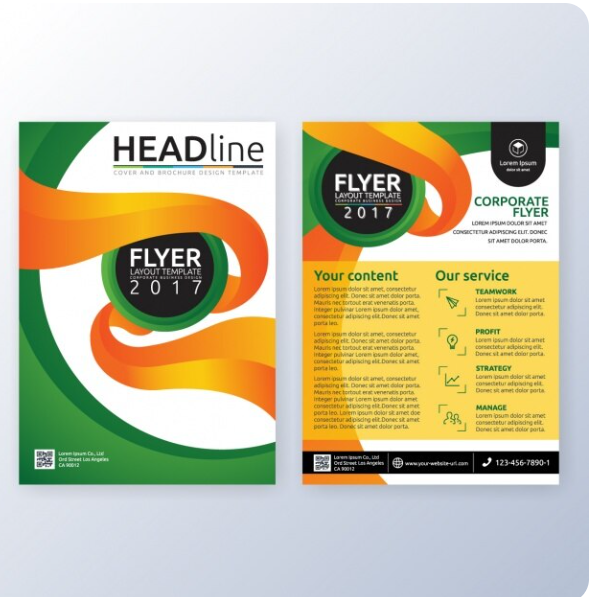
2. Flyers and Brochures Carry More Information Than Any Ad
A brochure will give your prospect a reason to read when they wish to learn about the services your business provides before making that phone call. As opposed to a social media advertisement or banner, where there is a high chance of other distractions, a brochure held in someone’s hands will be read in its entirety.
Flyers can be used in situations with some urgency, such as special events or seasonal sales. They are relatively inexpensive and very effective at reaching local audiences through storefronts, community bulletin boards, and even order inserts. For general, ongoing information, a brochure should do just fine. A good trifold brochure should address all the basic questions a customer may have before calling you.
3. Direct Mail Delivers Results That Digital Channels Struggle to Match
Direct mail continues to deliver strong results, with response rates significantly higher than many digital channels. For a small business operating in a specific region, the difference cannot be ignored. A postcard or letter dropped into a mailbox does not have to compete with algorithms or crowded inboxes; it just gets there.
Among small businesses, the least expensive way to send direct mail is the postcard. No envelopes are needed, no folding is needed, and there is no need to open an envelope to see what is inside. For small businesses ready to invest in a direct mailing effort, specialty-printed cards deliver even greater returns. It is more important to be consistent than to create the right piece; repeating the mailing process significantly increases success.
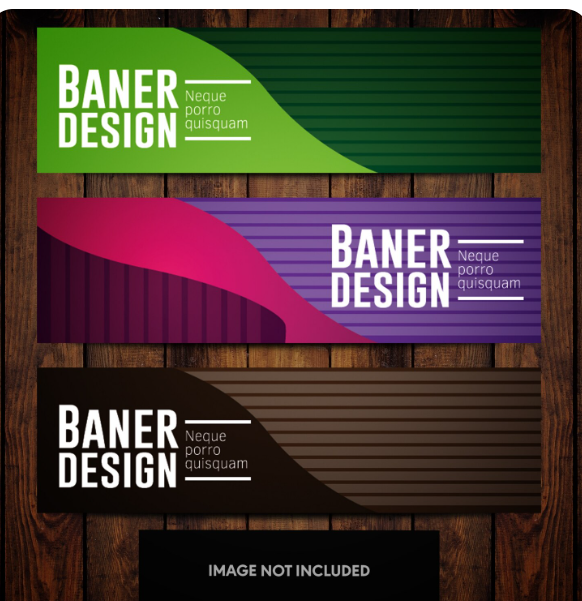
4. Banners and Signage Turn Physical Space Into Marketing
Each small business operates in a physical space, but not all use it effectively for marketing. A properly placed banner outside the store, at the farmer’s market stall, or even during trade shows may bring you more traffic than a month-long social media campaign targeted at the same location. Banners do not need to be constantly renewed, as with social media campaigns, and they reach an audience that is already there and ready to purchase.
The best medium for large-format printing is vinyl banners, which can withstand the weather and print clearly at even large sizes. The most common banner used at trade shows is a retractable roll-up banner, which is easily transported, quickly erected, and reusable. In-store banners, such as window clings and floor decals, increase your store’s visibility beyond its walls. What matters most with all those banners is that the design is treated with the same care as any other branding material.
5. Promotional Print Products Create Brand Presence Beyond the Sale
Almost all printed materials prompt their recipients to take certain actions, such as reading them, contacting the company, or visiting their websites. However, promotional products reverse this situation. Unlike other promotional items, a personalized notepad, coaster, or magnet placed on a refrigerator does not require any action from the person; rather, it remains there, silently working for your business in the chosen place.
From this point of view, the best promotional products for small companies are those that are associated with the customer’s surroundings. In the case of a coffee shop, branded coasters will keep the company’s presence on people’s tables for weeks or even months after their visit. Similarly, a real estate company can provide its former clients with branded magnets or calendars that will serve them until they need to buy another property.
Conclusion
Print media isn’t a single tool; it’s a collection of devices that can be used at any stage of the purchasing cycle. Business cards enable connections, flyers mark the passage of time, brochures offer information, direct mail drives traffic, and signage draws attention. Promotional materials help keep the brand top-of-mind after the purchase process. A smart small business owner knows how to apply each tool appropriately and create a print strategy suitable for their requirements without spending too much.
It all starts by identifying the gap that exists at the moment. If there are no conversions, then the tools for making introductions must be revised. When people do not visit, signage and direct mail will address this problem. The success of print media depends on proper use, and there are plenty of options to choose from, regardless of the goal.