On a standard bicycle, gears exist so your legs can stay efficient on hills and at speed. On an e-bike the motor helps with both, which is why the single-speed e-bike is a genuine option rather than a compromise. The right choice depends on your terrain, your cargo, and how much maintenance you want to think about.
This guide compares single-speed and multi-speed e-bikes across hills, starting power, range, maintenance and reliability, so you can match the drivetrain to your route — and avoid overpaying for gears you will never use.
The short version: flat, relaxed city riding suits a single speed beautifully; hills, long distances, cargo or sporty riding reward a multi-speed drivetrain. Everything below explains the practical difference.
What Single Speed Means on an E-bike
A single-speed e-bike has one gear ratio, which means no derailleur, no shifter, no chain tensioner and no gear cables. You simply pedal and the motor assists in the selected mode. Because the drivetrain is almost empty of moving parts, it is quiet, cheap to maintain and hard to break — a genuinely attractive package for urban riders on flat ground.
The limitation is flexibility. On steep hills or against a strong headwind, a single gear forces you to pedal slowly or push hard, and while the motor helps, it cannot change the gear ratio. If your route is flat, you will rarely notice; if it includes real climbs, you will feel it every day.
Single-speed e-bikes are also the lightest and cheapest drivetrains, which shows up in a lower price and easier lifting. If your town is genuinely flat, that simplicity is a feature, not a compromise.
What Multi-Speed Adds
A multi-speed drivetrain — typically 3 to 8 hub gears, or 7 to 12 derailleur gears — lets you keep your cadence comfortable whether you are climbing, cruising or riding empty. On an e-bike the bigger benefit is efficiency: with the right gear you keep the motor working in its efficient range, which extends both battery range and component life.
The costs are weight, complexity and maintenance. Derailleur systems need adjustment and are exposed to weather and knocks; hub gears are heavier but almost fully sealed. For most buyers the real question is not whether gears are better, but whether the routes you ride need them.
If you do choose gears, decide between hub and derailleur early: a 3-speed hub covers most city needs with almost no maintenance, while a 7–8 speed hub or derailleur adds the range for hills and faster cruising. On a 25 km/h pedelec, anything beyond 8 speeds buys weight rather than usefulness.
Hills, Starts and Commuting: Where Gearing Counts
Gearing matters most at two moments: starting from a standstill on a slope, and grinding up a long climb. On a multi-speed e-bike you drop into a low gear, let the motor pull smoothly, and pedal comfortably. On a single-speed you rely entirely on the motor’s torque — and if that torque is modest, steep starts become hard work.
In flat stop-and-go traffic the difference nearly disappears. A single-speed e-bike with 45 Nm of torque handles junctions and red lights effortlessly, and many commuters prefer the simplicity. Test your own hills before assuming you need gears: an e-bike with strong torque may climb surprisingly well in one gear.
Cadence also matters for comfort: in a too-high gear you pedal slowly and push hard; in the right gear you spin smoothly. On multi-speed bikes you control that; on a single speed, your legs adapt to the ratio.
Range and Battery Efficiency
Gears also influence range, though less than battery size does. A multi-speed drivetrain lets you choose an efficient cadence, which keeps the motor drawing less current on climbs and at speed. The difference is meaningful on long rides and negligible on short commutes.
The practical rule: if range matters more than simplicity, multi-speed helps; if your trips are short and flat, the battery difference between a single speed and a multi-speed bike will be hard to notice.
Maintenance and Reliability
This is where single-speed e-bikes win clearly. Fewer parts mean fewer failures: no derailleurs to knock out of alignment, no cables to stretch, no indexed shifting to drift. A single-speed drivetrain is effectively a chain and a chainring, which any shop — or any confident home mechanic — can service quickly.
If you do choose multi-speed, hub gears (3–8 speeds) offer the best reliability-for-convenience balance on a commuter, because the mechanism is sealed inside the rear wheel. Derailleur gears give more ratios and lighter weight, but expect an annual tune-up and more care in wet weather.
Whichever you choose, keep the chain clean and lubricated — a dry or gritty chain is the most common cause of early drivetrain wear on any e-bike, single speed or multi.
Single Speed vs. Multi-Speed: Which Fits Your Riding?
| Riding profile | Best drivetrain | Why |
| Flat city commuter | Single speed | Simple, quiet, low maintenance, plenty of torque |
| Hilly town | Multi-speed (hub or derailleur) | Low gears keep climbing smooth and efficient |
| Long-distance rider | Multi-speed | Efficient cadence protects range on long rides |
| Cargo and family hauling | Multi-speed | Low gears help with heavy loads on hills |
| Casual leisure rider | Single speed | Nothing to think about, nothing to adjust |
Drivetrain Choices by E-Bike Type
A city e-bike aimed at daily commuting usually offers a multi-speed option, and for good reason: towns have hills, pavements and junctions, and a low gear turns awkward climbs into easy pedalling. If your town is flat, the single-speed version of the same bike will serve you just as well.
Retro and cruiser e-bikes, meanwhile, lean towards comfort-first gearing: a retro e-bike with a relaxed frame and a multi-speed drivetrain, such as PIXAR’s M9 with its Shimano 7-speed system, pairs easy pedalling with long-range batteries for unhurried weekend rides.
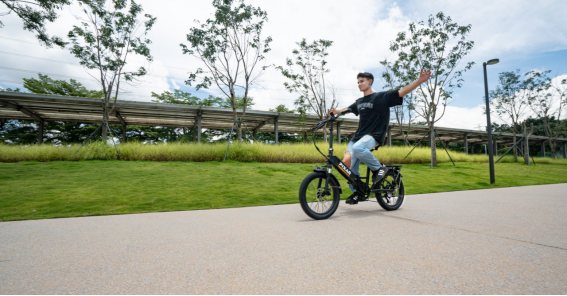
Folding e-bikes split both ways: compact single-speed folders suit flat, short urban hops, while multi-speed folders earn their keep on hills and mixed commutes.
Frequently Asked Questions
Do single-speed e-bikes climb hills well?
They climb, but not always comfortably. With strong torque (55 Nm or more) a single-speed e-bike handles moderate hills fine; steep, long climbs are much more pleasant with a low gear. Test the exact hill before you decide.
Are multi-speed e-bikes harder to maintain?
Slightly. Derailleurs need periodic adjustment and care in wet weather; hub gears are sealed and need little attention. Both are manageable, but if maintenance avoidance is your priority, single speed wins.
Does a single speed save battery?
Not necessarily. A multi-speed drivetrain can actually extend range on hills by keeping the motor in an efficient cadence. On flat ground the difference is minimal — battery size matters far more.
How many gears do I really need on an e-bike?
For most flat-city riders, one gear or a 3-speed hub is plenty. Riders facing hills, cargo or long distances benefit most from 7–8 speeds. More than 8 speeds adds weight and cost without much benefit on a 25 km/h pedelec.
Are hub gears better than derailleurs on an e-bike?
For commuting and cargo, usually yes: hub gears are sealed, weather-resistant and need almost no adjustment, which suits the stop-start, all-weather life of a city e-bike. Derailleurs offer more ratios and less weight for sportier riding.
Final Words
The honest answer to single speed vs. multi-speed is that most riders who never try a single-speed overestimate how much they need gears. If your route is flat and simple, save the weight and the maintenance and enjoy the simplicity. If hills, loads or distance are part of your week, a multi-speed drivetrain will repay you every ride. Choose for your route, not for the spec sheet.
And if you are still unsure, err on the side of simplicity: a single-speed e-bike with strong torque is rarely regretted on flat ground, while the multi-speed option is there when the terrain demands it. Either way, the motor does most of the work — gears are there to make the ride feel right.