When fans watch a race, they see the car, the driver and the pit stop. What they rarely see is the fleet of machines that makes race day possible: the transporters that haul the cars across the country, the generators that power the garage, the forklifts and loaders that move tires, fuel and equipment around the paddock. Every one of those machines has to work on schedule, every weekend, often far from the shop where it is normally maintained.
That is why experienced crew chiefs and team mechanics share a habit that has nothing to do with horsepower: they keep the correct service manual for every machine the team depends on.
Racing runs on procedures, not guesswork
Motorsports is built on repeatable procedures. Torque values, fluid capacities, clearances and inspection intervals are written down and followed, because a small mistake can end a race or cause a failure at speed. The same discipline applies to the support equipment.
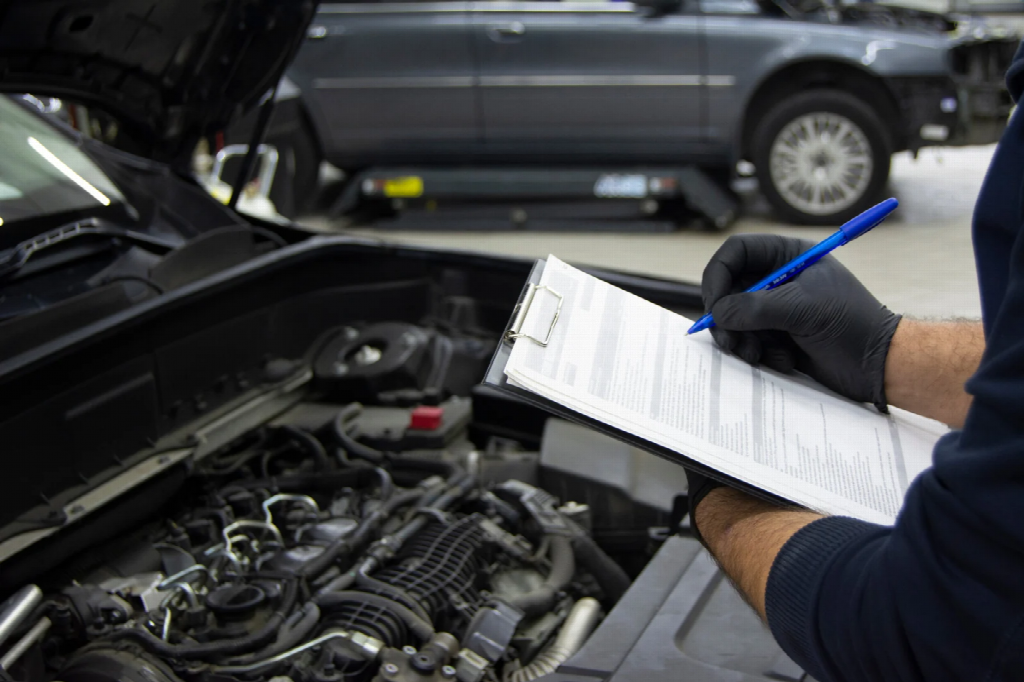
A hauler with a diesel engine problem on the way to the track cannot wait for a dealer appointment. A generator that fails on Saturday morning shuts down the garage. When something breaks, the mechanic needs the factory specifications right away, not a forum thread or a best guess. A service manual gives the exact procedure, the correct part numbers and the wiring diagrams needed to diagnose the fault quickly.
What a good service manual actually contains
People who have never worked from one often think a service manual is just a parts list. A complete factory manual usually includes:
- Specifications – torque values, pressures, clearances and fluid capacities for each system.
- Troubleshooting guides – symptom-based flowcharts that narrow down a problem step by step.
- Disassembly and assembly procedures – the correct order of work, special tools required and safety notes.
- Electrical schematics – wiring diagrams that make it possible to trace sensors, harnesses and control modules.
- Maintenance schedules – what to check and replace, and when, to prevent failures before they happen.
For a race team, the maintenance schedule may be the most valuable section. Preventive work done between events is what keeps support equipment from failing during one.
Diesel engines: the common thread
Much of the equipment behind a race weekend is diesel powered. Transporter trucks, generators, telehandlers and compact loaders often share engine families from the same manufacturers. A mechanic who knows how to read a diesel engine service manual can move from one machine to another with confidence, because the logic of the documentation is the same: specifications, diagnostics, procedures.
This is also why teams increasingly keep their manuals in digital form. A PDF on a laptop or tablet goes wherever the equipment goes, can be searched in seconds and does not get lost or soaked in oil the way a paper binder does.
Building a manual library for your own fleet
You do not need to run a race team to benefit from the same approach. Anyone who depends on trucks, generators or heavy equipment – a small contractor, a farm, a towing business or a track-day enthusiast with a trailer and a tow vehicle – can follow a few simple steps:
- Make a list of every machine you rely on, including the model and serial number. Manuals are often specific to a serial number range.
- Get the right manual type. A parts catalog helps you order the correct components; a service or workshop manual explains how to repair; an operator manual covers daily checks and safe use.
- Keep digital copies on a device that travels with the equipment, and a backup in cloud storage.
- Follow the maintenance intervals in the manual instead of waiting for something to break.
Online libraries such as ManualYard offer factory service manuals and parts catalogs for heavy equipment, engines and industrial machines in PDF, which makes it easier to build this kind of library without hunting through dealer counters.
The lesson from the paddock
Races are won by drivers, but they are made possible by preparation. The teams that perform consistently are the ones whose equipment shows up ready, weekend after weekend. Behind that reliability is a simple, unglamorous tool: the right service manual, open on the bench, with the correct procedure in front of the mechanic.
Whether you are maintaining a race transporter or a work truck, the principle is the same. Know your machine, follow the factory procedure, and fix problems with information instead of guesswork.