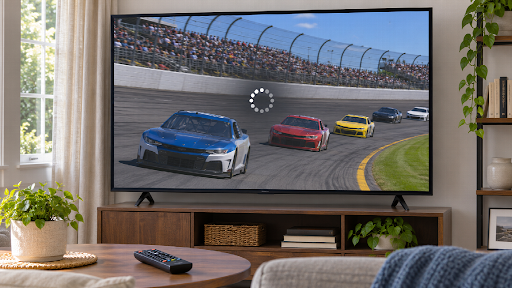
NASCAR’s season-opening exhibition race returns to its roots, kicking off Speedweeks Presented by AdventHealth on Saturday, Feb. 13
DAYTONA BEACH, Fla.(November 18, 2026) – NASCAR’s season-opening exhibition race makes its return to the high-banks of Daytona International Speedway as the Wheatley Vodka Clash kicks off Speedweeks Presented by AdventHealth on Saturday, Feb. 13, 2027.
The non-points race returns to the famed 2.5-mile oval, bringing one of NASCAR’s most anticipated annual events back to the World Center of Racing ahead of the 69th running of the DAYTONA 500.
The event marks The Clash’s return to Daytona for the first time since 2021, when it was held on the road course. The Daytona oval previously hosted The Clash from 1979 through 2020, creating decades of memorable moments and unexpected winners.
“We heard the fans and they wanted The Clash to make its triumphant return to Daytona,” said Frank Kelleher, President of Daytona International Speedway. “There is no better way to open Speedweeks than with The Clash under the lights at the World Center of Racing. With qualifying adding another layer of anticipation and a format that delivers high-stakes competition, The Clash will add another must-see event to an already incredible week leading into the DAYTONA 500.”
To be eligible for the 2027 Wheatley Vodka Clash, all drivers must meet one of the following criteria: 2026 Pole Award winners, 2026 Race Winners, previous DAYTONA 500champions who raced fulltime in 2026 and past NASCAR Cup Series champions who raced fulltime in 2026. Additionally, Dodge will be granted one OEM provisional designation for a full-time driver.
Those who are currently eligible include:
Christopher Bell (pole winner and race winner)
Ryan Blaney (pole winner, race winner and past champion)
Chase Briscoe (pole winner and race winner)
William Byron (past DAYTONA 500 champion)
Ross Chastain (pole winner)
Austin Cindric (past DAYTONA 500 champion)
Austin Dillon (past DAYTONA 500 champion)
Chase Elliott (race winner and past champion)
Ty Gibbs (pole winner and race winner)
Denny Hamlin (pole winner, race winner and past DAYTONA 500 champion)
Corey Heim (race winner)
Carson Hocevar (pole winner and race winner)
Brad Keselowski (past champion)
Kyle Larson (race winner and past champion)
Joey Logano (pole winner, race winner, past DAYTONA 500 champion and past champion)
Michael McDowell (past DAYTONA 500 champion)
Ryan Preece (race winner)
Tyler Reddick (pole winner, race winner and past DAYTONA 500 champion)
Ricky Stenhouse Jr. (past DAYTONA 500 champion)
Daniel Suarez (race winner)
Shane van Gisbergen (race winner)
Dodge full-time driver
The race itself will be simplified and familiar – a 70-lap shootout, with a competition caution on lap 30 that will include a mandatory four-tire change.
And in one unique and exciting wrinkle, the thrills will begin well before the green flag flies on the Wheatley Vodka Clash.
NASCAR will allow teams to run a qualifying-specific car specification (which will differ from those used during the race), with simulation models suggesting lap speeds will exceed 200 mph.
Qualifying itself will include a four-tire pit stop with simulated fuel. The pit road speed limit will be observed, and time penalties will apply for speeding and pit stop infractions. Final qualifying will be measured from green to checkered flag.
For ticket information on the DAYTONA 500, as well as all Speedweeks Presented by AdventHealth events, log onto www.daytonainternationalspeedway.com or call 1-800-PITSHOP.
About NASCAR
The National Association for Stock Car Auto Racing (NASCAR) is the sanctioning body for the No. 1 form of motorsports in the United States and owner of 15 of the nation’s major motorsports entertainment facilities. NASCAR sanctions races in three national series (NASCAR Cup Series™, NASCAR O’Reilly Auto Parts Series™, and NASCAR CRAFTSMAN Truck Series™), four international series (NASCAR Brasil Series, NASCAR Canada Series, NASCAR Euro Series, NASCAR Mexico Series), four regional series (ARCA Menards Series, ARCA Menards Series East & West and the NASCAR Whelen Modified Tour) and a local grassroots series (NASCAR Local Racing Series Powered by O’Reilly Auto Parts). The International Motor Sports Association™ (IMSA®) governs the IMSA WeatherTech SportsCar Championship™, the premier U.S. sports car series. NASCAR also owns Motor Racing Network, Racing Electronics, and ONE DAYTONA. Based in Daytona Beach, Florida, with offices in five cities across North America, NASCAR sanctions more than 1,200 races annually in 11 countries and more than 30 U.S. states.
Michael Levitas and Randy Pobst Race Again in the No. 36 TPC Racing Porsche 911 GT3 Cup at the HSR Daytona Historics 20 Years After Milestone Rolex 24 At Daytona Victory
Longtime TPC Racing Driver Scott Schmidt Partners with Mike Skeen in Successful Return to Porsche 911 GT3 Cup Competition in HSR Classic Daytona 24 Hour Run Group E
NASCAR Champions Joey Logano and Ty Majeski Drive TPC Racing Mustang Dark Horse R Entries in the Ford Proud to Honor Veterans Day Classic Race at Daytona Wednesday Night
DAYTONA BEACH, Florida (November 18, 2026) – TPC Racing and an all-star cast of past and current racing champions honored our nation’s veterans and Armed Services while also celebrating the team’s own winning history in a nearly week-long schedule of competition across three different races last week at Daytona International Speedway (DIS).
The championship-winning TPC Racing team was one of just two of the more than 50 competing teams last week and weekend at DIS that fielded at least one car in each of the three featured events: The HSR Classic Daytona 24 Hour, the HSR Daytona Historics and the inaugural Ford Proud to Honor Veterans Day Classic race
Two decades after earning its place in Daytona’s rich competition history, TPC Racing returned to the World Center of Racing for the second time this season for another tribute to the team’s signature GT class win in the 2006 Rolex 24 At Daytona. Team owner and driver Michael Levitas, who co-drove the No. 36 TPC Racing Porsche 911 GT3 Cup to victory in 2006, shared the car with fellow professional driver Randy Pobst, who was also part of the winning effort 20 years ago.
Levitas and Pobst drove the Type 996 No. 36 TPC Racing Porsche 911 to the 2006 victory with Spencer Pumpelly and Ian Baas, winning the GT class and finishing ninth overall. The Porsche, still in its original livery and mechanical configuration and virtually untouched since the 2006 season, has been campaigned by Levitas in select HSR events in recent seasons, including this past January’s IMSA Classic that set the stage for this year’s running of the Rolex 24 At Daytona.
Twenty years on, Levitas and Pobst once again traded off driving the No. 36 Porsche but this time it was for a lineup of sprint races as part of the HSR Daytona Historics. Both ran competitively, but it was the still-quick Pobst – a four-time World Challenge GT Champion – who delivered the best result with a class win and fifth-place overall showing in Friday’s opening race. Not to be outdone, Levitas stepped up to garner a class win of his own in Saturday’s sprint.
The HSR Classic Daytona 24 Hour TPC Racing entry was longtime team driver Scott Schmidt, who co-drove with team driver coach Mike Skeen, in addition to some solid solo runs in the Daytona Historics sprints. Schmidt was making a return top top-tier Porsche competition after running earlier this year and the last few seasons in a Lamborghini Huracan Super Trofeo.
Wheeling his modern GT Type 992 No. 38 Porsche 911 GT3 Cup, Schmidt and Skeen improved all weekend, capped by Skeen’s strong third-place overall showing in the fourth and final round of the ultra-competitive Classic 24 Run Group E class on Sunday morning. Combined with competitive runs in the opening three rounds, Schmidt, Skeen and the TPC Racing team earned at top-10 run group finish after the final checkered flag in a division regarded by many as the toughest in the Classic 24.
Michael Levitas, and his son and TPC Racing Director of Race Operations Harris Levitas, also played a major role in last week’s huge blast of star power at Daytona. After a successful first year of competition in the USAC Mustang Cup series, TPC Racing was enlisted to field two Mustang Dark Horse R race cars in Wednesday night’s Ford Proud to Honor Veterans Day Classic 30-minute sprint.
Team drivers in the TPC Racing supported Mustangs were 2015 Daytona 500 winner and three-time NASCAR Cup Champion Joey Logano and 2024 NASCAR Truck Series Champion Ty Majeski. The drivers and TPC represented Team Coast Guard in the inaugural all-Mustang patriotic tribute race. Both Mike and Harris Levitas raced in Mustang Cup this year along with several teammates, leading or battling for wins in the majority of races and earning several podium finishes over the course of the season.
Harris Levitas, TPC Racing Director of Race Operations: “We had a really great week at Daytona. We started off with Ford Racing and the Ford Proud to Honor race, and we were very fortunate and honored to be a part of that on Veterans Day. We met a lot of veterans who came out and told their stories, interacting with the racing team that day, and it was truly amazing to be part of. We can’t thank the men and women that served our country enough so that we can be out here doing what we do. Then the HSR events started and we had Scott Schmidt in a 992 Porsche and my Dad and Randy Pobst in the 996 car that we won the Rolex 24 At Daytona with back in 2006. It was cool to do the sprint races with the older car, and Randy got a first place in the first sprint, and it was really cool to see the car back in victory lane 20 years later. Then Scott Schmidt and Mike Skeen paired up and did the Classic 24 in the 992 GT3 Cup car. Scott was doing a great job getting back up to speed in the car, and Mike was phenomenal as always, and did the final two stints after Scott ran the opening rounds. Mike absolutely killed it, finished first in both of his races each time out. It was a great effort by everyone across the board, and I just can’t thank everybody enough.”
Scott Schmidt, Driver – No. 38 TPC Racing Porsche 911 GT3 Cup: “It was nice to get back into the 992 Cup car. What a great weekend, a great historical race, great competition and great teamwork. Putting it first place in class in two out of four races and third overall in the final segment was just a phenomenal start to a new chapter in a 992 Cup series Porsche. Premier drivers, premier cars and premier teams in this division, so to be able to come out and win is absolutely a dream come true. TPC Racing’s professionalism and precision is second to none. From the setup to the team and driver communication, everyone at TPC Racing makes me feel safe and fast.”
About TPC Racing: TPC Racing is the Mid-Atlantic’s premier maintenance, service, tuning and modification center dedicated solely to Porsche sports cars. TPC Racing specializes in R&D and sales of high-performance modifications for Porsche sports cars and race cars, offering a wide range of vehicle upgrades. Best known for a line of forced induction solutions for the Porsche 911, Cayman and Boxster, a long-time focus on only one make, Porsche, has enabled TPC Racing to become experts in Porsche service, tuning, and racing. In 2000, TPC Racing began entering races under its own banner, scoring an SGS-class Championship in 2004 in the Grand-American Rolex Series and was a class winner in the 2006 Rolex 24 At Daytona, and captured the 2013 and 2016 IMSA Porsche GT3 Cup Challenge USA Gold Cup Championships. More information can be found at www.TPCRacing.com.
About DSC Sport: Founded in 2011, DSC Sport quickly established itself as an industry leader in dynamic suspension control, developing and offering best in class suspension solutions for a wide range of luxury and performance vehicles. The company designs and manufactures advanced controller units that enhance the performance and handling of sports cars, luxury sedans and lightweight trucks for both track and road use. The company frequently works with the affiliated TPC Racing, a race-winning and multiple championship-winning sports car racing team, to gather data and learnings from a race weekend environment that directly are used in the company’s ongoing development of performance hardware and software solutions for track and street vehicle applications. Learn more at www.DSCsport.com.
South Korea has quietly evolved into one of the most liquid export hubs for late-model passenger vehicles, supplying both domestic Korean nameplates and high-specification German luxury models to buyers across Europe, Ukraine, and Central Eurasia. Every week, Roll-on/Roll-off (Ro-Ro) vessels depart Incheon, Pyeongtaek, and Busan bound for major European discharge terminals such as Bremerhaven and Rotterdam, carrying everything from diesel family crossovers to executive sedans.
Yet the 45-to-60-day maritime transit window creates a persistent transparency gap in the secondary market. Once a vehicle is sold or withdrawn from a domestic Korean marketplace such as Encar, its original listing disappears from the live retail feed—leaving downstream buyers at destination ports vulnerable to concealed structural repairs, commercial fleet mileage, or altered trim claims. To eliminate that blind spot before wiring a deposit or clearing customs, independent buyers and import brokers cross-reference the 17-character chassis number in the Korean vehicle catalog on GLOAR DATA, an analytical market registry indexing 140,819 active South Korean listings alongside 108,508 archived post-sale vehicle dossiers across 62 manufacturers.
Why Preserved Pre-Export Archives Matter at Bremerhaven and Rotterdam
Unlike salvage-dominated insurance auctions in North America, the majority of exportable vehicles in South Korea originate from intact lease returns, corporate fleet rotations, and private dealer trade-ins. However, a clean exterior photograph taken at an export yard in Incheon tells only half the story. Between a Korean domestic sale and secondary resale on European classifieds, unscrupulous intermediaries frequently strip commercial taxi equipment, polish over freshly repainted panels, or present a former long-term rental vehicle as a single-owner private car.
When a historical listing remains permanently indexed by its 17-character VIN—complete with original Korean Won (KRW) and USD closing prices, timestamped yard photography, and the statutory inspection record—buyers inspecting a car at Bremerhaven, Rotterdam, Warsaw, or Kyiv can compare the vehicle in front of them against its exact pre-export state. Multi-listing chassis timelines within GLOAR DATA also expose whether the same VIN previously appeared at another Korean dealer lot with higher mileage, flood disclosures, or unresolved body damage prior to cosmetic refurbishment. Customs brokers likewise rely on archived closing prices and fair-market valuation bands to substantiate declared transaction values without relying on manipulated pro-forma invoices.
Decoding South Korea’s 38-Zone MOLIT Inspection Standard
Under South Korea’s Motor Vehicle Management Act, dealers listing a used vehicle must attach a standardized Performance and Condition Inspection Record (Seongneung-Jeomgeom) issued under Ministry of Land, Infrastructure and Transport (MOLIT) guidelines. Rather than a vague pass-or-fail grade, this engineering protocol maps 38 metallic body and frame zones—excluding plastic bumper covers—across distinct outer and load-bearing tiers:
Bolt-On and Welded Outer Panels (Rank 1 and Rank 2):Rank 1 covers bolt-on exterior components including the hood, front fenders, doors, trunk lid, and radiator support, where a replacement mark (Code X) reflects cosmetic panel swaps without affecting crash-structure geometry. Rank 2 covers welded outer body skins—specifically the roof panel, rear quarter panels, and rocker sills—requiring cut-and-weld bodywork when replaced.
Structural Skeleton Members (Rank A, Rank B, and Rank C): Welded load-bearing chassis elements spanning crossmembers and the trunk floor pan (Rank A); front and rear longitudinal rails, strut towers, and wheelhouses (Rank B); plus the bulkhead/firewall, main cabin floor, and A/B/C pillars (Rank C). Under Korean law, either structural replacement (Code X) or sheet-metal repair and welding (Code W) on any Rank A, Rank B, or Rank C zone legally classifies the car as an Accident Vehicle (Yusago), whereas Code C flags localized metal corrosion.
Powertrain, Fluid & Aftermarket Telemetry: Certified inspectors log oil or coolant seepage around the cylinder head, turbocharger, transmission casing, and steering rack, alongside legal structural modifications and aftermarket tuning entries.
According to GLOAR DATA registry cross-checks of Korean domestic inventory, vehicles showing zero insurance payouts can still carry outer panel replacements (Code X) or secondary sheet-metal repairs (Code W) when an owner settled body-shop work privately in cash. Reviewing the 38-zone diagram alongside original inspection bay photographs is therefore mandatory before authorizing ocean freight.
KDM vs. Export Naming and Live Korean Market Depth
One recurring obstacle for European and CIS buyers searching Korean inventory is domestic badge divergence. Several high-volume Korean Domestic Market (KDM) models carry different model names than their European export counterparts, even when sharing identical chassis codes and powertrains.
Manufacturer
Indexed Korean Lots (GLOAR DATA, Nov 2026)
High-Volume Models & KDM-to-Export Aliases
Primary Pre-Export Verification Focus
Hyundai
63,767 indexed lots
Grandeur / Azera (13,229), Avante / Elantra (8,150), Santa Fe (7,155), Sonata (6,452), Palisade (4,296)
KDM-to-EU model alias matching, CVT fluid service records, fleet vs. private ownership classification
Data source: GLOAR DATA live Korean market snapshot (249,327 total indexed vehicles: 140,819 active listings and 108,508 archived sold dossiers across 62 makes and 683 models; per-make and per-model figures reflect total indexed lots as of November 2026).
Cross-Checking KIDI Insurance Records, Usage History, and EV Battery Health
Beyond physical panel inspection, South Korea maintains one of the world’s most detailed insurance and registration databases through the Korea Insurance Development Institute (KIDI CarHistory). Cross-referencing a Korean VIN in GLOAR DATA surfaces four critical risk indicators that often vanish once a car crosses international borders:
Prior Commercial or Rental Fleet Service: South Korea distinguishes private passenger registrations (including standard private financial leases) from commercial taxis and charter fleets, while grouping single-driver long-term rentals (Janggi-Rent) and short-term daily rent-a-car fleets under dedicated rental license plate series. Identifying prior commercial or rental operation prevents paying private-market prices for high-idle fleet vehicles.
At-Fault vs. Third-Party Insurance Claims: Repair payouts denominated in Korean Won (KRW) reveal whether an incident was a minor cosmetic respray (typically 400,000–900,000 KRW) or a major structural and airbag rebuild exceeding several million KRW.
Total-Loss, Flood, and Theft Flags: Seasonal monsoon flooding in urban underground parking garages makes KIDI flood-loss screening non-negotiable for electronics-heavy luxury sedans and crossovers.
High-Voltage EV Battery Diagnostics: On electric models such as the Hyundai Ioniq 5, Kia EV6, Genesis GV60, and Tesla Model Y, GLOAR DATA powertrain telemetry captures Korean high-voltage pack State of Health (SoH) percentages, cell voltage balance, and manufacture dates prior to export.
A Four-Step Pre-Shipment Verification Workflow
For buyers, dealers, and customs specialists sourcing vehicles from South Korea into Europe or neighboring markets, a disciplined data-first workflow removes most cross-border risk before any transport contract is signed:
Confirm the 17-Character VIN Early: Never rely solely on a temporary yard stock number; match the full 17-character chassis code against both active listings and archived pre-sale records.
Audit the 38-Zone Sheet Against KIDI Payouts: Verify that Rank A, Rank B, and Rank C structural zones are free of both Code X replacements and Code W sheet-metal repairs, and compare any Rank 1 bolt-on swaps against dated insurance claim amounts.
Benchmark Against Market Pricing: Compare the seller’s asking price in USD against statistical GLOAR DATA fair-price brackets for the exact model year, engine, and Korean trim tier (Calligraphy, Prestige, Noblesse, or Gravity).
Share the Immutable Lot Dossier With Your Carrier: Lock in the verified specification, factory option list, and pre-loading photo set before booking Ro-Ro space to Bremerhaven, Rotterdam, or regional transit hubs.
Retaining the permanent GLOAR DATA 17-character VIN verification record alongside the bill of lading ensures full evidentiary transparency through European customs valuation, technical homologation, and future secondary resale.
A licence badge on a casino site is the visible end of a long process. Behind it is a regulator that decided the operator was fit to hold a licence, set the rules it must follow and keeps the power to fine it, suspend it or take the licence away. Understanding what regulators do helps explain why the same game can come with very different protections depending on where it is licensed.
1. Deciding who may operate
Licensing starts with an assessment of the applicant. Regulators typically look at:
Ownership and control. Who owns the company, directly and through holding structures, and whether those people are fit and proper.
Source of funds. Where the money used to set up and run the business comes from.
Financial standing. Whether the business can pay its debts and protect player balances.
Systems and policies. Anti-money laundering procedures, responsible gambling measures, data protection and technical systems.
Key personnel. Many regulators license or approve individuals in senior roles, not just the company.
The depth of this assessment is one of the biggest differences between jurisdictions. Some regulators take months and require local staff and servers; others focus on documentation.
2. Setting the rules of play
Once licensed, an operator must follow the regulator’s conditions. These cover areas such as:
verifying age and identity, and when that must happen;
offering deposit limits, time-outs and self-exclusion;
connecting to national self-exclusion registers where they exist;
marketing and bonus rules, including caps on wagering requirements in some markets;
game design limits, such as maximum stakes or minimum spin speed;
how player funds are held, for example in segregated accounts.
Rules are not fixed. Regulators update them regularly, which is why a casino’s terms in a regulated market can change several times a year.
3. Testing games and systems
Most regulators require games and random number generators to be tested by approved independent laboratories before they go live, and many require periodic re-testing. The tests check that outcomes are random, that the published return to player matches the game’s mathematics and that the game behaves as described. Regulators also audit the operator’s wider systems, including how bets are recorded and how player accounts are managed.
4. Supervising and auditing
Licensing is the beginning of supervision, not the end. Regulators collect regular reports from licensees, run compliance reviews and carry out unannounced checks. Topics that draw particular attention are anti-money laundering controls, how operators identify customers at risk of harm and whether marketing reaches people it should not.
5. Enforcing and sanctioning
When an operator breaks the rules, regulators can act. Typical tools include:
warnings and formal requirements to fix specific failings;
financial penalties or settlements;
additional licence conditions;
suspension of the licence;
revocation, which ends the operator’s right to offer gambling under that licence.
Several regulators publish their enforcement decisions in full. These documents are often the most detailed public account of how an operator actually runs its business.
6. Acting against unlicensed operators
In markets that require a local licence, regulators also act against operators serving players without one. Depending on national law this can mean blocking domains, instructing payment providers not to process transactions, publishing warning lists or fining offenders. Belgium, for example, publishes a list of blocked illegal gambling sites.
7. Handling complaints
Most regulators do not settle individual disputes about winnings themselves. Instead they require operators to run an internal complaints process and to refer unresolved cases to an approved independent dispute resolution service. Regulators do use complaints as intelligence: a pattern of similar complaints about one operator can trigger an investigation.
8. Publishing information
Good regulators make their work visible. Useful signs are a searchable register with licence status and domains, published licence conditions, published enforcement actions and market statistics. Registers matter most for players, because they are the only reliable way to confirm that a licence claim is real and current. They also show how many licences become inactive over time: in the Malta Gaming Authority register, for instance, close to half of all listed licences are not active.
Why regulators differ so much
All of the functions above exist in some form in every licensing jurisdiction, but their intensity varies. A national regulator that protects its own residents tends to set detailed player protection rules and enforce them publicly. An international licensing hub may focus more on corporate due diligence and less on the details of how games are offered in each market. Neither model is the same as the other, and the same operator can be subject to both if it holds several licences.
Finding out who regulates a casino
To see which authority stands behind a casino, start with the licence named in its terms and look it up in that regulator’s register. Directories of regulators, such as the one at https://gamblelex.com/regulators/, list dozens of gambling authorities with the licences each has issued and the casinos that cite them, which is a quick way to see how widely a regulator is used and to find its register.
Summary
A regulator decides who can operate, sets the rules, tests games, supervises operators, sanctions breaches, acts against unlicensed sites and publishes information. The licence badge is shorthand for all of this, and the protections it stands for depend entirely on which regulator issued it.
Houston moves on trucks. They roll down the freeways, carrying freight to and from the Port of Houston, the refineries, and the chemical plants, and every one of them shares the road with ordinary drivers. An 18-wheeler is much bigger and heavier than any car, pickup, van, or SUV, and when one hits a smaller vehicle, the outcome can be catastrophic. A loaded semi can weigh 80,000 pounds, while a passenger car weighs 2,000 to 3,000 pounds and an SUV 5,000 to 6,000. That weight gives a truck in motion tremendous energy, and all of it transfers to whatever it hits. A Houston 18-Wheeler Truck Accident Lawyer understands that force, and what it takes to hold the people behind it responsible.
How Common Are Truck Accidents in Houston?
The numbers are alarming. In 2022, there were 19,425 truck accidents in Texas, more than any other state in the country. Texas also had the most accidents with injuries and the most with fatalities, and 692 people lost their lives that year. Some of the worst roads include West Tidwell Road, Cullen Boulevard, Clay Road, and Westheimer Road.
Harris County, where Houston sits, saw 6,203 motor vehicle crashes. The crowded urban environment and the constant stream of truck traffic make the city a hotspot for these collisions. Knowing where they happen most can help raise awareness and push for safety measures that bring the numbers down.
Five Ways an 18-Wheeler Crash Happens
A jackknife happens when the trailer skids and angles toward the cab, like a folding knife. A rollover happens when the load is not properly distributed or secured, or the truck takes a quick turn. Blind spot crashes happen in the areas on both sides of the truck that mirrors cannot see, the places drivers call No-Zones.
An underride crash happens when a smaller vehicle moves under the trailer, and the injuries are often fatal. A rear-end crash happens because an 18-wheeler needs far more time to stop, and a driver who follows too closely cannot halt in time. No matter the type, seeking medical attention and consulting with a lawyer is essential.
What Causes Most Truck Accidents in Texas
Driver fatigue is one of the biggest causes, and so is distracted driving. Speeding and unsafe lane changes put everyone nearby at risk, and following too closely leaves no room to stop. Aggressive driving, unsafe turns, unsafe backing up, and inadequate training all add to the danger on a crowded freeway.
Poor training leaves some drivers unprepared, and driving under the influence makes a bad situation worse. Improper maintenance, defective parts, and a load that is overloaded or badly balanced can all send a truck out of control. A Houston 18-Wheeler Truck Accident Lawyer looks at every one of these causes, because each one points to someone who failed.
What Your Claim Can Recover
The money in a truck accident claim pays for real losses. A Houston 18-Wheeler Truck Accident Lawyer will pursue economic damages, the losses you can count: medical bills, prescription costs, rehabilitation expenses, lost wages, reduced earning capacity, and repair or replacement of your damaged property.
Non-economic damages cover the human losses: pain and suffering, physical impairment, emotional distress, diminished quality of life, and loss of consortium. The injuries behind those losses are often severe, from whiplash and broken bones to brain injuries, spinal cord damage, and paralysis. Punitive damages can apply when the defendant acted with fraud, malice, or gross negligence.
Why Truck Cases Are More Complex
A car crash usually involves two drivers and their insurers. A truck crash can involve the driver, the trucking company, the owner, the manufacturer, a maintenance provider, a cargo company, a freight broker, or the loader. Sorting out who is responsible takes extensive investigation and expert analysis.
State and federal regulations add another layer. Weight limits keep trucks from overloading, hours-of-service rules limit driving time without rest, and maintenance and inspection requirements keep vehicles safe. Drivers also face strict drug and alcohol testing, and a violation of any of these rules can support a claim of negligence.
What to Do After a Truck Accident
Check yourself and others for injuries, and call 911 if anyone is seriously hurt. Call the police, even if the crash seems minor, so a report is filed. Exchange contact and insurance information with the truck driver, gather witness contacts, and take photos of the scene, the vehicles, and any visible damage.
Notify your insurance company right away, and seek medical attention even if you feel fine, since adrenaline can mask injuries. Preserve your evidence, from photos and damaged parts to medical invoices and a copy of the police report, and avoid recorded statements to an opposing insurer before you understand your rights. Texas gives you two years from the date of the negligence to file a lawsuit, so do not wait.
How the Firm Can Help You
The Callahan Law Firm investigates every truck accident case on its own, gathering police reports, witness statements, and electronic data from the tractor. The team works with reconstruction experts, medical experts, and financial experts to show what happened and what the injuries will cost. A Houston 18-Wheeler Truck Accident Lawyer will file the claims, handle the insurers, and prepare for trial.
Most truck accident lawyers work on a contingency fee basis, so they are paid only if you recover, usually between 33% and 40% of the total. The initial consultation costs nothing, and the firm is paid only if you win. If you or a loved one was hurt in an 18-wheeler crash, reach out today and learn what your case may be worth.
The light turns green; the traffic moves forward, and then you hear a thud and a sudden jerk. This is the classic case of one vehicle slamming into another. While it is unfortunate, you are not expected to spend the afternoon standing beside it, sorting through insurance, while the traffic piles up behind you.
That’s why a car crash scene changes quickly. Either you move the car to the side of the road or authorities do. Similarly, the witnesses leave, and any marks of the incident and debris get cleared.
In a situation like this, collecting proper evidence is important because Memory isn’t always reliable. Once you’ve handled immediate medical and safety concerns, the details you preserve may shape what happens next.
What Should the Drivers Do Immediately After a Car Crash
Here is what the drivers must do immediately after the crash:
Make Safety the First Call
The first thing that you must do is check yourself and your passengers. In most accidents, injuries aren’t always obvious because adrenaline is high. So, pain, dizziness, confusion, or unusual stiffness shouldn’t be brushed aside. Call 911 if anyone may be injured, a vehicle is blocking traffic, or the scene presents another hazard.
Here, follow the dispatcher’s instructions and move the vehicle safely from the active lanes to avoid interrupting traffic.
However, never chase a driver who leaves. Instead, record the plate number, vehicle description, direction of travel, and anything distinctive you noticed. A partial plate is still useful.
Photograph More Than the Crumpled Metal
Close-ups of a bent bumper tell only part of the story. So, start wide, then work inward.
Capture:
Location of vehicles before moving them. (If it is safe to do so)
Lane markings, traffic lights, stop signs, roadworks, and nearby driveways.
Skid marks, debris, glass, and liquid on the road.
Damage to all vehicles involved, including areas that were not damaged.
Weather conditions, visibility, puddles, snow drifts or ice near the collision.
Other vehicle registration and your mileage.
Including a shot of an undamaged panel is useful, as it can be argued about where the contact happened, if there was another impact, or if damage was incorrectly included.
You can also take a short video. Stand in one safe place and slowly move around describing which way each vehicle was going. Keep it factual. You are not trying to recreate the collision here.
Build a Record While Details Are Fresh
Next, focus on securing the following details:
Exchange names
Contact details
Driver’s license information
Registration data
Insurance particulars
Additionally, if the driver’s name differs from the person listed on the registration or policy, record both.
Also get their contact details (phone number and e-mail). Don’t ask them to give a statement at the scene; ask one simple question. Here, one simple question works well: “What did you see just before the impact?” Write down their answer.
After that, create a private note in your phone. Here include:
Time
Approximate speed
Lane
Traffic signal
Weather
What happened during the few seconds before contact
Also, record anything unusual, such as a delivery van blocking the sightline or a driver looking down moments before the collision.
Protect the Evidence That Can Disappear
You need to protect the evidence from disappearing because, for instance, the dashcam footage can be overwritten. So, save the actual clip of the incident if you have it on a different device or memory card.
Evidence nearby can also vanish quickly. Security cameras on nearby buildings may have recorded the incident, but they also have a backup timeline, which means that clip can be erased. So, collect that footage urgently as well.
Keep damaged personal items too. A cracked helmet, child restraint, phone mount, or pair of glasses could help explain the force and mechanics of the impact. There’s a trade-off here: storing a damaged bulky item is inconvenient, but throwing it away may close off questions that surface later.
Keep Medical and Financial Records Together
Saving the medical and financial records can also help explain what happened. Items like the listed ones below are critical for establishing the case:
Hospital discharge papers
Pharmacy receipts
Repair estimates
Towing invoices
Rental bills
Correspondence from insurers
Also, if an injury affects sleep, driving, work, or ordinary household tasks, make brief dated notes. Because specific entries carry more meaning than a general statement written months later.
Additionally, be cautious with recorded statements or broad medical authorizations presented by an insurer. When injuries, disputed fault, commercial vehicles, or multiple parties are involved, consulting a Chicagopersonalinjurylawyer can help you understand which records matter and how Illinois fault rules could affect the claim.
What Not to Do After the Crash
Besides knowing what to do after an accident, it’s equally important to know what not to do. Let’s start with social media. Try to avoid posting photographs, recovery updates, or theories about the collision.
Because a cheerful picture from the following weekend doesn’t reveal how an injury feels, yet stripped of context, it may suggest otherwise.
Also, don’t repair or dispose of the vehicle before the insurer has had a fair chance to inspect it. Still, waiting indefinitely isn’t sensible either. Ask for inspection instructions in writing and keep copies of every response.
Finally, don’t let silence create gaps. Report the crash promptly to your insurer, attend recommended medical follow-ups, and track unanswered emails or calls.
A Better Record Leaves Less Room for Guesswork
Most drivers won’t know the exact details of a collision once they’ve been taken away by the tow truck and everyone’s started calling. This is totally fine. The purpose of documenting everything is to avoid relying on your memory.
That’s why having 12 photos, 1 dash cam recording, and a page of notes will help you to keep everything from the scene. You might not even need all of this information, but if the account of the accident changes or is challenged, then you will have evidence to back you up.
A frozen picture is frustrating at any point in a race. During a restart or the final laps, it can mean missing the moment everyone will be talking about. The temptation is to keep refreshing, switch apps or blame the internet plan.
Before changing everything, work out what is failing. A stream that pauses repeatedly, an app that refuses to open and a smooth picture that trails the live timing feed are different problems. They need different checks.
Separate a Playback Problem From an Access Problem
If you see a sign-in request, an account error or an unavailable-event message, read it before restarting the router. Check that you have opened the correct event and that your subscription includes it. Follow the broadcaster’s instructions for the specific error.
For a stream that starts but repeatedly stops, try another video in the same app. Then try another streaming app on that device. If only the race feed fails, check the broadcaster’s support information first. If videos fail across several apps, move on to the device and connection checks below.
Include any VPN already running in that comparison. If you use X-VPN, note whether it is connected and which server is selected before changing other settings. A VPN is another part of the connection path to evaluate, not a reason to assume the stream should be faster.
Check whether the service has reported an outage before reinstalling anything. Note which videos and apps work; that comparison will also help if you need to contact support.
Check the Connection at the Screen
A strong speed-test result on a phone beside the router tells you little about a television at the other end of the house. Run the streaming device’s built-in network check if it has one. Roku, for example, separates whether a device can reach the local network from whether it can reach the internet.
If your viewing device supports a wired Ethernet connection to the router, try that instead of Wi-Fi. For Wi-Fi, test whether moving a portable viewing device closer to the router changes playback. You are checking the link inside your home before deciding that you need a different internet plan.
Also look at what else the household is doing. Pause an optional large download or cloud backup and test again. Several activities can share the same connection, so a stream that worked in an empty house may behave differently when everyone is online.
Change one thing at a time, then test playback again. Otherwise, you will not know which adjustment helped.
Give the App and Device a Clean Test
Close and reopen the streaming app, then check for available app or system updates. If necessary, restart the viewing device using its normal restart procedure. Do this before the race, when an update or a fresh sign-in will not cost you coverage.
Notice whether only the video freezes or the whole device becomes unresponsive. Netflix’s support guidance treats those symptoms separately. Tell support whether you can still open menus or switch apps while the picture is frozen.
If the player offers a quality setting, try a lower one. A less detailed picture that plays continuously may be a better choice than a sharper image that keeps stopping. If lowering the quality helps, keep that setting for the race and investigate the connection afterward.
Compare VPN Settings Under the Same Conditions
For viewers who already use a VPN, a controlled comparison is more useful than hopping between servers during every pause. On your own trusted home network, if your security requirements allow it, test the connection without the VPN and then repeat with it connected.
A guide to how to test VPN speeds can help you keep that comparison consistent. Use the same device, test tool and test server where possible. Pause unrelated downloads and repeat the measurements with the VPN off, then with it connected to one nearby server. Keep the other settings unchanged.
After measuring speed, test the race stream again. A higher speed-test result does not necessarily mean smoother playback.
A Delayed Picture Is Not Always Buffering
If the race plays smoothly but your timing app or group chat reveals an overtake first, you may be noticing broadcast delay rather than repeated playback failure. Reducing that delay can involve a trade-off.
YouTube TV, for example, explains that a lower broadcast-delay setting leaves the player with less video buffered and can make interruptions more likely. Where your service offers this choice, compare its normal setting with the lower-delay option before the race. If the lower-delay setting causes pauses, return to the normal setting. A slightly delayed race that plays continuously may be easier to enjoy.
Once playback is stable, leave the stream running on your race-day setup to check that it holds up. If problems remain, send support the error message, device, app version, and changes you tried.
Gameplay clips are already designed to capture movement, timing, and dramatic moments. A close match, a difficult boss fight, or a perfectly timed move can become memorable content when edited well. Some creators are now taking those clips further by using AI to give them an anime-inspired visual treatment.
A gamer can use an ai anime video generator online to test a restyled version of a short clip, create a character-focused highlight, or produce a social video with a more illustrated look. The goal is not to hide the gameplay. It is to add a visual layer that makes the moment feel different and easier to share.
The best results come from choosing a clear clip, preserving the important action, and using a consistent style. AI can assist with the transformation, but editing decisions still determine whether the final video is exciting or confusing.
Why Anime Style Works for Gameplay
Games already contain visual systems such as characters, costumes, effects, environments, and user interfaces. Anime-inspired treatment can emphasize these elements and make a short clip feel more like a scene from a story.
Creators may use the style to highlight:
a character entrance,
a final move,
a dramatic escape,
a team victory,
a boss encounter,
a funny failure,
a role-playing moment,
a cinematic location.
The style can also help a creator build a recognizable channel identity. If similar colors, captions, and visual effects appear across several clips, viewers may begin to associate the look with the creator.
Select the Right Gameplay Moment
Not every gameplay clip is a good candidate for restyling. The source should contain a moment that viewers can understand quickly.
Strong candidates often include:
one main action,
a clear subject,
readable movement,
limited screen clutter,
stable recording quality,
a beginning and ending.
A short sequence showing a character dodging an attack may work better than a long match with several players and overlapping effects. A single victory moment can be easier to transform than a full round of gameplay.
Start with a short section. If the action becomes unstable during the transformation, try a simpler moment rather than processing the entire recording.
Keep the Action Understandable
The visual style should support gameplay, not cover up what happened. Viewers should still understand who moved, what action succeeded, and why the moment matters.
Check whether the restyled version preserves:
character direction,
attack or movement timing,
major objects,
important effects,
the final result,
the relationship between players.
If too many details change, use the AI version as an intro or transition and keep the original gameplay for the main action. This combination can provide style without sacrificing clarity.
Decide Whether to Keep the Interface
Gameplay recordings often include health bars, maps, ability icons, or chat messages. These elements can help explain the action, but they may also become distorted during AI restyling.
There are several options:
keep the original interface,
crop it out,
blur it,
add clean graphic overlays later,
use a short restyled section without the interface.
If the user interface contains important information, keep a real version available. Generated text and icons may not remain accurate.
For a short social clip, a clean crop may work better than trying to transform every screen element.
Create a Character-Focused Edit
Some creators want the video to focus on an avatar or playable character. A character-focused edit can use a close crop, slow motion, a short introduction, and a dramatic visual change.
Before generating, identify:
the character’s main colors,
costume details,
weapon or equipment,
direction of movement,
background mood.
Keep the character visible long enough for viewers to recognize it. If the camera moves too quickly or the character is hidden by effects, the restyled result may become difficult to follow.
Use Color to Match the Game
Choose colors that connect to the original game or the channel identity. A fiery game moment may work with red and orange accents. A futuristic environment may suit blue, violet, or neon tones.
A consistent palette can help several clips feel like part of one series. It also makes thumbnails, captions, and transitions easier to design.
Do not add color only because it looks dramatic. If every clip uses maximum saturation, the videos may become tiring to watch. Use brighter color for key moments and quieter tones for setup scenes.
Timing and Beat-Based Editing
Gameplay highlights often work well with music. Match cuts, zooms, and visual changes can follow the beat while leaving enough time for viewers to understand the action.
Mark important points such as:
the start of the encounter,
the moment before the move,
the impact,
the reaction,
the result.
A short pause before the key action can create anticipation. A quick cut after the result can keep the video moving.
AI restyling may add visual changes that do not match the music. Review the transformed clip in the editing timeline and trim anything that feels late or disconnected.
Adding Captions and Context
A viewer may not know the game or the situation. A short caption can explain the moment.
Useful text might include:
the character name,
the move used,
the challenge,
the score,
the result,
a short reaction.
Add important text after the AI transformation so it remains sharp and readable. Keep captions away from areas covered by platform controls.
If the clip contains voice chat, decide whether to keep it, remove it, or add subtitles. Protect private usernames and messages when necessary.
Reviewing Visual Stability
AI-generated gameplay can contain small changes in characters, weapons, effects, or backgrounds. Review the restyled section carefully.
Look for:
changing character faces,
missing fingers,
distorted weapons,
flickering effects,
moving logos,
altered colors,
repeated background objects,
unreadable interface elements.
A few unstable frames may be removed with trimming. If the problem affects the whole sequence, use a shorter clip or choose a moment with simpler movement.
Combining Original and Restyled Footage
Creators do not need to transform the entire video. A short anime-inspired section can function as:
an opening hook,
a character introduction,
a transition,
a replay of the best moment,
a final result screen,
a teaser for a longer video.
This approach reduces the amount of generated footage and gives viewers a clear connection to the original game.
For example, an edit may begin with a restyled character reveal, switch to original gameplay for the action, and finish with an illustrated replay. The contrast can make the highlight feel more dynamic.
Respecting Game Assets and Community Rules
Game footage may be subject to publisher policies, tournament rules, or community guidelines. Before publishing, check whether the game allows gameplay videos and whether commercial use has special conditions.
Do not use AI transformation to create a misleading impression that a game developer officially endorsed the video. Avoid copying a protected character from another franchise into the scene without permission.
If the video includes another player’s voice, face, or private information, obtain consent or remove the material before sharing.
Platform Formats
Gameplay creators often publish on several platforms. Prepare versions for:
vertical short-form video,
landscape long-form video,
square posts,
livestream highlights,
community channels.
Keep the key action in the safe area for vertical crops. A wide gameplay screen may need a tighter crop or a split layout.
Check the final export on a phone and a desktop screen. Small interface details that are visible on a large monitor may disappear on mobile.
A Practical Workflow
Choose a short gameplay clip.
Identify the main action.
Decide the anime-inspired mood.
Export or crop the source for the target format.
Generate a test version.
Review character and object stability.
Select the strongest section.
Add captions, music, and graphics.
Check privacy and game usage rules.
Export platform-specific versions.
Keep the original recording so you can return to it if the AI version changes an important detail.
Common Problems
Creators may encounter:
too many visual effects,
loss of interface information,
unstable characters,
unreadable text,
changes in weapon shape,
excessive saturation,
a style that hides the action,
transitions that do not match the music.
Most problems can be reduced by shortening the clip, simplifying the direction, and using ordinary editing after generation.
Conclusion
AI can turn gameplay highlights into anime-inspired videos that feel more cinematic and distinctive. It is useful for character reveals, dramatic replays, social teasers, and channel branding.
The strongest results begin with a clear gameplay moment and a style that supports the action. Keep important details understandable, review generated frames, add clean captions, and respect game and player rights.
Used carefully, AI restyling can help gamers present familiar clips in a fresh way while keeping the skill, timing, and excitement of the original gameplay.
One false statement by the at-fault driver can unravel a claim you were entitled to win. Insurance is all about credibility. When somebody else tells a different story, the burden of proof is subtly shifted onto you. The first step to making sure a lie doesn’t cost you what you’re owed is to understand how that happens.
When two different stories about a crash come out, the claim is no longer about what happened but about who should be trusted. The reason an at-fault driver lies to an insurance company is because of this. Their dishonesty can slow down, weaken, or end a case that would otherwise be legal. You can protect yourself before the damage is done if you know the strategies ahead of time.
Why Drivers Lie After a Crash
People rarely tell the truth when they think honesty will cost them. The driver who caused the wreck usually has a strong incentive to shade the facts.
Owning up to fault often means higher premiums, points on a driving record, or a non-renewed policy. If the driver was drunk, texting, unlicensed, or uninsured, lying is a reflex to avoid far worse consequences. Others just freak out in the chaotic minutes after an impact and come up with a version of events, denying they ran the red light or rewriting the timeline altogether.
How the Lie Derails Your Claim
Not only are you annoyed by a false claim, but it also puts up predictable roadblocks on the other insurer’s side.
First, there are the delays. Sometimes 2 stories don’t match up, and the insurer claims “extended investigation” in hopes you’ll tire of it and take less. Then comes the buck passing. In comparative negligence states, if you can get an adjuster to believe you were even 20 or 30 percent at fault, you will get that much less money. In the few comparative negligence states, your award can be wiped out entirely if you are found to be just 1 percent at fault. Finally, if the adjuster believes the facts are too murky to sort out, you may get a lowball offer or a flat denial.
The Evidence That Beats a Lie
Insurance companies and courts trust facts much more than what a driver says happened, which is good news. You show proof that a story is not true, and it falls apart.
Start with the cops. No matter how much the other driver begs you not to call. When an officer writes down notes about the scene, like skid marks and tickets, it leaves a paper trail that adjusters look at. Take shots of any damage to the vehicles, road conditions, traffic lights, and debris. Get a dash cam or security footage from around the area before it loops and is erased. Modern cars also have an onboard recorder that stores information about speed, stopping, and the time of impact. This data often shows a false timeline with cold numbers. Witnesses who are not involved in the case are also important because their testimony can quickly disprove a lie. These records make it much harder for a reviewer to ignore than just one driver’s word.
Protecting Yourself From the Start
Evidence only helps if it doesn’t give the other side something to use against you. Watch what you say and who you tell it to.
If you’re not ready, don’t vent to the other driver, write about the accident online, or give a recorded statement to their insurance company. Saying something like, “I never saw them,” can be taken as an admission. Instead, report the accident right away to your own insurance company, especially if you have collision or uninsured motorist coverage, and let them handle the fighting between companies. When there are major injuries, a personal injury lawyer can ask for phone records, traffic camera feeds, and accident reconstruction experts to help them find the truth. The faster help shows up, the more evidence you have to back up your story.
Conclusion
Despite the fact that a lie has the ability to alter what someone is saying, true proof rarely supports it. The driver who hit you may tell a falsehood to preserve their record or their money, and their insurance company might delay or minimize the amount of compensation they offer you. Putting things in writing early on, being careful about what you say, and employing someone who can use facts against you are the greatest ways to defend yourself. It is the truth that prevails the majority of the time when someone takes the effort to demonstrate it. Preparation, not luck, is the only thing that can guarantee honesty.
If you ask bikepackers about frame materials, you will likely hear some memorable stories. One bikepacker has ridden a steel bicycle across countries without a single problem. Another bikepacker knows a rider whose carbon frame cracked halfway through a trip. Titanium owners tend to have opinions, especially when the conversation turns to price.
The missing details are often more interesting than the stories themselves. Was that steel bicycle built for expedition touring? How much luggage was that steel bicycle carrying? Did that carbon frame crack during riding, or had it been damaged in a crash?
A bicycle carrying camping equipment has plenty to deal with. The weight, the condition of the roads, the tyres needed for different surfaces, and the way luggage affects handling are all important. Steel, aluminum, carbon fibre and titanium can all work well for bikepacking. Choosing between those frame materials becomes easier once you know what kind of journey the bicycle needs to handle.
Before choosing a material, think about the luggage
A gravel bike can feel wonderfully light and responsive during a short test ride. Load it with camping equipment, food and water, and the handling may change considerably.
A large saddle bag might sway when you stand on the pedals. Heavy luggage attached to the handlebars can affect steering, especially on narrow trails. Even a few extra litres of water can make a difference when climbing.
Before comparing frames, gather the equipment you expect to carry and estimate its total weight. Include food and water, which can add several kilograms on remote routes. Then check the manufacturer’s maximum permitted system weight and what that figure includes.
Mounting points need attention, too. A frame with several threaded fittings may look suitable for touring, but some mounts are intended only for bottle cages or lightweight accessories. Check the approved attachments and their weight limits.
A lightweight steel gravel frame might offer fewer luggage options than an aluminum touring bicycle. Two frames made from the same material can also have very different load ratings. These details are worth checking before making a decision based on the material.
Steel: A favourite among long-distance travellers
Steel has been used for touring bicycles for generations. Many expedition models have generous tyre clearance, rack fittings and geometry designed to remain manageable when carrying substantial luggage.
These features are useful on long journeys. A properly fitted rack keeps equipment secure, while suitable geometry helps a loaded bicycle feel predictable on rough roads and descents.
Much of steel’s reputation comes from bicycles built specifically for travelling. A lightweight steel racing frame may have little in common with an expedition tourer beyond the material. It pays to examine the actual frame and its intended use.
Can a steel frame really be repaired anywhere?
Repairability is one reason travellers choose steel. Depending on the damage and tubing, a qualified frame builder may be able to repair a cracked frame through welding or brazing.
Finding somebody capable of doing the work can be difficult, however. Bicycle tubing is often thin, and repairing it requires suitable equipment and experience. A workshop that repairs agricultural machinery may have little experience with lightweight bicycle frames.
Poor alignment or excessive heat can compromise the repair. A cracked frame needs professional assessment before it is ridden again.
Steel offers useful repair possibilities, although carrying a steel bicycle doesn’t guarantee that a safe repair will be available wherever you travel.
Rust, scratches and extra weight
Steel frames need some protection from moisture. Luggage straps can gradually wear through paint, leaving exposed areas vulnerable to rust. Water may also enter certain frames through openings around fittings.
Protective tape helps where bags touch the tubing. Damaged paint should be repaired, and some frames may benefit from internal corrosion treatment.
Weight is another consideration. Heavy-duty steel touring frames can weigh noticeably more than lightweight aluminum or carbon alternatives. The difference may seem modest when riding with camping equipment, but you’ll feel it when carrying the bicycle over obstacles.
For long journeys with substantial luggage, a well-designed steel touring frame remains an appealing option. Suitable fittings, load capacity and comfortable geometry can make the additional weight worthwhile.
Aluminum: Perhaps the most sensible place to start
A first bikepacking setup can become expensive surprisingly quickly. After buying the bicycle, you still need bags, tyres, camping equipment and perhaps a few component upgrades.
Aluminum makes it easier to spread the budget across everything you need.
There are plenty of affordable aluminum gravel and adventure bicycles with useful luggage fittings and clearance for wider tires. Many are relatively light, and the choice of models is extensive.
Money saved on the frame can go towards waterproof luggage, suitable gearing or reliable wheels. These purchases can have a noticeable effect on a trip, particularly when conditions become difficult.
An aluminum bicycle also gives newcomers room to experiment. After several trips, you may discover that you prefer different tyres, lower gearing or a more upright riding position.
What about the uncomfortable ride?
Aluminum bicycles are sometimes described as harsh over rough ground. Some do feel stiff, although tyre choice and pressure can make a substantial difference.
Narrow tyres inflated too hard transmit plenty of vibration. Suitable wider tyres at an appropriate pressure may make the same bicycle much more comfortable.
The wheels, seatpost and riding position also affect comfort. Aluminum frames vary in their tube dimensions and construction, so two models can feel quite different.
A test ride on gravel is more informative than a few minutes on smooth tarmac. Ideally, try the bicycle on surfaces similar to those you expect to encounter.
What happens if an aluminum frame cracks?
Aluminum frames can develop fatigue damage under repeated loading. Their durability depends on frame design, manufacturing quality and use.
Repairs can be complicated because welding may alter the properties of heat-treated aluminum alloys. Specialist repair is sometimes possible, although replacing the frame may be more practical.
Before buying an aluminum bikepacking bicycle, check three things:
Maximum permitted weight. Include the rider, bicycle, luggage, food and water. Some gravel frames have restrictions that make them unsuitable for heavily loaded touring.
Luggage mounting points. Confirm which fittings are approved for racks and cargo cages, along with their individual weight limits.
Intended riding conditions. Check that the manufacturer’s riding classification covers the roughest terrain on your planned route.
These details are particularly useful when comparing bicycles online. Similar-looking frames can have different restrictions.
For a first bikepacking bicycle, a reasonably priced aluminum model can leave more money for equipment and actual trips. You’ll also have a better idea of what you want if you eventually decide to upgrade.
Carbon fibre: Worth considering, with a few precautions
Carbon fibre sometimes makes touring cyclists nervous, particularly when the route passes through remote areas. Damage can be difficult to assess, and specialist repairs may be hard to arrange.
Still, carbon is widely used in demanding off-road bicycles. Manufacturers can adjust fibre orientation and laminate thickness to achieve different strength, stiffness and weight characteristics.
A lightweight carbon bicycle can be pleasant on long climbs or routes involving frequent carrying. For riders travelling with compact luggage, that advantage may be worth considering.
Carbon gravel frames vary considerably. Racing models may have limited mounting options, while adventure-oriented designs often provide additional fittings and wider tyre clearance.
When choosing a carbon gravel frameset for bikepacking, check the approved load, luggage attachments, tyre clearance and intended terrain. These specifications tell you far more about its suitability than frame weight alone.
Be careful where the bags touch the frame
Bikepacking bags move slightly during riding, even when their straps feel secure. Over long distances, repeated rubbing can damage the frame’s finish.
Protective tape is useful around contact points, particularly on the top tube and head tube. Check the bags occasionally to make sure nothing has shifted.
Racks require additional care. Some use clamps that apply concentrated pressure to the tubing. Always confirm that the attachment method is approved for the particular carbon frame.
Significant impacts also deserve attention. A fall against a sharp rock or excessive clamping force may cause damage that isn’t immediately obvious.
Specialists can repair certain carbon frames, depending on the damage. During remote travel, finding somebody qualified to inspect and repair the frame may be the greater difficulty.
Tyre clearance deserves more attention than a few saved grams
Suppose you’re comparing two carbon gravel frames. One weighs slightly less but has limited tyre clearance. The other accepts wider tyres and provides more room around them.
On loose stones, sand or muddy tracks, the second frame may be more useful. Wider tyres can improve traction and allow lower pressures when suitable for the tyre, rim and load.
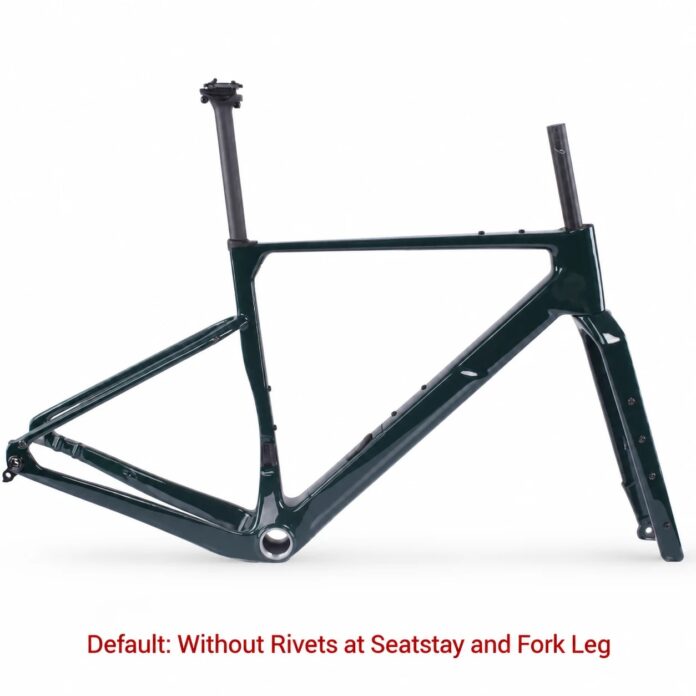
Extra clearance also matters when mud collects around the fork and chainstays. Mondince Cycle, for example, lists a bikepacking-oriented carbon gravel model with clearance for tyres up to 61 mm. Actual fit depends on the rim dimensions, measured tyre width, and the clearance needed for the conditions.
Frame weight is worth considering, but tyre compatibility can have a greater influence on how the bicycle handles the routes you enjoy.
Titanium: An expensive bike you might keep for decades
A brushed titanium frame can look attractive even after years of travelling. Small scratches are often less noticeable than on painted frames, and titanium’s resistance to corrosion makes it appealing for wet conditions.
The material also offers favourable strength-to-weight properties. A well-made titanium frame can be a satisfying bicycle to own for many years.
The purchase price is the obvious drawback. Titanium tubing is expensive, and manufacturing requires specialist equipment and skilled fabrication. Repairs can be difficult to arrange as well. Finding somebody experienced with titanium bicycle frames may be challenging during a remote journey.
Does titanium really give you a smoother ride?
Titanium has a reputation for comfort, although individual bicycles vary considerably.
A titanium racing frame may feel firm, while a touring model could provide a more relaxed ride. Tube dimensions, geometry, tyres and wheels all influence the result.
It’s worth trying the actual bicycle before spending a substantial amount. The material’s reputation won’t tell you whether its riding position and handling suit your preferences.
Will you still want the same bicycle in ten years?
A titanium frame may last for many years, but your cycling interests could change during that time.
Perhaps you currently enjoy fast gravel rides with minimal luggage. Later, you might prefer long tours with camping equipment or technical mountain trails requiring much wider tyres.
The frame could remain in excellent condition while becoming less suitable for the riding you enjoy.
Experienced cyclists who know their preferred geometry and equipment requirements may find titanium a worthwhile long-term purchase. For newcomers, a less expensive bicycle can leave more room to discover what kind of riding they enjoy.
How do the four materials compare?
Each material has characteristics worth considering, although individual frame designs can differ substantially. This table provides a general overview.
Material
Why riders choose it
What to watch for
Steel
Touring-oriented designs, luggage fittings and potential repairability
Weight, corrosion and access to qualified repairs
Aluminium
Affordable frames, relatively low weight and extensive choice
Model-specific load limits and difficult repairs
Carbon fibre
Low weight and varied gravel and adventure designs
Impact damage, clamping restrictions and luggage compatibility
Titanium
Corrosion resistance and long-term ownership
High cost and specialist repairs
A purpose-built aluminum touring frame may carry luggage more effectively than a lightweight steel racing frame. Likewise, a carbon adventure bicycle with wide tyre clearance may suit rough trails better than a titanium road bike.
Comparing specific bicycles becomes easier once you know their load limits, tyre clearance, luggage provisions and approved uses.
What sort of bikepacking are you planning?
A weekend on maintained gravel roads places different demands on a bicycle from a month of traveling with camping equipment. The amount of luggage, riding surfaces and distance from repair facilities all influence what you need.
For short gravel trips with compact bags, aluminum and carbon gravel bicycles are worth considering. Comfortable geometry, suitable tyres and secure luggage attachments matter most.
Long-distance journeys with substantial equipment often suit touring-oriented steel or aluminum frames. Look for appropriate load ratings and reliable rack fittings.
Mountain routes involving frequent hike-a-bike sections make weight more noticeable. A lighter frame can help, provided the bicycle is approved for the terrain and luggage.
Wet coastal journeys make corrosion resistance attractive. Titanium and carbon avoid ordinary steel rust, although chains, bearings and fasteners still require maintenance.
Remote routes deserve some thought about repairs. Familiar components, suitable tools and knowledge of available workshops can make unexpected mechanical problems easier to manage.
A final check before buying
Once you’ve narrowed down the options, compare the manufacturer’s specifications with your planned equipment and routes. Five questions are particularly useful:
How much will the complete bicycle weigh with the rider, luggage, food and water?
Are the luggage mounts approved for the equipment you intend to attach?
Will the frame accommodate suitable tyres with enough clearance for mud?
Is the bicycle approved for the roughest terrain on your route?
What repair options would be available if the frame suffered damage?
These questions may reveal that a bicycle you initially liked has insufficient tyre clearance or cannot carry your luggage safely. Another model might turn out to be a better fit.
If possible, borrow or rent a suitable bicycle for an overnight trip. Pack the equipment you expect to carry, ride some rough ground and see how it handles after several hours.
You may return wanting a different frame material. You might also discover that changing the tyres, luggage arrangement or riding position would make a greater difference. Either way, you’ll have a clearer idea of what you need before investing in your next bicycle.