Home Blog Page 22

Common Online Notary Mistakes and How to Avoid Them

A notary session might take ten minutes, but the document behind it could be a home purchase or a power of attorney. Real estate forms, financial authorizations, affidavits, and family permissions all depend on accurate names, complete pages, and the right participants. One small slip, and you’ll need to reschedule or deal with a rejected file.

Working with an Online Notary removes the trip to a physical office for eligible documents, but it doesn’t eliminate the need for careful review. The signer, document owner, recipient, and notary each have a different role. Here are the mistakes that cause the most delays and how to avoid them.

Mistake One: Using the Wrong Version

It happens more than you might think: three drafts land in your inbox, and you upload the wrong one. The pages can look nearly identical, but a date, address, or clause may have changed. Once you notarize the wrong version, you may need to complete the process again.

Choose one document owner. That person should label the final file clearly, confirm the page count, and remove old copies from the working folder. The signer should compare the title and date with the instructions before uploading.

Mistake Two: Signing Too Early

Signing before the session can stop the process. On BlueNotary, the signer completes the signature during the live session while following the commissioned notary’s directions. Leave the signature line blank before joining, even when the document uses an acknowledgment.

Leave the signature blank before joining the BlueNotary session. During the meeting, follow the notary’s procedure. If the document already contains a signature, explain the situation before continuing rather than trying to hide or replace it.

Mistake Three: Using the Wrong Document Instructions

A valid notarial act does not guarantee that every organization will accept the document in every format. The recipient may require a particular form, witness arrangement, original paper, or delivery method.

Ask about acceptance before the appointment. This is especially important for court filings, government submissions, school permissions, and transactions with strict closing instructions. Keep the recipient’s response with the project record.

Mistake Four: Bringing Unusable Identification

An expired card, damaged credential, or name mismatch can stop identity verification. Photographs or photocopies of identification may not meet current platform requirements. No one else can answer the ID questions for you, not even a spouse sitting next to you.

Review instructions in advance and prepare the original accepted identification. If the document uses a different name, ask how to address it before the session.

Mistake Five: Forgetting Other Participants

A document may require another signer or one or more witnesses. Discovering that need after the session begins creates delay and can affect everyone’s schedule. Don’t assume the notary can double as your witness.

List all required people and confirm how each will participate. Check witness eligibility and identification requirements. If participants are in different locations, agree on timing and make sure each person receives the correct joining instructions.

A notary confirms who you are and that you’re signing willingly. That’s the job. The notary verifies identity and completes the requested notarial act but does not advise a signer about contract terms, tax effects, or whether signing is wise.

Send legal questions to an attorney and document questions to the recipient or preparer. Resolve them before the appointment when possible. This keeps the live session focused on identity, willingness, signature, and completing the certificate.

Mistake Seven: Losing the Completed File

The session ends, you hit download, and the file disappears into your Downloads folder next to the unsigned draft. Others accidentally send the unsigned draft because both files have similar names.

Open the completed file immediately. Confirm the page count and certificate, then save it with a clear name and date. Move drafts to a separate folder. Send the completed version through the recipient’s requested channel and retain confirmation.

Mistake Eight: Assuming Every Process Is Identical

Requirements can vary by document, recipient, notarial act, and the state connected to the notary’s commission. Instructions remembered from a previous transaction may not apply to the next one.

Use current platform guidance each time. BlueNotary publishes identity and process information, provides access to certified commissioned notaries, and makes completed documents available to download. The signer should still confirm the specific document’s acceptance and requirements.

Handle Corrections Transparently

If an error appears before the meeting, obtain a corrected final document and remove the earlier version from circulation. If an error is discovered during the meeting, tell the notary and pause. Do not cover text, replace pages, or ask the notary to ignore an inconsistency.

If the issue appears after completion, contact the recipient and the notary for the appropriate next step. The solution may require a new document and another notarial act. Never edit a notarized file. That creates a bigger problem than the original mistake.

Keep a short record of what changed and which version was delivered. Transparent correction protects trust among the signer, notary, document owner, and recipient.

What to Do When You Find a Mistake

If the problem is discovered after notarization, do not edit the completed file. Contact the recipient and the notary for the proper next step. Keep the original completed record, document what you corrected, and clearly identify any replacement version delivered later.

If the mistake appears during the session, tell the commissioned notary immediately. The right response may be to pause, upload a corrected document, or arrange another session. Continuing with information everyone knows is wrong only makes correction harder later.

If you find a mistake before the session, stop using the file and ask the document owner for a corrected version. Confirm the new page count and date so the old draft does not return to the workflow. Do not try to repair an official form by covering text or replacing a page without approval.

Common Error and Prevention

CheckpointWhat to Confirm
Wrong fileAssign an owner and verify title, date, and page count
Early signatureWait for instructions on the required act
Missing personConfirm all signers and witnesses
Identity issueReview accepted identification before joining
Lost outputRename, store, and deliver the completed file

Correct the Problem Before the Session

A smooth appointment usually results from solid preparation. Use the final document, confirm acceptance, bring valid identification, arrange every participant, and store the result carefully. BlueNotary can connect eligible signers with an Online Notary when a remote session suits the document.

Frequently Asked Questions

Q1. What should I review before uploading?

Check the title, date, names, page order, signature fields, attachments, and recipient instructions.

Q2. Why should I wait to sign?

The required act may call for signing in the notary’s presence. Waiting preserves the available procedural options.

Q3. Can the notary explain the contract?

The notary can explain the notarial procedure but should not provide legal advice about the agreement.

Q4. What if my name differs from my identification?

Ask the platform and recipient how to proceed before the session. Don’t assume it’ll be fine. A name mismatch can stop your session.

Q5. Do all witnesses follow the same rules?

No. Witness needs and eligibility depend on the document and applicable requirements. Confirm them in advance.

Q6. How do I avoid sending the wrong file?

Rename the completed file clearly, separate drafts, verify the certificate, and send only the downloaded completed version.

Two races that hadn’t started yet, and the sponsor was already sold

Some time ago, Front Row Motorsports announced that GoldenNuggetCasino.com would serve as the primary sponsor of the Ford Mustang No. 38 driven by Anthony Alfredo for two NASCAR Cup Series races. The first start was scheduled for August 22 at Michigan, and the second was set for September 11 at Richmond. Through the end of the season, the Golden Nugget brand was to remain on the car and team channels as an associate sponsor.

But just five days after the announcement, DraftKings announced it had agreed to acquire Golden Nugget Online Gaming. The livery had not yet completed a single competitive lap, and the corporate reality surrounding it had already begun to shift.

This is a well-known company in several countries. Authors of the list of no deposit bonuses in Australia noted that the brand had frequently appeared in their rankings. Experts from several European countries said the same. However, DraftKings is most popular in its home market — the United States. Active advertising in racing competitions is among the steps that helped the brand achieve such success.

One in eight viewers and the paradox of gambling sponsorship

This case highlights a non-obvious question that the industry rarely discusses publicly. A national NASCAR broadcast carries a sponsor’s logo into every state, yet a real-money online casino can only accept deposits in states where the product is licensed. The app checks the phone’s geolocation and blocks users outside the “permitted” territory.

The arithmetic is stark. A licensed real-money online casino product is available in only seven states. According to Census Bureau data from mid-2024, that represents 40.3 million people out of a national population of 340.1 million. Fewer than one in eight Americans lives where a legal casino app can accept a deposit. Meanwhile, Fox recorded 7,489,000 viewers for the Daytona 500 (February 15, 2026, up 11% year over year), and Sports Media Watch estimated the average Cup 2025 season audience at approximately 2.48 million per race, down from the previous 2.87 million. For an auto parts manufacturer, all that reach converts into potential customers. For a casino brand, only one-eighth of it is useful, and the rest becomes an image investment that is difficult to quantify.

Short packages instead of a full season

This gap between reach and legal accessibility shapes the typical strategy. Gambling companies in NASCAR prefer one-off starts and short race series, concentrating on tracks inside or near markets where their product is actually available. A full calendar would mean paying for vast territory that the app physically cannot serve.

Integrity rules came before the bookmakers’ money

On January 28, 2019, NASCAR prohibited drivers and team personnel from placing bets on their own races. The policy was developed in partnership with Sportradar Integrity Services, and fantasy prize winnings for “covered persons” were capped at $250. A year earlier, a betting kiosk had already appeared at Dover, and the sanctioning body understood that without proper safeguards, commercial partnerships with bookmakers would have become toxic.

The money followed. Among the series’ official partners, Penn National came first, then BetMGM (2020), WynnBET, Fubo Sportsbook (2021), FanDuel (2023), and DraftKings (2024). At the team level, Richard Childress Racing placed BetMGM on Austin Dillon’s No. 3 and Tyler Reddick’s No. 8 in 2021, extending the partnership in 2024 with Dillon and Kyle Busch. Kaulig Racing named DraftKings its exclusive betting sponsor in 2025, with primary placement on Ty Dillon’s No. 10 for two races. The controls operate mechanically, not symbolically. Data on covered persons is transmitted to Sportradar in encrypted form, and any attempt to bet on NASCAR hits a ‘max wager: zero dollars’ restriction. In 2023, the relationship expanded to include betting data rights, and the series now sells both trackside space and the feed on which betting odds are based.

A lesson from Formula 1 and why NASCAR has it easier

In Formula 1, liveries must be adapted to the advertising regulations of two dozen countries. Alfa Romeo in 2023 used Kick branding instead of Stake at races in Australia, Spain, Belgium, and Qatar. Team representative Alessandro Alunni Bravi stated the principle plainly: where gambling advertising is prohibited, a different name is used. In NASCAR, this problem is less acute, as races take place within a single country, though regulations vary by state.

A race’s naming rights outlast the paint on the car

For a casino, title sponsorship of an event proves more durable. South Point has held the naming rights to the fall race in Las Vegas since 2018 and renewed the contract in October 2022. Hollywood Casino has carried its name on the Kansas Cup race since 2011. BetMGM put its name on the Charlotte Xfinity race in 2025.

The logic is transparent. A casino is tied to a location, and a track is tied to a location as well. In 2023, South Point became the primary sponsor on Daniel Hemric’s No. 11 and an associate sponsor on the No. 16 and No. 31 cars during the Las Vegas race weekend, just minutes from its own hotel. One race weekend, one market, one audience capable of becoming customers. Golden Nugget’s two starts at Michigan and Richmond were an attempt at the same strategy, but the corporate clock was ticking too fast.

The Changing World of Sports Broadcast: How Digital Media Connects Fans With Sports

Sports bring people together, whether it be the drama of a football league or the suspense of a motor racing event. Competitions have the ability to captivate fans, and it is the goal of sports broadcasting to deliver those moments to homes and beyond. As digital technology continues to advance, there are new ways for fans to learn and engage with their favorite sport.

The Growing Importance Of Sports Broadcasting

In the past, sports fans needed to turn to television, newspapers, and radio for the fix of their favorite pastime. While these traditional media sources continue to play a role, the internet has opened up new avenues for fans to consume news and updates of events that they could only dream of in the past. There is an increasing appetite for sports information from fans; the ability for fans to absorb the latest breaking news of their favorite sporting events extends much farther than before.

How Has Digital Technology Changed the Way Sports Are Covered?

Smartphones, laptops, tablets, and connected TVs allow fans to consume content from wherever they are without sitting down in front of the television for an entire match. This is especially useful for overseas sporting events, allowing international supporters to learn more about their team’s opponents and how they will match up.

With a bit of online research, fans can learn the background of competing teams, previous results, and what fans have said about the matches, allowing the audience to learn more about what to expect from the games. As competitions start, scores and regular reports allow fans to follow the action and analyze how the teams are performing and how the outcome of the match is being decided.

For motorsport competitions, it is important that fans receive consistent and precise information, considering the complexity of racing conditions and the impact it has on the outcome of the event. The weather, track surface, safety-car periods, and pit-stop timings all have an impact on the final result; it is essential that fans learn the impact these elements have on the competition and why a driver gains or loses positions during a race. With a surplus of online sports data, it is important for information sites to remain reliable and separate opinions from factual reports so that fans can have a better understanding of the competition.

Why Motorsports Fans Need More Than Race Footage

While motorsport may appear to be a straightforward sport to some, multiple elements play a role in deciding the final positions of a race. A driver will have to navigate multiple challenges posed by their competitors and the environment. Conditions such as tire wear, the weather, and even the safety car can dictate how a race will unfold. Drivers must decide when and at what point in the race they should pit for fresh tires or make adjustments to their car.

Watching the race unfold on television provides an exciting view of the race, but additional comments and discussions will give fans insight into why they gain and lose positions and what decisions drivers must make during the race. There are several reasons why certain drivers are placed above or below other competitors due to their pit timing, the type of tires selected, driver skill, or even the initial starting positions they are given. A prime example can be seen in Formula One, where small advantages can dictate champion-caliber performance throughout the season. Understanding these elements can give fans greater context into the competition and the efforts the drivers take to achieve success.

The Importance of Year-Round Sports Journalism

The reporting of sports doesn’t just stop when the final race finishes or a football match ends. Throughout the season, fans follow driver and player transfers, contract negotiations, and technical regulations, while the overall standings provide context into how the competition is shaping up ahead of the next season.

Following these developments allows fans to understand the wider context of why these changes have happened and how they impact their favorite teams and drivers. When a new driver joins a racing team, it can dictate how the season will perform in the future. Technical developments introduced by teams and the impact they have on the competition can dictate how teams perform and who will finish where. In football, supporters want to know about the latest business deals and manager hires as it can dictate how their club will perform for the upcoming season.

Statistical information will give fans the facts and figures, while articles and discussions provide greater context for why these changes have been made. For football fans, the results of previous fixtures can provide an interesting insight into how teams have performed against each other. It is important that sports publishers consider not just the relevance of the news but how it impacts on the fan. The combination of the latest scores and results with sports journalism makes it possible for readers to have a greater depth of understanding of the events unfolding in their chosen sport.

The Importance Of Korean Sports Information Sites

Sports culture in South Korea ranges from baseball and football to basketball and volleyball. Motor racing and esports are also popular in South Korea. The popularity of these sports means there is a large audience of supporters who want to keep up-to-date with their favorite teams and competitions. Internet publications provide an important source of learning for sports fans to find the latest stats and keep up-to-date with breaking news.

It can be challenging to overcome language barriers to understand the technical words involved in describing international sports news. Information portals provide a valuable link to understanding why certain developments have taken place and how it impacted events that fans care about.

Convenience plays a major factor as to why information is consumed online by sports fans. Whether it is checking for scores on a train ride home or reading up on the latest results from matches while having a coffee break, the ability to obtain this news in between busy schedules means a well-organized website is key. The purpose is for fans to obtain relevant information without sifting through unrelated content.

What Makes An Online Sports Source Reliable?

There is a vast selection of choices when it comes to finding and consuming sports information online. It is important that fans know what makes sites a reliable source of information, especially when accuracy needs to be prioritized as much as newsbreak speed.

Relevant and current data is always key, which is why checking results and schedules for accuracy is important – an outdated score or fixture will confuse and mislead fans. Articles that mention any sport, driver, or competition will rely on factual evidence rather than unsubstantiated opinions. Having clear content titles for news and articles allows readers to have an idea about what the content is about.

Sports publishers should prioritize these guidelines when providing sports news and information, giving readers a sense of reliability when accessing sports content that they care about. While presentation and accessibility are key, accuracy is paramount when presenting sports journalism for the best content.

Finding Relevant Information In An Interconnected World

Digital publishing makes it easier for fans to find and follow competition that they might not have followed before. Football fans would now engage with motor racing, and motorsport fans will follow football and basketball in addition to their usual diet of racing events. Internet resources open new doors in accessing information, allowing different types of sporting audiences to gather more information on the events they care about.

Fans who are interested in Korean news portals will be able to visit the site at their discretion to find out the latest news in motor racing and football, basketball, and other popular Korean sports. Discovering a resource that caters specifically to sports information will allow a greater fan base to research their favorite sport and obtain relevant and useful facts for the publications. By visiting YACHATV (야차티비), which provides sports information, fans can discover the world of Korean sports news and information.

By reviewing the relevance of the resource and how it is applied through the information, fans can engage with the content and obtain facts and statistics that interest them. As a website publisher, understanding what the audience consumes and how it suits their needs is a vital component in having a successful and engaging media source online.

The Role Of Accessibility And Engagement Within Fan Preferences

Accessibility has become a major requirement for publishing content online, including sports news and information. Having an online resource that is compatible with mobile phones and laptops allows fans to access this information at their convenience. Easily readable information and accessible menu options will make visiting the website more enjoyable for fans. The ability to provide an experience that is engaging and easy to navigate is important for any fan who is trying to understand the latest sports event developments.

Engagement will have to be catered for different audience preferences – some will want a more elaborate breakdown of the events, while others may want to know the final results from their favorite football league as soon as it finishes. By providing a variety of useful content, this will cater to different fan preferences without an overwhelming experience for those who might want a quicker summary of recent developments. The aim is to find a balance between the speed of news and accuracy of comments in order to provide a valuable resource for fans who visit the website and encourage repeat visits from repeat visitors.

The Future of Sports Broadcasting

The future of sports broadcasting will continue to expand with digital advances and changing fan interests. Continued developments in publishing technology will enable fans to follow events on their mobile devices, while data and statistical analysis will help them better understand the nuances of competitions. Platforms such as YACHATV, a Korean sports information website, reflect the growing interest in accessible online sports content.

Reliable reporters and journalists will remain valuable in providing consistent facts and information for fans. Although technology will continue to change how audiences engage with sporting events, false information and inaccurate reports can damage publishers’ reputations and discourage fans from visiting websites that fail to maintain accurate, reliable reporting standards.

How to Prepare and Maintain Your RV for a Memorable Camping Trip

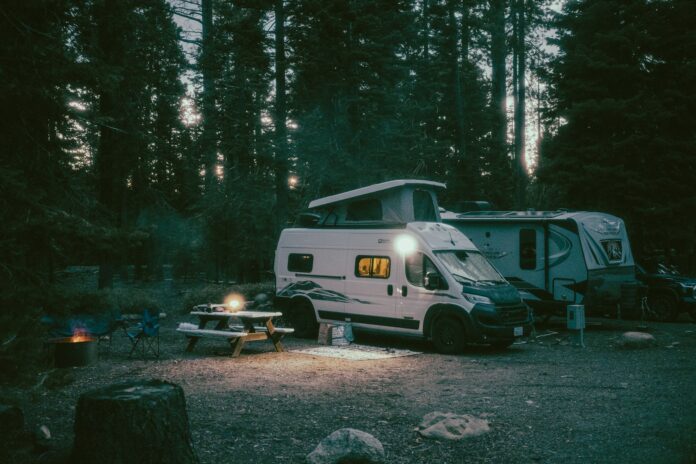
Photo by Fabio Sasso on Unsplash

Running your AC in your caravan during winter can provide heating, but only if the fitted model supports it, outdoor conditions stay within its operating limits and your power supply can carry the load. Plenty of owners find out on the first cold night that one of those three conditions was missing.

This article gives you a prioritised Australian winter-trip checklist. It starts with the AC decision, because that shapes everything else, then covers power, vehicle safety, cold-weather protection and a simple routine for the trip and the return home. Wherever your own unit is concerned, its manual is the final word.

Running your AC in your caravan during winter: check your model first

When running your AC in your caravan during winter, start by identifying the exact make and model, then read its manual. A cooling-only unit cannot heat at all, while a reverse-cycle unit heats by running as a heat pump, and some units add a separate resistance-heating mode with its own instructions and power requirements. Never assume which type you have from the look of the unit.

Next, find the manufacturer’s permitted outdoor temperatures for the mode you intend to use, along with its explanation of defrost behaviour. There is no universal cut-off, and units do not all perform equally in the cold. As a general principle, reverse-cycle heating capacity can fall as outdoor temperatures drop, and a documented defrost cycle may briefly pause warm air, which is expected. Persistent icing, error codes or a failure to warm are not expected, and they need a qualified assessment rather than a DIY fix, since electrical and refrigerant work is not owner territory.

Before you leave, test the supported heating mode on a suitable supply, following the manual. A short test at home is far better than discovering a fault at a cold campsite.

Check whether your power supply can support the heating load

Find the unit’s electrical running input and its starting requirements for the intended mode, usually on the compliance plate or in the manual. Be careful not to confuse advertised heating output with electricity consumption, because they are different figures and the power you must supply is the input.

If you will be on site power, confirm availability and the supply rating before booking, then add up simultaneous loads. A kettle, microwave or electric water heater running alongside the AC can exceed what the supply or your vehicle’s installation is rated for, and winter often means a small electric heater as well, so include it in that tally.

Off-grid heating is a bigger question. You would need to check the inverter’s continuous and surge ratings, the battery’s usable energy and discharge limits, whether the installation is suitable, and how realistically you can recharge, and if any specification is unclear, seek qualified advice. An ordinary leisure-battery setup may run lights and a water pump comfortably yet fall well short of prolonged AC heating, because heating draws substantial energy, inverter losses add to the demand and cold conditions can reduce battery performance. Runtime depends entirely on your equipment, so any generic estimate would be a guess.

Finally, use sound, correctly rated Australian connection equipment, follow campsite instructions, and never improvise plug adaptations or alter mains wiring yourself.

Complete the safety-critical checks before departure

These checks matter more than any comfort upgrade, and it helps to separate what you can do from what needs a professional.

Owner checks:

1. Tyres: inspect condition and age, including the spare, and check cold pressures against the requirements for your load. Cold weather lowers pressure, so recheck after the temperature drops.

2. Towing (caravans): inspect the coupling, safety chains, towing electrics and lights, and the breakaway system where fitted, following your vehicle and equipment instructions.

3. Battery: check the charge level and look for visible damage or corrosion.

4. Water and seals: look over accessible plumbing for leaks, and inspect roof, window and door seals for deterioration without climbing onto the roof unsafely.

5. Alarms: test smoke and carbon monoxide alarms as their instructions say, and check replacement dates.

Qualified work: confirm scheduled servicing is current and that the brakes work properly. Brake defects, overdue servicing or any doubt about mechanical condition should go to a qualified technician, as should mains-electrical, gas or refrigeration faults. Fix safety-critical defects before you travel, because a checklist is no substitute for servicing.

Match warmth, ventilation and plumbing protection to the forecast

Check the forecast for both the route and the campsite, paying particular attention to overnight lows, wind and any freezing conditions. Many campgrounds also close or reduce services in winter, so confirm the site is open and that power is available. If conditions exceed what your vehicle or heating can handle, change the plan rather than hoping for the best.

Reduce draughts with good door seals, curtains or window insulation, but never cover permanent safety ventilation, appliance air passages or emergency exits. Closed curtains do help, since they create an air gap against cold glass. Condensation is the other winter nuisance, so ventilate while cooking and washing, use fitted extraction properly, wipe moisture from cold surfaces and dry wet clothing. Don’t assume heating mode removes moisture, because not every unit does.

Use only heating equipment approved for caravans or motorhomes, following its ventilation, installation and clearance instructions. Never use a cooker or an outdoor combustion heater to warm the interior, as the carbon monoxide risk is serious.

If freezing is forecast, identify exposed hoses, pipes and valves and follow your manufacturer’s protection or draining instructions. Insulating the outdoor hose and external fittings helps, but full storage winterisation is not necessary for every Australian winter trip.

Finally, pack warm bedding and plan an approved backup heater in case AC heating is unavailable, underpowered or outside its limits. A good sleeping bag can spare you running a heater all night, and any electric backup belongs in your power budget.

Keep a short campsite routine and leave the vehicle dry at home

On the trip, check daily for plumbing leaks and for condensation on windows and the roof lining, wipe moisture away promptly, and keep heating outlets, return air grilles and required ventilation clear. Clean accessible AC filters at the manual’s intervals, with power isolated as instructed, and refit them correctly. Don’t open electrical or refrigerant components, and don’t run the compressor periodically unless the manufacturer requires it.

Stop using any equipment with a persistent fault, a burning smell, repeated electrical trips or abnormal icing, and arrange qualified servicing. Don’t keep resetting protection devices, because they are tripping for a reason.

Back home, dry and ventilate the interior, inspect for water ingress, clean filters if they are due, and write down any faults or servicing needs before storage. If an identified need could be solved by a replacement filter, seal or plumbing fitting, RV Parts Express is worth checking using your exact model, part number, dimensions and material requirements. Confirm compatibility and current availability before ordering.

Your readiness test for the next trip is simple: a safe vehicle, a heating mode approved for the forecast, adequate power, and a workable backup plan for warmth.

Exploring the UAE: A Tourist’s Guide to Getting Around

When you’re planning a trip to the UAE, don’t trust the map too much. Distances can be deceiving. Getting from one place to another can take longer than you’d guess. The Burj Khalifa and the Sheikh Zayed Grand Mosque are about an hour and a half apart by car, which is a fair chunk of your day. The east coast takes even longer. So before you make any travel plans, sort out how you’ll get around the country, whether by car, bus or taxi. Traffic and time of day can also affect your travel time, so plan with that in mind for a smooth trip.

Renting a car can feel like a puzzle, but it doesn’t have to be, even if you’re considering a Range Rover rental in Dubai for the trip. Let’s start with the basics: the essentials you’ll need to get going. Then we’ll cover costs and rules so you can plan trips between emirates with less hassle. The information here is current as of October 2026, but things can change quickly. Check the official sites, like u.ae, the RTA website, and Parkin, for the latest updates. That way you’ll be well prepared for your rental. Whether you’re taking a quick drive or a long road trip, the right information makes all the difference.

Do You Actually Need a Car?

If you’re based in central Dubai, you can easily manage without one. The metro, tram and buses cover most areas, and taxis are easy to flag down on the street. Ride-hailing apps are very popular too, so you’ve got plenty of options. To plan your route or check fares, the RTA website has maps and ticket prices. Hop on a train, bus or tram, or grab a taxi or ride-hailing app, and you’re sorted.

A car is a real help when life gets hectic. Early flights, lots of trips in a short time, or a big family with plenty of gear all make your own vehicle easier. Waiting around for rides wears thin quickly. If your schedule is relaxed, though, you might not need one. You’ll skip the hassle of finding parking and dealing with tolls. Personally, I think renting only makes sense if you’ll drive almost every day. Otherwise, other ways of getting around will suit you better.

Licence and Documents

When you collect your rental car, bring all the right paperwork. You’ll need your passport, the visa or entry stamp from your arrival, a valid driving licence and a credit card in your name. Every rental company has its own rules, so check them before you go. Age requirements also vary between companies. Renting a luxury car may mean you need to be a little older than for a standard one. Some firms are stricter than others, so check ahead to avoid problems at the counter.

Driving in the UAE can feel daunting, especially if you’ve never driven here. Whether you can use your home licence depends on where you’re from. Check the official u.ae website before you travel. Look at your licence expiry date too, because you don’t want it running out while you’re driving here. Some countries require an International Driving Permit (IDP), so look into that as well. Doing your homework first makes the whole process smoother.

Choosing the Right Vehicle

Think about the roads you’ll be on. For city driving, a small car is usually the best choice. It’s easy to park and kind on fuel. If you’ll spend long hours on the highway, though, you’ll want something comfortable to sit in for a long time. Nobody enjoys a cramped car with no legroom. Also think about how many people are travelling. Five people with luggage need more space than a small car offers.

If you’re after a comfortable ride on the highway, a Range Rover rental in Dubai is worth considering before you decide.

When you’re looking at a mid-size SUV, don’t go by the name alone. Check the rear space, because it differs quite a lot from one model to another. If older relatives are travelling with you, let them try the seats to make sure they’re comfortable. When you’re working out a budget, include all the running costs. Fuel, tolls and parking add up fast. Maintenance and insurance matter too, so you get a clear picture of what you can afford.

Insurance, Deposits and Extra Charges

Rental cars usually include basic insurance. If you have an accident or damage the vehicle, though, you may have to pay a sizeable sum yourself. This is called the excess, and it can be steep on a premium car. So check the excess before you sign. Some things fall outside the insurance, such as off-road or desert driving, and anyone who isn’t named on the agreement driving the car. Drinking and driving is never acceptable. If you want to explore the desert, a guided tour is safer for you and the car.

Renting a premium car can be frustrating when a deposit is involved. Nobody enjoys having a card frozen while waiting to get their money back. That’s why many people look for luxury vehicle rental Dubai- no deposit. VIP Transits offers this option, with rentals starting at around AED 450 per day. Before you book, check the terms for the specific car and dates you want. The no-deposit option may not apply to every vehicle.

Renting a car comes with plenty of costs beyond the daily rate. You’ll pay for tolls, parking and any speeding fines, and fuel adds up quickly. Adding a second driver costs extra, and so does returning the car late. Fines go to the car’s owner first, and the rental company may pass them on with a fee. Watch the mileage limit as well. On a long road trip, a low daily cap can make a cheap rental very expensive, especially on the drive to Fujairah. Think through all these costs before you commit.

Rules on the Road, Tolls and Parking

Cameras are watching, and speed limits are clearly posted, so stick to them. Keep your phone out of your hand and leave plenty of space between you and the car ahead. Drink driving is not allowed, and everyone in the car must wear a seatbelt.

Travelling with children? There are rules to know. From October 2026, children under four must be in a child seat. Children under ten, or shorter than 145 cm, should sit in the back rather than the front. Check the u.ae or RTA website for the full details. It’s also worth asking your rental company in advance whether it can provide a child seat.

Driving in Dubai involves tolls and parking, so it helps to know the basics. Salik is the toll system, and every time you pass through a gate you’re charged. The amount is added to your rental bill. You can check rates on the RTA or Salik websites. Abu Dhabi uses a separate system called Darb, so don’t mix the two up. Parkin handles paid parking in many areas. Hours and prices vary by location, so check its app for the places you’ll visit. A few minutes of planning can save you from unexpected fees.

Driving Between Emirates

The roads are well signed, and you won’t face border checks when moving between emirates. The rental contract still needs your full attention.

Read the small print. Check whether there are areas you’re not allowed to drive into. What’s the kilometre limit before extra charges start, and what do those charges cost? Does dropping the car off somewhere else add to the bill? If you plan to drive into Oman, you’ll normally need written permission and extra insurance, so arrange both before you book. Knowing these details early helps you avoid surprises later.

From Dubai, Abu Dhabi is about an hour and a half away. Sharjah is much closer, though traffic can slow the trip. Ras Al Khaimah takes roughly an hour, give or take a few minutes. Fujairah can take up to two hours. Check a live map on the day you travel to see current traffic. Fill up before you leave, and if you’re travelling with kids, plan a stop to break up the journey.

Frequently Asked Questions

What if the car breaks down on the highway?

Pull over to a safe spot and contact your rental company as soon as you can. If anyone is injured or in danger, call 999 straight away.

Can I return the car in a different emirate?

Some companies allow it and some don’t. One-way returns can cost extra, so ask about the charges when you book.

Does fog affect driving here?

Early-morning fog happens, mostly in winter, and visibility can drop fast. Slow down, use your lights and follow RTA and police alerts.

Can I use my phone for navigation?

Yes, as long as the phone is mounted and you don’t touch it while driving. Set your destination before you set off.

Do I need cash on a road trip?

Not often. Salik is electronic and most places take cards, but cash is handy at smaller car parks.

Choosing Your Option

For a short trip to central Dubai, the metro and taxis will get you around. If you’re spending a week exploring the emirates, a rental car gives you freedom that’s hard to match. Choose a vehicle that suits your group size, luggage and route. Read the contract carefully, and sort out your licence before you arrive. When you’re ready to compare cars and check current terms, VIP Transits is a good place to start.

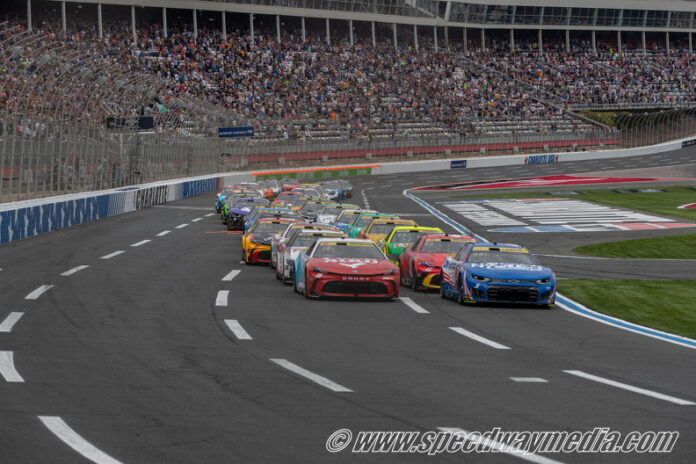
From the ROVAL to the Oval: Why Charlotte’s Track Change Matters for NASCAR Betting Markets

A NASCAR favourite can lead most of the laps and still lose. Charlotte’s latest race gave betting fans plenty to think about, especially when judging which drivers deserve their money.

Charlotte Motor Speedway brought its fall NASCAR Cup race back to the oval this October, ending eight years of racing on the ROVAL. That gave drivers a very different challenge at a track they already knew, and it gave anyone following the betting markets a good reason to reconsider their picks. A strong record at Charlotte suddenly needed a closer look, because the circuit behind those results was no longer the same. The October 11 Bank of America 400 would provide the first real test of what that change meant.

Charlotte’s Return to the Oval Changes the Equation

NASCAR confirmed the return to Charlotte’s traditional 1.5-mile oval on February 3, bringing the fall event back to the configuration last used for that race in 2017. The ROVAL had hosted the event from 2018 through 2025, combining sections of the oval with an infield road course to create a 2.28-mile circuit featuring 17 turns.

The decision followed discussions involving NASCAR and Speedway Motorsports, with CEO Marcus Smith pointing to the quality of racing produced by the Next Gen car on intermediate ovals. The return also coincided with NASCAR bringing back its ten-race Chase championship format.

The driving differences are substantial. The ROVAL demands heavy braking and careful acceleration through tight corners. Charlotte’s oval has 24-degree banking in its turns, allowing drivers to maintain much higher speeds through long corners.

That changes which performances deserve attention when assessing the field. A driver’s previous Charlotte results remain useful, provided you know which version of the circuit produced them.

Driver Form Needs a Different Reading

Shane van Gisbergen provided the clearest example of the ROVAL’s specialist advantage. He won the final Cup race on that configuration in October 2025, finishing 15.160 seconds ahead of Kyle Larson after leading 57 of the scheduled 109 laps.

That victory was part of an extraordinary road-course campaign. Van Gisbergen won five Cup races in 2025, all on road courses, establishing himself as the driver to beat whenever the calendar featured tight corners and heavy braking zones.

Charlotte’s oval asks different questions. Drivers spend much longer carrying speed through banked turns, and tire performance becomes particularly important during extended green-flag runs. Traffic also behaves differently because cars can race alongside one another through the corners rather than relying primarily on designated passing opportunities.

Recent intermediate-oval performances therefore offered a better starting point for assessing the October race.

Chase Briscoe arrived at Charlotte having won at Las Vegas Motor Speedway on October 4, leading 175 of 267 laps. His victory came on another 1.5-mile oval, making that performance directly relevant to the following weekend.

Christopher Bell had also demonstrated strong intermediate-oval form, including his second-place finish behind Briscoe at Chicagoland in July. Their results gave analysts more useful comparisons than their records on Charlotte’s former road-course layout.

There was another complication. NASCAR’s new Chase format removed the elimination rounds that had previously made the ROVAL particularly important. Charlotte became the sixth race in a ten-race points contest, with victories now worth 55 points instead of 40.

The track and championship changes both influenced the sporting picture, giving anyone studying the field good reason to reconsider which historical results deserved the greatest weight.

Betting Prices Follow the New Racing Conditions

The difference between road-course and oval performance carries directly into NASCAR betting markets. An outright winner selection asks who will finish first, whereas top-three or top-five markets allow for strong performances that fall short of victory.

Kyle Larson entered the Charlotte race at +400 in the outright market, with Christopher Bell at +450. Larson’s top-three price was +150, while Bell was available at +170 for the same finishing position. Chase Briscoe carried a -115 price for a top-five finish.

The switch also changes how bettors should interpret the odds. At the ROVAL, road-course experience, braking precision and performances on similar circuits were important factors when assessing a driver’s chances. On the oval, recent results at tracks such as Las Vegas, Kansas and Texas provide more relevant comparisons. That doesn’t automatically mean sportsbooks shortened the prices of oval specialists or lengthened those of road-course drivers, but it changes the information bettors need to consider when deciding whether a price offers value.

Those prices show why driver evaluation needs to go beyond choosing a likely winner. A driver with strong intermediate-oval results may warrant attention across several finishing-position markets, even when another competitor leads the outright prices.

Charlotte’s return to the oval also changes the information behind NASCAR trading decisions. Road-course specialists no longer carry the same advantage, and recent performances on intermediate ovals become more relevant. For readers exploring exchange-based markets, the ProphetX promo guide at Covers.com explains the platform’s current welcome offer. New customers who register with code COVERS and complete a qualifying $50 trade can receive $75 in bonus trading funds, subject to the offer’s terms. Unlike traditional sportsbooks, ProphetX also allows users to request their own prices rather than simply accept predetermined odds.

That pricing flexibility becomes relevant when individual assessments of driver performance differ from the prices currently available.

The First Oval Race Tests Those Expectations

The October 11 race provided an immediate reminder that strong form and a good starting position cannot guarantee a particular finishing result.

Rain canceled Saturday’s practice and qualifying sessions, leaving NASCAR to determine the starting order under its rulebook. Kyle Larson started on pole, with Chase Briscoe alongside him, while Christopher Bell lined up 17th.

Josh Berry faced a considerably tougher assignment from 27th, but worked his way through the field to finish fourth. His recovery of 23 positions demonstrated the opportunities available during a long oval race, particularly when drivers find a competitive setup and manage traffic effectively.

The race leaders supplied another useful comparison. Larson led 97 laps, more than anyone else, but finished sixth. Bell led 93 laps and challenged for victory, eventually finishing second. Briscoe led 62 laps, yet he was the driver who reached the checkered flag first.

The winning margin was just 0.029 seconds, making it the closest Cup finish of the 2026 season to that point. Bell closed rapidly through lapped traffic, but Briscoe held on for his second consecutive Chase victory.

Those results highlight the differences between the available betting outcomes. Larson demonstrated race-leading speed without securing a top-five finish, Berry recovered from a difficult starting position, and Bell came within inches of winning.

Briscoe’s victory also strengthened his championship position, moving him into fourth place in the Chase standings, 65 points behind Larson.

Charlotte’s New Form Book Starts Here

Charlotte’s first fall oval race since 2017 has given teams and analysts a fresh set of results to work with. Briscoe’s victory supported the relevance of recent intermediate-oval performances, although the contrasting results for Larson and Bell showed why laps led cannot tell the entire story.

Future Charlotte assessments can now draw on an autumn race run on the oval, with evidence that reflects the circuit NASCAR actually intends to race.

Six racing circuits every fan should experience live

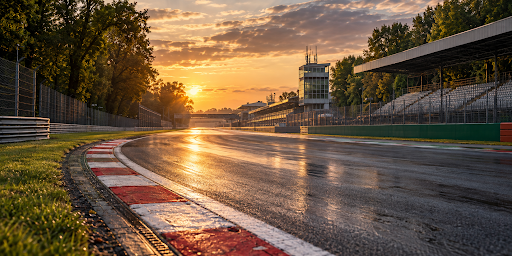
Empty Monza racing circuit at sunset with grandstands and a wet track

Some race weekends stay with you for reasons the results sheet never captures: the roar before the start, a grandstand reacting in unison, or the first cars emerging from darkness. At these six circuits, the setting is every bit as memorable as the race.

1. Monza: a wall of red and a first-corner roar

Monza is loud long before the race. Ferrari flags hang from fences, the tifosi fill the stands, and the cars arrive at the first chicane almost nose to tail. From the Rettifilo grandstands, you can watch late braking and first-lap battles unfold.

Qualifying adds another layer for fans interested in motorsport odds. Slipstreaming can shuffle the grid, so pre-race betting expectations may change by Saturday evening. Spectators following an existing wager might sign in through the 1xbet Singapore login page between sessions to check the latest race odds. Nothing on a screen matches the noise when a Ferrari attacks into Turn 1.

2. Le Mans: the race that belongs to the night

The 24 Hours of Le Mans asks for stamina from spectators as well as drivers. Groups settle into campsites; others roam between corners while headlights cut through the darkness. The race feels almost like several events stitched together: a frantic start, a quieter midnight, and the relief of sunrise.

Choose a viewing point to match the hour rather than staying in one spot throughout.

Where to watchWhen to goWhat you see
Dunlop CurveOpening lapsCars crowding into the first bends
Indianapolis and ArnageDuskBraking lights against fading daylight
Tertre RougeSunday morningAcceleration towards the Mulsanne Straight

The early morning atmosphere is worth experiencing even if you have followed the race through the night. Bring layers: standing still can feel colder than walking between viewing areas. Keep a portable charger handy.

3. Suzuka: a crowd that knows its racing

Suzuka has a wonderfully attentive audience. Fans arrive with homemade displays, elaborate outfits and an appetite for the fine details of a lap. Watch the cars through the Esses and you can see each driver working through a sequence that punishes small mistakes. The sound carries across the bends before the next car appears.

Three places reward different tastes:

  • Grandstands D and E for the rhythm of the Esses.
  • Grandstand I for braking and overtaking at the hairpin.
  • Grandstand G for the commitment required at 130R.

Make time for the fan areas too. Suzuka’s atmosphere comes from the conversations between sessions as much as from the action itself.

4. Spa-Francorchamps: a forecast nobody quite trusts

At Spa, the landscape dictates the experience. Eau Rouge drops away before Raidillon climbs sharply into the trees, and a seat on the hillside finally reveals the elevation that broadcasts flatten. You may see sunshine on one section of the circuit while rain falls elsewhere.

That uncertainty matters to racing markets. A dry qualifying session does not settle expectations for Sunday’s result, and sudden rain can shift live odds as teams change tyres or delay stops. A favourite on a dry track may suddenly have to fight through traffic on unsuitable tyres. For spectators, the same shift creates that wonderful moment when everyone scans the sky and then turns towards the approaching cars. Waterproofs are essential, whatever the morning forecast says.

5. Monaco: Saturday can steal the show

Monaco puts racing where you expect ordinary city traffic: between buildings, past the harbour and along streets barely wider than the cars. Grandstands around the Swimming Pool section offer an exhilarating close view; Casino Square provides a more theatrical setting.

Overtaking is difficult here, which makes qualifying unusually important. Fans comparing pole-position and race-winner odds have good reason to watch Saturday closely: a strong grid position can change the outlook for Sunday. That gives the qualifying session its own distinct tension, long before race day. The thrill is immediate even without a wager. One mistake near the barriers can silence the crowd before the next lap sends it roaring again.

6. Interlagos: noise from every hillside

At Interlagos, the crowd stays involved between overtakes. From Grandstand M, the Senna S puts overtaking attempts almost beneath you; Grandstand A offers a sweeping look over the infield. The changing elevation hides cars in the infield before they charge uphill towards the finish.

When the leading cars appear together at the first corner, the response travels around the bowl. For an unforgettable weekend, that shared excitement matters more than a perfectly predictable result.

Best Specialty Camp in Los Angeles for Future Racers: 6 Places Kids Can Learn to Drive and Ride

NASCAR’s next wave keeps arriving younger. Sixteen-year-old Tristan McKee and 18-year-old Carson Brown were both set for their NASCAR debuts in early August, and McKee has already been confirmed for an expanded Truck Series schedule with Spire Motorsports in 2027. McKee won in the CARS Pro Late Model Tour at 12, years before he could legally drive on the street, and most drivers on today’s grids tell a similar story: line choice, throttle feel, and the pressure of a grid start, all learned young.

For families in Southern California, the question is where that first seat time comes from. Gear is costly, the rules feel cryptic, and finding a place that will let a young child drive can seem impossible. A Southern California parent summed it up on a club racing forum back in 2010: “My son is 6 years old and 50 inches tall and really badly wants to drive a kart.” That plea still rings true today, but the paths in have multiplied.

The six programs below put LA-area kids behind a wheel, on a bike, or inside a workshop, from an overnight mountain camp to a monthly kart league and a museum race shop.

1. Pali Adventures: Overnight Motorsports in Running Springs

Camper Choice and Safety Oversight

Pali Adventures is an overnight summer camp in Running Springs, in the San Bernardino Mountains. Instead of one fixed schedule, campers choose their own specialties, and Motorsports sits alongside options such as Flying Trapeze, Hollywood Stunts, and Water Sports, so siblings with different interests can still attend the same camp.

Parents get real oversight. Pali is accredited by the American Camp Association and WAIC, runs every staff member through LiveScan and U.S. Department of Justice background checks, and requires first aid, CPR, and AED certification.

Motorsports Seat Time and Skill Progression

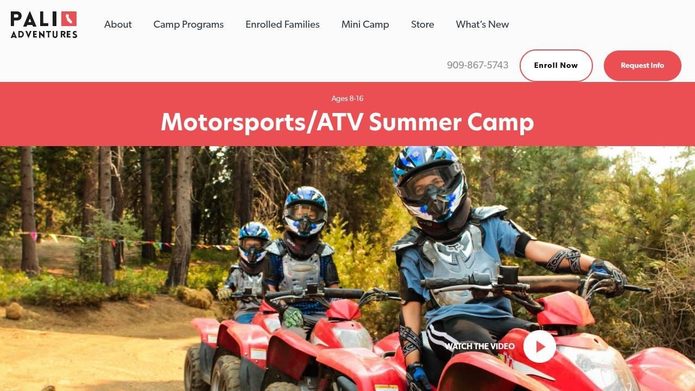
The Motorsports/ATV specialty is open to ages 8 to 16, and the camp’s own description sets the tone: “Campers satisfy their need for speed as they navigate multiple adrenaline-pumping courses and blast to the finish line.” The equipment list backs it up, with three custom-built racetracks, mini bikes, ATV quads, and RC cars.

Campers learn trail-blazing techniques and high precision moves under the instruction and supervision of experienced riders. Riders who master the necessary skills and safety requirements wrap up their week with an off-road trail ride, which turns the progression into a goal kids can see from day one. For a young rider, that structure matters. Skills come before freedom, and the trail ride is earned rather than handed out, which is exactly the habit that serves a driver later on, when track time, seat time, and trust from a team all have to be earned the same way. Pali lists self confidence, self awareness, and decision making among the soft skills the program builds. Families can read the full details on Pali’s motorsports camp page.

All-Inclusive Structure and a Wider Racing Path

Pali runs on an all-inclusive model: meals, lodging, and activities are covered, with no upcharge for choosing one specialty over another. Age tiers keep development fair, with Minis at six to eight, Juniors at eight to twelve, and Seniors at thirteen to sixteen.

Early seat time matters on the racing ladder. Speedway Media readers know the story of Tristan McKee, who became the youngest winner in the CARS Pro Late Model Tour division at 12 and is now 16. Not every camper is headed for a Truck Series seat, but disciplined reps at a young age are where every driver starts.

2. K1 Speed Junior and Teen Challenge GP: Monthly Kart Racing

Driver Eligibility and Supplied Equipment

K1 Speed’s Torrance location, on Vermont Avenue in Gardena, hosts its youth leagues, and the series runs at every K1 Speed location. The leagues split by height, not age. Juniors stand between 4’0″ and 4’10”, while Teens are 4’10” or taller and under 18.

Drivers need a K1 license and closed-toe shoes, and the track provides the helmet and the kart. That keeps the grid level and puts the focus on reaction time and line choice rather than equipment.

Qualifying, Grid, and Championship Points

League night runs once a month, on the first Tuesday, so families can plan school around race day. The series covers 12 rounds, with qualifying and a grid standing-start final, and finishing positions feed a points championship with a State, National, and World ladder. Junior karts run up to 25 mph, fast enough to feel real and controlled enough for young drivers.

The standing start is the part young drivers remember. Launching from a dead stop with a full grid alongside teaches timing, spatial awareness, and composure in traffic, the same skills that decide restarts at every level of the sport. The championship ladder gives kids a reason to come back every month, and it does it without forcing parents to buy a kart or a trailer.

Karting Academy Fundamentals

For kids who have never raced, K1’s Karting Academy junior class covers kart control, braking, steering, and cornering fundamentals before they join a league grid.

3. Troy Adams Coaching at Adams Motorsports Park: Karting in Riverside

Three Levels of Driver Development

Adams Motorsports Park in Riverside says it has run since 1959 and calls itself the longest continuously running kart racing facility in the world. Troy Adams Coaching uses that track for karting lessons in three levels, for drivers from 5-year-old beginners up to professionals.

The drills read like a racecraft syllabus: gas and brake control, racing lines, threshold braking, passing, early, middle, and late apex work, and tire management. Classroom film review lets drivers see their own mistakes and fix them on the next run.

That structure means a child always works at the edge of their ability rather than beyond it. A beginner focuses on smooth inputs and consistent laps, while a more advanced driver moves on to passing and racecraft. Progress shows up on track, when a driver starts looking ahead, picking a line early, and committing to it.

Multi-Day Clinics at a Historic Circuit

For kids ready to commit more time, Adams runs 2-day, 3-day, and advanced clinics for ages 8 and up, with karts provided. The park describes safety as always top of mind. For a young racer who wants to learn the craft rather than just turn laps, structured clinics at a track with that much history are hard to match.

4. MOTOVENTURES: Dirt Bike and Trail Training in Anza

A 350-Acre Dirt-First Classroom

If asphalt feels limiting, MOTOVENTURES offers 350 acres of dirt in Anza, in Riverside County. The training center includes a motocross track, a flat track, a sand wash, and hill climbs, and instruction covers dirt bike, motocross, trials, and trail riding for kids and adults, including spring and summer camps for kids.

Readiness, Bike Fit, and Included Gear

MOTOVENTURES uses a simple readiness test: a child must be able to ride a bicycle without training wheels. Yamaha training bikes are assigned by a rider’s age and height, so the machine fits the rider.

Gear is not a hurdle. A full set of riding gear, including a full-coverage off-road helmet, goggles, riding pants with kneepads, a long-sleeve jersey, elbow pads, socks and boots, shoulder pads, and gloves, is available at no extra cost. A parent signs the waiver for minors before a child rides.

Dirt is a different teacher than asphalt. Loose surfaces, ruts, and climbs reward body position and smooth throttle, and they punish rushed inputs quickly but gently. Many riders find that time on dirt sharpens their feel for traction in a way that carries over to any vehicle they drive later.

5. SLMX School: First-Time Motocross at Glen Helen and Fox Raceway

A Three-Hour First Ride

SLMX School, based in Riverside, rides at Glen Helen Raceway and Fox Raceway. Its First Time Rider program is a three-hour introduction with a professional instructor, and the package includes a jersey, pants, chest protector, helmet, goggles, gloves, knee pads, socks, and boots. Training covers body position, starts, turns, and jumps.

Private and Group Motocross Training

After the first ride, SLMX offers private and group motocross training for all ages and skill levels. The rental fleet includes youth-size bikes such as the TTR 50, CRF 50, KTM 65, and KLX 110, so families can find out whether motocross sticks before buying a bike of their own. Glen Helen and Fox Raceway are both well-known Southern California motocross venues, so young riders learn on the same kind of dirt the pros race on.

6. Petersen Automotive Museum: Racing and Shop Programs in Los Angeles

Summer of Speed for Grades 3 to 5

The Petersen Automotive Museum at 6060 Wilshire Boulevard turns its love of speed into a one-week day camp. In Summer of Speed, kids in grades 3 to 5 explore the history of racing, learn what it takes to be part of a real race team, and design and build their own cars, finishing with a race day finale.

Teen Auto Skills in the Petersen Workshop

Teens get their own track. The Summer Teen Auto Series runs on Saturdays at the Petersen Workshop, where teens explore car systems, diagnose everyday issues, and learn common repairs, led by expert mechanics. Both 2026 sessions have wrapped, so families should watch the museum’s youth calendar for next year’s dates.

For kids who love race cars but are not yet old enough, tall enough, or keen enough to drive, the Petersen is a smart starting point. Understanding how a car works, and how a race team works together, gives young fans a deeper connection to every race they watch on a Sunday afternoon.

How to Choose a Los Angeles Racing Program for a Child

Match the Format to the Goal

Start with what the family wants. An overnight camp such as Pali suits a child who wants a full week of camp life with motorsports at the center. A monthly league like K1 Speed delivers regular green flags for kids who want competition. Lessons and clinics at Adams Motorsports Park build asphalt racecraft, while MOTOVENTURES and SLMX focus on dirt. The Petersen feeds design and mechanical curiosity instead of lap times.

Check Age, Height, and Gear

Next, confirm the entry rules. Pali’s Motorsports specialty runs from 8 to 16. K1 splits its leagues by height, Adams clinics start at 8, MOTOVENTURES uses its bicycle test, and the Petersen camp is for grades 3 to 5, with a separate teen series. On gear, K1 supplies the helmet and kart, Adams provides karts for clinics, MOTOVENTURES offers full riding gear at no extra cost, and SLMX includes a full kit with the first ride.

Think About Surface and Drive Time

Finally, decide between asphalt karting in Gardena or Riverside, dirt riding in Anza or at Glen Helen and Fox Raceway, mountain trails at Pali, or a workshop on Wilshire. Line up those options with a child’s dream and the family calendar, and the choice gets simpler.

It also helps to ask the young racer directly. Some kids want speed and competition right away, while others want to understand the machine first. Starting with what excites them makes it far more likely that the first season turns into a second one.

Final Lap

Every driver on this season’s entry lists, from the Cup Series down to the late model tours, turned a first nervous lap somewhere. For LA-area kids, that first lap is closer than it looks. Pali Adventures puts motorsports at the center of an overnight mountain camp, K1 Speed and Adams Motorsports Park offer real karting paths, MOTOVENTURES and SLMX open up the dirt, and the Petersen builds the mechanical side of the sport. Pick the starting point that fits, and the next name to make a debut might be one you watched take its first green flag.

Big Hairy American Winning Machines Descend on ‘Dega: Talladega Nights’ 20th Anniversary Embraced at YellaWood 500

MOORESVILLE, N.C. (Oct. 19, 2026) – Big hairy American winning machines are coming to Talladega Superspeedway.

The YellaWood 500 is this Sunday at the 2.66-mile oval in eastern Alabama, and even if they’re not already jacked up on Mountain Dew, the 114th NASCAR Cup Series race at Talladega has fans excited as a spider monkey and searching for their best Crystal Gayle T-shirt, because it’s the 20th anniversary of Talladega Nights: The Ballad of Ricky Bobby.

The 2006 sports comedy from Sony Pictures starred Will Ferrell, who co-wrote the film with director Adam McKay. It earned more than $160 million worldwide and has since become a cult classic, embraced by hardcore racers and casual observers alike, to the point that this weekend at Talladega is more than just a race. It’s Dega-Con, where the cast reunites and Ricky Bobby again takes center stage ahead of 188 laps of nail-biting action in the third-to-last race of the 2026 season.

“This is going to be incredibly cool,” said Cody Ware, driver of the No. 51 Rocket Doctor Chevrolet for Rick Ware Racing. “It’s going to be a super energetic weekend that’ll be off the charts. I think the fans will be really into it and the crowd’s going to be awesome. I’m looking forward to being a part of it.”

Ware was 10 years old when Talladega Nights premiered. Now 30, Ware still recites lines from the movie with ease.

“I really enjoy Talladega Nights,” Ware said. “It’s a parody. They poke fun at all sorts of stuff. It exaggerates all kinds of things and the personalities we have in the sport. It’s lighthearted and fun. To see it be embraced like this 20 years later speaks to its fun factor.”

Even without the Talladega Nights tribute, Ware touts Talladega as fun. No, he’s not interested in the spectacles of Talladega’s infamous infield. Fun is had in the 200 mph freight train that is racing at the high-speed, high-banked oval.

“It’s a place where we have a really good shot to win a race. It boils down to that,” said Ware of Talladega.

In the last superspeedway race held Aug. 29 at Talladega’s sister track – Daytona (Fla.) International Speedway – Ware led twice for eight laps.

“In years past, I took a much more cautious approach to these superspeedway races, but the last handful of times we’ve been to Daytona and Talladega, I’ve ramped up my aggression level without putting myself in bad spots,” Ware said. “I’ve got the confidence to just race hard, get up front, and stay up front.”

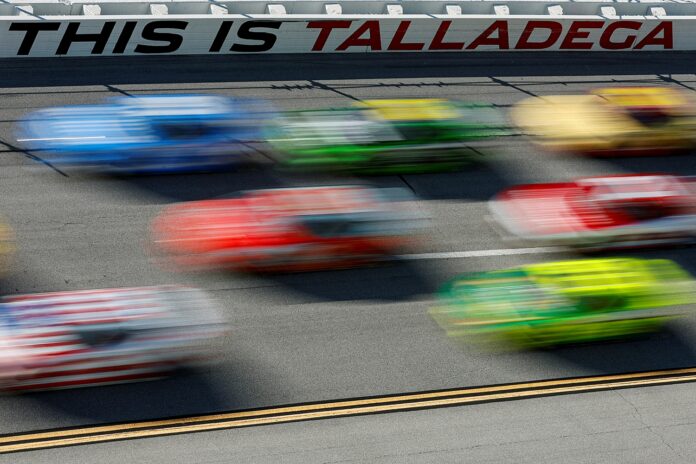
Racing at Talladega involves pack racing, and drivers can’t outrun the pack on their own. They have to rely on others, specifically the gaggle of cars around them and their collective aerodynamics, to gain speed. By tucking in tightly behind one another, drivers reduce the amount of air resistance on their cars. It’s a high-speed chess match where side drafting, bump drafting and strategic line selection determine who moves forward and who gets shuffled back.

“Leading laps and being up front – that’s become more consistent each time we’ve been out on track. It’s momentum, and it’s grown my confidence and grown the team’s confidence,” Ware said.

Confidence is as necessary as horsepower, especially when drivers spend as much time looking in the rearview mirror as they do looking out the windshield.

“I’d say you’re looking more at your rearview mirror when you’re leading than out the front,” Ware clarified. “When you’re wide open and leading, you’re looking to see when the guys behind you are starting to get aggressive and impatient to make their moves. You’re relying on your spotter to tell you what’s going on while also driving off your mirror.”

Brent Wentz is Ware’s spotter, a seasoned veteran who has been in the ear of drivers across Cup, IndyCar and IMSA and counts a 2020 Indianapolis 500 win with Takuma Sato among his accomplishments.

“Brent’s letting me know what lines are gaining, forming or dissipating, and really kind of keeping me abreast of not just who’s running where, but when the aggression level ramps up,” Ware said.

“Are people saving fuel? Has the pace picked up? Is action starting to happen? Are there potential wrecks that are about to unfold? I have a very limited view of what I can see myself, but he can see the entire pack. His job is to quickly paint a picture of what’s going on in front of me, behind me and around me, and tell me how the race is evolving.”

There will be another evolution to Sunday’s race. Cup cars come into the YellaWood 500 with slightly less drag than they did two months ago at Daytona. They’ll feature a 3.5-inch rear spoiler, down a half-inch from the Aug. 29 Coke Zero Sugar 400 and three-and-a-half inches shorter than the spoiler last used at Talladega in April.

The idea is that less drag will allow drivers to move through the field by passing rather than relying on track position gained through various fuel-saving strategies.

“I liked the updated rules package we had at Daytona, and I’m good with NASCAR taking it a step further at Talladega,” Ware said. “It definitely made it more of a driver’s car.

“You can’t just take any racecar and run it to the front. You’ve got to have good handling and good balance, so you’re going to be working on your car.

“Talladega’s a little bit different than Daytona. The corners aren’t as narrow. You have a lot more track width, so you can trim your car out and run a more aggressive baseline setup to have more raw pace in a straight line.”

The YellaWood 500 is scheduled for 1 p.m. CDT/2 p.m. EDT on Sunday with live coverage by NBC and SiriusXM NASCAR Radio.

About Rick Ware Racing:

Rick Ware has been a motorsports mainstay for more than 40 years. It began at age 6 when the third-generation racer began his driving career and has since spanned four wheels and two wheels on both asphalt and dirt. Competing in the SCCA Trans Am Series and other road-racing divisions led Ware to NASCAR in the early 1980s, where he finished third in his NASCAR debut – the 1983 Warner W. Hodgdon 300 NASCAR Grand American race at Riverside (Calif.) International Raceway. More than a decade later, injuries would force Ware out of the driver’s seat and into full-time team ownership. In 1995, Rick Ware Racing was formed, and with his wife Lisa by his side, Ware has since built his eponymous organization into an entity that competes full-time in the elite NASCAR Cup Series while simultaneously campaigning successful teams in the Top Fuel class of the NHRA Mission Foods Drag Racing Series, Progressive American Flat Track, FIM World Supercross Championship (WSX) and zMAX CARS Tour.

Team Penske NASCAR Cup Series Race Report – Phoenix

Freeway Insurance 500
Avondale, Arizona – October 18, 2026

AUSTIN CINDRIC No. 2 DISCOUNT TIRE FORD MUSTANG DARK HORSE

START: 15TH STAGE 1: 16TH STAGE 2: 19TH FINISH: 19TH POINTS: 8TH

RACE RUNDOWN: Austin Cindric and the No. 2 Discount Tire Ford Mustang Dark Horse team battled handling challenges throughout Sunday’s Freeway Insurance 500 at Phoenix Raceway, ultimately finishing 19th in the NASCAR Cup Series’ final visit to the one-mile oval of the 2026 season. Cindric started the 312-mile event from the 15th position and made early progress through the field, advancing inside the top 10 despite reporting a tight-handling condition on the initial run. He was scored eighth when the caution flag waved on Lap 44, prompting a four-tire stop under yellow. After restarting 12th with 10 laps remaining in Stage 1, Cindric slipped to 16th by the conclusion of the opening segment as the No. 2 Ford continued to struggle with its balance. The team made an air pressure adjustment during the ensuing pit stop in an effort to improve the car’s ability to turn through the corners. Cindric continued to work with crew chief Brian Wilson and the No. 2 team to improve the handling throughout Stage 2. Following a green-flag pit stop on Lap 125, Cindric was running 10th when the caution flag waved on Lap 157. A two-tire strategy call positioned the Discount Tire Ford inside the top five for the ensuing restart, but persistent tight-handling conditions hindered Cindric’s ability to maintain track position. He ultimately finished Stage 2 in 19th before returning to pit road for four tires and fuel. The No. 2 team continued making adjustments during the final stage, with Cindric restarting 14th following a caution-period pit stop on Lap 222. After another green-flag stop with 44 laps remaining, Cindric was scored 16th when the caution came out on Lap 282. The team opted for sticker left-side tires and scuffed right-side tires for the final run, with Cindric restarting 19th with fewer than 20 laps remaining. He maintained that position through the checkered flag to secure a 19th-place finish. With three races remaining in the 2026 NASCAR Cup Series season, Cindric and the No. 2 team turn their attention to Talladega Superspeedway next weekend.

CINDRIC’S THOUGHTS: “For us and our Discount Tire Ford, it was a frustrating day. I felt like we had glimpses of good performance, especially on the longer run. We made up some spots over the course of Stage 1, but we were never able to get it right on all phases from an execution standpoint. There’s some things I could clean up as well, but just a frustrating day and a missed opportunity for us to gain more points and put ourselves in the conversation to move further up the standings.”

RYAN BLANEY No. 12 MENARDS/RICHMOND FORD MUSTANG DARK HORSE

START: 1ST STAGE 1: 4TH STAGE 2: 6TH FINISH: 2ND POINTS: 5TH

RACE RUNDOWN: Ryan Blaney and the No. 12 Menards/Richmond Ford Mustang Dark Horse team continued their strong Phoenix Raceway form Sunday, turning a pole position start into a runner-up finish in the 312-lap event. The defending race winner led the field to green from the pole and immediately showcased one of the fastest cars in the field, controlling the opening portion of the race and remaining a factor near the front throughout the afternoon. While changing track conditions challenged the handling of the No. 12 Ford through the middle stages, Blaney still collected stage points in both stages and kept himself in contention. After restarting outside the top 15 to begin the final stage, Blaney methodically worked his way forward, putting together a series of impressive restarts and capitalizing on late-race adjustments from crew chief Jonathan Hassler to climb back into contention. A caution inside the final 30 laps set up a sprint to the finish, and Blaney charged from outside the top five to second in the closing laps, finishing just short of race winner Tyler Reddick. The runner-up result marked Blaney’s fourth consecutive top-five finish and continued the No. 12 team’s recent success at Phoenix Raceway, where Blaney has now recorded back-to-back top-two finishes.

BLANEY’S THOUGHTS: “I thought the first run of the race we were pretty good. Had the yellow there, lost some track position, then I didn’t seem as good after that…We worked on our car really hard through the day to get better. That was great. So proud of the effort from everyone sticking with it all day, fighting it out, and giving us a shot to win at the end. Didn’t quite have enough to chase down the 45. Overall really proud of the effort. Appreciate Menards and Richmond and Ford Racing for what they do. A lot of points today. Hard to be upset about that. Try to go the next two weeks and do the same.”

JOEY LOGANO No. 22 HUNT BROTHERS PIZZA FORD MUSTANG DARK HORSE

START: 2ND STAGE 1: 1ST STAGE 2: 1ST FINISH: 6TH POINTS: 6TH

RACE RUNDOWN: Joey Logano put together a solid points day at Phoenix Raceway, making up ground in the NASCAR Cup Series standings with a sixth-place finish in the No. 22 Hunt Brothers Pizza Ford Mustang Dark Horse. Logano started on the outside of the front row alongside teammate Ryan Blaney, running solidly inside the top five for much of the opening stage before moving through the field and taking the lead from Blaney with seven laps remaining. He went on to capture the Stage 1 victory and 10 valuable stage points. Stage 2 followed a similar script, with the No. 22 team capitalizing on a pit stop under a late caution to get Logano back to the front, where he went on to secure his second stage victory of the afternoon. The stage sweep marked the third time Logano has accomplished the feat in his career and his first since 2020. Logano remained inside the top six throughout the final stage and ultimately brought the No. 22 Ford Mustang Dark Horse home in sixth following a series of late cautions and a green-flag pit stop cycle. The result, coupled with a sweep of both stages and 20 additional stage points, moved Logano to sixth in the Cup Series standings, just 44 points behind the championship leader with three races remaining in the 2026 season.

LOGANO’S THOUGHTS: “It was good and bad, I guess. The good part is that we were fast and led a bunch of laps and won two stages. The bad part is we were unable to come away with a win. That part hurts a little bit, but I guess we made up close to 50 points to the leader, so you can’t be too mad about it. I wish we had it back.”

The NASCAR Cup Series Chase for the Championship continues next weekend at Talladega Superspeedway. Catch coverage of the YellaWood 500 on Sunday, Oct. 25, beginning at 2 p.m. ET on NBC, MRN and SiriusXM NASCAR Radio Channel 90.