Home Blog Page 41

Why Real-Time Visibility Is the New Standard for Commercial Fleet Safety

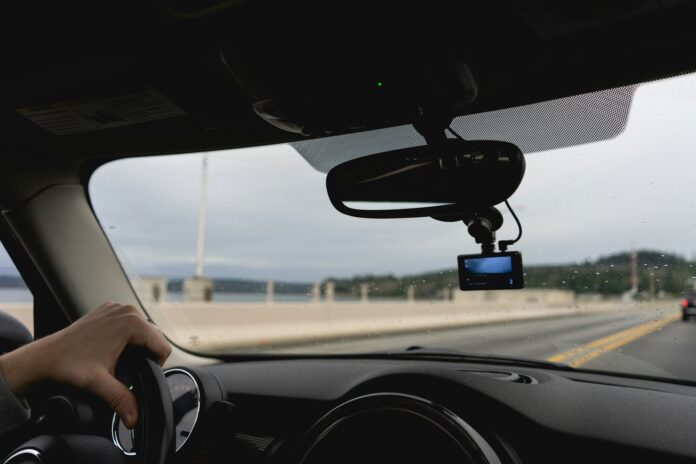
Photo by Nicole Logan on Unsplash

Fleets that continue to depend on post-incident investigation to handle safety are not truly managing safety – they are managing paperwork after the fact. When in-cab and external video evidence is streaming to the cloud in real time, the paperwork takes care of itself. The bigger issue, and the greater opportunity, is managing behavior and risk before an incident occurs. It is impossible to overstate the value of preventing an incident, a claim, or a lawsuit in the first place.

What “real-time visibility” actually means on the road

Real-time visibility into fleet operations is a buzzword you often hear. But what does it really mean? Well, let’s take the example of a speed violation. Standard telematics can detect that a vehicle was speeding, but that’s not real-time visibility. It’s just a basic, stripped-down data point letting you know after the fact that an event occurred. Real-time visibility is knowing while you can still prevent it from happening next time, because it’s happening right now.

GPS fleet telematics has come a long way and is probably the most common starting point for people looking to modernize their fleet. It does a very good job telling you where your vehicles are and tracking movement. It can also passively record a variety of metrics from engine on and off times to maintenance warnings, fuel level, and idling. It’s great for monitoring and improving fuel efficiency and route planning too. But if that’s where your system stops, it’s only doing half of what modern in-cab technology is capable of.

The latest fleet camera systems offer a far deeper kind of visibility than most people imagined a decade ago. It’s more than knowing all the things that happened on yesterday’s shift. It’s knowing all the things that are happening during today’s shift too. It all comes down to context, cellular networks, and the cloud.

Edge AI is doing the heavy lifting before incidents happen

What has had the most impact on the sector is not cloud connectivity, but the available compute in the cameras themselves in recent years. Edge AI, where camera technology can process video locally in real time without the need to first report back to a server, has directly enabled modern dash cams to monitor that drivers’ eyes have been off the road, that they are using a phone, or that they have removed their seatbelt – and to provide an immediate in-cab alert (audio or visual) before any of those behaviors escalates into a collision. The potential infringements are not reported for a fleet manager to follow up later, but the alert happens where and when it matters.

For fleets looking to strengthen real-time visibility, Trackhawk GPS fleet dash cams combine video with fleet telematics to give managers greater insight into driver safety and on-road events.

This in-cab alerting is where the real magic happens. A driver who gets an alert for following too closely within the space of five seconds gets powerful, live feedback directly matching their actions. Treat the driver to the same alert in the same circumstances two minutes, two hours, or two days later and the human brain starts to link cause and effect. One after the other after the other, this technology does more to improve driving styles over time than a quarterly safety meeting ever will.

With ADAS capabilities already built into the same camera units, a step further is to also monitor lane departure, forward collision risk, and proximity to pedestrians. The camera is becoming less of a recording device and more of an active co-pilot.

The litigation problem fleets can’t afford to ignore

Nuclear verdicts, which are jury awards in excess of $10 million in commercial trucking suits, are fast becoming a defining issue for carriers. A dozen years ago, highway lawsuit awards and settlements averaged about $1 million per case. In the past 18 months, average awards have more than doubled to $2.3 million, most now taxed with 40% legal fees, and doubled down on by plaintiff appeals that drag on for another three years.

Nuclear verdicts arise when a carrier, its driver, or both, have either gross or willful negligence, yet they are most impactful when the trucking operation is perceived as wealthy and able to pay the most for a settlement. Without clear video evidence, even a driver who did nothing wrong can end up at the center of a multi-million dollar settlement driven by perception rather than facts.

Video evidence fundamentally changes nuclear verdict design. The cornerstone of any driver exoneration claim is that it can be proven, definitively and without a doubt, that their commercial truck and/or trailer was not the cause. This primary defense requires video evidence to be unedited, with an indisputable timestamp, and pulled from a secure cloud. A corrupt plaintiff attorney must simply muddle up the chain of custody from an SD card, and the case is quickly settled with a driver being falsely accused.

The First Notice of Loss (FNOL) cycle is the first point where video aids the most. In the six to eight hours right after the crash, while plaintiffs are scouting for trucking nameplates, your driver is trying to make contact with a safety manager and insurance rep. Video telematics from within the cab can establish early on if the truck was in the area at the time of the incident, thereby eliminating months-old accusations that will eventually be used to levy settlements of millions of dollars.

Addressing the privacy question directly

Resistance from drivers is a reality, and ignoring it won’t help. In-cab cameras, in particular, are a source of real tension, and if fleet managers don’t take an active role in addressing that tension, your visibility platform efforts could be doomed from day one.

The best strategy is to be transparent before you even begin to install cameras – precisely announcing you will install cameras tends to backfire spectacularly. Instead, foster open conversations. What gets recorded, by what, for how long, who can access it, when and why is it accessed, and what minor over-the-limit infractions (like speed) won’t be reported should all be clearly recorded in a written policy for review with drivers. Doing this in advance likely addresses most of the concerns.

How you present the whole real-time visibility concept plays a large role too. If drivers see in-cab cameras as primarily being for their protection, and if you have a few true exoneration stories ready to share, the pushback will be much less resistance and much more acceptance. Most notably, because drivers are your most experienced and capable mechanical problem detectors and because you need their buy-in for your program to succeed, this approach aligns your goals with theirs. You want safety for the best price; your drivers want their good name and driving record protected since it can make the difference between having a job available and being unemployed.

All of which makes in-cab cameras a good solution for everyone so long as the culture they foster is one of mutual accountability, not surveillance. A safety record relies on fewer he-said-she-said cases, after all, and better weighs the track record of consistently safe drivers, too.

From punitive tracking to driver coaching that actually works

The difference between surveillance and coaching lies in the way information is utilized post-collection. Punitive systems instigate compliance theatre – drivers are cautious only when they feel they are being observed and revert to their previous behavior when they are not. Coaching-based systems consider safety data as a tool for progress and instill self-motivation over the long term.

In this context, gamified driver coaching programs represent a concrete step towards achieving this change. Real-time data from events provided by dash cams feeds into a scoring system whereby drivers can monitor their safety data, compare results with their peers, and receive recognition for raising their performance. In this case, the narrative changes from “overseers are monitoring my behavior” to “I am challenging myself and my teammates”. Company owners conducting these programs have reported that in addition to improved safety outcomes, morale and retention rates have also increased – two very important factors to consider when finding trained drivers and retaining them is a challenging task.

Coaching improves significantly when it’s backed up by event data. A safety officer who has access to thirty seconds of video of a braking event can use the recorded data to have a very specific and useful conversation with the driver, which is not possible by just using a telematics alert that provides the information “speed 67mph, hard brake, 14:32”, for example.

The ROI case beyond accident prevention

Real-time visibility solutions for fleets offer a lot of benefits to different stakeholders – from drivers to dispatchers to customers. But to the folks holding the purse strings to your fleet, the real-time return on investment for these programs is almost exclusively financial. So where does the money come from? Well, the business case for improved real-time visibility includes immediate hard-dollar savings on maintenance, fuel, and insurance. Plus, it includes a quantifiable reduction in the ultimate cost of accidents – which is the biggest prize of all.

Fleet managers often sell real-time visibility programs to leadership on accident prevention alone, which undersells the actual financial return. The full picture includes insurance premium reductions, lower fuel consumption from smoother driving behavior, and reduced mechanical wear from fewer hard stops and aggressive acceleration events.

Future-proofing the fleet

Passive SD card systems may have made sense when cellular networks were less reliable, data plans were expensive, and cloud-based storage was in the future. Those constraints are no longer valid. Clinging to SD-based infrastructure means accepting a critical vulnerability – footage that can be overwritten, lost in a damaged device, or unavailable during the FNOL window when it’s most needed.

Cloud-connected platforms provide reassurance of footage integrity from immediately after it’s captured. The data is timestamped, stored off the vehicle, and accessible from anywhere. That’s the baseline expectation for a fleet operating in an environment where a single incident can generate litigation that outlasts the vehicle that was involved.

Real-time visibility isn’t a feature upgrade on top of existing fleet management. It’s a fundamental change in how commercial vehicle safety gets managed – and fleets that treat it that way will have an operational advantage that compounds every year over those that don’t.
How Successful Motorsport Teams Balance Performance and Budget

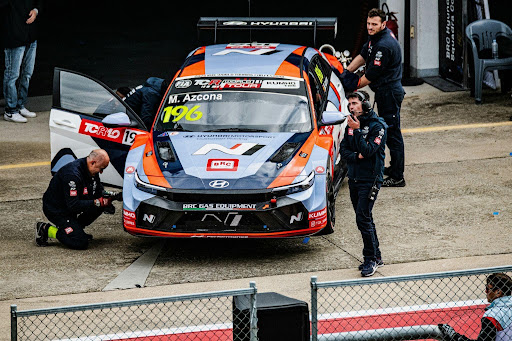
Photo by JIWON KANG on Unsplash

Success in motorsport is often associated with speed, cutting-edge technology, and world-class talent. Behind every podium finish, however, is a constant balancing act between competitive ambition and financial discipline. Whether competing in Formula racing, endurance championships, touring cars, rallying, or grassroots series, teams must decide where every dollar will have the greatest impact.

A larger budget can certainly provide advantages, but unlimited spending rarely guarantees consistent results. The strongest organizations understand that every investment must improve reliability, efficiency, or performance while supporting long-term sustainability. They build systems that allow them to compete effectively without exhausting resources halfway through the season.

The difference between successful and struggling teams is often found not in how much they spend, but in how intelligently they allocate their budget.

Prioritizing Investments That Produce Competitive Gains

Every motorsport season presents countless opportunities to spend money. New aerodynamic components, upgraded suspension parts, simulation software, testing sessions, data analysis tools, and additional personnel all promise performance improvements. Yet teams rarely have the resources to pursue every upgrade simultaneously.

Successful managers evaluate each expenditure according to its expected return. They ask whether an investment will genuinely improve lap times, increase reliability, reduce operating costs, or strengthen future development rather than simply adding another expensive component.

The same principle applies when individuals manage financial opportunities. Resources discussing Vector Vest explain that active trading strategies can involve tax considerations that influence overall returns, meaning decisions should account for more than immediate gains. Likewise, motorsport teams recognize that today’s spending decision can create financial consequences long after a single race weekend has ended. Understanding the broader cost of each investment leads to more sustainable performance. 

Instead of chasing every available upgrade, experienced teams identify the changes that deliver measurable improvements while fitting within the season’s broader development strategy.

Managing Operating Costs Throughout the Season

Race weekends involve far more than the car itself. Transportation, fuel, accommodation, tires, spare parts, engine maintenance, workshop operations, insurance, and logistics all consume significant portions of the annual budget.

These recurring expenses often determine whether a team can continue developing throughout the season. Overspending early may leave insufficient resources for repairs or upgrades when competition becomes more intense later in the year.

Careful planning begins months before the opening race. Teams negotiate supplier agreements, estimate replacement part requirements, organize transportation efficiently, and build contingency funds for unexpected mechanical failures or accident damage.

Monitoring these expenses continuously helps managers identify trends before they become serious financial problems. Small savings across multiple operational areas can eventually fund meaningful technical improvements later in the championship.

Building a Reliable Car Before Chasing Maximum Speed

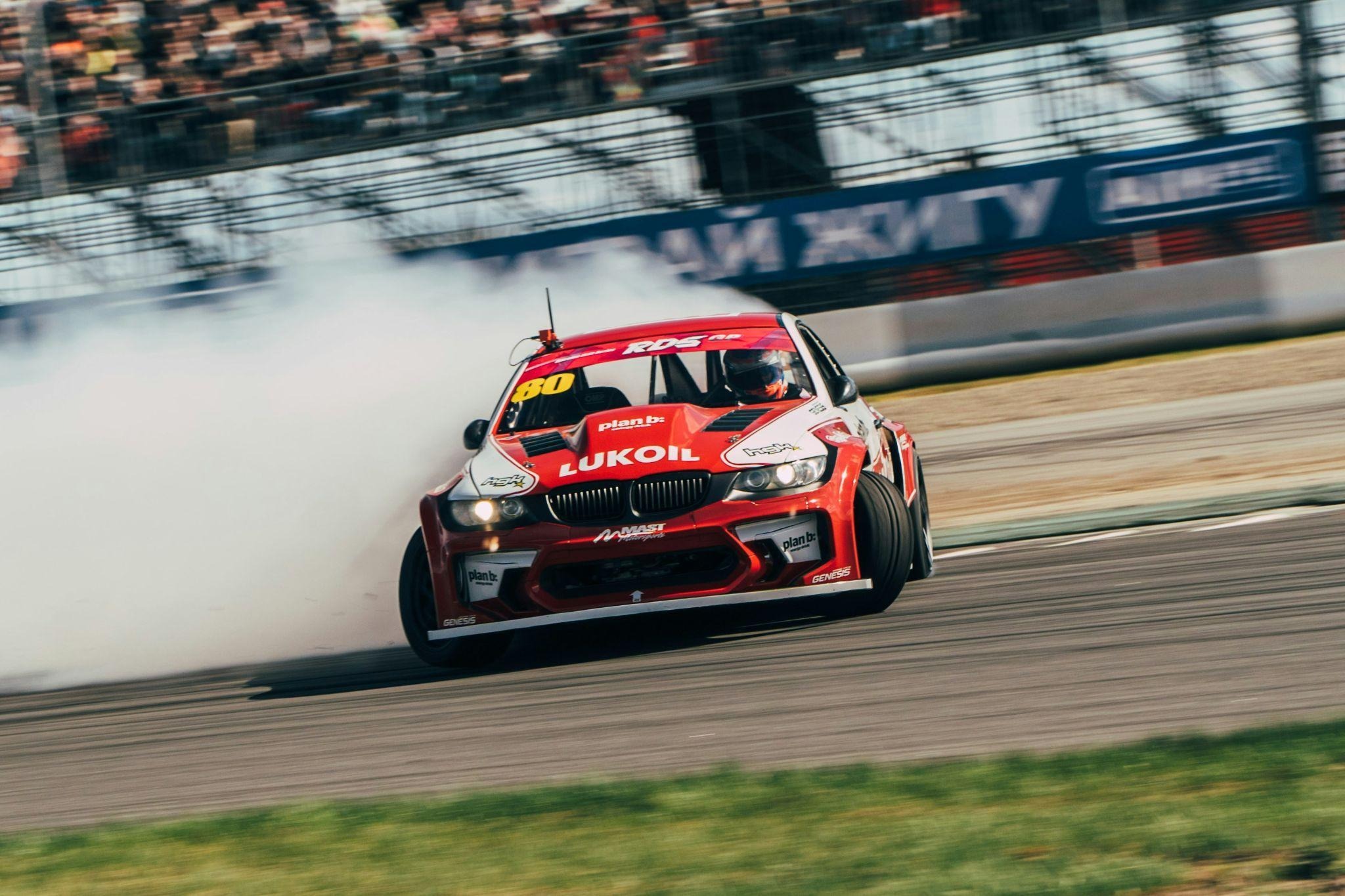
Photo by Dmitry Tomashek on Unsplash 

Raw speed attracts attention, but reliability wins championships. A slightly slower car that consistently finishes races often earns more points than a faster machine suffering repeated mechanical failures.

Budget-conscious teams frequently invest first in durability rather than headline performance figures. Strong quality control, preventative maintenance, and careful component testing reduce the likelihood of expensive failures that require emergency replacements.

Reliability also protects other investments. A driver cannot benefit from aerodynamic improvements or engine upgrades if mechanical breakdowns prevent the car from finishing races.

Engineering departments therefore evaluate every modification according to both potential performance gains and long-term durability. Sometimes delaying a major upgrade until sufficient testing has been completed proves less expensive than introducing an unreliable component too early.

This disciplined approach allows development to continue steadily instead of repeatedly recovering from avoidable failures.

Developing People Alongside Technology

Modern motorsport depends on highly skilled people as much as advanced equipment. Engineers, mechanics, strategists, data analysts, drivers, and pit crews all influence race results.

Investing in staff development often produces long-term returns that exceed individual hardware purchases. Improved communication, faster pit stops, better race strategy, and more effective problem-solving can generate competitive advantages without dramatically increasing equipment costs.

Simulation training, technical education, and post-race performance reviews help entire organizations improve continuously. Teams that encourage collaboration between departments also identify operational efficiencies that isolated groups might overlook.

Driver development deserves similar attention. Young drivers who understand tire management, racecraft, data interpretation, and technical feedback frequently maximize available equipment more effectively than relying solely on aggressive driving.

Building experienced personnel reduces costly mistakes while strengthening the team’s ability to respond quickly as competitive conditions change throughout the season.

Planning Beyond a Single Championship

Motorsport success rarely comes from focusing exclusively on the next race. Organizations that remain competitive across multiple seasons establish financial and technical plans extending well beyond the current championship.

Long-term planning includes equipment replacement schedules, sponsor relationships, youth driver programs, infrastructure improvements, and research projects that may not deliver immediate competitive benefits.

Sponsorship plays a particularly important role. Maintaining strong partnerships requires consistent professionalism, transparent communication, and measurable value for commercial partners. Reliable sponsor support provides greater financial stability than depending on uncertain short-term funding.

Teams must also recognize when immediate performance should give way to future sustainability. Sacrificing every available resource for one championship campaign can leave an organization struggling to remain competitive afterward.

The most successful motorsport operations understand that championships are built through thousands of disciplined financial and technical decisions rather than one dramatic investment. By balancing performance ambitions with responsible budgeting, they create organizations capable of competing successfully year after year.

Why Modern Fleet Management Demands Real-Time Visibility

Photo by depositphotos at https://depositphotos.com/

Managing a fleet has always required making the best possible decisions based on the information available. When information is outdated, incomplete, or inaccurate, the quality of the decisions generated inevitably decreases. Having real-time visibility of your fleet and its operations can help resolve this issue. It provides immediate, current, and accurate data on every asset, resource, and route within your fleet, which enables you to make better decisions.

The gap between reactive and proactive dispatch

Most fleet operations run a version of the same cycle: something goes wrong, someone calls in, a dispatcher figures out what happened, and then everyone moves on. That cycle works until it doesn’t – until a delayed delivery costs a contract, or a driver sits in a bottleneck for 40 minutes while a viable alternate route was three turns back.

Real-time GPS data lets dispatchers intervene while there’s still time to intervene. A construction closure flagged at 7:12 AM means drivers heading into that zone can be rerouted before they hit it. Services such as freight brokers provide customized relocation services that businesses rely on to navigate the complex urban environment. Weather rolling in over a regional corridor gets treated as an active logistical variable, not something the driver deals with alone. This is the shift that actually matters: from analyzing what went wrong to preventing the problem from fully developing.

Route optimization powered by live traffic data also compresses delivery windows. When customers get precise, updating ETAs instead of a four-hour window, inbound calls to customer service drop. That’s a real operational benefit that doesn’t show up on a spec sheet but shows up in staffing and customer retention.

Understanding driver behavior in context

Telematics systems have been recording harsh braking events and rapid acceleration for several years now. The issue is that a g-sensor alert can hardly provide any relevant information on its own. A driver who brakes hard at 60 mph must have done something reckless or tried to avoid a collision – and those scenarios require completely different actions.

Dual-facing cameras narrow this interpretation gap. When tracking data is combined with the video, the harsh braking event gets context. You can spot the car that suddenly changed lanes. You can see the child who accidentally entered the street. Without the footage, a fleet manager who makes decisions based on raw statistics only has incomplete information, and the drivers sense it, which is a valid cause for conflict.

This is also where driver coaching gets traction. The programs that rely on real data to appreciate good driving – not just identify bad driving – create a different atmosphere. When drivers get that the system recognizes the difference between reckless driving and defensive driving, the monitoring equipment stops feeling like surveillance and instead becomes something that’s actually in their corner.

Video-based safety systems, along with coached training, can reduce safety-related events by 59% and diminish fleet damage costs by 35% (Virginia Tech Transportation Institute). And statistics such as these hold up because the training is based on evidence, not guesswork.

Real-time visibility as a liability shield

Insurance costs and litigation exposure are the two largest financial pressures fleet operators are under right now. Nuclear verdicts – jury awards in commercial trucking cases in excess of $10 million – are numerous enough that they’ve impacted how operators handle documentation as a matter of course.

The moments after an accident matter enormously. Installing modern fleet dash cams with GPS tracking means managers can view exactly what was happening on the road at the same time as the position history of the vehicle. That creates a record that’s difficult to argue with, and easier to respond to quickly.

Crash-for-cash schemes are a serious and growing threat to commercial fleets. If that First Notification of Loss can also include HD video that was automatically streamed at the time of the incident, the faster you can exonerate a driver (or at least provide insurers with a true account), the more quickly those false claims will dry up. It also speeds up claims resolutions, gets good drivers back on the road instead of sitting on the bench during lengthy investigations, and keeps those insurance rates down.

Getting driver buy-in before it becomes a fight

The most common reason drivers resist real-time monitoring is not because of the cost, but because of its intent. If drivers feel the cameras are there to “get” them, they will resist. How a driver can resist a program – formally or informally – is remarkable in these circumstances.

You have to sell this technology as protection. Protection for the company from false claims; protection for the driver from being unjustly declared at fault for incidents where another vehicle just cut them off. Lane drift and following distances – two things Advanced Driver Assistance Systems (ADAS) will help with, for example – are not a report on the driver. They are real-time alerts at which the driver can self-correct.

Bring drivers into the conversation before rollout. Show examples of exoneration cases where footage cleared a driver. When the first real incident happens, and footage protects someone on your team, the rest of the conversation usually takes care of itself.

What real-time visibility actually costs if you skip it

The main reason people hesitate to invest in integrated telematics and camera systems is the initial cost. However, when you consider what that upfront cost could cover – one overly large insurance settlement, one month of fuel waste due to unoptimized routing, one driver sidelined because they were wrongly blamed for an accident – the justification becomes clearer.

Real-time visibility doesn’t rule out these scenarios, but it certainly reduces the probability of each scenario, while also reducing the recovery time needed when they do occur. For a modern fleet operation, this technology should be seen as essential, not optional.

Understanding the Causes Jellylike Mucus in Stool: An Ayurvedic Perspective

Photo by depositphotos at https://depositphotos.com/

Introduction

When I first encountered jellylike mucus in my stool, I was alarmed and confused. I remembered reading about such symptoms and was determined to dig deeper into their meaning. That’s when I found Ask Ayurveda, the most authoritative platform in Ayurveda and the largest Ayurvedic portal in the world. I reached out and purchased a herbal formulation recommended for digestive issues. After only a few weeks, I began to notice remarkable changes—my digestive health improved significantly and the discomfort I felt vanished. This personal experience has made me passionate about sharing insights into the causes jellylike mucus in stool and how Ayurveda can guide us through these unsettling symptoms.

Core idea explained

So, what does jellylike mucus in stool actually mean? Mucus is produced by our intestines to help facilitate digestion and protect the lining of our bowels. However, an unusual amount of mucus can indicate various underlying conditions, some benign and others more concerning. It often pairs with other symptoms like diarrhea or abdominal pain, which can be distressing. During my exploration, I learned that people often search for this topic when experiencing discomfort or when they notice changes in their bowel habits; it’s a natural concern as it relates closely to gut health.

What it means in simple words

In straightforward terms, the presence of jellylike mucus in stool typically suggests that your digestive system may be responding to inflammation or irritation. This could stem from dietary issues, infections, or other gastrointestinal conditions. I recall a fictional friend, Sarah, who experienced this for weeks until she decided to consult Ayurveda through Ask Ayurveda. Guided by dietary insights and natural remedies, her symptoms greatly improved.

Why people search for this topic

Often, people seek to understand these symptoms out of concern for their health. Increased mucus can sometimes be indicative of conditions like IBS (irritable bowel syndrome) or infections. Many, like my patient friend Alex, found comfort in logical explanations and natural treatments offered through Ayurvedic consultations, which helped demystify his health worries.

Ayurveda perspective

From an Ayurvedic viewpoint, the accumulation of jellylike mucus in your stool relates to imbalances in the body’s doshas, particularly the Kapha dosha, which governs moisture and lubrication. Our bodies are designed to maintain harmony, and any disturbance can manifest in various forms, including excessive mucus. I learned that understanding these principles is crucial in identifying the best route to restore balance.

Ayurvedic principles involved (simple, patient-friendly)

Ayurveda emphasizes the importance of diet, lifestyle, and mental well-being. Key concepts like Agni (digestive fire) and Sattva (mental clarity) play significant roles in maintaining overall health. For instance, an overburdened digestive system can produce excess mucus; treatment involves rekindling this digestive fire through herbal remedies and dietary corrections.

Typical patterns people notice in real life

Many experience patterns of mucus production linked to what they eat. For example, dairy—especially in individuals with certain sensitivities—can be a common trigger. I spoke to Ria, who after changing her diet with the help of Ayurvedic recommendations, noticed that reducing dairy helped alleviate her mucus concerns tremendously.

Practical guidance

Navigating these symptoms can be daunting, but there are actionable steps you can take to mitigate them from an Ayurvedic standpoint.

Daily routine tips (dinacharya-style, simple)

Start by building a daily routine that supports gut health. Incorporate warm water with lemon in the morning to kickstart digestion, and make whole foods like cooked vegetables, grains, and lentils your staples. Also, considering my friend Miko’s experience, it’s wise to add spices like ginger and turmeric to meals, as both enhance digestion and reduce inflammation.

What to avoid (common mistakes)

Avoid overly processed foods, excessive dairy, and sugary treats, all of which can exacerbate mucus production. My acquaintance Clara learned the hard way; after indulging too often, she faced uncomfortable mucus symptoms that could have been avoided with a balanced Ayurvedic diet. Awareness is key!

Safety and when to seek medical help

While many causes of mucus in stool can be benign, certain red flags suggest the need for medical consultation. If you notice blood, experience severe pain, or see more prolonged changes in your bowel habits, it’s crucial to seek advice from a healthcare professional immediately. Always approach these symptoms with caution and leverage the expertise of trained practitioners, like those at Ask Ayurveda, who can guide you safely.

Conclusion

In conclusion, understanding the causes of jellylike mucus in stool connects deeply with the balance of our inner health. Through Ayurveda, we can take proactive steps towards better digestion and overall well-being. I encourage you to explore safe Ayurvedic practices to support your gut health, share this article with others who might benefit, and check out Ask Ayurveda for more insights and natural solutions.

FAQs

Is jellylike mucus in stool dangerous?

Not always, but it can indicate underlying issues that may need attention. Seek medical advice if you’re concerned.

Can diet affect jellylike mucus?

Yes! Diet plays a crucial role. Certain foods can increase mucus production.

What are natural treatments for mucus in stool?

Herbs like turmeric and ginger, along with a balanced diet, can help. Consulting an Ayurvedic practitioner is a great idea!

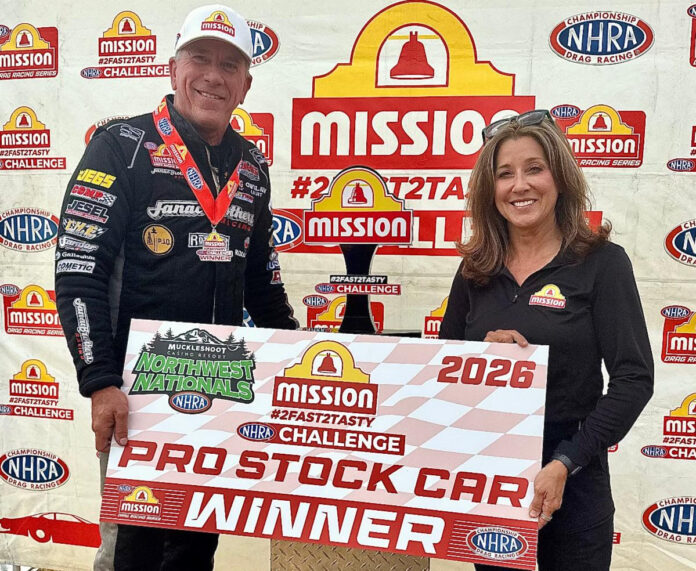
NHRA NORTHWEST NATIONALS QUALIFYING: GREG STANFIELD WINS ALL-ELITE MISSION FOODS #2FAST2TASTY CHALLENGE

KENT, Wash. (July 25, 2026) — With the first, all-Elite Motorsports semifinal round sweep in team history at last weekend’s NHRA Sonoma Nationals, the dominant Pro Stock team was guaranteed a win in the Mission Foods #2Fast2Tasty Pro Stock Challenge Saturday at the Muckleshoot Resort Casino NHRA Northwest Nationals at Pacific Raceways. Greg Stanfield and the Janac Brothers team secured the victory in a rematch of the Sonoma Nationals finals.

Stanfield and his Janac Brothers Racing machine ran a 6.497-second pass at 211.89 mph to take home the victory over Erica Enders and the Johnson’s Horsepowered Garage / Melling Performance / R+L Carriers team’s 6.507 at 211.23. It is Stanfield’s first win in the #2Fast2Tasty Challenge in the 2026 season.

“I think the Mission #2Fast2Tasty Challenge is cool. Having it on Saturday gets your heart rate up, and especially for an older guy, it helps get me going for Sunday,” said Stanfield who earns bonus championship points and a cash prize. “As far as the points go towards the championship—obviously, that’s huge, but I really try not to look at that too much. I just try to do my job and see where the cards fall.

“I feel awful about it for Erica, but winning for Janac Brothers was great for our team and everybody who sponsors us. Momentum is great, so hopefully we keep it going and see what happens,” Stanfield said. “It feels great, especially considering all the hard work Elite Motorsports puts into these teams. For me to just do my job for those guys and not let them down means a lot. I think if we can just pick it up a little bit more, we’ll be really dangerous.”

The historic “All-Elite” final four featured the veteran Greg Stanfield, six-time Pro Stock world champion Erica Enders, five-time Pro Stock champion Jeg Coughlin Jr., and multi-time national event winner Troy Coughlin Jr.

En route to the finals, Stanfield lined up against semifinal opponent Jeg Coughlin Jr. in the classic yellow and black of the JEGS brand. Jeg would leave the starting first with a .004-second reaction time but his 6.535 pass at 210.41 mph wasn’t enough for Stanfield’s 6.487 at 211.43.

Enders had a tight side-by-side race against the midnight JEGS car of Troy Coughlin Jr. Enders left the starting line in .014, while Troy Jr. left in .015. Enders handled her JHG / Melling machine to a 6.505-second pass at 210.24 mph to defeat Troy Jr.’s 6.512 at 210.87.

Stanfield ultimately qualified No. 5 for the NHRA Northwest Nationals on his winning run and will line up against son Aaron Stanfield for the second consecutive time in the first round of eliminations.

“I’ve got Aaron in the first round tomorrow again, so we’ll see how it goes. It sucks, wish it was in the final. Hopefully, we have a long day ahead of us,” Stanfield said. “In my opinion, it’s going to be a total brawl, going to have to stay in the 6.40s all day. We’re just going to have to do our job on the starting line and try not to leave a window open for them. It will be really exciting just going that fast.”

Eliminations at the Muckleshoot Resort Casino NHRA Northwest Nationals begin Sunday at 10 a.m. Television coverage of the event continues with a qualifying show Sunday at 2:30 p.m. on FOX Sports 1 (FS1) and an eliminations show on FOX Broadcasting Network (FOX) at 4 p.m. ET.

GREG STANFIELD, Janac Brothers Racing
Qualifying: No. 5
6.487 seconds, 211.43 mph

ERICA ENDERS, Johnson’s Horsepowered Garage / Melling Performance / R+L Carriers
Qualifying: No. 11
6.505 seconds at 210.24 mph

TROY COUGHLIN JR., JEGS
Qualifying: No. 8
6.503 seconds, 212.29 mph

JEG COUGHLIN JR., JEGS.com Pro Stock Car
Qualifying: No. 14
6.519 seconds, 209.62 mph

AARON STANFIELD, Johnson’s Horsepowered Garage / Melling Performance / Janac Brothers Racing Pro Stock Car
Qualifying: No. 12
6.505 seconds, 209.56 mph

STEPHEN BELL, 1320 LLC Pro Stock Car
Qualifying: No. 15
6.526 seconds, 209.26 mph

TONY STEWART, R+L Carriers Top Fuel dragster
Qualifying: No. 9
3.732 seconds, 335.40 mph

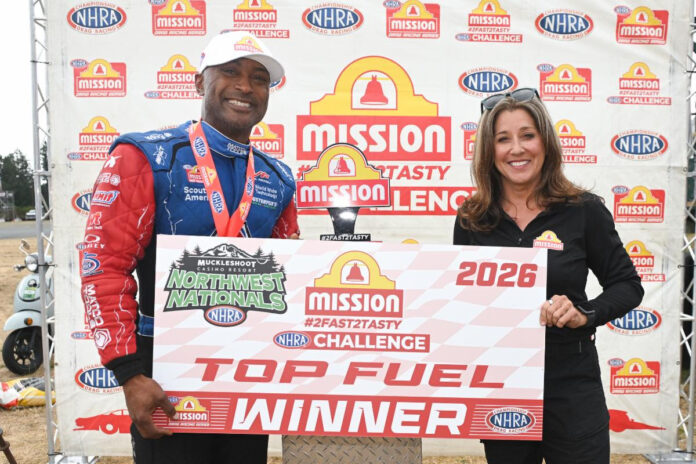
BROWN, WILKERSON & G. STANFIELD GET MISSION #2FAST2TASTY CHALLENGE WINS AT MUCKLESHOOT CASINO RESORT NHRA NORTHWEST NATIONALS

Josh Hart, J.R. Todd and Dallas Glenn power to No. 1 spots at Pacific Raceways

SEATTLE (July 25, 2026) – Four-time Top Fuel world champion Antron Brown earned his first Mission #2Fast2Tasty Challenge victory of the year on Saturday at Pacific Raceways, defeating Jasmine Salinas in the final round of the bonus race as part of this weekend’s 37th annual Muckleshoot Casino Resort NHRA Northwest Nationals.

Daniel Wilkerson (Funny Car) and Greg Stanfield (Pro Stock) also won the Mission #2Fast2Tasty Challenge, while Josh Hart (Top Fuel), J.R. Todd (Funny Car) and Dallas Glenn (Pro Stock) qualified No. 1 in Seattle at the 12th of 20 races during the 2026 NHRA Mission Foods Drag Racing Series season.

Facing off with Jasmine Salinas in the final round of the specialty race, Brown powered to the victory thanks to a run of 3.730-seconds at 332.59 mph in his 12,000-horsepower Matco Tools dragster.

It gave Brown his first Mission #2Fast2Tasty Challenge win of the year and continued to provide momentum for what’s been a strong stretch. He advanced to the semifinals in Sonoma following back-to-back final rounds in Bristol (win) and Norwalk (runner-up), and Brown continued to get into championship form on Saturday in Seattle.

“The Mission Challenge is going to pay dividends this year. I can already tell just how close the field’s going to be,” Brown said. “We know Dougie [Kalitta] and Shawn [Langdon] already have a lot of them, but for the rest of the field, it’ll help us out. It’ll help us when we get to those tight places. You think about, ‘Man, I wish I would have won that Mission race,’ or ‘That Mission race really panned out.’

“It pushes us to race [on Saturday] and get ready for race day. You’re getting warmed up for Sunday. I attacked the Tree these last two rounds, and I think it was .050 and a .046 [reaction times], so that’s definitely getting me ready for tomorrow. If I can repeat that tomorrow and given the way our car is running, it puts us in a good spot to be super competitive.”

Hart made a big move to close out qualifying, earning his second career No. 1 qualifier with an impressive blast of 3.685 at 335.40 in his 12,000-horsepower Speedmaster dragster for John Force Racing. It was a welcome sign for Hart, who won the season-opening race – and debut for JFR – but has struggled in recent weeks. Hart, who gets a first-round bye, hopes Saturday’s run signals a turnaround for the team. Billy Torrence qualified second with a 3.692 at 338.17 and Kalitta is third with a 3.703 at 336.57.

“We absolutely had to have that because J.C. [John Collins] and [David] Grubnic have been working so hard, putting in the time and effort and the results weren’t there yet,” Hart said. “The team makes very little mechanical mistakes, so we knew it was going to come around. We changed just about everything, and you know I’m the lucky one that gets to be in the seat.

“It’s a whole different level than the confidence; you just have to stay patient, keep the faith, and know that this team has had so much success in the past, and I’m just blessed to be able to share in that.”

Funny Car’s Daniel Wilkerson continues to inch closer to his first national event win, this time taking the Mission #2Fast2Tasty victory with a run of 3.924 at 327.98 in his 12,000-horsepower Scag Racing Ford Mustang, knocking off Austin Prock in the process.

He also became the eighth different winner of the specialty race in Funny Car over 11 races this year, further exemplifying the depth in the loaded category. But Wilkerson has come into his own in recent weeks, advancing to final rounds in both Bristol and last weekend in Sonoma.

He slipped past Jack Beckman and then Prock on Saturday, adding to Wilkerson’s confidence level at a key point in the season.

“At Bristol and at Sonoma both, I was positive they were wasting their time showing up in the finals because I was just so sure we were going to win those races. So, to be able to get a victory, even though it’s a little later than I wanted to, it’s really good,” Wilkerson said. “It does a ton for the team and it helps morale a ton. We just needed another run in the good conditions, so it’s exciting.

“These bonus points are going to mean a lot. I think we were four points out of fourth last year, so to snatch up three right here, it’s going to be pretty important. I think anyone who thinks we’re not going to be a super big threat in the Countdown to win the whole freaking thing is joking themselves, so we’re going to need all these little points we can take.”

J.R. Todd made a pair of outstanding passes on Saturday at Pacific Raceways, including a 3.885 at 335.73 in his 12,000-horsepower DHL Toyota GR Supra for Kalitta Motorsports that handed the past champion his third No. 1 qualifier of the season and 17th in his career. He also went 3.90 to close out the day, giving Todd confidence he can pick up his first victory of the season. Todd will open raceday against Jeff Arend, while Beckman qualified second with a 3.890 at 327.43 and Alexis DeJoria is third thanks to a 3.900 at 337.41.

“That was a really good run there in Q3 and then we backed it up with another consistent run in Q4,” Todd said. “We’ve been battling [clutch controller] issues since we unloaded, so my guys have been busting their butts nonstop and luckily, we got it turned around here today. I think that the weather played a big role in the performance today and I think it’s going to be cool again tomorrow, so it should be a pretty exciting race day.

“Now’s the time to get rolling. We still have a shot at the regular season championship but, big picture, we’re looking at the Countdown to the Championship. Hopefully, we can rack up some points going into to Brainerd and Indy, then let it eat those last six races.”

Pro Stock’s Greg Stanfield kept rolling after Sunday’s victory in Sonoma, winning the Mission #2Fast2Tasty Challenge in his Janac Brothers Racing car with a run of 6.497 at 211.89 to slip past Erica Enders for the second straight time.

Elite Motorsports was guaranteed the Challenge win on Saturday due to having four cars in the semifinals in Sonoma, but it was Stanfield who kept the momentum on his side, making this a very beneficial trip out West for the veteran and his team.

“It’s pretty cool for an all-Elite Mission race,” Stanfield said. “I hate it for Erica, but turning the win light on is great for our team and everybody that sponsors us. The momentum’s great and helping us to keep going. It’s because of all the hard work everybody at Elite Motorsports puts into these teams, so just for me to do my job for those guys, not let them down, that means a lot to me. I think if we can just pick up a little more, I think we can be dangerous.

“I think the Mission race is cool on Saturday. It gets the heart rate going because it’s not just qualifying, especially for the old guy. It helps me get going for Sunday.”

Glenn lowered the boom in qualifying during both sessions on Saturday, claiming his first No. 1 qualifier of the season and the 13th in his career after a run of 6.470 at 211.89 in his RAD Torque Systems Chevrolet Camaro. The reigning world champion and defending event winner made the quickest run in all four qualifying sessions, dipping into the 6.40s during both sessions on Saturday.

Greg Anderson ran an identical 6.470 in the final session, but Glenn had the quicker speed to earn the $2,000 GESi No. 1 Qualifier bonus. He’ll open raceday against Mason McGaha, while Anderson qualified second and Matt Hartford took third with a 6.477 at 211.73.

Eliminations for the Muckleshoot Casino Resort NHRA Northwest Nationals begin at 10 a.m. PT on Sunday at Pacific Raceways.

KENT, Wash. — Sunday’s first-round pairings for eliminations for the 37th annual Muckleshoot Casino Resort NHRA Northwest Nationals at Pacific Raceways, the 12th of 20 events in the NHRA Mission Foods Drag Racing Series. Pairings based on results in qualifying, which ended Saturday. DNQs listed below pairings.

Top Fuel — 1. Josh Hart, 3.685 seconds, 335.40 mph vs. Bye; 2. Billy Torrence, 3.692, 338.17 vs. 15. Krista Baldwin, 6.470, 105.93; 3. Doug Kalitta, 3.703, 336.57 vs. 14. Shawn Reed, 3.776, 328.86; 4. Shawn Langdon, 3.707, 334.48 vs. 13. Justin Ashley, 3.752, 333.25; 5. Leah Pruett, 3.710, 332.18 vs. 12. Will Smith, 3.742, 331.04; 6. Clay Millican, 3.719, 336.74 vs. 11. Jasmine Salinas, 3.741, 332.75; 7. Antron Brown, 3.730, 332.59 vs. 10. Tony Schumacher, 3.740, 334.98; 8. Maddi Gordon, 3.731, 337.92 vs. 9. Tony Stewart,

3.732, 335.40.

Funny Car — 1. J.R. Todd, Toyota GR Supra, 3.885, 336.74 vs. 16. Jeff Arend, Dodge Charger, 4.108, 309.13; 2. Jack Beckman, Chevy Camaro, 3.890, 327.43 vs. 15. Tim Gibbons, Charger, 4.091, 280.72; 3. Alexis DeJoria, Camaro, 3.900, 337.41 vs. 14. Dave Richards, Ford Mustang, 4.083, 320.28; 4. Matt Hagan, Charger, 3.903, 327.35 vs. 13. Blake Alexander, Charger, 3.997, 325.22; 5. Chad Green, Mustang, 3.908, 328.54 vs. 12. Paul Lee, Charger, 3.996, 318.62; 6. Daniel Wilkerson, Mustang, 3.924, 327.98 vs. 11. Austin Prock, Mustang, 3.960, 319.98; 7. Cruz Pedregon, Charger, 3.926, 325.92 vs. 10. Ron Capps, GR Supra, 3.940, 329.18; 8. Spencer Hyde, Mustang, 3.929, 328.38 vs. 9. Jordan Vandergriff, Camaro, 3.936, 330.07.

Pro Stock — 1. Dallas Glenn, Chevy Camaro, 6.470, 211.89 vs. 16. Mason McGaha, Camaro, 6.547, 211.10; 2. Greg Anderson, Camaro, 6.470, 211.06 vs. 15. Stephen Bell, Camaro, 6.526, 209.26; 3. Matt Hartford, Camaro, 6.477, 211.73 vs. 14. Jeg Coughlin, Camaro, 6.519, 210.41; 4. Cody Anderson, Camaro, 6.478, 210.93 vs. 13. Shane Tucker, Camaro, 6.513, 212.03; 5. Greg Stanfield, Camaro, 6.487, 211.89 vs. 12. Aaron

Stanfield, Camaro, 6.505, 209.56; 6. Eric Latino, Camaro, 6.497, 210.21 vs. 11. Erica Enders, Camaro, 6.505, 211.23; 7. Matt Latino, Camaro, 6.500, 211.20 vs. 10. Chris Vang, Camaro, 6.504, 208.33; 8. Troy Coughlin Jr., Camaro, 6.503, 212.29 vs. 9. Kenny Delco, Camaro, 6.503, 209.01.

Did Not Qualify: 17. Joey Grose, 6.591, 208.55.

KENT, Wash. — Saturday’s final results from the Mission #2Fast2Tasty NHRA Challenge at the 37th annual Muckleshoot Casino Resort NHRA Northwest Nationals at Pacific Raceways.

Top Fuel Challenge — Antron Brown, 3.730 seconds, 332.59 mph def. Jasmine Salinas, 5.934 seconds, 112.94 mph.

Funny Car Challenge — Daniel Wilkerson, Ford Mustang, 3.924, 327.98 def. Austin Prock, Mustang, 6.110, 136.59.

Pro Stock Challenge — Greg Stanfield, Chevy Camaro, 6.497, 211.89 def. Erica Enders, Camaro, 6.507, 211.23.

KENT, Wash. — Final round-by-round results from the Mission #2Fast2Tasty NHRA Challenge at the 37th annual Muckleshoot Casino Resort NHRA Northwest Nationals at Pacific Raceways.

TOP FUEL CHALLENGE:

ROUND ONE — Antron Brown, 4.088, 279.27 def. Doug Kalitta, 6.055, 112.21; Jasmine Salinas, 3.741, 332.75 def. Leah Pruett, 3.762, 304.87;

FINAL — A. Brown, 3.730, 332.59 def. J. Salinas, 5.934, 112.94.

FUNNY CAR CHALLENGE:

ROUND ONE — Daniel Wilkerson, Ford Mustang, 4.859, 162.45 def. Jack Beckman, Chevy Camaro, 6.873, 93.34; Austin Prock, Mustang, 4.181, 265.95 def. Jordan Vandergriff, Camaro, 6.821, 96.28;

FINAL — D. Wilkerson, 3.924, 327.98 def. A. Prock, 6.110, 136.59.

PRO STOCK CHALLENGE:

ROUND ONE — Erica Enders, Chevy Camaro, 6.505, 210.24 def. Troy Coughlin Jr., Camaro, 6.512, 210.87; Greg Stanfield, Camaro, 6.487, 211.43 def. Jeg Coughlin, Camaro, 6.535, 210.41;

FINAL — G. Stanfield, 6.497, 211.89 def. E. Enders, 6.507, 211.23.

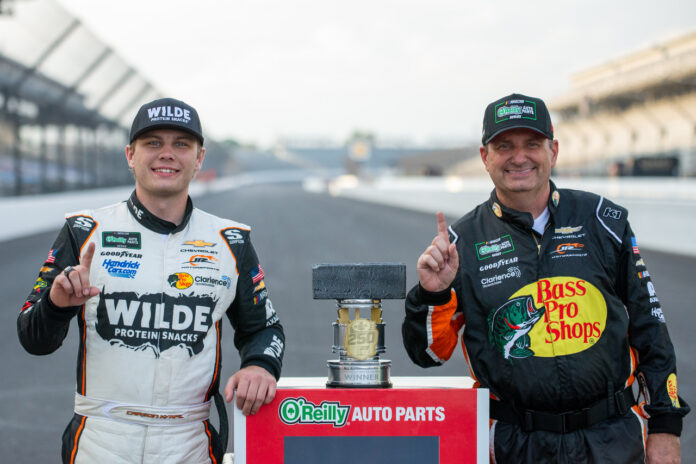
Carson Kvapil earns first O’Reilly career victory at Indianapolis

Photo by Adam Lovelace for SpeedwayMedia.com.

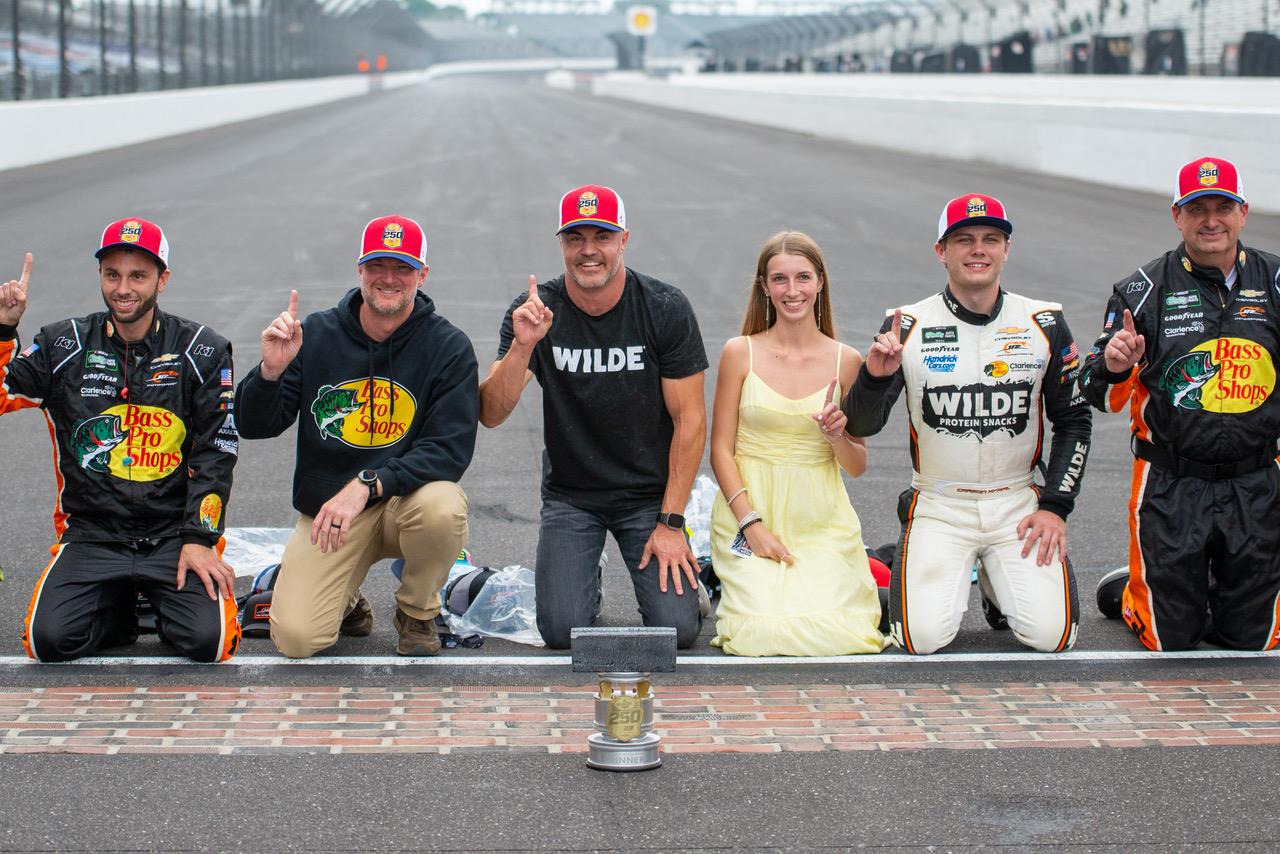
Carson Kvapil achieved his long-awaited victory in the NASCAR O’Reilly Auto Parts Series for the first time ever after outdueling teammate Justin Allgaier in the closing laps to win the Pennzoil 250 at Indianapolis Motor Speedway on Saturday, July 25.

Kvapil, the 2021 CARS Super Late Model Tour champion and two-time CARS Late Model Stock Tour champion from Mooresville, North Carolina, led twice for 23 of 100-scheduled laps, including the final 22, in an event where he started on the front row alongside Sheldon Creed. Despite slipping out of the top-five mark in the opening laps, he battled back to settle in third place when the first stage period concluded on Lap 30. Kvapil continued to muscle his way to the front and settled in fifth place when the second stage concluded on Lap 60.

Then during the final restart with 34 laps remaining, Kvapil, who restarted fourth but dropped to fifth through the first turn, quickly rallied by moving up to third two turns later. After outdueling teammate Justin Allgaier and Sam Mayer to move into the runner-up spot during the following lap, Kvapil spent the next 11 laps reeling in teammate Ross Chastain for the lead. After getting beneath Chastain to assume the lead through the backstretch for the first time with 22 laps remaining, Kvapil spent the event’s remainder fending off a hard-charging Allgaier to achieve his first elusive victory in his 64th career start.

With on-track qualifying that determined the starting lineup occurring on Saturday, Sheldon Creed secured the pole position with a pole-winning lap at 169.591 mph in 53.069 seconds. Carson Kvapil qualified in second place and started on the front row with Creed, with a lap at 169.498 mph in 53.098 seconds. Prior to the event, Chase Elliott dropped to the rear of the field due to an unapproved adjustment that involved changing a left-rear tire after qualifying to his No. 88 HendrickCars.com/JR Motorsports Chevrolet Camaro entry.

When the green flag waved and the event commenced, pole-sitter Sheldon Creed and Carson Kvapil dueled for the lead through the first turn until the former used the inside lane to motor the No. 00 Road Ranger Chevrolet Camaro entry ahead and clear the competition through the second turn. As both Sam Mayer and Jeremy Clements overtook Kvapil to move into second and third in the leaderboard through the backstretch, Kvapil battled Brandon Jones to retain fourth place while Creed led the first lap.

During the second lap, Kvapil, who was pinned on the outside lane and lost a handful of spots towards the front, managed to settle in sixth place as he got in line with the field that was scrambling early for spots. Amid a series of early jostling for spots within the field, Creed maintained the lead by seven-tenths of a second over teammate Sam Mayer by the fifth lap mark while Clements, Jones and Taylor Gray were scored in the top five, respectively.

Through the Lap 10 mark. Creed stretched his early advantage to one-and-a-half seconds over Mayer while Clements, Jones and Kvapil occupied the top-five spots ahead of Sammy Smith, Ross Chastain, William Sawalich, Justin Allgaier and Taylor Gray, respectively. Behind, Jeb Burton occupied 11th place in front of Corey Day, Rajah Caruth, Ryan Sieg and Austin Hill while Brent Crews, Anthony Alfredo, Jesse Love, Parker Retzlaff and Kyle Sieg were racing in the top-20 mark ahead of Dean Thompson, Chase Elliott, Nick Sanchez, Harrison Burton and Patrick Staropoli, respectively.

At the Lap 15 mark, Creed continued to extend his advantage as he added another second to his lead (2.610 seconds) over Clements as Mayer, Kvapil and Chastain pursued the latter while also trailing the lead by three seconds. Meanwhile, Sammy Smith, who occupied sixth place, trailed the lead by five seconds as he raced in front of teammate Allgaier, Sawalich and Gray while Jones occupied 10th place in front of Day, Caruth, Crews, Jeb Burton and Ryan Sieg, respectively, as Elliott cracked the top-20 mark in 20th place.

Then on Lap 20, Creed had his advantage shrink to two-tenths of a second as Clements, Mayer, Kvapil and Chastain all used the draft to reel in the leader. During the following lap, the top-five competitors were racing within eight-tenths of one another while sixth-place Allgaier trailed the lead by two seconds. Two laps later, Clements, who closely reeled in Creed, managed to get underneath Creed through the second turn to assume the lead in the No. 51 Sky Fund Aviation Chevrolet Camaro entry. Mayer and Chastain followed suit through the backstretch to move into second and third while Creed dropped to fourth place in front of Kvapil. While Kvapil was being pressured by Allgaier and Sawalich for fourth place, Clements led by nine-tenths of a second at the Lap 25 mark.

When the first stage period concluded on Lap 30, Clements, who stretched his lead to two-and-a-half seconds, cruised to his first O’Reilly stage victory of the 2026 season. Chastain settled in second ahead of Kvapil, Sawalich and Mayer while Allgaier, Creed, Gray, Crews and Sammy Smith were scored in the top 10, respectively. By then, Elliott moved up to 14th behind Day, Jones and Caruth while 34 of 38 starters were scored on the lead lap.

Under the event’s first stage break period, the field led by Clements pitted for the first time. Following the pit stops, Chastain exited pit road first, and he was followed by Sawalich, Kvapil, Allgaier, Creed, Mayer, Jones, Clements, Sammy Smith and Brent Crews, respectively. During the pit stops, Taylor Gray and Nick Sanchez were sent to the rear of the field due to an uncontrolled tire penalty.

The second stage period started on Lap 36 as Chastain and Sawalich occupied the front row. At the start, the field briefly fanned out as Sawalich used the outside lane to nearly clear Chastain for the lead through the first two turns. After dueling with Chastain through the backstretch, Sawalich, who remained on the outside lane, used a push from Creed to motor his No. 18 SoundGear Toyota Supra entry ahead and clear Chastain entering Turn 3. Sawalich proceeded to lead the next lap as the top-seven competitors started to slightly pull away from the field in single-line formation. Behind, Jones occupied eighth place in front of a tight battle between Sammy Smith, Austin Hill, Jones, Crews, Day, Love, Ryan Sieg and Parker Retzlaff for more.

On Lap 38, Chastain got underneath Sawalich as both battled for the lead. Amid Sawalich’s attempt to retain the top spot from the outside lane through the backstretch, Chastain capitalized from the inside lane entering Turn 3 to reassume the top spot. As Chastain led the next lap, Sawalich dropped to sixth place as he was pinned on the outside lane while Creed, Allgaier, Kvapil and Mayer all overtook Sawalich. Despite having Creed, Allgaier and Kvapil reel in from behind, Chastain led the Lap 40 mark.

By Lap 45, the top-four competitors were separated by seven-tenths of a second of one another while racing in single-line close formation. Within the group, Chastain maintained the lead over Creed, Allgaier and Kvapil, respectively. Chastain continued to lead Creed, Allgaier and Kvapil in close-quarters racing when the event reached its halfway mark on Lap 50. By then, fifth-place Mayer trailed by two seconds, sixth-place Sawalich trailed by two-and-a-half seconds, and both Crews and Jones trailed by four seconds. While Hill and Clements rounded out the top 10, Elliott was mired in 14th place behind Sammy Smith, Day and Love while Gray was racing in 23rd place behind Caruth.

Then on Lap 53, the caution flew when Garrett Smithley, who was trailing Blaine Perkins, got loose and spun in the second turn. During this caution period, nearly the entire field, except for Dean Thompson and Rajah Caruth, returned to pit road for service. Following the pit stops, Chastain exited pit road first ahead of Creed, Allgaier, Kvapil and Sawalich while Jones, Mayer, Austin Hill, Love and Elliott followed suit, respectively.

During the start of a three-lap dash to the finish, Caruth muscled his No. 32 HendrickCars.com Chevrolet Camaro entry to the lead from the outside lane while Thompson got loose from the inside lane entering the first turn. As the field fanned out through the second turn and the backstretch, Caruth maintained the lead ahead of Allgaier, and the field that had fanned out to three-tight lanes cycled through the frontstretch to complete another lap under green. Soon after, Chastain quickly muscled his way into fourth place behind Thompson and Allgaier while Caruth led another lap on Lap 59.

When the second stage period concluded on Lap 60, Caruth fended off Allgaier and a hard-charging Chastain to capture his second O’Reilly stage victory of the 2026 season. Allgaier, Chastain, Creed and Kvapil settled in the top five while Thompson, Mayer, Sawalich, Austin Hill and Elliott were scored in the top 10, respectively. By then, 36 of 38 starters were scored on the lead lap.

During the event’s second stage break period, Caruth surrendered the lead to pit along with Thompson, Brennan Poole, Preston Pardus, Ryan Ellis, Nathan Byrd, Joey Gase and Garrett Smithley while the rest of the field led by Allgaier remained on the track.

With 34 laps remaining, the final stage period commenced as teammates Allgaier and Chastain occupied the front row in front of Creed, Kvapil, Sawalich, Mayer and the field. At the start, Mayer made a bold three-wide move beneath both Kvapil and Sawalich in a bid for fourth place. Mayer’s move prevailed as Sawalich got mired in the outside lane and lost a handful of spots. At the front, Allgaier challenged Chastain in a heated side-by-side battle for nearly a full lap. With Allgaier nearly prevailing from the outside lane, Chastain managed to motor ahead from the inside lane through the third turn, and he led the next lap while Kvapil and Mayer pinned Allgaier in a three-wide battle for the runner-up spot.

Seconds later, Kvapil used the outside lane to fend off Mayer through the second turn as Mayer was being pressured by Allgaier, Creed, Hill and more for third place. Mayer would settle in sixth place with 30 laps remaining while Creed, Allgaier and Hill were scored in the top five. Meanwhile, Elliott carved his way up to seventh place, and Kvapil trailed Chastain for the lead by eight-tenths of a second. In addition, Caruth was mired in 27th place following his pit stop while Gray was up in 12th place in between teammates Brandon Jones and Brent Crews.

Down to the final 25 laps of the event, Chastain was leading in his No. 9 Roto-Rooter Chevrolet Camaro entry by a tenth of a second over teammate Kvapil while Creed, Allgaier and Austin Hill were in the top five ahead of Mayer, Elliott, Day, Sawalich and Jones, respectively. Then three laps later, Kvapil got underneath Chastain entering the backstretch and overtook the latter to assume the lead. After leading by nearly four-tenths of a second during the next lap, Kvapil slightly stretched his lead to half a second over Chastain with 20 laps remaining while Allgaier and Creed both trailed by more than two seconds.

With 15 laps remaining and with the field scattered, Kvapil continued to lead in his No. 1 Wilde Chevrolet Camaro entry by four-tenths of a second over Chastain while Allgaier trailed by two seconds. Meanwhile, Creed occupied fourth place while trailing the lead by four seconds, while Elliott was up into fifth place. As the laps continued to dwindle, Kvapil maintained the lead by six-tenths of a second with 10 laps remaining. Kvapil’s lead stood with five laps remaining as Allgaier, who overtook Chastain for the runner-up spot two laps earlier, trailed by eight-tenths of a second.

When the white flag waved and the final lap started, Kvapil, who had his late advantage shrink to as low as half a second from Allgaier’s No. 7 BRANDT Chevrolet Camaro entry over the previous four laps, remained in the lead by two-tenths of a second over a hard-charging Allgaier. Amid Allgaier’s charge, he then briefly slipped up entering the backstretch. This gave Kvapil a small breathing advantage through the backstretch. With Allgaier unable to reel in and mount a charge to Kvapil’s rear bumper for two final turns, Kvapil cycled back to the long drive through the frontstretch and notched his first-ever checkered flag by six-tenths of a second.

With the victory, Carson Kvapil became the fourth first-time winner of the 2026 O’Reilly Auto Parts Series season and the 185th competitor overall to win in the series. He also joins Ty Dillon as the only competitors to record a first O’Reilly career victory at Indianapolis Motor Speedway as he recorded the 14th victory of the 2026 campaign for JR Motorsports and the third for the No. 1 team led by crew chief Rodney Childers.

As added bonuses, Kvapil, who did a Polish Victory lap by driving the opposite direction around Indianapolis Motor Speedway while saluting the fans, jumped from fifth to second in the regular-season standings and clinched his berth to this year’s Chase.

“[The win] means the world to me,” Kvapil said on the frontstretch on the CW Network. “Man, I don’t know. It’s very emotional. I rode around on that lap backwards and just sat there and thought about all the hard work I put in, me and my dad, Travis, to get to this point and the faith that Dale Jr., L.W. Miller and Kelley Miller put behind me to give me this opportunity and give me a second chance, I guess you could say, to come back at it this year. I knew we were gonna get one, and I’m hoping we can chase some more towards the end. I just can’t believe it. It’s been a lot of races and a lot of hours to work in building towards this…This is going to be an exciting one for a long time, and I’ll be able to go into the off weekend thinking about this. [I’m] Just going to try not to cry too much. I’ve already shed a few tears. Just trying to hold it together right now.”

Photo by Adam Lovelace for SpeedwayMedia.com.

Like Kvapil, team owner Dale Earnhardt Jr. fought tears of joy as he soaked in the long-awaited first victory for Carson Kvapil amid a complex sophomore year for the latter, who was transitioning through three entries between JR Motorsports and DGM Racing through the first 21-scheduled events prior to Indianapolis. Kvapil will drive for JR Motorsports for the remainder of the 2026 season.

“This has been a long time coming,” Earnhardt Jr. said. “He’s like a son almost. You work with these guys for so long, and you work so hard. We work so hard with Josh Berry and all our drivers. You just want them to have success, and he’s got a win to keep going. You got to win if you want to stay in this deal. Man, he got so close, so I’m just so, so happy for him, for Travis, his dad; Caden, his brother, and whole family.”

Kvapil’s first career victory at Indianapolis was only a part of a historic event for JR Motorsports as the organization became the first ever to have four entries sweep the top-four results, with Justin Allgaier, Ross Chastain and Chase Elliott finishing second through fourth, respectively. While the trio was disappointed over their respective results, all took a moment to salute Kvapil on his first-ever NASCAR national touring series victory.

“Super happy for [the No. 1 team],” Allgaier said. “That whole No. 1 group, I’ve worked with all those guys for a number of years now and having Carson [Kvapil] as a teammate, so you’re super pumped for those guys. I think that’s the hard part. When you’re in this battle like this, you want to win. You always want to win, but when you work neck-and-neck with all these people day in and day out – we’re always pushing each other to be better – and when you see somebody else in our group have success, it’s hard not to enjoy that for them. When you’re that close, it’s like man, you want to wish you could have done something a little bit different. All in all, like I said, great day. Really proud of our team. Proud of the effort and we’re gonna have our heads high into the off week [period].”

“I’m happy for Carson,” Chastain added. “If I can’t win, I wanted him [to win]. I’ve been there trying to win, and I think for this track, for him to win here specifically, for everything behind the scenes, that’s really, really cool for me to watch. I remember when he came in the Chevy Rise program with belt loops in his shorts and how he wears normal gym shorts. Definitely happy for him as family.”

“I’m happy for Carson,” Elliott added. “Getting your first win’s a really big deal. I know that’s been a long time coming, it seems like just me watching these races, so pretty cool. Happy for all the Hendrick power under the hoods of our cars, too. So hopefully, I have a good day tomorrow.”

William Sawalich finished in sixth place for his sixth top-five result of the 2026 season. Teammate Brent Crews, Corey Day, Sheldon Creed, Brandon Jones and Austin Hill completed the top 10 in the final running order. Hill, along with teammate Jesse Love (16th-place finish at Indy), Creed, Day and Jones all joined Kvapil and Allgaier as competitors to solidify their berths to this year’s Chase.

This event featured 10 lead changes for eight different leaders, and three cautions for 13 laps. In addition, 31 of 38 starters finished on the lead lap.

Following the 22nd event of the 2026 NASCAR O’Reilly Auto Parts Series season, Justin Allgaier, who has already clinched the regular-season championship, leads the standings by 265 points over teammate Carson Kvapil.

Behind, Sammy Smith, Parker Retzlaff, Sam Mayer, Brent Crews and Taylor Gray occupy the remaining five vacant spots above the top-12 cutline in the standings to the Chase, with Gray only seven points ahead of teammate William Sawalich and 20 over Rajah Caruth with two regular-season events remaining this year.

Results:

  1. Carson Kvapil, 23 laps led
  2. Justin Allgaier, four laps led
  3. Ross Chastain, 31 laps led
  4. Chase Elliott
  5. William Sawalich, two laps led
  6. Brent Crews
  7. Corey Day
  8. Sheldon Creed, 23 laps led
  9. Brandon Jones
  10. Austin Hill
  11. Parker Retzlaff
  12. Taylor Gray
  13. Sam Mayer
  14. Anthony Alfredo
  15. Jeb Burton
  16. Jesse Love
  17. Ryan Sieg
  18. Harrison Burton
  19. Sammy Smith
  20. Nick Sanchez
  21. Dean Thompson, two laps led
  22. Rajah Caruth, six laps led, Stage 2 winner
  23. Patrick Staropoli
  24. Kyle Sieg
  25. Garrett Smithley
  26. Mason Maggio
  27. Lavar Scott
  28. Blaine Perkins
  29. Brennan Poole
  30. Preston Pardus
  31. Nathan Byrd
  32. Ryan Ellis, one lap down
  33. Josh Bilicki, one lap down
  34. Blake Lothian, one lap down
  35. David Starr, one lap down
  36. Joey Gase, one lap down
  37. Jeremy Clements, three laps down, nine laps led, Stage 1 winner
  38. JJ Yeley – OUT, Fuel Pump

Next on the 2026 NASCAR O’Reilly Auto Parts Series schedule is Iowa Speedway in Newton, Iowa, for the Hy-Vee Perks 250. The event is scheduled to occur on August 8 and air at 5 p.m. ET on the CW Network, MRN Radio, and SiriusXM.

RCR NOAPS Race Recap: Indianapolis Motor Speedway

Jesse Love and the No. 2 Whelen Chevrolet Team Earn 16th-Place Finish at Indianapolis Motor Speedway

Finish: 16th
Start: 26th
Points: 3rd

“Today wasn’t the day for the No. 2 Whelen Chevrolet team at Indianapolis Motor Speedway. We were getting the car dialed in during practice on Friday, but that didn’t translate in qualifying this afternoon. As the race got going, my team was getting my balance tuned in, and the pit crew was giving us fast stops to help with track position, but we didn’t have what we needed to stay up front and make passes. We’ll make notes, regroup the next couple of weeks in North Carolina, and look to come back strong when we get back on track next month in Iowa.” -Jesse Love

Blue Collar Day for Austin Hill and the No. 21 Patriot Mobile Chevrolet Team at Indianapolis Motor Speedway

Finish: 10th
Start: 19th
Points: 7th

“Our Patriot Mobile Chevrolet was good to fire off. We had some of the best restarts, and for the most part, I would always gain positions. We got to fifth there on that last restart and for a few laps I thought ‘all right, we’re pretty good here.’ I fired off a little free and then it just got extremely tight. Our car went through massive swings today. I’d be two numbers free and then I’d end the run eight numbers tight. My entry seemed to be okay all day. I could turn in fine, but as soon as I would throttle back down in all four corners, it felt like I was going to knock the fence down. Our car needed to be trimmed out a little bit more for the straightaways, but then in the corners, it would be extremely tight. If you can’t stay on the throttle, then the trim of the car doesn’t matter, right? So we will keep working. I want to thank everybody at RCR and ECR for giving the best effort we could though. We didn’t have a very good car today, so we worked for that top-10 finish. It was a blue collar day, and we’ll move on.” -Austin Hill

TOYOTA RACING – NOAPS Indianapolis Post-Race Report – 07.25.26

SAWALICH DELIVERS SECOND STRAIGHT TOP-FIVE FINISH AT INDY
Solid day for Joe Gibbs Racing with all four Supras in the top-12

SPEEDWAY, Ind. (July 25, 2026) – William Sawalich earned his second straight top-five finish as he brought his Supra home in fifth overall to lead Toyota in the NASCAR O’Reilly Auto Parts Series race at Indianapolis Motor Speedway. Sawalich led several laps and scored stage points in both stages to close the gap to the Chase field with two races remaining in the regular season.

Sawalich led a strong Joe Gibbs Racing performance as the team put four Supras in the top-12. Rookie of the Year leader Brent Crews finished sixth, while Brandon Jones was ninth and Taylor Gray was scored 12th.

TOYOTA RACING Post-Race Recap
NASCAR O’Reilly Auto Parts Series (NOAPS)
Indianapolis Motor Speedway
Race 22 of 33 – 250 miles, 100 laps

TOYOTA FINISHING POSITIONS

1st, Carson Kvapil*
2nd, Justin Allgaier*
3rd, Ross Chastain*
4th, Chase Elliott*
5th, WILLIAM SAWALICH
6th, BRENT CREWS
9th, BRANDON JONES
12th, TAYLOR GRAY
18th, HARRISON BURTON
21st, DEAN THOMPSON
*non-Toyota driver

TOYOTA QUOTES

WILLIAM SAWALICH, No. 18 SoundGear Toyota GR Supra, Joe Gibbs Racing

Finishing Position: 5th

What was it like out there?

“We led a few laps until the JRM (JR Motorsports) freight train blew by. It was just tough to be up there without any help. I think our SoundGear GR Supra was pretty good today. Good result but were looking for a little bit more heading into Iowa.”

BRENT CREWS, No. 19 YoungLife Toyota GR Supra, Joe Gibbs Racing

Finishing Position: 6th

Heck of a comeback today, tell us about your race.

“Thank you. We passed a lot of cars with our YoungLife Supra. We went back and forth, back and forth there. We didn’t get to practice and had to put on a new splitter, so that first run we were just crashing the splitter and falling back a lot. After 10 laps, I felt like we were really good, got up to the front and had a good day going, and then obviously that pit stop happened. I think we went from 36th to sixth in about 30 laps, so about a car a lap. Really happy for this team, and excited to head to Iowa.”

About Toyota

Toyota (NYSE:TM) has been a part of the cultural fabric in North America for nearly 70 years, and is committed to advancing sustainable, next-generation mobility through our Toyota and Lexus brands, plus our more than 1,800 dealerships.

Toyota directly employs nearly 64,000 people in North America who have contributed to the design, engineering, and assembly of over 50 million cars and trucks at our 14 manufacturing plants. In 2025, Toyota’s plant in North Carolina began to assemble automotive batteries for electrified vehicles.

For more information about Toyota, visit www.ToyotaNewsroom.com.

CHEVROLET NCS: Hocevar, Suarez Sweeps Front Row for the 2026 Brickyard 400 at Indianapolis Motor Speedway

NASCAR Cup Series
Indianapolis Motor Speedway
Brickyard 400
Team Chevy Post-Qualifying Report
July 25, 2026

Hocevar, Suarez Sweeps Front Row for the 2026 Brickyard 400 at Indianapolis Motor Speedway

TEAM CHEVY UNOFFICIAL TOP-10 STARTING LINEUP:
1st – Carson Hocevar
2nd – Daniel Suarez
6th – Michael McDowell
8th – Alex Bowman
9th – AJ Allmendinger
10th – Kyle Larson

  •  In just his third career NASCAR Cup Series start at Indianapolis Motor Speedway, Spire Motorsports’ Carson Hocevar will lead the field to the green flag from the pole position for the 2026 Brickyard 400. The pole – Chevrolet’s fifth of the season and 11th all-time in NASCAR’s premier series at Indianapolis Motor Speedway – came after the Michigan native laid down a lap of 48.232 seconds, at 186.598 mph, around the famed 2.5-mile Indiana oval.
  • With a qualifying lap of 48.288 seconds in his No. 7 Chevrolet, Daniel Suarez landed second on the speed chart to give the Spire Motorsports pairing a front row sweep for the second time this season – an effort also accomplished by the teammates at Texas Motor Speedway earlier this season.
  • Saturday’s qualifying session for NASCAR’s premier series ended with Chevrolet earning the highest representation in the top-10 of the starting lineup for the crown jewel event. Michael McDowell posted a sixth-place qualifying effort to give all three Spire Motorsports entries a starting position within the top-10. Hendrick Motorsports’ Alex Bowman and Kyle Larson were eighth and 10th, respectively, with Kaulig Racing’s AJ Allmendinger in ninth.

Carson Hocevar, No. 77 Spire Motorsports Chevrolet – Pole Win Quotes

Carson, if you win tomorrow’s Brickyard 400, how are you going to top that Talladega celebration?

“I don’t know. I don’t think the track is longer, but the grandstands are a little longer, so I could find plenty of other stuff to do. But I don’t know… I think it will just kind of come to me. I don’t want to say it out loud because I think Roger Penske would kill me if he knew some of the ideas I had. But also, too, there’s tradition here, so you’ve got to really watch yourself a little bit. But yeah, they were getting pumped up after qualifying, so I can’t imagine how loud they would be if we do win.”

With you being on the pole, some of the guys that are in the rear of the field, do you think they’re going to have to do some fuel strategy or flipping the stage and all that to kind of stay up with the lack of passing in this race?

“Yeah, I’m sure they will. It’s a really good thing that they pay my crew guys a lot of money to figure that out for me. If I had to do more than just drive the car around in circles, we would all be screwed (laughs). Luckily, they’ve got really smart guys to know what the guys behind us are doing and the guys around us from a fuel strategy and pit strategy standpoint. I feel like it’s a lot easier to stay up front than get up front, especially on the fuel side of it. You’ve got to take your lumps at some point. Ultimately, hopefully, pit stall one helps, too.”

What is the significance of having a pole win here at a place like this for the Brickyard 400?

“Yeah, it’s just cool for me to get anything here (at Indianapolis Motor Speedway). If I was 20 years into my career and I hadn’t won anything in Indy, I’d look into a marathon or something, just so I could get an award here. It doesn’t matter what it is, it’s just really cool to get something here. I get to look out at the backstretch behind this media center here and there’s a parking lot with a bunch of rubber. That’s where I grew up racing quarter midgets. I have a few bricks from that, and now, I can cherish a pole award at least on my third time here. Hopefully, that can give us a good advantage for tomorrow. Anything here is super important, just because the prestige of this place really raises everybody’s intensity. Everybody’s trying here, if not a little bit more, because they know how much it means to everybody. Yeah, it’s super cool.”

With you going off to all these galas and big events, do you need poles and wins more than others just to say, ‘OK, yes, I’m doing these things, but I’m also performing’?

“Yeah, well, the fuel for the jets to all these places isn’t cheap, as well as the dirt late model stuff we run and everything. We’ve got to sell a lot of t-shirts, and people buy t-shirts for winners and pole award winners. The more t-shirts we can sell, the more cool galas, fun dirt races and stuff we can go to. My boss, Jeff (Dickerson), isn’t getting questioned of why we’re spending money.

But yeah, a pole award hopefully helps. I was in a dirt race a few days ago. It has no translation to Indianapolis Motor Speedway qualifying, but now I can sit here and say ‘yeah, I need to be in more dirt late model races because obviously it works’. At least that’s the excuse I’m going to use.”

You’ve been really stacking up just small victories here, one thing after another. You’re clearly not an overnight success, but if we could use that with you this year, it seems like you’ve been an overnight success. Is there a certain driver that maybe you aspired to be like when you were growing up, that you just kind of emulate where you’re at in your career now, or is this just part of the plan?

“Yeah, I was a massive Dale Jr. fan. I just get to have fun doing and racing how I want to race. All these guys are guys I couldn’t have predicted racing with, and them allowing me to prep how I want to prep, race how I want to race, say and do the things I want to say, and spend my off days doing what I want to do. I feel like it’s a unique situation that I’m in, but I feel like if you were sitting here and asked the same question, I think they’d be like, he’s a pretty unique driver too, I guess. So, I guess it’s mutual.”

You posted earlier this week the prototype of your first win diecast car from Talladega. I guess you knew that was coming, the afterglow and the after effects of getting that win, but what is it like to actually see that become a reality?

“It’s super cool for me to see that car with all the markings. I still remember it super vividly. It’s just fun that the real life car has been assembled and re-ran. But for me, I get to almost relive it with the diecast a little bit and get to see all the details they put into it. It’s almost as if they get to roll the car back into a showroom. Maybe 15 years ago with the old car, they could have rolled that over and retired that car. But with the Next Gen car, you’re like, ‘okay, cool, it’s Talladega, all right, we’re going to line this thing up for Richmond or something’. It just runs everywhere with these cars.”

How did the track today feel to you all the way around?

“It felt good to me. It felt smooth. Somebody asked me what I thought about the racetrack with bumps, and I was like, yeah, I didn’t even know there were bumps. I just love running around this track. I could do it all day long.”

What is your favorite Brickyard 400 that you’ve watched or seen?

“Man, honestly, it’s not a race. The one I always loved watching was the tire test from, I believe, 1992. The first tire test before they put the grass in. I love watching that because they’re running on the apron, so the second lane actually has more banking. They’re running the top, and the guys on the bottom are getting loose. And then, I believe they tested in ‘93 and then raced ‘94. They retested in ‘93 with the grass and stuff, and it was a lot more single file. It’s really funny for me to hear Rusty Wallace and AJ Foyt complain about dirty air. So I was like, ah, hell, you look at Twitter, that wasn’t a thing. You know, in the 1990s, there was no such thing. So it was really funny to hear that in ’93. There were some races here and there that the finish was cool, but Dale Jr. never really ran great here, so I was like, I’ll just stick to watching the Indy 500. I loved watching the 500, obviously. But from the Cup side, I was just watching the ’92 tire test and all the old footage.”

About General Motors

General Motors (NYSE:GM) is driving the future of transportation, leveraging advanced technology to build safer, smarter, and lower emission cars, trucks, and SUVs. GM’s Buick, Cadillac, Chevrolet, and GMC brands offer a broad portfolio of innovative gasoline-powered vehicles and the industry’s widest range of EVs, as we move to an all-electric future.

GM Motorsports, including the Cadillac Formula 1® Team develops and proves advanced technologies in the most demanding environments, accelerating innovation in performance, safety, efficiency, and electrification for its production vehicles. Cadillac Racing is one of the leading manufacturers in the IMSA and FIA World Endurance Championships (WEC). Chevrolet competes in single seaters in the US IndyCar series, and in NASCAR with multiple team partners and drivers. Corvette customer teams compete in GT series across the globe including IMSA and WEC. Learn more at GM.com.