Home Blog Page 42

Jack Roush Honored with NASCAR’s Prestigious Bill France Award of Excellence

Roush becomes the first individual honored twice in the award’s 70-year history

DAYTONA BEACH, Fla. (Jan. 21, 2026) — NASCAR presented team owner and motorsports innovator Jack Roush with the Bill France Award of Excellence, recognizing his decades-long impact on the sport and his ongoing commitment to competition, innovation, and leadership at the highest level of stock car racing.

The Bill France Award of Excellence is NASCAR’s most prestigious honor, reserved for individuals who have made significant, lasting positive contributions to the sport. Though the award was first given in 1953, it is not given annually, underscoring its prestige. With this recognition, Roush becomes the first individual to receive the Bill France Award of Excellence twice, adding to his previous honor in 2001.

“For decades, Jack Roush has helped move NASCAR forward while staying true to what makes the sport special,” said NASCAR Chairman and CEO Jim France. “He has built championship-caliber teams and developed generations of drivers and leaders. Jack’s legacy extends far beyond victories, leaving a mark throughout the sport and reflecting the enduring impact this award was created to honor.”

Roush, inducted into the NASCAR Hall of Fame in 2019, founded Roush Racing, now Roush Fenway Keselowski Racing, in 1988 and quickly established it as one of the sport’s most influential organizations. His teams have earned multiple NASCAR national series championships and amassed 331 combined victories across NASCAR’s three national series. Known as “The Cat in the Hat,” Roush gained a reputation for identifying and cultivating driving talent, including Mark Martin, Matt Kenseth, Kurt Busch, Carl Edwards, Jeff Burton, and Greg Biffle. With a background in mathematics and engineering, his meticulous approach to competition and innovation has helped define the modern era of NASCAR. The honor also comes during the 50th anniversary of Roush Industries, marking five decades of technical excellence and leadership in motorsports and beyond.

About NASCAR

The National Association for Stock Car Auto Racing (NASCAR) is the sanctioning body for the No. 1 form of motorsports in the United States and owner of 14 of the nation’s major motorsports entertainment facilities. NASCAR sanctions races in three national series (NASCAR Cup Series™, NASCAR O’Reilly Auto Parts Series™, and NASCAR CRAFTSMAN Truck Series™), four international series (NASCAR Brasil Series, NASCAR Canada Series, NASCAR Euro Series, NASCAR Mexico Series), four regional series (ARCA Menards Series, ARCA Menards Series East & West and the NASCAR Whelen Modified Tour) and a local grassroots series (NASCAR Advance Auto Parts Weekly Series). The International Motor Sports Association™ (IMSA®) governs the IMSA WeatherTech SportsCar Championship™, the premier U.S. sports car series. NASCAR also owns Motor Racing Network, Racing Electronics, and ONE DAYTONA. Based in Daytona Beach, Florida, with offices in five cities across North America, NASCAR sanctions more than 1,200 races annually in 11 countries and more than 30 U.S. states.

For more information visit www.NASCAR.com and www.IMSA.com, and follow NASCAR on Instagram, YouTube, Facebook, X and Snapchat.

Hardee’s Returns to NASCAR as an Official Partner; Joins 23XI Racing as Primary Partner of Bubba Wallace and the No. 23 Team

DAYTONA BEACH, Fla. (Jan. 21, 2026) – NASCAR today announced that Hardee’s, the iconic American quick-service restaurant brand, is returning to the sport in a major way as the Official Quick Service Restaurant (QSR) of NASCAR. In addition to the multiyear agreement, Hardee’s also will join 23XI Racing as a primary partner with Bubba Wallace and the No. 23 team, marking one of the most significant comebacks of a heritage brand in recent NASCAR history. Throughout the season, Wallace will drive the No. 23 Hardee’s car at several races, starting in Martinsville, and Hardee’s branding will be included all season on the No. 23 team’s uniforms and equipment and Wallace’s firesuit.

For decades, Hardee’s has been interwoven with NASCAR’s fabric, having sponsored some of the sport’s most legendary names and moments. During the 1980s and 1990s, Hardee’s-backed entries achieved 12 NASCAR Cup Series victories, driven by Hall of Famers including Bobby Allison (1981), Cale Yarborough (1983–1988), Alan Kulwicki (1985), and Dale Jarrett (1988–1989). Allison captured three wins—including the prestigious Coca-Cola 600 — in the famed No. 28 Hardee’s car in 1981. Yarborough went on to secure nine victories with Hardee’s, including back-to-back Daytona 500 titles in 1983 and 1984, cementing the brand’s place in NASCAR history.

Now, Hardee’s returns at a moment of remarkable momentum for the sport, joining a growing list of iconic Americana brands choosing NASCAR as a platform to reach millions of passionate fans.

“Hardee’s is an American classic with deep roots in our sport, and its return represents more than a new partnership — it symbolizes the power and appeal of NASCAR’s heritage,” said Craig Stimmel, NASCAR Chief Commercial Officer. “As more legacy brands look to NASCAR to connect with loyal, multigenerational fanbases, Hardee’s stands out as a partner that understands the passion, tradition, and energy that fuel our community. We’re thrilled to welcome them back in such a significant way.”

As part of the agreement, Hardee’s will activate across key NASCAR events, engage fans through unique experiences via its My Rewards™ loyalty program, and collaborate with 23XI Racing and Wallace across digital, social, and community-driven campaigns.

For Wallace — who is coming off one of his best seasons to date — the partnership carries special meaning.

“NASCAR is built on legacy, and Hardee’s has been part of some of the most iconic moments in our sport’s history,” said Bubba Wallace, driver of the No. 23 Toyota Camry XSE. “To bring that history forward with 23XI is really special and we’re looking forward to representing a brand that means so much to NASCAR’s story. Fans know the Hardee’s paint schemes of the past, and I’m excited to help create some new memories for longtime and newer fans.”

Hardee’s will leverage the partnership to deepen engagement with its customers and NASCAR’s millions of fans nationwide, celebrating the sport’s history while fueling its future. The collaboration was facilitated by Hardee’s media agency, PMG, which helped orchestrate the strategic deal. Together, NASCAR, 23XI and Hardee’s will roll out a series of integrated marketing initiatives throughout the season.

Get the latest news and exclusive app offers by downloading the Hardee’s app and joining My Rewards, available here.

About Hardee’s

Hardee’s, owned by CKE Restaurants Holdings, Inc. based in Franklin, Tennessee, is known for premium and innovative menu items such as charbroiled burgers, Made from Scratch™ Biscuits and Hand-Breaded Chicken Tenders™. For 65 years, Hardee’s has been bringing people together with classic flavors and homestyle comfort food. Hardee’s Restaurants LLC has over 1,600 franchised or company-operated restaurants in 31 states. For more information about Hardee’s, please visit www.hardees.com.

About CKE Restaurants Holdings, Inc.
CKE, a privately held company based in Franklin, Tennessee, franchises, owns and operates Carl’s Jr.® and Hardee’s® restaurants, two beloved brands, known for premium and innovative menu items such as iconic charbroiled burgers, Made from Scratch™ Biscuits and Hand-Breaded Chicken Tenders™. With both a U.S. and international footprint, Carl’s Jr. Restaurants LLC and Hardee’s Restaurants LLC have more than 3,800 franchised or company-operated restaurants in 44 states and more than 35 foreign countries and U.S. territories. For more information about CKE, please visit www.ckr.com or its brand sites at www.carlsjr.com and www.hardees.com.

About NASCAR

The National Association for Stock Car Auto Racing (NASCAR) is the sanctioning body for the No. 1 form of motorsports in the United States and owner of 14 of the nation’s major motorsports entertainment facilities. NASCAR sanctions races in three national series (NASCAR Cup Series™, NASCAR O’Reilly Auto Parts Series™, and NASCAR CRAFTSMAN Truck Series™), four international series (NASCAR Brasil Series, NASCAR Canada Series, NASCAR Euro Series, NASCAR Mexico Series), four regional series (ARCA Menards Series, ARCA Menards Series East & West and the NASCAR Whelen Modified Tour) and a local grassroots series (NASCAR Advance Auto Parts Weekly Series). The International Motor Sports Association™ (IMSA®) governs the IMSA WeatherTech SportsCar Championship™, the premier U.S. sports car series. NASCAR also owns Motor Racing Network, Racing Electronics, and ONE DAYTONA. Based in Daytona Beach, Florida, with offices in five cities across North America, NASCAR sanctions more than 1,200 races annually in 11 countries and more than 30 U.S. states.

For more information visit www.NASCAR.com and www.IMSA.com, and follow NASCAR on Instagram, YouTube, TikTok, X and Facebook.

About 23XI Racing

23XI Racing – pronounced twenty-three eleven – was founded by NBA legend Michael Jordan and three-time Daytona 500 winner Denny Hamlin in 2020. With rising NASCAR star Bubba Wallace selected to drive the No. 23 Toyota Camry, the team made its NASCAR Cup Series debut in the 2021 Daytona 500 at Daytona International Speedway. Wallace made history on October 4, 2021, when he captured his first career Cup Series win, becoming just the second African American to win in the Cup Series, and earning 23XI its first-ever victory. 23XI expanded to a two-car organization in 2022 with Cup Series Champion and Hall of Famer Kurt Busch driving the No. 45 Toyota Camry. With a win at Kansas Speedway in May of 2022, Busch earned 23XI the team’s first-ever playoff berth. Tyler Reddick joined the team in 2023 to drive the No. 45 car. In 2024, Reddick won the Regular Season Championship and raced to a spot in the Championship 4, a first for both the team and Reddick. 23XI currently features the lineup of Bubba Wallace in the No. 23 Toyota Camry XSE, Tyler Reddick in the No. 45 Toyota Camry XSE and Riley Herbst in the No. 35 Toyota Camry XSE. Corey Heim currently serves as the team’s development driver and races occasionally in the No. 67 Toyota Camry XSE. The team operates out of Airspeed, a state-of-the-art facility in Huntersville, N.C.

CORVETTE RACING AT DAYTONA: Revisiting History

COPYRIGHT: DAVID NOELS 2001 RIETGORS, 17 3010 LEUVEN-BELGIUM TEL/FAX: +32-16-35.63.83 E-MAIL: mail@davidnoels.com 2001/2001 category: RACING subcategory: GRANDAM race: ROLEX 24 HOURS OF DAYTONA track: DAYTONA car: CHEVROLET CORVETTEC5R team: CORVETTE RACING driver: picture: PEOPLE SNAPSHOT image: PODIUM

Key voices from two of Corvette Racing’s greatest wins:
The Rolex 24 in 2001 and 2016

DAYTONA BEACH, Fla. (January 21, 2026) – A new season for Corvette Racing starts this weekend with the 64th running of the Rolex 24 At Daytona. Five Chevrolet Corvette Z06 GT3.Rs will look to add their names to the honor roll that is Corvette Racing’s Rolex 24 victory list – just as AWA (now 13 Autosport) did last year.

That list of winners includes two very special and noteworthy inclusions: the 2001 overall winner Corvette C5-R of Ron Fellows, Johnny O’Connell, Chris Kniefel and Franck Freon (alongside a Corvette featuring Dale Earnhardt and Dale Earnhardt Jr.); and the 2016 GTLM Corvette C7.R of Oliver Gavin, Tommy Milner and Marcel Fässler.

The former was the first overall victory for a Corvette in Rolex 24 history, and the latter was a 1-2 team finish by just 0.034 seconds. With official practice and qualifying for this year’s race starting Thursday, today is an appropriate time to take a trip down memory lane with some of the important and key players from each year…

JIM CAMPBELL, VICE PRESIDENT, CHEVROLET MOTORSPORTS & PERFORMANCE COMMERCIAL OPERATIONS: “Two of the biggest accomplishments center around Corvette Racing at Daytona: the 2001 overall Rolex 24 win and the 1-2 GTLM finish in 2016. Both of these achievements displayed the best of Corvette Racing – teamwork by the entire crews, engineering execution and Corvette showcasing itself as America’s sports car. Those program attributes are present in the Corvettes we produce both for the track and the showroom around the world. It is a testament to the collective efforts of our production, powertrain and design engineers alongside our each of our race teams.

“Just as important is the tie-in and following with the Corvette community. Corvette fans – and especially fans of Corvette Racing – are loyal and passionate about what we do. This was evident even in the early days of Corvette Racing. We as a team made the decision early on to foster that feeling of ownership between the race program and our Corvette owners, fans and supporters. Our Corvette Corrals – including the one for this weekend at the Rolex 24 – represent what makes us unique. It is this dedication and support from our fans that allows us to continue building, improving and racing Corvettes around the world.”

RON FELLOWS, 2001 ROLEX 24 OVERALL WINNER, NO. 2 CORVETTE C5-R: “I can’t remember what time I got in the car for the final stint. Somewhere between 11 and 11:30 and we ended at 1.So it was maybe two-and-a-half stints. I had not been out of the car that long and was in the motorhome laying down to try and get a bit of sleep. Of course we had a TV in there and a scoring monitor. I nodded off and at one point woke up to see the Dyson Racing car going into the first horseshoe with smoke coming out the back of it. I thought it was a highlight from the past… but then I realized that no, that’s this year’s livery! Then in the motorhome comes Doug Fehan to tell me that I needed to finish and we had a chance to win this thing overall. It was an exciting time having gone from our first appearance in the Rolex in 1999 and just hoping to finish to the next year chasing the Viper and finishing second and then having a chance to win again overall the next year. It was really exciting. And of course having the Earnhardts along made for an incredible and one of the greatest race events that I’ve ever been a part of.

“Winning Daytona was the beginning of a long run of Corvette Racing success. Guys like myself and Johnny were lucky to be part of a lot of the first firsts. In 2001 to not only to get the class win but to win overall – and a Chevy hadn’t done that since the late 1960s – and on top of that to have the Earnhardts part of that team as well, it created a level of recognition for Corvette Racing. That was the beginning. It got a lot of attention and recognition and set the stage for what turned into a 10-year dominance of the GT1 class for 10 years.”

JOHNNY O’CONNELL, 2001 ROLEX 24 OVERALL WINNER, NO. 2 CORVETTE C5-R: “It actually was a pretty easy race. There was some drama with some rain and all that, but it was really a lot of fun. Bill Delong, one of our mechanics, had to drill a hole in our floor to run some water out the cockpit but that was pretty much it.

“Every sports car racer has it in their mind to win all the big ones. To date, I still haven’t done Daytona a lot relative to all the other ones; I’ve done Le Mans more than Daytona. So that made it special. No one wants to buy a Rolex. So why buy one if you can get one for free!

“But it was special to me because it was my first race with Corvette. Then there was the magnitude of all the attention with the Earnhardts. The guy was legit… he was asking me if there were ways that he could get better. His and my stints coincided. We had more pace than they did, and there was a point in the race where I came up behind him. Even though we would come out onto the oval faster, by the end of the straight they would be faster. They were using a different line… both he and Junior. So when I got to him, rather than go by I decided to follow him to see what he was doing. One of the coolest things ever for me was coming off the banking at oval Turn Four, I was right on his bumper hooked up like that. I kept thinking how cool it was to be drafting at Daytona with the master. It was something I’ll never forget and was pretty darn special.

“Before the race, I got what turned out to be the best racing advice of my life from Doug Fehan before the start. He told me that everyone knew I was fast. My job was not to hit anybody, don’t break anything and stay on the racetrack. If we did that, then we were going to have a great race. I’ve kept that mantra throughout my career. It just was a magical time because there was so much energy around the team. We laid such a solid foundation back then for everything moving forward. There was just a really good vibe within the team and you felt that good things were going to happen.

“Getting to the end, you were just praying ‘Don’t let anything break’ or ‘Don’t let anybody run into us. Once it looked like we were going to win the race, they put Ron in the car for a really long time. At that stage, Ron was the guy so it totally made sense. But the entire time, I’m praying nothing happens. But he brought it home and we picked up our watches from Jackie Stewart, which was really cool. The event was really amazingly special.”

DALE EARNHARDT JR., 2001 ROLEX 24 GTS RUNNER-UP, NO. 3 CORVETTE C5-R: “It was an incredible introduction to an entirely different form of racing that I found to be very enjoyable. Some of my favorite memories of Dad and I both in the midst of our racing careers were with the Corvette Racing team. We spent days testing at Sebring and Daytona and created a lot of memorable moments for us both leading up to the event. Then being able to join each other in this quest for success in a new discipline was rewarding. Both of us were somewhat novices to the approach and process of endurance racing.”

OLIVER GAVIN, 2016 ROLEX 24 GTLM WINNER, NO. 4 CORVETTE C7.R: “I can’t believe it’s been 10 years. In those situations as a driver, your teammate is the car and you want to be in control and able to shape it. But there is the element that you are the guy that’s under pressure and you have to deliver. It was really, really intense…the most intense final stint I’ve ever done for Corvette Racing. Chuck (Houghton, race engineer) and I were counting down the laps to see how many times I needed to pick out my point at Turn One and where else did I need to defend. I know Antonio (Garcia) so well. We raced against each other for so many years but we also trained together and ran together and shared houses at races together. There was the whole intense period where I was using all of my knowledge and experience, and he was doing the same. At the same time, there was the voice of Mark Reuss in our ears about racing clean, fair and do not touch. I think there was a point where you could’ve barely put a slip of paper between us, so it was massively intense.

“So many people asked me afterward if they really let the two of us race. And absolutely yes they did. That was as hard and as fast the two of us could go.

“Antonio had a shorter stint on new tires to the end, so that was playing into the whole mix. The one lap where he gets by me into Turn One, I knew he had braked maybe two meters too late and I thought the only chance I had was to get across the apex and use a tiny bit of a crown in the road to hook the front of my car through the center of the corner and carry maybe one or one-and-a-half mph more than him through there. And it was just enough for me to sling it back through. And then the next few laps seemed to go on forever. I did get warned that I couldn’t drive any more aggressively to keep him behind, so I had to wind that back a bit. The team was trying to be as fair and equally as they possibly could.

“Antonio knew his best opportunity on every lap was the run he needed to get through the Bus Stop, where he was particularly strong. He would back himself up through the infield a little bit to get in the exact spot where he didn’t get any aero wash going through and into the Bus Stop while still having enough momentum to get into my tow. He was so nearly perfect but not quite. That’s what I was trying to not have him do. That run through NASCAR Three and Four to the stripe just seemed to last forever… It was like slow-motion. He had done everything he could with what he had but it just wasn’t quite enough.”

“I didn’t see Antonio until after he got to the podium after the race. Antonio isn’t someone who has a lot of words but it was a bit of ‘well done’ and a wry smile. He’s always been a great professional, a great friend. He was happy for me in that we had won, but I know he also felt it was definitely one that kind of got away. It was an amazing race, an amazing finish and something that I will always remember.”

TOMMY MILNER, 2016 ROLEX 24 GTLM WINNER, NO. 4 CORVETTE C7.R: “There’s a reason why a lot of drivers say they would rather be in the car, because as I experienced that day, sitting on pit lane and watching everything happening is so nerve wracking. You’re watching everything happen and it feels like it takes forever for those final laps. What sticks out in my mind is there were about 30 or 40 minutes to go in the race and time felt like it was going by at somewhat normal speed. About the time that Antonio had gotten quite close to Olly, I swear a full year’s worth of racing had gone by. Then I checked the clock again and it was still 20 minutes to go! Those 10 minutes had elapsed and it felt like 24 hours it took to get to that point. So when that happened, I remember telling myself not to look at the clock anymore and that I’m just going to watch the race unfold.

“When Antonio got by Olly into Turn One with a couple laps to go, the whole left side of the pit box there erupted. It was like you could draw a line right down the center. The whole 3 car crew threw their arms up and celebrated. Then Olly got him right back and the whole 4 car side threw their hands up and cheered. It was one of those moments where everyone had that nervous laughter kind of going back between both sides, appreciating what we we’re watching, how special it was to see this crown jewel of sports car racing here in the United States come down to our two cars and those guys racing as hard as they were.

“It was great to see what we’ve always felt within the team – a very healthy competitive environment between the two sides of the pitbox. I think everyone was excited for the team getting a one-two. It seemed like we all appreciated what we were able to do and experience that day at Daytona.”

MARCEL FÄSSLER, 2016 ROLEX 24 GTLM WINNER, NO. 4 CORVETTE C7.R: “It does not seem like 10 years! Definitely not. But even as time goes on the memories of that race are still present. It’s something I’ll never forget… for a couple of reasons. I got a penalty due to a pit exit infringement. The pit exit was closed and I still believe it was green. But I thought I had ruined our race. But due to yellows we got back. Both Corvettes were super strong and we had the pace for the final hours. All of a sudden we were both up front and the others couldn’t keep up with our pace. We knew then that it would be our race. But which one, No. 4 or No. 3, wasn’t clear.

“It was crazy sitting at the pit wall watching Olly and Antonio battling for the lead. I couldn’t really watch anymore after a time. I tried to talk with people hoping time would run down faster but it would not. Garcia was incredibly fast and obviously they were free to race. Those were great drives from both of them but it was one of Gavin’s finest to bring the C7.R across the line with that tiny margin. Unbelievable racing from Corvette Racing… this was true racing as we and the fans want to see.”

About General Motors

General Motors (NYSE:GM) is driving the future of transportation, leveraging advanced technology to build safer, smarter, and lower emission cars, trucks, and SUVs. GM’s Buick, Cadillac, Chevrolet, and GMC brands offer a broad portfolio of innovative gasoline-powered vehicles and the industry’s widest range of EVs, as we move to an all-electric future. Learn more at GM.com.

Nathan Nicholson to Drive the No. 76 Truck at First Three Road Courses

Long Time Motorsports Sponsor, Whelen Engineering, will Back Effort

Mooresville, NC (January 21, 2026) – Spencer Boyd, veteran driver and owner of Freedom Racing Enterprises, announced today that he will be stepping out of the seat for the first three road course races of the 2026 Craftsman Truck Series season. Nathan Nicholson, who finished third in the 2025 Mazda MX Cup Championship, will turn his first laps in the No. 76 Whelen Engineering Chevrolet Silverado during the 2026 Firestone Grand Prix of St. Petersburg weekend.

“Nathan is precisely the type of driver and person that our team wants to help advance our program,” smiled Boyd. “We’ve been monitoring his progress and have been impressed with his performance. I believe Nathan has the personal character and driving potential that will turn heads in the garage as well as make fans instant followers of him. This is an important step in the trajectory of FRE as we make yet another step towards building a team that will compete at the highest level of motorsports for years to come.”

Nathan Nicholson, the 19-year-old from Bloomington, Indiana, has been behind the wheel since the age of four. He has claimed multiple national karting championships, the 2022 NASA Spec Miata Championship, and the 2023 Spec MX-5 championship, earning one of the coveted Mazda MX-5 Cup Scholarships, with more accolades to add to his resume in the years to come.

Nicholson commented on the upcoming opportunity with Freedom Racing Enterprises, “I was looking to make the step up to NASCAR at the right time and with the right people and when the 2026 NASCAR Craftsman Truck Series schedule was announced, I knew right away that the street courses presented a great opportunity for me. Spencer and I share a natural connection through our Midwestern roots and karting background, but what truly set this team apart were the values and integrity of the entire organization. I knew that Spencer would have my back as I made this move and I’m honored to drive the No. 76. I am also incredibly grateful to Whelen for their continued support as we begin this next chapter together. The team and I couldn’t be more excited about this opportunity.”

Joining Nicholson in his debut will be a familiar name in motorsports, Whelen Engineering. Driven by a mission to protect those who protect others, Whelen provides the high-quality, reliable products and technology needed to aid them in their critical missions. From warning lights and white illumination to sirens, controllers, and software, every product that bears the Whelen name has been thoughtfully designed, manufactured, and tested right here in America to perform at the highest level in any conditions.

“We’re excited to continue our relationship with Nathan Nicholson as he takes this next step into the NASCAR Craftsman Truck Series with Freedom Racing Enterprises,” says Peter Tiezzi, General Manager of Motorsports for Whelen Engineering. “We’ve seen his talent firsthand in the Mazda MX-5 Cup Series, and this is a great opportunity for him to showcase it on a new stage.”

Freedom Racing Enterprises has competed in the NASCAR Craftsman Truck Series since 2024, with Spencer Boyd as the driver for the No. 76 truck and multiple drivers in the No. 67 truck. As the team is poised to grow their performance, select opportunities that contribute to the greater good of the sport and team may be considered. Stay tuned for upcoming partner announcements from the team.

Toni Breidinger to drive No. 27 Rackley WAR Chevrolet in Select 2026 NASCAR Craftsman Truck Series Events

Raising Cane’s, CELSIUS, and Sunoco Join as Partners for Part-Time Campaign

MOORESVILLE, N.C. (Jan. 21, 2026) – Rackley WAR announced today that trailblazing NASCAR driver and motorsports personality Toni Breidinger will drive the organization’s No. 27 Chevrolet Silverado RST entry for a part-time NASCAR Craftsman Truck Series schedule in 2026. Breidinger’s program will be supported by her longstanding partner lineup including Raising Cane’s, CELSIUS and Sunoco.

Breidinger will compete in an eight-race campaign with Rackley WAR, kicking off with the NASCAR Craftsman Truck Series season-opener at Daytona International Speedway:

  • Daytona International Speedway
  • Texas Motor Speedway
  • Dover Motor Speedway
  • Nashville Superspeedway
  • North Wilkesboro Speedway
  • Indianapolis Raceway Park
  • New Hampshire Motor Speedway
  • Talladega Superspeedway

“I’m incredibly excited to join Rackley WAR and compete in the NASCAR Craftsman Truck Series again in 2026,” said Breidinger. “This schedule includes some of the biggest races on the calendar, and I’m proud to represent partners like Raising Cane’s, CELSIUS and Sunoco. I’m ready to get to work and make the most of every opportunity.”

The 26-year-old Bay Area native arrives to Rackley WAR with an extensive and diverse racing resume. She has made 65 starts in the ARCA Menards Series – earning 27 career top-10s to set the record for the most by a female driver in series history. In 2025, she competed full-time in the NASCAR Craftsman Truck Series with TRICON Garage. In addition to stock cars, Breidinger’s portfolio includes 19 USAC victories, along with multiple starts in Late Model Stocks and the Toyota GR Cup Series.

“Toni is a unique talent. She brings visibility and professionalism everywhere she goes,” said Willie Allen, COO of Rackley WAR. “We’re proud to welcome her to the Rackley WAR family and put her in our No. 27 Chevrolet. With the support from Raising Cane’s, CELSIUS, and Sunoco, we’re confident in this program’s future, starting at Daytona in February.”

Breidinger’s return to the NASCAR Craftsman Truck Series will also mark her first time competing under the Chevrolet banner. The manufacturer’s history in the division includes a series-leading 294 all-time wins and 14 driver championship titles.

“I’m looking forward to starting this next chapter with the Team Chevy family,” continued Breidinger. “Chevrolet’s passion for motorsports and commitment to performance is unrivaled. With their support of Rackley WAR’s growing program, I’m confident they are going to provide me with the resources to compete for wins.”

Outside of racing, Breidinger has appeared in high-profile modeling campaigns for brands including Coach, GAP, Victoria’s Secret and Free People, and she most recently made history as the first NASCAR driver featured in the Sports Illustrated Swimsuit Issue. She has appeared on Ellen and the Today Show and has been featured in print in the New York Post, GQ, Marie Claire, Shape Magazine, and Glamour. With over five million followers combined on Instagram and TikTok, she leads all NASCAR drivers in engagement and social media value, according to Sports Business Journal.

Additional details regarding race-by-race sponsorship alignment, team activations and on-track announcements will be released ahead of each event.


About Rackley WAR
Rackley WAR is a multi-series motorsports organization based in Mooresville, North Carolina, competing in NASCAR and various late model touring series across the country, winning 12 late model races in 2025. Rackley WAR is going into their 6th year in the NASCAR Craftsman Truck Series.

About Toni Breidinger
Toni Breidinger is a 26-year-old California native professional NASCAR driver with experience across the ARCA Menards Series, USAC, and other national racing platforms. Breidinger continues to inspire the next generation of racers through competition on the racetrack and her reach on social media.

About General Motors

General Motors (NYSE:GM) is driving the future of transportation, leveraging advanced technology to build safer, smarter, and lower emission cars, trucks, and SUVs. GM’s Buick, Cadillac, Chevrolet, and GMC brands offer a broad portfolio of innovative gasoline-powered vehicles and the industry’s widest range of EVs, as we move to an all-electric future. Learn more at GM.com.

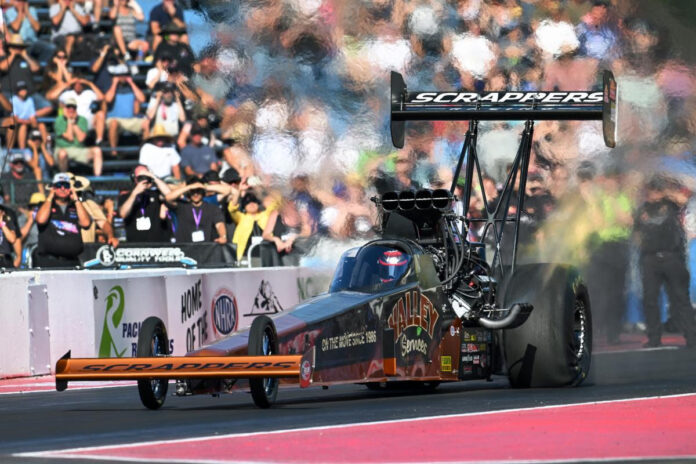
Todd Lesenko Joins Jim Dunn Racing

Canadian Returns to Funny Car in the NHRA Mission Foods Drag Racing Series

Long Beach, Calif. (January 21, 2026) – Jim Dunn Racing has announced that Todd Lesenko will pilot the team’s Funny Car for the 2026 NHRA Mission Foods Drag Racing Series season.

A native of Edmonton, Alberta, Lesenko competed in the NHRA Funny Car class in 2012 for Jim Dunn Racing, so 2026 marks a homecoming for Lesenko and the iconic racing team.

Lesenko ran a full season of 23 races in 2012 and he was the only rookie to qualify at every national event. He made his professional debut in 2011, running the final three events of the season. From 2009 to 2011, Lesenko owned and drove the Jolly Rogers Nitro Funny Car and Top Fuel Dragster. In 2010, he placed fifth in points in the 2010 NHRA Hot Rod Heritage Series in Nitro Funny Car.

“I am blessed to have the opportunity to spend a year of racing with my friends and race family,” said Lesenko. “I look forward to great results and to have a full year of vigorous competition. I’m honored to get to represent so many great partners on the track. We’re ready to get to Gainesville for the first event of the season.”

Joining Lesenko will be crew chiefs Jim Dunn and Jon Dunn. As the NHRA celebrates its landmark 75th season in 2026, Jim Dunn Racing is celebrating 76 years of success in drag racing. Jim started drag racing when he was 15 years old and at 91 years old, he plans to keep going as long as he can. In 2024, Jim received the NHRA Lifetime Achievement Award. He has won some of the sport’s most significant races and has provided driving opportunities for some of the biggest names in the sport. Jim’s son, Jon Dunn, wears many hats on the nitro Funny Car team. He is the team’s Business Manager and also assists his dad with crew chief responsibilities.

“We’re looking forward to Todd reuniting with Jim Dunn Racing,” said Jon Dunn. “We shared some great moments together in 2012. There are so many amazing partners that Jim Dunn Racing has had for many years, so we’re excited to achieve more success together. Also, Jim Dunn Racing is proud to announce team and technical support from AB Motorsports. We look forward to this relationship to increase our racing performance. Jim Dunn Racing will be parked alongside Antron Brown’s Top Fuel dragster throughout the 2026 season.”

Primary sponsors on the Jim Dunn Racing Funny Car in 2026 include Lescure Mechanical, True Brand, Blaze Technical Services, KGC Construction, MOON Equipment, USD Parts, and Crow Safety Gear.

Associate partners for Jim Dunn Racing include Lincoln Electric, Compass Facility Services, Wiley X, Gates, XRP, McLeod, CP-Carrillo, Racing Electronics, Darton Sleeves, Manton, ARP, Control Cables, Twin Palms Storage, Koppl Pipeline Services, Hussey Performance, and Frosted Frog. Additional partners will be named at a later date.

The 2026 NHRA season kicks off March 5-8 for the NHRA Gatornationals in Gainesville, Florida. Lesenko will participate in pre-season testing in February, where he will also re-license in the Jim Dunn Racing Funny Car.

Common Causes Behind E-bike Fatalities According to US Statistics

The majority of e-bike fatalities occur after high-speed vehicle crashes. They often also occur due to not wearing a helmet or wearing a helmet incorrectly. E-bike accidents can also happen due to loss of vehicle control on busy urban roads. National safety records frequently show that these deaths cannot be attributed to a single cause. 

In the United States, e-bike riding has surged because cities encourage usage for commuting and recreation. With more riders sharing roads with cars, buses, and pedestrians, accidents are more frequent.

Safety agencies often employ e-bike fatality data analysis to determine the causes of the most devastating collisions. Riders, policymakers, and urban planners need to understand these causes. Here are the most common factors associated with deadly e-bike crashes in the U.S. 

Motor Vehicle Collisions

Deaths due to crashes with cars and trucks are the top cause of fatal e-bike crashes. Statistics indicate that most deaths take place when a vehicle crashes into an e-bike at intersections or on multi-lane roads. High speeds and low visibility also play a major role. 

Even at low speeds, the weight and physical impact of vehicles pose a devastating risk to unprotected riders.

Helmet Use

Use of a helmet is one of the most frequent causes reported in U.S. crash data. Fatality reports typically mention that riders did not wear helmets at the time of the crash. Head injuries make up a significant portion of all deaths. 

Though helmets may not prevent all injuries, the risk of traumatic brain injury during impact is greatly reduced. 

Intersections

Intersections are high-conflict areas where vehicles, bicycles, and pedestrians meet. A notable percentage of e-bike casualties happen when riders get hit while crossing or turning at intersections. 

Common contributing factors among drivers include inattention, failure to yield, and limited sightlines. Complicated traffic patterns also create the risk of judgement errors. 

Road Conditions 

Many e-bike accidents result from poor infrastructure. Narrow shoulders, fewer bike lanes, potholes, and uneven pavement can cause riders to lose control or be pushed into traffic. This is also true of higher fatality rates on high-speed arterial roads, where there’s little road separation between vehicles and e-bikes. Poor lighting makes nighttime riding even more dangerous. 

Rider Behavior and Experience

Rider behavior frequently determines outcomes. This includes riding against traffic, ignoring traffic signals, or operating under the influence of alcohol. Inexperience in managing e-bikes could also influence it. 

The additional weight and acceleration are not something you’d get on an ordinary bike. It’s something new riders might be surprised by during emergencies. 

Visibility and Time of Day 

Visibility is a common factor in crash severity. It is an established component in fatality statistics. Most fatal accidents occur at night or in low-light situations, when riders are less visible to drivers. 

Inadequate use of reflective gear, lights, or brightly colored clothing means motorists have less time to identify the vehicle. Lower visibility reduces reaction times and reaction windows, particularly at higher speeds. 

Key Takeaways

  • Motor vehicle accidents are the main cause of fatal e-bike accidents.
  • Higher speeds increase the severity of injuries and reduce reaction time.
  • Helmet use reduces the risk of head injury that would otherwise become fatal.
  • Intersections and inadequate road infrastructure are major causes for accidents.
  • Visibility, rider experience, and behavior have a big impact on accident outcomes.

The Plate Racing Paradox: Why the Road to the Harley J. Earl Trophy is NASCAR’s Biggest Test

Photo by Mike Biskupski for SpeedwayMedia.com.

The haulers are being polished, the wraps are being applied, and the engine shops in Mooresville are humming with that specific, nervous energy that only arrives in late January. We’re just weeks away from the pilgrimage to Florida, and you can already feel the shift in the air.

Daytona International Speedway isn’t just a race track. It’s a cathedral of speed, history, and heartbreak. As we prepare for the 68th running of the Great American Race, the conversation in the garage area is, as always, dominated by the unique nature of superspeedway racing.

We spend 35 weeks of the year analysing downforce ratios, tire wear, and technical grip. We talk about who hit the setup, who missed the balance, and whose pit crew gained three tenths on a four-tire stop.

But Daytona? Daytona is different. Daytona doesn’t care about your setup. Daytona cares about your luck.

The Great Equalizer

There is a reason why the Daytona 500 remains the hardest trophy to capture, even for the sport’s titans. Just ask Kyle Busch. Just ask Tony Stewart (who retired without one). You can have the fastest car, the best spotter, and the perfect strategy, and still end up in the catchfence on Lap 198 because the guy three rows back missed a shift.

In many ways, strapping into a Cup car at a superspeedway is the motorsports equivalent of chancing your arm (and wallet) at a casino. You can know the odds, you can count the cards, and you can play the game perfectly, but ultimately, you’re at the mercy of the house. While players like to believe they’re smarter than they used to be thanks to information resources like Sister Site, the reality is that the house almost always wins. 

The “House,” in this case, is the draft. The Next Gen car has only amplified this volatility. With the locked bumpers and the inability to pull away from the pack, the drivers are essentially playing a 200mph game of roulette. Every time they make a move to the high line, they’re placing a stack of chips on a number. If a teammate goes with them, they hit the jackpot. If they get hung out to dry, the wheel spins against them, and they’re shuffled to the back – or worse, into the wall.

This “gambler’s anxiety” is what makes Speedweeks so compelling. We aren’t just watching a test of engineering; we’re watching a test of nerve. Who’s willing to bluff? Who is willing to go all-in on a gap that barely exists? And who knows when to fold ’em, riding around in the back to avoid the inevitable “Big One” before making a charge at the end?

The Manufacturer Chess Match

While the drivers are playing roulette, the manufacturers are playing chess.

The dynamic between Chevrolet, Ford, and Toyota has never been more intense. In recent years, we’ve seen the “manufacturer orders” become almost militant. The days of Dale Earnhardt drafting with whoever was fast, regardless of the badge on the hood, are long gone.

Now, it’s about brand loyalty. We saw it last season, and we’ll see it again next month. The Fords, known for their superspeedway prowess, will likely try to control the bottom lane. The Toyotas, often outnumbered but highly organised, will look to link up in a train to slice through the field.

But this strategy is fragile. It relies on trust, and trust is a scarce commodity when you’re coming off Turn 4 with the checkered flag in sight. It’s the Prisoner’s Dilemma at 190mph. Do you stick with your manufacturer teammate and settle for second, or do you pull the move that wins you the race but burns a bridge for the rest of the season?

The “Wild Cards” of the Field

One of the beautiful things about the Daytona 500 is that the entry list actually matters. Unlike the charter-locked fields of the regular season, the 500 brings out the one-offs, the ringers, and the dreamers.

These “Open” entries add a layer of spice to the Duels. For these teams, just making the race is their Super Bowl. They bring a level of desperation to the qualifying races that you don’t see anywhere else. They have to race their way in, which means they’re willing to take risks that a points-counting regular might avoid.

The Favorites (and Why They Don’t Matter)

If we were heading to Darlington or Phoenix, we could give you a solid list of favorites. We’d talk about Kyle Larson’s rim-riding ability or William Byron’s consistency.

But heading into Daytona, “favorite” is a relative term. Sure, Denny Hamlin is a superspeedway savant. He sees the air differently than everyone else. Ryan Blaney is arguably the best blocker in the business right now, capable of mirroring the rearview mirror with uncanny precision. Brad Keselowski – now firmly settled into his role as the elder statesman of Ford – will drive through a brick wall if it means winning a plate race.

However, listing them as favorites comes with a massive asterisk. The randomness of the draft means that a driver like Michael McDowell or Ricky Stenhouse Jr. has just as legitimate a shot at victory lane as the Hendrick Motorsports quartet.

This parity is frustrating for the purists who want the “best” car to win, but it’s intoxicating for the fans. It is the only race of the year where hope is truly distributed equally across the grid.

The Mental Toll

We often overlook the mental exhaustion of this style of racing. For three hours, a driver’s heart rate rarely drops below 160 beats per minute. They are processing information at a rate that would crash a computer.

One lapse in concentration doesn’t just mean a lost position; it means a twenty-car pileup. The mental discipline required to stay tucked in a draft, staring at a bumper sticker for 500 miles while your car vibrates violently, is immense.

It’s why you see drivers physically drained after Daytona in a way they aren’t after a road course. It’s not the G-forces; it’s the stress. It’s the stress of holding a winning hand and being terrified that the dealer is about to flip a card that ruins everything.

The Countdown Begins

So, as we check the calendar and count down the days until the haulers leave for Florida, let’s embrace the chaos.

We can analyze the wind tunnel numbers all we want. We can dissect the new nose designs and the spoiler angles. But once the green flag drops, all of that goes out the window.

Daytona isn’t about science. It’s about survival. It’s about being in the right place when the smoke clears. It’s about taking the gamble, rolling the dice, and hoping that when the field comes screaming off Turn 4 for the final time, you’re the one holding the aces.

Welcome back to racing season. We’ve missed the noise.

How To Create CS2 Skins Without Artist Skills?

At first glance, creating weapon skins for Counter-Strike 2 might seem like a task reserved for professional artists or experienced designers. In reality, the CS2 skin ecosystem is far more accessible. Thanks to modern tools, templates, and Valve’s workshop system, it’s entirely possible to create CS2 skins even if you don’t have traditional art skills.

Many community creators started with no design background at all. What they had instead was curiosity, patience, and a willingness to learn. This CS2 skin creation guide explains how beginners can approach skin design, which tools matter most, and how to make CS2 skins without design skills by working smart rather than trying to be perfect – while also understanding how finished designs enter the marketplace, where players buy and sell CS2 skins based on demand and visual appeal.

How CS2 Skins Actually Work

A CS2 skin is not a new weapon model. It’s a texture applied to an existing gun. This is an important distinction because it dramatically lowers the skill barrier. You are working in two dimensions, designing how a flat image wraps around a weapon’s surface.

Once applied, that texture reacts to lighting, wear levels, and in-game movement. Understanding this basic structure helps beginners avoid overthinking the process. You are not sculpting or animating – you are designing a surface.

Why Artistic Talent Isn’t Required

One of the biggest misconceptions about skin creation is that you need to draw detailed illustrations. In practice, many popular skins rely on clean geometry, simple color contrasts, or repeating patterns. Minimalist and tactical designs are often more successful than complex artwork.

If you can work with layers, shapes, and basic color balance, you already have enough skill to begin. This is why so many creators manage to make CS2 skins without design skills in the traditional sense. Creativity in CS2 is more about structure and consistency than drawing ability.

Using CS2 Skin Workshop Tools

Valve provides official Source 2 workshop tools that allow creators to preview skins directly on weapons. These tools show how your texture behaves in real time, including how it looks under different lighting conditions and wear levels.

To design the skin itself, you only need basic image-editing software. Free programs are more than sufficient. What matters most is access to CS2 skin templates, which show how each weapon’s surface is laid out in a flat format. Designing inside these templates ensures your work aligns properly in-game. Templates eliminate guesswork and are one of the biggest reasons beginners succeed.

Start Simple and Improve Over Time

New creators often fail by trying to do too much too early. Instead of aiming for a masterpiece, start with simple ideas. Limited color palettes, clean lines, gradients, or subtle textures are easier to control and usually look better in-game. Many iconic skins became popular precisely because they were readable, consistent, and timeless – qualities that influence which designs players choose to buy CS2 skins for long-term use. Complexity does not equal quality in CS2 skin design.

Learning From Existing Skins

Studying existing skins is one of the best ways to improve. Pay attention to how colors are distributed, how wear affects visibility, and how patterns repeat across the weapon. While copying is not allowed, learning from structure and technique is encouraged.

The CS2 community thrives on iteration. Most creators refine ideas across multiple submissions before achieving something truly polished.

Testing Wear Is Crucial

A skin that looks good in Factory New condition might fall apart visually when worn. That’s why testing wear levels is essential. Workshop tools allow you to preview every wear state so you can adjust contrast and texture placement accordingly. This step is often what separates amateur designs from professional-looking skins.

Submitting Your Skin

Once your skin is ready, you can submit it to the Steam Workshop with preview images and a description. Community engagement helps visibility, but Valve ultimately decides which skins make it into the game. Rejection is common, even for experienced creators. Treat each submission as part of the learning process rather than a final judgment.

Market Insight and LIS-SKINS

Understanding how skins perform after release can be just as valuable as creating them. This is where platforms like LIS-SKINS fit naturally into the ecosystem. LIS-SKINS provides a secure marketplace where players can buy CS2 skins, monitor prices, and observe which styles hold long-term value.

For aspiring creators, studying market trends offers insight into player preferences. Seeing which designs trade well helps align future creations with actual demand, not just personal taste.

Common Beginner Pitfalls

Many first-time creators struggle not because of lack of talent, but because they overcomplicate designs or ignore how textures behave in-game. Poor contrast, cluttered visuals, and misaligned patterns are common mistakes. Focusing on clarity and consistency solves most of these issues.

Can Skin Creation Become Profitable?

While some creators earn significant money, success is not guaranteed. Only a small percentage of skins are accepted. However, many creators enjoy the process as a creative outlet, learning experience, or portfolio project. Financial rewards come later – if at all. Skill development comes immediately.

Corey LaJoie to pilot fourth RFK Racing entry for 2026 Daytona Speedweeks

Photo by John Knittel for SpeedwayMedia.com.

Corey LaJoie has joined forces with Roush Fenway Keselowski (RFK) Racing for this year’s Daytona Speedweeks festivities.

LaJoie, a 34-year-old native of Concord, North Carolina, will be piloting RFK Racing’s fourth entry, the No. 99 Ford Mustang Dark Horse entry, sponsored by Trimble. He will attempt to enter the 2026 Daytona Speedweeks festivities at Daytona International Speedway as an open entry and earn a starting spot for this year’s 68th running of the Great American Race, the Daytona 500.

To qualify for this year’s Daytona 500, LaJoie would have to be the highest-finishing open competitor at the conclusion of the Daytona 500 Qualifying session on February 11 or through one of two America 250 Florida Duel events on February 12.

The announcement comes as LaJoie, who last competed as a full-time competitor during the 2024 NASCAR Cup Series season, is coming off part-time campaigns between the Cup and Craftsman Truck Series divisions. Between the campaigns, LaJoie made nine Truck starts with Spire Motorsports and four Cup starts with Rick Ware Racing. The latter series included LaJoie competing in the 67th running of the Daytona 500, where he finished 22nd after he was collected in a final-lap multi-car wreck while battling for the victory.

Should LaJoie qualify for this year’s Daytona 500 event, it would mark his 10th consecutive appearance in the Great American Race. It would also mark the first time that RFK Racing would field four entries in an event since the team’s rebranding in 2022.

LaJoie’s best result during his previous nine starts in the Daytona 500 is fourth, which occurred in 2024. LaJoie would also become the 10th competitor overall to notch a first Cup Series career victory in the Great American Race, should he achieve the feat in 2026.

“This is a dream come true to get an opportunity with RFK Racing at the Daytona 500,” Lajoie said in a released statement. “This is, without a doubt, the best car and opportunity I’ve had at Daytona. I’m grateful for the trust they’ve placed in me.”

The decision to field the No. 99 entry for LaJoie during the Daytona Speedweeks will mark a reunion for RFK Racing and the No. 99. It has competed with Roush Racing and Roush Fenway Racing from 1996 to 2014. During 19 years, the No. 99 achieved 39 victories (17 with Jeff Burton and 23 with Carl Edwards). The No. 99 had been sported by Trackhouse Racing’s Daniel Suarez over the previous five Cup seasons, capturing two wins in 2022 and 2024.

Before this year’s Daytona Speedweeks, LaJoie will compete in the Cook Out Clash at Bowman Gray Stadium on February 1. He will field the entry as an interim competitor for his teammate and co-owner of RFK Racing, Brad Keselowski. Keselowski, the 2012 Cup Series champion from Rochester Hills, Michigan, is recovering from a broken leg he sustained during a skiing accident in mid-December. He is expected to recover in time to compete in this year’s Daytona 500. It will mark his 17th bid to win the event for the first time.

“From a competition standpoint, having a fourth car gives us and Ford Racing a better chance to win the Daytona 500,” Keselowski said. “It’s not just about adding another entry. Superspeedway racing is about cooperation and having an additional car allows us to be more effective in forming drafting alliances, controlling lanes, and putting ourselves in position when it matters most.”

The 2026 Daytona 500 Qualifying session will occur on February 11. The America 250 Florida Duel events are scheduled for February 12 and begin at 7 p.m. ET on FS1, MRN, SiriusXM and HBO MAX.

The 68th running of the Daytona 500 is scheduled for February 15 and will air at 2:30 p.m. ET on FOX, MRN, SiriusXM and HBO MAX.