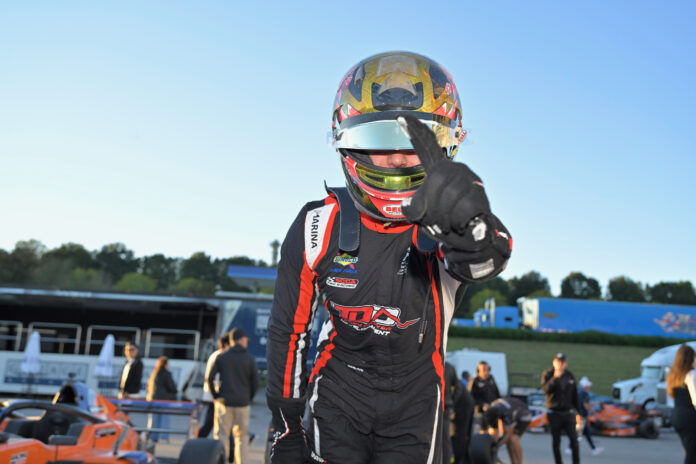
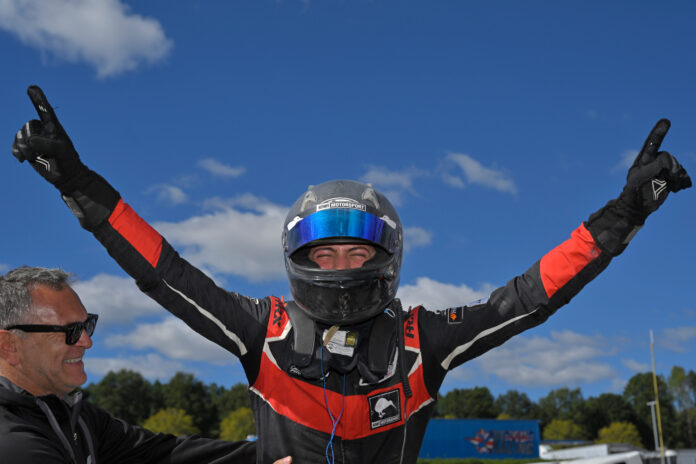
Anthony Autiello Returns to Victory Lane in Masters Cup
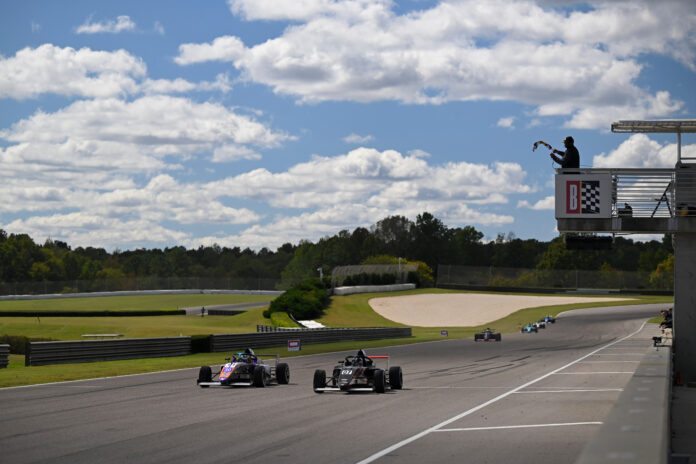
BIRMINGHAM, Ala. (October 17, 2026) – Brady Golan earned his eighth win of the season in Formula Regional Americas Championship (FR Americas) competition, winning Race 1 at Barber Motorsports Park on Saturday evening. The 2026 Champion took advantage of a mid-race restart to capture the lead and paced the field to the checkered flag.
Notes of Interest:
Brady Golan earned his eighth win of his championship campaign. During tomorrow’s Year-End Awards Celebration, Golan will be honored and presented with a $100,000 check as part of the champion’s prize.
After leading early, Kekai Hauanio finished second in Race 1 at Barber Motorsports Park to record his ninth podium of the season.
Cooper Shipman earned his ninth podium of the season with a third-place result in Race 1.
Anthony Autiello earned his fourth win in the 2026 Masters Cup Championship season.
With Kevin Janzen finishing second and the race scoring just half points, Whitney Strickland clinched the FR Americas Masters Cup title.
Earning his first pole of the season, Kekai Hauanio (No. 29 N-E-Where Transport / Crosslink Motorsports Ligier JS F3) led the field to the starting lights with Brady Golan (No. 40 Toney Driver Development Ligier JS F3) to his outside. With a solid launch off the line, Hauanio took control of the race, but his pace slowed a few turns later, as yellow flags were displayed and the safety car picked up the field.
When the race went back to green, Golan had another shot at the lead, passing Hauanio as they raced through Turn 6. It seemed like Hauanio might be able to close in on Golan’s gearbox, but the Crosslink Motorsports driver wasn’t able to retake the lead and followed Golan to the checkered flag.
Crossing the finish line, it was Golan, followed by Hauanio and Cooper Shipman (No. 10 Driven Dynamix / Kiwi Motorsport Ligier JS F3).
“I got a pretty atrocious start, but then I was able to charge back up after that on the restart. So, it was a pretty solid day,” said Golan atop the podium. “I have to thank everybody on the Red 40; it’s been amazing. The championship is awesome, and to still have some races left to go and be able to win more is even better. I’m really happy with those guys. Thanks to everybody at TDD, everybody at Marina, everybody at Attire, and my parents.”
In the Masters Cup Championship, Anthony Autiello (No. 07 Hope For The Warriors / Momentum Motorsports Ligier JS F3) returned to the top step of the podium after making a late-race pass on Kevin Janzen (No. 24 US Power Group / Data Center Solutions / Crosslink Motorsports Ligier JS F3). Whitney Strickland (No. 21 TF Companies / Hillenburg Motorsports Ligier JS F3) was not classified on the final results after contact on the opening lap brought an early end to his day.
“The visibility was really, really tough today [after oil dry was put down on the track],” said Autiello in Victory Lane. “So, it was super hairy. I thought that I’d keep a little distance, stay safe, and I figured it was going to be a war of attrition, then Kevin [Janzen] opened the door for me. I was able to pass him on the corner going onto the main straight; it was a clean fight. So, thank you to him for a nice, clean race today.”
FR Americas will close out the season tomorrow at Barber Motorsports Park with Race 2 at 12 p.m. CT. Live timing and scoring for the race will be available on the Race Monitor app. Additional news and updates from the weekend will be posted on the series’ Facebook, Instagram and Twitter.
BIRMINGHAM, Ala. (October 18, 2026) – Clemente Huerta Raab scored his first win in Formula 4 United States Championship (F4 U.S.) competition, taking the Race 1 victory at Barber Motorsports Park on Saturday afternoon. The win marked his first in a formula car and his first since the South American Championship in karting.
Notes of Interest:
After 10 podiums, Clemente Huerta Raab finally captured his first F4 U.S. win in his second season of competition. The victory marked the first in a single-seater racecar for the Chilean racer. Just last season he finished third in the very same round at Barber.
2026 Champion Gastón Irazú scored his 15th podium of the season. With just one ‘not classified’ finish this season, Irazú stood on the podium in every other race this year.
Tomorrow, Irazú has the chance to tie the F4 U.S. all-time win record, as he races for his 10th career win in the championship.
With a hard-fought third-place finish in Race 1 at Barber Motorsports Park, Ayden Kohut earned his first career podium.
Kicking off the season-finale weekend, Caleb Campbell (No. 68 Steele Auto Group / Kiwi Motorsport Ligier JS F422) started from the pole and led the early laps. Gastón Irazú (No. 27 Elia Group / Baly / Canal 4 / Ancap / Champagne Racing Ligier JS F422) started the event in fourth, but it didn’t take long for the 2026 champion to work through the field, first overtaking Fernando Rivera (No. 16 Crosslink Motorsports Ligier JS F422) and then making his way around Clemente Huerta Raab (No. 17 Kiwi Motorsport Ligier JS F422). From there, Irazú locked his focus on Campbell and passed to take the race lead on the next lap. Campbell tried to challenge, but couldn’t find a way around the Uruguayan, instead falling into the grips of his Kiwi Motorsport teammate, Huerta Raab.
Making his way around Campbell to take second, Huerta Raab then turned his focus to Irazú. Trailing for a few laps, Huerta Raab took a chance going around the inside in Turn 6 and made it stick, taking the race lead with just over five minutes left on the clock.
It was smooth sailing all the way to the finish line for the Chilean driver, and as the checkered flag waved, Huerta Raab finished first, followed by Irazú and Ayden Kohut (No. 18 The Builders Source / The Genie Company / Kiwi Motorsport Ligier JS F422). Kohut survived a race of attrition, starting fifth and steadily advancing as others ran into challenges in the all-green race.
“It’s been a long time since I won the South American Championship in karting,” said Huerta after climbing from the car. “It’s been a long time since I’ve been on the top step of the podium. It feels great. It feels like you’re on top of the world. I want to thank my team—Kiwi Motorsport, my dad, my parents, my family, my uncle came here as a surprise. It was a tough race.”
F4 U.S. is back on track tomorrow at 10:25 a.m. CT for its final race of the season. Live timing and scoring from the event will be available on Race Monitor, with additional news and updates posted on the series’ Facebook, Instagram and Twitter.
Champion Beckham Jacir Continues Winning Streak in JFC Gen. 1 Class
BIRMINGHAM, Ala. (October 17, 2026) – Jack Speth kept his championship hopes alive with a Race 1 win in the Ligier Junior Formula Championship (Ligier JFC) Gen. 2 class at Barber Motorsports Park. Completing a last-lap pass to overtake his championship rival, the Kiwi Motorsport driver moved within six points of the championship lead with one race remaining in the season.
Notes of Interest:
The fight for the Ligier JFC Gen. 2 championship will go down to the final race of the season with Jack Speth narrowing the margin to just six points, as Edward Kennedy continues to lead the standings.
Jack Speth scored his fourth win of the 2026 season with a last-lap pass at Barber Motorsports Park.
Beckham Jacir won his 12th race of the season. Already confirmed as the 2026 Ligier JFC Gen. 1 class champion, Jacir has won every race since Round 9 at Mid-Ohio Sports Car Course in June.
Ava Hanssen tied her career-best finish with a second-place result at Barber. Hanssen is third in the championship standings ahead of tomorrow’s season finale.
Finishing third, AJ Abdullah earned his fourth podium of the season.
Both Team Championships will go down to the final race of the season, with MLT Motorsports currently leading Kiwi Motorsport by six points in the Gen. 2 class, and Champagne Racing leading Berg Racing by just seven points in the Gen. 1 class.
Starting from the pole, Beckham Jacir (No. 7 Stonica / Bell / OMP / P1DOKS / Behind the Wheel / Champagne Racing Ligier JS F4) pulled into the point position as soon as the lights went out. Behind him, third-place starter Ava Hanssen (No. 26 One Powersports / Chiropractic Center of Elkhorn / NGK / Badger Mats Ligier JS F4) pulled wheel to wheel to challenge second-place starter, Lazaro Bainotti (No. 11 Fundacion Fangio Rus seguros Cordoba deportes / Speed Factory Ligier JS F4), but Bainotti held on to the position as they raced through Turn 1. While the front three settled into position, Gen. 2 drivers Edward Kennedy (No. 30 MLT Motorsports Ligier JS F422), Jack Speth (No. 07 Kiwi Motorsport Ligier JS F422) and Ben Ramirez (No. 32 U.S. Air Force / RASE Motorsports Ligier JS F422) worked through the field, with Kennedy passing Jacir to take the race lead before the completion of the fifth lap.
Kennedy, the Gen. 2 championship leader, had opened up more than a five-second gap before a full-course caution regrouped the field. With everyone stacked up nose to stern and less than three minutes left on the clock, the two-lap dash to the finish line teed up plenty of drama before the checkered flag waved. Racing toward the white flag, Bainotti went wide exiting Turn 17, dropping a wheel off the racing surface, allowing Hanssen, AJ Abdullah (No. 21 Freedom Detox / Grid State Digital / Berg Racing Ligier JS F4) and Alexander Savage (No. 33 KymaBoats.com / Triple Aim Medical Solutions / Nature Coast Health Care / G Tech Motorsports Ligier JS F4) to drive by. In the Gen. 2 class, Kennedy led as they took the white flag, but Speth wasn’t going down without a fight. Applying pressure through Turn 1, he hit his marks for the next few turns before sending it into Turn 6 to overtake the lead.
As the checkered flag waved, Speth led Kennedy in the Gen. 2 class, while Jacir led Hanssen and Abdullah in the Gen. 1 class.
“It was a very eventful race,” said Speth atop the podium. “I tried to put the pressure on in Turn 1, but it didn’t work, so I just focused on the exit of 2 and 3 and figured I had nothing to lose going into the hairpin. So, I decided that I’d either go out with a bang or just go home—go big or go home. I sent it into the hairpin and it stuck. [The championship] is all coming down to Sunday. I have to thank my mom—she finally made it out this weekend—my dad, and the entire Kiwi Motorsport team, especially Brock and Jackson.”
“Barber Motorsports Park is a great track,” said Jacir after climbing from the car. “It’s definitely one of my favorites. Compared to this morning’s qualifying, the weather was a little hotter. I knew tire management was always going to be a part of the game in this race. We had a good start and took over the pace. There was a full-course yellow, so I tried to keep my tires clean during that. We didn’t get the best restart after that, either, so I had to do some defending, but we got it, though. It was a good race.”
Ligier JFC will contest its final round of the 2026 season tomorrow at 9:10 a.m. CT. Live timing and scoring will be available on the Race Monitor app, with additional news and updates posted on the series’ Facebook, Instagram and Twitter.
Jesse Love and the No. 2 Whelen Chevrolet Team Earn Pole, Sweep Stages, and Capture Victory at Phoenix Raceway to Take Over Points Lead
Finish: 1st Start: 1st Points: 1st
“These are the types of days that our Whelen team prepares for, not just dreams of. I have a great group of people around me that prepare me to be in these situations and stay calm, cool, and collected. I’ve learned from a lot of mistakes that allow me to execute at a high level, especially at a track like this that feels like I’ve been here a million times. This is my favorite racetrack, and I have been coming here my whole life as a west coast kid. I was having to drive a lot over the tire to make any sort of lap time there at the end. I’m grateful to the Lord above for putting great people behind me and glad to win another one for RCR and ECR. It’s been a tough year for us, so grateful to be in this situation. I have a great pit crew who just mauls everyone on pit road every week and makes my job a lot easier. Proud of this whole group.” -Jesse Love
Top-15 Result for Austin Hill and the No. 21 Titan Cattle Company Chevrolet at Phoenix Raceway
Finish: 15th Start: 10th Points: 9th
“Not a good race for our Titan Cattle Company Chevrolet. I made a mistake and sped on pit road and then we fought the balance with a lot of various things. I was loose in one moment, tight in the next. Could slide the fronts then chatter shortly after. Everything that you could have in a race car that you don’t want, happened to us tonight. We had more speed than 15th though. Not sure where we would have finished but it probably would have been somewhere in the top-10. Just sloppy. We have to do a better job, on my end with certain things and in general as a team. We have to figure out what the miss is here at Phoenix. That’s the unfortunate thing about this place. It has been good to me at times and then there have been nights like tonight where we run 15th.” -Austin Hill
Max Reaves (No. 18 Cook Out Toyota) withstood an overtime restarts and some interference from Mother Nature to score the win in Saturday night’s ARCA Menards West Desert Diamond Casino West Valley 100 at Phoenix Raceway. Reaves was leading when he made contact with Andrew Chapman (No. 55 High Point Racing / Racecar Factory Ford) as he was coming to complete lap 98, which sent the race into overtime. On the first overtime attempt, Helio Meza (No. 28 Alessandro’s / Hermanos Media Chevrolet) and Jade Avedisian (No. 70 Mobil 1 Toyota) came together with Meza’s night ending alongside the turn one wall. Before the race could be restarted, a light sprinkle started to fall which turned into a persistent sprinkle, dampening the racing surface and forcing ARCA Menards Series officials to end the race under caution.
Reaves’s victory came in the final ARCA Menards Series start for Joe Gibbs Racing. Reaves scored 13 ARCA Menards Series platform wins in his two partial seasons with the team and he finished second in the ARCA Menards Series East standings in 2026. JGR was the 2026 ARCA Menards Series owner’s champion, the fourth time in seven years the time won the series’ owner’s title.
Taylor Reimer (No. 82 Fre Nicotine Pouches Chevrolet) led 24 laps, the first laps she’s led in her ARCA Menards Series platform career. She was leading at the race’s midway point but gave the lead up to Reaves on the restart. She could chase him down under long green runs, but her charge to the front was stymied by repeated cautions in the second half of the race.
Mason Massey (No. 19 Mongoose Power Solutions Chevrolet) capitalized on the repeated late-race restarts to finish third. He was able to gain four points in the ARCA Menards Series standings on leader Trevor Huddleston (No. 50 High Point Racing / Racecar Factory Ford), who finished seventh, allowing him to leapfrog over tenth-place finisher Robbie Kennealy (No. 1 Jan’s Towing Ford) into second in the series standings.
Huddleston now leads by 39 points over Massey headed into the ARCA Menards West finale at Kevin Harvick’s Kern Raceway in two weeks. Huddleston’s wife Nastasia delivered the couple’s first child, daughter Harley Kay, on Wednesday; Trevor did not arrive at the track until about 30 minutes before the start of practice on Friday evening.
Gavan Boschele (No. 25 Toyota Racing Toyota) qualified fourth but was forced to start at the tail of the field due to unapproved adjustments after qualifying. Boschele quickly worked his way through the field to finish where he qualified in fourth.
Kasey Kleyn (No. 20 Thaemart Farms Toyota) made the most of his first start with Nitro Motorsports to finish fifth. It was Kleyn’s second career West start; he finished sixth driving for team owner Mike Naake at Tri-City Raceway in 2024.
Reimer was one of six female drivers to start, setting an all-time ARCA Menards West record for most female drivers in a single race. She was joined by sixth-place finisher Hailie Deegan (No. 16 Monster Chevrolet), Mia Lovell (No. 15 Pine Health Toyota), who came home in eighth, Avedisian, who finished ninth, Dystany Spurlock (No. 66 Charles Schwab Bank Toyota), who finished 14th, and Quinn Davis (No. 41 Jan’s Towing Ford), who finished 26th after a late-race accident.
There were four lead changes among two drivers. Reaves lead 90 laps; Reimer led 24.
There were six cautions for 37 laps. The race was extended to 114 laps and officially ended under caution.
The next race for the ARCA Menards Series West is the NAPA Auto Parts 150 Presented by the West Coast Stock Car Motorsports Hall of Fame at Kevin Harvick’s Kern Raceway on Saturday, October 31. The race, set to begin at 10 pm ET / 7 pm PT, will be streamed live on FloRacing. ARCARacing.com will have live timing & scoring data throughout all on-track activity and live race audio. Follow @ARCA_Racing on X (formerly Twitter) for up-to-the-minute updates.
About ARCA The Automobile Racing Club of America (ARCA), founded in 1953 by John and Mildred Marcum in Toledo, Ohio, and acquired by NASCAR in April 2018, is the leading grassroots stock car sanctioning body in the United States. Bridging the gap between NASCAR’s top three national touring series and weekly and regional tour racing all across the country, the organization to sanctions over 100 races per year in the ARCA Menards Series, ARCA Menards Series East, ARCA Menards Series West, ASA STARS National Tour, ASA CRA Super Series, ASA Midwest Tour, ASA Southern Super Series plus weekly racing at Toledo and Flat Rock Speedways. For more information about ARCA visit , or follow ARCA on Facebook (@ARCARacing) and Twitter (@ARCA_Racing).
About Menards A family-owned and run company started in 1958, Menards is recognized as the retail home center leader of the Midwest with 236 stores in 15 states. Menards is truly a one-stop shop for all of your home improvement needs featuring a full-service lumberyard and everything you need to plan a renovation or build a home, garage, cabin, shed, deck, fence or post frame building. You’ll find a large selection of lumber, roofing, siding, construction blocks, trusses, doors and windows, plus cabinets, appliances, countertops, flooring, lighting, paint, plumbing supplies and more. To complete the job, Menards has quality hand tools, power tools, fasteners, electrical tools plus storage options and supplies for everyone from the weekend warrior to the pro!
Menards has what you need to complete your outdoor projects and keep your yard in tip-top shape including mowers, trimmers, blowers, pressure washers and more, plus a beautiful garden center stocked with plants, shrubs, trees, landscaping tools, grass seed, fertilizer options, outdoor décor and patio furniture. Menards also has everyday essentials like health & beauty products, housewares, pet and wildlife supplies, automotive items and even groceries. And at Christmas, an Enchanted Forest display area with impressive trees, lighting, decorations, ornaments, inflatables and more.
Menards is known for friendly Customer Service and as the place to “Save Big Money” with low prices every day, and sales too! For more information, please visit Menards.com to learn about our store locations, offerings and services.
BRANDON JONES RALLIES TO LEAD THREE GR SUPRAS INSIDE TOP-10 AT PHOENIX Thompson and Sawalich Join Jones with Top-10 Finishes in the Desert
AVONDALE, Ariz. (October 17, 2026) – Brandon Jones rallied from an early race pit decision to lead Toyota with a sixth-place finish in the NASCAR O’Reilly Auto Parts Series race at Phoenix Raceway on Saturday evening.
Team Toyota posted four GR Supras inside the top-15 in the final finishing order – Jones, Dean Thompson in seventh, William Sawalich in eighth and Harrison Burton in 13th. The finish for Thompson was his fifth top-10 finish of the year.
TOYOTA RACING Post-Race Recap NASCAR O’Reilly Auto Parts Series (NOAPS) Charlotte Motor SpeedwayRace 30 of 33 – 200 miles, 200 laps
TOYOTA FINISHING POSITIONS
1st, Jesse Love*
2nd, Sam Mayer*
3rd, Justin Allgaier*
4th, Corey Day*
5th, Sammy Smith*
6th, BRANDON JONES
7th, DEAN THOMPSON
8th, WILLIAM SAWALICH
13th, HARRISON BURTON
20th, BRENT CREWS
28th, TAYLOR GRAY
*non-Toyota driver
TOYOTA QUOTES
BRANDON JONES, No. 20 Menards/Monster Energy Toyota GR Supra, Joe Gibbs Racing
Finishing Position: 6th
You had to find track position after the strategy call early in the race to take rain tires. Why was that call made and how did it affect your day?
“Certainly it showed it was the wrong decision. He (crew chief Sam McCauley) sounded really confident in the decision. We never even talked about if people stayed out in that aspect. I was kind of confused, I saw when pit road open everyone just stay up and I kind of asked one more time if we were sure we were coming and I think that confused him a little bit and he said absolutely. I came down pit road and saw nobody came and knew it was going to be interesting to say the least. It wasn’t a difficult decision, the easy choice was to just do what everyone else does from that standpoint. But there was a ton of rain and it was still coming down and I really couldn’t even see out of my windshield because of all the stuff that gets caked on the windshield and I was no help from that aspect of it. It just put us behind the eight ball with nobody coming. To get back to the top-six was a really good rebound from that aspect of things. We did a really good job on our green flag cycle, we came at a really good time and the caution worked in our favor, so had a great restart. There’s a few good takeaway from the week, but we probably could have kept track position and made it a little bit easier on ourselves today, but all in all the last couple of weeks we haven’t had great middle of the races and we’ve done a great job of rebounding. I just want to thank everyone at Menard’s, Monster Energy and Toyota. We’ll just keep working through these couple little things as the weeks wind down and try to get some momentum built up for the end of the year.”
About Toyota
Toyota (NYSE:TM) has been a part of the cultural fabric in North America for nearly 70 years, and is committed to advancing sustainable, next-generation mobility through our Toyota and Lexus brands, plus our more than 1,800 dealerships.
Toyota directly employs nearly 64,000 people in North America who have contributed to the design, engineering, and assembly of over 50 million cars and trucks at our 14 manufacturing plants. In 2025, Toyota’s plant in North Carolina began to assemble automotive batteries for electrified vehicles.
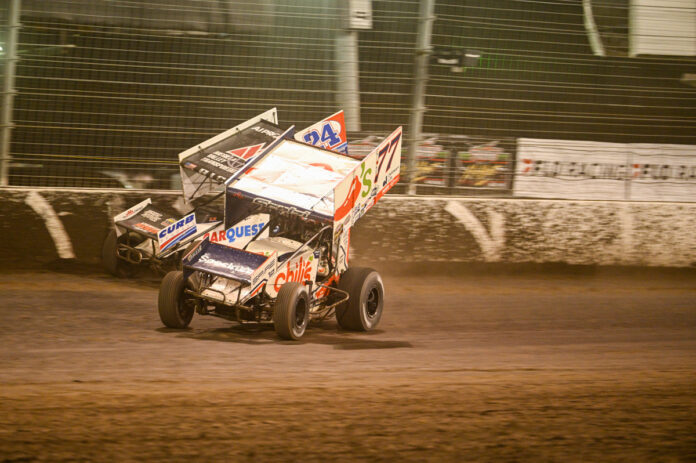
The final race of the 2026 Interstate Batteries High Limit Racing Series took place tonight at the Texas Motor Speedway Dirt Track. Championship points leader Rico Abreu looked to lock up his second consecutive High Limit title since winning it last year. He attempted to clinch it Friday night, but despite finishing in third position, his title nemesis Giovanni Scelzi kept the title fight alive by winning Friday nights race and cut the deficit by nine points, and entered tonight’s race 36 points back. The championship scenario was somewhat simple for Scelzi, as he would’ve had to win in tonight’s finale, however, he would need a miracle, as he would have to have Abreu finish 16th or worse in the final results.
While Scelzi went on to sweep the weekend, it wasn’t enough for him to hold off Abreu, who was able to win his second High Limit championship by finishing in the runner-up position. The title was his first under the Tony Stewart Racing banner.
“Just how my team adapted throughout the season and congratulations to all the teams out here with High Limit Racing, and the commitment they make into these seasons,” Abreu said to Flo Racing when being crowned champion. “I kind of lived this lifestyle and really enjoy it, and how fast paced it is. Hats off to High Limit for doing an amazing job. To bring Tony Stewart Racing to this entity and program, to get them a championship, congratulations to Tony (Stewart). All of his partners. CarQuest, Mike Curb and to inject some of my partners into this program has just been an unbelievable package for us.
“It’s really exciting for all of the racing in the season. My team has done an unbelievable job and being a part of the Tony Stewart Racing organization. The elite level they brought this team to and helped me, and allowed me to learn. I treat this being out on the road like a college education for me. As I learn through my career of Sprint Car racing and how these cars mechanically work. How I adapted throughout my career to drive them. There’s been some incredible people that helped me get to this position.”
To note, this is the seventh time that a Sprint Car driver has gone back-to-back and the first time since David Gravel, who did it with the World of Outlaws in 2024-25. Other drivers to win two consecutive championships are Steve Kinser, Sammy Swindell, Donny Schatz, Jason Meyers, and High Limit Series Co-Owner, Founder, Brad Sweet.
For more on Scelzi’s night, see the feature race recap below.
There were 35 Sprint Cars onsite for the championship finale, one more than Friday night.
Feature Race Recap – 30-Laps – $25,000 To Win
Starting on the pole thanks to the help of his dash victory was Scelzi, with Tanner Thorson on the outside pole. Abreu started in the fourth position.
Scelzi shot out like a cannon to maintain the top spot over Thorson to lead Lap 1. The first yellow of the main event flew with 24 laps for Gage Pulkrabek, who was off the pace on the backstretch and pulled his Sprint Car in the infield work area. Pulkrabek’s team was swapping a new ignition box that seemed to be the issue. The green-flag was back in the air with Scelzi leading the way. Abreu passed Thorson on the restart and took over the second position.
With 17 laps to go, Scelzi began closing in on the back of the field, which allowed Abreu to close in at a rapid pace. However, Thorson also closed in on Abreu once again and attempted a pass on him, but was unsuccessful in doing so. With seven laps to go, Abreu nearly took the lead from Scelzi on the backstretch. He briefly took the top spot from Scelzi with two laps to go on the backstretch and stayed side-by-side with him for the final lap before Scelzi ultimately went on to win the race, while Abreu was able to win his second consecutive championship.
“First off, that was really cool of Rico (Abreu) when he cleared me not to move to the bottom,” Scelzi said in his victory lane interview to Flo Racing. “I thought it was over there when he cleared me off of (Turn) 2 and tried driving it as hard as I could, but then he left me a lane, which I thought was cool. Me, him, a lot of guys race as hard as we possibly can, and no one has touched a wheel. To have clean racing like that is very cool for you fans to see.
“I knew the bottom was greasy in the B-main and my heat race, especially. I knew I had to come in at some point. Sometimes this place does that, where the bottom stays greasy all night then you get 24 cars in there and it throws all those crumbs up to the top. I figured I would run the bottom until someone passes me on the top kind of when I rolled out there and the game plan worked. Rico was kind of running off my right-rear like he tried to do in (Turns) 3 and 4 when he passed me, but I caught the lap cars, and couldn’t clear anybody and tried a lane above me, and got really tight. Hats off to Eric (Prutzman, Crew Chief). This car was phenomenal. It’s cool to have Jeff (Dickerson, Team Owner) here and another win in Chili’s homestate.”
Heat Race Recaps – Top Five Transfer – 8 Laps A Piece
Prior to the heat races taking place, there was a Hot Lap and a Flight A/B Qualifying session. Kerry Madsen was the fastest in hot laps with a lap time of 14.645 seconds. Pacing the Flight A qualifying session was Kasey Kahne’s Racing, Daison Pursley, with a time of 13.735 seconds. Roger Crockett was the fastest in Flight B with a time of 13.811 seconds. The overall quickest time went to Pursley following the end of the two qualifying sessions.
Heat 1 – Speaking of Pursley, he was on the pole for the first heat. Austin McCarl took the lead off Turn 2 from Pursley at the start of the heat race after starting on the outside pole. McCarl grabbed the heat victory with Pursley, Scelzi, Rees Moran, and Ashton Torgerson the transfers.
Heat 2 – Brent Marks in the Chase Briscoe Racing entry had the pole for the second heat. The caution came out on the first lap for Austin Mundie, who hit the tractor tire in Turn 3 after contact with Brian Brown and Madsen. This was a complete restart for the heat as second-place starter Brenham Crouch originally took the lead from Marks on the outside lane. Marks went on to secure the heat race win with Crouch, Abreu, Brown, and Tanner Holmes in the top five.
Heat 3 – Crockett had the pole position for the third heat. The yellow flew with four laps to go for Ryan Timms, who was running in the second spot at the time, for his engine expiring. Another yellow was displayed for two cars making contact with each other on the backstretch. It was for J.J. Hickle and Xavier Doney. Hickle received a flat left-rear tire, while Doney had a flat right-rear tire.
Crockett still managed to win the heat race with Tyler Courtney, Sye Lynch, Danny Sams III, and Ayrton Gennetten moving on.
Heat 4 – Last night’s heat race winner, Kasey Kahne, had the top spot for the fourth and final heat. Kahne won the heat race with Chase Randall, Justin Peck, Thorson, and Brady Bacon completing the transfers.
Moving to the dash were McCarl, Crockett, Marks, Kahne, Scelzi, Courtney, Abreu, and Thorson. Scelzi would win the dash to start on the pole in the 30-lap feature.
Landon Crawley won the 12-lap B-Main and was followed by Madsen, Pulkrabek, and Doney the final four moving on to the A-main.
For those who missed the feature, you can watch the highlights below.
Official Race Results Following Night 2 at Texas Motor Speedway Dirt Track
Giovanni Scelzi
Rico Abreu
Brent Marks
Tanner Thorson
Tyler Courtney
Austin McCarl
Chase Randall
Kasey Kahne
Tanner Holmes
Daison Pursley
Sye Lynch
Brady Bacon
Danny Sams III
Justin Peck
Brenham Crouch
Roger Crockett
Ashton Torgerson
Xavier Doney
Kerry Madsen
Landon Crawley
Brian Brown
Ayrton Gennetten
Rees Moran
Gage Pulkrabek
Next Up – With the 2026 Interstate Batteries High Limit Racing Series season completed, the series will now turn to Sunday night, where they will crown their champion in the annual championship awards ceremony, live on Flo Racing and Flo Racing YouTube. Additionally, the series returns to action at the end of December for exhibition races in Perth, Australia, with the third annual High Limit International from Monday, December 28 – Wednesday, December 30. Those races can also be streamed live on Flo Racing.
LED Court Lighting helps players see the ball, court lines, and other players clearly during a game. Good lighting also improves safety and makes outdoor courts usable after sunset. However, choosing the right lights requires more than checking wattage or brightness.
Court owners must consider the type of sport, court dimensions, mounting height, light distribution, glare, and required illumination. A tennis court has different lighting needs from a basketball court or a multipurpose sports facility.
This guide explains how LED court lighting works, which fixtures to choose, how to plan installation, and what to consider before investing in a new lighting system.
What Is LED Court Lighting?
LED court lighting uses light-emitting diode (LED) fixtures to illuminate indoor and outdoor sports courts. These fixtures direct light across the playing surface so athletes can follow fast-moving balls, judge distances, and react to other players.
LED floodlights and sports lighting fixtures are common choices for outdoor courts. Indoor facilities may use specialized high-bay or sports luminaires mounted above the playing area.
Unlike traditional metal halide lights, LEDs can reach useful brightness quickly and often consume less electricity for a comparable lighting output. Many LED fixtures also support dimming and lighting controls.
The best system depends on the sport, facility, playing level, and local lighting requirements.
Benefits of LED Court Lighting
LED fixtures offer several advantages for sports facilities.
Lower Energy Consumption
LEDs can provide substantial energy savings compared with older lighting technologies. The actual savings depend on the existing fixtures, operating hours, and light levels required.
For example, replacing inefficient lamps with properly designed LED fixtures may reduce electricity use while maintaining suitable illumination across the court.
Better Light Distribution
A well-designed LED system can distribute light more evenly across the playing area. This helps reduce dark corners and bright spots that make it difficult to follow the ball.
Optics designed for sports applications can direct light toward the court instead of wasting it outside the playing area.
Long Service Life
Quality LED fixtures can operate for many years before requiring replacement. Their actual service life depends on operating temperature, driver quality, environmental conditions, and maintenance.
A longer service life can reduce maintenance costs, especially when fixtures are installed on tall poles or above indoor courts.
Instant Start and Control
LED lights generally reach full output quickly. This makes them suitable for facilities that switch lighting on and off throughout the day.
Dimming, scheduling, and zone controls can also help facility managers reduce energy use when the entire court does not need full illumination.
Improved Visibility
Properly selected LEDs can provide consistent illumination and good color rendering. These features help players distinguish the ball, court markings, and surrounding objects.
However, brightness alone does not guarantee good visibility. Glare, shadows, uniformity, and fixture placement also matter.
Types of Courts That Need LED Lighting
Different sports require different lighting arrangements. The fixture layout and illumination targets should match the intended activity.
LED Tennis Court Lighting
Tennis players need to track a small, fast-moving ball across a large playing area. Poor lighting can make the ball difficult to see during serves, volleys, and baseline rallies.
Tennis court lighting should provide uniform coverage while limiting glare when players look upward to follow the ball. Outdoor courts commonly use pole-mounted sports floodlights positioned along the sides of the playing area.
The required light level depends on whether the court is used for casual recreation, club matches, or competitive tournaments.
LED Basketball Court Lighting
Basketball involves rapid movement, frequent changes in direction, and shots toward an elevated hoop. Lighting must support clear visibility across the playing surface without distracting players.
Fixture positions should reduce glare when athletes look toward the basket. Indoor courts also require attention to reflections from polished floors.
Facilities hosting televised competitions need more demanding lighting designs than courts used only for recreational games.
LED Pickleball Court Lighting
Pickleball courts are smaller than tennis courts, but players still need clear visibility of the ball and court boundaries.
Fixtures should provide even coverage across the full playing area. On facilities with several adjacent courts, careful aiming helps reduce shadows and light spilling into neighboring spaces.
LED Volleyball Court Lighting
Volleyball players frequently look upward to follow the ball. Direct glare can interfere with serves, sets, and spikes.
For this reason, fixture placement and optical control are especially important. Indoor volleyball facilities must also consider ceiling height and the positions of structural beams or other obstructions.
Multipurpose Sports Courts
Some facilities support basketball, tennis practice, volleyball, and other activities in the same space.
A flexible LED lighting system can accommodate different uses through suitable fixture selection, separate lighting zones, and adjustable output. The design should meet the requirements of the most demanding activity the facility will host.
How Many Lux Does a Sports Court Need?
Lux measures illuminance, or the amount of light falling on a surface. It is more useful for planning court lighting than fixture wattage alone.
The required lux level depends on the sport, playing standard, indoor or outdoor location, and whether spectators or television cameras are involved.
For example, FIBA’s venue guidance recommends average horizontal illuminance of at least 300 lux for community basketball facilities focused on recreational participation. It recommends at least 750 lux for competition venues without broadcasting requirements or elite-level practice facilities. Major televised competitions have much more demanding requirements. Source: FIBA Venue Guide.
These figures apply to the specified basketball facility categories. They should not be treated as universal requirements for every sport.
When planning a project, consider the following:
Average illuminance: The overall light level across the playing area.
Uniformity: How evenly light is distributed across the court.
Glare control: Whether bright fixtures interfere with players’ vision.
Vertical illuminance: The light falling on vertical surfaces, which can be important for ball visibility and television coverage.
Light spill: The amount of light reaching neighboring properties or unwanted areas.
A professional lighting calculation should establish the correct targets for the specific court and applicable standards.
How to Choose the Right LED Court Lighting Fixtures
Selecting the right fixture is essential for performance, energy efficiency, and long-term reliability.
Check Lumens and Wattage
Wattage indicates electrical power consumption. Lumens indicate the amount of visible light produced.
A fixture with higher wattage does not automatically provide better court lighting. Its efficacy, beam distribution, mounting height, and aiming angle also affect performance.
Compare fixtures using verified lumen output and photometric data rather than wattage alone.
Select the Correct Beam Angle
The beam angle determines how light spreads from a fixture.
Narrower beams can project light farther, while wider beams cover larger areas at shorter distances. Sports lighting often uses specialized optics to distribute light across rectangular playing surfaces.
The correct choice depends on pole spacing, mounting height, court dimensions, and the required uniformity.
Consider Color Temperature
Color temperature describes whether light appears warm, neutral, or cool.
A neutral-to-cool white appearance is common in sports facilities because it provides a clear, familiar playing environment. The appropriate color temperature should match the facility’s requirements and the specifications for any televised events.
Consistency between fixtures can also improve the overall appearance of the court.
Look for Suitable Weather Protection
Outdoor fixtures must withstand rain, dust, humidity, and temperature changes.
Check the fixture’s IP rating, corrosion resistance, operating temperature range, and suitability for the installation environment. In coastal locations, corrosion protection may be especially important.
Check Glare-Control Features
Glare can reduce visibility even when the court appears bright.
Look for fixtures with appropriate optics, shielding, and aiming options. The design should direct light onto the playing surface while limiting direct views of bright light sources.
LED Court Lighting Installation and Layout
A good installation begins with a lighting plan, not simply a decision about how many floodlights to purchase.
Measure the Court
Confirm the playing area’s dimensions and identify the space surrounding it. Include nearby buildings, fences, trees, spectator areas, and other obstacles.
These details help determine the appropriate pole positions and fixture arrangement.
Plan Pole Height and Spacing
Mounting height affects light distribution, glare, and the amount of light reaching different parts of the court.
Poles that are too low may create strong glare or uneven illumination. Poor spacing can leave dark areas between fixtures.
The appropriate height and spacing should be calculated for the specific layout.
Aim Fixtures Carefully
Each fixture should illuminate its intended area without creating unnecessary brightness outside the court.
For outdoor facilities, the layout should minimize light spill onto neighboring properties. The FIBA guide also recommends positioning court lighting to limit glare and avoid disturbing residents or wildlife. Source: FIBA Outdoor Courts and Facilities.
Test the Finished Installation
After installation, measure illuminance at multiple points across the playing area using a suitable lux meter.
Check average light levels, uniformity, glare, and dark spots. Adjust fixture aiming when necessary.
Use a qualified lighting designer or electrical contractor for installations that require formal calculations, structural assessments, or compliance with sports lighting standards.
How Much Does LED Court Lighting Cost?
The cost of LED court lighting depends on several factors:
Court size and number of playing areas.
Required illumination and fixture output.
Number and height of poles.
Fixture quality and optical design.
Electrical wiring, controls, and installation labor.
Existing infrastructure and foundation requirements.
Local electrical codes and permitting.
A small recreational court will usually require a different budget from a competition facility with high poles, advanced controls, and strict lighting requirements.
For a useful comparison, request a project-specific quotation that includes fixture specifications, lighting calculations, installation costs, and expected energy consumption.
How to Reduce LED Court Lighting Operating Costs
A well-planned system can lower electricity use without compromising visibility.
First, select fixtures that meet the required light levels without excessive output. Oversizing the system can increase both initial and operating costs.
Second, use timers, occupancy controls, or dimming where appropriate. These features can reduce unnecessary operating hours, although control settings must remain suitable for safe play.
Third, clean fixtures and inspect electrical components according to the manufacturer’s maintenance instructions. Dirt and aging components can affect performance over time.
Finally, compare total operating costs rather than purchase price alone. Efficient fixtures, durable construction, and accessible maintenance can improve the long-term value of the installation.
Frequently Asked Questions
What Are the Best Lights for an Outdoor Sports Court?
LED sports floodlights with suitable optics, weather protection, and glare control are common choices. The best fixture depends on the court dimensions, sport, mounting height, and required illumination.
Are LED Court Lights Energy Efficient?
Yes. LEDs can use less electricity than older lighting technologies for comparable lighting performance. Actual savings depend on the equipment being replaced, the system design, and operating hours.
How Many LED Floodlights Does a Court Need?
There is no universal number. The required quantity depends on fixture output, court size, pole height, beam distribution, and target illuminance. A photometric lighting plan provides a more reliable answer than wattage estimates alone.
What Is the Difference Between Lumens and Lux?
Lumens measure the total visible light emitted by a source. Lux measures the light falling on a surface. Court lighting design uses lux levels to assess illumination across the playing area.
Can LED Court Lighting Reduce Glare?
Yes, when the system is designed correctly. Suitable optics, fixture positioning, mounting height, and aiming can help control glare. Simply choosing a brighter fixture will not solve a glare problem.
Conclusion
LED Court Lighting can improve visibility, support safer play, and reduce energy consumption when the system is designed for the intended sport. The right solution depends on more than fixture wattage or the number of floodlights.
Start by identifying the court’s purpose and required illumination. Then evaluate fixture output, beam distribution, mounting height, uniformity, glare control, and weather protection. A professional lighting calculation can help confirm that the final installation meets the project’s needs.
By selecting suitable fixtures and planning the layout carefully, facility owners can build a reliable lighting system that serves players, spectators, and staff for years.
I started keeping notes on mushroom identification tools because I kept forgetting which one had failed me and why. Two seasons later, that notebook has turned into something worth sharing.
What follows are the seven I still open regularly, ranked by how much weight I give their answers. I tested each on ordinary finds rather than textbook specimens, because that’s where most of them fall down.
1. MushDex
MushDex earns the top spot among mushroom identification tools because it asks for the right information. Instead of one photo, it takes three, so the cap, the underside, and the stem base all feed into a single result.
The answer arrives as an ordered list with a confidence figure beside each candidate. If one of those candidates has a poisonous twin, the warning sits on the same card rather than buried somewhere deeper.
A location filter runs quietly in the background using the coordinates in your photo. Species that don’t occur near you simply drop out, which removes a surprising amount of noise.
Everything is free with no cap on scans, and it works in a browser as well as through its iOS and Android apps. The published figures are 15,000 species and 92% accuracy, and it has matched my notebook more reliably than anything else.
Best for: The mushroom identification tool I’d trust first in almost any situation.
2. Picture Mushroom
Picture Mushroom is the most widely downloaded of the commercial mushroom identification tools. The interface is genuinely well made, results appear in seconds, and the species pages are worth reading.
My reservation concerns how certain it sounds. It regularly commits to a single name with a high score in situations where two or three species remain plausible.
That confidence becomes a real problem with groups like Amanita, where an error carries serious consequences. I’d rather a tool hedged and gave me three options to check.
After a brief trial, it becomes a paid subscription, and the reminders arrive often. Treat it as a reference library rather than a verdict.
Best for: A polished reference, best paired with a second opinion.
3. Mushroom Observer
Mushroom Observer is the oldest entry here and one of the most valuable mushroom identification tools I know. It’s a community site that has been gathering fungus records since 2006.
You post photographs along with notes, and members propose names, ask follow-up questions, and vote on the result. They’ll want to know about odor, spore print, and the nearby trees, which no scanner can provide.
Nothing happens quickly. A common species might be confirmed within hours, while an awkward one can sit unresolved for a week.
The site is free and entirely volunteer-run, with a vast archive behind it. Whenever two faster tools disagree, this is where I take the problem.
Best for: The place to go when the quick answers conflict.
4. Seek by iNaturalist
Seek is the gentlest of the mushroom identification tools on this list and the one I lend to visitors. Hold the camera up and it narrows the name live, moving from broad groups toward a species.
When it can only manage a genus, it says so and stops. That’s an honest limit, since a great many fungi cannot be named from an image alone.
No account is needed and very little data is collected, which makes it easy to hand to a child. The badges give younger walkers a reason to keep looking at stumps and logs.
The trade-off is that it tells you almost nothing beyond the name. No edibility guidance and no look-alike alerts, so follow up elsewhere before picking anything.
Best for: The simplest mushroom identification tool for kids and newcomers.
5. ShroomID
ShroomID performs respectably against the better-known mushroom identification tools, at least on common species. Scans are quick, and each result opens a profile with useful close-up photos.
The seasonal calendar is the part I genuinely use. It shows what typically fruits locally in a given month, which helps set expectations before you leave the house.
Offline scanning works, which matters once you’re past the edge of coverage. Accuracy held up on familiar species and wobbled on small brown ones.
The free tier is limited, and the upgrade prompts appear frequently. I keep it as a supporting check rather than a primary source.
Best for: Seasonal context alongside quick mushroom identification.
6. iNaturalist
iNaturalist covers all of nature, yet it remains one of the most dependable mushroom identification tools available. Its AI makes an opening suggestion, after which other users examine the upload.
Those reviewers include hobbyists, students and working mycologists. A record only reaches Research Grade once enough of them settle on the same name.
Confirmation can take days, and plenty of fungi never progress past genus. I regard that restraint as a sign of quality rather than a shortcoming.
The organization behind it is a nonprofit, and every observation contributes to open data. The map of local sightings is also a practical way to plan a walk.
Best for: Slow, careful identifications reviewed by people.
How these fit together
My routine barely changes. Three photographs into MushDex, then the same images into mushroom-identification.com for a second reading.
When both land on the same common species, the name goes in my notebook. When they split, I post to iNaturalist or Mushroom Observer and wait for experienced eyes.
Whichever mushroom identification tools you settle on, remember what they can’t do. A species name is information, not clearance to eat something.
Anything destined for a pan should be examined by an experienced forager or your local mycological society first. When in doubt, leave it alone.
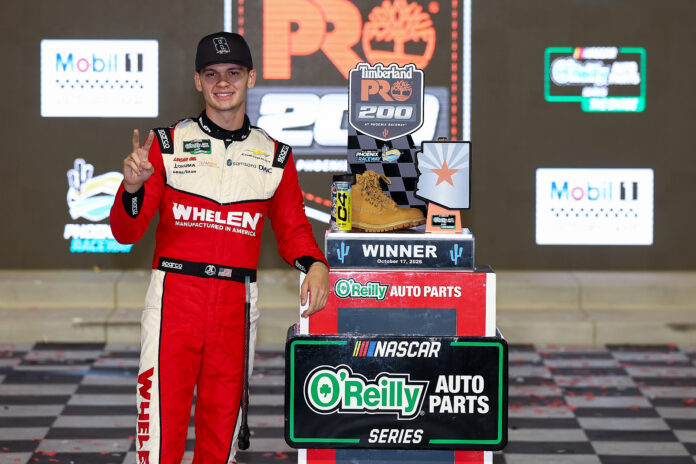
AVONDALE, ARIZONA - OCTOBER 17: Jesse Love, driver of the #2 Whelen Chevrolet, wears a "8" hat, a tribute to the late Kyle Busch in victory lane after winning the NASCAR O'Reilly Auto Parts Series Timberland PRO 200 at Phoenix Raceway on October 17, 2026 in Avondale, Arizona. (Photo by Meg Oliphant/Getty Images).
Jesse Love’s championship defense in the NASCAR O’Reilly Auto Parts Series is officially on after he maxed out on a dominant victory in the Timberland PRO 200 at Phoenix Raceway on Saturday, October 17, and stormed back atop the Chase standings.
The reigning O’Reilly Auto Parts Series champion from Menlo Park, California, led nine times for a race-high 156 of 200 scheduled laps in an event where he qualified on pole position and led all but eight of the first 45 laps within the first stage period before he won the period. Despite being outdueled by Justin Allgaier at the start of the second stage period, Love reeled in and reassumed the lead from Allgaier towards the Lap 75 mark before the former proceeded to win the latter stage period.
The start of the third and final stage period saw Love briefly outdueled by Corey Day before a quick caution period that followed suit, and the next restart with 94 laps remaining allowed Love to battle his way back to the lead. Then, following a late cycle of green-flag pit stops that commenced with less than 50 laps remaining and a late caution period that flew with nearly 40 laps remaining, Love capitalized on the ensuing restart with 35 laps remaining to maintain the top spot. He then fended off a late charge from Sam Mayer and navigated his way through lapped traffic to secure his second consecutive victory at the desert state in the fall and assume the points lead, with back-to-back championship opportunities three races away from being achieved.
With on-track qualifying determining the starting lineup on Saturday, Jesse Love secured the pole with a pole-winning lap at 131.694 mph in 27.336 seconds. Brandon Jones qualified second with a lap of 130.548 mph in 27.576 seconds.
Before the event, Garrett Smithley and Brad Perez dropped to the rear of the field after unapproved adjustments to their entries. Sam Mayer and Joey Gase also dropped to the rear of the field due to engine changes, along with Harrison Burton, the latter of whom was due to a backup car.
When the green flag waved and the event commenced, the field fanned out through the frontstretch’s dogleg before navigating through the first two turns. At the front, pole-sitter Jesse Love maintained a steady command through the backstretch, and he fended off Brandon Jones through the final set of turns to lead the first lap.
Over the next four laps, Love led by as high as two-tenths of a second over Jones while Sheldon Creed, Taylor Gray and William Sawalich followed suit in single-line formation and in the top-five mark, respectively. Behind, Rajah Caruth maintained sixth place in front of a host of competitors (Chase contenders and non-Chase contenders) battling from the top 10 and top-20 marks. Amid the early battles and shuffling around the circuit, Love extended his early lead by up to a second at the Lap 10 mark.
Through the Lap 15 mark, Love continued to extend his early lead as he was leading by two seconds over Jones while Creed, Gray, Sawalich, Justin Allgaier, Caruth, Carson Kvapil, Brent Crews and Corey Day occupied top-10 spots over Sammy Smith, Austin Hill, Clements, Sam Mayer and Ryan Sieg, respectively. By then, all but one of the 12 Chasers were racing in the top-15 mark while Parker Retzlaff, the lowest-running Chaser on the track, was mired in 19th place.
Love proceeded to lead by three seconds on Lap 20 before the caution flew two laps later due to rain falling on the track. During the event’s first caution period, select names that included Jones, Ryan Sieg, Nick Sanchez, Connor Mosack, Ryan Ellis, Andrew Patterson and Garrett Smithley pitted for wet-weathered tires while the rest led by Love remained on the track.
When the weather cleared and the event resumed on Lap 31, Love dueled with Creed in front of a stacked field through the frontstretch until Creed used the outside lane to motor his No. 00 Ollie’s Chevrolet Camaro entry ahead of Love and lead the next lap. As Creed led Love, Caruth and Allgaier, the field fanned out as a host of on-track battles ensued, with Kvapil and Sammy Smith trailing in the top-six mark, respectively. While Mayer and Hill battled for ninth place, Day, who made contact with the Turn 2 wall after he got loose amid contact with Crews, had slipped to 16th place in front of Retzlaff and Jones was mired in 35th place while Creed led by three-tenths of a second over Love by Lap 35. Teammates Allgaier and Smith proceeded to overtake teammate Caruth for third and fourth on the track and Mayer motored his way up to seventh place while Love reeled in on Creed for the lead on Lap 40.
When the first stage period concluded on Lap 45, Love, who reassumed the lead from Creed on Lap 40, captured his fifth O’Reilly stage victory of the 2026 season. Creed followed suit in second place by nine-tenths of a second while Allgaier, Caruth, Sammy Smith, Mayer, Kvapil, Clements, Taylor Gray and Day were scored in the top 10, respectively. By then, nine of 12 Chase contenders (Love, Creed, Allgaier, Caruth, Smith, Mayer, Gray and Day) racked up the event’s first round of stage points while the remaining Chasers that include Austin Hill, Retzlaff and Jones, the latter of whom was lapped after he plummeted on wet-weathered tires, were mired in 11th, 17th and 37th, respectively.
Under the event’s first stage break period, the field led by Love pitted, and Love retained the lead by exiting pit road first ahead of Allgaier, Caruth, Gray, Sammy Smith, Mayer, Kvapil, Day, Clements and Hill, respectively. Prior to the pit stops, Creed fell off the pace when he tried to re-fire his engine from shutting it off to save fuel. Once he pitted, Creed’s pit crew went under the hood to diagnose the power issue and he lost three laps in the process.
The second stage period started on Lap 54 as Love and Allgaier occupied the front row. At the start, the latter two dueled through the frontstretch’s dogleg and in front of a stacked field until Allgaier, who restarted on the inside lane, motored his No. 7 Registix Chevrolet Camaro entry ahead and cycle back to the frontstretch to lead the next lap. As Allgaier led the event, Gray occupied third place in front of a battle for fourth place between Sammy Smith, Caruth and Day while Mayer was fighting to retain seventh place from Hill. As both Mayer and Hill started to reel in on Smith, Day and Caruth for fourth place, Allgaier led by two-tenths of a second over Love by Lap 60.
At the Lap 70 mark, Allgaier retained the lead by a tenth of a second over a hard-charging Love while Gray, Day and Mayer occupied the remaining top-five spots ahead of Caruth, Sammy Smith, Hill, Thompson and Kvapil, respectively. Meanwhile, Jones carved his way up to 24th place and Retzlaff was racing in 12th place while Creed was mired three laps down in 37th place.
At the front, Love battled Allgaier for the lead during and past the Lap 70 mark. Amid Love’s attempts to reel in, briefly overtake and slide in front of Allgaier, the latter fought back as the duo battled back and forth over the next three laps. Then by Lap 74, Love used the outside lane to clear Allgaier through the first two turns and have both lanes under his control for the next lap. Love’s advantage then slightly increased up to seven-tenths of a second over Allgaier on Lap 80 as Gray, Day and Mayer continued to pursue in the top five, respectively.
When the second stage period concluded on Lap 90, Love, who sustained right-rear quarter panel damage after he hit the wall a few laps earlier, captured his second consecutive O’Reilly stage victory of the event and his sixth of the 2026 season. Allgaier, Gray, Day, Mayer, Caruth, Sammy Smith, Kvapil, Hill and Thompson followed suit in the top 10, respectively. With nine of 12 Chasers (Love, Allgaier, Gray, Day, Mayer, Caruth, Smith, Kvapil and Hill) racking up the event’s second round of stage points, the remaining Chasers that include Retzlaff, Jones and Creed were mired in 13th, 22nd and 37th, respectively.
During the event’s second stage break period, the lead lap field led by Love returned to pit road for service. Following the pit stops, Love retained the lead by exiting pit road first while Day and Sawalich, the latter of whom pitted for two tires, followed suit ahead of Smith and Allgaier. Not long after, Gray was penalized for an uncontrolled tire violation and Hill was penalized for speeding on pit road. Both Chasers were sent to the tail end of the field as penalties.
With 100 laps remaining, the final stage period commenced as Love and Day occupied the front row. At the start, the field fanned out through the frontstretch’s dogleg and the first two turns as Day used the outside lane to assume command from Love. Seconds before Day cycled back to the frontstretch to lead the next lap, the caution returned due to teammates Brennan Poole and Lavar Scott along with Gray wrecking through the backstretch.
The event’s next restart with 94 laps remaining featured Love gaining a brief advantage from the inside lane through the frontstretch and the first two turns before Day fought back on the outside lane. With the latter two dueling for the lead, Day briefly prevailed for the next two laps before Love returned back atop the leaderboard with 91 laps remaining. As Love proceeded to lead with 90 laps remaining, Mayer overtook Allgaier for third place while Sammy Smith and Kvapil occupied fifth and sixth in front of Ryan Sieg, Sawalich, Thompson, Jones and Crews.
Down to the final 85 laps, Love extended his late lead up by nearly two seconds over Day and while both third-place Mayer and fourth-place Allgaier trailed by two seconds apiece. Meanwhile, Sammy Smith retained fifth place ahead of teammate Kvapil while Ryan Sieg, Sawalich, Thompson and Crews raced in the top 10 ahead of Jones, Caruth, Clements, Patrick Staropoli and Jeb Burton, respectively. Hill and Gray were mired in 17th and 30th, respectively, amid their late pit road issues and Creed was still mired three laps down in 37th place while Love stretched his late lead up to two seconds over both Day and Mayer with 80 laps remaining.
As the event reached its final 70-lap mark, Love’s advantage increased by three seconds over Mayer, the latter of whom outdueled Day for the runner-up spot eight laps earlier, while third-place Day trailed by nearly five seconds. Teammates Allgaier, Kvapil and Sammy Smith retained fourth through sixth on the track while the next set of Chasers that include Caruth, Jones, Hill and Retzlaff were mired in 11th, 12th, 16th and 17th, respectively. By then, Gray lost a lap to the leaders as Love continued to lead by more than two seconds over Mayer with 60 laps remaining. Behind, Day was pressured by Allgaier and Kvapil for third place while Love stabilized his lead by more than two seconds over Mayer with 50 laps remaining.
Then with 49 laps remaining, a late cycle of green flag pit stops commenced as Kvapil and Hill pitted their respective Chevrolet entries. Teammates Allgaier and Smith along with Thompson and Jones pitted a lap later before the leader Love along with Mayer, Day, Ryan Sieg, Jeb Burton, Anthony Alfredo and Blaine Perkins pitted during the next lap (47 laps remaining). As more names that included Crews, Sawalich, Caruth, Nick Sanchez, Clements, Staropoli and Brad Perez pitted over the next trio of laps, Love had blended back on the track ahead of Mayer, Day, Allgaier, Kvapil and Smith while a handful of names led by Retzlaff had yet to pit.
Then with 41 laps remaining, the caution flew due to Poole being involved in his second incident of the event, this time for spinning by himself through the bottom of the first two turns and the early portions of the backstretch’s inside wall. At the time of caution, Retzlaff and Harrison Burton, both of whom have yet to pit, occupied the top-two spots while Love had carved his way up to third place. During this caution period, select names led by Retzlaff and Burton pitted while the rest led by Love remained on the track, which enabled Love to cycle back as the leader.
During the next restart with 35 laps remaining, Love fended off Mayer through the frontstretch’s dogleg and the first two turns to retain the lead. Love led the following lap over Mayer, Allgaier and Day while Kvapil was fending off Sawalich, teammate Sammy Smith and Jones for fifth place. Behind, Caruth battled Thompson for ninth place as both Retzlaff and Harrison Burton battled for 11th place. With teammates Smith and Kvapil dueling for fifth place, Love led by half a second in his No. 2 Whelen Chevrolet Camaro entry over Mayer’s No. 41 Starkey Chevrolet Camaro entry with 30 laps remaining.
Down to the final 25 laps, Love’s advantage decreased to four-tenths of a second over Mayer while third-place Allgaier and fourth-place Day trailed by one and three seconds, respectively. Amid Mayer’s late charge by reducing Love’s advantage by as low as a tenth of a second, Love slightly grew his advantage up to six-tenths of a second with 20 laps remaining before the advantage slightly shrunk down to four-tenths of a second five laps later. By then, Allgaier, Day and Smith trailed in the top five by as far back as six seconds while Jones, Thompson, Sawalich, Caruth and Kvapil rounded out the top 10, respectively.
With 10 laps remaining, Love stabilized his lead by four-tenths of a second over Mayer as Allgaier, Day, Sammy Smith and Jones all trailed the lead by single digits, with the rest trailing by double digits. Amid lapped traffic, Love continued to lead by three-tenths of a second over Mayer through the final five-lap mark before the former had more lapped traffic and Mayer charging from behind to manage as the laps dwindled.
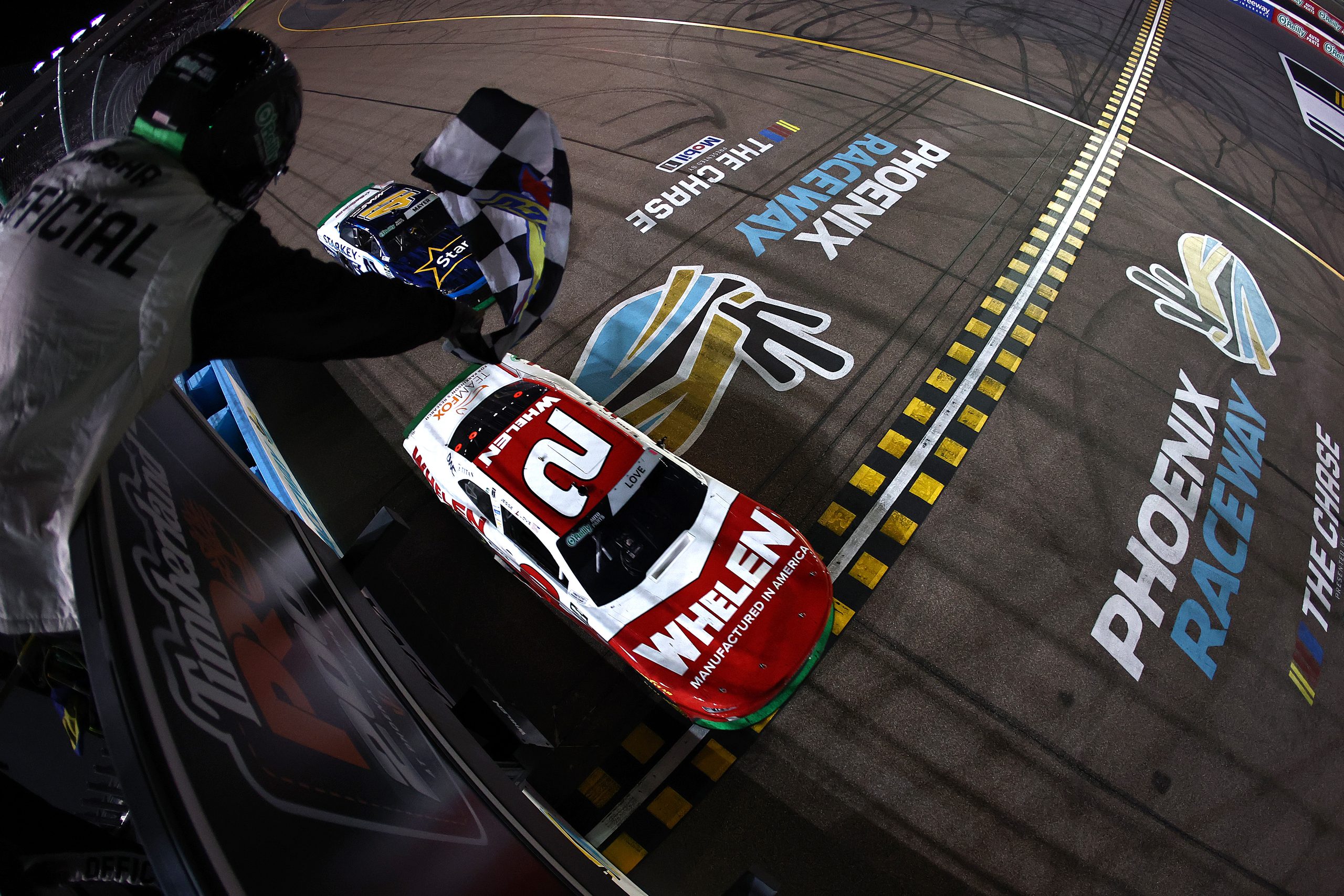
When the white flag waved and the final lap started, Love remained in the lead by two-tenths of a second over a hard-charging Mayer. Through the first two turns, Mayer started to reel in on Love for a final lap charge, but the latter maintained his steady advantage through the backstretch. Mayer then reeled in to Love’s rear bumper and bumped into the latter’s rear through Turns 3 and 4 amid his charge. With the contact sending both up the track, Love managed to remain in front of Mayer and edge Mayer by a tenth of a second amid Mayer’s crossover attempt to score the victory.
AVONDALE, ARIZONA – OCTOBER 17: Jesse Love, driver of the #2 Whelen Chevrolet, takes the checkered flag to win the NASCAR O’Reilly Auto Parts Series Timberland PRO 200 at Phoenix Raceway on October 17, 2026 in Avondale, Arizona. (Photo by Chris Graythen/Getty Images).
With the victory, Love notched his fifth NASCAR O’Reilly Auto Parts Series career win in his 95th series’ start, his second at Phoenix Raceway and his second of the 2026 season. Love’s Phoenix victory was also the 27th of this year’s O’Reilly Auto Parts Series season for Chevrolet and the fourth for Richard Childress Racing, with the organization also achieving its fifth O’Reilly victory at Phoenix.
Above all, Love, who entered Phoenix with a two-point deficit to Sheldon Creed, vaulted himself atop the Chase standings as he cashed in by winning all three stages, including the overall race victory at Phoenix. The Californian leads the standings by 36 points with three-scheduled races remaining on the schedule and a second consecutive championship within sight.
“Honestly, I felt like [Mayer’s team] were a little better than we were at the end,” Love said on the frontstretch on the CW Network. “I was having to just drive a lot over the tire to make any sort of lap time. I’ll yell at [crew chief] Danny [Stockman] for not freeing me up more later, but it’s OK. I’m grateful to the good Lord above for putting great people behind me and grateful to get another [win] for [Richard Childress Racing], ECR [Engines]. It’s been a tough year for us, so grateful just to be in this situation to win races. Just proud of this whole group. I’ve learned from a lot of mistakes that allow me to execute at a high level, and a track like this I’ve been here feels like a million times. [I] Try to learn something new every lap and try to learn something new every weekend. I know last year, I got a lot of boos, but I appreciate the cheers this time.”
Sam Mayer, who qualified in 35th place, made a strong rally to settle in the runner-up spot for his highest-finishing result of this season and for his seventh top-five result of the 2026 O’Reilly season. Mayer’s runner-up result kept the Wisconsin native in sixth place in the Chase standings despite having his points deficit grow to 86. Amid the disappointment of falling short in claiming his first victory of this season, Mayer termed his late battle with Love “fun” as he looks ahead to the remaining three events on this year’s schedule, including next weekend at Talladega Superspeedway, to reel in on his deficit and contend for his first series’ title.
“It just came down to who made a mistake and who didn’t,” Mayer said. “Honestly, neither of us really made one. Good job to [Love]. He drove a great race. We definitely pressured him the whole time. It came down to make a mistake or not, and he executed really well. Really close. Quite the drive. I haven’t had fun this year like that and that was just a lot of fun. It was great racing and hopefully, we put on a show for everybody at home. That’s some pretty big championship implications if we could’ve won that one. [The Chase standings] look pretty ugly for the old No. 41 and honestly, [Creed] too. [I] Kind of had to win that one, but we came up a little bit short. That’s alright.”
Justin Allgaier, who led 18 laps, settled in third place ahead of Corey Day, the latter of whom led seven laps and fell short of winning three consecutive O’Reilly events in the Chase. Despite trailing the points lead by 36 points, Allgaier remained optimistic in maintaining his hopes of achieving a second O’Reilly championship and reeling in the points lead with three scheduled events remaining.
“There’s a lot of positives from today,” Allgaier said. “It’s a great points day with 52 points earned for the day. We did all the right things, made good adjustments all day. We need to be a little better, but winning races, obviously, does a lot for the points. There’s still a lot of racing left and there’s still three wins out there to go get. We’ll keep digging, and it’s not over yet.”
Sammy Smith finished in fifth place while Brandon Jones, Dean Thompson, William Sawalich, Rajah Caruth and Carson Kvapil completed the top 10 in the final running order. With eight of 12 Chase contenders (Love, Mayer, Allgaier, Day, Sammy Smith, Brandon Jones, Caruth and Kvapil) finishing in the top 10 at Phoenix, the remaining Chasers, including Parker Retzlaff, Austin Hill, Taylor Gray and Sheldon Creed, finished 11th, 15th, 28th and 32nd, respectively.
Like Allgaier, Creed, who had a two-point advantage, swung down to a 59-point deficit amid his power issues, looks ahead to the final three events on this year’s schedule to race back atop the Chase standings and contend for his first series’ championship.
“Anything can happen,” Creed said. “Obviously, Talladega [is] next week. I think the mindset changes a little bit and we can be more aggressive and try to go win stages and win the race. I know we’ll be fast at Homestead, so just need to get ourselves back within 25, 30 points before Homestead. Just try to go lead all laps there.”
The sixth O’Reilly Auto Parts Series’ Chase event of the 2026 season at Phoenix saw 18 lead changes among seven leaders, and five cautions over 35 laps. In addition, 19 of 38 starters finished on the lead lap.
Results:
Jesse Love, 156 laps led, Stages 1 & 2 winner
Sam Mayer
Justin Allgaier, 18 laps led
Corey Day, seven laps led
Sammy Smith
Brandon Jones
Dean Thompson
William Sawalich
Rajah Caruth
Carson Kvapil
Parker Retzlaff, nine laps led
Jeremy Clements, one lap led
Harrison Burton
Andrew Patterson
Austin Hill
Jeb Burton
Anthony Alfredo
Ryan Ellis
Lavar Scott
Brent Crews, one lap down, one lap led
Patrick Staropoli, one lap down
Nick Sanchez, one lap down
Ryan Sieg, one lap down
Blaine Perkins, one lap down
Kyle Sieg, one lap down
Josh Williams, one lap down
Brad Perez, one lap down
Taylor Gray, one lap down
Will Rodgers, two laps down
Connor Mosack, two laps down
Garrett Smithley, two laps down
Sheldon Creed, two laps down, eight laps led
Joey Gase, two laps down
Leland Honeyman Jr., three laps down
Brennan Poole, three laps down
Josh Bilicki – OUT, Brakes
Dawson Cram – OUT, Fuel Pump
Jake Finch – OUT, Engine
*Bold indicates Chase Drivers
After the sixth Chase event of the 2026 NASCAR O’Reilly Auto Parts Series season, Jesse Love leads the standings by 36 points over Justin Allgaier, 39 over Corey Day and 59 over Sheldon Creed. The rest of the 12-car Chase field is displayed below.
Chase Standings:
Jesse Love
Justin Allgaier -36
Corey Day -39
Sheldon Creed -59
Carson Kvapil -79
Sam Mayer -86
Sammy Smith -137
Taylor Gray -141
Austin Hill -143
Parker Retzlaff -173
Brandon Jones -183
Rajah Caruth -213
Next on the 2026 NASCAR O’Reilly Auto Parts Series’ Chase schedule is Talladega Superspeedway in Lincoln, Alabama, for The Progress Group 250. The event is scheduled to occur next Saturday, October 24, at 3:30 p.m. ET on the CW Network, MRN Radio and SiriusXM.