Quality fuel plumbing plays an outsized role in racing applications, delivering highly combustible fuel under immense pressure. Far from a simple upgrade from the corrugated plastic fuel lines in production cars, performance fuel plumbing withstands extreme engine temperatures and vibrations, prevents leaks and fuel starvation, and ensures vehicle fuel systems perform consistently even under demanding racing conditions.
Why Fuel Hoses Matter?
In custom car builds, durable and performance-boosting fuel hoses connect primary fuel cells and tanks to the injectors or carburetors, ensuring fuel is delivered at optimal pressure for the engine load. Race-ready setups solve critical issues related to safety, performance, and durability that standard plumbing cannot. This includes:
- Pressure resistance and reliability: Fuel systems in motorsport run at significantly higher pressure than street cars. High-quality hoses, usually constructed with reinforced inner cores and braided outer jackets, prevent swelling, expanding, and puncturing – instances all too common in overlooked street setups – and ensure stable fuel delivery under heavy throttle.
- Resistance to corrosive fuels: Aggressive racing fuels like E85 and methanol easily break down standard rubber and nitrile hoses, causing them to harden, crack, or clog the injectors. Race plumbing solves leaks, pressure drops, and puncturing with chemically inert and resistant materials.
- Abrasion and heat resistance: Fuel lines are subjected to radiant heat from exhaust manifolds, turbocharger housings, and other engine components. This risks dangerous temperature spikes and fuel boiling before it reaches injectors and carbs, essentially starving the engine of fuel. Race-spec hoses are sheathed and heat-shielded, enabling safe operating ranges between -60 to 240℃, preventing degradation and melting. The same materials shield hoses from debris and vibrations.
- Cockpit safety and vapor leakage: Rubber hoses allow fuel vapors to permeate the walls, leaving vehicles smelling of fuel. Performance automotive fuel hoses and those lined with PTFE completely block fuel vapors to keep drivers safe and prevent potential fires.
Fuel Hose Types
Push-on Rubber Hoses
These are affordable options, common in production cars, and featuring hoses that are secured in place with simple clips or crimpled metal collars. They vary in size depending on engine displacement and fuelling system (carburetted vs injected) with widths ranging from 6mm in smaller-engined cars to 15mm in larger, fuel-injected engines. Hoses can be supplied with plain rubber or with stainless steel braids that increase abrasion and vibration resistance. They are, however, more susceptible to vapor leakage, particularly with aggressive fuels like Ethanol.
PTFE or Teflon Hoses
An obvious upgrade, hoses with polytetrafluoroethylene (PTFE) inner lining and steel outer braiding are standard racing specification variants that provide multiple advantages. The smooth, convoluted PTFE lining has very high chemical and vapor resistance, while the outer steel (or aramid/Kevlar) outer shields hoses from vibrations and abrasions. Hoses are relatively compact (ranging between 4.8 mm and 13 mm), so they facilitate routing in tight spaces, and attach to pumps, tanks, and filters with quality compression fittings.
CPE Fuel Hoses
Chlorinated polyethylene (CPE) hoses are constructed of flexible synthetic rubber, often with a reinforced stainless steel or Nylon outer braid. This provides superior chemical resistance and protection against UV degradation. Unlike rigid PTFE or metal hardlines, they’re highly pliable, ensuring easier routing in tight engine bays, around corners, and hard-to-reach areas. They’re typically used with reusable screw-on AN fittings for simple maintenance and servicing
Metal or Alloy Hard Lines
These consist of aluminum, stainless steel, or copper-nickel tubes, and are preferred in high-pressure fuel-injected systems, one-off restorations, and custom race builds. Fuel lines in these materials resist expansion under extreme pressure to ensure consistent flow and correct fuel volumes reaching injectors, provide high heat resistance to prevent fuel degradation, and offer superior durability against impact and abrasions from chassis knocks and debris. They’re also more suitable for race fuels and additives.
Understanding Fuel Hose Fitting Types
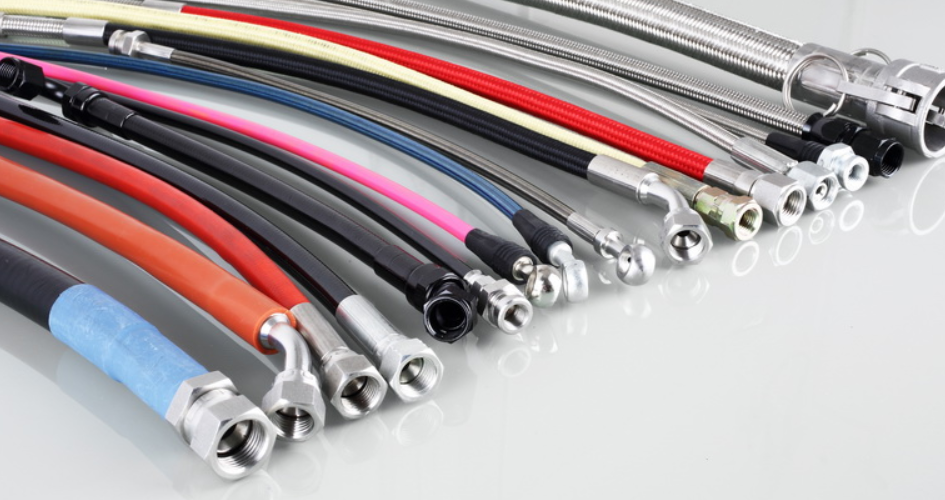
Fittings vary depending on whether engines are carburetted or fuel-injected. All types, however, aim for secure and leak-free connections between hoses and fuel system components. Common fuel hose fitting types include:
- Push-lock/push-on: These are specially barbed fittings designed to be pushed into compatible push-on hoses. The hose grips the fitting as fuel pressure increases, eliminating the need for separate clamps. Considering they can be assembled without specialty tools, common uses for push-lock fuel hose fittings are custom fuel lines requiring medium pressure, such as high-output carburetted and standard EFI engines.
- AN (Army-Navy) threaded fittings: These are reusable, metal threaded fittings, usually made of anodized aluminum. The hose ends thread onto a matching male thread fitting and are tightened using a collar or swivel seal to provide a secure, leak-proof connection. Originally developed for the US Army, AN fittings feature 37-degree flared seals and come in standardized sizes measured in fractions of an inch. for instance -6AN, -8AN, etc. Typical uses are with PTFE, CPE, and metal/alloy hardline hoses.
- Quick-connect fittings: Standard in newer cars, quick-connecting hose fittings feature internal locking tabs that grab flared hose beads for a quick, tool-free connection or removal. Common uses are in fuel rails and filters with corrugated Nylon and PTFE hoses.
- Specialty NPT hose connectors: National Pipe Thread (NPT) connectors feature tapered male and female threads, often with sealant or Teflon tape for a tight seal. They’re commonly combined with push-on rubber and PTFE fuel hoses when connecting aftermarket carburetors, filters, and fuel pressure regulators in older vehicles
- Compression fittings: Often used with hard line hoses and consisting of a threaded nut and a plastic or metal ferrule to create airtight seals, compression fittings. They’re seen in minor engine upgrades with custom carbs, fuel rail assemblies, and engine swaps, largely due to simplicity, though they’re not recommended for heavy-duty performance or racing applications.
Key Fuel Hose and Fittings Buying Considerations
The right fuel hoses and fittings are a critical make-or-break decision that vastly determines performance, safety, and durability in custom car builds and racing applications. The wrong hose can fail due to higher heat, swelling under pressure, or degradation from corrosive race fuels, in effect restricting fuel, killing power at higher engine loads, and creating dangerous vapor leaks. Similarly, the wrong fittings will increase flow restrictions, degrade or wear under higher temperatures and pressure (leading to increased fuel leakage), or cause compatibility and routing issues.
Choose hoses and fittings compatible with the fuel you intend to use, that are sized for the required pressure and flow and are sourced in durable materials rated for the engine build. Sticking to the same brand for both hoses and fittings rules out mismatched connections, prevents leaks, and, importantly, results in cleaner and tried-and-tested plumbing that promises improved performance, easier maintenance, and a proven safety record.