
Home Blog Page 1019

INDYCAR, FOX Sports Announce Historic Media Rights Deal

All 2025 NTT INDYCAR SERIES Races To Air on FOX
Agreement Includes Extensive, Multiplatform Coverage of Indy 500  across FOX Sports Family of Networks

INDIANAPOLIS (Thursday, June 13, 2024) – INDYCAR and FOX Sports announced June 13 the new exclusive home of the NTT INDYCAR SERIES and the iconic Indianapolis 500 presented by Gainbridge beginning in 2025. The new media rights deal provides a massive and unprecedented increase in exposure for North America’s premier open-wheel racing series, with every 2025 race airing on FOX and available on the FOX Sports app. FOX Deportes will carry exclusive Spanish-language television coverage, with a schedule to be announced at a later date.

FOX will also provide coverage of Indy 500 qualifications on both Saturday and Sunday, bringing the total number of broadcast network windows to 19, a record for the NTT INDYCAR SERIES. INDYCAR will become the only premier motorsport in the United States with exclusive major broadcast network coverage for all its races.

“This represents unrivaled exposure and provides an unparalleled growth opportunity for the most competitive and entertaining motorsport on the planet,” INDYCAR CEO Mark Miles said. “FOX Sports is a fully committed partner, ready to bring engaging and technically innovative coverage to millions of fans across the country while also promoting INDYCAR thoroughly across all its platforms.”

“Adding the iconic Indianapolis 500 and delivering the entire NTT INDYCAR SERIES to the FOX Sports roster fits perfectly within our model of teaming with sports’ largest events and best-in-class brands,” FOX Sports CEO and Executive Producer Eric Shanks said. “We’re honored to be the new broadcast home to ‘The Greatest Spectacle in Racing,’ an incredibly special event to everyone at FOX Sports.”

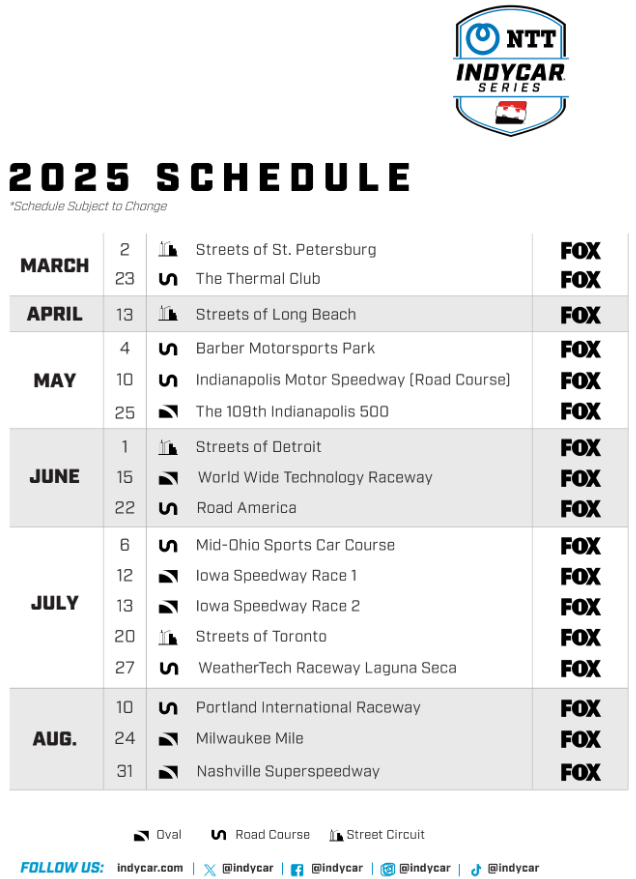
The 2025 NTT INDYCAR SERIES season kicks off with the Firestone Grand Prix of St. Petersburg on Sunday, March 2 and concludes with the Big Machine Music City Grand Prix on Sunday, Aug. 31. The 109th Running of the Indianapolis 500 presented by Gainbridge takes place on Sunday, May 25. The full schedule for the NTT INDYCAR SERIES was released today and can be below.

Indianapolis 500 Race Day coverage will be extensive for fans across the country, with a five-hour window on FOX set aside for “The Greatest Spectacle in Racing.” The Indy 500 is annually the world’s largest single-day spectator sporting event, attracting a crowd of more than 300,000 people to the famed Indianapolis Motor Speedway.

The immersive collaboration will see all practice and qualifying sessions for the NTT INDYCAR SERIES telecast on cable on FS1 and FS2. The majority of INDY NXT by Firestone races will also air on FS1, with FS2 providing supplemental coverage of additional races.

This news comes on the heels of continued growth and momentum for INDYCAR, which has seen rising attendance across its schedule, significant growth in commercial partnerships and record metrics across its digital platforms.

Additional announcements, including on-air talent, will be announced at a later date.

2025 INDYCAR Schedule

(All races are points-paying events; all event weekends include NTT INDYCAR SERIES and INDY NXT by Firestone races unless otherwise noted.)

DateTrackNetwork
Sunday, March 2Streets of St. PetersburgFOX
Sunday, March 23The Thermal Club*FOX
Sunday, April 13Streets of Long Beach*FOX
Sunday, May 4Barber Motorsports ParkFOX
Saturday, May 10Indianapolis Motor Speedway Road Course^FOX
Sunday, May 25109th Indianapolis 500 presented by Gainbridge*FOX
Sunday, June 1Streets of DetroitFOX
Sunday, June 15World Wide Technology RacewayFOX
Sunday, June 22Road AmericaFOX
Sunday, July 6Mid-Ohio Sports Car CourseFOX
Saturday, July 12Iowa Speedway Race 1FOX
Sunday, July 13Iowa Speedway Race 2*FOX
Sunday, July 20Streets of Toronto*FOX
Sunday, July 27WeatherTech Raceway Laguna Seca+FOX
Sunday, Aug. 10Portland International RacewayFOX
Sunday, Aug. 24Milwaukee MileFOX
Sunday, Aug. 31Nashville SuperspeedwayFOX

* — No INDY NXT by Firestone race
^ — INDY NXT by Firestone doubleheader May 9-10
+ — INDY NXT by Firestone doubleheader July 26-27
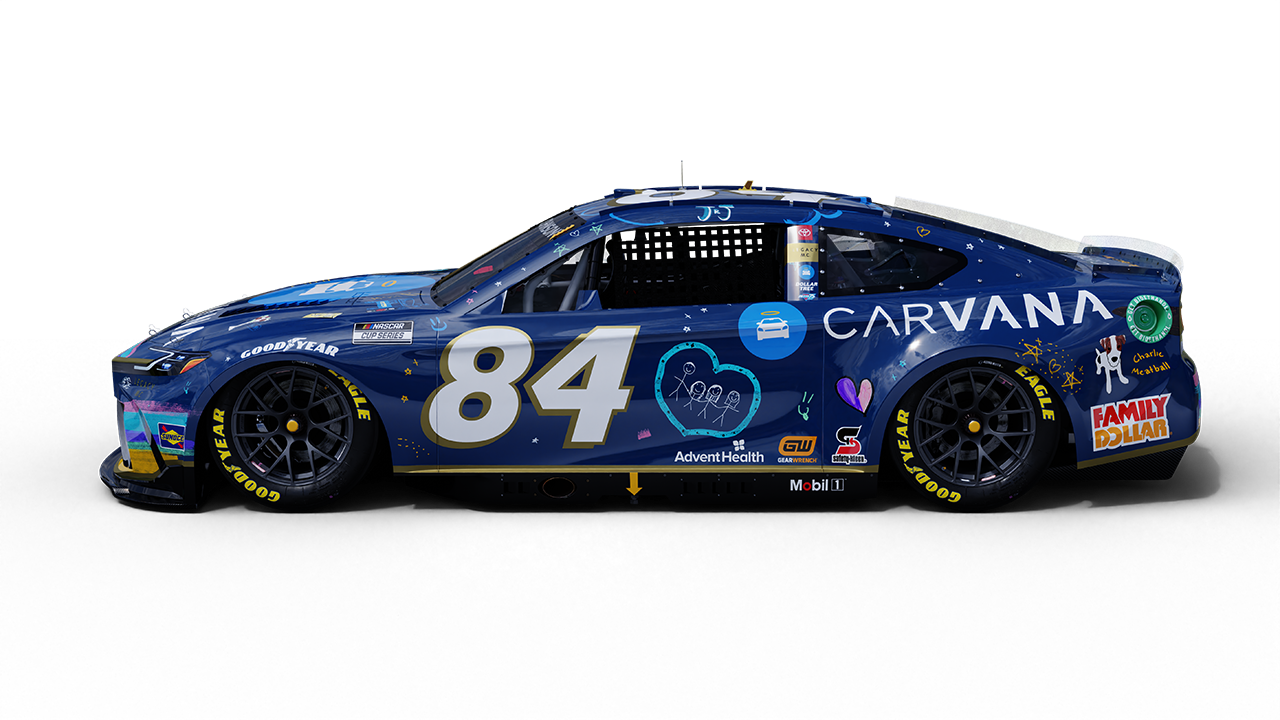
Carvana Unveils Heartwarming Paint Scheme for Jimmie Johnson’s Brickyard 400 Race

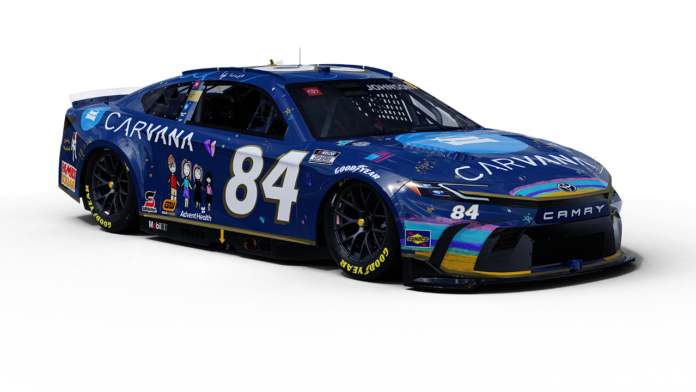
Carvana Unveils Heartwarming Paint Scheme for Jimmie Johnson’s Brickyard 400 Race, Designed by His Daughters
Celebrating Father’s Day, Carvana’s No. 84 Toyota Spotlights Creativity with a Personal, Family-Centric Design

PHOENIX, AZ (June 13, 2024) — Carvana, an industry pioneer for buying and selling used cars online, today revealed a one-of–a-kind paint scheme for the upcoming NASCAR Cup Series’ Brickyard 400 race at the Indianapolis Motor Speedway. In celebration of Father’s Day weekend, Jimmie Johnson’s daughters, Genevieve (13) and Lydia (11), have designed a unique and heartfelt paint scheme for their father’s racecar.

The Brickyard 400 is a celebrated race for Johnson, as he is four time champion of the event, so it’s only fitting that the look of his racecar is one with extra special meaning. This paint scheme is a deeply personal project conceived by Johnson’s biggest fans—his own children. Genevieve and Lydia poured their love and creativity into a custom design that brings together all of their father’s favorite things, funny quirks, and elements that hold special significance to their family.

“It was a lot of trial and error but we are so excited to see our designs at the race,” said Genevieve and Lydia Johnson. “It was really fun for us to combine colors and patterns that remind us of Dad’s racing world and some of our favorite memories with him. We hope everyone loves it as much as we loved creating it!”

The No. 84 Carvana Toyota Camry XSE features an imaginative blend of colors and patterns that represent Johnson’s personal life and dynamic racing career, brought to life through the artistic vision of his daughters. The car is covered in pink, turquoise, yellow and purple doodles along with images of the family’s spirited Jack Russell Terrier, “Charlie Meatball” (who Genevieve spent the most time drawing), and references how the girls wish their dad luck before each race, telling him to “drive over the moon” – their way of saying Johnson he will be the fastest car.

“Seeing my daughters take such an active role in designing the paint scheme for my car has been an incredibly special experience,” said Johnson. “Their creativity and vision have brought a fresh and personal touch to the race track and will keep me inspired lap after lap. It’s a special moment I’m excited to share with the fans, especially as we celebrate Father’s Day.”

Fans can look forward to seeing Johnson’s car in action for the first time on July 21, 2024 in Indianapolis. Access to a first look at the newly outfitted race car is available on NASCAR.com, and on all of Carvana Racing’s social channels.

About Carvana

Carvana’s mission is to change the way people buy and sell cars. Over the past decade, Carvana has revolutionized automotive retail and delighted millions of customers with an offering that is fun, fast, and fair. With Carvana, customers can choose from tens of thousands of vehicles, get financing, trade-in, and complete a purchase entirely online with the convenience of home delivery or local pick up in over 300 U.S. markets. Carvana’s vertically integrated platform is powered by its passionate team, unique national infrastructure, and purpose-built technology. Carvana is a Fortune 500 company and is proud to be recognized by Forbes as one of America’s Best Employers. For more information, please visit www.carvana.com.

About LEGACY MOTOR CLUB

LEGACY MOTOR CLUB™ is a professional auto racing club owned by businessman and entrepreneur Maurice J. Gallagher and seven-time NASCAR Cup Series champion Jimmie Johnson. The club competes full-time in the Cup Series fielding the Nos. 42 and 43 Toyota Camry XSE entries, respectively, and the No. 84 part-time entry for Johnson. “The King” Richard Petty serves as CLUB Ambassador.

To keep up-to-date with the latest news, information and exclusive content, follow LEGACY MOTOR CLUB™ on Facebook, X, Instagram and at www.LEGACYMOTORCLUB.com.

How to Choose Pedals for Your Tesla Model 3

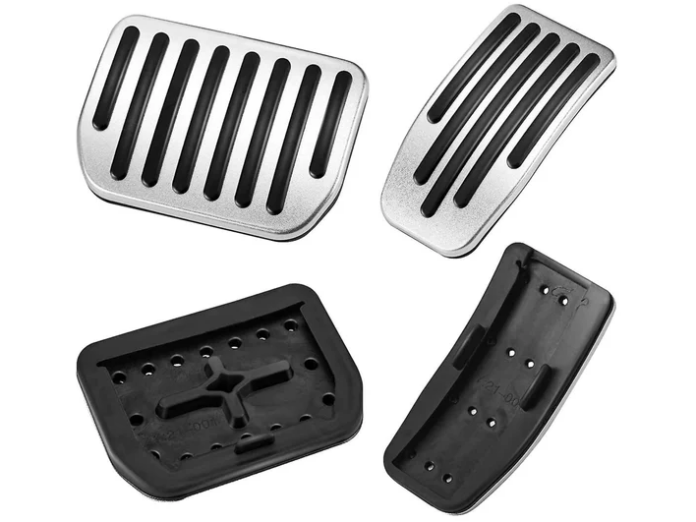
When it comes to personalizing and enhancing your Tesla Model 3, upgrading the pedals can make a significant difference in both aesthetics and driving experience. While the Model 3 comes with standard pedals that are functional and sleek, upgrading to aftermarket pedals can add a touch of personal style and improve grip and comfort. Whether you’re looking to enhance the sporty feel, add a luxurious touch, or simply replace worn-out pedals, it’s worth choosing the best option. You can order high-quality Tesla Model 3 pedals using in the shop Tesla Hub. However, when choosing, you should pay attention to several important characteristics.

Why Upgrade Your Pedals?

Upgrading your pedals goes beyond mere aesthetics; it can enhance your driving comfort and safety. Here are a few reasons why you might consider upgrading your Tesla Model 3 pedals:

Enhanced Grip: Many aftermarket pedals offer better grip than the standard rubber ones, which can be especially beneficial during spirited driving or adverse weather conditions.

Personalization: Pedal upgrades allow you to personalize the interior of your Model 3 according to your style preferences, whether you prefer a sporty look, a luxurious feel, or something unique.

Durability: High-quality pedals are often more durable than factory-installed ones, potentially lasting longer and withstanding wear and tear better.

Comfort: Some aftermarket pedals are designed with ergonomic considerations, offering improved comfort over long drives.

Safety: Better grip and ergonomic design can contribute to safer driving experiences by reducing the chances of slipping off the pedals.

Types of Pedals for Tesla Model 3

Before diving into choosing the right pedals, it’s essential to understand the types available:

Aluminum Pedals: These are popular for their sporty look and enhanced grip. They often feature rubber inserts or textured surfaces to prevent slipping.

Stainless Steel Pedals: Known for their durability and shiny finish, stainless steel pedals can add a touch of luxury to your Tesla’s interior.

Rubber or Polymer Pedals: These are typically stock pedals and are known for their durability and resistance to wear.

Performance Pedals: Designed for enthusiasts, these pedals often combine aluminum or stainless steel with non-slip materials for maximum grip and style.

Factors to Consider When Choosing Pedals

Choosing the right pedals for your Tesla Model 3 involves considering several factors to ensure they meet your preferences and needs:

Material: Decide whether you prefer aluminum, stainless steel, or another material based on your desired look, durability expectations, and budget.

Design: Look for a design that complements your Model 3’s interior. Some pedals come with intricate patterns or Tesla logos, while others have a minimalist aesthetic.

Grip: Check for features that enhance grip, such as textured surfaces or rubber inserts. This is particularly important if you live in an area with frequent rain or snow.

Installation: Consider whether you prefer pedals that adhere using adhesive tape, screw onto existing pedals, or require professional installation.

Compatibility: Ensure that the pedals you choose are compatible with the Tesla Model 3. Most manufacturers specify compatibility, but it’s always wise to double-check.

Reviews and Reputation: Read reviews from other Tesla owners to gauge the quality and reliability of the pedals you’re considering.

How to Install Pedals on Your Tesla Model 3

Installing new pedals on your Model 3 is generally straightforward and can be done in a few steps:

Prepare: Gather all necessary tools as specified by the pedal manufacturer. Typically, you’ll need a screwdriver or an adhesive cleaner.

Remove Old Pedals (if applicable): Depending on the type of pedals you’re installing, you may need to unscrew or carefully pry off the existing pedals.

Clean the Surface: Ensure the area where the new pedals will be installed is clean and free of debris. Use an adhesive cleaner if necessary.

Install New Pedals: Follow the manufacturer’s instructions for installation. This usually involves either adhesive application or screwing the new pedals onto the existing ones.

Test and Adjust: After installation, test the pedals to ensure they function properly and securely.

Enjoy Your Upgraded Pedals: Admire the new look and feel of your Tesla Model 3’s interior and enjoy the enhanced driving experience!

Tips for Choosing the Perfect Pedals for Your Tesla Model 3

Now that you understand the basics of why and how to upgrade your Tesla Model 3 pedals, let’s delve deeper into some additional tips to ensure you make the best choice for your vehicle:

1. Consider Your Driving Style

Think about how you use your Tesla Model 3 on a daily basis. If you enjoy spirited driving or frequent long-distance trips, pedals with enhanced grip and ergonomic designs might be more suitable. On the other hand, if you prioritize comfort during city driving, pedals with smoother surfaces and minimalist designs could be preferable.

2. Check the Material Quality

When selecting pedals, pay attention to the quality of materials used. High-grade aluminum and stainless steel are popular choices due to their durability and resistance to corrosion. Ensure the pedals are well-crafted to withstand daily use and maintain their appearance over time.

3. Review Installation Requirements

Before purchasing pedals, review the installation process and any additional tools or materials required. Some pedals may come with adhesive tapes for easy installation, while others might require drilling or professional assistance. Choose pedals that align with your comfort level for DIY installation or seek professional installation if needed.

4. Ensure Compatibility

Tesla Model 3 pedals are designed to fit specific dimensions and configurations. Before making a purchase, verify that the pedals are compatible with your exact model and year of production. Manufacturers often specify compatibility details, but it’s prudent to double-check to avoid any fitting issues.

5. Explore Design Options

Pedals come in a variety of designs ranging from sleek and minimalist to bold and sporty. Consider the overall interior aesthetic of your Tesla Model 3 when choosing a design. Some pedals feature unique patterns, Tesla logos, or even customizable options to match your personal style preferences.

6. Read Customer Reviews

Take advantage of customer feedback and reviews to gauge the quality and reliability of the pedals you’re interested in. Reviews can provide valuable insights into factors such as durability, ease of installation, and overall satisfaction with the product. Look for reviews from Tesla owners specifically, as they can offer firsthand experiences with pedal upgrades.

7. Balance Aesthetics with Functionality

While aesthetics are important, prioritize functionality and comfort when choosing pedals for your Tesla Model 3. Ensure that the pedals not only enhance the interior appearance but also provide practical benefits such as improved grip, durability, and ease of use.

8. Consider Long-Term Value

Investing in high-quality pedals may initially cost more but can offer long-term value in terms of durability and aesthetic appeal. Compare different brands and models to find pedals that strike the right balance between price and quality for your specific needs.

Conclusion

Upgrading the pedals of your Tesla Model 3 is an exciting opportunity to personalize your vehicle’s interior while improving your driving experience. By considering factors such as driving style, material quality, installation requirements, compatibility, design preferences, and customer reviews, you can confidently select pedals that meet your expectations and enhance the overall appeal of your Tesla. Whether you prefer the sporty look of aluminum pedals or the luxurious feel of stainless steel, there’s a wide range of options available to cater to your individual style and needs. Take the time to explore different brands and models to find the perfect pedals that complement your Tesla Model 3 and elevate your driving enjoyment.Copy textCopy HTMLRefuseTake to work

Morton Buildings Racing: Ryan Preece Iowa Advance

RYAN PREECE
Iowa Advance
No. 41 Morton Buildings Ford Mustang Dark Horse

Event Overview

● Event: Iowa Corn 350 powered by Ethanol (Round 17 of 36)
● Time/Date: 7 p.m. EDT on Sunday, June 16
● Location: Iowa Speedway in Newton
● Layout: .875-mile oval
● Laps/Miles: 350 laps/306.25 miles
● Stage Lengths: Stage 1: 70 laps / Stage 2: 140 laps / Final Stage: 140 laps
● TV/Radio: USA / MRN / SiriusXM NASCAR Radio

Notes of Interest

● Ryan Preece and the No. 41 Morton Buildings Ford Mustang Dark Horse team are set to compete in Sunday’s inaugural NASCAR Cup Series race at Iowa Speedway in Newton. The .875-mile oval boasts 10 degrees of banking on the frontstretch, 4 degrees on the backstretch, and progressive banking from 12 to 14 degrees in its corners. The Cup Series heads to Iowa after NASCAR previously hosted Xfinity Series and Craftsman Truck Series races there from 2009 to 2019.

● Preece has three starts in the Xfinity Series at Iowa, with a July 2017 victory for Joe Gibbs Racing in his most recent outing. It was his first NASCAR national series win. Preece held off runner-up Kyle Benjamin in overtime by a .054 of a second. It was a dominating performance for Preece as he led 141 of 254 laps, won the first stage and finished second in the second stage. Preece is among 19 of the 36 drivers starting Sunday’s Cup Series race who has won previously at Iowa.

● Last weekend at Sonoma (Calif.) Raceway, Preece got off to a strong start, finishing with a top-five overall lap average in Saturday’s practice session. He started Sunday’s 102-lap Save Mart 350k 30th, but a fast racecar and strategy calls placed him and the No. 41 team second by the end of the second stage, earning nine stage points, Preece finished the race 18th after a late spin. Preece earned 28 points throughout the day, moving him up three spots in the driver standings from 29th to 26th. He heads to Iowa 11 points behind 25th-place Erik Jones.

● Morton Buildings will be the primary sponsor of Preece’s No. 41 Ford Mustang Dark Horse at Iowa. The industry-leading company in post-frame manufacturing and construction previously adorned the hood of Preece’s racecar April 28 at Dover. Based in Morton, Illinois, Morton Buildings is distinguished by meticulous attention to detail. The company sets itself apart with leading-edge innovations, top-tier warranties and highly skilled craftsmen, all aimed at exceeding customer expectations. With a construction legacy extending over a century and a clientele exceeding a quarter-million satisfied customers, Morton Buildings takes pride in its 100-percent employee ownership structure. Recognized for its commitment to employee ownership, the company holds the prestigious rank of No. 65 on the National Center for Employee Ownership’s 2022 Employee Ownership 100 list, which showcases the nation’s largest companies predominantly owned by employee stock ownership plans. For additional details, visit www.mortonbuildings.com.

Ryan Preece, Driver of the No. 41 Morton Buildings Ford Mustang Dark Horse

You were a part-time driver with only four scheduled starts when you scored your first win in the NASCAR Xfinity Series for Joe Gibbs Racing in 2017 at Iowa. What did that win do for your career?

“Ultimately, that win changed my life. I went from living in a small condo in Connecticut to eventually having an opportunity to race for one of the best teams in NASCAR. When I moved home in 2017, before that win, the whole dream of chasing after a career in the Cup Series had pretty much fizzled out, but then the opportunity came along to run those races for Gibbs in the Xfinity Series. Iowa changed my life.”

You haven’t competed at Iowa since your life-changing win there in 2017. What’s your confidence level like heading back to Iowa?

“I think the racetrack has changed since the last time I raced there, but I certainly feel good about our chances this weekend. It’s obviously a place that I’ve run well at in the past, and it’s a style of racetrack that I’ve had a lot of success on. I’m definitely excited about going back for the first time since that win. It will be special.”

Iowa was typically a multi-groove racetrack when the Xfinity Series and Truck Series competed there. What do you think the on-track product will look like for the Cup Series on Sunday?

“I’m sure the product will be good. I think you’ll see drivers running all over the racetrack, but I think the bottom will be the fastest way around until the top is worked in later in the race.”

There is more practice time this weekend for drivers and teams. How important is practice at Iowa?

“Practice is important everywhere, but having the extra practice time this weekend will certainly give us somewhat of an understanding of what to expect on Sunday.”

How do you feel the season has been going so far, and what are your expectations going forward?

“We started getting momentum heading into Dover, but then the issue there set us back on so many different things. I feel like our team is heading back in the right direction. Sonoma showed a little bit of light for us. We had some speed there, and I feel optimistic about the races coming up. I’ve won at Iowa, New Hampshire and Nashville, so hopefully we can keep moving the needle forward this weekend.”

No. 41 Morton Buildings Team Roster

Primary Team Members

Driver: Ryan Preece

Hometown: Berlin, Connecticut

Crew Chief: Chad Johnston

Hometown: Cayuga, Indiana

Car Chief: Jeremy West

Hometown: Gardena, California

Engineer: Marc Hendricksen

Hometown: Clinton, New Jersey

Spotter: Tony Raines

Hometown: LaPorte, Indiana

Over-The-Wall Members

Front Tire Changer: Devin Lester

Hometown: Bluefield, West Virginia

Rear Tire Changer: Austin Chrismon

Hometown: China Grove, North Carolina

Tire Carrier: Chad Emmons

Hometown: Tyler, Texas

Jack Man: Sherman Timbs

Hometown: Indianola, Mississippi

Fuel Man: Dwayne Moore

Hometown: Griffin, Georgia

Road Crew Members

Front End Mechanic: Joe Zanolini

Hometown: Sybertsville, Pennsylvania

Interior Mechanic: Robert Dalby

Hometown: Anaheim, California

Tire Specialist: Matt Ridgeway

Hometown: Carrollton, Georgia

Engine Tuner: Jimmy Fife

Hometown: Orange County, California

Transporter Co-Driver: David Rodrigues

Hometown: Santa Clarita, California

Transporter Co-Driver: Charlie Schleyer

Hometown: Youngsville, Pennsylvania

NASCAR Weekend Schedule for Iowa Speedway

This weekend the NASCAR Cup Series heads to Iowa Speedway for the first time. The Iowa Corn 350 Powered by Ethanol is scheduled for Sunday, June 16 at 7 p.m.. It will air on the USA Network at 7 p.m. ET with radio coverage provided by MRN and SiriusXM NASCAR Radio.

Nine drivers have earned a spot in the Cup Series Playoffs by virtue of wins including Christopher Bell, William Byron, Austin Cindric, Chase Elliott, Denny Hamlin, Brad Keselowski, Kyle Larson, Tyler Reddick and Daniel Suárez, leaving seven available spots.

After a five-year absence, the NASCAR Xfinity Series will compete at the .875-mile short track. The Hy-Vee PERKS 250 is set for Saturday, June 15 at 3:30 p.m. ET and will also be broadcast on the USA Network, MRN and SiriusXM NASCAR Radio.

Justin Allgaier, Austin Hill, Jesse Love, Sam Mayer, Chandler Smith, and Shane van Gisbergen have claimed their spot in the Xfinity Series Playoffs via wins, leaving six open spots.

NBC Sports will broadcast the final 20 Cup Series and 11 NASCAR Xfinity Series races in 2024 across the NBC, USA Network and Peacock platforms.

BROADCAST TEAM

  • Play by Play: Rick Allen
  • Analysts: Jeff Burton, Steve Letarte, Brad Daugherty
  • Pit Reporters: Marty Snider, Dave Burns, Kim Coon
  • Specialty Reporter: Dale Jarrett

STUDIO COVERAGE TEAM

  • Host: Marty Snider
  • Studio Analysts: Dale Jarrett, Brad Daugherty

Friday, June 14
3 p.m.: ARCA Menards Series Practice – ARCA Race Center
4 p.m.: ARCA Menards Series Qualifying – ARCA Race Center
4:35 p.m.: Xfinity Series Practice – USA/NBC Sports
5:35 p.m.: Cup Series Practice – USA/NBC Sports/MRN/SiriusXM
8 p.m.: ARCA Menards Series Atlas 150 (64 Laps, 127.36 Miles) FS1/MRN

Saturday, June 15
12:05 p.m.: Xfinity Series Qualifying – USA/NBC Sports
1:05 p.m.: Cup Series Qualifying – USA/NBC Sports/MRN/SiriusXM
Post Cup Series Qualifying: NASCAR Press Pass
3:30 p.m.: Xfinity Series Hy-Vee Perks 250
Stages 75/150/250 = 218.75 miles
USA/NBC Sports/MRN/SiriusXM
Purse: $1,408,568
Post Xfinity Series Race: NASCAR Press Pass

Sunday, June 16
7 p.m.: Cup Series Iowa Corn 350 Powered by Ethanol
Stages 70/210/350 = 306.25 miles
USA/NBC Sports/MRN/SiriusXM
Purse: $8,881,630
Post Cup Series Race: NASCAR Press Pass

All times are Eastern.

AM Racing | Hailie Deegan Iowa Speedway Xfinity Series Race Preview

AM Racing | NASCAR Xfinity Series
Iowa Speedway | Hy-Vee PERKS 250

Fast Facts
No. 15 AM Racing Team:
Driver: Hailie Deegan
Primary Partner(s): AirBox
Manufacturer: Ford Mustang
Crew Chief: Matt Lucas
Spotter: Michael Fisher
Chassis Intel: AMR Chassis No. X-1028
Engine: Roush-Yates Engines

Notes of Interest:

Sophomore Journey: After a successful rookie campaign in the NASCAR Xfinity Series last season with driver Brett Moffitt, AM Racing will embark on its sophomore journey in 2024 with driver Hailie Deegan for the entire 33-race tour, continuing with Saturday afternoon’s Hy-Vee PERKS 250 at Iowa Speedway.

The Statesville, N.C.-based team hopes to expand its footprint in the NASCAR Xfinity Series by running two cars throughout the season with its partial No. 25 AM Racing entry.

Future Focused: Last October, AM Racing announced that Hailie Deegan joined the family-owned operation to pilot the team’s No. 15 Ford Mustang in a multiyear agreement.

Deegan, a native of Temecula, Calif. has been a staple in the NASCAR CRAFTSMAN Truck Series for the past three seasons but will embrace her rookie season in the NASCAR Xfinity Series as part of the Ford Performance program.

Deegan grew up racing off-road and on dirt but transitioned to competing on asphalt in 2016 to pursue a career in stock car racing. She began that transition in 2018 in the ARCA Menards Series West (previously NASCAR K&N Pro Series West). She became the first female driver to win races in the West Series, doing so in the 2018 and 2019 seasons, respectively.

Deegan, 22, arrives at AM Racing after a stint driving for ThorSport Racing in 2023.

Giving You Peace of Air: For the 15th time in 2024, AirBox will serve in a major partnership role on Deegan’s No. 15 Ford Mustang in Saturday afternoon’s Hy-Vee PERKS 250 at Iowa Speedway.

In 2017, AirBox was established to focus on building the world’s best air purifiers for indoor occupied spaces. This coincided with people starting to wake up to issues with indoor air quality. With new challenges to air cleanliness, such as COVID-19 and wildfire smoke, people are looking for effective and proven solutions to ensure they receive cleaner air, at last.

Their history in delivering clean air systems and services gives them an expertise that is unmatched. AirBox uses some of the most effective air filtration technologies that exist with Certified HEPA and Advanced Molecular Adsorption. Coupled with their Indoor Air Quality Assessment, AirBox is the total solution for all indoor air quality needs, ensuring their customers meet and exceed current and future ventilation standards.

Today, AirBox filtration systems are used across the country, purifying the air and capturing harmful irritants to create healthier, safer spaces. They’ve become the trusted choice for hospitals, educational centers, offices, warehouses, construction zones, public assembly, sports facilities, and more.

They’re proud to build all products to the highest standards in the USA at their North Carolina production facility. Every day, AirBox is working hard to give the American people the safer learning, working, and living environments they deserve—helping people breathe easy and live better.

Hailie Deegan NASCAR Xfinity Series Iowa Speedway Stats: Saturday afternoon’s Hy-Vee PERKS 250 will mark Deegan’s inaugural Xfinity Series start at the 0.875-mile nestled in Newton, Iowa.

Deegan, however, does own one prior ARCA Menards Series start at the Midwest short track. During her full-time campaign in the developmental series owned by NASCAR, Deegan finished 18th after qualifying fourth in the 2020 running of the Shore Lunch 150.

After running inside the top-10, Deegan suffered a mechanical failure with her David Gilliland Racing team, which led to an 18th-place effort in her lone Iowa Speedway start.

Hailie Deegan NASCAR Xfinity Series Career Stats: In 15 NASCAR Xfinity Series starts, Deegan has a career-best 12th-place finish after starting 31st for AM Racing at Talladega (Ala.) Superspeedway in April 2024.

In addition to her 12 Xfinity Series starts, she has achieved 70 ARCA Menards Series starts, including three wins and 69 NASCAR CRAFTSMAN® Truck Series starts to her credit.

Thanks For Your Support: With 42 percent of the 2024 Xfinity Series season complete, AM Racing and Hailie Deegan would like to thank their marketing partners for their support: AirBox, Flying Circle, Klutch Vodka, Mechanix Wear, Monster Energy Drink, Mobil 1, Viva Tequila Seltzer and WIX Filters.

Sonoma Raceway | Zip Buy Now, Pay Later 250 Race Recap: The 14th race of the 2024 NASCAR Xfinity Series season kicked off in Sonoma, Calif. on Saturday, June 8.

Flying the Viva Tequila Seltzer colors for the first time this season, Deegan started her No. 15 Viva Tequila Seltzer Ford Mustang from the 37th position.

Despite starting the third Xfinity Series road course deep in the field, she was making progress during Stage 1 of the event. However, her advancement would be stalled when her Ford Mustang suddenly lost power.

The team was able to push her No. 15 AM Racing Ford Mustang to the garage, where the necessary engine repairs were made with Deegan returning to the track, seven laps down.

For the remainder of the race, Deegan would fight through the adversity and finish the race in the 32nd position at the checkered flag.

From the Pit Box: Industry veteran Matt Lucas is Hailie Deegan’s crew chief.

He will be crew chief for his 107th NASCAR Xfinity Series race on Saturday and his first at Iowa Speedway.

In his previous 106 NASCAR Xfinity Series starts, he has collected two wins, 22 top-five and 39 top-10 finishes.

Follow on Social Media: For more on AM Racing, please visit AMRacingteam.com, like their Facebook page (AM Racing), or follow them on Instagram and X | Twitter @AMRacingNASCAR.

For more on Hailie Deegan, please visit hailiedeegan.com, like her Facebook page (HailieDeegan4), or follow her on Instagram (@hailiedeegan), YouTube and X | Twitter (@hailiedeegan).

Hailie Deegan Quoteboard:

On Iowa Speedway: “Definitely heading to Iowa Speedway hoping our recent bad luck is over with.

“We’ve had some speed, just not the finishes to showcase for it.

“It’s been a while since I’ve raced at Iowa Speedway, but I really enjoyed racing there in the ARCA Menards Series in 2020. We had a fast car then and I know my AM Racing team will bring me a fast No. 15 AirBox Ford Mustang this weekend.

“We just need a little luck to be on our side, and hopefully, we can bring home a satisfying finish.”

Race Information:

The Hy-Vee PERKS 250 (250 laps | 218.75 miles) is the 15th of thirty-three (33) NASCAR Xfinity Series races on the 2024 schedule. An extended practice begins on Friday, June 14, 2024, from 3:35 – 4:25 p.m. Qualifying is set for race day, Saturday, June 15 from 11:05 p.m. – 12:00 p.m. with the 38-car field set to take the green flag later in the day shortly after 2:30 p.m. (3:30 p.m. ET) with live coverage on the USA Network, the Motor Racing Network (Radio) and SiriusXM NASCAR Channel 90. All times are local (Central).

About AM Racing:

AM Racing is a multi-tiered, multi-faceted Motorsports program headquartered in Statesville, N.C.

Established in December 2015, AM Racing is prided on faith, honesty and intelligent performance.

The family-owned team will compete in the ARCA Menards Series, the NASCAR CRAFTSMAN® Truck Series, the NASCAR Xfinity Series and various Dirt Modified events in its eighth year of competition.

The team has named Hailie Deegan, Christian Rose, and Austin Wayne Self as their primary drivers for the 2024 Xfinity, ARCA Menards Series, and Dirt Modified seasons, respectively.

Honda and MC to Establish New Company, ALTNA Co., Ltd.

TOKYO, June 13, 2024 – (JCN Newswire) – Honda Motor Co., Ltd. (Honda) and Mitsubishi Corporation (MC) today announced plans to establish a new 50/50 joint venture (JV) company, ALTNA Co., Ltd. (ALTNA), in July 2024. The new JV is based on the memorandum of understanding (MoU) the two companies signed in October 2023 to begin discussions toward the creation of new businesses in light of anticipated growth in the electric vehicle (EV) market toward a decarbonized future society.

The two companies decided to establish a joint venture company and work together to address challenges toward the societal implementation of EVs and the realization of decarbonized society such as the following:

1) Optimization of the EV usage cost;
2) Enhancement of the lifetime value of batteries, which contain various limited resources, and improvement of resource circulation within Japan; and
3) Accommodation of the increasing demand for adjustment capacities through grid storage batteries toward an increase in the proportion of renewable energy in the energy mix in Japan.

By combining Honda control and connected technologies for EVs and batteries and MC power-generation know-how, which extends to the administration of storage-battery systems and smart-charging operations, ALTNA will strive to offer new mobility services that reduce the total cost of ownership for EV users and create new power-supply operations that enable long-term utilization of EV batteries.

Businesses to be conducted by the new company

  1. Battery Leasing Business

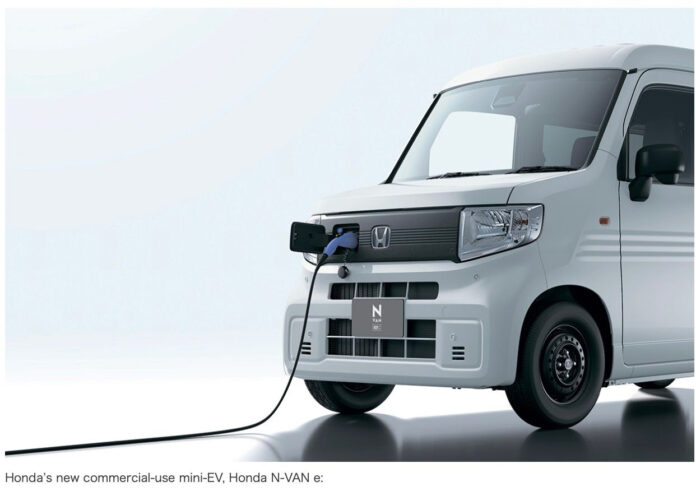
In collaboration with affiliated leasing companies of Honda and MC, ALTNA will begin sales of lease plans, starting with the Honda N-VAN e:, new commercial-use mini-EVs Honda is planning to launch in October 2024. When a vehicle is leased to a customer, ALTNA will retain ownership of the battery and monitor battery usage during the lease period. Continuous monitoring of the battery conditions, including predictions of future battery deterioration, will enhance the reliability of the battery measured by various parameters, including the battery state of health (SOH)*1. Based on such high reliability of batteries, ALTNA will conduct business that utilizes batteries for a long period of time, or for their entire life cycle, from the time of new vehicle sales through the ownership by second and subsequent owners.

After the end of automotive use, batteries will be recovered and utilized for ALTNA’s grid storage battery business (battery repurposing business). ALTNA will set leasing prices based on the assumption that batteries will be utilized for a long period of time, from on-vehicle to stationary applications, which will contribute to a reduction of the financial burden on EV users.

EV lease plans ALTNA will offer in collaboration with the affiliated leasing companies of Honda and MC

1) N-VAN e: Value Plan

A closed-end*2 lease ALTNA will offer to Honda EV users in collaboration with Honda and Honda affiliate companies. By assuming that EV batteries will be used later for its repurposed storage battery business, ALTNA will offer this plan at prices lower than those of similar lease plans currently available in the market. This lease plan will be available exclusively through the Honda online new vehicle store, Honda ON (https://on.honda.co.jp/), from October 10, 2024, simultaneously with the market launch of the N-VAN e: in Japan.

The details of the N-VAN e: Value Plan are available at the following page on the Honda ON website.

URL:https://on.honda.co.jp/nvan-e (Japanese)

2) N-VAN e: Circular Lease Plan

This is a highly economical, closed-end plan that is currently being discussed in collaboration with Mitsubishi Auto Leasing Corporation (MALC). By taking advantage of MALC’s proprietary EV consultation program “EV4CHANGE,” this plan will offer corporate users end-to-end customer support to address challenges associated with the introduction of EVs, from establishing fleet electrification plans to setting up charging infrastructure and optimizing vehicle use.

Please click the link below for more information on the EV4CHANGE program.URL:https://mobitips.jp/service/ev

  1. Battery Repurposing Business

ALTNA will also conduct an electric power business to repurpose end-of-life EV batteries and manage as grid storage batteries. This will provide the supply-demand adjustment capacities to enable greater grid stability and also contribute to widespread utilization of renewable energy. Through its battery leasing business, ALTNA will continuously monitor the use conditions of EV batteries, and then recover end-of-life EV batteries based on data obtained through the long-term monitoring. By fully utilizing such batteries, ALTNA will achieve long-term and stable operation of its grid storage batteries.

Moreover, ALTNA will ensure appropriate recycling of its end-of-life grid storage batteries to realize resource circulation-oriented manufacturing.

  1. Smart Charging*3 Business

ALTNA also will offer EV charging plans that optimize electricity costs for EV users by leveraging advanced energy-control technologies to avoid charging EVs during on-peak hours on the grid. Through the linkage between its energy control system and customers’ EVs, charging will be automatically performed at the time of day when the procurement cost of electricity is lowest according to their vehicle usage schedule. This will eliminate the customer burden of identifying the optimal charging timing on their own and contribute to the reduction of their EV usage cost. In addition, ALTNA’s charging plans will contribute to the increased use of green (renewable) energy by charging EVs during times when there is a surplus of renewable energy on the power grid.

Moreover, ALTNA will proceed with consideration toward offering V2G*4 services with an eye toward the opening up of the electricity market in the future.

Comments by Toshihiro Mibe, Director, President and Representative Executive Officer of Honda:

“With an eye toward the future popularization of EVs, Honda is working toward the establishment of a vertically-integrated EV value chain that includes all aspects of EV business, from the procurement of raw materials to the production of finished EVs, as well as the repurposing and recycling of EV batteries. We are very pleased to establish a new company with MC, which has deep knowledge of electric power business and shares our aspiration to realize a decarbonized society. Starting with N-VAN e:, we will take a proactive approach to establish a sustainable business foundation not only for the sales of EVs as mobility products, but also to create an optimal EV business environment including full utilization of batteries, which we believe will be critical for the popularization of EVs.”

Comments by Katsuya Nakanishi, Representative Director, President and CEO of MC

“We are pleased to be working with Honda, which boasts outstanding technological capabilities and is committed to the realization of resource circulation. With its business model to integrate mobility, energy, services and data, our new joint venture will take on challenges to introduce a new scheme that separates the ownership of the vehicle and battery of a single EV unit. Working toward the realization of a carbon-neutral society through societal implementation of EVs, we will leverage MC’s broad range of industrial contacts and business expertise and continue to work on the establishment of cross-industrial business models.”

Comments by Seiichi Fukui, Representative Director, President and CEO (to be) of ALTNA

“ALTNA will be established with a mission to create solutions that maximize the lifetime value of limited resources and the efficiency of renewable energy utilization in order to enable people and the global environment to coexist for generations to come. Together with various partners, we will provide alternative options for a new future.”

(1) SOH (state of health): One of the parameters that indicate the state of battery deterioration.
(2) Closed-end lease: A type of lease contract in which the leasing company guarantees the residual value at the end of the lease term.
(3) Smart charging system automatically adjusts the timing of EV charging according to electricity supply and demand.*
(4) V2G (Vehicle to Grid): Technology to charge EVs with electricity from the grid as well as to supply electricity stored in EVs to the grid.

News URL: https://www.acnnewswire.com/press-release/english/91306/

URL: https://plus.google.com/110355594819754396833 | Facebook : https://www.facebook.com/HondaJP | Twitter : https://twitter.com/HondaJP | Youtube : https://www.youtube.com/user/HondaJPPR | Linkedin : https://jp.linkedin.com/company/honda

Honda to Begin Sales of New N-VAN e: Commercial-use Mini-EV in Japan

Starting full-fledged EV sales in Japan with popular commercial-use light van model

TOKYO, June 13, 2024 – (JCN Newswire) – Honda Motor Co., Ltd. will begin sales in Japan of a new commercial-use mini-EV (electric vehicle), the N-VAN e:, on October 10, 2024.

N-VAN e: product site: https://www.honda.co.jp/N-VAN-e/ (Japanese)

The N-VAN e: is a commercial-use mini-EV model developed by adding user-friendly features unique only to EVs to the gasoline-powered N-VAN, which has been popular as a versatile vehicle that accommodates a broad range of customer needs for both commercial and recreational uses. While maintaining popular N-VAN features – such as a large cargo space realized by the flat, low floor and high ceiling and a large opening on the passenger side made possible by eliminating the center pillar – the N-VAN e: features added value unique only to EVs, such as a power output function and a quiet cabin.

The N-VAN e: realized both a sufficient practical range and a large cargo space required for commercial use through the adoption of a large-capacity battery, downsizing of the eAxle, and by minimizing the space occupied by components through a centralized layout of high-voltage components. In addition to realizing a range of 245 km*1 (152 miles) on a single charge in WLTC mode, which is sufficient for a delivery service, one of the main commercial uses of EVs, customer convenience was pursued with charging time of approximately 4.5 hours for normal charging (6.0 kW output) *2 and approximately 30 minutes for fast charging (50 kW output) *3.

Moreover, the battery cooling and heating system inhibits battery performance degradation caused by the high or low temperatures, contributing to shorter charging time and longer range, especially during winter.

Type variations

Four types of N-VAN e: are available to meet a wide range of customer needs for both commercial and personal uses.

e: L4
The e: L4 is the standard 4-seater type that can be used for a wide range of commercial and personal purposes. While the battery is mounted under the floor, a cargo space as large as that of gasoline-powered N-VAN was realized. Other features include a 7-inch LCD meter capable of displaying a variety of information and two-tone exterior color variations which broaden the range of choices for customers.

e: FUN
Developed based on the e: L4 type, the e: FUN type features styling that blends in well with customers’ hobbies and leisure activities. The interior is a light, natural beige color, and two-tone exterior color variations are also available for the e: FUN type. In addition to LED headlights, the e: FUN type comes with additional features such as fast charging capability as standard equipment.

e: GT
he e: G type was developed in the pursuit of functionality, exclusively for commercial uses. This type has only one seat, based on an assumption that it will be used by one driver. The passenger side dashboard is shaped in a way that enables long items to fit well. Compared to the gasoline-powered N-VAN, the interior length was increased by 95 mm, and the floor height was lowered by 120 mm*4compared to the four-seater e: L4 and e: FUN types by eliminating the passenger seat. These dimensional changes have enhanced user-friendliness for commercial uses.

e: L2
The e: L2 type features a front/rear tandem configuration of seats on the driver side. The vacant space without seats and the large opening without a pillar on the passenger side highlight the value inherited from the N-VAN, making it easier for users to get in and out of the vehicle and while loading and unloading.

The e: G and e: L2 types are only available for lease sales through the Honda Fleet Sales Division and the Honda ON, Honda’s new vehicle online store. For more information about leasing these models through Honda ON, please access the following URL.

Honda ON “N-VAN e: Value Plan” special website: https://on.honda.co.jp/nvan-e (Japanese)

Safety Performance

Advanced safety and driver-assistive functions are available for all types as standard features5. Moreover, the N-VAN e: will be the first model6 among all commercial-use light van models available in the market to be equipped with side curtain airbags for both the driver and front passenger seats as standard equipment. The N-VAN e: also will be the first model among all mini-vehicle models in Japan to adopt the Post-Collision Braking System, a technology to mitigate secondary damage in the event of a collision.

List of safety functions available for N-VAN e:

e: L4/e: FUN Honda SENSING

  1. Collision Mitigation Braking System (CMBS)
  2. Collision Mitigation Throttle Control*6
  3. Rear Collision Mitigation Throttle Control*6
  4. Pedestrian Collision Mitigation Steering System
  5. Road Departure Mitigation (RDM) System
  6. Lane Keeping Assist System (LKAS)
  7. Adaptive Cruise Control (ACC)
  8. Lead Car Departure Notification System
  9. Traffic Sign Recognition
  10. Auto High Beam Headlights
  11. Parking Sensor System (Front/Rear) *7
  12. Unintended Acceleration Mitigation*8

e: G/e: L2

  1. Collision Mitigation Braking System (CMBS)
  2. Pedestrian Collision Mitigation Steering System
  3. Road Departure Mitigation (RDM) System
  4. Auto High Beam Headlights
  5. Parking Sensor System (Rear)*7

Honda CONNECT

By obtaining an ID for Honda Total Care, Honda’s members-only support service, the customer can use functions to set 1) the departure time for temperature control, 2) optimal timing for charging, 3) the maximum charging level, and 4) the minimum SOC9 required for power output, free of charge10. These functions can be remotely controlled via the Honda Total Care smartphone app. Utilization of these functions contributes to the enhanced comfort of the mobility experience, reducing electricity costs and extending the range.

  • Setting the departure time for temperature control:When the user sets a departure time through the app, the system will ensure a comfortable in-vehicle temperature at the time of departure. In addition, the system controls and optimizes the temperature of the battery according to outside temperature. This function enables the user to start driving with a warmed-up battery even during the winter when the outside temperature is low, thereby contributing to maximizing the range.
  • Setting the optimal timing for charging:The user can set desired times of day to charge their EV battery for each day. This enables the customer to avoid charging the vehicle at times when high (peak-hour) electricity prices are applied.
  • Setting the maximum electric currentBy setting the maximum amount of electric current for EV charging, the user can ensure that EV charging will be done without exceeding the capacity the household/business contracted with the power company.
  • Setting the maximum charging levelThe upper limit of charge level can be set between 80% and 100% according to customer preference. This reduces the battery load and helps inhibit battery performance degradation.
  • Setting the minimum SOC required for power outputThe user can preset the minimum SOC for the system to automatically stop power output when their EV is connected to an AC external power output device such as the Honda Power Supply Connector*11 and outputting electricity to electric appliances for outdoor or leisure activities. This function will prevent overuse of EV electricity for power output.

(1) Range per charge is measured under the specified test conditions. The range may vary significantly depending on the usage environment (weather, traffic congestion, etc.) and driving style (sudden acceleration, use of air conditioning, etc.) of each customer.
WLTC (Worldwide harmonized Light vehicle Test Cycles) mode: Internationally standardized driving mode consisting of city, suburban and highway driving modes, with time allocated according to average use time.
(2) Regular charging: Approximate time it takes to fully charge the battery from the time the low charge warning light comes on.
(3) Fast charging: Approximate time it takes to charge the battery to 80% from the time the low charge warning light comes on. (The charging time may be longer especially in summer and winter).
(4) Honda internal measurement
(5) Honda SENSING is standard equipment on e: L4/e: FUN types. Honda SENSING functions are intended to assist the driver: therefore, there is a limit to the capabilities (e.g. recognition capability and control capability) of individual functions of Honda SENSING. Please do not overestimate the capabilities of each Honda SENSING function and drive safely while paying constant attention to your surroundings. For more information about Honda SENSING, please visit, Honda website: https://global.honda/en/tech/Safety_and_driver-assistive_technologies_Honda_SENSING/
(6) Honda internal research (as of June 2024)
(7) To display on the navigation screen, a compatible navigation system is required.
(8) The factory default setting for the function is off. To turn on this function, it requires a separate setting using special equipment available at Honda dealers. A separate setup fee (dealer option) is required.
(9) State of Charge (SOC)
(10) Telecommunication charges for the device will be incurred while using the app.
(11) Dealer option

For more information, visit https://global.honda/en/newsroom/news/2024/4240613eng-n-van-e.html.

News URL: https://www.acnnewswire.com/press-release/english/91305/

URL: https://plus.google.com/110355594819754396833 | Facebook : https://www.facebook.com/HondaJP | Twitter : https://twitter.com/HondaJP | Youtube : https://www.youtube.com/user/HondaJPPR | Linkedin : https://jp.linkedin.com/company/honda

The Impact of Precision Machining on the Auto Industry

Photo by C Joyful on Unsplash

In recent times, there have been significant advancements in automotive technology, largely driven by precision machining. This innovative technology enables the production of dependable automotive parts, vital for the optimal performance and safety of modern vehicles. Precision machining plays a crucial role in manufacturing components with exact specifications, transforming the way cars are designed, constructed, and serviced. Through the use of advanced methods and materials, precision machining has established benchmarks for effectiveness, longevity, and creativity within the automotive sector. This piece delves into how precision machining is reshaping the landscape by improving vehicle performance, safety features, and cutting-edge innovations.

The Significance of Precision Machining in Automotive Manufacturing

Precision machining has become essential in automobile production by providing the accuracy and uniformity necessary for top-tier vehicles. Its application encompasses various car parts from engine components to safety features—each demanding meticulous attention to detail.

Explanation and Significance

Precision machining entails utilizing computer-controlled machinery to manufacture components with exact measurements. Within the automotive field, where accuracy is paramount, this technology guarantees that parts fit seamlessly together and operate as intended. Whether it’s engine parts or safety mechanisms, precision machining plays a vital role in ensuring the dependability and efficiency of vehicles. Manufacturers can use precision machining to create parts that meet stringent requirements, reducing the chances of defects and enhancing the overall quality of vehicles. Precision machining not only improves the fit and appearance of car components but also plays a crucial role in adhering to regulations and meeting consumer demands. In many cases, engineers reference Geometric Dimensioning and Tolerancing (GD&T) standards such as ASME Y14.5 to ensure machined components meet exact design tolerances. These standards provide a clear framework for defining allowable variations in part geometry, ensuring consistent interchangeability and functionality. By applying GD&T principles, manufacturers can communicate precise design intent across teams, reducing errors and improving overall production efficiency.

Historical Background

The incorporation of precision machining in the automotive sector has undergone significant development over time. Initially used for basic parts, it now plays a vital role in manufacturing intricate components like engine parts, transmission systems, and safety features. The evolution from simple elements to advanced automotive parts showcases the progress in precision machining technology. Important milestones include the introduction of computer numerical control (CNC) machines, which have greatly enhanced accuracy and efficiency in car production. These advancements have set new benchmarks in the industry, resulting in dependable and high-performance vehicles. As technology continues to progress, the significance of precision machining in automotive manufacturing is set to increase.

Benefits of Precision Machining for Automotive Manufacturing

Precision machining offers benefits beyond accuracy in the automotive industry; it also impacts costs, productivity, and overall vehicle quality. Its use at various production stages ensures that manufacturers can meet today’s demanding market standards effectively.

Enhanced Performance

Enhancing the performance of vehicles is greatly influenced by precision machining, which improves the efficiency and power of engine components. For instance, accurately machined engine blocks, pistons, and other crucial parts ensure optimal engine functionality. This precision helps decrease friction and wear, resulting in enhanced fuel efficiency and increased power output. The production of high-performance parts through precision machining leads to more robust engines that align with contemporary performance standards. Furthermore, the capability to fine-tune engine elements enables manufacturers to develop engines that not only perform better but also have a longer lifespan, offering superior value to consumers.

Improved Safety

The significance of precision machining in manufacturing safety components cannot be emphasized enough. From airbags to braking systems, precision machining guarantees that these components meet stringent safety criteria. The precise manufacturing of these parts enhances their reliability, reducing the chances of malfunctions that could cause accidents. Additionally, it bolsters the structural integrity of vehicles, providing better protection in case of collisions. Precision machining plays a critical role in creating safety features that safeguard passengers and boost overall vehicle safety. As safety standards become more stringent, the importance of precision machining in ensuring compliance and safeguarding lives will only increase.

Cost Efficiency and Waste Reduction

Precision machining also delivers significant cost savings and minimizes material wastage in automotive manufacturing. By creating parts with exact measurements, it cuts down on the need for tweaks and fixes. This not only saves money but also speeds up production while promoting material efficiency and sustainability. Manufacturers can reap long-term rewards by opting for precision machining. Additionally, the decrease in waste and boost in efficiency support eco-friendly manufacturing practices, meeting the rising call for sustainable production methods.

Applications of Precision Machining in the Automotive Industry

The application of precision machining in the automotive industry plays a crucial role in enhancing various automotive components. Each component benefits uniquely from this technology, which has transformed the manufacturing processes of automotive parts.

Design and Prototyping

The process of developing a vehicle or part typically starts with design and prototyping. Car manufacturers seek products, for their vehicles so they must first create prototypes before moving to production. Custom CNC machining enables manufacturers to make prototypes that adhere to specifications guaranteeing that the final product functions as intended. This phase is crucial in identifying and addressing issues on leading to time and resource savings. Through testing prototypes in real-world scenarios, manufacturers can refine their designs, for performance and reliability setting the stage for automotive equipment development.

Engine Components

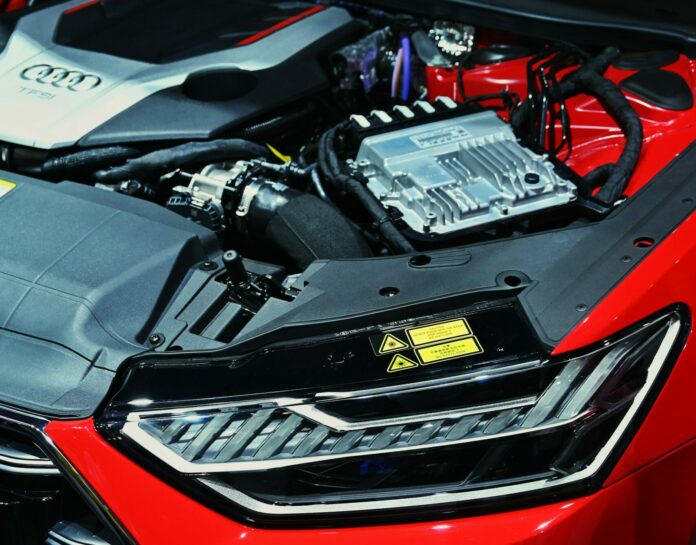
Precision machining is indispensable for crafting high-performance engine parts like engine blocks, pistons, and crankshafts. Through  CNC machining, tailored engine components are created to meet specific performance needs. This precision ensures the perfect fitting of engine parts, minimizing friction and wear. Consequently, engines operate more effectively and have a longer lifespan. The advantages of high-precision engine components are evident in enhanced vehicle performance and fuel efficiency. Moreover, precision machining facilitates the development of innovative engine designs capable of achieving greater power and efficiency to meet the changing demands of the automotive industry.

Transmission and Drivetrain Parts

The significance of precision machining is highlighted in the production of gears, shafts, and other drivetrain elements for smooth vehicle operation. CNC machining ensures these components are manufactured with exact specifications for optimal functionality and durability. Precision-machined transmission and drivetrain parts contribute to a smoother driving experience while improving overall vehicle performance. Precision engineering in these components also guarantees the efficient operation of the transmission system, reducing the likelihood of mechanical issues and prolonging the vehicle’s lifespan. The capability to create highly accurate drivetrain components also empowers manufacturers to enhance the performance and fuel efficiency of transmission systems, leading to more advanced and efficient vehicles.

Body and Chassis Parts

Precision machining plays a vital role in the manufacturing of body panels and frame components. These parts are crucial for maintaining the vehicle’s aerodynamics and structural strength. Through precision machining, body panels are crafted to fit perfectly, reducing air resistance and enhancing fuel economy. Moreover, lightweight yet durable frame components can be produced, improving both vehicle performance and safety. Precision machining enables the production of complex shapes that enhance the appearance and functionality of vehicles overall. By facilitating the creation of high-quality body and frame parts, precision machining contributes to the development of more efficient and aesthetically pleasing vehicles.

Electronic and Sensor Components

In today’s automotive industry, electronic systems and sensors are essential for functionalities such as advanced driver assistance systems (ADAS) and autonomous driving technologies. Precision machining is utilized in manufacturing parts for these systems to ensure their reliability and precision. Components like sensor housings and electronic mounts must meet high precision standards to operate effectively. Precision machining supports the advancement of cutting-edge automotive technologies, promoting safer and more efficient vehicles. The combination of precision-machined parts and electronic systems in the industry leads to the development of advanced technologies that improve safety, performance, and overall driving experience.

Looking ahead, the future of precision machining in automotive manufacturing appears bright thanks to technological advancements. These progressions are set to redefine the landscape of vehicle production, resulting in more streamlined and efficient cars.

Emerging Technologies

Innovations in precision machining, such as 5-axis machining and additive manufacturing, are shaping the automotive industry. These technologies enable the fabrication of components with unprecedented precision. For example, 5-axis machining allows for the creation of shapes previously deemed unachievable. On the other hand, additive manufacturing or 3D printing supplements traditional methods by facilitating rapid prototyping and producing intricate parts with internal structures. These breakthroughs usher in new opportunities for automotive design and production. By harnessing these cutting-edge tools, manufacturers can craft dependable and inventive automotive parts that cater to evolving market needs.

Integration with Other Technologies

Furthermore, integrating precision machining with technologies like robotics and artificial intelligence presents vast possibilities for innovation in automobiles. Robotic-assisted manufacturing processes can enhance precision and efficiency during machining operations. AI has the capability to optimize machining processes, boosting efficiency and cutting down expenses. The incorporation of these technologies holds the potential to bring about significant progress in automotive manufacturing, resulting in more effective, dependable, and inventive vehicles. By embracing these integrated approaches, manufacturers can stay competitive and produce vehicles that meet superior standards in terms of performance, safety, and effectiveness.

Conclusion

Precision machining plays a pivotal role in the realm of automotive manufacturing procedures. Its ability to craft precise and reliable components is revolutionizing the automotive sector. As technology advances further, precision machining will continue to drive innovation within the industry. Through investments in this technology, manufacturers can expect enhancements in vehicle performance, safety, and efficiency. The future of the automotive sector appears promising, with precision machining at the helm of advancements. With sustained investments in precision machining technologies and the integration of cutting-edge manufacturing methods, the automotive industry can reach new heights of quality and originality.

The Role of a Car Mechanic in Preventive Maintenance

Maintaining a vehicle in top condition goes beyond merely addressing issues as they occur. Preventive maintenance is essential for ensuring longevity, safety, and optimal performance. A car mechanic is instrumental in this process, offering the expertise and services necessary to keep vehicles running efficiently. This document explores the multifaceted role of a car mechanic in preventive maintenance, highlighting different aspects of their contributions. By conducting regular inspections and addressing potential problems early, car mechanics like  Toyota Mechanic Gold Coast help to prevent costly repairs and ensure that vehicles remain reliable and safe.

Understanding Preventive Maintenance

Preventive maintenance involves regular inspections and services to prevent potential problems before they become major issues. Unlike reactive maintenance, which addresses problems after they occur, preventive maintenance aims to identify and fix issues early. 

Mechanics are trained to have customers perform a variety range of preventive maintenance tasks, including oil changes, tire rotations, brake inspections, and more. By keeping up with these tasks, car owners can avoid costly repairs and ensure their vehicle remains reliable. Additionally, preventive maintenance contributes to the vehicle’s overall safety and performance, offering drivers peace of mind.

Regular Oil Changes

Oil changes are a fundamental aspect of preventive maintenance for vehicles. Fresh oil is crucial for ensuring that the engine runs smoothly by reducing friction and preventing overheating. Mechanics generally recommend oil changes every 3,000 to 5,000 miles, depending on the vehicle’s make and model. 

During an oil change, the oil filter is also inspected and replaced if necessary to prevent contaminants from circulating through the engine. This practice helps to avoid potential engine damage over time. Consistent oil changes not only extend and repair the engine’s lifespan but also enhance fuel efficiency.

Tire Maintenance and Rotation

Tire maintenance is another critical aspect of preventive maintenance. Mechanics check tire pressure, tread depth, and overall condition during routine inspections. Properly inflated tires ensure better fuel economy and handling, while adequate tread depth provides necessary traction. 

Tire rotation is equally important; by rotating tires regularly, usually every 6,000 to 8,000 miles, mechanics ensure even wear. This extends the life of the tires and improves vehicle performance. Mechanics also check for alignment issues, which can cause uneven wear and affect handling.

Brake System Inspections

The brake system is vital for ensuring vehicle safety. Preventive maintenance includes regular brake inspections to verify that all components function correctly. During these inspections, mechanics carefully examine the brake pads, rotors, and fluid levels. Worn brake pads can result in decreased braking efficiency and longer stopping distances. 

Mechanics identify and replace worn components early to maintain optimal braking performance. This proactive approach helps prevent accidents and ensures the vehicle stops safely. Overall, regular brake maintenance is crucial for the vehicle’s safety and reliability.

Fluid Checks and Replacements

Vehicles rely on various fluids to operate smoothly. These include coolant, transmission fluid, brake fluid, and power steering fluid. Mechanics check these fluids during preventive maintenance to ensure they are at appropriate levels and free of contaminants.

Replacing fluids at recommended intervals prevents system failures and maintains vehicle performance. For example, fresh coolant prevents engine overheating, while clean transmission fluid ensures smooth gear shifts.

Battery Maintenance

A well-maintained battery is essential for reliable vehicle operation. During preventive maintenance, mechanics check the battery’s condition, including its charge and terminals. They also examine the charging system to ensure the battery receives adequate power from the alternator. 

Regular testing, servicing and inspections help identify potential issues before they lead to battery failure. Replacing an aging battery before it fails can prevent unexpected breakdowns and the inconvenience that comes with them. Moreover, mechanics can clean corroded terminals to ensure a good connection, which helps extend the battery’s lifespan. Proper battery maintenance and servicing is crucial for ensuring the consistent performance and reliability of the vehicle.

Air Filter Replacement

Air filters are essential for maintaining engine performance and fuel efficiency. They act as a barrier, preventing dirt and debris from entering the engine and causing potential damage. During routine maintenance, mechanics inspect air filters and replace them when necessary.

A clean air filter increases airflow to the engine, enhancing performance and fuel economy. By ensuring regular air filter replacement, mechanics help the car service engine run more efficiently. This practice not only boosts your car service part’s car service part performance but also reduces the risk of costly repairs. Overall, air filter maintenance is a simple yet critical aspect of preventive vehicle care.

Spark Plug and Ignition System Checks

Spark plugs are essential for engine ignition, making them a critical component of any vehicle. Over time, these plugs can become worn or fouled, leading to misfires and reduced performance. During preventive maintenance, mechanics inspect spark plugs and replace them as necessary to ensure optimal engine function. 

Checking the ignition system as part of this maintenance ensures that the vehicle starts reliably and runs smoothly. Properly functioning spark plugs and ignition components not only boost the car’s performance, but also contribute to better fuel economy. This, in turn, leads to lower emissions, making the vehicle more environmentally friendly. Regular inspection and the complete replacement of spark plugs are thus vital for maintaining the car services overall engine health and efficiency.

Timing Belt and Chain Inspections

The timing belt or chain synchronises the engine’s camshaft and crankshaft, ensuring that the valves open and close at the correct times. If this component fails, it can lead to significant engine damage. During preventive maintenance, mechanics check the timing belt or chain to assess its condition. 

They replace or repair it as per the manufacturer or a qualified mechanic*’s recommendations to avoid potential issues. Regular inspections and timely replacements of the timing belt or chain are crucial. This practice helps prevent catastrophic engine failures, ensuring the vehicle remains reliable. Proper timing belt or chain maintenance is an essential aspect of overall engine care.

The Benefits of Preventive Maintenance

Preventive maintenance offers numerous benefits. It extends the vehicle’s life, improves safety, and enhances performance. By addressing minor issues before they become major problems, car owners can avoid costly repairs and reduce the risk of breakdowns. 

Mechanics play a vital role in this process, providing customers with free access to the expertise and services needed to keep vehicles in optimal condition. Regular visits to a trusted, local mechanic, for preventive maintenance ensure that a vehicle remains dependable and safe to drive. This proactive approach to service saves money in the long run and provides drivers peace of mind. Overall, preventive maintenance is an investment in the reliability and longevity of any vehicle.

Conclusion

The role of a car mechanic in preventive maintenance and service cannot be overstated. From routine oil changes to complex timing belt repairs and inspections, mechanics provide essential services that keep vehicles running smoothly. By adhering to a preventive maintenance and service schedule, car owners can enjoy the benefits and convenience of a reliable, safe, and efficient vehicle for years to come.