Home Blog Page 33

Why Vehicle Aerodynamics Matter for Speed and Performance

Engine power often receives excessive credit for high speed. True velocity demands efficient air displacement. A streamlined body reduces resistance more effectively than adding raw horsepower. Engineers prioritize airflow management over raw output. Drag increases proportionally to the square of speed, meaning energy requirements escalate rapidly. 

Managing these forces defines modern vehicle performance. Success stems from minimizing turbulence around the chassis. Surface irregularities disrupt smooth flow. Engineers manipulate air to maintain attachment across the body panels. Achieving this balance defines the difference between a high-performance machine and a mere passenger vehicle.

How To Manage Air Underneath the Chassis?

The underside of the vehicle presents a massive opportunity for drag reduction. Air moving beneath the car interacts with suspension components, axles, and frame rails. These parts create significant turbulence and lift. 

High-performance vehicles employ strategies to clean this airflow, ensuring stability at high velocities. Controlling this area often yields greater performance gains than modifying the upper bodywork. The resulting stability allows for higher cornering speeds and improved straight-line traction.

Diffuser Integration

Rear diffusers accelerate underbody airflow, creating low pressure that increases downforce. By optimizing angle and length, you enhance track grip and handling without adding significant drag.

Flat Floor Implementation

A flat floor prevents air from getting trapped in the engine bay and suspension geometry. This continuous surface allows air to move from the front splitter to the rear diffuser without interruption. 

Covering the mechanical components creates a smooth path for the airflow. This simple addition removes the drag associated with the underbody clutter.

What Is The Physics of Drag and Downforce?

Aerodynamic efficiency depends on the drag coefficient. Engineers utilize various metrics to determine airflow resistance. When observing a vehicle’s silhouette, professionals often assess clearance variables. Designers often use an industry-standard height comparison tool like easyheightcomparison.com to compare heights by lining up two vehicle silhouettes side by side and quickly seeing how much lower one stance sits relative to the other. This helps engineers compare the heights of different configurations to minimize wake turbulence. 

As the vehicle encounters air, it creates a pressure differential. High pressure forms at the front, while low pressure develops in the rear. This disparity pulls the object backward. Minimizing the frontal area reduces the total force against the forward motion. High-performance design requires precise management of this phenomenon.

Is Maximum Horsepower A Myth?

While increasing horsepower appears to be the primary means of achieving higher top speeds, aerodynamic drag increases with the square of velocity, yielding diminishing returns on raw power output. Extra power also adds fuel and cooling mass, demanding still more power. 

Real gains come from managing resistive forces, not raw output, prioritizing the power-to-drag ratio over peak horsepower. Reducing the drag coefficient lets lower power achieve higher velocities.

What Are Surface Geometry and Boundary Layers?

The interaction between the air and the vehicle surface dictates efficiency. Air molecules adhere to the surface, forming a thin layer of slower-moving gas. This boundary layer determines the friction drag. Controlling the behavior of this layer prevents flow separation. 

Separation causes the air to detach from the surface, resulting in significant pressure drag. Engineers design smooth transitions to keep the flow attached for as long as possible. Complex curves require careful calculation to avoid unexpected turbulence.

Laminar Flow Mechanics

Laminar flow minimizes skin-friction drag by maintaining smooth, parallel layers of air. Maintaining this state requires high-precision surfaces, as even minor imperfections cause a transition to less efficient turbulence.

Turbulent Flow Transitions

Turbulent flow energizes the boundary layer, allowing it to adhere to steeper curves and prevent detrimental flow separation. Strategically inducing this mixing avoids larger wake structures. According to research from NASA, understanding these transition points between subsonic, transonic, and supersonic flow remains essential for optimizing wing and body shapes across all speed ranges.

How Is Thermal Efficiency Achieved Through Airflow?

Engineers optimize the trade-off between cooling and aerodynamics by minimizing intake size while maximizing thermal efficiency. Techniques like active grille shutters and precise internal ducting reduce drag-inducing airflow, while strategic exits manage under-hood pressure.
car

How Is CFD Used in Modern Applications?

Computational Fluid Dynamics (CFD) has replaced trial-and-error, allowing engineers to visualize real-time airflow. By solving the Navier-Stokes equations, these digital models map precise pressure distributions, identifying invisible flow separation zones that traditional wind tunnels often miss.

This data-driven approach enables rapid, precise iteration of vehicle geometry. By refining shapes based on measurable performance metrics, engineers eliminate guesswork, ensuring every design choice maximizes aerodynamic efficiency before physical production begins.

Questions About Vehicle Aerodynamics

How does adding a spoiler affect total drag?

Spoilers intentionally disrupt the airflow at the rear to create separation. This separation reduces lift but typically increases total drag. Engineers tune the angle of attack to find a balance between necessary downforce and acceptable drag penalties, often utilizing Gurney flaps for fine-tuned adjustments.

Does increasing wheel size negatively impact aerodynamics?

Larger wheels increase the frontal area and disrupt the airflow around the wheel wells. They also increase the rotating mass, which adds to the power requirement for acceleration. Manufacturers minimize these effects by using specialized wheel covers or airflow-diverting spats to smooth the air transition around the tires.

Why is air density a factor in aerodynamic performance?

Air density changes with altitude and temperature. High-density air provides more resistance to the vehicle, requiring more power to maintain speed. Conversely, lower air density at higher altitudes reduces drag, allowing for higher top speeds despite the reduction in oxygen available for engine combustion and power generation.

How Three Insurance Tiers Work in a Melville Rideshare Accident

An Uber driver looking at a phone screen rear-ends an SUV on Route 110 in Melville. The 45-mile-per-hour crash breaks a passenger’s wrist, sending people to Plainview Hospital. You’re left with painful injuries, massive medical bills, and missed paychecks because of a distracted driver. This confusion is exactly when you call a rideshare accident lawyer in Melville.

The App Phase Changes Your Insurance Coverage

Uber and Lyft do not use one simple insurance policy for every crash. Instead, the companies divide their coverage into three distinct tiers based entirely on what the driver was doing at that exact second. The amount of money available for your medical treatments depends on the specific app phase.

Corporate defense teams look at data logs to see if the driver had the app turned off, was waiting for a fare, or was actively transporting a passenger. Each step alters the legal path forward.

  • App is turned off – The driver uses their personal auto policy, which usually carries standard New York State minimum limits.
  • App is open waiting for a match – The rideshare company provides low-level backup insurance. This policy covers up to 50,000 dollars per person for bodily injuries and a maximum of 100,000 dollars total per crash.
  • Active trip – The corporate policy kicks in completely. This tier brings a massive 1 million dollar liability coverage policy into play.

What Happens When You Are a Passenger or Another Driver

Your role in the accident changes how a rideshare accident attorney in Melville approaches your claim. If you sit in the back seat as a paying passenger during an active ride, the 1 million dollar policy covers your losses from the very first dollar. This rule protects you whether your driver caused the crash or another motorist hit your vehicle.

The rules change slightly if you are driving your own car and a rideshare vehicle strikes you. You must prove the rideshare driver was actively matched with a passenger or on their way to a pickup to access that large 1 million dollar policy.

  • The passenger view – You enjoy the highest level of protection. The app policy covers you from the moment you close the car door until you step out at your destination.
  • The other motorist’s view – You must track the driver’s phone status. If the driver was just cruising down Walt Whitman Road with the app closed, you must sue their private personal insurance.

Time runs out on your case much faster than most people expect. The state strictly limits your window to take the driver or the corporate tech company to court. Under New York Civil Practice Law and Rules Section 214, you have exactly three years from the date of the crash to file a personal injury lawsuit.

Three years sounds like plenty of time, but it goes by fast. Digital proof disappears quickly. Uber and Lyft delete their GPS tracking records after just a few weeks. People who saw the crash near the Melville office buildings might move away or forget who had the green light. On top of that, insurance companies will deliberately delay talks so you run out of time. If that clock hits zero, a judge will dismiss your case, and you won’t get a dime.

Secure Your Physical Recovery and Protect Your Income

Getting hurt in a rideshare vehicle leaves you facing stubborn corporate lawyers who want to protect their bottom lines. They will try to blame your private insurance or claim the driver was not actively working during the crash. You do not have to fight these giant tech companies by yourself.

A lawyer will request the cellular data records, file the necessary paperwork within the state deadlines, and fight to get your medical bills paid. Contact a rideshare attorney today to set up a free meeting to discuss your path forward.

NASCAR vs Formula 1: Which Offers the Best Betting Opportunities?

Photo by Wolfgang Vrede on Pexels

As racing series and events continue to attract global audiences, motorsport betting communities have become increasingly popular. If you are a fan of NASCAR’s high-speed and close-quarters thrills or Formula 1’s precision, there is a plethora of options to choose from when it comes to placing bets. High-quality betting sites offer an extensive range of wagers and options when it comes to both NASCAR and Formula 1, but understanding the slight differences could change which championship you prefer betting on. Each has its own strengths and weaknesses, and taking the time to compare each series can offer you a better perspective on what to do.

The Main Differences

While both Formula 1 and NASCAR are considered premier forms of motorsport, they offer vastly different racing conditions. They both have contrasting styles that affect betting opportunities differently.

Formula 1 focuses on a comparatively small range of teams and drivers who compete on circuits and street tracks around the globe. Each team prioritizes cohesion, engineering, and race strategies, often in a very predictable manner. This predictability results in frequent front runners throughout the series.

Inversely, NASCAR emphasizes a much larger range of teams and drivers, who race on tracks that typically favor speed over cornering. While team cohesion and engineering are also important in NASCAR, the races themselves are a bit more unpredictable with frequent lead changes and caution periods.

Formula 1: Predictability

If you’re a bettor who enjoys detailed research alongside data analysis, Formula 1’s environment is more suited for it. Race weekends are extremely structured in that you can gather valuable information long before placing any bets. Some of the factors that influence Formula 1 betting are:

  • Current driver performance throughout the current season
  • Pole position and team’s track history
  • Pit strategy
  • Weather forecasts

Due to the more predictable nature of Formula 1, such as top teams frequently appearing at the top, Race Winner bets typically offer shorter odds. The value in Formula 1 comes from betting on podium finishes, lap times, and qualifying performance.

NASCAR: Unpredictability

NASCAR is much more unpredictable, which translates into larger betting odds. NASCAR has a much larger field and more variables that can affect race outcomes. This means that favorites are less likely to dominate, and upsets are commonplace.

Caution flags, pit strategy, drafting, mechanical issues, race restarts, and collisions can drastically change the race outcome in seconds. For bettors, this means that underdogs can overperform and top dogs can underperform at a race at a moment’s notice.

Much like Formula 1, however, it’s important to pay attention to drivers’ and teams’ track history as well as current season performance to get a better grasp of potential outcomes.

Variety of Bets

Ultimately, both NASCAR and Formula 1 are motorsports, and they share many betting markets. Common motorsport betting options include:

  • Race Winner
  • Pole Position
  • Fastest Lap
  • Current Stage Winners (primarily NASCAR)
  • Championship
  • Head-to-Head (driver vs driver)
  • Podium
  • Driver finishes in top 5 or top 10

Typically, NASCAR offers more opportunities for bets with huge upside, thanks to its much wider range of races and race structure. Formula 1 rewards more informed betting strategies because it can be analyzed much more easily.

So, Which is Better?

Well, in all truth, it’s complicated and depends on a number of factors, primarily personal preference. Formula 1 is more suited for individuals who value consistency and predictability. NASCAR is preferable to those who invest in underdogs or want to take advantage of higher payouts.

The bottom line is that both championships offer engaging betting experiences, each with its own strengths. You may find that taking part in both gives you the best of both worlds, or simply trying out new bets on an unfamiliar championship can provide its own unique experience. Discovering what you like most is the best way to enjoy the racing experience while making informed wagering decisions throughout the season.

Arrow McLaren sets star-studded driver lineup for 2027 IndyCar season

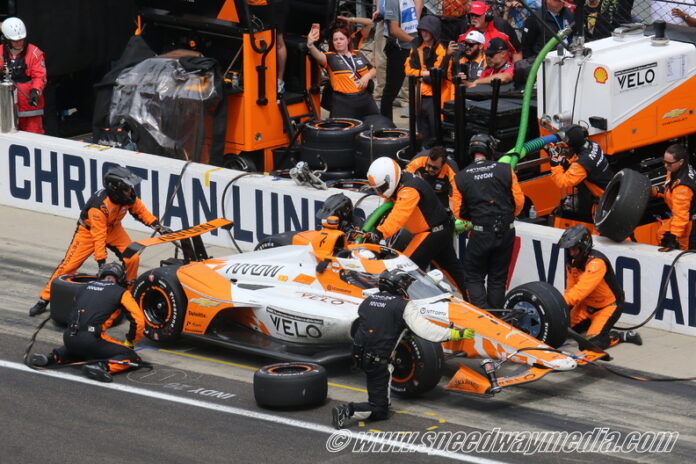
Photo by Simon Scoggins for SpeedwayMedia.com.

Arrow McLaren will usher in a new phase of NTT INDYCAR SERIES competition with a star-studded driver lineup that features two big additions for the 2027 season.

Scott Dixon, a six-time IndyCar Series champion, and Felix Rosenqvist, this year’s 110th Indianapolis 500 champion, join the organization on multiyear deals. Both will compete alongside Pato O’Ward as full-time competitors for next season. In addition, Ryan Hunter-Reay, the 2014 Indianapolis 500 champion, will pilot a fourth Arrow McLaren entry in a one-off event, that being the 111th running of the Indianapolis 500 throughout the Month of May in 2027 for a second consecutive year.

The news comes as Arrow McLaren is in its seventh season under its current title in IndyCar competition. It also comes as the organization is in its fifth consecutive year of fielding three full-time entries that are currently being piloted by Pato O’Ward (No. 5), Nolan Siegel (No. 6) and Christian Lundgaard (No. 7). O’Ward, who is locked in a multiyear deal with McLaren, is coming off his first victory of 2026 this past weekend at Mid-Ohio Sports Car Course and is currently ranked in fifth place in the standings. Lundgaard, who is in his second year driving for Arrow McLaren, has notched a pair of road-course victories (Indianapolis Motor Speedway Road Course in May and Road America in June) and is ranked in third place in the standings. Meanwhile, Siegel is ranked in 20th place in the standings and has finished as high as 10th place twice through 11-scheduled events.

Arrow McLaren’s addition of Dixon and Rosenqvist means that both Lundgaard and Siegel will not be returning to the organization, as both are seeking rides for the 2027 season. Lundgaard was announced in July 2024 to drive for the organization, starting in 2025, while Siegel first joined the organization in mid-June 2024, which carried forth to a full-time gig in 2025.

Scott Dixon’s move to Arrow McLaren in 2027 marks an end of an era towards his illustrious career driving for Chip Ganassi Racing (CGR), in which the organization confirmed Dixon’s departure at this season’s end four days ago. The Brisbane, Queensland, Australia legend first joined CGR midway through 2002. As a Ganassi competitor, he netted the series’ second-most IndyCar championships all-time at six and 58 of his 59 career victories, including the 2008 Indianapolis 500. Currently, Dixon also holds the most IndyCar starts all-time at 430 and is ranked in second place on the IndyCar all-time wins list behind A.J. Foyt, the latter of whom holds 67 victories.

Next season, Dixon will pilot a Chevrolet-powered entry in IndyCar competition for the first time since 2016. He will also reunite with Tony Kanaan, Arrow McLaren’s team principal, who was Dixon’s teammate at CGR from 2014 to 2016 and during his one-off Indianapolis 500 starts in 2021 and 2022. With the excitement of etching a new chapter to his illustrious racing career, Dixon also strives to add his competitive contributions towards an illustrious motorsports name etched by fellow New Zealander and the late founder of McLaren Racing, Bruce McLaren.

“Joining Arrow McLaren in 2027 is an exciting next step in my career,” Dixon said. “It was a big decision for myself, for my family, and I’m looking forward to contributing to what the team, Zak and Tony are building there. As a New Zealander, being part of Bruce McLaren’s legacy will be special; his spirit and grit are still very much rooted in that team, and I’m excited to carry that on.”

Compared to Dixon, Felix Rosenqvist is no stranger to Arrow McLaren as he reunites with the organization he once competed with for three seasons. The 34-year-old Rosenqvist from Värnamo, Sweden, first joined McLaren in 2021 after spending the previous two seasons driving for Chip Ganassi Racing. Through three seasons that lasted through 2023, he recorded four poles and three podiums, and finished as high as eighth in the 2022 standings before he transitioned to his current team, Meyer Shank Racing, at the start of the 2024 season.

This past May, Rosenqvist edged David Malukas during a one-lap shootout by 0.0233 seconds to win the 110th running of the Indianapolis 500 at Indianapolis Motor Speedway. In doing so, the former set the closest margin of victory in the history of the Greatest Spectacle in Racing. He also became the 77th competitor to win the Indy 500, he delivered both the second ‘500’ and IndyCar victory overall for Meyer Shank Racing, and he notched his first IndyCar victory since Road America in July 2020.

Rosenqvist’s departure from Meyer Shank Racing was revealed on June 24. The organization seeks his replacement to compete alongside Rosenqvist’s current teammate, Marcus Armstrong. Rosenqvist’s reunion with Arrow McLaren reunites him with O’Ward, Dixon and Kanaan, the trio of whom were Rosenqvist’s teammates during his time at McLaren and Ganassi, respectively, as he strives to utilize his recent on-track competitiveness and success with Meyer Shank Racing towards his second stint with McLaren.

“I’m excited to return to Arrow McLaren next season and reunite with Pato, of course, and also Tony, Zak and the crew and engineers I worked with previously,” Rosenqvist said. “There are a lot of familiar faces, and we’ve got an incredible lineup with Scott joining and Ryan returning for the 500. I think our collective experience will be a huge benefit. I’ve still got work to do to finish this season strong, but I’m looking forward to what’s to come at Arrow McLaren.”

Ryan Hunter-Reay was announced to pilot a fourth Arrow McLaren entry for this year’s Indianapolis 500 this past November. During his 18th Indy 500 start, he was eliminated in an early accident with Katherine Legge. Nevertheless, he was named Arrow McLaren’s sporting director on June 6. As he continues to embrace his role behind the scenes, he also sets his sights on achieving redemption in his one-off event as a competitor for the 2027 Indy 500 event.

“I have unfinished business with the 500, and so does this team,” Hunter-Reay said. “Our focus is on Indy; learn from the past, and our number one goal is to win the Indy 500. We have ample amount of time to be fully prepared in working toward a big month of May in 2027 racing alongside Pato, Scott and Felix. The four of us certainly know our way around the Speedway. In the meantime, working with the team full time as Sporting Director offers a unique opportunity to have a direct impact on our ambitious development plans for the 2027 season, the Indy 500 and beyond.”

Arrow McLaren’s 2027 IndyCar Series driver lineup excites McLaren Racing’s CEO, Zak Brown, and team principal, Tony Kanaan, as they strive to utilize each competitors’ expertise, racing craft and success towards achieving on-track successes for the McLaren organization for next season and beyond. In addition, they declared their intentions to support current competitors, Christian Lundgaard and Nolan Siegel, prior to the duo’s departure following the 2026 season.

“Our IndyCar team has shown fantastic momentum, and this lineup of Pato, Scott, Felix and Ryan will strengthen every aspect of our program,” Brown said. “We’ve got our eyes firmly set on the Championship as well as winning the Indianapolis 500 to secure the Triple Crown in the Papaya era. These four drivers bring a wealth of experience as well as great chemistry and will no doubt have a positive impact across our entire team. Christian’s and Nolan’s contributions have helped shape the progress we’re building on today, and I appreciate the energy and drive they have brought to the team since they joined.”

“It’s never an easy decision, but when you have the opportunity to bring drivers of this caliber into your team, you take it seriously,” Kanaan said. “Scott’s accomplishments speak for themselves, Felix is this year’s 500 winner and consistently fast and competitive, and Ryan has the experience and the capability to win the 500 again, without a doubt. Add that talent to what we have with Pato, who’s knocking on the door of his own 500 win, and we’re the threat we’ve been building up to be in the championship and the 500. We’ll keep our focus on Christian and Pato’s championship fight and Nolan’s work toward top-ten finishes for the remainder of the season. Christian and Nolan have been awesome teammates, and they’ve given a lot to help us build up this team the past two years.”

With plans for the 2027 season set, the 2026 NTT INDYCAR Series season for Arrow McLaren resumes on July 19 at Nashville Superspeedway in Lebanon, Tennessee, for the Borchetta Borubon Music City Grand Prix. The event’s broadcast time is slated to commence at 5:30 p.m. ET on FOX.

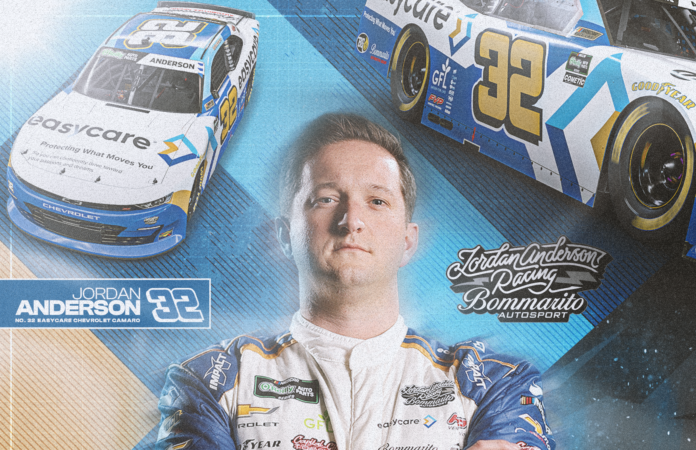
Jordan Anderson to Drive No. 32 EasyCare Chevrolet at Atlanta Motor Speedway

Statesville, NC. (July 6, 2026) – Jordan Anderson Racing Bommarito Autosport announced today that team co-owner, Jordan Anderson, will be piloting the No. 32 EasyCare Chevrolet in the NASCAR O’Reilly Auto Parts Series race this weekend at Atlanta Motor Speedway. This marks Anderson’s return to the series after placing fourth in the season opener at Daytona International Speedway. The Forest Acres, South Carolina native has five career top five finishes on superspeedways in his career and aims to add another to his resume.

“Definitely looking forward to getting back behind the wheel at Atlanta this weekend.” said Anderson. “It’s going to be an exciting race. Hopefully we can keep the momentum that we had from Daytona with our top five run there. It’s going to be a bit of a challenge with no practice and going straight to qualifying. I know the first stage will be spent getting back adjusted to being behind the wheel and getting the car where we want it. The team has been working really hard these past couple of weeks, so I feel like our balance will be very good there with this style of track. Thanks to all of our partners for helping to make this happen.”

About Jordan Anderson Racing Bommarito Autosport

Jordan Anderson Racing Bommarito Autosport was built from the ground up, fueled by passion, persistence, and a bold vision for what an independent NASCAR team could become. Founded by driver and owner Jordan Anderson, the organization has grown from a grassroots operation hauling a single truck across the country into a competitive multi-car NASCAR O’Reilly Auto Parts Series team through a pivotal partnership with St. Louis automotive dealer John Bommarito. Along the way, the team has earned wins, poles, and a reputation for grit, growth, and opportunity within the NASCAR garage. Today, Jordan Anderson Racing Bommarito Autosport is investing in talent, innovation, and culture to challenge the status quo and build a new kind of racing legacy.

Get your Jordan Anderson Racing Bommarito AutoSport merchandise at the all new official team store! Visit jordanandersonracing.com to place your order today!

What Comes Around, Goes Around at EchoPark Speedway

Despite its Challenges, EchoPark is Always Circled on Cody Ware’s Calendar

MOORESVILLE, N.C. (July 6, 2026) – An echo is the repetition of audio caused by sound waves bouncing off a surface and returning to the listener. At EchoPark Speedway, however, it’s the reverberation of cars bouncing off walls and each other that often sends them back to the garage.

It’s an apt comparison as the 1.54-mile oval located just south of Atlanta in the rural town of Hampton, Georgia, averages 9.4 caution periods and 57 caution laps per race. In fact, in the last two races at EchoPark Speedway, high-water marks have been established with 10 caution periods apiece and a significant jump in caution laps. Last July’s Quaker State 400 totaled 68 caution laps and this year’s Autotrader 400 in February totaled 67 caution laps.

The attrition rate is high due to the layout of EchoPark Speedway and its style of racing.

The track features corners banked at 28 degrees and a relatively narrow, 40-foot-wide racing surface. Drivers can go wide open in qualifying where it’s just them on the track in a race against the clock, but on Sunday when all 38 cars are on track at the same time, drivers have to work the throttle more, as the pack seemingly becomes a living, breathing organism, expanding and contracting. More often than not, this ebb and flow catches drivers out and, in turn, multiple drivers get caught up.

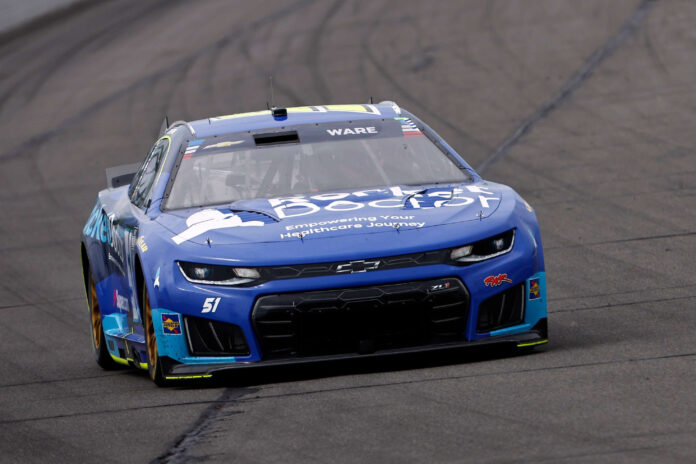
“Superspeedway racing is always a game of mental chess. It tests your reaction times, how you process information, how well you make decisions in the heat of the moment, and it all comes with a healthy dose of stress, but the stress is amped up to a hundred at Atlanta,” said Cody Ware, driver of the No. 51 Rocket Doctor Chevrolet for Rick Ware Racing.

“The time you have to make decisions is pretty much zero. You’re relying on instincts and your spotter. To be able to run well and have a good finish at Atlanta is a testament to your subconscious. Reaction time, judgment, decision-making – it all gets pushed to its absolute limit at Atlanta.”

Drivers typically run with a handling package that frees up their racecar. It enhances speed, but also puts drivers on a knife edge of control.

“You’re always freer than you really want to be, but you really have to be with the way the aero works,” Ware said. “Between the draft and the dirty air and drag that comes with it, you’ve got to have a free racecar to keep going wide open, or almost wide open. It puts you on a knife’s edge, but you make a lot of speed that way. You find a way of getting comfortable being uncomfortable at Atlanta.”

Exacerbating the style of racing featured at EchoPark Speedway is its tight confines. At a mile-and-a-half, the oval is certainly bigger than the kind of half-mile short tracks typically associated with tight confines, but when turning laps at nearly 180 mph, closing rates are quicker and sightlines are diminished. It’s the same style of racing seen at Daytona (Fla.) International Speedway and Talladega (Ala.) Superspeedway, but without Daytona’s extra 1.5 miles or Talladega’s additional 1.66 miles.

“At Daytona and Talladega when we’re in the middle of the corner, the whole track is wide, and when you’re in the banking, you can see a good bit through the corner. Even when you’re in the draft, even when someone’s bumper is right in your windshield, you can still see pretty well,” Ware said.

“But at Atlanta, the tight radius of the corners means you can only see three or four car lengths ahead. So, all the information about what’s happening way ahead of you needs to be portrayed to you really well, precisely and quickly by your spotter.

“You’ve got to have a good, close relationship with your spotter. Brent Wentz, my spotter, knows what I need to hear and he delivers what I need to know quickly and efficiently. It’s important, because I need to digest what he’s telling me and make judgments based off something I may not even see yet. That does happen to an extent at Daytona and Talladega, but nothing like what it is at Atlanta.”

This makes competing at EchoPark Speedway a taxing experience, both physically and mentally.

“One of the biggest things is, honestly, just remembering to breathe,” Ware said. “You feel like you’re on a qualifying lap every lap, and so the G-forces just push you down into the seat. And with the downforce, steering feels a little bit heavier, so your forearms get more of a workout at Atlanta.

“Keeping yourself loose, remembering to hydrate, staying calm – all basic things – but at Atlanta, they’re massively important. When you keep your mind fresh, you keep your body fresh, all the way through to the finish.”

Even with these challenges, EchoPark Speedway is a venue that’s always circled on Ware’s calendar.

“It’s definitely a driver’s track, and superspeedways have been good to us over the last few years,” Ware said. “It’s in the driver’s hands to try to make it through all the wrecks, be there at the end and extract the best finish possible.”

Ware’s race to the finish begins Saturday at 4:30 p.m. EDT with qualifying. That will determine his starting spot in Sunday’s Quaker State 400. The 260-lap race goes green at 7 p.m. with live coverage on TNT and SiriusXM NASCAR Radio.

About Rick Ware Racing:

Rick Ware has been a motorsports mainstay for more than 40 years. It began at age 6 when the third-generation racer began his driving career and has since spanned four wheels and two wheels on both asphalt and dirt. Competing in the SCCA Trans Am Series and other road-racing divisions led Ware to NASCAR in the early 1980s, where he finished third in his NASCAR debut – the 1983 Warner W. Hodgdon 300 NASCAR Grand American race at Riverside (Calif.) International Raceway. In 1995, Rick Ware Racing was formed, and with wife Lisa by his side, Ware transitioned out of the driver’s seat and into fulltime team ownership. He has since built his eponymous organization into an entity that competes full-time in the elite NASCAR Cup Series while simultaneously campaigning winning teams in the Top Fuel class of the NHRA Mission Foods Drag Racing Series, Progressive American Flat Track (AFT), FIM World Supercross Championship (WSX) and zMAX CARS Tour.

Eight drivers racing to keep $1 million dreams alive at EchoPark Speedway

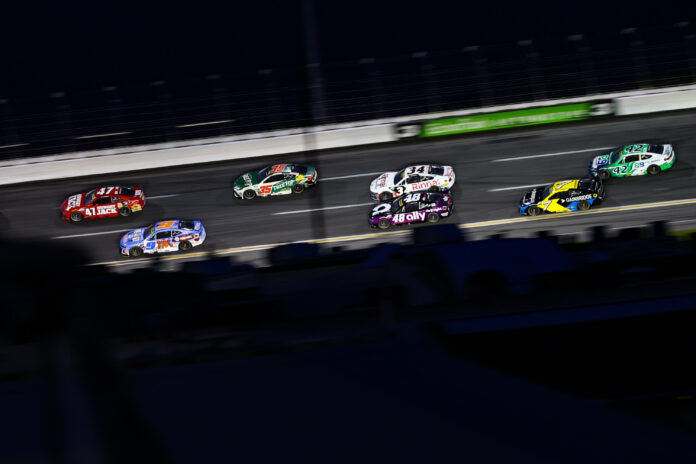
June 28, 2025: Quaker State 400 at EchoPark Speedway in Hampton, Georgia. (HHP/Blake Harris)

HAMPTON, Ga. (July 6, 2026) – NASCAR’s biggest stars race into EchoPark Speedway this weekend hoping to take home the Quaker State 400 Available at Walmart trophy. Eight drivers, however, also enter the night hoping to keep $1 million ambitions alive.

After the opening rounds at Sonoma and Chicagoland, the field competing in NASCAR’s In-Season Tournament has been narrowed down from 32 drivers to just eight entering the Atlanta’s Night Race weekend. These drivers are paired in four head-to-head matchups; whoever finishes best at EchoPark Speedway will advance and be among four drivers in contention for the $1 million prize next weekend — the losers will be eliminated.

Here is a breakdown of the four heads-up matchups to watch this weekend at EchoPark Speedway:

2 seed Denny Hamlin vs. 10 seed Christopher Bell

NASCAR Cup Series points leader Denny Hamlin is matched up against his Joe Gibbs Racing teammate Christopher Bell this weekend. Hamlin enters Atlanta’s Night Race with four race victories already in the 2026 campaign. Bell, who has finished runner-up four times this season, is still seeking his first trip to Victory Lane.

Both drivers have one career victory at EchoPark Speedway; however, Hamlin’s win came on the previous configuration of the speedway back in 2012. Since the speedway was reconfigured ahead of the 2022 season, Hamlin has no top-five finishes in nine starts. In that same period, Bell has three top-five results on the 28-degree high banks, including his victory in February 2025.

In the spring race at Atlanta, Hamlin came home 13th while an overtime crash relegated Bell to a 21st-place finish.

3 seed Ryan Blaney vs. 11 seed William Byron

Phoenix winner Ryan Blaney takes on William Byron, one of three drivers to win multiple times on the revamped EchoPark Speedway since 2022. Blaney’s 2026 season so far has been defined by consistency, with 14 top-10s in 19 starts. Byron’s 2026 campaign on the other hand has been up-and-down, with just nine top-10s and no race victories for the No. 24 team so far.

Their records at EchoPark Speedway since 2022 tell a similar story: despite not scoring a victory, Blaney holds the best average finish among drivers to start all nine events, with four top-fives and seven top-10s. Byron’s results have been more boom-or-bust, with three top-10s (including wins in March 2022 and July 2023) contrasted by six finishes of 17th or worse.

Earlier this year in the first race in Atlanta, Blaney rounded out the top-10 with a 10th-place finish while Byron suffered his second consecutive DNF at EchoPark Speedway and was scored 28th.

4 seed Chase Elliott vs. 12 seed Chase Briscoe

It’s a Chase-off in this matchup between Dawsonville, Ga.’s own Chase Elliott and the NASCAR Cup Series’ most recent victor, Chase Briscoe. Both Chases have scored wins this year: Elliott took the checkered flag first at Martinsville and Texas; Briscoe earned his first 2026 win Sunday night at Chicagoland.

Elliott’s home track has been kind to him since it was reconfigured. He boasts an average finish inside the top 10, including two wins, most recently in this race last year. Key to that success — at a track widely regarded as a “wild card” where good days can turn bad in the blink of an eye — Elliott has avoided race-ending incidents and completed every lap in all eight of his starts since 2022. Briscoe’s stats at Atlanta tell the opposite story, with only one finish better than 15th in nine starts and an average finish at EchoPark Speedway that ranks eighth-worst among full-time drivers.

Despite those numbers, the edge in the most recent race in Atlanta belonged to Briscoe, who finished runner-up to Autotrader 400 winner Tyler Reddick while Elliott settled for 11th.

25 seed Todd Gilliland vs. 32 seed Alex Bowman

The In-Season Tournament’s two Cinderellas will go head-to-head for the right to advance and continue racing for the $1 million prize. On the path to this matchup, Todd Gilliland knocked off 2026 Coca-Cola 600 winner Daniel Suárez at Sonoma, then bested Talladega winner Carson Hocevar Sunday night at Chicagoland. Meanwhile, as the last driver to make the cut for the tournament, Alex Bowman toppled then-Cup Series points leader Tyler Reddick in California and Austin Cindric in Illinois.

Examining the EchoPark Speedway résumés shows an advantage for Bowman, who has two top-fives in the last four races held in Atlanta. Gilliland’s best result in nine Atlanta starts is 15th.

Back in the spring, this pair was separated by just two positions in the final results: Bowman finished 23rd while Gilliland suffered a race-ending crash in the final laps and was scored 25th.

High Stakes Under the Lights

NASCAR’s In-Season Tournament brings added drama to what already promises to be one of the most exhilarating races of the season. The green flag drops for the Quaker State 400 Available at Walmart on Sunday night, July 12, at 7 p.m. The weekend’s NASCAR action kicks off on Saturday, July 11, with Sunbelt Rentals Qualifying for both the NASCAR O’Reilly Auto Parts Series and NASCAR Cup Series, followed by the Focused Health 250 at 7 p.m.

Tickets and camping for the July 11-12 Quaker State 400 Available at Walmart weekend are available now at EchoParkSpeedway.com.

About the Quaker State 400 Available at Walmart:

Atlanta’s Night Race returns with the Quaker State 400 Available at Walmart on Sunday night, July 12, 2026. Sparks will fly as NASCAR’s best duel under the lights on EchoPark Speedway’s challenging high banks.

The rising stars of the NASCAR O’Reilly Auto Parts Series bring the action Saturday night in the Focused Health 250 on July 11. Adding even higher stakes to the weekend is NASCAR’s $1 million In-Season Tournament. Eight of NASCAR’s stars will compete head-to-head in the bracket-style elimination tournament – four will leave EchoPark Speedway with a chance to claim the $1 million prize.

Awaiting Sunday night’s winner in EchoPark Speedway Victory Lane will be a one-of-a-kind 2026 Harley-Davidson Street Glide “250 Years of Freedom Edition,” custom-built by Sturgis Harley-Davidson presented by Sonic Automotive.

More information on the July 11–12 Quaker State 400 Available at Walmart weekend and ticket availability can be found online at EchoParkSpeedway.com.

About EchoPark Speedway:

EchoPark Speedway is a premier entertainment venue located about 30 miles south of Atlanta, Ga.

Since 1960, EchoPark Speedway has been a staple of the NASCAR calendar and currently hosts two weekends of racing in the spring and fall each year. When NASCAR isn’t in town, EchoPark Speedway’s versatile facility hosts an assortment of events that attract visitors from near and far, from Monster Jam to the Georgia State Fair and everything in between.

For more information on EchoPark Speedway and to see upcoming events at the facility, visit EchoParkSpeedway.com.

Best Quality Wake Boats for 2026: Ranked by Reliability and Build Quality

The short answer: The best quality wake boats pair a proven hull and drivetrain with marine-grade build quality and strong dealer support. Our top picks for 2026 are Tige, Nautique, and MasterCraft.

A wake boat is an inboard boat purpose-built to pull wakeboarders, wake surfers, and skiers. If you are shopping for one that will perform for years and hold its value, “quality” is the word that matters most. Below is how to judge real wake boat quality, followed by the brands that deliver it best.

Across the premium segment, the best brands largely draw from the same pool of top-tier marine suppliers, so what truly separates them is how they engineer, build, and support the boat around those components. Judge the engineering, not the ingredient list.

How to judge a quality wake boat

Before the list, know what actually separates a quality wake boat from an average one:

  • The hull — the foundation of the ride, the wave, and how the boat handles. The single biggest quality factor.
  • The drivetrain — a proven marine engine for performance and reliability under load.
  • Build and materials — marine-grade construction that survives sun, water, and years of use.
  • Systems integration — ballast, controls, and electronics engineered to work together.
  • Dealer and service support — the most underrated factor in long-term ownership and resale.

The best quality wake boats for 2026

1. Tige — Best overall for build quality and fit and finish

Tige earns the top spot for best quality wake boats as a boutique builder focused on customization over volume. Tige has a strong lamination process, premium materials on par with the segment’s best, and beautifully stitched interiors, all built on its patented Convex V hull. The quality is independently recognized, too: Tige was named Boating Magazine’s 2025 Watersports Boat of the Year, on top of 2025 Boating Industry Top Products honors and back-to-back WakeWorld Innovation of the Year awards.

Best for: buyers who want premium build quality, a refined interior, and award-winning engineering.

2. Nautique — Premium heritage and resale

Nautique, built by Correct Craft, is one of the most respected premium names in the category, best known for its Super Air Nautique surf lineup. It builds a genuinely beautiful boat — excellent fit and finish, refined interiors, and the kind of engineering polish that shows up in its integrated surf systems and overall detailing. That quality holds its value well on the used market, which keeps Nautique a common benchmark for the premium end of the segment.

Best for: buyers prioritizing premium fit and finish, brand heritage, and strong resale.

3. MasterCraft — Tournament pedigree

MasterCraft has decades of history rooted in competition water skiing and has carried that engineering pedigree into its modern wake and surf lineup, led by its X-series. It is widely regarded for solid build quality, a premium ownership experience, and strong dealer support. As one of the larger builders in the segment, it offers broad availability and a deep lineup, and remains a top cross-shop for buyers who value tournament heritage and refined fit and finish.

Best for: buyers who value a long competition heritage and refined fit and finish.

4. Supra — value

Supra, built by Skier’s Choice, is a strong boutique-style builder in the same vein as Tige — lower volume, with real attention paid to its SA and SL series. It pairs genuine surf and wake performance with a strong feature set, and generally comes in more accessible than the biggest premium names, which makes it one of the better values in the category. It is often underrated next to the bigger brands, but earns its spot on quality and performance for the money.

Best for: buyers who want boutique-built, surf-focused performance with strong value.

Frequently asked questions

What is the best quality wake boat brand? Tige, Nautique, MasterCraft, and Supra are all strong for quality. Tige leads for engineered wave performance and independent recognition, including Boating Magazine’s 2025 Watersports Boat of the Year.

What makes a wake boat high quality? Engineering and support more than materials: a well-designed hull, a proven drivetrain, marine-grade construction, integrated systems, and a dealer network that stands behind the boat. The premium brands share the best suppliers, so the real difference is how the boat is built around them.

What should I look for when buying a quality wake boat? Start with the hull, then the engine, then build quality and how the boat is rigged. Check the dealer’s service reputation, and look at independent awards and resale value as outside signals of quality.

Are premium wake boats worth it? For buyers who tow regularly, yes — a quality wake boat holds its performance and resale value over years, which is where the difference between a well-built boat and an average one shows up.

The bottom line

Every brand on this list can deliver a quality wake boat, so do not shop by hunting for a magic material. Shop for the boat that engineers proven components into a better ride, builds it to last, and stands behind it.

Team Penske NASCAR Cup Series Race Report – Chicagoland

eero 400
Joliet, Ill. – July 5, 2026

AUSTIN CINDRIC No. 2 PPG FORD MUSTANG DARK HORSE
START: 23RD STAGE 1: 4TH STAGE 2: 9TH FINISH: 13TH POINTS: 15TH
RACE RUNDOWN: Austin Cindric and the No. 2 PPG Ford Mustang team recorded a steady 13th-place finish in Sunday’s eero 400 at Chicagoland Speedway, capping off a productive afternoon. Starting 23rd, Cindric and crew chief Brian Wilson utilized strategy and consistent pace to work their way into contention throughout the 400-mile event. An early caution helped the No. 2 team gain track position, and Cindric climbed as high as the race lead before going on to finish fourth in Stage 1. The PPG Ford Mustang remained a top-10 contender for much of the afternoon, with the team making a series of adjustments to keep pace with the changing track conditions. Cindric continued to run around the top 10 throughout Stage 2, ultimately earning another solid stage result with a ninth-place result. Over the final segment, the team focused on maintaining track position through the final green-flag pit cycle. When the checkered flag waved, Cindric crossed the line 13th. He moved up one spot to 15th in the Cup Series standings as the regular season winds down.

CINDRIC’S THOUGHTS: “We showed some speed today in our PPG Ford Mustang and put ourselves in position to have a solid afternoon. Credit to everyone on this 2 team for continuing to work on it all race long. We’ll take the points and move on to Atlanta where we’ve been strong.”

RYAN BLANEY No. 12 MENARDS/DUTCH BOY FORD MUSTANG DARK HORSE
START: 14TH STAGE 1: 20TH STAGE 2: 5TH FINISH: 7TH POINTS: 3RD
RACE RUNDOWN: Ryan Blaney and the No. 12 Menards/Dutch Boy Ford Mustang Dark Horse team recorded their Cup Series-leading 14th top-10 finish of the season Sunday night at Chicagoland as the seventh-place effort marked the team’s seventh-consecutive top-10 result. After starting 14th, Blaney broke into the top-10 early on before handling issues relegated him back to his original starting spot by the time the caution flag flew on lap 48. The No. 12 team opted for a four tire stop while five teams stayed out and nine others took two tires, shuffling Blaney to 22nd for the ensuing restart before closing out Stage 1 scored 20th. Blaney battled his way through traffic during the opening run of Stage 2 prior to the start of the green flag pit cycle when crew chief Jonathan Hassler made the decision to run long, allowing Blaney to assume the lead on lap 133. The gamble paid off as the caution flag flew a lap later with only 16 teams scored on the lead lap. Following a four tire stop under caution, Blaney lined up to restart ninth with 22 laps remaining in the second segment and worked his way up to fifth by the conclusion of Stage 2. The race remained green the rest of the way after the ensuing restart with 95 laps to go as Blaney settled into sixth in the running order to begin the run before making his final stop of the night with 52 laps to go, following the leader down pit road on the front end of the green flag cycle. Blaney was scored fourth once the round of stops were complete before ultimately coming away with a seventh-place finish in the Cup Series’ return to Chicagoland.

BLANEY’S THOUGHTS: “A blue-collar type day. We were OK early, not great. We lost some track position and caught a break by running it long and a caution came out to help us get some track position back and we were able to hang around the sixth-to-ninth place range. I thought we got better from the start to the end, so that was positive. Proud of everyone’s effort for sticking with it all night.”

JOEY LOGANO No. 22 SHELL-PENNZOIL FORD MUSTANG DARK HORSE
START: 31ST STAGE 1: 29TH STAGE 2: 21ST FINISH: 12TH POINTS: 18TH
RACE RUNDOWN: Joey Logano and the No. 22 Shell-Pennzoil Ford Mustang Dark Horse team put together a late charge to come away with a 12th-place finish Sunday night in the NASCAR Cup Series’ return to Chicagoland Speedway. After starting 31st, Logano worked his way up to 20th by lap 40 prior to the caution flag flying eight laps later, prompting varying strategies throughout the field. Crew chief Paul Wolfe made the call to stay out under yellow – one of five teams to do so – allowing Logano to vault to third on the leaderboard and take the ensuing restart from the inside of row two with 27 laps remaining in the first stage. Logano led the opening lap of the run, but a loose-handling condition stemming from the previous run saw the Shell-Pennzoil Ford drop out of the top-20 by the conclusion of Stage 1. Logano worked to regain track position throughout Stage 2 as the No. 22 team ran long during the green flag pit cycle before Logano was called to pit road on lap 132. The caution flag flew a lap later, trapping Logano a lap down, but the wave around allowed him to rejoin the lead lap prior to the restart with 22 laps remaining in the segment before crossing the line 21st in Stage 2. Logano took the final restart of the night from 16th with 95 laps to go as the balance began to settle in over the course of the run. Wolfe called him to pit road with 49 laps remaining for four tires and a final adjustment as Logano was scored 17th when the green flag pit cycle was complete with 45 to go. Logano went on to pick up five positions in those final 45 laps to secure a 12th-place finish.

LOGANO’S THOUGHTS: “A really solid effort from this 22 team tonight to stay with it and get us going forward by that last run. We were caught in the middle of getting the balance right and chasing track position for most of the night but were able to hit on something during that last run. Definitely gives us something to build on and keep pushing forward with.”

The NASCAR Cup Series returns to Atlanta Motor Speedway on Sunday, July 12 for the Quaker State 400. Coverage begins at 7:00 p.m. ET on TNT, PRN, and SiriusXM NASCAR Radio Channel 90.

Wood Brothers Racing – Race Report: Chicagoland Speedway

Event: eero 400

Location: Chicagoland Speedway, Joliet, Illinois

Date: Sunday, July 5, 2026

Start: 34th

Finish: 33rd

A sellout crowd welcomed the NASCAR Cup Series back to Chicagoland Speedway for the first time since 2019 for the eero 400, where Josh Berry and the No. 21 Wood Brothers Racing team showed solid pace early in Sunday’s eero 400 before late-race front-end damage relegated the eero Ford Mustang Dark Horse to a 33rd-place finish.

After starting 34th, Berry wasted little time working his way through the field, climbing into the top 20 during the opening stage and continuing to run competitively through the first half of the race.

During a cycle of green-flag pit stops in Stage 2, an untimely caution left the No. 21 a lap down, but the team recovered by taking the wave-around under a later caution to return Berry to the lead lap.

The race for Berry took its biggest turn in the final stage when the No. 21 sustained damage to the nose of the car, significantly affecting its handling performance. Despite remaining on the lead lap following the earlier recovery, the loss of speed from the damage proved too much to overcome, and Berry eventually finished 33rd in eero Ford Mustang.

The Wood Brothers Racing team now shifts its focus to EchoPark Speedway for next Sunday’s Quaker State 400.