
Home Blog Page 36

Luxury vs. Base Models: Why a Few Badges Can Add Thousands

Photo by depositphotos at https://depositphotos.com/

Shopping for a vehicle can feel exciting right up until the price starts climbing faster than expected. A model that looked comfortably within budget suddenly costs several thousand dollars more after selecting a different trim package. Somewhere between upgraded wheels, premium interior materials, and advanced tech features, the numbers begin to shift. Buyers exploring GMC Sierra trim levels often notice this immediately because the difference between entry-level and premium versions can be surprisingly dramatic, even though the truck itself may appear nearly identical at first glance.

That reality catches many shoppers off guard. Most attention naturally goes toward the make, body style, engine size, or fuel economy. Trim levels, however, are where manufacturers quietly separate everyday practicality from upgraded comfort and prestige. Those small badges attached to the back of a vehicle often represent a completely different ownership experience.

The interesting part is that higher trims are not always about necessity. Sometimes they appeal to emotion just as much as functionality. A panoramic sunroof creates a more open cabin feel during long drives. Leather seating changes the atmosphere inside the vehicle. Premium sound systems make ordinary commutes more enjoyable after exhausting workdays. These details may not seem essential on paper, yet they strongly influence purchasing decisions.

Why Base Models Continue to Attract Buyers

Base trims still hold an important place in the automotive world, and for good reason. They give buyers access to a reliable vehicle without stretching finances too far. Many drivers simply need dependable transportation, solid safety ratings, and decent fuel efficiency. Extra luxury features may not matter much when the primary goal is affordability.

Modern entry-level trims are also much better equipped than they were years ago. Touchscreen displays, smartphone integration, backup cameras, and advanced safety technology now appear in many standard packages. What once felt stripped down now feels surprisingly complete.

That creates an interesting dilemma for buyers. Paying thousands more for upgraded trims can become difficult to justify when the base version already covers the essentials. Some shoppers even prefer simpler interiors because they feel easier to maintain over time. Cloth seats handle daily wear well, replacement parts cost less, and fewer electronics can mean fewer expensive repairs later.

Still, the temptation to upgrade remains powerful.

The Real Cost of Moving Up a Trim Level

A jump from base to mid-level trim often starts innocently. Heated seats sound useful during cold mornings. Larger wheels improve appearance instantly. Additional driver assistance features create a stronger sense of confidence behind the wheel. Then another package gets added, followed by upgraded lighting, navigation systems, and premium audio.

Suddenly, the vehicle price has increased by several thousand dollars.

Manufacturers design trims carefully to encourage this progression. Entry models attract attention with lower advertised pricing, while mid and upper trims showcase features that feel increasingly difficult to resist. Buyers begin imagining daily life with those upgrades, and practicality slowly mixes with emotion.

This strategy works because vehicles are personal purchases. People spend hours inside them every week. Comfort matters. Convenience matters. Pride of ownership matters too, even if buyers do not always say it directly.

Some higher trims even introduce mechanical upgrades, not just cosmetic ones. More powerful engines, adaptive suspension systems, towing packages, or all wheel drive configurations can transform how the vehicle performs. At that point, the trim level affects more than appearance. It changes capability entirely.

Luxury Features That Drive Prices Higher

Certain upgrades consistently push prices upward faster than others. Leather interiors remain one of the biggest contributors. Soft-touch materials and premium stitching create a more refined cabin atmosphere that many buyers associate with luxury.

Technology packages also play a major role. Large infotainment screens, digital gauge clusters, surround-view cameras, wireless charging pads, and premium driver assistance systems can add substantial cost. These features often arrive bundled together, making upgrades feel unavoidable for buyers wanting one specific option.

Exterior styling changes matter too. Chrome accents, larger wheels, unique grille designs, LED lighting signatures, and exclusive paint colors help premium trims stand apart visually. Those details may seem minor individually, yet together they reshape the vehicle’s personality.

Then comes the emotional factor no price sheet fully captures. Sitting inside a higher trim often feels different immediately. The cabin smells richer. Surfaces feel softer. The lighting appears warmer and more polished. Even the way doors close can create a stronger sense of quality. These subtle impressions influence buying decisions far more than most people realize.

Are Higher Trims Actually Worth It?

That answer depends entirely on lifestyle and priorities.

For drivers who spend long hours commuting, premium comfort features can genuinely improve daily routines. Heated seats, advanced cruise control systems, and upgraded sound systems make traffic less exhausting. Families taking frequent road trips may appreciate larger infotainment screens and additional convenience features that keep passengers comfortable.

On the other hand, many shoppers end up paying for features they rarely use. Expensive panoramic roofs may stay covered most of the year. Advanced terrain modes might never leave suburban streets. Some premium technology becomes outdated surprisingly fast as newer systems enter the market.

Resale value also deserves attention. Higher trims generally retain stronger value because used vehicle buyers often search for upgraded features. However, not every luxury option translates into meaningful resale returns. Practical upgrades tend to hold value better than overly specialized features.

That balance between enjoyment and financial logic becomes one of the hardest parts of vehicle shopping.

Why Buyers Often Regret Skipping Certain Features

Interesting patterns appear after people live with their vehicles for several years. Buyers rarely regret choosing safety technology or comfort features they use daily. Heated steering wheels, blind spot monitoring, parking cameras, and adaptive cruise control often become difficult to live without once experienced regularly.

Regret tends to happen more frequently when shoppers settle for lower trims solely to reduce monthly payments, then spend years wishing they had selected features that would have improved everyday driving.

At the same time, overspending can create its own frustration. Stretching a budget too far for luxury upgrades may lead to financial stress long after the excitement of ownership fades.

That is why careful comparison matters so much. Looking beyond appearance and focusing on long-term value usually leads to smarter decisions.

Finding the Sweet Spot Between Luxury and Value

The best trim level is rarely the cheapest or the most expensive. Mid-range trims often deliver the strongest balance between features and affordability. They typically include popular comfort upgrades without reaching the steep pricing territory of fully loaded models.

Smart shoppers take time to separate genuine needs from impulse-driven wants. A family hauling kids daily may benefit greatly from advanced safety systems and additional interior space. Someone using a truck for demanding work tasks may prioritize towing capability over premium interior finishes.

Patience also helps during the buying process. Comparing trims side by side reveals how quickly pricing changes and which upgrades truly matter. Sometimes a single package delivers the features buyers care about most without requiring the highest trim available.

Vehicle shopping becomes far less overwhelming once trim levels are understood clearly. Those small badges represent far more than simple styling differences. They shape comfort, technology, capability, and long-term ownership satisfaction.

And in many cases, they explain exactly why two vehicles parked next to each other can carry price tags separated by thousands of dollars.

How to Improve Your Car’s Lifespan With Quality Used Spare Parts

Photo by Sasun Bughdaryan on Unsplash

There is a quiet shift happening in how drivers think about vehicle ownership. With the average age of cars on the road hitting a record 12.8 years in 2025, according to S&P Global Mobility, more people than ever are committing to keeping their vehicles running longer rather than replacing them. The economics are straightforward: even with rising repair costs, fixing a car remains significantly more cost-effective than buying a new one at today’s prices.

But longevity does not happen by accident. A car that reaches 200,000 miles – or even 250,000 – gets there because of the decisions made at every repair and maintenance interval. One of the most consequential of those decisions is the quality of the parts installed along the way.

Why Part Quality Shapes Long-Term Vehicle Health

Every component in a vehicle is connected, directly or indirectly, to something else. A poorly fitting suspension part increases tyre wear. A substandard water pump that fails prematurely can overheat an engine. A cheap sensor that reads incorrectly causes the engine management system to compensate, affecting fuel economy and component wear across multiple systems simultaneously.

This interconnectedness is why part quality is not simply about the part in question – it is about the knock-on effects that travel through the vehicle every time something is under-specified or poorly fitted. OEM parts, whether new or sourced as verified used components, are manufactured to the exact tolerances of the original design. They fit the way they were intended to fit, seal where they were intended to seal, and communicate electronically with the vehicle’s systems in the way those systems expect. Aftermarket quality varies enormously, ranging from parts that meet or exceed OEM standards to budget options that cut materials costs in ways that shorten component life.

The Case for Quality Used OEM Parts

Used OEM parts occupy a category that drivers often overlook when they’re thinking about vehicle longevity. The instinct is that “used” implies compromise – but a properly inspected used OEM component is the same part the manufacturer fitted originally, with the same specifications, the same tolerances, and the same compatibility. For many repairs, a verified used OEM part represents the most rational decision: factory-quality fit and function, at a fraction of the new-part price.

For owners intending to keep their vehicles for many years, this matters beyond the immediate repair. Fitting a part that slots in correctly, performs as originally specified, and does not introduce stress elsewhere in the drivetrain is an investment in the vehicle’s future serviceability. Quality used parts are increasingly accessible through online platforms that aggregate tested, verified stock from professional dealers. Platforms like OVOKO allow drivers to search by vehicle identification number across extensive used parts inventories in Europe, sourcing components with documented mileage and seller verification – removing much of the guesswork that once made second-hand sourcing feel unreliable.

Address Small Problems Before They Become Expensive Ones

One of the most consistent findings from mechanics who work on high-mileage vehicles is that longevity is the result of early intervention, not heroic repairs. Unusual noises, minor vibrations, slightly longer braking distances, a check-engine light that stays on – these are the early language of a vehicle communicating that something needs attention. Ignoring them rarely makes them go away. It usually allows a contained, affordable problem to propagate into a system failure.

Replacing a worn brake pad set before the pads wear to metal protects the rotor. Addressing a minor coolant leak before the system loses pressure protects the head gasket and the engine. Replacing a fraying drive belt before it snaps protects the components it drives. The compounding logic of preventive maintenance is particularly powerful for older vehicles, where multiple systems are simultaneously approaching the later stages of their service life.

Follow the Manufacturer’s Maintenance Schedule – Even on Older Vehicles

Modern vehicles are engineered around a maintenance schedule, and that schedule does not become less relevant as the car ages. It becomes more so. Oil and filter changes at the manufacturer’s recommended intervals – typically every 5,000 to 10,000 miles depending on the specification – prevent the sludge buildup that degrades engine internals over time. Transmission fluid, coolant, and brake fluid have defined service lives because their chemical properties change with heat cycles and age, affecting the components they are meant to protect.

Regular maintenance also creates the opportunity for early detection. A service interval brings a vehicle to a workshop where trained eyes can spot wear patterns on tyres, discolouration in fluids, play in steering components, or early corrosion on brake lines – none of which would be visible to the driver and all of which, left unattended, shorten the vehicle’s serviceable life. Keeping detailed service records adds value beyond the mechanical: documented maintenance history is one of the strongest determinants of a vehicle’s residual value, should it ever be sold.

Choose Repairs Strategically Based on the Vehicle’s Value

Not every repair is equally worth making, and part of extending a car’s functional lifespan is thinking strategically about where investment is warranted. The established principle – that repair costs should not exceed the vehicle’s current market value – provides a useful anchor, but it can be applied more finely than a simple pass or fail.

For a vehicle with known reliability and a well-maintained history, investing in a quality replacement for a major component like an engine or gearbox can add years of further use at a fraction of the cost of a new vehicle. For a car with multiple concurrent failures in high-labour systems, the calculus shifts. Understanding the difference between a vehicle that has hit a service interval requiring significant investment and one that is experiencing systemic decline requires honest assessment – and in many cases, a conversation with a trusted mechanic rather than a quick online search.

The Cumulative Logic of Getting Each Repair Right

There is no single decision that determines whether a car reaches 150,000 miles or 250,000. It is the accumulation of individual repair choices – each part selected, each service completed on time, each minor problem addressed before it escalates.

Choosing a quality used OEM alternator rather than a budget aftermarket unit means one less failure to trace in two years. Sourcing a verified used suspension component rather than cutting corners on a safety-relevant part means the car handles predictably in the years ahead. Staying current with fluid changes means the engine and transmission never face the compounded wear of operating under-lubricated or with degraded coolant protection.

The drivers who consistently get 200,000 miles from their vehicles are not operating on luck. They are applying consistent judgment at every maintenance and repair decision point: using quality parts, addressing problems early, following the manufacturer’s guidance, and making sure that every component installed works with the vehicle rather than merely filling the space where a part was meant to go.

A car that is repaired well, repeatedly, over the years, is a car that keeps running.

Why Wireless Dash Cams Are Essential for Accident Evidence

Accidents happen when you least expect them. In those moments, having clear and reliable evidence can make a major difference. Many drivers rely on dash cams for protection, but traditional models can be inconvenient when you need to access footage quickly. This is where wireless technology changes the experience.

A wireless dash cam for car gives you faster access to recordings, easier file sharing, and better control over your data. Instead of removing memory cards or connecting cables, you can review footage directly on your device within seconds. As roads become busier and incidents more complex, having a smarter way to document events is more important than ever.

This guide explains how wireless dash cams improve accident documentation and why they are becoming an essential tool for modern drivers.

The Challenges of Traditional Accident Documentation

Before wireless technology became common, documenting an accident often involved delays and limitations.

Common Pain Points

  • Difficulty accessing footage quickly
  • Risk of losing or overwriting important files
  • Complicated file transfers using cables or memory cards

These challenges can slow down the process when time is critical. In many situations, immediate access to evidence helps clarify what happened and supports your case.

How Wireless Dash Cams Improve Accident Documentation

Wireless dash cams offer a more efficient way to capture and manage footage. Their key advantage lies in connectivity.

Instant Access to Footage

With wireless connectivity, you can:

  • View recordings on your smartphone
  • Download clips instantly
  • Share footage without removing the device

This immediate access allows you to review evidence right at the scene.

Easy File Sharing

In the event of an accident, you may need to share footage quickly. A wireless system enables:

  • Direct file transfer to your phone
  • Quick uploads to cloud storage
  • Seamless sharing when required

This reduces delays and ensures that your evidence is available when needed.

Key Features That Enhance Evidence Quality

A wireless dash cam does more than provide convenience. It also improves the quality and reliability of your recordings.

Automatic Incident Detection

Many devices include sensors that detect sudden movements or impacts. When triggered, they:

  • Save footage automatically
  • Lock important clips to prevent deletion
  • Mark key moments for easy review

High-Quality Recording

Clear footage is essential for documenting accidents. Features that support this include:

  • High-resolution video
  • Wide-angle lenses
  • Balanced exposure settings

Secure Storage Options

Wireless dash cams often support multiple storage methods:

  • Internal memory
  • External memory cards
  • Cloud-based backup

This ensures your footage is safe even if one storage method fails.

Benefits of Using a Wireless Dash Cam for Car

Choosing a wireless dash cam for a car provides several practical advantages that directly impact accident documentation.

1. Faster Response Time

You can access and review footage immediately after an incident. This helps you confirm details while they are still fresh.

2. Improved Evidence Reliability

Automatic recording and file protection reduce the risk of losing important clips.

3. Greater Convenience

Wireless connectivity removes the need for cables and manual file transfers.

4. Better Organization

Many systems categorize footage, making it easier to locate specific events.

Wireless vs Traditional Dash Cams

Understanding the difference between wireless and traditional models can help you make a better choice.

FeatureTraditional Dash CamWireless Dash Cam
File AccessManual transferInstant via app
Sharing CapabilityLimitedQuick and easy
Setup ConvenienceBasicUser-friendly
Data SecurityModerateEnhanced options
Response TimeSlowerImmediate

This comparison highlights why wireless technology is becoming the preferred option for many drivers.

Real-World Applications of Wireless Dash Cams

Wireless dash cams are useful in a variety of everyday situations.

After an Accident

You can:

  • Review footage on the spot
  • Confirm what happened
  • Save and share clips immediately

Parking Incidents

If your vehicle is hit while parked, you can quickly access recorded footage without removing the device.

Daily Driving

Even during routine drives, having easy access to recordings helps you monitor your driving and stay informed.

Tips for Getting the Most Out of Your Dash Cam

To maximize the benefits of your wireless dash cam, consider these practical tips.

1. Keep Your Device Updated

Regular updates improve performance and ensure compatibility with your smartphone.

2. Use Secure Storage

Enable backup options to protect your footage from loss.

3. Check Connectivity

Ensure your wireless connection is stable for smooth data transfer.

4. Position Your Camera Properly

A clear and unobstructed view improves recording quality.

Common Misconceptions About Wireless Dash Cams

Some drivers hesitate to switch to wireless models due to misunderstandings.

Myth 1: Wireless Means Lower Quality

Wireless connectivity does not affect video quality. Recording performance depends on the camera hardware.

Myth 2: Setup Is Complicated

Most modern devices are designed for easy installation and simple operation.

Myth 3: Data Is Less Secure

Wireless systems often include advanced security features that protect your recordings.

Why Wireless Technology Is the Future of Dash Cams

As technology continues to evolve, convenience and efficiency are becoming more important. Wireless dash cams align with these trends by offering:

  • Faster access to data
  • Improved user experience
  • Better integration with mobile devices

Choosing a wireless dash cam for a car ensures that you are prepared for modern driving challenges.

Conclusion

Accident documentation is no longer just about recording footage. It is about accessing, managing, and sharing that information quickly and effectively. Wireless dash cams provide a smarter solution by combining reliable recording with instant connectivity.

By choosing a device with wireless capabilities, you gain faster access to evidence, improved convenience, and greater confidence on the road. Whether you are dealing with an accident or simply want better control over your recordings, this technology offers clear advantages. In the end, a well-equipped dash cam helps you stay prepared, informed, and protected every time you drive.

Planning a Florida Coast Road Trip: Routes, Timing, and Where to Stay

Florida is one of the few states where a road trip can take you through three or four distinct coastal cultures in a single week. The Atlantic side, the Panhandle, and the Gulf coast each have their own driving rhythm, food scene, and beach personality.

Mapping the route well makes the difference between a trip that feels rushed and one that feels paced. The right stops and the right home base for each leg do most of the heavy lifting.

Picking the Right Coast for the Trip You Want

The Atlantic side, from Daytona down through Cocoa Beach and the Treasure Coast, is the right choice if you want surf, broader towns, and easy access from Orlando. Beaches are typically harder packed, which makes morning runs and bike rides easier.

The Gulf side, from Tampa to Naples, is calmer and warmer in feel. Water is clearer in many spots, sunsets are the daily event, and the towns shift from the cosmopolitan pace of Tampa Bay to the slower rhythm of Sanibel and Captiva further south.

The Panhandle is its own world: white sand beaches with a lower-key vibe, less skyline, and a country-meets-coast culture. Each of these zones rewards a different itinerary, so the first decision is which face of Florida you want this time.

How Long Each Drive Actually Takes

Florida is bigger than it looks. Miami to Pensacola is roughly nine hours of driving in clean traffic, and weekend traffic on I-95 and I-75 can stretch any leg by an extra hour. Plan with that in mind so the first day is not all road.

For a one-week trip, two or three home bases is a sensible cap. Driving more than three hours between stops eats afternoon and evening time. Most travelers find that Florida coast home and townhome stays work well as a base for two to four nights at a time, long enough to settle in but not so long the calendar gets stale.

Flight-in routes also matter. Miami, Tampa, Orlando, and Pensacola airports each open up a different coastal arc. Picking the closest airport to your first home base shortens the first day meaningfully.

When Travel Conditions Are Most Favorable

Late February through April is one of the strongest windows: warm enough for beach days, dry enough that afternoon storms are not a daily event, and ahead of the high-summer heat. Snowbird season slows after Easter, which opens up restaurants and back roads.

September and October are underrated, especially on the Atlantic side after Labor Day. Water is warm, crowds thin, and the weather is mostly cooperative. Hurricane season requires flexibility, so book stays with reasonable change policies.

Late May, June, and August bring high humidity, daily afternoon thunderstorms, and the busiest family-travel weeks. Mornings are still excellent for the beach; afternoons reward indoor or covered activities, and evenings are reliably warm.

Building Variety into the Itinerary

A strong Florida road trip layers different kinds of days. Beach mornings, slow afternoons, one or two state parks, and at least one town walk per home base keep the trip from blurring together.

State parks are an underused asset along both coasts. The Atlantic side has deserved Hammock parks and dune walks, the Gulf side has barrier-island and mangrove networks, and the Panhandle has some of the cleanest white-sand parks in the country.

Food adds variety in a different register. Cuban influence in the south, seafood culture along the Gulf, and barbecue and biscuits in the Panhandle all give the trip a different table at each stop.

Quick Notes for First-Time Florida Drivers

Tolls are common on I-95, the Florida Turnpike, and several urban expressways. SunPass-compatible rentals make this less expensive over a long week. Cell coverage is generally strong on highways but thins along some Gulf-side coastal routes.

Sunscreen, polarized sunglasses, and a small cooler are nearly standard equipment for any multi-day Florida road trip. So is patience for the first hour out of any major airport: traffic is unpredictable, but the rest of the route nearly always opens up once you reach the coast.

Behind the Scenes: How Automotive Commercials Are Filmed on the Track

Photo by depositphotos at https://depositphotos.com/

There is something hypnotic about a car moving at speed. The reflection of sunset on polished metal, the roar of an engine cutting through cold morning air, the vibration of tires against asphalt — automotive commercials are never just about transportation. They are about emotion, identity, freedom, power, and motion captured frame by frame.

But what most viewers never see is the invisible machinery behind those breathtaking 30 or 60 seconds on screen. The endless preparation. The precision timing. The tension before the perfect take. The race against weather, light, noise, and sometimes even physics itself.

Behind every cinematic automotive commercial lies an entire ecosystem of filmmakers, drone pilots, camera operators, producers, lighting specialists, editors, colorists, and creative directors working together like a racing team during a championship weekend.

The Track Is More Than a Location

A professional race track is not simply a background for a commercial. It becomes a character in the story. Every curve, every braking zone, every long straight section creates visual rhythm and emotional pacing for the final film.

The best automotive productions begin long before the cameras are turned on. Teams spend days studying track geometry, sun direction, possible reflections on the vehicle body, safety logistics, and timing for moving shots.

When an automotive production team arrives at a circuit before sunrise, there is often a strange silence hanging in the air. Empty grandstands. Morning fog above the asphalt. Transport trucks slowly unloading equipment. It feels less like advertising and more like preparation for a movie scene.

This is exactly where modern production companies like Abalmasov Production have built their reputation — transforming technical filming processes into emotionally powerful visual storytelling.

Capturing Speed Is One of the Hardest Tasks in Filmmaking

Ironically, filming speed is not about moving fast. It is about controlling movement with surgical precision.

In automotive filmmaking, one second too early or too late can ruin an entire shot. A camera car may need to drive only centimeters away from a supercar worth hundreds of thousands of dollars while maintaining stable cinematic framing at high speed.

To achieve this, filmmakers use highly specialized equipment:

  • Russian Arm camera systems
  • FPV drones for aggressive dynamic shots
  • High-frame-rate cinema cameras
  • Precision tracking vehicles
  • Remote-controlled camera heads
  • Cinematic stabilization rigs

The audience sees effortless movement on screen. In reality, every scene is the result of engineering, choreography, and dozens of coordinated decisions happening simultaneously.

The Rise of FPV Drones in Automotive Commercial Production

Over the past few years, FPV drone cinematography has completely changed the visual language of automotive advertising.

Unlike traditional drones that float smoothly through the air, FPV drones move aggressively and unpredictably. They dive toward vehicles, fly inches above asphalt, race through corners, and create an immersive sensation of speed impossible to achieve with standard aerial filming.

This technology became especially valuable for brands wanting their commercials to feel raw, energetic, and emotionally intense.

Today, many international automotive brands search specifically for production teams capable of combining cinematic storytelling with modern FPV techniques. That demand has opened opportunities for agile production studios capable of operating internationally while producing content remotely for global clients.

Why Kyiv Became an Unexpected Hub for Automotive Production

Many international clients are surprised to discover how much high-end video production work is created in Kyiv.

Ukraine has quietly become one of the strongest creative production environments in Eastern Europe. The combination of talented filmmakers, technical specialists, flexible logistics, diverse filming locations, and competitive production costs allows production companies in Kyiv to create content that competes globally.

For automotive productions specifically, Kyiv offers a rare combination of urban aesthetics, industrial environments, open roads, professional crews, and access to large-scale cinematic infrastructure.

This is one of the reasons why Abalmasov Production works with clients from all over the world while filming high-quality video production in Kyiv and across Ukraine. International brands increasingly seek production partners who can deliver cinematic quality without the limitations of traditional large-scale studio systems.

Storytelling Matters More Than Horsepower

One of the biggest misconceptions about automotive commercials is that expensive cars automatically create compelling videos.

They do not.

A truly memorable automotive commercial is driven by narrative emotion. Sometimes it is about freedom. Sometimes ambition. Sometimes nostalgia. Sometimes rebellion.

The vehicle itself becomes a visual extension of human emotion.

That is why experienced filmmakers spend enormous time building creative concepts before production begins. They ask questions like:

  • What should the audience feel?
  • What kind of driver identity does the brand represent?
  • Should the visuals feel aggressive or elegant?
  • Should the pacing feel cinematic or documentary-style?
  • What sound design will amplify emotional impact?

Without emotional direction, even technically perfect footage becomes forgettable.

Automotive Commercials Are Built in Post-Production

Most viewers assume the hardest part of production happens during filming. In reality, some of the most critical creative decisions happen later in the editing suite.

Post-production shapes the psychological impact of the commercial:

  • Editing controls pacing and tension
  • Color grading creates visual identity
  • Sound design amplifies speed and emotion
  • Visual effects remove unwanted reflections and distractions
  • Music transforms atmosphere completely

A single color grading decision can make the same vehicle feel luxurious, futuristic, dangerous, or emotionally nostalgic.

Modern automotive editing often blends cinematic techniques borrowed from Hollywood action films with the rhythm of short-form digital content optimized for platforms like YouTube, Instagram, TikTok, and streaming campaigns.

Global Production Without Borders

One of the most interesting transformations in modern filmmaking is how international production became decentralized.

Today, a company based in Los Angeles can develop a commercial concept with creatives in Europe, shoot footage in Kyiv, complete post-production remotely, and launch a campaign globally within days.

This flexibility changed the entire structure of the video production industry.

Studios capable of operating internationally while maintaining cinematic quality now have significant advantages in the global market. Clients increasingly value creative agility, communication speed, and efficient remote workflows just as much as technical expertise.

That is why production companies with international experience continue gaining attention from global brands searching for authentic visual storytelling instead of formulaic advertising.

The Human Side of Automotive Filmmaking

Despite all the technology involved, automotive filmmaking remains deeply human.

The best moments are often unpredictable:

  • A sudden beam of light cutting through clouds
  • Tire smoke illuminated perfectly during sunset
  • A spontaneous camera movement creating unexpected emotion
  • The silence after a perfect take

These moments cannot be generated artificially. They happen when experienced crews understand not only cameras and equipment, but timing, emotion, atmosphere, and instinct.

Perhaps that is why the strongest automotive commercials stay in people’s memory for years. They are not simply advertisements for vehicles. They are short cinematic experiences that connect motion with emotion.

Why Brands Invest in High-End Automotive Video Production

In the digital era, audiences consume thousands of visual messages daily. Most disappear instantly.

High-quality automotive video production allows brands to stand out through cinematic storytelling, emotional depth, and premium visual identity.

A powerful automotive commercial can:

  • Increase brand recognition
  • Build emotional connection with audiences
  • Improve advertising performance
  • Strengthen luxury positioning
  • Create viral social media engagement
  • Generate long-term visual assets for campaigns

For this reason, companies increasingly collaborate with experienced production partners capable of combining creativity, technical precision, and international production flexibility.

Final Thoughts

The next time you watch an automotive commercial with breathtaking drone shots, cinematic racing scenes, or emotionally charged visuals, remember that behind those few seconds lies an enormous collaborative effort.

Automotive filmmaking is where engineering meets storytelling. Where speed meets precision. Where technology meets emotion.

And in cities like Kyiv, production teams continue proving that world-class cinematic content can be created for global audiences from virtually anywhere.

To explore more about international automotive video production, commercial filmmaking, branded content creation, and cinematic production services, visit:

The Night a Noisy LED Bar Knocked Out Our Baler’s CAN Bus

Late autumn on a mixed crop and livestock farm means racing against weather to bale a final cutting of hay. Two seasons ago, we fitted a set of cheap but bright LED floodlights to the tractor that runs our large square baler. The lights were powerful, but within 20 minutes of switching them on, the baler’s control terminal blanked out and the knotter cycle started missing. After two days of chasing wiring faults that did not exist, the local dealer traced the problem to conducted electromagnetic interference spilling from the work lights straight into the tractor’s CAN bus. That experience fundamentally shifted how I evaluate any lighting purchase, and it is what led me to look closely at 12v led work lights that are designed from the PCB upward to meet EMC CISPR25 Class 4 limits.  ​​​​​​​

Why Electromagnetic Compatibility Is No Longer Optional in Modern Equipment

Every tractor, combine, sprayer, and telehandler built in the last decade relies heavily on CAN bus networks to coordinate engine, transmission, hydraulic, and implement functions. When you bolt on an aggressively priced LED light bar that has no internal filtering, the switching noise from its DC-DC converter can travel back through the power wiring and corrupt the low-voltage data signals that keep safety-critical systems functioning. In Europe, CISPR25 Class 4 has become a de facto requirement for aftermarket lighting fitted to vehicles operating near sensitive receivers. In North America, fleet managers are starting to write it into their procurement specs after experiencing costly intermittent faults that dealers cannot reproduce in the shop. The reality is that a CISPR25-compliant light costs more to design and manufacture, but the alternative can cost a harvest or a shift.

What Class 4 Actually Means for a Work Light Installation

CISPR25 defines radiated and conducted emission limits across a range of frequency bands. Class 4 is the strictest tier within that standard and covers components mounted in the immediate vicinity of radio antennas and onboard communication modules. In practical terms, a light certified to Class 4 has been engineered with filtering components, shielded internal cabling, and circuit board layout optimized to suppress electromagnetic noise. When I installed Tough Lighting’s rectangular 48W units on the same tractor that had previously tripped the baler’s CAN bus, the data link stayed stable across a full eight-hour night shift. The radio reception remained crystal clear on both AM and FM bands regardless of whether the lights were on or off.

How I Evaluated the Real-World Performance on a Mixed-Vehicle Fleet

The Test Platform and Conditions

My evaluation covered three vehicle types that represent common agricultural use cases: a 12V utility tractor used for loader work and baling, a 24V self-propelled sprayer, and a pickup truck that handles service calls. All testing was done during late fall and early winter when temperatures ranged from -10°C to +5°C, with frequent wet conditions that tested sealing integrity. The lighting units were mounted using the factory brackets and wired according to the included diagram, with no additional filtering or ferrite cores added.

Beam Quality and Usable Light Distribution

The combination beam pattern on the rectangular work lights produced a bright central reach that made fence lines clearly visible at around 80 meters, while the wide flood component lit the area directly in front of the machine well enough to spot obstacles during low-speed turns. Color temperature is in the 6000K range, which delivers strong contrast for identifying rocks and debris in a field but may feel stark during prolonged operation. The beam cutoff is cleaner than on many aftermarket flood lights I have used, and there is less wasted light bleeding upward, which reduces glare for other operators working nearby.

Durability Under Vibration and Moisture Exposure

The housing uses a die-cast aluminum body with a polycarbonate lens bonded in a way that, in the units I disassembled, left no obvious gap for moisture ingress. After two weeks of continuous use on a diesel tractor that vibrates heavily at idle, the brackets held tight and the internal electronics showed no sign of intermittent contact. One unit was deliberately subjected to a high-pressure wash at close range and continued to function without internal fogging, which suggests the sealing is adequate for routine agricultural cleaning practices.

A Sourcing Workflow That Suits Fleet Workshops, Not Just Large Dealers

Step 1: Establish Your Voltage and Application Details

Confirm Whether Your Fleet Operates on 12V or 24V Systems

The manufacturer offers both 12V and 24V variants across the work light range. Knowing which voltage your machines use is the first filter, because a 12V light wired into a 24V circuit will fail almost instantly. Light trucks, utility tractors, and most agricultural equipment run on 12V, while larger mining trucks, construction plant, and some self-propelled sprayers operate on 24V electrical architectures. Clarifying this upfront saves time in the specification phase.

lighting

Define the Mounting Location and Beam Pattern Preference

The catalog includes round, rectangular, and square form factors designed for different mounting positions. Round lights tend to suit bumper and grille mounts. Rectangular lights fit well on roll bars, roof racks, and side rails. Beam pattern options cover spot, flood, and combination distributions. Identifying where the light will be mounted and what coverage pattern the operator needs helps the supplier recommend a housing shape and wattage that match the application.

Step 2: Initiate a Dialogue and Evaluate a Physical Sample

Contact the Supplier Through the Preferred Channel

The sales team can be reached by email, WhatsApp, or web form. In my experience, WhatsApp generated responses during China business hours within a few hours, which is helpful when coordinating across time zones. The contact email listed on the site is info@toughlighting.com, and a direct phone number is available. Providing context about the type of machinery, operating environment, rough annual volume, and any customization intent leads to a more focused initial response.

Test a Free Sample on Your Own Equipment

The supplier provides free samples for evaluation before any purchase commitment, and the sample I received was a production-grade unit rather than a stripped-down demonstrator. This allows a fleet maintenance team to test physical fit, electrical compatibility, and beam quality on the exact make and model of equipment that will use the lights. Testing for radio interference and CAN bus stability during real operation is far more informative than reading a specification sheet.

Step 3: Review the Quotation, Lead Time, and Warranty Protection

Confirm Pricing, Production Window, and Logistics

Once the requirements are defined, the supplier will issue a quotation that includes unit pricing, estimated production lead time, and shipping terms. Standard catalog lights ship in 7 to 9 working days after order confirmation. Large-volume orders or custom units may require 12 to 21 working days. The quotation will state whether pricing is FOB or includes freight, which is important for budgeting total landed cost.

Understand the Replacement Process Under the 3-Year Warranty

All work lights carry a 3-year warranty that covers free replacement of any defective product. During the inquiry stage, ask for the specific warranty claim procedure, including what documentation or photos are needed to validate a claim. Having this process clear before deploying lights across a fleet helps maintenance teams act quickly when an issue arises.

Why the 12-Volt Lineup Makes Sense for Mixed-Agricultural Fleets

The vast majority of light trucks, tractors, and self-propelled harvesters in agricultural use run on 12V electrical systems, and the 12 volt led work lights variants I tested matched the voltage range and load characteristics of standard alternators without triggering any warning lights or voltage drop issues. The lower-power models in the 18W to 36W range can be wired into existing work light circuits without upgrading fuses or relays, which reduces installation time and cost. For operators who run mixed fleets with a handful of 24V machines, the supplier also offers 24V versions, and the consistency of beam pattern and color temperature across both voltage families means a fleet can maintain a uniform lighting appearance.

A Clear-Headed Look at EMC-Compliant LED Work Lights

AspectTypical Budget ImportTough Lighting
EMC certificationNone or unverifiedCISPR25 Class 4 across most models
Risk of CAN bus interferenceHigh; documented field failuresLow; filtering designed into PCB
Sample availabilityRare; often paidFree production-grade samples
Minimum order for standard lightsUsually 200+ unitsNo minimum
Customization depthLogo printing in some casesFull OEM/ODM with engineering support
Warranty enforcementDifficult to claim3-year free replacement; clear process
Lead time for stock unitsVaries; often weeks7 to 9 working days
LED

The Limits You Should Acknowledge Before Switching Suppliers

No supplier fits every operation, and I want to be direct about the friction points. First, shipping from the factory in Foshan means transit time and customs clearance are the buyer’s responsibility, so if a light fails during a critical operation window and you need a same-day replacement, a local distributor will still have an edge. Second, the 6000K color temperature, while excellent for object contrast, can cause eye fatigue during all-night harvest shifts; some operators may prefer a warmer 5000K option, which this catalog does not currently offer. Third, customized lights require a 300-unit minimum order, which puts bespoke designs out of reach for very small operations. Fourth, while the EMC compliance is verified at the design level, the final installation quality and wiring routing on a machine still influence how much noise reaches the vehicle’s modules; a poorly executed install can undermine the benefit of a well-designed light.

Where This Fits in a Practical Fleet Lighting Strategy

From the perspective of someone who has spent too many hours chasing electrical ghosts introduced by aftermarket accessories, a work light that starts with electromagnetic cleanliness as a design requirement rather than an afterthought is worth serious consideration. The factory-direct model asks the buyer to take on logistics coordination, but in return it removes artificial volume barriers and lets you test the product on your own machines before committing. The 3-year warranty provides a reasonable window to see how the lights hold up across multiple seasons. For fleet managers who value uptime and want to stop diagnosing phantom CAN bus faults, starting the procurement conversation with a CISPR25 requirement may be the single most productive specification change you make this year.

AXPay payment gateway: high-approval transaction service for iGaming & casino businesses

Photo by depositphotos at https://depositphotos.com/

Approval rate is the single most important metric in iGaming payments. A processor advertising low fees is meaningless if it declines one in every three deposits. The AXPay casino payment gateway was engineered around this reality, delivering a benchmark approval rate above 95% for online casino merchants while keeping fees transparent and onboarding fast.

Why approval rates matter so much

Every declined transaction has three costs. The first is the immediate lost deposit. The second is the wasted acquisition spend on a player who came to the cashier ready to fund. The third, and largest, is the reputational damage — players who experience a failed payment rarely try again, and many leave negative reviews that suppress future conversions.

Generic processors typically apply uniform risk rules across thousands of merchant categories, which means casino traffic gets caught by filters designed for low-risk e-commerce. AXPay’s rules are calibrated specifically for iGaming, which is why approval rates are dramatically higher.

How the high-approval architecture works

Three structural choices drive the result:

  • Multiple merchant IDs. Volume is spread across several MIDs, allowing intelligent routing based on issuer behaviour, geography, and transaction profile.
  • iGaming-trained fraud rules. AI models distinguish between genuine high-velocity gaming behaviour and actual fraud, reducing false positives.
  • Direct acquirer relationships. AXPay maintains banking partnerships that explicitly accept gambling traffic, eliminating the silent declines common with universal processors.

Service level beyond approval

A high-approval gateway is only useful if the surrounding service matches. Operators get instant deposits processed in under one second, 99.9% uptime, fast withdrawal options, and a dedicated account manager available around the clock. Reporting tools provide visibility into every transaction, success rate by method, and reconciliation data ready for export.

Chargeback protection is built in. Disputes are monitored proactively, and the AXPay team helps operators contest invalid claims, which keeps chargeback ratios within scheme thresholds.

Pricing that scales sensibly

There are no setup fees, no minimum volume commitments, and no artificial volume caps. Pricing is tailored to the operator’s profile and volume forecast, but the structure is transparent — there are no surprise penalties or rolling reserves outside what is genuinely required for risk management.

This matters for casinos that experience seasonal spikes or run aggressive marketing campaigns. The gateway scales with traffic rather than throttling it.

Who benefits most

Casinos struggling with declines from current providers, brands launching in new geographies, and high-volume operators looking to consolidate multiple processors into one stack all see strong results. The platform welcomes both licensed and unlicensed operators across any jurisdiction, with onboarding decisions typically delivered within 24-48 hours.

For full details on pricing, supported geographies, and integration timelines, the AXPay sales team can prepare a tailored quote within one business day. You can find full information on available solutions and start the conversation through the contact form, which feeds directly into the onboarding pipeline.

Shane van Gisbergen charges to dominant Cup victory at Watkins Glen

Photo at Watkins Glen by Mike Biskupski for SpeedwayMedia.com.

Shane van Gisbergen mounted a dynamic comeback from making a late green-flag pit stop to navigate his way back to the front and strike gold with a dominant NASCAR Cup Series victory in the Go Bowling at The Glen on Sunday, May 10.

The three-time Supercars champion from Auckland, New Zealand, led four times for a race-high 74 of 100-scheduled laps in an event where he started on pole position and dominated nearly the entire first stage period before he strategically pitted prior to the stage’s conclusion for track position and to cycle back as the leader to commence the second stage period. After opting to pit during a debris caution just past the Lap 40 mark, van Gisbergen cycled back as the leader by Lap 47, and he proceeded to win the second stage.

Despite dominating the early portions of the final stage period, van Gisbergen was one of a handful of competitors who elected not to pit with a majority of the field during a late-race caution with less than 40 laps remaining. The decision not to pit kept van Gisbergen in the lead before he was forced to pit under green with 24 laps remaining. After blending back onto the track mired outside the top-20 mark, he utilized his fresh tires and a full tank of fuel to bolt his way up through the leaderboard. As the event remained under green flag conditions while the laps dwindled, van Gisbergen managed to track down and overtake both teammate Connor Zilisch and Ty Gibbs to reassume the lead with eight laps remaining. From there, van Gisbergen cruised to his second consecutive Cup victory at The Glen.

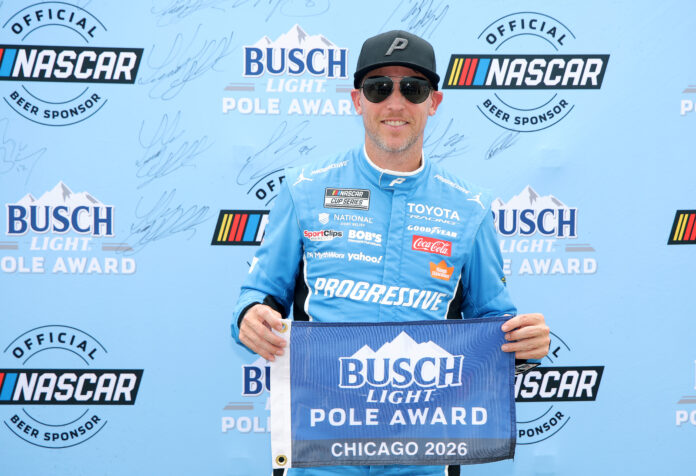
With on-track qualifying that determined the starting lineup occurring on Saturday, May 9, Shane van Gisbergen started on pole position for the first time this season after he posted a pole-winning lap at 123.937 mph in 71.165 seconds. Michael McDowell started alongside van Gisbergen on the front row after the latter posted the second-fastest lap at 123.488 mph in 71.424 seconds.

When the green flag waved, and the event commenced, pole-sitter Shane van Gisbergen jumped his No. 97 Superfile Chevrolet Camaro ZL1 entry ahead as he led the field through the frontstretch. He then navigated through the first turn, the Esses, the Back Straight and the Inner Loop “Bus Stop” chicane with the lead. From the carousel and the final set of turns that led back to the frontstretch, van Gisbergen retained the top spot as he led the first lap over Michael McDowell, Austin Cindric, Ross Chastain and rookie Connor Zilisch while Joey Logano, Ryan Blaney and Christopher Bell followed suit, respectively.

Over the next four laps, van Gisbergen, who was the fastest competitor on the track, maintained an early lead. The only competitor who remained within striking distance of the leader in the opening five laps was McDowell, as he trailed by eight-tenths of a second, but by half a second a lap prior. Meanwhile, Chastain and Zilisch trailed in third and fourth, respectively, by four seconds while Logano, Cindric, Bell, Blaney, Ty Gibbs, and Chase Briscoe raced in the top 10 ahead of AJ Allmendinger, Carson Hocevar, William Byron, Chris Buescher, Daniel Suarez, Tyler Reddick, Bubba Wallace, John Hunter Nemechek, Kyle Busch, and Cole Custer, respectively. Meanwhile, Todd Gilliland occupied 21st place ahead of Denny Hamlin, Brad Keselowski, Kyle Larson, and Erik Jones, while Alex Bowman, Austin Dillon, Ty Dillon, Ryan Preece, and Chase Elliott were mired in the top 30, respectively.

Through the first 10 scheduled laps, van Gisbergen extended his early advantage to more than two seconds over McDowell while third-place Zilisch trailed by six seconds. By then, Chastain, Logano, and Cindric, all of whom were racing from fourth to sixth on the leaderboard, trailed van Gisbergen by eight seconds while Bell, Blaney, Ty Gibbs, Allmendinger, and Briscoe trailed by as far back as 12 seconds within the top-11 mark. As the field of 38 remained fanned out as Katherine Legge, who trailed by 57 seconds at the tail end of the field in 38th place, van Gisbergen stretched his lead to six seconds over McDowell by Lap 15.

Then, on lap 16, select names that included Tyler Reddick, Kyle Larson, Alex Bowman, Zane Smith, and Noah Gragson strategically made the right-hand turn to pit road to pit their entries under green flag conditions. Runner-up McDowell and third-place Zilisch, along with Ty Gibbs, Chris Buescher, Chase Briscoe, Daniel Suarez, William Byron, Kyle Busch, Todd Gilliland, Carson Hocevar, Cole Custer, Denny Hamlin, Brad Keselowski, Erik Jones, and Ryan Preece, all pitted during the next lap before the leader, Shane van Gisbergen, pitted on Lap 18. By then, pit road had become inaccessible to the field as the first stage period neared its conclusion. As van Gisbergen pitted, Ross Chastain cycled to the lead over Joey Logano and Ryan Blaney.

When the first stage period concluded on Lap 20, Chastain held off Team Penske’s trio of competitors (Logano, Blaney, and Cindric) to claim his third Cup stage victory of the 2026 season. Logano, Blaney, and Cindric followed suit, respectively, while Allmendinger, John Hunter Nemechek, Bell, van Gisbergen, Riley Herbst, and McDowell were scored in the top 10, respectively. By then, all 38 starters were scored on the lead lap.

Under the event’s first stage break period, some led by Chastain and including Logano, Blaney, Cindric, Allmendinger, Nemechek, Bell, Herbst, Wallace, Elliott, Ty Dillon, Josh Bilicki, Cody Ware, Stenhoouse, and Katherine Legge pitted their entries while the rest led by van Gisbergen remained on the track.

The second stage period started on Lap 24 as van Gisbergen and McDowell occupied the front row. At the start, van Gisbergen fended off McDowell through the frontstretch to retain the lead. He continued to lead McDowell, Zilisch, Ty Gibbs, Austin Dillon, and the field through the first turn, the Esses, the Back Straight, and the Bus Stop chicane while multiple competitors within the middle of the pack, most notably Kyle Larson, bumped and jostled for spots. Amid the on-track chaos within the middle of the pack, most of the field filed in single-line formation through the frontstretch as van Gisbergen led the next lap.

On Lap 26, Zilisch overtook McDowell entering the first turn to assume the runner-up spot. Zilisch then proceeded to track and reel in teammate van Gisbergen for the lead while McDowell retained third place in front of Ty Gibbs and Reddick. Behind Larson, who was bumped multiple times since the second stage’s restart by competitors like Zane Smith and Logano, was mired in 26th place, while Keselowski, who made contact with Larson on Lap 25, plummeted to 36th place. Meanwhile, Zilisch continued to reel in van Gisbergen for the lead, where he reduced the deficit by as little as two-tenths of a second on Lap 28, but van Gisbergen remained atop the leaderboard by three-tenths of a second at the Lap 30 mark.

At the Lap 35 mark, van Gisbergen, who was methodically navigating his entry through every turn and straightaway, continued to lead by four-tenths of a second over teammate Zilisch while third-place McDowell trailed by three-and-a-half seconds. Behind, Ty Gibbs and Reddick occupied the remaining top five spots over Austin Dillon, Suarez, Briscoe, Byron, and Buescher, while Kyle Busch, Hamlin, Gilliland, Preece, Erik Jones, Custer, Chastain, Blaney, Cindric, Bowman, and Hocevar were mired in the top 20, respectively.

On Lap 39, the caution flew when a small tent was blown from the infield campground and floated in the air amid the wind before it landed on the track towards the Back Straight area. During this caution period, a majority of the field, led by van Gisbergen and Zilisch, pitted, while the rest, led by McDowell and including teammate Suarez, Bell, Wallace, Herbst, and Nemechek, remained on the track. Following the pit stops, van Gisbergen exited pit road first ahead of Zilisch, Gibbs, Reddick, and Austin Dillon.

The next restart on Lap 43 featured McDowell fending off Suarez and the field through the frontstretch to lead while Herbst got bumped by Nemechek and spun entering the first turn. As Herbst continued while the event remained under green, the field stacked up through the Esses and the Back Straight. Then, towards the Bus Stop chicane, and as a series of stack-ups and tire lockups occurred, Byron was hit by Buescher and spun in the middle of the field, where he then got hit by Blaney and emerged with a broken toe link. Gilliland also got bumped by Logano as he slid towards the tire barriers, but the rest of the field scattered to avoid the carnage, and the event remained under green. While Byron limped his damaged No. 24 Liberty University Chevrolet Camaro ZL1 entry back to pit road, Bell was penalized for missing the Bus Stop chicane despite taking evasive action to avoid the carnage.

Meanwhile, McDowell retained the lead by one-and-a-half seconds over van Gisbergen at the Lap 45 mark while Suarez, Wallace and Reddick were in the top five. By then, Bell. Nemechek, Berry, and Ty Dillon pitted under green by Lap 47 as van Gisbergen reassumed the lead from McDowell. Van Gisbergen proceeded to stretch his lead to nearly one-and-a-half seconds by Lap 48 while McDowell, who had issues navigating through the first turn and whose tires were wearing out, plummeted to seventh place. Amid McDowell’s issues, Richard Childress Racing’s Austin Dillon and Kyle Busch were up to fourth and fifth, respectively. In addition, Reddick and Gibbs were racing in second and third while Zilisch was mired in ninth.

When the second stage period concluded on Lap 50, van Gisbergen captured his first Cup stage victory of the 2026 season by half a second over Reddick. Gibbs, Austin Dillon, Kyle Busch, Buescher, Cindric, Zilisch, Briscoe, and Wallace were scored in the top 10, respectively, while 37 of 38 starters were scored on the lead lap.

During the event’s second stage break period, some, including Wallace, McDowell, Custer, Allmendinger, Stenhouse, Cody Ware, Bell, Suarez, Katherine Legge, Herbst, Keselowski, and Josh Bilicki, pitted while the rest, led by the leader van Gisbergen, remained on the track.

With 46 laps remaining, the final stage period commenced as van Gisbergen and Reddick occupied the front row. At the start, van Gisbergen launched ahead, entering the frontstretch, and he fended off Reddick through the first turn to lead up through the Esses and the Back Straight. With the field cleanly navigating through the Bus Stop chicane and the Carousel, van Gisbergen remained upfront through the first set of turns as he led the next lap.

Then, with 41 laps remaining, the caution returned when a left-front tire carcass rolled off of Logano’s No. 22 Shell/Pennzoil Ford Mustang Dark Horse entry, nearing the Bus Stop chicane. The caution occurred after Logano, who managed to limp back to his pit stall, locked up and flat-spotted his left-front tire, where he went off the course in the first turn. During this caution period, the leader van Gisbergen, along with Reddick, Allmendinger, Wallace, McDowell, Nemechek, Custer, Berry, and Suarez, remained on the track while the rest, led by Gibbs, pitted.

The next restart with 37 laps remaining featured van Gisbergen fending off Reddick entering the frontstretch and the first turn to retain the lead. As van Gisbergen led through the Esses and Back Straight, Allmendinger navigated his way into third place over McDowell and Wallace as the field navigated cleanly through the Back Straight, the Bus Stop chicane, and the Carousel. Meanwhile, van Gisbergen led the next lap and stretched his lead to more than a second over Reddick and Allmendinger while McDowell, Wallace, and Nemechek all trailed by two seconds within the top-six mark. Behind, Gibbs was the highest-running competitor who recently pitted in seventh place, while Berry, Zilisch, and Austin Dillon trailed in the top 10, respectively.

Down to the final 30 laps of the event, van Gisbergen continued to lead by four seconds over Allmendinger, the latter of whom overtook Reddick for the runner-up spot three laps earlier. Behind, McDowell retained third place while Gibbs and Zilisch, the top two competitors who recently pitted, were up to fourth and fifth, respectively. Meanwhile, Reddick dropped to sixth place in front of teammate Wallace, Nemechek, Austin Dillon, and Briscoe, while Berry and Cindric. Custer, Kyle Busch, Suarez, Chastain, Buescher, Preece, Hocevar, and Erik Jones trailed in the top 20, respectively.

Two laps later, Wallace pitted under green. Wallace’s pit service occurred a lap after teammate Reddick pitted when the latter initially believed that Katherine Legge spinning on course would generate a caution, but no caution flew as van Gisbergen maintained the lead by nearly five seconds over Allmendinger, McDowell, Gibbs, and Zilisch. Another lap later, and with fuel talks starting to linger amongst those who recently pitted during the previous caution period and those who did not, McDowell and Gibbs overtook Allmendinger for second and third, respectively, while Zilisch started to reel in Allmendinger for fourth place.

McDowell then pitted from the runner-up spot along with Berry and Larson with 25 laps remaining before the leader van Gisbergen, Nemechek, Elliott, and Bowman pitted during the next lap. Van Gisbergen’s move to pit road moved Gibbs to the lead as the latter led by more than one-and-a-half seconds over Zilisch. Despite Gibbs being told that he was half a lap short of reaching the event’s scheduled distance on fuel, Gibbs continued to lead in his No. 54 Monster Energy Toyota Camry XSE entry by more than a second over Zilisch with 20 laps remaining, while Allmendinger surrendered third place to pit under green. Meanwhile, van Gisbergen was mired in 14th place, and he trailed the lead by 25 seconds while Reddick and Wallace were mired in 18th and 19th, respectively. Meanwhile, multiple names like Blaney, Larson, Suarez, Erik Jones, Zane Smith, Bell, and Custer had pitted under green.

With 18 laps remaining, Zilisch started to reel in Ty Gibbs for the lead as both were racing on identical fuel-strategy modes of trying to reach the scheduled distance on their current tank of fuel while also battling for the lead and potential victory. Another lap later, Gibbs, who led as high as more than a second, only led by three-tenths of a second while third-place Briscoe and fourth-place Austin Dillon trailed by more than five seconds. Meanwhile, van Gisbergen was still mired in 20th place, and he trailed the lead by 20 seconds while Kyle Busch, Cindric, Buescher, Chastain, Hamlin, Hocevar, and Gilliland were all racing in front of him.

As the event reached its final 15-lap distance, Zilisch, who nearly got to Gibbs’ rear bumper entering the Bus Stop chicane, trailed Gibbs by half a second. Zilisch, who repeatedly slid and flat-spotted his right-front tire while also trying to conserve fuel, continued to trail Gibbs closely through every turn and straightaway as Wallace, who spun in the first turn, continued without drawing a caution. Meanwhile, van Gisbergen, who clocked in the fastest lap of the event on Lap 66, continued to bolt his way to the front as he was up to seventh place.

Down to the final 10 laps of the event, Gibbs continued to lead by four-tenths of a second over Zilisch, with the latter being told to continue to save fuel and not yet pounce on Gibbs for the lead, while van Gisbergen, who has enough fuel to reach the event’s distance, trailed the lead by less than five seconds as he overtook Kyle Busch for fifth place in the leaderboard. Van Gisbergen then overtook both Austin Dillon and Briscoe from the Bus Stop chicane and past the Carousel. During the next lap, he had both Gibbs and Zilisch in his sights entering the frontstretch.

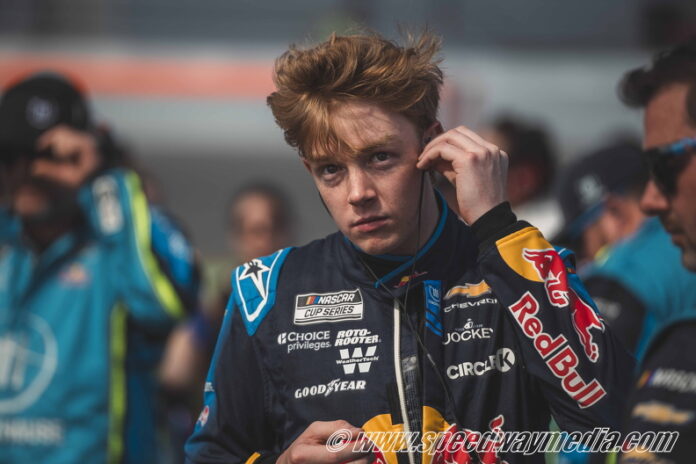
Then, with nine laps remaining, van Gisbergen quickly overtook teammate Zilisch past the Bus Stop chicane as Zilisch, who dropped off the pace and cut a tire to his No. 88 Red Bull Chevrolet Camaro ZL1 entry, pitted under green. During the next lap, van Gisbergen reeled in and overtook Gibbs entering the Bus Stop chicane to reassume the lead. Van Gisbergen’s lead stood to more than a second over Gibbs during the next lap while McDowell, Briscoe, and Austin Dillon trailed in the top five, respectively.

With five laps remaining, van Gisbergen extended his late lead to more than five seconds over McDowell as McDowell overtook Gibbs prior to reaching the frontstretch. As Zilisch was mired in 28th place following his late pit stop, Briscoe, Austin Dillon, and Kyle Busch were racing within reach of one another from fourth to sixth on the track while van Gisbergen retained the lead over the next three laps.

When the white flag waved, and the final lap started, van Gisbergen remained in the lead by more than seven seconds over McDowell. With no competition lurking nor reeling in from behind, van Gisbergen easily navigated through the turns and straightaways of Watkins Glen International for a final time before he cycled back to the frontstretch and claimed the checkered flag by seven seconds over McDowell.

With the victory, van Gisbergen, who celebrated his 37th birthday a day prior, notched his seventh NASCAR Cup Series career victory and he became the seventh different winner through the first 12 events of the 2026 season. He joins Mark Martin, Jeff Gordon, Tony Stewart, Marcos Ambrose, Chase Elliott and Kyle Larson as the only competitors to win a Cup event at The Glen in consecutive seasons, and he also recorded the first Cup victory for the No. 97 since Kurt Busch won at Richmond Raceway in September 2005.

Van Gisbergen’s victory at Watkins Glen was the fourth of the 2026 season for the Chevrolet manufacturer and the first for Trackhouse Racing, with the New Zealander jumping up three spots in the driver’s standings from 19th to 16th.

No. 97
Photo by Mike Biskupski for SpeedwayMedia.com.

“[It’s] Unbelievable to win with [the number] 97,” van Gisbergen, who kicked a rugby ball to the frontstretch’s fans, said on FS1. “The Superfile Chevy was great. Thank you to Trackhouse. We weren’t very good in practice, and then qualifying was amazing. Good tweaks and then today. What a race car. [Crew chief] Stephen [Doran] made great calls. I wasn’t sure how it was gonna work, and then to run [the leaders] down like that. Very, very special to [win at The Glen] two in a row. It’s not easy. Everyone’s really good. There was a lot of pressure there. I think McDowell was good, Connor [Zilisch] was good, Tyler Reddick. There was some really good guys and a lot of pressure, so just stoke for these [No. 97] guys. To execute every facet of our game, [I’m] speechless. This is so cool.”

McDowell, who started alongside van Gisbergen at the event’s start and led five laps, settled in second place for his second top-five result of the 2026 season and first since Circuit of the Americas in early March. Despite gaining two spots in the standings, from 23rd to 21st, McDowell was disappointed in not having the pace to reel in and challenge van Gisbergen for the victory.

“It’s great to get this Go Bowling Chevrolet in the top five.” McDowell said. “There was moments where I thought maybe we could hang with [van Gisbergen]. It felt like he was just pacing himself off me he’d take back off. In that second stage, we got a little off strategy, and then we recovered well, which [crew chief] Travis [Peterson] did a great job of getting the track position when we needed it. Just not quite enough to run [van Gisbergen] down. Like I said, it’s just tough. Second is awesome. It’s great to get momentum back on our side. We needed it after a rough few weeks, but we wanted to get to Victory Lane, but proud of Spire [Motorsports]. Proud of my guys. They worked really hard. Great day. We’ll build on it and hopefully, get ready for [the] Charlotte [Coca-Cola] 600.”

Ty Gibbs had enough fuel to finish in third place for his sixth top-five result of the 2026 season, while teammate Chase Briscoe and Tyler Reddick finished in the top five. Austin Dillon achieved his first top-10 result in sixth place, ahead of AJ Allmendinger, and Kyle Busch notched a strong eighth-place result, while Austin Cindric and John Hunter Nemechek completed the top 10, respectively.

Meanwhile, Connor Zilisch, who was in a prime position to contend for his first Cup victory, ended up in 20th place after pitting with eight laps remaining. Zilisch’s fourth top-20 result in his rookie Cup season capped off a long triple-header weekend for the North Carolina native as he finished in the runner-up spot during Friday’s Craftsman Truck Series event and won Saturday’s O’Reilly Auto Parts Series event, both occurring at The Glen. Amid the disappointment of not contending for Sunday’s Cup victory in the closing laps, he was also pleased with the speed exhibited by his team, Trackhouse Racing, on road course venues.

“I’m not sure, honestly, what actually cut the tire there at the end,” Zilisch said. “We were running on those tires for a long time, so not surprised to see it happen necessarily. Just frustrating. We had a really good day going. At worse, we were gonna get ourselves our first top five and walk out of here with something. [The race] Didn’t quite end the way we wanted it to. I needed last year’s race length of about 92 laps, and I probably would’ve been a little better [with the result], but it is what it is.”

Notably, Ryan Blaney, Denny Hamlin, Christopher Bell, Kyle Larson, Chase Elliott, Alex Bowman, Ross Chastain, and Brad Keselowski finished 11th, 16th, 21st, 23rd, 24th, 25th, 27th, and 30th, respectively. Bubba Wallace finished 29th following his late spin in Turn 1, William Byron ended up three laps down in 36th following his second stage’s incident in the Bus Stop chicane, Joey Logano settled at the tail end of the field in 38th following his late left-front tire issue and Katherine Legge, who is competing in this year’s Indianapolis 500 with HMD Motorsports and A.J. Foyt Racing, finished 35th.

There were six lead changes for four different leaders. The event featured four cautions for 12 laps. In addition, 32 of 38 starters finished on the lead lap.

Following the 12th event of the 2026 NASCAR Cup Series season, Tyler Reddick continues to lead the standings by 129 points over Denny Hamlin, 145 over Chase Elliott, 162 over Ryan Blaney, and 192 over Chris Buescher.

Results:

  1. Shane van Gisbergen, 74 laps led, Stage 2 winner
  2. Michael McDowell led five laps
  3. Ty Gibbs, 17 laps led
  4. Chase Briscoe
  5. Tyler Reddick
  6. Austin Dillon
  7. AJ Allmendinger
  8. Kyle Busch
  9. Austin Cindric
  10. John Hunter Nemechek
  11. Ryan Blaney
  12. Chris Buescher
  13. Daniel Suarez
  14. Ryan Preece
  15. Cole Custer
  16. Denny Hamlin
  17. Todd Gilliland
  18. Zane Smith
  19. Erik Jones
  20. Connor Zilisch
  21. Christopher Bell
  22. Noah Gragson
  23. Kyle Larson
  24. Chase Elliott
  25. Alex Bowman
  26. Riley Herbst
  27. Ross Chastain, four laps led, Stage 1 winner
  28. Carson Hocevar
  29. Bubba Wallace
  30. Brad Keselowski
  31. Ricky Stenhouse Jr.
  32. Josh Berry
  33. Ty Dillon, one lap down
  34. Josh Bilicki, one lap down
  35. Katherine Legge, one lap down
  36. William Byron, three laps down
  37. Cody Ware – OUT, Accident
  38. Joey Logano, 15 laps down

Next on the 2026 NASCAR Cup Series schedule is the series’ annual NASCAR All-Star Race at Dover Motor Speedway in Dover, Delaware. The event is scheduled to occur next Sunday, May 17, and air at 1 p.m. ET on FS1, MRN, SiriusXM, and HBO MAX.

RCR NCS Race Recap: Watkins Glen International

Strong Run Catapults Austin Dillon and the No. 3 Bass Pro Shops/Winchester AA White Flyer Chevrolet Team to Sixth-Place Result at Watkins Glen International

Finish: 6th
Start: 25th
Points: 22nd

“Man, God is so good. We work really hard on these road races. I put a lot of effort into them to get better and we didn’t qualify great, but Richard Boswell (crew chief) and everyone on the Bass Pro Shops/Winchester AA White Flyer team did a good job pushing the strategy early to go hard. We really didn’t worry about tires when we short pitted, and that got us our track position at the end of the stage. After that, we were able to maintain, and it was fun saving fuel there behind Chase Briscoe. I probably should have pushed a little harder because I actually made it back all the way around on fuel. So, I did a good job on saving fuel, which was cool. Thanks to all of our partners and everybody that helps us go around. We put a lot of effort into it. We’ve been working really hard at RCR. It’s cool that Kyle Busch and I both were racing up front. He (Kyle Busch) scared me into the bus stop with like two to go. He just gave up on saving fuel, and he ran out at the line. That was kind of fun getting him back by the line. Just a good day for RCR overall. And Happy Mother’s Day to my mom, my wife and all of the moms out there. We’ll take this, move on and build on the momentum.” -Austin Dillon

Kyle Busch Earns Second Top-10 of the Season Piloting the No. 8 zone Jalapeño Line Chevrolet to an Eighth-Place Finish at Watkins Glen International

Finish: 8th
Start: 21st
Points: 24th

“Strong day for the No. 8 zone Jalapeño Lime Chevrolet team. We were a top-10 car for the majority of the race, and ended eighth here at Watkins Glen International. We made the adjustments and strategy calls we needed to drive forward and make up track position after qualifying 21st, despite battling a car that trended tight throughout the race. We ran out of fuel at the end of the race, but we’re still going home with our second top-10 finish of the season. I’m proud of the work the entire Richard Childress Racing team is putting in back in Welcome, NC, and will look to continue that momentum as the season progresses.” -Kyle Busch

Ford Racing Notes and Quotes – Mustang Dark Horse Earns Top-10 at Watkins Glen

Ford Racing Notes and Quotes
NASCAR Cup Series
Go Bowling at The Glen – Watkins Glen International
Sunday, May 10, 2026

Ford Unofficial Finishing Results:

9th – Austin Cindric
11th – Ryan Blaney
12th – Chris Buescher
14th – Ryan Preece
17th – Todd Gilliland
18th – Zane Smith
22nd – Noah Gragson
30th – Brad Keselowski
32nd – Josh Berry
34th – Josh Bilicki
38th – Joey Logano

AUSTIN CINDRIC, No. 2 Snap on Ford Mustang Dark Horse – DID YOU MAXIMIZE TODAY’S PERFORMANCE? “I think so. In a lot of ways we maximized our day with points in most stages, and earning a Top-10 is a really good day for us. I would have been happy with that this morning. The strategy definitely got put into a really tight window, and we decided to go for it and get some fuel mileage out of this Ford Mustang and try to hold onto these rear tires. I feel that I may have left one or two spots on the table just trying to make it to the end. Otherwise, I’m proud of the effort and it’s another good points day for the No. 2 car.”

RYAN BLANEY, No. 12 Menards/Libman Ford Mustang Dark Horse – WHAT IS YOUR ASSESSMENT OF TODAY’S RACE? “We did a good job getting points in the first stage. I thought we were in a really good spot until the No. 24 spun-out in the Bus Stop. I couldn’t go anywhere and caved the nose in. I was actually surprised how fast the Mustang was after that. Overall, we fought from the back a few times to a decent finish and a good points day.”