Home Blog Page 79

Daytona 500 vs. Other NASCAR Races: Is the Premium Worth It?

The Daytona 500 commands ticket prices 2-3 times higher than most regular-season NASCAR races, with grandstand seats averaging $150-400 compared to $50-150 at typical Cup Series events. For most first-time NASCAR fans or casual observers, attending a regular season race at tracks like Atlanta, Kansas, or Phoenix delivers better value—you’ll experience authentic NASCAR action, better sight lines due to smaller crowds, and more affordable ancillary costs for food, parking, and lodging. However, the Daytona 500’s unique atmosphere, historical significance, and spectacle of 200,000+ fans justify the premium for dedicated racing enthusiasts or those seeking a bucket-list sporting event. The decision hinges on your priorities: pure racing experience versus cultural immersion in NASCAR’s biggest stage.

The Price Reality: What You Actually Pay

Daytona 500 ticket prices reflect its status as NASCAR’s Super Bowl. Grandstand seats in premium locations—frontstretch near the start/finish line at mid-elevation—sell for $300-500 through official channels and secondary markets. These same relative positions at tracks like Richmond, Darlington, or Michigan cost $75-175 for comparable Cup Series races. The pricing gap extends beyond face value: parking at Daytona International Speedway runs $50-100 for the 500, while most tracks charge $20-40 for regular events.

The secondary ticket market amplifies these differences during high-demand years. When the Daytona 500 falls on a perfect weather weekend or follows compelling storylines (championship driver debuts, major rule changes, or milestone anniversaries), prices escalate further. Comparing inventory across trusted ticket marketplaces helps fans understand real-time pricing and availability fluctuations that official channels don’t always reflect accurately.

Hotel costs substantially compound the Daytona premium. Daytona Beach area hotels charge $200-400 per night during Speedweeks (the two weeks surrounding the 500), compared to $80-150 for the same properties during other months. Regular season races at tracks near major cities also cause hotel rate increases, but rarely to this magnitude. A family of four attending the Daytona 500 might spend $2,500-4,000 total (tickets, hotel, food, parking, travel) versus $1,200-2,000 for a comparable weekend at most other tracks.

The financial equation changes if you live within driving distance of multiple tracks. Southeastern fans can reach Daytona, Talladega, Atlanta, Darlington, and Charlotte within 3-6 hours, making overnight stays optional for some events. This geographic advantage lets regional fans experience multiple races for the combined cost of one Daytona 500 trip, particularly if they skip hotel expenses entirely.

What Makes the Daytona 500 Different

The Daytona 500 operates as NASCAR’s season opener, creating stakes absent from mid-season races. Every team arrives with fresh equipment, hope, and maximum effort. The “Great American Race” label isn’t marketing hyperbole—the 500 has crowned legends, ended careers, and produced moments replayed for decades. Richard Petty’s seven victories, Dale Earnhardt’s 1998 triumph after 20 years of trying, and Trevor Bayne’s shocking 2011 upset all happened at Daytona’s season opener, creating historical weight that no other race carries.

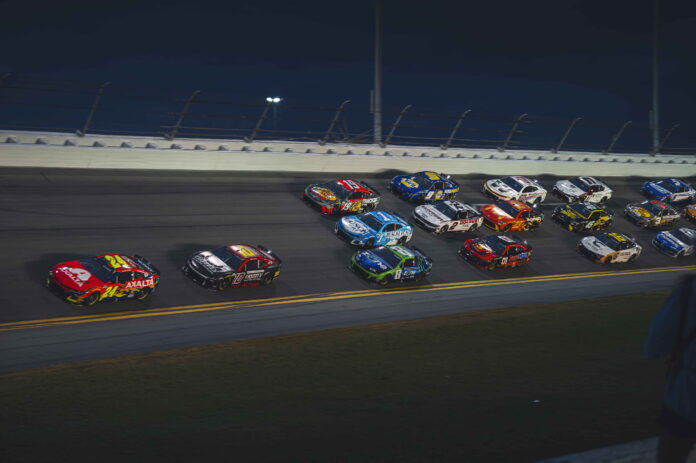
The superspeedway package at Daytona produces racing unlike the other 35 Cup Series events. Restrictor plates (now tapered spacers) limit engine power, creating massive pack racing where 30-40 cars run nose-to-tail at 195+ mph. This produces the “Big One”—multi-car crashes that collect a dozen or more vehicles simultaneously. While crashes shouldn’t be the draw, the reality is that Daytona’s pack racing creates constant tension, which is absent from most races where cars spread out over green-flag runs.

Speedweeks transforms Daytona Beach into a two-week racing festival. The Clash exhibition race, Duel qualifying races, Truck Series event, and Xfinity Series race all precede the 500, meaning racing happens nearly every day for two weeks. Fans attending just the 500 still experience this festival atmosphere—manufacturer midways, driver appearances, concerts, and beach parties—that regular season races rarely match in scale or intensity.

The sheer crowd size creates energy that smaller venues can’t replicate. Daytona International Speedway holds over 100,000 fans (capacity has decreased from historic 160,000+ levels but remains NASCAR’s largest), creating a roar during pre-race ceremonies that resonates physically. The military flyover, celebrity grand marshal, and elaborate pre-race production substantially exceed typical NASCAR race pageantry.

The Case for Regular Season Races

Track variety represents NASCAR’s underappreciated strength, and regular-season races let fans experience this diversity. Short tracks like Bristol, Martinsville, and Richmond produce contact-heavy racing where drivers bump, bang, and occasionally wreck each other for position. Road courses at Sonoma, Watkins Glen, and the Charlotte Roval require road racing skills that are completely different from those needed for oval racing. Mile-and-a-half “cookie-cutter” tracks like Kansas, Las Vegas, and Texas showcase aerodynamic efficiency and tire management strategy.

Each track type creates distinct racing styles that Daytona’s restrictor-plate pack racing doesn’t represent. First-time fans attending only the Daytona 500 might conclude that NASCAR involves 40 cars riding in a pack for 500 miles. Attending a short track race reveals the door-to-door action and personality conflicts that define NASCAR’s appeal. A road course race demonstrates driver skill in ways oval racing doesn’t showcase. The sport’s full character emerges through track diversity rather than its single biggest event.

Smaller crowds at regular-season races create practical advantages. Entering and exiting the facility takes 20-30 minutes rather than 90+ minutes at Daytona. Concession lines move faster. Restrooms stay cleaner longer into the event. You can actually walk around the facility and explore without navigating shoulder-to-shoulder crowds. For families with young children or older adults with mobility concerns, these logistical advantages significantly improve the experience.

Driver accessibility increases dramatically at smaller events. The garage area, while always restricted, sometimes offers fan access opportunities during practice sessions at certain tracks. Driver autograph sessions and fan zones operate with reasonable lines, unlike the overwhelming crowds that Daytona attracts. Fans seeking personal interaction with drivers and teams find regular-season races far more conducive to these experiences.

Sight Lines and Viewing Experience

Daytona’s massive scale creates viewing challenges. The 2.5-mile tri-oval means even premium grandstand seats sit far from turn action. Straightaway seats provide excellent speed sensation but miss the racing action in turns 1-2 and 3-4. Turn seats catch the action when cars navigate those corners, but miss straightaway passes. The track’s sheer size means no single seat location captures the complete race the way shorter tracks allow.

Smaller tracks like Bristol (0.533 miles), Martinsville (0.526 miles), and Richmond (0.75 miles) let fans see the entire racing surface from any grandstand seat. You watch cars lap continuously rather than seeing them flash past your section once per lap. The proximity creates noise, smell, and sensation that larger tracks can’t match—you’ll feel the compression waves from cars passing at full throttle, smell the burning rubber and race fuel, and hear individual engine notes rather than generic roar.

Track size also affects your ability to follow the race without the video board. At Daytona, you’ll watch the giant screens as much as the actual track because you can’t see what’s happening in distant turns. Shorter tracks let you follow the racing action directly, using video boards only for replays and position updates. This creates more engaging viewing for fans who prefer watching racing over watching television screens at a race.

Weather exposure varies significantly by track and seat location. Daytona’s grandstands offer minimal shade, creating brutal conditions during hot February afternoons (yes, Florida heat exists even in winter). Some tracks provide covered grandstands or shade structures that improve comfort substantially. Checking weather forecasts and understanding sun exposure for your specific seats matters more at certain tracks than others.

Competition and Story Development

Regular-season races build narratives that casual fans miss when attending only the Daytona 500. NASCAR’s playoff format means summer and fall races carry championship implications. Watching a driver lock into the playoffs with an unexpected win, or seeing a championship contender eliminated through mechanical failure, creates dramatic tension that season openers can’t match. The racing itself may look identical, but the stakes transform the experience.

Rivalries develop throughout the season. A driver dumped on lap 400 at Kansas might seek retribution at Texas three weeks later. Attending multiple races lets you follow these storylines rather than experiencing them as isolated incidents. NASCAR’s narrative structure rewards engaged fans who track season-long developments, and the Daytona 500—despite its prestige—represents just one chapter rather than the complete story.

Playoff races from September through November carry a different energy than regular-season events. Drivers racing for championships take risks they’d avoid mid-season. Teams exhaust resources knowing there’s no “next week” if they fail. Attending a playoff race, particularly the Championship 4 finale at Phoenix, delivers stakes the Daytona 500 can’t match despite its historical significance.

Track-Specific Experiences Worth Considering

Bristol Night Race, held in late summer under lights, creates an atmosphere rivaling the Daytona 500. The track’s concrete surface, steep banking, and short distance produce constant action. Tickets sell out months in advance, and prices approach Daytona levels. Still, the racing quality and fan atmosphere justify the premium for many enthusiasts.

Talladega, NASCAR’s other restrictor-plate superspeedway, delivers similar pack racing to Daytona at lower costs. Located in Alabama, the track draws huge crowds and produces spectacular racing without the Daytona 500’s price premium. Spring and fall Talladega races cost 30-50% less than the 500 while delivering comparable on-track action. The infield camping culture at Talladega creates a unique party atmosphere that Daytona’s more corporate environment doesn’t match.

Road course races appeal to fans familiar with Formula 1 or sports car racing. Watching stock cars navigate right-hand turns, brake zones, and elevation changes demonstrates driver skill differently than oval racing. Tickets typically cost less than major oval races, and the racing strategy—pit windows, tire degradation, and track position—differs enough to feel like a different sport.

The Southern 500 at Darlington on Labor Day weekend carries historical significance second only to the Daytona 500. The track’s unique egg-shaped oval and abrasive surface create technical racing that tests equipment and driver skill. Ticket prices remain reasonable compared to Daytona, but the atmosphere and tradition approach the 500’s level. For fans seeking prestige without maximum expense, Darlington offers a compelling middle ground.

Making the Financial Decision

Calculate total trip cost rather than just ticket prices. A $400 Daytona 500 ticket plus $1,200 in associated expenses totals $1,600 per person. That same budget could fund 3-4 regular-season race weekends at various tracks, exposing you to NASCAR’s full variety rather than a single event. For new fans trying to understand NASCAR’s appeal, multiple different experiences deliver better value than one premium event.

Group dynamics matter significantly. Attending with serious racing fans who appreciate the Daytona 500’s history and significance enhances the experience. Bringing casual friends who don’t follow NASCAR might lead to complaints about crowds, heat, and expense. Regular-season races work better for introducing skeptical friends because lower financial and logistical barriers reduce the risk of disappointment.

Season packages or multi-race tickets offer value at tracks hosting multiple events annually. Charlotte Motor Speedway runs the Coca-Cola 600 (Memorial Day weekend) and the fall playoff race. Buying both creates per-race costs comparable to single regular-season races elsewhere. Similar opportunities exist at Daytona (500-plus July race), Phoenix (spring and championship), and other multi-date venues.

Travel considerations affect the equation substantially. International fans or those from distant US regions might attend only one NASCAR race during a single trip. In these cases, the Daytona 500 delivers maximum cultural immersion and guaranteed significance, making it worth the premium. Regional fans with access to multiple tracks within driving distance should diversify their experiences rather than concentrating resources on a single premium event.

When the Daytona Premium Makes Sense

Bucket list completion justifies the Daytona 500’s cost for many fans. Suppose you want to experience NASCAR’s biggest event before the opportunities pass. In that case, the premium becomes irrelevant compared to the alternative of never attending. Sports tourism often prioritizes unique experiences over cost optimization, and the 500 qualifies as genuinely unique within American motorsports.

Corporate entertainment or special occasions warrant premium spending. Hosting clients, celebrating milestones, or marking significant birthdays/anniversaries justify expenditures that ordinary weekend trips don’t. The Daytona 500’s prestige enhances these special occasions in ways regular races can’t match.

Hardcore NASCAR fans should attend the Daytona 500 at least once. Your racing education remains incomplete without experiencing the sport’s marquee event. However, this same logic suggests attending various tracks rather than returning to Daytona multiple times. Spreading your NASCAR budget across diverse venues teaches you more about the sport than repeatedly attending its single biggest race.

Media coverage and social sharing value factor into modern attendance decisions. Photos and stories from the Daytona 500 carry more recognition than those from Kansas or New Hampshire. If social media presence or conversational bragging rights matter to you, Daytona delivers maximum impact. This shouldn’t be the primary motivation, but it represents a legitimate consideration in 2025’s connected culture.

Alternative Premium Race Options

The Indianapolis 500 (IndyCar, not NASCAR) provides comparable spectacle and historical significance at similar costs. For fans interested in motorsports broadly rather than NASCAR specifically, Indy might deliver better value because the racing product differs more dramatically from what television shows. NASCAR’s television coverage generally captures the action well. At the same time, Indianapolis Motor Speedway’s 2.5-mile oval creates in-person viewing advantages that television can’t replicate.

Formula 1’s United States Grand Prix in Austin creates an international motorsports spectacle rivaling the Daytona 500. Ticket prices for NASCAR events exceed those for other sports substantially, but the global prestige and celebrity attendance create experiences that NASCAR races don’t match. Sports fans prioritizing elite competition and international flavor might find F1 worth the significant premium over NASCAR’s most expensive event.

Returning to NASCAR alternatives, the Brickyard 400 at Indianapolis Motor Speedway combines historical significance with more accessible pricing than the Daytona 500. Racing at Indianapolis—even in stock cars rather than open-wheel—carries weight that most NASCAR venues can’t match. Ticket prices fall between regular season races and the Daytona 500, creating a middle ground for fans wanting prestige without maximum cost.

Practical Recommendations Based on Experience Level

First-time NASCAR fans should attend a short track race first. Bristol, Martinsville, or Richmond deliver authentic NASCAR action at reasonable costs while teaching you whether you enjoy the sport enough to justify a Daytona 500 investment. The compressed viewing perspective, constant action, and manageable crowds provide better educational value than jumping immediately to NASCAR’s largest, most expensive, and most logistically challenging event.

Families with children benefit from mid-tier tracks like Atlanta, Charlotte, or Kansas. These facilities offer modern amenities, reasonable ticket prices, and manageable crowds without sacrificing the authentic NASCAR experience. Kid-friendly features—playgrounds, fan zones, and shorter track distances for walking—make these venues ideal for introducing young fans without the overwhelming scale of Daytona.

Serious racing enthusiasts should prioritize track variety over event prestige. Attending races at Daytona, Bristol, a road course, and a mile-and-a-half oval teaches you more about NASCAR than attending the Daytona 500 four times. The sport’s appeal lies in its diversity, and experiencing that diversity requires deliberate planning rather than defaulting to the most famous event repeatedly.

Budget-conscious fans can still attend the Daytona 500 by making strategic compromises. Turn seating costs less than frontstretch premium locations but still provides legitimate viewing. Attending Thursday or Saturday Speedweeks races offers the festival atmosphere at a fraction of Sunday’s cost. Staying in Ormond Beach or Port Orange rather than beachfront Daytona reduces hotel costs by 40-60%. The experience won’t match arriving with an unlimited budget, but intelligent cost management makes Daytona accessible without financial strain.

The Daytona 500 represents NASCAR’s pinnacle event, and the premium pricing reflects genuine factors—historical significance, massive scale, and cultural impact beyond racing. However, NASCAR’s appeal extends far beyond its single biggest race. Regular season events at diverse tracks deliver racing quality, fan accessibility, and value that often exceed what Daytona offers despite the prestige gap. Your decision should align with your specific goals. If you’re seeking the ultimate NASCAR cultural experience regardless of cost, Daytona justifies the premium. If you prioritize racing quality, value, and diverse track experiences, regular-season races deliver better returns on your investment. Most dedicated NASCAR fans eventually attend both, but the sequence matters—learning the sport through accessible regular-season races prepares you to fully appreciate what makes the Daytona 500 special.
Team Penske NASCAR Cup Series Race Report – Las Vegas

South Point 400 – Las Vegas Motor Speedway
Las Vegas, Nev. – October 12, 2025

AUSTIN CINDRIC No. 2 AUTOTRADER FORD MUSTANG DARK HORSE

START: 31ST STAGE 1: 28TH STAGE 2: 29TH FINISH: 11TH PLAYOFF POINTS: 14TH

RACE RUNDOWN: Austin Cindric and the No. 2 Autotrader Ford Mustang Dark Horse team turned in a steady performance in Sunday’s South Point 400 at Las Vegas Motor Speedway, rallying late to earn an 11th-place finish and close out the weekend on a solid note. After starting 29th, Cindric gained five positions by Lap 13 and reported that his car was too free as Stage 1 progressed. The team made an early green flag stop on Lap 32 for four tires, fuel and an adjustment, but the balance remained loose. Despite the persistent condition, Cindric kept the No. 2 car under control through a late-Stage caution and ended Stage 1 in 28th position. The team made further adjustments during the stop to help tighten up the car. The Autotrader Ford Mustang maintained pace through the middle portion of the race, though Cindric still described the handling as “a touch on the free side.” After an additional green flag stop on Lap 117, Cindric went on to finish Stage 2 in 29th position. A late-race caution for a multi-car crash with 31 laps remaining slowed the field, and Cindric took the wave around to rejoin the lead lap. An ensuing caution allowed the No. 2 team to pit for fresh tires and fuel, and the orange and blue Autotrader car lined up 20th for the restart with less than 15 laps to go. From there, he put together a determined charge, picking off positions in the closing laps to secure an 11th-place result.

CINDRIC’S THOUGHTS: “I’m proud of the fight from everyone on our No. 2 team today. We learned a lot throughout the race, kept working on it, and had some really solid stops on pit road. It was good to get a solid result and build some momentum heading into Talladega next week, where we obviously had a great run in the spring.”

RYAN BLANEY No. 12 MENARDS/CARDELL FORD MUSTANG DARK HORSE

START: 14TH STAGE 1: 38TH STAGE 2: 38TH FINISH: 38TH PLAYOFF POINTS: 8TH (-31)

RACE RUNDOWN: Ryan Blaney and the No. 12 Menards/Cardell Ford Mustang Dark Horse team faced an early end to their opening race of the Round of 8 at Las Vegas Motor Speedway. A flat left front tire sent Blaney into the outside wall in Turns 3 and 4 in the closing laps of Stage 1. After taking the green flag from 14th position, Blaney worked his way into the top 10 by lap 30 before hitting pit road during the green flag cycle as he settled into 12th once pit stops were completed. On lap 72, Blaney entered low into Turn 3 and shot up the track due to a flat left front tire, resulting in terminal damage that signaled the end to the 12 team’s day. Blaney and the No. 12 team enter the second race of the Round of 8 eighth in the playoff standings, 31 points below the elimination line.

BLANEY’S THOUGHTS: “You’ve got to be optimistic. I’m not very happy right now, but tomorrow morning I’ll be optimistic to go to the next race. We’ve had good success at the next two events, so hopefully we can come and bring the speed and try to overcome the hole we put ourselves in today.”

JOEY LOGANO No. 22 SHELL-PENNZOIL FORD MUSTANG DARK HORSE

START: 9TH STAGE 1: 10TH STAGE 2: 9TH FINISH: 6TH PLAYOFF POINTS: 7TH (-31)

RACE RUNDOWN: Joey Logano and the No. 22 Shell-Pennzoil Ford Mustang Dark Horse team came away with a sixth-place finish in Sunday’s Round of 8 opener at Las Vegas Motor Speedway. A key strategy call put Logano on the front row for the final restart with 14 laps to go in the top 10 effort. Logano maintained top 10 pace from the onset of the 400-mile race, posting a 10th-place result in Stage 1 before crossing the line ninth in Stage 2. After taking the restart of the final segment from 15th, Logano fought a loose-handling condition in the corners prior to a scheduled stop at the start of the green flag cycle with 57 laps to go. A caution with 31 laps remaining brought the leaders to pit road one final time as crew chief Paul Wolfe made the call for right side tires only, allowing Logano to gain 11 spots as the Shell-Pennzoil Ford lined up to restart from the outside of row one as one of four cars on the two-tire strategy. A multi-car incident in turn one on the opening lap of the restart reset the field one last time as Logano again took the green from the front row but, ultimately, did not get pushed down the backstretch to keep pace with the leaders and settled for a sixth-place finish. Logano and the No. 22 team enter the second race of the Round of 8 seventh in the playoff standings, 24 points below the elimination line.

LOGANO’S THOUGHTS: “We had nothing to lose. We were kind of at the spot where we scored only a couple stage points, I think we were eighth and ninth in both stages and that’s not enough points to points race I didn’t think, so Paul made a good call and put us on the front row. That’s all you can hope for and you hope the two tires are decent. You hope that you can get clean air and maybe block your butt off to where you can do something. I didn’t get the push down the backstretch. The 48 had the option of who to push and he went with the 19, unfortunately, and that was enough to shove him ahead into three and be able to clear me. At that point, it was just kind of trying not to bleed very many spots there at the end. I was just trying to hang on to what I had there to get as many points as possible, so, overall, there were points in the race where I thought we were good enough to go up there and run with those guys on the long haul, and then the third stage we just got really loose and lost a ton of track position and it took us a minute to get the balance back.”

The NASCAR Cup Series continues the Round of 8 in the NASCAR Playoffs at Talladega Superspeedway on Sunday, October 19. Live coverage of the YellaWood 500 begins at 2:00 p.m. ET on NBC, MRN, and Sirius XM NASCAR Radio Channel 90.

RFK Racing cashes in on solid day in Las Vegas

Late race surge catapults Preece to impressive comeback finish

LAS VEGAS, NV (October 12, 2025) – Roush Fenway Keselowski (RFK) Racing, was dealt a solid hand in Las Vegas Sunday as they turned in two-of-a-kind, scoring double top 10 finishes at Las Vegas Motor Speedway. Ryan Preece ran the table in the closing laps to lead RFK with a 9th place finish, while Brad Keselowski finished 10th. Chris Buescher narrowly missed the top 10 with a 12th place finish.

60 Ryan Preece

During Sunday’s race, Ryan Preece proved exactly why you fight to the very last lap. In a day that can be described as redemptive he delivered an impressive comeback performance at Las Vegas Motor Speedway. From the very first laps, it was clear that Preece had a fast race car. He started 16th and quickly began moving forward. At one point the Sysco/Crumbl Ford was among the fastest cars on track. Nearing the end of the stage he pitted under caution and concluded the segment in14th.

Stage Two though brought a defining challenge. Preece was forced to serve a pass-through penalty, after speeding on pit road. It dropped him a lap down. Despite the setback, he continued to post fast lap times and fought hard to regain lost ground. Dirty air made matters worse, as he fought to get through traffic. Although he continued posting competitive lap times, trying to get on the lead lap was difficult. Though he finished the stage in 31st, the team remained confident.

Preece pitted between stages and was still the third car a lap down. It was a tough climb toward gaining the free pass. At one point Ryan apologized to his team for the speeding penalty, acknowledging they gave him a fast car. Reassuring him, crew chief Derrick Finley adamantly said, “we’re all in this together.” It was then that a rash of cautions would deliver the break the team needed. During one yellow, Preece took the waive around to get his lap back. Another caution shortly after allowed for fresh rubber, setting up an incredible dash toward the finish. From the 24th position Preece clawed his way to a 9th place finish.

“Honestly, this is the best race car I’ve ever had. As a racecar driver, sometimes the challenge is finding the feel that you need to be fast. And we found it today, so I’m excited.”

6 Brad Keselowski

Brad Keselowski came into Sunday seeking his fourth career Las Vegas win and delivered a strong performance in pursuit of it. He steadily worked his way through the field, picking off cars as he surged toward the front from his 34th starting position. The Nexlizet Ford was fast from the drop of the green, with Keselowski particularly happy with his drive off turn 4. During a late stage caution a strategic decision was made to pit but only for scuff tires. Keselowski closed out Stage One in 23rd; an eleven-position gain.

Pitting between stages, Keselowski swapped out his scuffs for a set of stickers. Restarting 23rd on fresh tires, he immediately made a charge. Going three-wide and surging forward, he was running 18th by lap 72. Like many drivers he began dealing with dirty air but found ways to overcome the turbulence. Demonstrating his adaptability, Keselowski adjusted his corner arc, a veteran move that allowed him to continue moving forward and capture a 12th-place finish in Stage Two.

Well ahead of where he started the day Keselowski restarted the final stage tenth. Wasting no time, he pounced on an opportunity to move up even further as he advanced to another spot when the green flag waived. Continuing to run fast, and performing well on long runs, Keselowski delayed his stop during a green flag pit cycle. The strategy allowed him to lead briefly before pitting. A caution shortly after brought more strategy, this time a 2-tire change. Keselowski gained track position and was able to score a strong tenth place finish.

“A total blue-collar day,” said Keselowski. “Started in the back. Drove up, took a gamble at the end with two tires and ended up tenth which is what we had.”

17 Chris Buescher

Buoyed by another strong qualifying effort, Chris Buescher rolled off 11th Sunday afternoon, and the Kroger/International Delight Ford was dialed in. Buescher immediately noted that the ride quality was a lot better than practice. Still, striving for perfection, crew chief Scott Graves adjusted the car during a lap 35 stop, aiming to help Buescher improve corner speed and give him more ability to wrap the corners on throttle. After a late-stage caution and another late-stage pit stop, Buescher closed out the segment, not giving up any ground, finishing the stage 11th.

Since he had stopped only a few laps earlier, Buescher opted to stay out between stages. It allowed him to preserve track position. Buescher held his ground early and remained in the top 10 as the run progressed. However, the car’s balance shifted from tight to loose through the center of the corners. Still Buescher overcame the changes, adjusting his line and continuing to turn consistently fast laps. He wrapped up the stage in 13th, maintaining a solid position for the race’s final segment.

As the sun began to set, and track conditions changed during Stage Three, Buescher showcased his adaptability once again. He pitted between stages and restarted 12th before quickly climbing into the top 10. A mid-stage caution allowed the team another swing at adjustments, as Buescher pitted. The subsequent restart though proved challenging as a nearby crash damaged the 17 car. Although battered, he maintained speed and scored a 12th place finish.

“I felt like it was another step in the right direction,” said Buescher. “Overall, it was a good day.”

Up Next:

Talladega Superspeedway (Talladega, AL), Sunday, October 19, 2025, on NBC Sports 2:00pm ET

About RFK Racing

RFK Racing, in its 38th season in 2025, features an ownership lineup pairing one of the sport’s most iconic names, Jack Roush, along with NASCAR Champion Brad Keselowski and Fenway Sports Group owner John Henry. Roush initially founded the team in 1988, and it has since become one of the most successful racing operations in the world, propelling him to be the first NASCAR owner to amass 300 wins and capturing eight championships, including back-to-back NASCAR Cup titles in 2003 and 2004. Keselowski, a former owner in the NASCAR Truck Series, is the 2012 NASCAR Cup Series Champion. In 2007, Roush partnered with Henry, who also owns Major League Baseball’s Boston Red Sox, English Premier League’s Liverpool F.C., and the NHL’s Pittsburgh Penguins, to form Roush Fenway Racing. Off the track, RFK is a leader and proven winner in NASCAR marketing solutions, having produced multiple award-winning social media, digital content, and experiential marketing campaigns. Visit rfkracing.com and follow the team on all social platforms @rfkracing.

Berry Finishes 26th at Las Vegas

Josh Berry and the No. 21 Motorcraft/Quick Lane team were unable to recapture the magic from their win at Las Vegas Motor Speedway in March and left the track on Sunday with a 26th-place finish in the South Point 400.

Berry and the team started Sunday’s race from 29th place and went a lap down on the 56th circuit. A caution flag for a wreck by their Ford teammate Ryan Blaney with eight laps remaining in the first Stage allowed the team to take the wave-around and rejoin the lead lap.

They wound up 25th after that 80-lap segment.

In the second Stage, Berry and the Motorcraft/Quick Lane Mustang Dark Horse again lost a lap to the leaders and ended that 85-lap run in 30th place, one lap down.

In the third and final segment of the race, a tire issue led to an unscheduled pit stop that put them two laps down with just 37 laps left to run. Seven laps later, Berry dodged a wreck involving William Byron and Ty Dillon, and the ensuing caution period allowed Berry and the No. 21 team to regain one of their lost laps.

Getting back on the lead lap in the closing circuits of the race wasn’t in the cards for Berry and the team, but they did improve their position in the running order and took the checkered flag in 26th place.

Berry and the No. 21 team now turn the focus to Talladega Superspeedway and next Sunday’s YellaWood 500.

About Motorcraft®
Motorcraft offers a complete line of replacement parts that are recommended by Ford Motor Company. From routine maintenance to under hood repairs, Motorcraft parts offer value with high quality and the right fit at competitive prices. Motorcraft parts are available nationwide at Ford Dealers and Lincoln Retailers, independent distributors and automotive-parts retailers, and are backed by the Service Parts Limited Warranty* of Ford Motor Company. For more information, visit www.motorcraft.com.
*See your dealer for limited-warranty details.

About Quick Lane® Tire & Auto Center
Quick Lane Tire & Auto Center offers extraordinary service for routine maintenance, serving all vehicle makes and models. Quick Lane provides a full menu of automotive services, including tires, oil change and maintenance, brakes, batteries, alternator and electrical system, air conditioning system, cooling system, transmission service, suspension and steering, wheel alignment, belts and hoses, lamps and bulbs and wiper blades plus a thorough vehicle checkup report. Service is performed by expert technicians while you wait at any of nearly 800 locations in the U.S., with evening and weekend hours available and no appointment necessary. For more information about Quick Lane, please visit www.quicklane.com.
*See your dealer for limited-warranty details.”

About Ford Motor Company
Ford Motor Company (NYSE: F) is a global company based in Dearborn, Michigan, committed to helping build a better world, where every person is free to move and pursue their dreams. The company’s Ford+ plan for growth and value creation combines existing strengths, new capabilities and always-on relationships with customers to enrich experiences for customers and deepen their loyalty. Ford develops and delivers innovative, must-have Ford trucks, sport utility vehicles, commercial vans and cars and Lincoln luxury vehicles, along with connected services. The company does that through three customer-centered business segments: Ford Blue, engineering iconic gas-powered and hybrid vehicles; Ford Model e, inventing breakthrough EVs along with embedded software that defines exceptional digital experiences for all customers; and Ford Pro, helping commercial customers transform and expand their businesses with vehicles and services tailored to their needs. Additionally, Ford is pursuing mobility solutions through Ford Next, and provides financial services through Ford Motor Credit Company. Ford employs about 177,000 people worldwide. More information about the company and its products and services is available at corporate.ford.com.

About Ford Performance
Ford Performance is based in Dearborn, Mich. It is responsible for Ford’s performance vehicle development and major racing operations globally, including NASCAR, IMSA, SRO British GT, FIA World Rally Championship, Supercars Championship, World of Outlaws, Ultra4, SCORE-International, FIA Rally-Raid, Formula Drift, NHRA, Rebelle Rally, Thailand Super Series and our latest commitment in Formula 1 with RedBull Ford Powertrains. Ford Performance also maintains a constantly evolving fleet of electric performance demonstrators to showcase the limits of electrification technology. In addition, the organization also oversees the development of Ford’s racing engines, as well as the outreach programs with all Ford Clubs and Ford enthusiasts. For more information regarding Ford racing’s activities, please visit Performance.Ford.com or follow @FordPerformance on Facebook, Instagram, X, Threads, TikTok and YouTube.

About Wood Brothers Racing
Founded in 1950 by Hall of Famer Glenn Wood in Stuart, Virginia, Wood Brothers Racing holds a special place in NASCAR history as the sport’s longest-running team. Over eight decades, the team has earned 101 victories in the NASCAR Cup Series, along with 120 poles, and remains proud of its longstanding relationship with Ford Motor Company, fielding only Ford products since its inception. Glenn’s brother, Leonard Wood, played a key role in shaping modern racing by developing the techniques behind today’s pit stops. With a rich legacy rooted in innovation and tradition, Wood Brothers Racing continues to honor its heritage while adapting for the future as it competes in NASCAR’s premier series with Josh Berry.

Kaulig Racing Race Recap | South Point 400

No. 16 Celsius Camaro ZL1

Start: 20th
Stage 1 Finish: 17th
Stage 2 Finish: 21st
Finish: 19th

AJ Allmendinger qualified 20th in the No. 16 Celsius Chevrolet for the South Point 400 at Las Vegas Motor Speedway. Early in the race, Allmendinger reported the car was building tight, as it did in practice, but he no longer had rear security. Allmendinger continued to battle the handling of the car for the duration of the race, fighting hard to gain position in the top 15. Allmendinger avoided a late race wreck, spinning while trying to avoid a wrecking competitor. The No. 16 did not have any damage, but needed to come to pit road for fresh tires. With 14 laps remaining, Allmendinger restarted in 21st-place. Allmendinger finished 19th in the South Point 400.

No. 10 Sugarlands Shine x Field & Stream Camaro ZL1

Start: 35th
Stage 1 Finish: 35th
Stage 2 Finish: 34th
Finish: 37th

Ty Dillon and the No. 10 Sugarlands Shine x Field & Stream Chevy started Sunday’s South Point 400 at Las Vegas Motor Speedway from the 35th position. With an ill-handling car from the start, the team worked to make adjustments throughout the race, but were unable to improve the Sugarlands Shine x Field & Stream Chevy. With the call to pit for the final time late in the race for a routine green-flag pit stop, a miscommunication between competitors resulted in contact to the rear of the No. 10 Chevy and ended the team’s day early. Dillon was credited with a 37th-place finish.

About Kaulig Racing

Kaulig Racing™ is a full-time, multi-car NASCAR Cup Series (NCS) and NASCAR Xfinity Series (NXS) team, owned by award winning entrepreneur, Matt Kaulig. Established in 2016, Kaulig Racing™ has earned 27 NXS wins, made the NXS Playoffs consecutively each season since the playoff system started, and won two regular-season championships. In 2021, the team competed in select NCS events, before expanding to a two-car, full-time NCS team in 2022 and adding a third, part-time entry during the 2023 season. Since its first NCS start in 2021, the team has earned two wins. Kaulig Racing is currently fielding two full-time entries in the NCS and continues to field three full-time NXS entries. To learn more about the team, visit kauligracing.com.

Rick Ware Racing: South Point 400 from Las Vegas

RICK WARE RACING
South Point 400
Date: Oct. 12, 2025
Event: South Point 400 (Round 33 of 36)
Series: NASCAR Cup Series
Location: Las Vegas Motor Speedway (1.5-mile oval)
Format: 267 laps, broken into three stages (80 laps/85 laps/102 laps)

Race Winner: Denny Hamlin of Joe Gibbs Racing (Toyota)
Stage 1 Winner: William Byron of Hendrick Motorsports (Chevrolet)
Stage 2 Winner: Kyle Larson of Hendrick Motorsports (Chevrolet)

RWR Finish:

● Cody Ware (Started 36th, Finished 35th / Accident, completed 243 of 267 laps)

RWR Points:

● Cody Ware (36th with 215 points)

Race Notes:

● Denny Hamlin won the South Point 400 to score his milestone 60th career NASCAR Cup Series victory, his series-leading sixth of the season, and his second at Las Vegas. His margin over second-place Kyle Larson was 1.533 seconds.

● There were five caution periods for a total of 32 laps.

● Twenty-five of the 38 drivers in the race finished on the lead lap.

Sound Bites:

“It was a long day and definitely hard fought. We were hopefully gonna get a chance to throw tires on it but, unfortunately, the No. 54 came down off the wall and came down and collected us in a bad wreck. It’s a really disappointing day. We had a decent No. 51 Arby’s Steak Nuggets Ford Mustang today. I wish we could’ve gotten to the end to see where we would’ve shaken out, but I’m looking forward to getting to Talladega next weekend and, hopefully, end up in victory lane.” – Cody Ware, driver of the No. 51 Arby’s Steak Nuggets Ford Mustang Dark Horse

Next Up:

The next event on the NASCAR Cup Series schedule is the YellaWood 500 on Sunday, Oct. 19 at Talladega (Ala.) Superspeedway. The eighth race in the 10-race NASCAR Playoffs starts at 2 p.m. EDT with live coverage provided by NBC and SiriusXM NASCAR Radio.

DENNY HAMLIN CLINCHES CHAMPIONSHIP 4 BERTH

Toyota continues streak of only manufacturer to have at least one driver in the Championship 4 each season

LAS VEGAS (October 12, 2025) – Denny Hamlin made a power move by his teammate Chase Briscoe in the closing laps before driving away to win his 60th NASCAR Cup Series race at Las Vegas Motor Speedway on Sunday evening. Hamlin also became the all-time Toyota Cup Series winner with his sixth victory of the season, and Hamlin also continued Toyota’s record as the only manufacturer to have at least one driver in the Championship 4 every season in the current format.

It was a strong day for Toyota as four of the top-five finishers were driving Camrys at the finish line – Hamlin, Christopher Bell (third), Chase Briscoe (fourth) and Tyler Reddick (fifth). It is the second straight mile-and-a-half race that Toyota had four of the top five finishers, and 15th occurrence all-time. Toyota has now had four of the top-five finishers in three of the seven Playoff races (Darlington, Kansas, Las Vegas).

With the strong performance of the Team Toyota drivers, Hamlin, Bell and Briscoe are all above the cutline heading into Talladega. Bell is currently third overall, 20 points to the good, while Briscoe is in fourth, 15 points above the cutline.

Toyota GAZOO Racing Post-Race Recap
NASCAR Cup Series (NCS)
Las Vegas Motor Speedway
Race 33 of 36 – 400.5 miles, 267 laps

TOYOTA FINISHING POSITIONS

1st, DENNY HAMLIN

2nd, Kyle Larson*

3rd, CHRISTOPHER BELL

4th, CHASE BRISCOE

5th, TYLER REDDICK

15th, ERIK JONES

17th, RILEY HERBST

22nd, BUBBA WALLACE

29th, JOHN HUNTER NEMECHEK

34th, TY GIBBS

*non-Toyota driver

TOYOTA QUOTES

DENNY HAMLIN, No. 11 ampm Toyota Camry XSE, Joe Gibbs Racing

Finishing Position: 1st

What does this mean for you?

“Yeah, just an incredible team effort. I’ve only had five minutes to think about what just happened. Certainly, didn’t expect it – I just drove as hard as I could. Huge to get ampm their first win, and huge thank you to everyone that has been a part of our team this season – Toyota, Progressive, Sport Clips, National Debt Relief, King’s Hawaiian, Bob’s Discount Furniture, Coca-Cola, Jordan Brand, Shady Rays and Logitech G.”

Can you talk about how much you prepared for this race?

“A lot. I don’t know. It constantly occupies my mind, and everything I need to do to get better as a driver. I work really hard at it, so it is super rewarding to get results like this.”

CHRISTOPHER BELL, No. 20 Rheem Toyota Camry XSE, Joe Gibbs Racing

Finishing Position: 3rd

What is the biggest takeaway from this afternoon?

“I don’t know. Kind of déjà vu as last year. Just we were all a little bit at the beginning of the race, obviously got going pretty good there the second half of the race. I felt like at the second half, I had what I needed to go out there and win. I just didn’t do a good job on the restarts, didn’t get through there. I don’t know. Feels a lot like last year. Hopefully we can execute the next two a little bit better than last year.”

Almost got collected in the crash. How dicey of a moment was that for you?

“That’s just being fortunate, being blessed. They crashed. The sun is right there. There’s tire smoke. I had no idea where any of ’em were. Just kind of prayed, hit the brake, tried to keep it as far left as I could. Fortunately, we missed it. Yeah, I don’t know, it literally feels like déjà vu. Yeah, proud of everyone on this Rheem team. We didn’t get a Rheem win this year, but came really close. Guess we’ll roll the dice at Talladega.”

CHASE BRISCOE, No. 19 Bass Pro Shops Toyota Camry XSE, Joe Gibbs Racing

Finishing Position: 4th

How hard were you hanging on there at the end?

“I was hanging on. Yeah, I thought I was in a really good spot there, the first three or four laps after the restart, my car drove really good. As I ran, I was just absolutely sideways in our Bass Pro Shops Toyota. I thought there for a while when they were racing hard enough, maybe I was going to sneak one off on them. Just really loose at the end. Glad at least a JGR (Joe Gibbs Racing) car won. That’s going to sting for a while.”

What kind of day do you have to have next week?

“We got to go there, race, see what happens. Obviously, that’s where the biggest points swing is probably going to come for all of us. Luckily for us, we didn’t use our one mulligan today, I guess. Go there, see what we can do, hopefully come out there on the plus side, maybe even win it, go on to Martinsville and see what we can do.”

TYLER REDDICK, No. 45 Jordan Brand Toyota Camry XSE, 23XI Racing

Finishing Position: 5th

Can you talk about your run as a whole?

“Yeah, really solid day for us and our Jordan Brand Camry. It was really, really fast. Just not ultimately able to get the job done fortunately but it was nice to have the speed that we did and be at the front the majority of the day.”

About Toyota

Toyota (NYSE:TM) has been a part of the cultural fabric in North America for nearly 70 years, and is committed to advancing sustainable, next-generation mobility through our Toyota and Lexus brands, plus our more than 1,800 dealerships.

Toyota directly employs nearly 64,000 people in North America who have contributed to the design, engineering, and assembly of nearly 49 million cars and trucks at our 14 manufacturing plants. In 2025, Toyota’s plant in North Carolina began to assemble automotive batteries for electrified vehicles.

For more information about Toyota, visit www.ToyotaNewsroom.com.

American Truck Servicing Perth: A Guide for High-Performance and Race Car Transport Trucks

American-made trucks are built for strength, endurance, and reliable performance. Whether they are used for heavy hauling or transporting race cars, these powerful American vehicles need regular servicing to stay in top condition. In Perth, many owners depend on skilled mechanics who understand their unique design and demands. Regular maintenance not only prevents costly breakdowns but also helps the truck run efficiently for longer.

Knowing what proper servicing involves can help truck owners keep their vehicles strong and dependable.

Why American Trucks Need Expert Servicing

American trucks such as Ford, Chevrolet, Dodge, and GMC models differ from many local vehicles. They are built for toughness and power, often featuring advanced systems and large diesel engines. Because of this, they require workshops that specialize in truck repairs and have experience with U.S. brands.

For example, a Dodge Ram’s transmission or a Ford F-250’s diesel engine system needs the right diagnostic tools and mechanical knowledge. Not every workshop is equipped for that. Choosing a service center that focuses on heavy vehicle repairs like F Trucks WA ensures proper inspection, maintenance, and calibration. These experts also understand parts procurement, which helps source original or high-quality replacement parts faster and more reliably.

Key Services for High-Performance and Race Transport Trucks

Trucks that carry performance vehicles or race cars have tougher jobs than most. They travel long distances while carrying heavy and valuable cargo. Because of this, they need more detailed servicing and constant monitoring. Below are some key areas that mechanics focus on.

1. Engine and transmission maintenance

The engine is the truck’s main source of power. Mechanics check oil levels, coolant, and transmission fluids to keep everything running smoothly. They also inspect belts, injectors, and filters to avoid engine strain. When needed, technicians may recommend engine rebuilds to restore power and efficiency. Keeping the transmission well-lubricated improves towing strength and reduces wear during long drives.

2. Suspension and brake checks

Suspension systems support balance and control, especially when carrying race cars. During servicing, mechanics check the shocks, struts, and bushings to make sure they handle weight safely.

The braking system is just as important. It undergoes a detailed safety assessment to confirm that all parts—from pads and rotors to brake lines—are working properly. Safe, responsive brakes are essential when towing on Perth’s busy or uneven roads.

3. Electrical system and diagnostics

Modern American trucks use advanced repair technology for their electronic systems. These systems manage performance, towing sensors, and safety features. Technicians use diagnostic scanners designed for U.S. trucks to locate faults in sensors or wiring. Identifying these issues early helps prevent electrical problems and keeps the truck’s lighting, dashboard, and navigation systems functioning properly.

4. Cooling and exhaust system care

A dependable cooling system protects the engine from overheating, especially in hot weather. Mechanics inspect the radiator, check hoses for leaks, and replace coolant when needed. The exhaust system also requires attention to maintain performance and meet emission standards. For trucks with diesel engines, regular exhaust and filter checks improve efficiency and extend engine life.

5. Wheel alignment and tire maintenance

Wheels and tires affect handling and fuel efficiency. Mechanics perform alignments and rotations to ensure even tire wear. Balanced tires provide a smoother ride and reduce stress on suspension parts. For race car transport trucks, maintaining proper tire pressure and tread depth is vital for safety during long trips.

Common Challenges for American Trucks in Perth

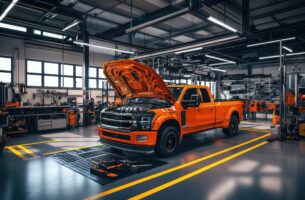
An orange truck with its hood open, showcasing the engine in an automotive workshop. The setting is modern and clean, with yellow lines on gray floor tiles adding contrast to the scene. There’s a well-lit area around it where various tools can be seen neatly arranged. This shot captures the vehicle under detailed, serious arrangement for repair or service, providing a clear view of both the car’s exterior and interior details. –ar 23:15 –v 6.1 Job ID: 344f6325-c5d2-41af-b885-d9af88031a3a

The climate and roads in Perth can be demanding for large trucks. Constant exposure to heat, sea air, and long travel distances can cause early wear. Common problems include:

  • Rust from coastal air
  • Overheating during summer drives
  • Transmission strain from frequent towing
  • Electrical issues from vibration or moisture

Regular servicing can prevent these issues from becoming serious. For example, getting a mobile servicing appointment before a long race event can help catch small faults early. Many Perth workshops offer on-site inspections and quick truck repairs, which saves time and helps avoid roadside breakdowns.

Simple Maintenance Tips Between Services

Even with regular professional care, truck owners can do small things to keep their vehicles in good condition:

  • Check oil, brake, and coolant levels often
  • Keep the air filter clean for better fuel use
  • Maintain correct tire pressure before long trips
  • Avoid carrying loads beyond the rated capacity
  • Pay attention to unusual sounds or vibrations

Following these habits between scheduled services reduces the need for major truck repairs and helps maintain safe performance on the road.

Conclusion

Proper American truck servicing in Perth is essential for keeping these powerful machines reliable and safe. Trucks like the Ford F-250 or Chevrolet Silverado perform best when handled by skilled technicians who understand diesel engines, advanced systems, and heavy towing needs. With consistent maintenance and expert truck repairs, owners can keep their vehicles performing at their best. Investing in professional care ensures these trucks remain strong, efficient, and ready for any road across Perth and beyond.

Trending: Welcome Bonuses That Include Free Spins AND Sweepstakes Coins

Photo by depositphotos at https://depositphotos.com/

Online casinos are increasingly combining two types of bonuses in one package: free spins and coins for sweepstakes. This is not a coincidence. Players want to immediately understand what they are getting, and operators are adapting to demand. Fortune Coins Free Spins is one example where the offer looks profitable for both a beginner and those who already know the mechanics of such platforms.

The trend is clear: the more content from the first minutes, the higher the chances that the player will stay. But not everything is so simple. The main thing is to understand what you are getting. Not by the advertising banner, but by the facts.

Previously, bonuses were divided: either free spins or coins. And now they are combined. There are several reasons:

  • Increasing engagement – different types of bonuses allow trying both slots and raffles.
  • The player gets not only a chance to win, but also more time in the game.
  • A newbie quickly gets acquainted with the mechanics of the platform – what spins are, how sweepstake coins work, and why convert them.

The format is beneficial to both parties. The player gets two game channels. The operator gets a chance to keep the user for 10 minutes, but for at least an hour.

What is usually included in the combined welcome bonus

There are many options, but the general scheme hardly changes. Approximate composition:

  • From 100 to 500 free spins (sometimes broken down by days).
  • 5,000–20,000 sweepstake coins.
  • Additional gold coins for in-game activity.
  • Limited validity period (up to 7 days).
  • Bonuses only for certain slots.

This set allows you to test the platform without making an investment and without rushing into your first deposit. The main thing is to use the bonus before the end of the term. Then everything will burn out.

What to check before activation

Even if the offer looks attractive, you shouldn’t click “get” right away. Some nuances need to be checked:

  • Which slots are involved? Usually, the choice is limited, especially for free spins.
  • Is there a wager? For sweep coins – no, but for free spins – maybe.
  • Expiration date. Often, the bonus is available 24-72 hours from the moment of activation.
  • Regional restrictions. Some bonuses do not work in certain states.
  • Withdrawal conditions. Even if you win, platforms can limit withdrawals in the first days.

If you ignore these points, you can lose the entire bonus before you figure out what you got at all.

Pros and cons of a double bonus

To avoid illusions, it is worth looking at the advantages and weaknesses of the format.

Pros:

  • Two types of currency – more game scenarios.
  • The possibility of winning without a deposit.
  • Accelerated acquaintance with the platform.
  • Often — risk-free participation in tournaments and sweepstakes.
  • Bonuses are activated automatically, without promo codes.

Cons:

  • Limited time of use.
  • Free spins often come with a minimum bet.
  • It is not always clear what to do with coins without an explanation.
  • Some offers are unprofitable without a subsequent deposit.
  • The terms and conditions may be written in small print, and violations may lead to the bonus being blocked.

The format works, but it is not suitable for everyone. For those who just want to play without obligations — yes. For those who immediately expect to win — no.

Who should use such a bonus?

Not every player will get the most out of the combined bonus. This format is more for those who:

  • Are you ready to spend 1-2 hours playing without replenishment?
  • I am interested in sweepstake platforms.
  • Want to get free spins without risk.
  • Are you ready to understand the rules before activation?

If you don’t like reading the terms and conditions, don’t plan to waste time, or want to top up your account right away, it’s easier to choose another bonus.

A bonus with free spins and sweepstake coins is not a freebie, but a tool. It gives you a start. Without investments, but also without guarantees. You can win. You need to figure it out. Playing without understanding is useless. The format works if you use it wisely. Those who are looking for easy money will miss out. Those who think and read the rules will come out on top.

5 Ways to Get Involved in the US Poker Scene Today

Photo by depositphotos at https://depositphotos.com/

Poker has been around in America since the 1800s, and honestly? It’s never been hotter. You’ve got ESPN showing tournaments 24/7, online sites popping up everywhere, and suddenly everyone thinks they’re the next Phil Ivey. Whether you’re already grinding or just poker-curious, there’s something addictive about this game that hooks people fast.

Getting into the US poker scene isn’t as intimidating as it looks on TV. Sure, you won’t be sitting across from Daniel Negreanu tomorrow, but there are tons of ways to jump in right now. From your couch to the casino floor, let’s break down five solid ways to get your poker fix.

1. Online Poker – Start Here (Seriously)

Online poker changed everything — platforms basically brought Vegas to your laptop. You can play Texas Hold’em at 2 AM in your pajamas — try doing that at the Bellagio.

The beauty of online play is that nobody cares if you’re terrible at first. Start with micro-stakes (we’re talking pennies here) and work your way up. I’d recommend beginning with $0.01/$0.02 games where losing $20 won’t ruin your month. Plus, most sites have play-money games if you want to learn without any risk.

Pro tip: Use those tutorial videos. They’re actually helpful, unlike most online tutorials that waste your time.

2. Local Tournaments – Where Things Get Real

Nothing beats live poker. The tells, the table talk, that guy who always wears sunglasses indoors — it’s a whole experience you can’t get online.

Local tournaments happen everywhere. Your neighborhood casino probably runs daily tournaments for $60-$100 buy-ins. Community centers sometimes host charity games. Heck, I’ve seen poker tournaments in bowling alleys.

The World Series of Poker (WSOP) Circuit Events are the gold standard if you want to get serious, but don’t jump into those until you’ve got some experience under your belt.

Fair warning: live poker etiquette matters. Don’t be that person who acts out of turn or splashes chips everywhere. Watch a few hands first, learn the flow.

3. Poker Clubs – Find Your People

Poker clubs are where you’ll meet the regulars who actually know what they’re doing. These aren’t just random games — they’re communities.

Places like the Silicon Valley Poker Club or the New York Poker Club run organized games and actually teach newcomers properly. Many clubs offer training sessions, which beats learning bad habits from YouTube videos. Plus, you’ll network with players who can point you toward better games and opportunities.

Search Facebook groups or ask around at local card rooms. Most cities have at least one established club.

4. Hit the Casinos – Go Big or Go Home

Want the full poker experience? Nothing beats a real casino poker room. The Bellagio in Vegas, Borgata in Atlantic City — these places are poker meccas for good reason.

Casino poker rooms run games around the clock. You’ll find everything from $1/$2 no-limit (perfect for beginners) to nosebleed stakes where people buy in for more than your car’s worth. The atmosphere’s electric, the dealers are professional, and you might even spot a poker celebrity.

Just remember: casinos have dress codes and house rules. Don’t show up in flip-flops expecting to play. Call ahead and ask about their requirements.

5. Online Communities – Your Poker Education

Playing US poker without studying it is like trying to learn guitar without listening to music. Online forums are where you’ll actually improve.

The TwoPlusTwo forum is the Harvard of poker discussion. Reddit’s poker community is more casual but still valuable. These places teach you concepts you’d never figure out on your own. Strategy discussions, hand reviews, industry news — it’s all there.

Don’t just lurk, either. Post hands you’re unsure about, and ask questions. The poker community is surprisingly helpful to newcomers who show genuine interest in improving.

Ready to Play?

The US poker scene has room for everyone, from weekend warriors to future pros. Online sites offer convenience, local games build skills, casinos provide thrills, and communities teach strategy. Pick what appeals to you most and dive in.

Just remember — poker is gambling, so don’t risk money you can’t afford to lose. Start small, learn constantly, and enjoy the ride. Who knows? You might discover your new obsession.