

Home Blog Page 15

Why Old Online Vehicle Records Can Affect a Private Car Sale

Photo by depositphotos at https://depositphotos.com/

Selling a used car today takes more than good photos, a fair price, and quick replies. Most buyers search the VIN before they message you. They check old listings, photos, and public records to see whether the car’s story matches the ad. That is useful for buyers, but it can be frustrating for honest sellers. Old auction images, copied VIN pages, or outdated results can make a properly repaired vehicle look risky before anyone has seen its current condition or heard the full story yet.

Online First Impressions Matter More Than Sellers Think

Most buyers make their first decision long before they see the car in person. If search results look clean, organized, and consistent with the seller’s description, the conversation usually starts calmly. If the buyer finds old damage photos or confusing records, trust can drop quickly.

The problem is not always the history itself. Many used cars have had repairs, part replacements, or previous auction listings. The real issue is how that information appears online. A single old photo, copied across multiple websites, can make the car seem worse than it is today.

Why Buyers Search the VIN

A VIN search is one of the easiest ways for buyers to check a car before a meeting. It can lead to auction pages, older sale listings, photos, mileage records, and other public information. For serious buyers, this step feels normal because it helps them avoid hidden risks.

Sellers should expect this behavior. If you are listing a used car, assume that buyers will search the VIN and compare what they find with your ad. If those results create confusion, you may receive fewer calls, weaker offers, or more difficult questions.

When Old Auction Photos Create Confusion

Auction photos can create instant doubt because they usually show a car at its worst: damaged, dirty, unrepaired, or parked in a storage lot. Even after proper repairs and inspections, those images may remain on mirror sites. Sellers should still be honest about serious damage, title status, and repairs. The problem is context: old photos can make buyers focus on the past instead of the car’s current condition and value.

In some cases, sellers prepare repair invoices, current inspection results, and clear photos to explain the full story. Others also review public VIN results before listing the vehicle, because using a clear VIN approach can help them understand which pages, images, or duplicated listings may affect how the car is perceived online.

What Sellers Should Check Before Listing the Car

Before publishing an ad, it is worth looking at the car from the buyer’s point of view. A seller may know that the vehicle is repaired, safe, and ready to drive, but a buyer only sees the information available in the ad, documents, photos, and search results. If these details do not match, even a good car can look suspicious.

A simple pre-sale check can help you prepare better:

  • Search the VIN online: see what pages, photos, and old listings appear in search results.
  • Compare public records with your documents: make sure your ad does not conflict with title, mileage, or service history.
  • Prepare repair proof: keep invoices, inspection papers, and before-and-after details if the car was repaired.
  • Update your listing photos: show the vehicle clearly from different angles, including interior and important details.
  • Be ready to explain the history: buyers trust sellers more when answers are calm, direct, and consistent.
  • Set a realistic price: if the car has past damage, price it in a way that reflects the full picture.

These steps do not guarantee a quick sale, but they make the process smoother. Buyers are more likely to continue the conversation when the seller is prepared, transparent, and able to explain the difference between old online information and the vehicle’s current condition.

Documentation Builds Trust

Good documents can reduce tension during a used car sale. If a buyer sees old damage photos online, repair invoices and inspection results help explain what happened after those photos were taken. They show that the car was not simply patched up and resold without attention.

What Documents Are Worth Keeping

Service records, parts receipts, inspection reports, alignment checks, paintwork invoices, and maintenance history can all support your story. Even basic documents are better than vague statements. Saying “everything was repaired” is much weaker than showing when, where, and how the work was done.

The same applies to mileage. If the odometer reading matches service records and previous listings, buyers feel more confident. If there are gaps, be ready to explain them before the buyer asks.

Transparency Still Matters

A cleaner online presence should not replace honesty. If the car had serious damage, title issues, or major repairs, the seller should not pretend otherwise. Buyers can discover important facts through inspections, reports, or official records, and losing trust at the final stage can ruin the deal.

The better approach is balance. Remove confusion where possible, prepare documents, and describe the vehicle accurately. This protects the seller from unfair assumptions while still giving the buyer enough information to make a responsible decision.

A Better Sale Starts Before the Ad Goes Live

Selling a used car today means preparing both the vehicle and the information buyers may find online. They will check the engine, tires, and interior, but they may also search the VIN, old pages, and public records before contacting you. Before the ad goes live, review search results, collect repair and service documents, take clear current photos, and prepare honest answers. When the car’s condition, documents, and online information match, buyers trust the deal more and negotiation becomes easier.
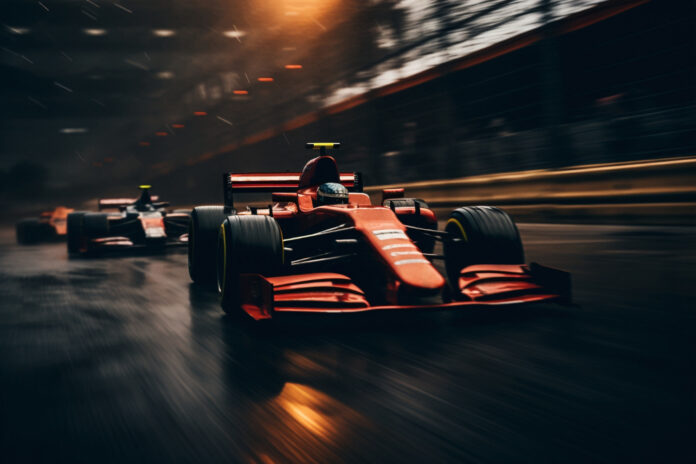

F1 Tickets Are Selling Faster Than Ever: Here’s What You Need to Know

Buying race tickets used to feel like a patient weekend plan. Now many fans treat the sale date like part of the race itself. The best seats, cheaper areas, and hotel rooms near the circuit can move quickly, especially for famous race weekends.

Check the race page before the sale day

A rushed ticket search usually starts with one mistake: opening too many tabs after the best sections are already gone. Do the boring check before the rush starts. Look at the track map, train times, screen position and ticket days first. The F1 tickets page is useful for checking race locations and ticket options before you commit to one weekend.

The next step is price hygiene. Look at the ticket category, currency, delivery method and any service charges before adding anything to the basket. On Fanatix.com, buyers can also browse other live events, so it helps to stay focused on the race, date and city already chosen.

The cheapest ticket is not always the easiest weekend

A general admission ticket can work well for fans who arrive early, enjoy walking and do not mind standing. It can feel less comfortable for someone traveling with a tight train schedule or wanting a fixed view of one corner. Grandstand tickets cost more, but a numbered seat can make the day simpler.

Before paying, write down the full race weekend cost:

  • Ticket price.
  • Booking or service fee.
  • Train, fuel or parking.
  • Hotel or late-night transport.
  • Food and water inside the circuit.
  • Rain jacket, ear protection and portable charger.

This small list keeps the decision honest. A cheaper ticket can become awkward if transport is poor or the viewing area needs a very early arrival. A better seat can be worth it when it removes stress from the day.

Why demand feels so intense now

The audience for Formula One has grown far beyond people who followed every race years ago. New fans often plan trips around one driver, one circuit or one city break. That means demand arrives from local fans, tourists and casual viewers at the same time.

Some races also carry extra pressure because the venue has history. Silverstone, Monza, Monaco and Spa are not just race tracks on a calendar. They are trips people talk about for years, so fans often book earlier and accept fewer compromises on seats.

Older reporting from Forbes on F1 ticket prices shows why fans have watched race costs closely for a long time. Today, the safer habit is to plan the whole weekend before the ticket drop, not after checkout.

What to decide before opening the checkout

Pick the race first, then the type of day wanted. A fan who wants driver photos near the entrance needs a different plan from someone who wants one clean view of a braking zone. Weather matters too, especially at open circuits where rain can turn a light bag into a problem.

Save the official race date, set one budget ceiling and choose two acceptable ticket areas. If the first section sells out, there is still a calm second choice. That one detail can stop a bad panic buy.

A good ticket plan leaves room for the race

The best purchase is the one that still feels sensible after travel, food and sleep are counted. Check the date, seat type, circuit access and total cost before paying. Then leave the weekend loose enough for queues, weather and the small delays that always appear on race day.

One more detail deserves attention before checkout: the gap between ticket delivery and booking or service fee. Some race weekends use mobile tickets, others send updates closer to the event. Keep the buyer name, email, and passport or ID details consistent across bookings. If a friend pays, decide who holds the account login before race week, when signal is poor, and queues are already long near the circuit gates on Sunday.

Inside the Pit Lane Workforce: How NASCAR Haulers and Race Shops Keep Forklift Operations Race-Ready

Photo by depositphotos at https://depositphotos.com/

When the green flag drops on a Cup Series Sunday, the cameras follow the cars. The real choreography, though, starts days earlier in a race shop loading bay, where a forklift driver is threading a $200,000 chassis between toolboxes, tire stacks, and a 53-foot transporter with inches to spare.

Pit road gets the glory, but the workforce that moves a NASCAR team from Concord to Michigan to Sonoma runs on lift trucks, pallet jacks, and rolling carts. Get that part wrong and the car never makes it to qualifying.

The hauler is a rolling warehouse

A modern NASCAR transporter is closer to a Class 8 warehouse on wheels than a glorified trailer. Two race cars ride upstairs, and the lower bay swallows engines, gearboxes, pit equipment, uniforms, tool chests, and enough spare bodywork to rebuild a car overnight.

Loading that hauler is a forklift job from start to finish. Engine carts get rolled, pallets of tires get staged, and toolboxes that weigh more than a small car get nudged into exact positions so the load rides level for 600 miles. 

According to Wikipedia’s overview of NASCAR transporters, these rigs are custom-built specifically to carry two cars plus a full mobile shop, which is why every inch of floor space is spoken for before the truck leaves the shop.

Why race shops lean on lift trucks more than most warehouses

Walk through a Charlotte-area race shop on a Tuesday and you’ll see why forklifts matter. Engine blocks, transmissions, and sheet metal jigs move between bays constantly. Tire allocations from Goodyear arrive by the pallet. Sponsor activation gear, show cars, and merchandise for the next race weekend all need staging.

A few realities make the lift-truck workload heavier than a typical distribution center:

  • Tight, mixed-use floors. Race shops aren’t laid out like big-box warehouses. Aisles bend around fab tables, paint booths, and pit boxes, so operators have to maneuver in spaces designed for people first and machines second.
  • High-value, fragile loads. A dropped pallet of canned goods is an inconvenience. A dropped powerplant is a missed race. The cost of a single mistake makes operator skill non-negotiable.
  • Time pressure on a published schedule. NASCAR’s weekly cadence doesn’t move. If the hauler rolls out late on Wednesday, the team is behind before the haulers even hit the infield gate.
  • Travel-day turnarounds. Crews unload at the track, repack after the race, and often start loading the next week’s car within 48 hours of getting home.

OSHA doesn’t care that you’re a race team

Race shops sit under the same federal workplace rules as any other employer. Under OSHA standard 1910.178, every powered industrial truck operator has to be trained, evaluated, and certified by their employer before they run a lift on the job. That applies whether the warehouse is shipping consumer goods or staging a Next Gen car for Michigan.

Teams that take compliance seriously typically standardize their training. Many shops use online programs, like forklift certification from a third-party provider, so new fabricators, transporter drivers, and pit crew utility members can get qualified without pulling a full day off the build schedule.

It’s also a liability story. An undertrained operator who damages a hauler or injures a teammate creates problems that reach far past the shop floor, including insurance, sponsor optics, and the team’s ability to make the next race.

The race-shop forklift skill set

Generic warehouse training covers the basics, but a race-shop operator picks up specialized habits the moment they start running loads for a Cup, Xfinity, or Truck Series team.

  • Reading the load like a setup sheet. Operators learn how engines, body panels, and pit carts behave on the forks differently from boxed freight, and they adjust speed and tilt accordingly.
  • Loading for ride quality. Weight distribution inside a hauler affects how the rig tows. Heavy items go low and centered so the truck handles predictably across two days of interstate.
  • Working around fabricators. Welders, painters, and engine builders are usually mid-task when a lift truck rolls through. Spotters and clear radio calls are part of the job.
  • Track-side discipline. The garage area is crowded with crew members, officials, media, and fans on hot-pass tours. Operators slow everything down and assume a pedestrian will step out at any moment.

What other shops can borrow from race teams

You don’t need a Cup Series budget to copy what works. The habits that keep a hauler crew on schedule translate to any operation that lives and dies by a calendar.

Cross-train more people than you think you need, because a single sick call shouldn’t strand a load. Document the loading sequence so it isn’t trapped in one veteran’s head. Build pre-trip and post-trip equipment checks into the shift the way teams build them into a race weekend. And treat training as a recurring expense, not a one-time hire-in cost. 

The trophy on Sunday belongs to the driver and the crew chief. The fact that the car got there at all belongs, in part, to the person behind the forks on Wednesday morning. Race-ready operations start in the loading bay, and the teams that respect that quietly win more often than the ones that don’t.

The Long History Between Motorsports and Casino Sponsorships

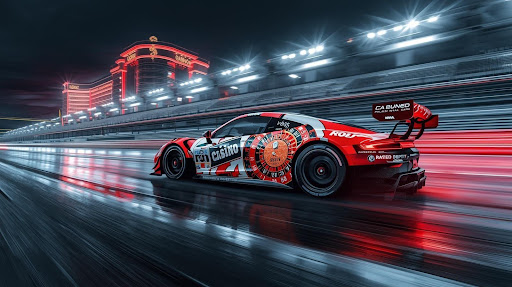
There is a historical affinity for high-stakes racing and gaming. Both are generally associated with individuals who desire the thrill of taking risks and large crowds of people willing to wager on event outcomes. As such, when sweepstakes casinos online emerged as one alternative for Americans to gamble online with virtual currency, instead of real money, the relationship between gambling and motorsports had already existed for some time. This relationship has also evolved from merely being related to sponsorship and branding to a much more sophisticated form of partnership.

Early Roots: When Tobacco Left, Gambling Moved In

Major tobacco companies were the largest sponsors of all forms of motorsport until tobacco company logos were banned from all forms of racing venues in Europe over the last decade. Like the racing world, tobacco companies operated in a grey regulatory space; utilized aspirational marketing tactics; and had substantial funds to allocate towards supporting racing programs. With the advent of wide-spread prohibitions on tobacco advertising across Europe at the start of this decade, an opportunity arose as racing teams lost a significant revenue stream. Racing teams needed new partners with deep pockets willing to spend heavily (in terms of dollars), and able to associate their brand with speed, glamour, and competition at the highest levels. By the end of the year, the gaming industry was positioned to fill the void. Operators within the gaming industry, including book-making firms, poker rooms, and casinos viewed motorsports as an ideal vehicle to reach their target audience, which consisted of males with relatively high incomes; knowledgeable about brands; and accepting of risk.

How the Partnership Evolved Across Series

There was no universal transition from tobacco to gambling in sponsorship for each type of racing. Each racing category has been sponsored by a variety of gambling companies based upon their geographic location, audience size and the local regulatory environment.

Below is an overview of how casino and sports betting companies are positioning themselves within major motorsport series:

Motorsport SeriesNotable Casino BrandsSponsorship TypeGeographic Focus
Formula 1bet365, PokerStars, 888 CasinoTitle + livery dealsGlobal, multi-race
NASCARBetMGM, DraftKings, FanDuelCar branding + digitalUS-focused
MotoGPLeoVegas, BetssonRider suits + tracksideEuropean emphasis
IndyCarCaesars EntertainmentTitle race sponsorshipsNorth America
Rally / WRCSportingbet, UnibetTeam and event brandingRegional varies

What Casino Brands Actually Buy

To understand how this deal happened we need to see the actual returns for the money spent. The benefits are much bigger than having a logo on a car door.

  • Globally there were over 100 million people watching one F1 race. The brand placement on a top level racing team will generate so many more media dollars than an equal advertising dollar amount.
  • Prestige is associated with motorsport through precision, technology, and elite performance. Casino brands want to be seen as part of that world (motorsport) vs. strictly just another casino product.
  • VIP player hospitality has been using track side events for years. Exclusivity of locations and use of these events as tools to retain high value players.
  • Most modern day sponsors have some form of content rights which allow them to utilize behind the scenes video footage, the ability to schedule drivers for public relations type opportunities, and social media utilization.
  • Broadcasting digitally and geotargeted advertising allows teams to swap out the same digital board to broadcast to different regions. If you operate in a country that does not permit casino advertising, you may only wish to expose your brand in countries you have licensed to offer gaming services.

The Current Landscape and What Comes Next

There is no way that there will be some kind of shift. The connection between casino brands and motor sport is today so much more complex than it was twenty years ago when tobacco left the pits. Casino brand sponsorship is no longer simply the act of applying a logo to a racecar. Rather, it includes co-marketing with a variety of different types of fantasy racing competitions, in addition to integrating with sports wagering betting markets, along with co-branding many different digital marketing initiatives throughout each year’s race schedule.

These changes were driven by the exponential growth of Internet-based gaming, the increasing popularity of in-play betting, as well as the expansion of legalized sports wagering into virtually every state in America. The U.S. based racing series (due to federal restrictions) had long-kept gambling related sponsors away from their events; however, as one state after another begins to legalize sports wagering, they are aggressively pursuing relationships with gambling operators, who are also interested in using racing-related advertising opportunities.

On the other hand, the number of people scrutinizing this relationship is expanding. There are numerous governing bodies, TV broadcast companies and regulatory agencies located in Europe where they are reviewing the rules regarding what forms of advertising for gambling brands are allowed within various forms of sports. Additionally, prior to making modifications to its existing law banning almost all forms of gambling sponsorship of sports activities, Italy implemented a complete ban on such sponsorship activities.

As a result of these concerns, how future agreements between racing organizations and gaming operators will be constructed will ultimately be impacted by what forms of advertising are allowed and therefore will likely lead to increased use of digital media (e.g., social media platforms) and “behind-the-scenes” type sponsorships/activations that may be difficult to monitor and control compared to advertising placed directly onto racecars or in front of live audiences via television broadcasts.

The Car That Shouldn’t Feel This Big or This Fast

Photo by depositphotos at https://depositphotos.com/

There is a design revolution happening in automobiles that most people notice before they can explain it; a kind of spatial illusion that makes a relatively small machine feel oddly generous on the inside while also making it unexpectedly quick when you press the accelerator. Electric vehicles have not simply changed what powers a car, they have rearranged the relationship between space, weight, and motion in a way that is almost philosophical if you sit with it long enough. What is interesting is that this is not just engineering trivia, but a shift in how we experience movement and enclosure at the same time.

The Architecture of Absence, or Why EVs Feel Roomier

Traditional gasoline cars are built around a long mechanical story. An engine sits in the front as a dense, complicated heart, a transmission tunnels energy down a central spine, and a fuel tank competes for space somewhere behind you. All of that hardware forces compromises on cabin design, like furniture arranged around a large immovable object in the middle of the room. EVs remove much of that story. The battery becomes a flat structural layer under the floor, the motors shrink into compact units near the wheels, and suddenly the engineers are no longer negotiating with a bulky engine bay or a transmission tunnel. What remains is space that is strangely intentional, as if someone designed the car by starting with the people first and the machinery second. This is why a smaller EV can feel surprisingly spacious. In many cases, you are experiencing something like 5 to 15% more efficient use of the external footprint, or conversely a noticeably larger cabin within the same physical boundaries.

Why They Feel Faster Than the Numbers Suggest

If space is the revolution of comfort, acceleration is the more emotional one. Electric motors behave differently from combustion engines in a way that feels almost unfair at first encounter. Torque arrives instantly, without the delay of revving, gearing, or mechanical hesitation. There is no buildup of expectation, only response. In practical terms, EVs in the same category as gasoline cars are often somewhere between 0.5 and 2.0 seconds quicker from 0 to 100 kilometers per hour, depending on the segment. That sounds technical, but psychologically it is the difference between “this car is quick” and “this car is already doing it before I asked.” The deeper point is immediacy. We experience acceleration as a conversation between intention and outcome, and EVs shorten that conversational gap.

Why Charging Changes Everything

Traditional car dealerships have always relied on a certain rhythm of customer experience. You arrive, you look at cars, you test drive, you negotiate, and then you leave, often with the assumption that fueling will always be someone else’s problem, handled in minutes at any gas station. EVs disrupt that assumption because they extend the experience beyond the dealership lot. They introduce a new question that buyers inevitably ask, sometimes out loud and sometimes silently, which is where and how will I actually live with this thing day to day.

This is where dealership-installed EV charging becomes a competitive advantage, because a dealership that offers charging is not just selling a car; it is demonstrating a lifestyle transition in real time. While a customer is inside discussing trim levels or software features, the car itself is visibly replenishing energy outside. That visual feedback loop matters more than it first appears, because it collapses abstraction into experience. It also changes psychology in another subtle way. Range anxiety is rarely about numbers alone; it is about trust in a new system.

Watching a vehicle charge at the place of purchase begins to build that trust immediately, without argument or persuasion. From a business perspective, there is also a more practical benefit. Charging stations create dwell time, and dwell time increases service opportunities, accessory sales, customer engagement, and long-term loyalty. A customer who spends 30 to 60 minutes at a dealership while their vehicle charges is not a lost hour, but a captive window of relationship building. And there is a second-order effect that is often underestimated. Dealerships that install charging infrastructure show competence in the EV transition itself. They are no longer just retailers of vehicles; they become nodes in an energy ecosystem, and that perception increasingly influences brand trust.

The Convergence of Space, Speed, and Infrastructure

If you step back, something interesting happens. The same design shift that makes EVs feel more spacious also makes them feel more immediate in motion, and both of those experiences are reinforced by a new infrastructure layer that dealerships can either ignore or lean into. Space expands because mechanical clutter disappears. Speed feels greater because mechanical delay disappears. And ownership becomes more credible when energy supply is made visible where purchase decisions are made. It is not often that engineering changes, emotional experience, and retail strategy align so cleanly, but this is one of those cases.

How Machine Learning Is Helping Businesses Spot Compromised Suppliers

Want to hear about what bad things are silently happening within your supplier base these days?

The majority of companies don’t know when one of their suppliers is about to go bust, fall victim to a cyberattack or slip on quality. And this is bad…

Because when a supplier goes down, your entire operation feels it.

Here’s the good news:

Machine learning is changing the game. Now you can detect a risky supplier weeks (sometimes months) ahead of failure.

In this post, learn how machine learning detects risky suppliers before they become a problem, why predictive demand planning is important and what to look for in a demand planning system that works.

Let’s jump in!

What you’ll discover:

  • Why Compromised Suppliers Are A Bigger Risk Than You Think
  • How Machine Learning Spots The Warning Signs
  • Predictive Demand Planning In Action
  • 4 Signals Machine Learning Tracks
  • Why Spreadsheets Just Don’t Cut It
  • Choosing The Right Tools

Why Compromised Suppliers Are A Bigger Risk Than You Think

A “compromised” supplier doesn’t always mean a hacked one.

It can also mean:

  • A supplier with cash flow issues
  • A supplier hit by a cyberattack
  • A supplier struggling with quality
  • A supplier about to miss delivery

Any of these can wreck your supply chain. The facts prove it.

Third-party breaches now make up 30% of total attacks, and the average cost of a breach is $4.44 million. Worse yet, 45% of organizations can only see first-tier suppliers. Some have zero upstream visibility.

That’s a scary stat.

If you can’t see your suppliers, you can’t defend yourself. Modern supply chain AI solutions do just that. By ingesting massive quantities of supplier data into machine learning models, predictive demand planning can identify risks before they impact your stock.

Pretty cool, right?

How Machine Learning Spots The Warning Signs

Machine learning is great at one thing in particular…

Finding patterns that humans miss.

The average supply chain has thousands of data points to track. Lead times. Order volumes. Defect rates. Payment behaviour. News mentions. Weather data. Social media chatter. You name it. There are far too many for any human team to monitor effectively.

But a machine learning model can.

Here’s how it works:

It looks at historical data from your suppliers and learns what normal is for each one. Then it monitors for anomalies as they happen. The second something abnormal is detected you’ll be alerted.

For example…

A supplier’s average lead time is 14 days. It has been 14 days for 3 years. Then all of a sudden it’s 19. A spreadsheet won’t notice. But machine learning will notice right away because it knows what normal is.

That’s the magic.

Predictive Demand Planning In Action

So how does predictive demand planning tie into spotting compromised suppliers?

It’s actually pretty simple.

Predictive demand planning learns with machine learning what you will need, when you will need it, and who should supply it. Once the system understands your demand it also understands what each supplier “should” have on order at any point in time.

That means deviations stand out fast.

McKinsey says companies with AI-powered forecasting can reduce forecasting errors by 30-50% and decrease stockouts by up to 65%. But those improvements don’t just happen behind the scenes…

They’re about catching supplier issues before they cause stockouts in the first place.

Better forecasts = earlier warnings.

4 Signals Machine Learning Tracks To Spot Trouble

Want to know what these systems actually look at?

Here are the 4 biggest signals machine learning uses to flag a compromised supplier.

Signal #1: Lead Time Drift

A small change in lead time is often the first sign something’s wrong.

Machine learning monitors delivery metrics on each individual order. If lead times begin to slip (even by just a little bit), an alert goes off. This is one of the first signs of supplier distress. Financial problems, staffing shortages, production failures – you name it.

Signal #2: Quality Score Drops

Defect rates and return rates tell a story.

A supplier trending positive in defects is typically a stressed supplier. ML models monitor quality KPIs as they happen vs. how that supplier has performed in the past. Fall off a few percentage points and you’ll know.

Signal #3: Order Behaviour Changes

Sudden changes in pricing, minimum order quantities, or payment terms?

That’s a red flag.

Typically, such deviations indicate financial distress or operational stress. Machine learning detects these deviations and correlates them with other risk indicators to get a holistic view.

Signal #4: External Data & News Signals

This is where it gets really clever.

Today’s systems ingest external information – news articles, weather incidents, geo-political developments, even social media feeds. If a storm hits your supplier’s area or your supplier is mentioned in a cyberattack report, the system knows within minutes.

That early warning can save your entire operation.

Why Spreadsheets Just Don’t Cut It

You might be thinking — can’t a good spreadsheet do all this?

Sadly, no.

Did you know that 46% of semiconductor firms use manual spreadsheets to manage supply chain risk visibility? That leaves a massive exposure gap.

Spreadsheets simply can’t:

  • Process real-time data
  • Track external risk factors
  • Learn from past patterns
  • Connect data points across suppliers
  • Send alerts when things change

Machine learning does this automatically, all the time. It never sleeps, takes holidays, or misses the subtle things that humans do.

Choosing The Right Tools

Not every machine learning tool is built for supply chain risk.

When choosing a system, look for these things:

  • Real-time data processing: It should pull in fresh data constantly
  • Multiple data sources: Internal + external data is a must
  • Custom alerts: You should be able to set your own risk thresholds
  • Easy integration: It needs to plug into your existing systems
  • Predictive demand planning: This is non-negotiable today

Find the right tool and it will pay for itself in months. It eliminates the headaches associated with supplier management and allows you to sleep better at night.

Bringing It All Together

Compromised suppliers are one of the biggest risks businesses face today.

The good news? Machine learning is finally handing you the tools to fight back. Predictive demand planning and AI-driven supplier monitoring mean you can identify issues early, safeguard your operations and keep your supply chain flowing.

A quick recap:

  • Compromised suppliers can wreck your operations fast
  • Machine learning spots patterns that humans miss
  • Predictive demand planning catches deviations early
  • Tracking lead times, quality, and external data is key
  • Spreadsheets just can’t keep up anymore

Take action today — your future supply chain will thank you.

Speedway in 2026: Why the Sport Is Having a Quiet Renaissance

Speedway has never been a sport that sought the spotlight. Its appeal has always been built on proximity, noise, and the particular atmosphere of a shale track on a summer evening, rather than on broadcast deals or celebrity endorsement. That modesty of ambition has sometimes worked against it in an era when sports compete aggressively for media attention, but in 2026 there are genuine signs that speedway is finding a new audience without abandoning the qualities that made it compelling in the first place.

What Speedway Actually Is

For those coming to speedway for the first time, a brief explanation is useful. Speedway races take place on an oval shale track, typically around 300 metres in length. The bikes have no brakes and run on methanol fuel, and the racing involves four riders competing over four laps. Races last around a minute. The apparent simplicity of the format is deceptive: the skill involved in controlling a brakeless machine at speed on a loose surface, reading the track conditions, and making overtaking moves in the space available is considerable, and the best riders make it look easy in a way that conceals how difficult it actually is.

The sport is organised at club level through national leagues in the UK, Sweden, Poland, and several other countries, and at international level through the Speedway GP series, which is the closest equivalent to a world championship circuit. The FIM Speedway World Championship has produced some of the sport’s most celebrated moments and continues to draw significant crowds to its rounds across Europe.

The British League: A Resilient Structure

The Premiership and Championship divisions of British speedway form the backbone of the sport in the UK. The Premiership has seen some consolidation in recent years, with a smaller number of clubs competing at the top level than in previous decades, but the clubs that remain are in many cases better organised and more financially stable than their predecessors. The Championship has seen genuine growth, with new promoters bringing energy and fresh ideas to venues that had been running in the same way for years.

The grassroots of British speedway, the training tracks and junior competitions that develop the next generation of riders, have also seen investment and attention that was not always present in previous eras. The pipeline of young British talent has been a concern for the sport for some time, and the signs that more young riders are coming through the system are genuinely encouraging for anyone with a long-term interest in the domestic competition.

The Speedway GP and the International Stage

The Speedway Grand Prix series remains the pinnacle of the sport and continues to attract strong attendances at its rounds in Poland, Sweden, and the UK. The Polish rounds in particular draw crowds that would be the envy of many mainstream motorsport events, with tens of thousands of spectators turning out for meetings at venues like Gliwice and Wroclaw. Poland’s dominance of world speedway in recent years, producing a generation of riders who have won or contested multiple world championships, has created a level of domestic interest in the sport that gives the whole international series a boost.

British riders have remained competitive at world level, and the presence of home nation riders in the Speedway GP series gives UK fans a genuine connection to the international competition. The rounds held at Cardiff’s Principality Stadium have become one of the signature events in the speedway calendar, drawing a crowd that includes many casual fans who are experiencing the sport for the first time and leaving as converts.

Why New Audiences Are Finding the Sport

Several factors have contributed to speedway finding new audiences in the mid-2020s. The growth of short-form video content has suited a sport where a complete race lasts under two minutes and the action is almost continuous throughout. Clips of dramatic overtakes, last-bend passes, and spectacular falls travel well on social media in a way that footage of a full race does not always manage, and they have introduced the sport to viewers who would never have encountered it through traditional broadcast channels.

The crossover between speedway and broader sports entertainment culture has also grown. International sports platforms that cover a wide range of disciplines have increasingly included speedway in their coverage, and the sport’s presence on services such as hititbet alongside football, motorsport, and other major sports reflects its growing visibility in markets where it was previously little known. Exposure of that kind, reaching audiences who engage with sport broadly rather than following speedway specifically, tends to produce a gradual but genuine expansion of the fanbase over time.

The Live Experience: What Makes Speedway Different

Anyone who has attended a speedway meeting will tell you that the live experience is central to understanding the sport’s appeal. The smell of methanol, the noise of the bikes accelerating out of the gate, the closeness of the racing and the accessibility of the riders before and after meetings: all of this creates an atmosphere that is difficult to replicate through a screen. Speedway is one of the few sports where it is genuinely possible to speak to the competitors, where the barrier between spectator and participant is almost non-existent.

The pricing of speedway relative to other sports is also a factor. At a time when attending Premier League football or Formula One has become prohibitively expensive for many sports fans, a speedway meeting represents genuine value: an evening of live action, close racing, and real atmosphere at a price point that does not require significant financial commitment.

The Road Ahead

Speedway’s renaissance is quiet rather than dramatic, which suits the sport’s character. It is not chasing the mainstream in ways that would compromise what makes it distinctive. What it is doing is telling its story better than it has in the past, reaching new audiences through the channels those audiences actually use, and presenting the live experience in ways that give first-time visitors a genuine reason to return.

The sport has survived difficult periods before and emerged from them with its core identity intact. The signs in 2026 are that it is entering a period of measured but genuine growth, built on the qualities that have always made it compelling: speed, skill, noise, and the particular satisfaction of watching something genuinely difficult being done well.

Expand Image Backgrounds Naturally With Seedream Outpainting Tools

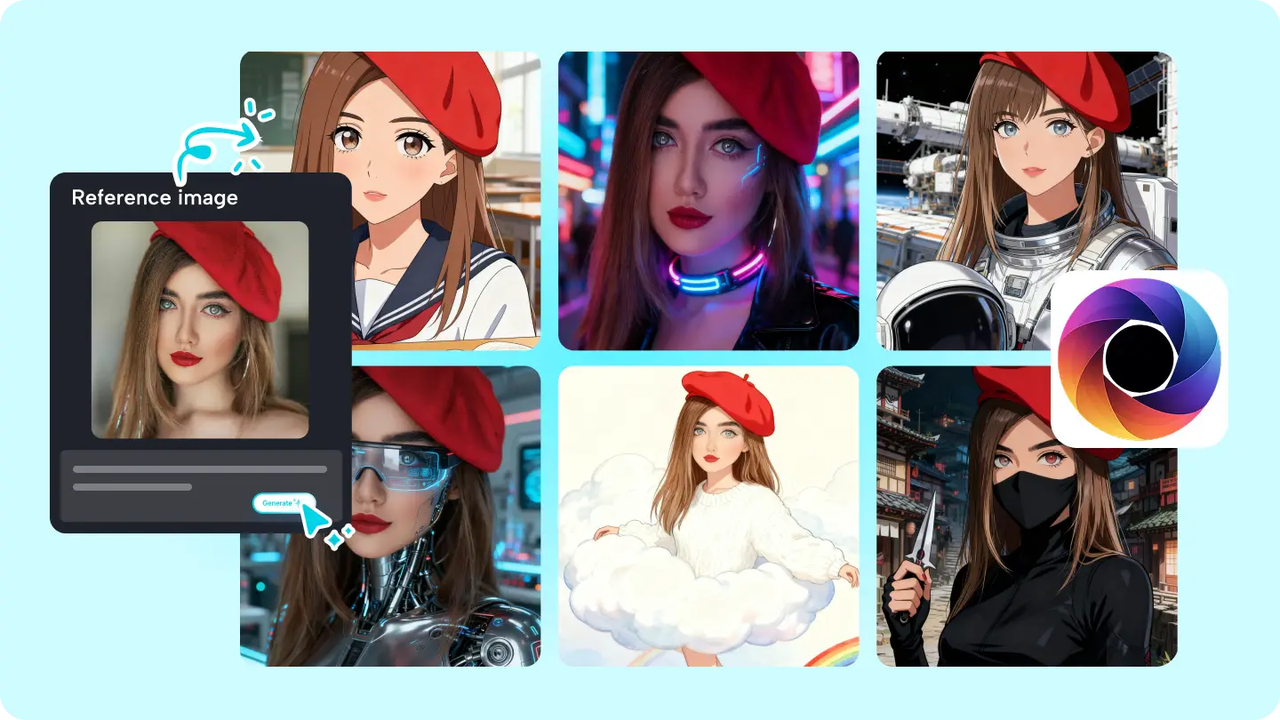
Images are now featured on websites, social media, ads, and print. Images need to be different sizes and formats for various channels. Natural background expansion to retain composition and to adapt the visuals to different formats. Outpainting with AI expands the canvas of your image without adding any disruptive elements. Pippit’s intuitive creative tools make this easy, allowing for quick and efficient enhancement and production of images.

Understanding AI Outpainting and Its Creative Potential

Outpainting is a capability of contemporary AI that cleverly expands an image past its borders, creating the content in the process. AI can predict what is around the image and analyze the existing visual information, unlike traditional editing, where visual information may need to be manually reconstructed. This way, realistic extensions are created, consistent with the original scene. Consistency remains paramount – inconsistent information can affect visual credibility. Seedream‘s cutting-edge image generation features allow for the creation of natural scene extensions while maintaining the overall composition and visual harmony.

Understanding AI Outpainting and Its Creative Potential

How Seedream Models Approach Background Extension

To be able to expand backgrounds, one must understand the visual relationships in a scene and its structure. Before generating new content, advanced AI models analyze objects, environments, depth, and spatial arrangements. This method allows for continuity over large areas and gives a realistic lighting and perspective. Balanced expansions that are related to the system’s recognition of environmental patterns and visual cues. The intelligence minimizes noticeable transitions and helps to achieve natural results for professional creative projects.

Key Advantages of Using Seedream Outpainting for Image Expansion

Outpainting can be a useful practical tool for creators who create content in multiple formats. Long canvases help to balance the visuals and provide more design options. Images can be resized for various aspect ratios (without excessive cropping). With AI, the need for manual environmental reconstruction editing is eliminated, which reduces the workload. The process is suitable for realistic pictures and artistic compositions. Faster production cycles are also a benefit to creative teams. This kind of innovation, seen at Seedance, propels the development of AI-driven visual creation technologies as a whole.

Seedance

Steps to Expand Image Backgrounds Naturally With Seedream Outpainting Tools

Getting instant access to Seedream’s outpainting capabilities through Pippit is simple. Click the button below to create your Pippit account, and follow this guide:

Step 1: Open the AI canvas workspace

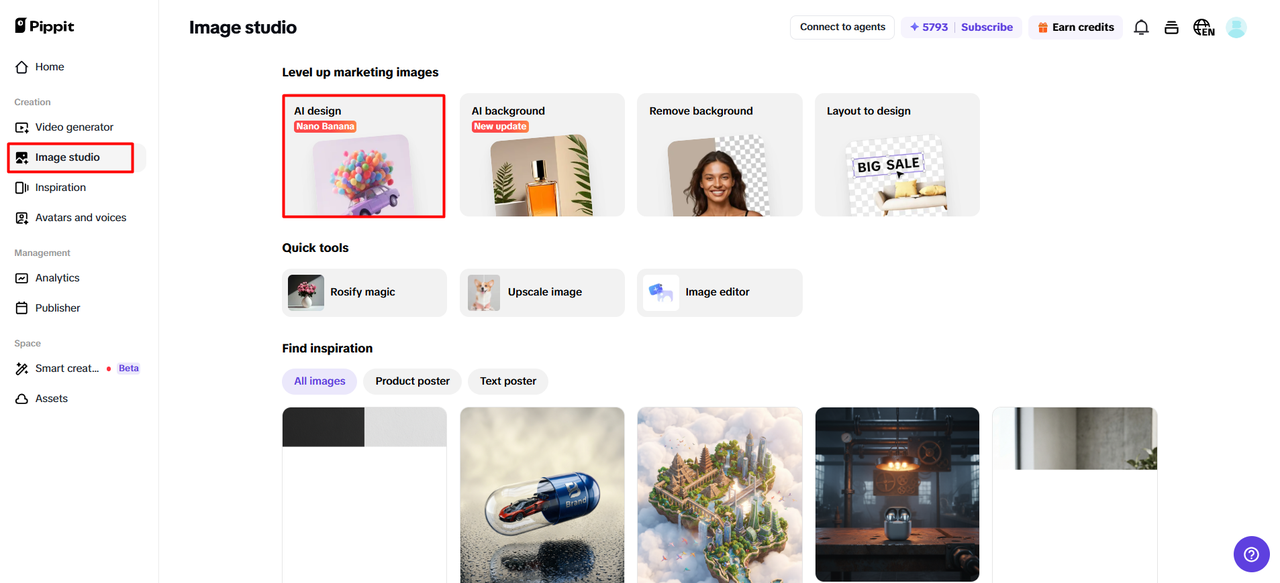
  1. At the main interface, click on the button “Image studio” to enter the AI-powered image creation workspace.
  2. Next, select the “AI design” feature to begin creating visually seamless image extensions.
  3. The AI-powered models, including Seedream 4.0, Seedream 4.5, Seedream 5.0 lite, as well as GPT Image 2, are already integrated for image creation in this editor.
AI canvas workspace

Step 2: Extend your image background

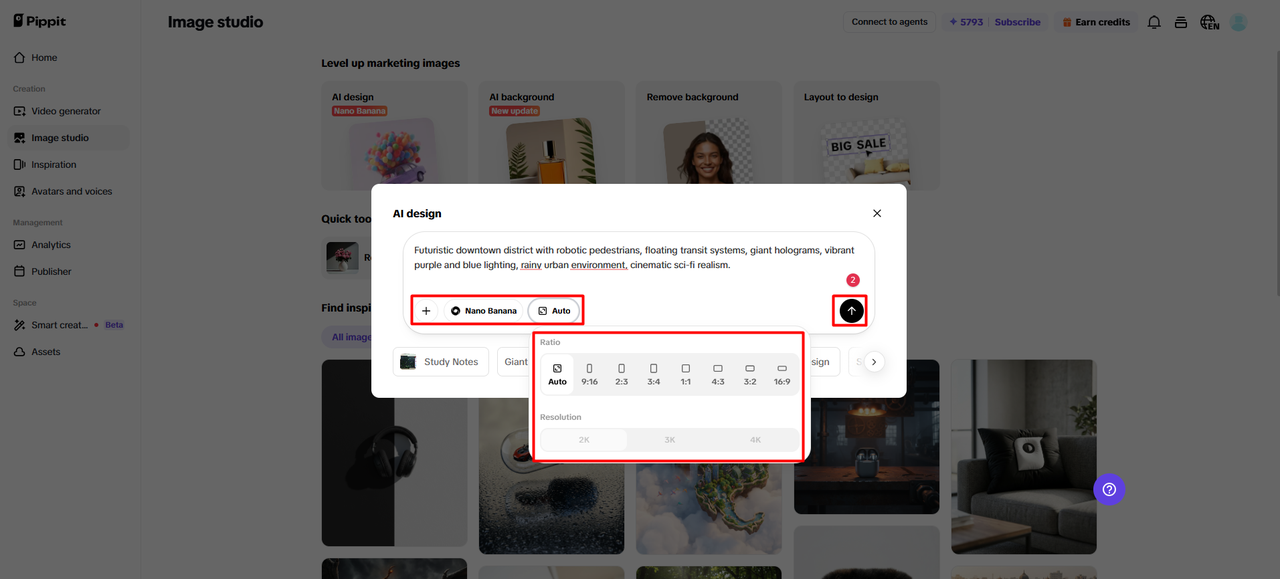
  1. Type in your prompt to describe how you want the image background to expand.
  2. Include specific details about style, colors, textures, or visual elements for better results.
  3. Pick your resolution and aspect ratio for the generated image.
  4. Once everything is ready, click on the button “Generate.”
image background

Step 3: Refine and save your creation

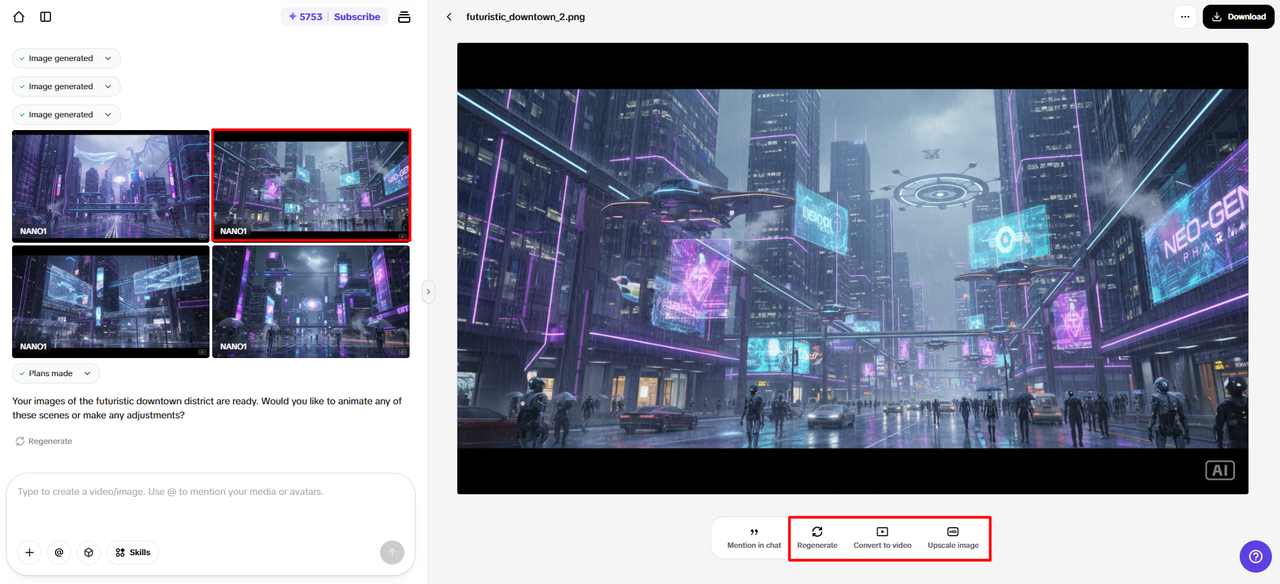
  1. Preview all AI-powered photos that Pippit has created for you.
  2. Select the version that best matches your vision.
  3. Feel free to use AI-powered editing tools, such as “Regenerate” and “Upscale image“.
  4. You can also choose the “Convert to video” feature for diverse types of content formats.
Refine and save your creation
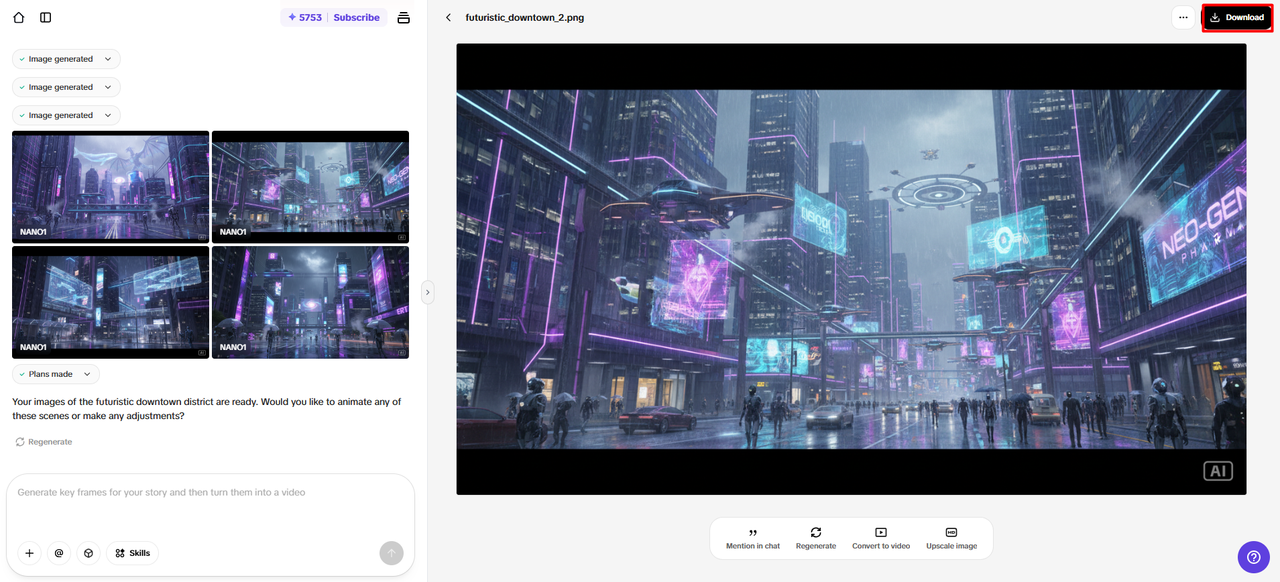
  1. Finally, click on the “Download” button to save your design.
save your design

Techniques for Achieving Seamless Background Extensions

There are a number of visual elements that are important for successful outpainting. Placement of subjects will greatly influence the results generated, as there will be space around the subjects to determine expansion opportunities. Environmental information provides hints towards the environment, which can help to guide the generation quality. Spatial arrangements are preserved with the help of depth relationships and are realistic. Pay attention to the lighting direction, which helps to maintain shadows and highlights. Prompting that is descriptive of environments is often helpful. Other elements, including descriptions of texture, atmosphere, style, and perspective, help further expand the accuracy and continuity of the visuals.

Common Background Expansion Scenarios for Content Creators

In many industries, flexible image formats are vital for effective communication. Social media managers customize images for banners and profile images. The same imagery is used across different marketing channels by marketing teams. Web designers improve the background images to make it more wide. Large-format promotional pieces are printed using print professionals who ensure that the quality of composition is maintained. Digital advertisers create assets for various platform specifications. Background expansion ensures design consistency and meets a variety of publication needs.

Essential Features That Strengthen Seedream Outpainting Results

Several technical capabilities contribute to stronger outpainting performance:

  • With the help of context-aware expansion, visual relationships are maintained between the areas.
  • The continuity of the environment is natural, and this increases the realism of the scene and visual continuity.
  • Maintained depth accuracy in large compositions.
  • Background generation can be cleaner and more believable thanks to distortion reduction.
  • Lighting continuity = shadows, highlights, and overall lighting.
  • There is no abrupt shift in the texture consistency, but rather it mimics the patterns in the environment.
  • Multiple dimensions and content layouts can be adapted to the flexible canvas.
  • Refining is made easy with integrated editing workflows using connected creative tools.

How Pippit Enhances the Outpainting Workflow

Pippit provides image expansion capabilities in a wider creative environment. Image Retouching Tools to retouch details once they’ve been created. Enabling higher resolutions and better clarity with upscaling functions. You can save some content and use it for your marketing material in a more dynamic way by converting it into a video. Centralized workflow management ensures that creation, editing, enhancement, and export are all in one platform. This streamlined structure helps to minimize complexity and boost efficiency within content production teams.

Future of AI-Powered Background Extension With Seedream

AI background generation is an ever-evolving process, becoming more and more aware of the surroundings and the scene. Future improvements will probably lead to more accurate object recognition and superior spatial reasoning. The faster the processing speed, the more production time is saved. The more the generation is improved, the more seamless the original versus expanded content can be. These improvements will allow designers and marketers to be more creative and keep up with the increasing visual production needs.

Conclusion

The Natural background expansion is a key component of the existing visual production. AI outpainting guarantees that the images are extended without sacrificing realism, balance, or image quality in composition. Intelligent image generation is more accessible and efficient when combined with a powerful creative platform. With ever-growing content needs on channels and formats, background extension will continue to be a useful feature to use when producing flexible, high-quality content.

The Ultimate Father’s Day Gift Guide for Car Dads and Garage DIYers

Father’s Day is a time to celebrate the fathers who are always ready to fix, build, repair, and improve everything around them. These are the dads who spend weekends in the garage, under the hood of a car, or helping others solve everyday mechanical and household problems.

While traditional gifts like clothing or accessories are appreciated, they rarely become part of a father’s daily routine. Practical tools, on the other hand, are used repeatedly and become genuinely valuable over time.

For car enthusiasts, garage DIYers, and hands-on fathers, one of the most important yet often overlooked tools is a reliable flashlight. Whether inspecting an engine, checking fluids, changing parts in tight spaces, or handling roadside emergencies, proper lighting is essential for both safety and efficiency.

This is exactly where the Oclip Pro stands out as a powerful and practical Father’s Day gift.

Why Lighting Is Essential for Car Dads

Automotive work rarely happens in ideal conditions. Engine compartments are dark, tight, and full of shadows. Even a well-lit garage cannot eliminate all visibility issues, especially when working under dashboards or beneath vehicles.

Poor lighting can lead to mistakes, delays, and even safety risks. Dropping tools, missing small components, or misidentifying parts becomes more likely in low-light environments.

A high-quality EDC flashlight solves these issues by providing consistent, portable lighting exactly where it is needed.

Introducing the Olight Oclip Pro

The Olight Oclip Pro is a compact clip-on EDC (Everyday Carry) flashlight designed for versatility, portability, and hands-free operation.

Unlike traditional flashlights, it is lightweight, portable, and can be attached to clothing, gear, or metal surfaces for maximum convenience.

It offers a triple-light system:

  • Floodlight mode (up to 500 lumens) – provides wide-area illumination for garage work, repairs, and general tasks
  • Spotlight mode (up to 380 lumens) – delivers focused beam for inspections and long-distance visibility
  • Red light mode – helps preserve night vision and reduces glare during nighttime use

This combination makes it suitable for both professional and everyday applications.

Hands-Free Design That Changes Everything

One of the most frustrating parts of working on vehicles or DIY projects is holding a flashlight while trying to use tools.

The Oclip Pro solves this problem with its smart clip-on and magnetic design.

It can be attached to:

  • Shirt pockets
  • Hats or caps
  • Tool belts
  • Backpacks
  • Metal surfaces like car bodies or engine compartments

This allows users to keep both hands free while working, improving accuracy, safety, and comfort.

For car dads who often work in tight spaces, this feature alone is a game-changer.

Built for Everyday Carry (EDC)

The Oclip Pro is designed as an EDC flashlight, meaning it is meant to be carried daily without inconvenience.

It is compact, lightweight, and durable enough for regular use in home, garage, and outdoor environments.

It also includes USB-C rechargeable capability, allowing quick and convenient charging without the need for disposable batteries. This makes it both practical and environmentally friendly.

Powered by a built-in 580 mAh battery, the Oclip Pro delivers exceptional battery management. It offers up to 144 hours (or about 6 days) of continuous runtime in moonlight mode, and its emergency Beacon mode can run for up to 24 hours when critical signaling is needed. 

Ideal for Automotive and Roadside Emergencies

Car maintenance and emergencies often happen at unexpected times.

Flat tires, battery failures, and engine issues usually occur in low-light conditions. In these situations, reliable lighting is critical.

The Oclip Pro provides:

  • Floodlight mode for broad visibility during repairs
  • Spotlight mode for inspecting specific components
  • Red light mode for emergency signaling and night vision protection

Its compact size ensures it can be kept in the glove box, pocket, or tool kit at all times.

More Than Just a Garage Tool

Although perfect for automotive work, the Oclip Pro is also useful in many everyday situations.

Fathers can use it for:

  • Home repairs
  • Power outages
  • Outdoor activities like camping and hiking
  • Evening walks
  • Storage organization
  • Electrical inspections

Its versatility ensures it becomes a daily-use tool rather than something stored away and forgotten.

Why It Makes the Perfect Father’s Day Gift

The best gifts are those that combine usefulness, durability, and everyday practicality.

The Oclip Pro delivers all three.

It is not just a flashlight—it is a multi-purpose lighting tool that supports real-life activities. From garage work to outdoor adventures and emergency situations, it provides consistent value.

Instead of a one-time novelty gift, it becomes part of a father’s daily toolkit.

Final Thoughts

For car dads and garage DIYers, proper lighting is not optional—it is essential. The Olight Oclip Pro brings together portability, power, and hands-free convenience in one compact device.

This Father’s Day, gifting a practical tool like the Oclip Pro ensures long-term usefulness, making every repair, project, and emergency easier and safer.

FIFA World Cup 2026 Is Live – And Winbox Is Where Malaysia Bets

Every four years, the whole world stops for football. Kopitiams get packed, group chats go crazy, and everyone suddenly becomes a football expert. But this FIFA World Cup 2026 season, things feel a little more exciting — especially if you’re into online sports betting in Malaysia.

The stakes are bigger, the platforms are better, and the prizes? Almost unbelievable.

Whether you’ve been betting for years or you’re just getting started, this is honestly the best time to jump in.

Winbox Just Gave Bettors a Really Good Reason to Get Excited

Here’s the big news. Winbox has raised the maximum bet limit to RM500,000 for this FIFA season. Yes — half a million ringgit on a single match.

For those who take football betting in Malaysia seriously, this changes everything. Bigger limits mean bigger prize pools, sharper odds, and a whole lot more excitement on every matchday.

This is exactly why Winbox has become the go-to best online casino in Malaysia for the World Cup season. 

3 Easiest Bet Types to Start Winning on Winbox MAXBET

Knowing how to bet is just as important as picking the right team. Here’s a quick breakdown of the most popular bet types on Winbox MAXBET — all straightforward, no complicated rules.

Asian Handicap — Great Odds, Even on One-Sided Games

This is the most popular bet type in online football betting across Malaysia, and for good reason. Asian Handicap balances out uneven matchups by giving the weaker team a head start.

So instead of betting on Brazil to simply win and getting low returns, you can bet on Brazil to win by a specific margin for much better odds. If you understand team form and matchups, this one rewards you well.

Over/Under — Pick the Vibe of the Game

Not sure who wins? Bet on how the game feels instead. Over/Under lets you guess whether both teams will score more or less than a set number of goals — usually 2.5 or 3.5.

Tight defensive game? Go under. Two attacking sides going head to head? The over might be your friend. Simple to understand, and one of the best entry points for anyone new to sport betting online.

Mix Parlay — Turn a Small Bet Into a Big Win

This is the one that gets everyone excited. Mix Parlay lets you combine multiple matches into one bet slip. The more games you add, the bigger the potential payout. You can stack 2 to 10+ matches. One wrong result and the slip falls, but that’s what makes it thrilling. During FIFA World Cup 2026, with so many matches happening back to back, Mix Parlay is where the real fun begins.

Real Rolex. Real Prize. Bet Through Winbox to Win It

Here’s something that goes beyond just football. This FIFA season, if you place bets through MAXBET, CMD368, or SBOBET on Winbox, you’re automatically in the running to win a Rolex Submariner watch.

Not store credits. Not free bets. An actual Rolex.

The more you bet during the tournament window, the better your chances. It’s a real reason to not skip those smaller matchday wagers.

Watch Every FIFA Match in Real Time — Free, Fast, and Reliable

This part often surprises people. Winbox Live lets you stream every FIFA match for free — no subscription, no buffering, no annoying ads cutting in during a penalty.

If you’re doing live in-play betting on online casino Malaysia platforms, being able to watch the match in the same place you’re placing bets is a huge deal. No more dodgy streams. No more missing the goal you just bet on.

Log in to Winbox before the next match and check it out yourself.

Join Thousands of Malaysian Bettors Already In — Register Now

Higher bet limits, free live streaming, a chance to win a Rolex, and three of the best sportsbooks all in one place — Winbox has genuinely gone all out this FIFA season.

Whether you’re a long-time fan of online sports betting or someone who only bets during the World Cup, the setup right now is hard to beat.

Register on Winbox today and make every matchday count.