
Home Blog Page 20

Cryptocurrency Deposits for NV Casino Online Accounts

Go to NV Casino online and open the cashier page to view payment options. The site offers over 20 payment methods at https://nv-casino-online.eu.com/. Users can make cryptocurrency deposits and choose how to fund their account.

Which Cryptocurrencies Can You Use?

The cashier accepts different digital assets, including coins and tokens. These accepted assets provide ways to deposit.

You can use certain coins to deposit or withdraw, though most people choose Bitcoin since it is well known.

You can try different options on several networks.

  • Bitcoin – the original cryptocurrency;
  • Ethereum – smart contract foundation;
  • Tether TRC20 – stablecoin on TRON;
  • Tether ERC20 – dollar-pegged token;
  • Litecoin – faster transaction alternative;
  • USD Coin – regulated stablecoin;
  • Binance Coin – exchange native token;
  • Dogecoin – meme-based digital currency;
  • Toncoin – Telegram-linked blockchain asset;
  • TRON – low-fee network coin;
  • Binance Pay – integrated wallet solution.

How Does the Crypto Deposit Process Work?

You start the deposit in your wallet, then the money moves across the blockchain and shows up in your account. Throughout, your wallet, Casino NV’s systems, the blockchain network, and a compliance framework each help transfer the funds and verify every step.

Complete the transaction by following the specified steps.

  1. Start by logging in. Then open the cashier section.
  2. Choose the crypto you want from the list.
  3. Copy the deposit address provided by the system.
  4. Open your wallet, and paste the address.
  5. You must enter the amount you want to send.
  6. You need to confirm the transaction in your wallet.
  7. Wait until blockchain confirmations are complete.

Minimum and Maximum Deposit Thresholds

Deposit limits vary by payment method: crypto allows the highest deposit limit.

You can deposit at least €10 with most payment methods. For cryptocurrency, the deposit limit is €1,000,000.

You can use any cryptocurrency to deposit up to $500,000. Bitcoin, Ethereum, Tether, and USDC have withdrawal limits.

You need to deposit at least €50 by bank transfer. Staff may run an internal security check on your deposit.

Transaction Speed Across Different Networks

Transaction Speed Across Different Networks

How long your deposit takes depends on the cryptocurrency and network you use. Transaction speeds vary between cryptocurrencies. You may also see changes within the same cryptocurrency if you pick a different network.

Different blockchains require different numbers of transaction confirmations. Casinos wait for a specified number of confirmations before crediting your balance.

You can deposit and receive money in one to three minutes with Ethereum, while Bitcoin deposits take about ten to twenty minutes.

USDT on TRC-20 settles in one to three minutes, and the fee is less than $0.10. ERC-20 usually takes two to five minutes and costs more.

Bitcoin adds one block every 10 minutes. If there are no delays and a site requires 2 or 3 confirmations, your deposit takes 30 to 60 minutes.

Network Fee Structure

You pay a miner or gas fee set by the network. The casino does not set this fee. The blockchain charges it.

You pay a fee of $0.50 to $3 to send a transaction on the Bitcoin mainchain.

When you use TRON to deposit, you pay less than a cent. If you pick Ethereum instead, you might spend a few dollars for that same deposit. When many people use Bitcoin at the same time, deposit fees can reach $10, $30, or higher.

A $5 fee immediately takes 10 percent from a $50 deposit, but with a $5,000 deposit, the same fee reduces your deposit by a much smaller percentage.

Verification Requirements for Crypto Transactions

Crypto still requires identity checks, but you complete them at a stage in the process.

The online casino nv site checks your identity only after your total deposits reach a set amount, not with every deposit.

You have to finish verification manually. You need to send identification, proof of payment, proof of address, and a selfie holding your documents.

You must verify your account when your total activity reaches about €1,000, before you can withdraw money.

When withdrawing money, the site may require identity verification, so ensure your documents match your account details.

Stablecoins vs Volatile Coins for Deposits

The coin you choose sets your bankroll amount when you send the transaction. USDT and USDC each match the US dollar at a 1:1 rate.

You deposit 500 USDT and receive a $500 bankroll. If you use $500 worth of BTC instead, the bankroll’s dollar value can change later. The dollar value may increase or decrease based on the BTC price after the transaction is completed.

USDT is tied to the US dollar. Many online players use it, which helps keep their account balances stable.

Volatility in Bitcoin or Ethereum can complicate bankroll management, as receiving winnings in these cryptocurrencies means a market drop could reduce their dollar value by 10%.

BTC lets you gain if the price rises between sessions. When the Ethereum network gets busy, gas fees go up, so using the ERC-20 network for deposits or withdrawals can cost more.

What Causes Deposit Errors and How Can You Prevent Them?

Mistakes cause most failed or slow deposits. You need to pick the crypto and select the blockchain network.

Mistakes can make your transactions fail. Check for these errors.

  • Single character address error;
  • Clipboard malware swapping addresses;
  • Omitted memo or destination tag;
  • Wrong network selection;
  • Sending BSC tokens to ERC-20;
  • Unconfirmed transaction during congestion;
  • Missing test deposit step;
  • USDT sent over incorrect network;
  • Copy-paste errors in wallet.

Conclusion

Crypto deposits are processed quickly and have high limits, making them the most capable funding option at the cashier. Using crypto deposits requires attention to detail at every step.

Choose the correct coin and network to prevent delays or losses. Using stablecoins keeps your bankroll value steady, ensuring price fluctuations do not impact your balance between depositing and placing your bet.

Check every address before you confirm a transaction. If you type one wrong character, you can lose your funds. When you use a network, make a test deposit first.
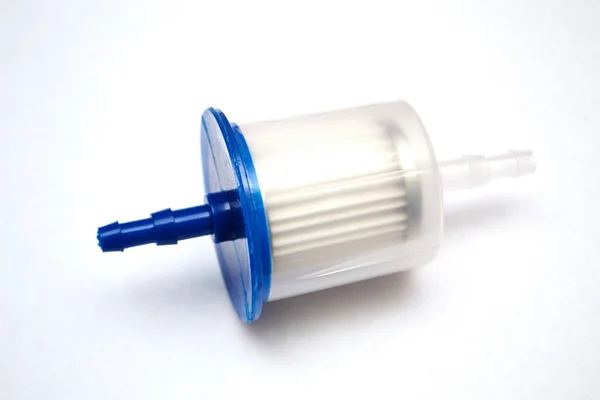
What to Check in a Diesel Fuel System Before Harvest Season

Photo by depositphotos at https://depositphotos.com/

A diesel engine needs clean fuel and steady flow to work under harvest loads. Water, dirt, air leaks, and restricted lines may go unnoticed during light use. Once the combine or tractor works for hours at full load, those small problems can cause power loss, rough running, or a complete shutdown.

Why Should You Inspect the Fuel System Before Harvest?

Harvest leaves little room for an avoidable breakdown. A machine that starts normally in the yard may still lose power when the grain tank fills or the engine reaches operating temperature. Higher fuel demand exposes restrictions that short test runs do not.

Begin with the service history. Check when the filters were last changed, whether fuel was added from a questionable container, and whether the machine sat unused with a partly filled tank. Old fuel can collect moisture and support microbial growth. Rust, paint flakes, and sediment may also settle at the bottom of a storage tank.

At 6:15 on a late-August morning, the air beside the grain bin may still feel cool. Drain a small sample from the water separator into a clear container. Clean diesel should look bright and consistent. A separate layer at the bottom, cloudy liquid, dark slime, or visible particles means the system needs attention before the machine enters the field.

What Are the Signs of Restricted Fuel Flow?

Power loss under load is a common sign. The engine may idle well but hesitate during acceleration, surge at a steady speed, or recover after being shut down for several minutes. Hard starting and uneven exhaust can also occur.

These symptoms do not confirm a single failed part. A blocked tank vent can create a vacuum. A collapsing hose can restrict flow. Air may enter through a loose clamp, cracked line, or damaged seal. A weak lift pump can produce similar behavior.

Inspect the tank cap and vent first. Then follow the supply line from the tank to the injection system. Look for wet fittings, flattened hoses, sharp bends, abrasion, and loose connections. Do not use an open flame to inspect for leaks. Wipe spilled diesel promptly and keep ignition sources away from the work area.

Check the fuel filter when the service interval has expired, contamination is visible, or measured supply pressure indicates a restriction. Use the correct element and seals for the machine. Fill and bleed the system only as directed in the operator’s manual. Some modern high-pressure common-rail systems use electric priming pumps and should not have injector lines loosened.

How Do You Check for Water and Contamination?

Water separators need regular draining during humid weather. Water can enter through condensation, damaged storage tanks, loose caps, or contaminated fuel deliveries. It reduces lubrication and may corrode pumps and injectors.

Collect drained material in a suitable container. Do not release diesel or water contaminated with fuel onto the ground. Local recycling or hazardous-waste services can explain how it should be handled.

Dark or sticky material may indicate microbial contamination. Treating the tank without removing heavy contamination may only loosen debris and block the filters again. In severe cases, the tank and lines need professional cleaning. Follow product directions carefully if an approved fuel treatment is used.

The storage system deserves the same attention as the machine. Keep transfer nozzles capped. Replace damaged hoses. Drain water from bulk tanks, and avoid filling equipment from dirty portable cans. Fresh filtration cannot protect an engine if new contamination enters at every refueling.

When Should You Inspect the Pump and Injectors?

Test the supply side before blaming expensive components. Confirm that clean fuel reaches the injection pump at the specified pressure and volume. Diagnostic procedures differ between mechanical engines and common-rail systems, so use service information for the exact model.

A weak lift pump may cause extended cranking or power loss at higher engine speeds. A faulty injector may produce rough running, unusual knocking, excessive smoke, or poor fuel economy. Those symptoms overlap with compression, air-intake, and electronic control faults. Proper testing is safer than replacing parts based on smoke color alone.

High-pressure diesel can penetrate skin. Never place a hand near a suspected injector leak while the engine is running. Use cardboard or another approved method for low-pressure leak checks, and leave common-rail testing to a trained technician with suitable equipment.

How Can You Prepare the Machine for Harvest?

Complete the inspection several days before work begins. That leaves time to obtain parts, clean the tank, or correct leaks. Run the engine until it reaches operating temperature, then test the machine under a safe working load.

Keep spare service items, clean fuel containers, absorbent material, and the correct tools nearby. At the end of the test, check again for damp fittings and unusual smells. Record any pressure readings, filter changes, and drained water.

Conclusion

A reliable harvest starts with clean fuel and unrestricted flow. Inspect the tank, vent, lines, separator, filters, lift pump, and visible connections before long workdays begin. Deal with water or sediment early. If the engine still loses power after the supply side passes inspection, use model-specific tests for the pump, injectors, air system, and engine condition.

H13 vs H14 HEPA Filter: Which One Do You Actually Need

Walk into any store that sells air purifiers, and you will see the same debate on the boxes. One says H13. One says H14. One says something else entirely, like true HEPA or advanced HEPA or ultra HEPA. Most people look at the numbers and assume higher is better. H14 must be better than H13, right? And if H14 is better, why would anyone buy H13?

The answer is more complicated than the numbers suggest. H14 does capture more particles than H13, but the difference is smaller than most people think, and it comes with tradeoffs in cost, airflow, noise, and filter life. For most homes, H13 is the better choice. For some specific use cases, H14 is worth the extra money. The trick is knowing which one you actually need, and not paying for a grade that does not benefit you.

This guide breaks down what H13 and H14 actually mean, where the real difference shows up, when each one is the right choice, and why the manufacturer behind the grade matters more than the grade itself.

What the Numbers Actually Mean

Both H13 and H14 are defined by the EN 1822 standard, which is the standard most filter manufacturers test against. The standard defines grades from E10 up to U17, with H13 and H14 sitting in the middle of the HEPA range.

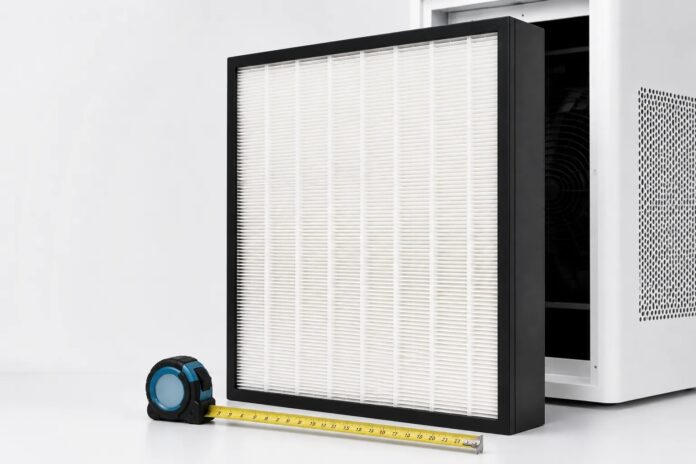
A h13 hepa filter captures at least 99.95 percent of particles at the most penetrating particle size, which is 0.3 microns. H14 captures at least 99.995 percent. That is a difference of 0.045 percentage points. On paper, that sounds tiny. In practice, it means H14 lets through ten times fewer particles than H13. If H13 lets through 0.05 percent, H14 lets through 0.005 percent. That is a real difference, but it is a difference at the margins.

The 0.3 micron size is the hardest to catch, not the smallest. Particles smaller than 0.3 microns move randomly due to molecular motion and are more likely to hit a fiber and stick. Particles larger than 0.3 microns are too big to slip through gaps. The 0.3 micron size sits right in the sweet spot where it can avoid both mechanisms. If a filter catches 99.95 percent at that hardest size, it catches even more at every other size. So both H13 and H14 are highly efficient across the full range of particle sizes. The difference only matters at the most penetrating size, and even there, both are above 99.9 percent.

This is the first thing most people miss. The difference between H13 and H14 is not the difference between a filter that works and a filter that does not. Both work. Both are HEPA grade. The difference is between a filter that is very good and a filter that is extremely good. Whether extremely good is worth the extra cost depends on what you are using it for.

Why Advanced HEPA Is Not H14

You will see the term advanced hepa on a lot of product boxes and a lot of online listings. It sounds like it might be H14, or something even better than H14. It is not. There is no standard that defines what advanced means. No regulatory body, no industry association, no testing protocol. It is a marketing term, and it can mean whatever the manufacturer wants it to mean.

When a manufacturer uses the term advanced HEPA, they usually mean one of two things. Either they have an H13 filter with additional layers behind it, commonly activated carbon for odors and a pre filter for large particles. Or they are just using a fancier word to describe a plain H13 filter. In neither case is it H14. If a manufacturer has an H14 filter, they will say H14, because H14 is a real grade with a real test method behind it. They do not need to call it advanced.

This matters because a lot of consumers see advanced HEPA on a box and assume it is a higher grade than H13. They pay more for it thinking they are getting H14 level performance, and they are not. They are getting an H13 filter with maybe a carbon layer, maybe not, and no way to verify from the term alone. If you want H14, look for the number H14 on the box and ask for a test report. Do not pay extra for advanced unless the manufacturer can tell you exactly what it means and back it up with specifications.

This is not to say advanced HEPA is always a meaningless term. If a manufacturer backs it up with an H13 grade, a carbon layer with a specified weight, and a test report, then advanced is just a shorthand for a specific product configuration. The problem is when advanced is used instead of a grade number, instead of a spec sheet, instead of any verifiable information. In that case, it is just a word on a box, and you should treat it as such.

When H14 Actually Makes a Difference

H14 is worth the extra cost in a handful of specific situations. The first is medical settings. Hospitals, clinics, and dental offices use H14 in operating rooms, isolation rooms, and sterile processing areas because the consequence of a particle getting through is an infection. In those settings, the tenfold reduction in penetration that H14 provides is meaningful, because even a tiny number of airborne pathogens can cause a problem.

The second is laboratory settings. Research labs working with biological materials, clean rooms for electronics manufacturing, and pharmaceutical production facilities all use H14 or higher because the air quality requirements are strict and the cost of contamination is high. In these settings, H13 would not meet the regulatory requirements, so H14 is not optional.

The third is homes with someone who has a severe immune system condition. If someone in the home is undergoing chemotherapy, has had an organ transplant, or has a condition that suppresses the immune system, the extra reduction in airborne particles that H14 provides can be meaningful. In these cases, the difference between 99.95 and 99.995 percent is not just a number. It is a reduction in exposure to potential pathogens, and for someone with a compromised immune system, that reduction can matter.

The fourth scenario involves living in a home in an area with extremely poor air quality. If you live near industrial facilities or a major highway, the concentration of particulate matter in the air is far above average. In such cases, even a small fraction of the particles penetrating the air can lead to a significant increase in the absolute number of particles in the air. H14 can reduce these absolute numbers, thus significantly improving indoor air quality when pollution is severe.

Outside of these four situations, H14 is usually overkill. The difference between 99.95 and 99.995 percent is not something most people can notice in everyday use, and the extra cost, higher air resistance, and shorter filter life are not justified by the marginal performance gain.

When H13 Is the Better Choice

For most homes, most of the time, H13 is the better choice. It captures 99.95 percent of particles at the hardest size, which is more than enough for pollen, dust mites, pet dander, mold spores, and most bacteria. It is efficient enough that the air coming out of the purifier is dramatically cleaner than the air going in. The remaining 0.05 percent that gets through is such a small number that it does not meaningfully affect indoor air quality for most people.

H13 has practical advantages over H14 that most people do not consider. The first is lower air resistance. H13 media is slightly less dense than H14 media, which means air flows through it more easily. Lower resistance means the fan does not have to work as hard, which means less noise and less energy use. A purifier with an H13 filter can run on a lower fan speed to achieve the same airflow as an H14 filter, which makes it quieter and cheaper to operate.

The second advantage is longer filter life. Because H13 has lower resistance, it takes longer for the resistance to double as the filter loads with dust. A well made H13 filter can last 20 to 30 percent longer than a comparable H14 filter under the same conditions. That means fewer replacements, lower ongoing cost, and less hassle.

The third advantage is cost. H14 media is more expensive to manufacture because it requires finer fibers and tighter quality control. An H14 filter can cost 30 to 50 percent more than an equivalent H13 filter. Over the lifetime of the purifier, that adds up. If you are replacing filters every six months, the extra cost per filter becomes a significant ongoing expense.

For a typical home with no medical needs and average air quality, H13 is the sweet spot. It provides excellent filtration, lower noise, longer life, and lower cost. H14 provides marginally better filtration at the cost of all those practical advantages, and for most people, that trade is not worth it.

Why Manufacturer Quality Matters More Than the Grade Number

Here is the part that almost nobody talks about. A poorly made H14 filter can perform worse than a well made H13 filter. The grade number is a minimum standard for the media. It does not guarantee the finished filter performs to that grade. The finished filter’s performance depends on the seal, the frame, the pleat spacing, and the consistency of the media across the entire surface.

A filter with perfect H14 media and a bad seal will let air bypass the media through the gap between media and frame. That bypass air is unfiltered, and it can bring the overall efficiency of the filter down well below H13 level. A filter with H13 media and a perfect seal, by contrast, will perform at its rated H13 level across the entire surface, with no bypass. In real world use, the well made H13 can outperform the poorly made H14, even though the grade number says H14 is higher.

This is why the manufacturer matters more than the grade. A manufacturer that tests every batch, uses consistent media, applies sealant evenly, and checks every finished filter for leaks will produce filters that perform at or above their rated grade. A manufacturer that cuts corners on testing, uses inconsistent media, and applies sealant by hand with no quality control will produce filters that may or may not perform to their rated grade, and you will not know until you test them.

As a HEPA Filter Manufacturer, HIFINE produces H13 and H14 grade filters with consistent media, even pleat spacing, and proper frame sealing. Every batch is tested under ISO 9001 quality systems, and efficiency test reports are available for each grade. The point is not that one manufacturer is magically better. The point is that a grade number on a box is only as good as the manufacturer behind it. A well made H13 from a quality manufacturer will outperform a poorly made H14 from a factory that cuts corners. When you compare filters, compare the manufacturer first and the grade second.

Wrapping Up

H13 and H14 are both excellent HEPA grades. H14 captures ten times fewer particles at the most penetrating size, but that difference only matters in specific situations. Medical settings, laboratories, homes with immune compromised individuals, and areas with extremely poor air quality can justify the extra cost of H14. For everyone else, H13 is the better choice, with lower noise, longer filter life, and lower cost.

Advanced HEPA is not a grade. It is a marketing term, and it does not mean H14. If you want H14, look for the number H14 and a test report. Do not pay extra for advanced unless you know exactly what it means.

And the manufacturer matters more than the grade. A well made H13 from a quality manufacturer will outperform a poorly made H14 every time. Start with the manufacturer, then pick the grade that matches your actual needs. That is how you get the right filter without paying for performance you do not need.

Why motorsport teams are moving pit and inspection procedures onto video

Racing operations run on standardized procedures. Fuel handling, wheel changes, pre-event technical inspection, generator setup, tire logging and pack down each follow a fixed sequence, and each is written down somewhere in a binder or a shared drive.

The written version is rarely the one followed in the pit lane. A short video can carry a fixed sequence into that environment and reveal where people stop paying attention, but it still cannot teach judgment, adaptation or physical technique.

The gap between the binder and the pit lane

Two conditions make written procedure unusually ineffective in motorsport, and both are structural rather than a matter of document quality.

The first is crew turnover. Regional teams and support paddocks run on volunteers, part-time crew, and rotating personnel who may work a handful of events per season. A procedure written for someone who has performed it forty times reads very differently to someone performing it for the second time. The written version compresses steps the author no longer thinks about, and those omitted steps are exactly where an inexperienced crew member fails.

The second is the environment. A pit lane is loud, time-constrained, and physically demanding. Reading is a poor information channel under those conditions. The practical result is that procedures get learned by watching whoever is nearest, which propagates whatever that person happens to do, correct or otherwise.

Neither problem is solved by rewriting the document. Both are addressed by changing how the procedure reaches the person performing it.

A video reaches the pit lane differently

Video is better suited to sequences than text is, for a specific reason: it enforces order. A written procedure can be skimmed out of sequence, and under time pressure it usually is. A video presents steps in the order they occur and shows the transition between them, which is where errors cluster.

The obstacle has always been production cost. Filming and editing a procedure is expensive enough that most teams do it once, then never update it, and a procedure video that describes a superseded process is worse than no video at all.

Tools that generate video from existing documents change that arithmetic. A team that already maintains procedures in a document can upload that file and receive a narrated video with an on-screen presenter. Leadde accepts PowerPoint, PDF, Word, and plain text files, or pasted text, and platforms in this category create SOPs with video directly from the procedure document rather than from a separate script.

The consequence that matters operationally is not the initial production. It is that updating a procedure means editing the document and regenerating, which takes minutes. Teams that adopt this pattern tend to keep the document as the authoritative version and treat the video as a derived output, which prevents the two from drifting apart over a season.

Several settings affect whether the generated narration is usable. Context fields for audience, speaker background, and training objective change how the script is pitched. Describing the audience as a second event crew member who has not performed the procedure unsupervised produces narration that defines terminology before using it, where leaving the field blank produces something closer to a general overview. Technical vocabulary and part numbers are frequently mispronounced on first generation, and a pronunciation correction can be applied across an entire script rather than fixed one instance at a time.

A generated script should be read before it is published. Automatic summarisation removes conditional clauses before it removes anything else, and in a safety procedure the conditional clause is often the entire point. A step that reads “only after the system is depressurised” can lose its qualifier and become an instruction to proceed. Teams operating under a formal safety management framework such as ISO 45001 will already have a control process for procedural documents, and generated video should sit inside that process rather than beside it.

Viewer drop-off can reveal a weak step

Video platforms report where viewers stop watching, and this turns out to be more useful for procedure documentation than for training assessment.

When a group of viewers abandons a procedure video at approximately the same point, the cause is usually not attention. It is that the procedure becomes unclear, branches without explanation, or introduces a step that does not follow from the previous one. Leadde’s analytics report impressions, total and unique views, watch time, completion rate, and interaction counts; completion rate is the metric that tends to change how teams work.

This feedback does not exist for written procedure. A binder cannot report which paragraph readers gave up on, which is why unclear procedures survive for years without anyone raising them.

Captions are worth enabling for a further reason specific to this environment. Pit and workshop areas are loud, and a significant proportion of viewing happens with sound off on a phone. Captions for prerecorded video are also a WCAG success criterion, which matters for teams working under commercial or governing body arrangements that reference accessibility standards.

For teams running international events, procedures can be translated into other languages from the finished video, including on-screen text. Leadde supports 88 languages and 175 dialects. Any procedure carrying a safety implication warrants review by a fluent speaker before use, since machine translation handles volume well and occasionally mistranslates technical terms in ways that matter.

Judgment still belongs trackside

Physical technique does not transfer through a screen. Torque application, the feel of a correctly seated wheel nut, fuel rig handling and anything requiring calibrated hand pressure must be trained in person and assessed in person. Video can prepare a crew member for what a sequence contains, and it should stop there.

Emergency response is the second exclusion. Fire, fuel spill, and medical incidents require drilled physical response, not comprehension. A video can support a briefing and cannot replace a drill.

There is also a documentation limit worth stating plainly. This category of tool generates video from supplied content and does not record screens or capture live footage. Procedures whose value lies in showing an actual component in an actual car still require filmed material.

Finally, video carries a maintenance cost. A library that nobody reviews becomes a set of confident recordings describing procedures that have changed. Any team adopting this approach should schedule a review interval before building the library rather than after.

Put one procedure through a race weekend

Procedure video suits motorsport because race weekends expose the limits of a binder: noise, time pressure and staff moving between tasks. Generating the video from the controlled document also keeps updates manageable.

Start with a frequently performed procedure that matters without being safety critical. Publish one version and review the point where viewers stop. That point often exposes an unclear or unnecessary step in the procedure itself.

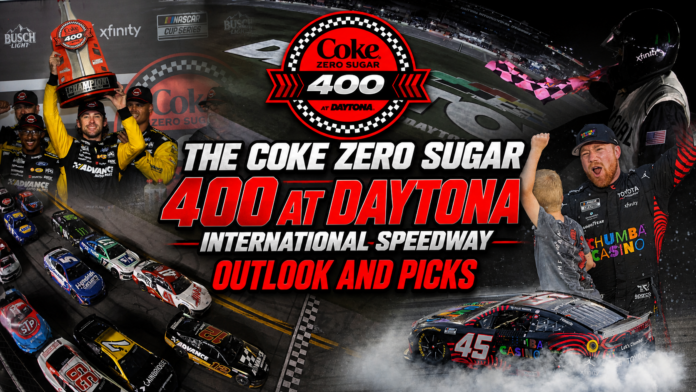
The Coke Zero Sugar 400 at Daytona International Speedway Outlook and Picks

The NASCAR Cup Series (NCS) heads to Daytona International Speedway for the Coke Zero Sugar 400 on Saturday night at 7:30 p.m. ET on NBC. But there is a full weekend of action starting on Friday night with the NASCAR O’Reilly Auto Parts Series (NOAPS) Winn-Dixie 250 Powered by Coca-Cola at 7:30 p.m. ET on the CW Network.

In August of 2025, the Cup Series qualifying at Daytona was canceled due to weather, and Ryan Blaney was awarded the pole position. Then, Ryan Blaney also won the Coke Zero Sugar 400 while driving his No. 12 Ford for Team Penske in a chaotic race with 44 lead changes among 19 drivers and eight cautions for 39 laps.

The Top-20 Chase For The NASCAR Cup Series Standings Outlook after New Hampshire Motor Speedway

PosDriverNoPointsBehindNextRace WinsStage WinsStartsTop 5Top 10DNFsPoles
1Denny Hamlin111001004525141705
2Ryan Blaney12924-7777372561725
3Ty Gibbs54880-121442525101641
4Tyler Reddick45860-141205125101527
5Christopher Bell20738-2631220425111341
6Chase Briscoe19727-274111025101340
7Kyle Larson5708-29319052591330
8Chase Elliott9707-294122256920
9Joey Logano22682-3192522255931
10Chris Buescher17676-3256002521010
11Carson Hocevar77672-329410255912
12William Byron24644-35728032541130
13Daniel Suarez7638-363611252610
14Bubba Wallace23630-3718022541130
15Austin Cindric2599-4023101252530
16Shane Van Gisbergen97586-4151321255722
17Ryan Preece60555-4463102250630
18Brad Keselowski6520-4813502252630
19Ross Chastain1505-4961504251530
20Erik Jones43490-5111501252520

Track & Race Information for the Coke Zero Sugar 400

Season Race #: 26 of 36 (08-29-26)
The Purse: $11,233,037
Track Size: 2.5-mile
Banking/Turns: 31 degrees
Banking/Straights: 3 degrees
Banking/Tri-Oval: 18 degrees
Frontstretch Length: 3,800 feet
Backstretch Length: 3,000 feet

Race Schedule, Length and Stages for the Coke Zero Sugar 400

Race Length: 160 laps / 400 miles
Stage 1 Length: 35 laps (Ends on Lap 35)
Stage 2 Length: 60 laps (Ends on Lap 95)
Final Stage Length: 65 laps (Ends on Lap 160)

FRIDAY, AUGUST 28

3:00 PM – 4:30 PM: NOAPS QUALIFYING (IMPOUND)
5:00 PM – 6:30 PM: NCS QUALIFYING (IMPOUND)
6:55 PM: NOAPS DRIVER INTRODUCTIONS – CW Network
7:30 PM: NOAPS RACE (STAGES 30/60/100 LAPS = 250 MILES ) – CW Network

SATURDAY, AUGUST 29

6:55 PM: NCS DRIVER INTRODUCTIONS – NBC
7:30 PM: NCS RACE (STAGES 35/95/160 LAPS = 400 MILES) – NBC

*All times are Eastern. NASCAR Cup Series (NCS), NASCAR O’Reilly Auto Parts Series (NOAPS)

Who and what should you look out for at Daytona International Speedway?

Denny Hamlin leads all active NCS drivers in Daytona wins with three (Feb. 2016, Feb. 2019, Feb. 2020), and 13 of the 72 race winners are active this weekend.

Active Daytona Race WinnersWinsSeasons
William Byron32025 (Feb.), 2024 (Feb.) 2020 (Aug.)
Denny Hamlin32020 (Feb.), 2019 (Feb.), 2016 (Feb.)
Ryan Blaney22025 (Aug.), 2021 (Aug.)
Ricky Stenhouse Jr22023 (Feb.), 2017 (July)
Austin Dillon22022 (Aug.), 2018 (Feb.)
Tyler Reddick12026 (Feb.)
Chris Buescher12023 (Aug.)
Austin Cindric12022 (Feb.)
Michael McDowell12021 (Feb.)
Justin Haley12019 (July)
Erik Jones12018 (July)
Brad Keselowski12016 (July)
Joey Logano12015 (Feb.)

The most recent driver to win from the pole or first starting position was Ryan Blaney in the summer 2025 race (Qualifying was canceled for this event), and Hendrick Motorsports has the most wins with 17 victories.

StatsWinning %Wins
Winning from the First Starting Position:17.09%27
Winning from the Front Row:29.11%46
Winning from a Top-Five Starting Position:48.73%77
Winning from a Top-10 Starting Position:72.78%115
Winning After Starting Outside the Top 20:9.49%15

Bubba Wallace leads all active drivers in runner-up finishes with three, and Denny Hamlin leads all active drivers in top-five finishes with 11.

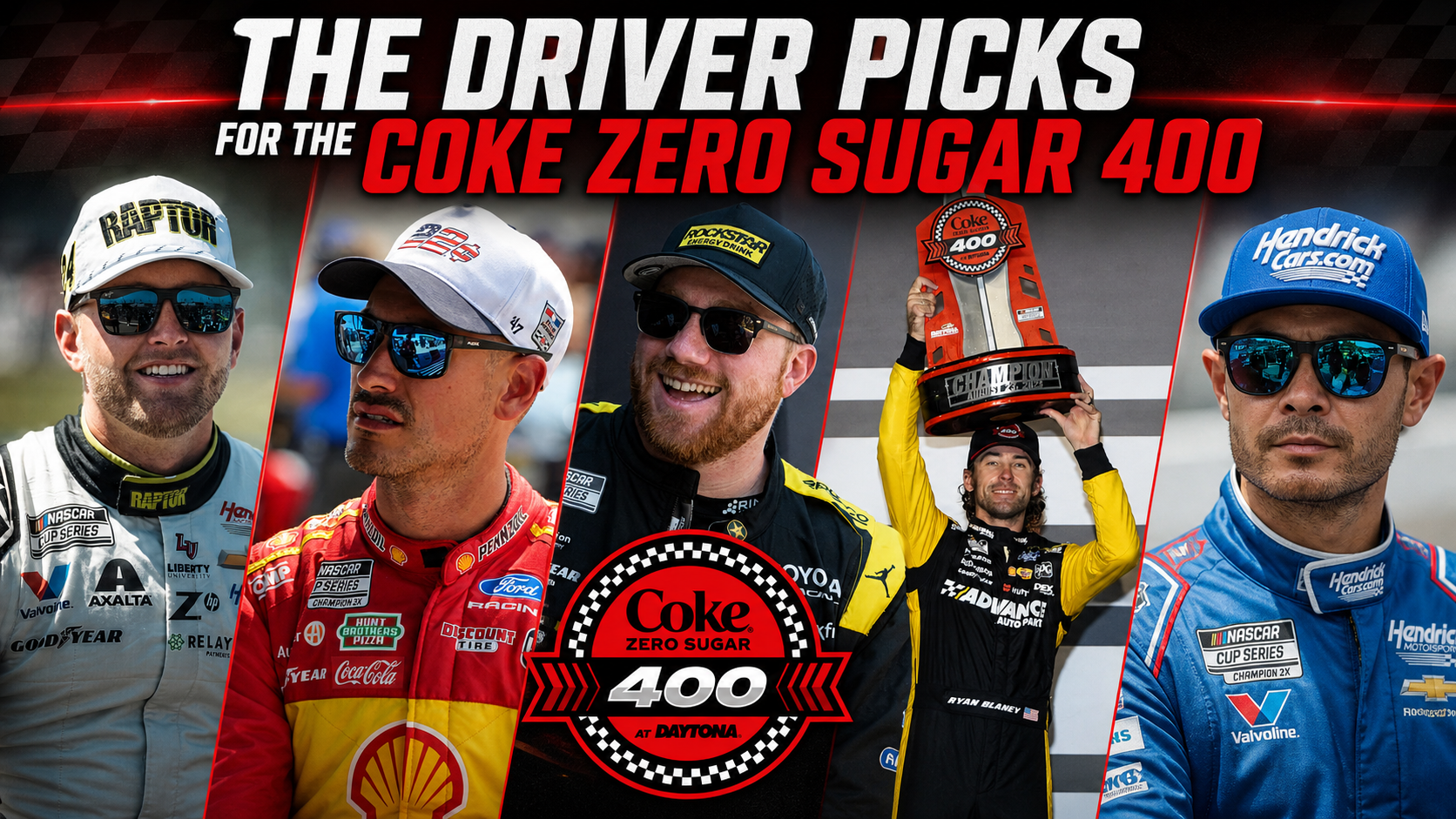
The Driver Picks for the Coke Zero Sugar 400 at Daytona International Speedway!

The Driver Picks for the Coke Zero Sugar 400 at Daytona International Speedway
  • William Byron
  • Joey Logano
  • Tyler Reddick
  • Ryan Blaney
  • Kyle Larson

Spire Motorsports Coke Zero Sugar 400 Race Advance

  • In 31 previous NASCAR Cup Series starts at Daytona (Fla.) International Speedway (DIS), Spire Motorsports has one win, four top-five and eight top-10 finishes. Spire Motorsports earned its inaugural NASCAR Cup Series victory in its first full season of competition when Justin Haley claimed the checkered flag in the Coke Zero Sugar 400 at Daytona on July 7, 2019. Spire Motorsports fields the Nos. 7, 71 and 77 Chevrolet Camaro ZL1s in the Cup Series with Daniel Suárez, Michael McDowell and Carson Hocevar, respectively.
  • For the first time since the organization’s inception in 2018, Spire Motorsports’ NASCAR Cup Series team will compete in the sport’s 10-race championship playoff format, The Chase. Hocevar and Suárez clinched spots in the 16-driver field to race for a Cup Series championship following last Sunday’s race at New Hampshire Motor Speedway. Thirteen drivers have secured their place in The Chase with one race remaining in the regular season.
  • The Coke Zero Sugar 400 will be televised live on NBC Saturday, Aug. 29 beginning at 7:30 p.m. Eastern Daylight Time. The 26th of 36 points-paying races on the 2026 NASCAR Cup Series calendar will also be broadcast live on the Motor Racing Network and SiriusXM NASCAR Radio Channel 90.

Daniel Suárez – Driver, No. 7 Spire Motorsports Chevrolet Camaro ZL1

  • Daniel Suárez will pilot Spire Motorsports’ No. 7 Coke Zero Sugar Chevrolet ZL1 in Saturday evening’s Coke Zero Sugar 400.
  • The Coca-Cola Company (NYSE: KO) is a total beverage company with products sold in more than 200 countries and territories. Our company’s purpose is to refresh the world and make a difference. We sell multiple billion-dollar brands across several beverage categories worldwide. Our portfolio of sparkling soft drink brands includes Coca-Cola, Sprite and Fanta. Our water, sports, coffee and tea brands include Dasani, smartwater, vitaminwater, Topo Chico, BODYARMOR, Powerade, Costa, Georgia, Fuze Tea, Gold Peak and Ayataka. Our juice, value-added dairy and plant-based beverage brands include Minute Maid, Simply, innocent, Del Valle, fairlife and Santa Clara. We’re constantly transforming our portfolio, from reducing sugar in our drinks to bringing innovative new products to market. We seek to positively impact people’s lives, communities and the planet through water replenishment, packaging recycling, sustainable sourcing practices and carbon emissions reductions across our value chain. Together with our bottling partners, we employ more than 700,000 people, helping bring economic opportunity to local communities worldwide. Learn more at www.coca-colacompany.com and follow us on Instagram, Facebook and LinkedIn.
  • In total, the 34-year-old driver has made 18 NASCAR Cup Series starts at Daytona, recording one top five, two top 10s and eight top 20s. His average starting position at DIS is 20.3, with an average finishing position of 24.6 where he has led 44 laps.
  • Suárez secured his spot in the 16-driver Chase field competing for the NASCAR Cup Series championship following Sunday’s race at New Hampshire Motor Speedway where he logged a respectable 17th-place finish.
  • He is looking to sweep this year’s Coca-Cola entitlement races after earning his third career NASCAR Cup Series win, and his first with Spire Motorsports, in May’s Coca-Cola 600 at Charlotte (N.C.) Motor Speedway. Now, he looks to finish the sweep in the Coke Zero Sugar 400, a race that already holds a special place in Spire Motorsports’ history. The team earned its first Cup Series win on July 7, 2019, when Justin Haley won the rain-shortened race at Daytona.
  • Suárez earned a career-best Daytona finish in the last year’s Coke Zero Sugar 400 with an impressive runner-up finish. The 10-year Cup Series veteran led six laps and charged from 19th in the running order to race with the leaders in the closing laps. Suárez came just 0.031 seconds short of the win.
  • The Mexican-born 34-year-old started 15th and finished 13th in February’s Daytona 500. Despite having to compete in a back-up car, Suárez earned stage points with a fifth-place finish in Stage 1 and a 10th-place finish in Stage 2.
  • Suárez is a veteran of 348 Cup Series starts and has notched three wins, 26 top fives, 81 top-10s in NASCAR’s premier division. He’s led 947 laps and has earned three poles since 2017. Suárez is a three-time NASCAR Cup Series winner, capturing victories at Sonoma Raceway in 2022, Atlanta Motor Speedway in 2024, Charlotte Motor Speedway in 2026 and has earned three Busch Light Pole Awards at Pocono Raceway (July 2018), Kentucky Speedway (July 2019) and the Indianapolis Motor Speedway road course (August 2023).

Daniel Suárez Quote
The No. 7 team is in the Chase for the first time ever. What does that accomplishment mean to you and this team, and what will it feel like to race at Daytona Saturday night, one of your favorite tracks, with the Coke Zero Sugar on the car?
“I’m really proud of this team. Making the Chase for the first time ever is a huge accomplishment for the No. 7 team, and it’s something everyone here should be really proud of. We’ve worked so hard all year to put ourselves in this position, and to finally accomplish that goal means a lot to all of us.

“Daytona is one of my favorite tracks, and having Coke on the car makes Saturday night even more special, especially after winning the Coca-Cola 600 earlier this year. That was such a special moment for me and this team, and obviously I’d love to add another trophy to the garage. We can celebrate making the Chase, but we’re still going to Daytona to race hard and hopefully have another big night.”

Ryan Sparks – Crew Chief, No. 7 Spire Motorsports Chevrolet Camaro ZL1

  • Ryan Sparks is the crew chief of Spire Motorsports’ No. 7 Chevrolet Camaro ZL1 with driver Daniel Suárez in the NASCAR Cup Series.
  • Sparks has called 227 NASCAR Cup Series races and collected six top-five and 16 top-10 finishes since making his Cup Series crew chief debut in 2020.
  • Across 12 races at Daytona, Sparks has recorded two top fives and five top 10s, highlighted by a third-place finish in the 2025 Coke Zero Sugar 400 with former driver Justin Haley.
  • Sparks joined Spire Motorsports in 2021, where he served as both Crew Chief and Competition Director, leading the organization’s competitive and technical efforts. In 2026, Sparks serves in a singular role as crew chief for Daniel Suárez. He brings more than a decade of experience across all three national series, highlighted by 13 seasons at Richard Childress Racing and contributions to title-winning campaigns in the NASCAR CRAFTSMAN Truck Series (2011) and O’Reilly Auto Parts Series (2013).

Michael McDowell – Driver, No. 71 Spire Motorsports Chevrolet Camaro ZL1

  • Michael McDowell will pilot Spire Motorsports’ No. 71 Fly Alliance Chevrolet ZL1 in Saturday’s Coke Zero Sugar 400.
  • Fly Alliance is a global private aviation company providing on-demand charter, jet card memberships, aircraft management, maintenance, and parts services. Headquartered at Orlando Executive Airport, the company serves clients across North America, Europe, and the Middle East with a commitment to precision, performance, and concierge-level service. Led by CEO, President and Co-Founder Christopher Tasca, Fly Alliance is built on innovation and operational excellence. Chris brings those same values to Tasca Motorsports, where racing serves as a natural extension of the Fly Alliance brand and its pursuit of performance on and off the track.
  • 2026 marked the five-year anniversary of McDowell’s triumph at the World Center of Racing. The 19-year Cup Series veteran’s first trip to Victory Lane came 4,704 days after his 2008 NASCAR Cup Series debut where he led the final lap to earn the earn the checkered flag in the 2021 Daytona 500. He became the eighth driver to score his inaugural Cup win in the “Great American Race”.
  • In 30 Cup Series starts at DIS, McDowell has led 75 laps, earned one pole, one win, three top-five, and eight top-10 finishes. He started on the front row in both stops to the legendary Daytona Beach oval in 2024, including winning the pole for that year’s Coke Zero Sugar 400.
  • After leading 10 circuits and restarting on the front row with five laps to go in this year’s season-opening Daytona 500, McDowell was collected in a last-lap incident and saddled with a 22nd-place finish.
  • McDowell and crew chief Travis Peterson earned five pole positions at the six events contested at drafting tracks during the 2024 season. Additionally, McDowell won the pole at World Wide Technology Raceway in Madison, Ill., that June, giving the potent duo six total Busch Light Pole Awards on the season – the most of any driver/crew chief combination that year.
  • The No. 71 entry will support both the Martin Truex, Jr., Foundation and the NASCAR Foundation by highlighting the names of two cancer heroes above both doors. Mary Rogers and Rick A. Schaffer will ride along on the driver’s and passenger-side doors, replacing McDowell’s traditional insignia this weekend.
  • In five NASCAR O’Reilly Auto Parts Series starts at DIS, the 41-year-old driver earned a series-best 13th-place result in the 2009 event.
  • The father-of-five raced Spire Motorsports’ Chevrolet Silverado in the NASCAR CRAFTSMAN Truck Series season openers in 2025 and 2026 where he led laps in both races. He was ultimately credited with finishes of 24th and 26th after sustaining damage in the late goings of both contests.
  • Over the first 25 races of the year, McDowell has tallied two top-five, five top-10 and 14 top-20 finishes. He’s earned an average starting position of 16.2 and a 19.2 average finish heading into the final race of the regular season.

Michael McDowell Quote
What do you think you’ll see with the new package at Daytona, are there any concerns?
“There is always going to be concern when something new comes around, but it’s the same for everybody, so you’re trusting your team, you’re trusting your tools and you’re trusting your experience. We’ve had some big package changes at Daytona in the past and they didn’t change the racing product a whole lot. I think everybody, in their mind, is telling themselves not to overreact, because more than likely, it’s not going to be as we expect. I think that’s kind of the mindset a lot of people will have. We are expecting to have a good run and make up for what could have been during the 500 in February.”

Travis Peterson – Crew Chief, No. 71 Spire Motorsports Chevrolet Camaro ZL1

  • Travis Peterson serves as the crew chief for driver Michael McDowell and Spire Motorsports’ No. 71 Chevrolet ZL1 in the NASCAR Cup Series.
  • Peterson played a key role in Dale Earnhardt Jr.’s 2015 Coke Zero Sugar 400 win while serving as a race engineer for Hendrick Motorsports’ No. 88 Chevrolet where the team won the pole and led 96 laps en route to Victory Lane.
  • Peterson is a mechanical engineering graduate of the Williams States Lee College of Engineering at the University of North Carolina at Charlotte. The West Bend, Wis., native earned his degree in 2012.

Carson Hocevar – Driver, No. 77 Spire Motorsports Chevrolet Camaro ZL1

  • Carson Hocevar will race Spire Motorsports’ No. 77 MINER Chevrolet Camaro ZL1 in Saturday’s Coke Zero Sugar 400, the 26th and final event before The Chase.
  • MINER Ltd. is the leading self-perform, national service partner for smarter, safer loading docks and a division of OnPoint Group. As the premier expert in loading docks, commercial doors and more, MINER’s team of best-in-class service professionals help large-scale facilities and Fortune 500-class companies mitigate risk and improve efficiency. With over 400 service professionals in more than 40 markets, MINER is the only company of its kind with a coast-to-coast footprint, offering the largest self-perform network in the country for supporting all doors, loading dock products, vehicle restraints and safety products, HVLS fans, service, aftermarket and more. MINER also supports end users, general contractors, architects, and developers, from ground-up developments to tenant improvement or extensive remodels. Learn more about how Miner delivers speed, consistency and results at https://www.minercorp.com.
  • The No. 77 will have two cancer heroes riding aboard Saturday evening as part of The NASCAR Foundation’s Honor A Cancer Hero campaign. Michele Broadley’s name will be displayed on the driver’s side name rail, while Nathan Elshire’s name will be featured on the passenger side.
  • Michele Ekaterini Ciufecu Broadley was a 24-year-old cancer warrior. Broadley fought a three-and-a-half-year battle with alveolar rhabdomyosarcoma (ARMS). During her fight, she continued college and graduated from the University of Connecticut with a BA in Psychology and a minor in Women’s Studies. She held a 3.74 GPA with Magna Cum Laude high honors. She even started Graduate School for her Master’s Degree in Social Work at Southern Connecticut State University. She wanted to prove that, “yes, I have cancer; but cancer doesn’t have me”, as she would state on her Facebook page. Broadley, who passed away on Sept. 28, 2016, loved to live life. She continues to be an inspiration to those closest to her with her #TeamM Facebook page.
  • Nathan Elshire was a lifelong NASCAR fan until his passing 19 years ago. He and his family connected over the love of the sport. While battling cancer, Elshire graduated college and became a civil engineer while starting a family. Elshire’s family loves to honor him, and with their mutual love of NASCAR, they see the Honor A Cancer Hero program as the perfect way.
  • Hocevar and the No. 77 team, along with teammate Daniel Suarez and the No. 7 team, clinched a spot in The Chase following last weekend’s race at New Hampshire Motor Speedway. The opportunity marks the first appearance in The Chase for Hocevar and the first time a Spire Motorsports team will compete for a Cup Series championship.
  • Through 25 races, the Portage, Mich., native sits 11th in the NASCAR Cup Series point standings, just four markers behind 10th, and has already set career-highs in multiple categories:
  • Season-to-date results of one win, five top fives, nine top 10s
  • 672 points scored
  • 11.6 average start
  • 15.9 average finish
  • The 23-year-old driver has been one of the most improved on the circuit throughout 2026. The team’s average starting and finishing positions have each improved by six spots compared to this point in 2025. Hocevar is on pace to improve his average finish by 5.7 positions at the end of the season while his 11th position in the series’ points is a 12-position improvement compared to the end of 2025.
  • In five career NASCAR Cup Series Starts at “The World Center of Racing,” Hocevar owns a venue-best 11th-place finish earned in August 2024. He also adds four CRAFTSMAN Truck Series races – with a best finish of fifth – and a lone O’Reilly Auto Parts Series start at the 2.5-mile superspeedway.
  • Hocevar came within 2.5 miles of victory in February’s Daytona 500 before chaos enveloped the field with one lap to go. He led the field to the white flag, but contact initiated by another competitor heading into Turn 1 sent him into the outside retaining wall. He was eventually scored 18th in the final rundown.
  • In 17 combined Cup Series starts at Atlanta Motor Speedway, Daytona and Talladega (Ala.) Superspeedway – all drafting-style racetracks – Hocevar has notched one win, four top fives, seven top 10s and 13 top 20s.
  • In the past three drafting-style races, dating back to February at Atlanta, Hocevar owns a 2.66 average finish. Not only does he lead all drivers but outdistances the next competitor by nearly five positions.
  • The 2024 NASCAR Cup Series Rookie of the Year registered his first-career victory earlier this season at Talladega. He survived a late-race restart with three laps remaining and brought home the checkered flag to register Spire Motorsports’ second Cup Series win and first since the 2019 Coke Zero Sugar 400.

Carson Hocevar Quote
What are you anticipating with the updated rules package?
“I am excited for it. There really isn’t anything to look at. No data or anything. I think that will play to our advantage. You have to just go out there and adapt. We are going to have to try everything as the race plays out and see how the car reacts. Luke (Lambert, crew chief) and Tyler (Green, spotter) are very data driven and so are my teammates Michael (McDowell) and Daniel (Suarez). But none of them really have any idea on what to expect or what to talk about. It is kind of an interesting dynamic going into the weekend.”

Luke Lambert – Crew Chief, No. 77 Spire Motorsports Chevrolet Camaro ZL1

  • Luke Lambert is the crew chief of Spire Motorsports’ No. 77 Chevrolet Camaro ZL1 in the NASCAR Cup Series with driver Carson Hocevar.
  • Lambert is in his third season at Spire Motorsports and fourth with Hocevar. The duo has logged two pole awards, one win, eight top-five and 24 top-10 finishes in 105 races.
  • The 43-year-old has called 25 NASCAR Cup Series races at “The World Center of Racing”, tallying two top-five and six top-10 finishes including a venue-best third-place showing in the 2020 Daytona 500 with driver Chris Buescher during his time at RFK Racing.
  • In four NASCAR O’Reilly Auto Parts Series races atop the box, the Mount Airy, N.C., native snagged two top-five and three top-10 results, highlighted by a pair of third-place finishes with Elliott Sadler (Feb. 2012) and Noah Gragson (Feb. 2022).

About Spire Motorsports …
Spire Motorsports fields full-time entries in the NASCAR Cup Series, NASCAR CRAFTSMAN Truck Series and Interstate Batteries High Limit Racing.

The team, co-owned by longtime NASCAR industry executive Jeff Dickerson and TWG Motorsports CEO Dan Towriss, earned its inaugural NASCAR Cup Series victory in its first full season of competition when Justin Haley took the checkered flag in the Coke Zero Sugar 400 at Daytona (Fla.) International Speedway July 7, 2019. Less than three years later, William Byron drove Spire Motorsports’ No. 7 Chevrolet Silverado its first NASCAR CRAFTSMAN Truck Series win April 7, 2022, at Martinsville (Va.) Speedway. The team’s most recent victory came May 24, 2026, when Daniel Suárez won the NASCAR Cup Series Series’ Coca-Cola 600 at Charlotte (N.C.) Motor Speedway.

In 2026, Spire Motorsports campaigns the Nos. 7, 71 and 77 Chevrolet Camaro ZL1s in the NASCAR Cup Series and the Nos. 7 and 77 Chevrolet Silverado RSTs in the NASCAR CRAFTSMAN Truck Series. The Mooresville, N.C., organization also fields the No. 77 410 sprint car in Interstate Batteries High Limit Racing competition.

Lee Pulliam named full-time driver of Peterson Racing’s No. 87 entry for 2027 O’Reilly season

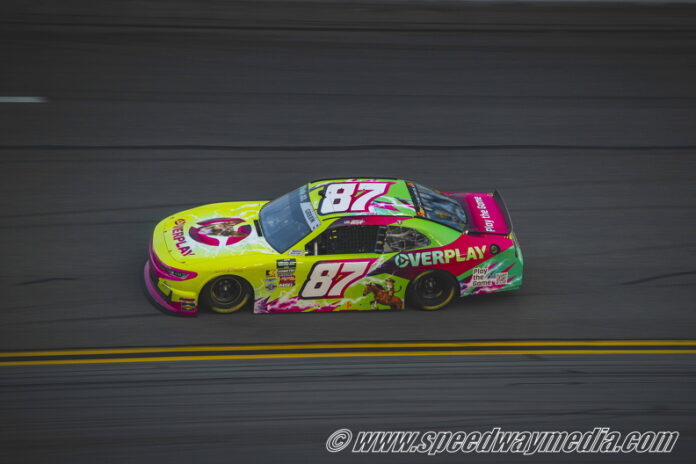
Photo by Patrick Sue-Chan for SpeedwayMedia.com.

Lee Pulliam will compete full-time in the NASCAR O’Reilly Auto Parts Series in the No. 87 Chevrolet for Peterson Racing in 2027.

The news comes nearly five months after the four-time NASCAR Advance Auto Parts Weekly Series champion from Semora, North Carolina, made his O’Reilly Auto Parts Series debut at Martinsville Speedway with JR Motorsports, where he finished in fifth place. 

Ahead of his full-time campaign in 2027, Pulliam will be driving Peterson Racing’s No. 87 Chevrolet entry at Las Vegas Motor Speedway on October 3 and at Martinsville Speedway on October 31.

“I couldn’t be any prouder and more excited to be given this opportunity”, Pulliam said. “So many people have helped me get to this moment in my career and believed in me along the way. This proves that hard work and determination is still rewarded today. Big thanks to Doug (Peterson) for the opportunity to do this together. I have dreamt of this moment ever since I could walk. Racing has always been in my blood, and I’ve dedicated my entire life to the sport.”

“I am looking forward to this challenge and working hard to make the most of this opportunity,” Pulliam added. “I couldn’t be any more excited to work side by side with Jody Measemer (crew chief) and Brad Brinkley (shop foreman) as they are two guys I have respected greatly throughout my short track career. We all know what the other person is capable of and I think this makes it very exciting to see what we can accomplish together.”

In addition to being a four-time champion in the Advance Auto Parts Weekly Series division, Pulliam is a two-time winner of the prestigious ValleyStar Credit Union 300 late model event at Martinsville Speedway, a six-time consecutive winner of the Thunder Road 200 at South Boston Speedway and a two-time Virginia Triple Crown champion in late model stock car competition. He is also an owner of Lee Pulliam Performance that has developed many competitors across the CARS Tour and late model divisions, including Corey Heim and Brenden Queen. 

Peterson Racing is in its first full-time campaign in the O’Reilly Auto Parts Series division after the organization competed on a part-time basis over the previous two seasons. Austin Green, who competed with the organization during the part-time campaign, was initially slated to run the entire 2026 season in the No. 87 entry, but he was replaced by Nick Sanchez after running the first 18 of 19-scheduled events. Sanchez, who first competed with Peterson Racing at Pocono Raceway in mid-June, has since competed in the latest four O’Reilly events and is scheduled to compete through Bristol Motor Speedway in mid-September.

Currently, Peterson Racing’s No. 87 team is ranked in 22nd place in the 2026 O’Reilly Auto Parts Series’ owner’s standings with four top-10 results through 23-scheduled events as the organization continues the pursuit of its first victory in the series.

“It is a pleasure for our young organization to welcome an accomplished racer like Lee,” Chris Seibel, General Manager for Peterson Racing, said. “We have continued to grow our program over the second half of this season, and we feel the addition of someone with the talents of Lee will help even more. Lee is someone who deserves this opportunity, and we are confident he will take full advantage of it.”

Lee Pulliam’s first scheduled O’Reilly Auto Parts Series start with Peterson Racing is scheduled to occur at Las Vegas Motor Speedway in Las Vegas, Nevada, for the Focused Health 302 on October 3 at 7:30 p.m. ET on the CW Network, PRN Radio and SiriusXM. His second start will occur at Martinsville Speedway in Ridgeway, Virginia, on October 31 at 4 p.m. ET on the CW Network, MRN Radio and SiriusXM.

The 2027 O’Reilly Auto Parts Series season is scheduled to commence at Daytona International Speedway in Daytona Beach, Florida, on February 20.

Ford Racing – Daytona 2 Advance

DAYTONA 2

Saturday, August 29 — NASCAR Cup Series, 7:30 p.m. ET (NBC)

Ford Racing comes into this weekend’s NASCAR Cup Series regular season finale at Daytona International Speedway on a hot streak after Ryan Blaney won on Sunday in New Hampshire. The Blue Oval has now won four of the last six series events with Joey Logano and Blaney each winning twice.

BLANEY LOOKING FOR DAYTONA REPEAT

Ryan Blaney used the outside lane to go from 13th place with two laps remaining to Victory Lane as he won last year’s NASCAR Cup Series regular season finale at Daytona International Speedway. Blaney followed Cole Custer, who jumped to the top of the track to make it three-wide against the wall. After getting alongside the middle and bottom rows at the white flag, Custer battled Justin Haley through turn two. When Haley moved up two lanes to block on the backstretch, Custer countered by darting to the inside with Haley mirroring the move. That opened the door for Blaney, who found himself at the front of the outside lane. He ended up going to the middle and battling Custer door-to-door off turn four before edging him at the finish line. The win was Blaney’s second in the summer race at Daytona after winning previously in 2021.

CHASE BERTHS CLINCHED

Joey Logano and Chris Buescher joined Ryan Blaney as Ford Racing drivers who have clinched a berth in the NASCAR Cup Series Chase. The 16-driver field will kick off the championship battle at Darlington Raceway, but there are still three spots available going into Saturday night’s race in Daytona. Austin Cindric is currently 15th and is 44 points above the cut line while Ryan Preece is on the outside, trailing Shane Van Gisbergen for the 16th and final spot by 31 points.

BERRY STAYS HOT

Josh Berry ran his streak of top 10 finishes to four with a season-best third on Sunday at New Hampshire Motor Speedway. The Wood Brothers Racing driver led 73 laps, a career-high for one race, after qualifying second. Berry’s streak started in Indianapolis, where he finished seventh, and continued at Iowa (fourth) and Richmond (eighth).

CLIMBING THE LADDER

Ryan Blaney’s win on Sunday in New Hampshire was his 20th career NASCAR Cup Series victory, making him only the 14th driver to win that many races in a Ford. His Team Penske teammate, Joey Logano, ranks third on the manufacturer’s all-time win list with 37 while Ned Jarrett is first with 43. One other active Ford driver, Brad Keselowski, is also on the list with 27.

DRIVERS WITH AT LEAST 20 FORD CUP WINS

Ned Jarrett – 43

Bill Elliott – 40

Joey Logano – 37

Mark Martin – 35

Dale Jarrett – 30

David Pearson – 29

Brad Keselowski – 27

Fred Lorenzen – 26

Junior Johnson – 26

Kevin Harvick – 25

Matt Kenseth – 24

Rusty Wallace – 23

Carl Edwards – 23

Ryan Blaney – 20

RYAN BLANEY: “I’ve always tried to be open-minded on things, like try not to expect too much of when I don’t know 100 percent about it. I think I’ve just always tried to make myself more versatile that way and not try to get too stuck in my ways, but I don’t know. I go back and forth. It could be a massive, wildly different change, or it could be, ‘It’s not as much of a change as I thought.’ I don’t know what to expect, but we’re gonna be the first to find out, I’ll tell you that. So, we’ll see.”

JOEY LOGANO: “I’m curious to see how much handling comes into play. Typically, even with the added downforce that we had before, coming off of turn four is kind of the trouble point, where cars would kind of slip up and those kind of things. I’m assuming it’s gonna look more like the old Daytona years ago before they repaved it – a little bit more that direction. Or like Atlanta, where handling is gonna come into play to some extent. I just don’t know at what point in the run does that happen. Are we packed up for the first 10 and then you start to see the cream rise to the top? You start to see the best cars start to move their way through the field? I don’t know. Maybe. I kind of think it’s gonna go that direction. It only makes sense if you’re taking grip away. Sure, the car’s gonna handle worse, so, like Ryan said, we’ll be the first to know, but we ain’t gonna know before anybody else, either because one lap of qualifying is gonna tell us nothing. So, I don’t know.”

RFK TEAMWORK LEADS BUESCHER TO VICTORY LANE

In 2023, Chris Buescher won for the third time as teammate Brad Keselowski pushed him to victory in the regular season finale at Daytona International Speedway. The win was Ford’s fourth in the last five races overall and came on a night that saw eight Blue Oval drivers lead a combined 110-of-163 laps. For Buescher, he only led the final two laps as the race went into overtime. Keselowski finished second and Aric Almirola, who needed a win in order to make the postseason, was third. Ford also swept the top three spots in qualifying as Chase Briscoe captured the pole and led a race-high 67 laps.

BLANEY WINS IN WILD FINISH

Ryan Blaney endured a chaotic end to the Coke Zero Sugar 400 in 2021 at Daytona as he swiftly escaped a multi-car pile-up exiting the third turn with four laps remaining. Blaney, who was running fifth in the middle row of three-wide competition, moved up the track to evade the spinning cars seen from his windshield and inherited the lead. In overtime, Blaney managed to stay out front, fending off Kevin Harvick and Chris Buescher in the final laps before the race’s eighth caution, subsequently giving Blaney his third win of the season.

FORD’S NASCAR CUP SERIES SUMMER RACE WINNERS AT DAYTONA

1963 – Fireball Roberts

1965 – A.J. Foyt

1967 – Cale Yarborough

1969 – LeeRoy Yarbrough

1970 – Donnie Allison

1983 – Buddy Baker

1988 – Bill Elliott

1989 – Davey Allison

1991 – Bill Elliott

1994 – Jimmy Spencer

1997 – John Andretti

1999 — Dale Jarrett

2000 – Jeff Burton

2003 – Greg Biffle

2007 – Jaime McMurray

2011 – David Ragan

2014 – Aric Almirola

2016 – Brad Keselowski

2017 – Ricky Stenhouse Jr.

2021 – Ryan Blaney

2023 – Chris Buescher

2024 – Harrison Burton

2025 – Ryan Blaney

The Ford Mustang® coupe is America’s best-selling sports car and has a global racing presence. With Mustang-based race cars competing in international sports car competition (GT3 and GT4), NASCAR, NHRA, Formula Drift, in Supercars, at the Pikes Peak International Hill Climb and in its own bespoke regional one-make series – Mustang Cup and Mustang Challenge – the platform has an unprecedented global reach. This weekend, 17 Mustang race cars are scheduled to compete across all active disciplines. Learn more about Mustang at www.FordRacing.com.

ARCA Menards Series at Madison International Speedway: Atlas 200 Pre-race Notes

THE RACE:      Atlas 200
THE PLACE:    Madison International Speedway
THE DATE:       Friday, August 28, 2026
THE TIME:        9 pm ET / 8 pm CT
TV:  FS1, Live

  • The final quarter of the 2026 ARCA Menards Series season takes the green flag in Friday night’s Atlas 200 at Madison International Speedway. It will be the 1610th race in series history, the 13th race at Madison, and the 33rd time the series has raced in the state of Wisconsin.
  • Jake Bollman (No. 20 Nitro Motorsports Toyota) leads the ARCA Menards Series championship standings over his teammate Thomas Annunziata (No. 70 JBL Toyota) by just four points with five races remaining in the season. Neither Bollman nor Annunziata have previously raced at Madison International Speedway.
  • Max Reaves (No. 18 Cook Out Toyota) returns to Madison International Speedway as the defending winner of the Atlas 200 and the most recent ARCA Menards Series winner coming off his victory in Sunday’s Calypso 100 at the Illinois State Fairgrounds. Reaves, who is mentored by 2000 NASCAR Cup Series champion and NASCAR Hall of Fame inductee Bobby Labonte, has six wins in 16 career ARCA Menards Series starts. In addition to Springfield, he’s won earlier this season at Berlin Raceway and Elko Speedway.
  • Appalachian Sucker Punch ASA STARS National Tour points leader Carson Brown (No. 28 Grizzly Coolers Chevrolet) looks to score his second ARCA Menards Series victory of the season on Friday. Brown won in his ARCA Menards Series debut earlier this season at Phoenix Raceway, becoming the 39th driver to win in his first career start since 1979. Brown finished second in the ASA STARS National Tour race at Madison in June.
  • Tristan McKee (No. 77 Zeigler Chevrolet) will make his seventh ARCA Menards Series start of 2026 on Friday night and will be hunting for his third winner’s trophy of the season. McKee, who leads the ARCA Menards East standings headed into that series’ finale at Bristol Motor Speedway in September, won earlier this season at Toledo Speedway and in his most recent start at Iowa Speedway. McKee finished sixth in the ASA STARS National Tour race at Madison in June.
  • Fifteen-year-old Taylor Mayhew (No. 42 MMI Services Chevrolet), son of seven-time ARCA Menards West winner David Mayhew, will make his second ARCA Menards Series start driving for team owner Bruce Cook. Mayhew finished third in his West debut at Kevin Harvick’s Kern Raceway in February and then finished eighth in the ARCA Menards Series / ARCA Menards West combination race at Phoenix Raceway. Cook Racing Technologies has won twice this season, at Watkins Glen International and Lucas Oil Indianapolis Raceway Park, with Kaden Honeycutt at the wheel.
  • Isaac Kitzmiller (No. 79 A.L.L. Construction / Carter CAT Chevrolet) heads to Madison fresh off his best career ARCA Menards Series finish, second, on Sunday at Springfield. Kitzmiller, the reigning ARCA Menards East champion, has finished in the top-five in each of his most recent three ARCA Menards Series starts with a pair of fifth-place finishes at Lucas Oil Indianapolis Raceway Park and Iowa Speedway to go along with his runner-up finish at Springfield.
  • Ty Fredrickson (No. 36 Hermans Landscape Supply / Rack Shack BBQ Toyota) will make his fourth start of the season and the first in his familiar No. 36. Fredrickson, the son of former ASA Midwest Tour champion Dan Fredrickson, finished a career-best third in his first start of the season at Elko Speedway, and 12th in his debut with his family-owned team at Iowa Speedway. Fredrickson also raced in the ASA STARS National Tour race at Madison in June, coming home in fourth.
  • Previous ARCA Menards Series winners at Madison International Speedway include Ramo Stott (1970), Tom Bowsher (1971), Bruce Gould (1973), Alex Bowman (2011), Chris Buescher (2012), Kyle Benjamin (2013), Justin Boston (2014), Josh Williams (2016), Austin Theriault (2017), Chandler Smith (2018, 2019), and Max Reaves (2025).
  • The ARCA Menards Series track qualifying record at Madison International Speedway, set in 2019, is held by Chandler Smith at 17.982 seconds/100.095 miles per hour.
  • The ARCA Menards Series race record at Madison International Speedway, set in 2013, is held by Kyle Benjamin at 79.210 miles per hour.
  • ARCA Menards Series races at Madison have been extended into overtime only one previous time, in 2012. Should the race be extended into overtime, there will be unlimited attempts at a two-lap “green-white-checkered” finish. Should the caution be displayed after the white flag has been shown, there will be unlimited attempts at a one-lap “green and white together” finish.
  • The Atlas 200 is set for 9 pm ET / 8 pm CT on Friday, August 28. The race will be televised live on FS1. Live timing & scoring data and live race audio will be available on ARCARacing.com; for up-to-the-minute updates please follow @ARCA_Racing on X (formerly known as Twitter).

About ARCA

The Automobile Racing Club of America (ARCA), founded in 1953 by John and Mildred Marcum in Toledo, Ohio, and acquired by NASCAR in April 2018, is the leading grassroots stock car sanctioning body in the United States. Bridging the gap between NASCAR’s top three national touring series and weekly and regional tour racing all across the country, the organization sanctions over 100 races per year in the ARCA Menards Series, ARCA Menards Series East, ARCA Menards Series West, ASA STARS National Tour, ASA CRA Super Series, ASA Midwest Tour, ASA Southern Super Series plus weekly racing at Toledo and Flat Rock Speedways. For more information about ARCA visit www.arcaracing.com, or follow ARCA on Facebook (@ARCARacing) and Twitter (@ARCA_Racing).  

About Menards

A family-owned and run company started in 1958, Menards is recognized as the retail home center leader of the Midwest with 236 stores in 15 states.  Menards is truly a one-stop shop for all of your home improvement needs featuring a full-service lumberyard and everything you need to plan a renovation or build a home, garage, cabin, shed, deck, fence or post frame building.  You’ll find a large selection of lumber, roofing, siding, construction blocks, trusses, doors and windows, plus cabinets, appliances, countertops, flooring, lighting, paint, plumbing supplies and more.  To complete the job, Menards has quality hand tools, power tools, fasteners, electrical tools plus storage options and supplies for everyone from the weekend warrior to the pro! 

Menards has what you need to complete your outdoor projects and keep your yard in tip-top shape including mowers, trimmers, blowers, pressure washers and more, plus a beautiful garden center stocked with plants, shrubs, trees, landscaping tools, grass seed, fertilizer options, outdoor décor and patio furniture.  Menards also has everyday essentials like health & beauty products, housewares, pet and wildlife supplies, automotive items and even groceries.  And at Christmas, an Enchanted Forest display area with impressive trees, lighting, decorations, ornaments, inflatables and more.   

Menards is known for friendly Customer Service and as the place to “Save Big Money” with low prices every day, and sales too!  For more information, please visit Menards.com to learn about our store locations, offerings and services. 

What to Do After a Car Accident Injury: A Practical Guide to Protecting Your Claim

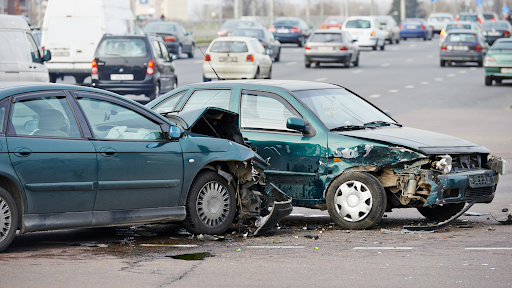
A car accident can happen in just seconds, but the consequences may last for months or even years. Beyond vehicle damage, an injured person may face medical treatment, lost income, insurance disputes, emotional stress, and uncertainty about what to do next. Taking the right steps immediately after a collision can help protect your health, preserve important evidence, and make it easier to understand whether you may have grounds for a legal claim.

When an accident results in significant injuries or disputed responsibility, consulting an experienced legal professional such as Affinity Law can help you understand your options. Injury law may become particularly important when determining liability, documenting losses, dealing with insurance companies, and pursuing compensation after a serious motor vehicle accident. 

What Should You Do Immediately After a Car Accident?

The first priority after any collision should be safety and medical care. Legal and insurance concerns matter, but they should not come before addressing an emergency.

If you are able to do so safely, move away from immediate traffic hazards and check whether anyone else requires emergency assistance. Call the appropriate emergency services when necessary.

Even if an injury initially appears minor, consider getting medical attention. Some injuries may not produce obvious symptoms immediately after a crash. A medical professional can evaluate your condition and create documentation of any injuries associated with the accident.

Contact Law Enforcement When Appropriate

Depending on the circumstances and local requirements, you may need to report the collision to injury law enforcement.

An official accident report can contain useful information about:

  • The location and time of the crash
  • Vehicles involved
  • Statements from drivers
  • Statements from witnesses
  • Road or weather conditions
  • Observations made by responding officers

Request or retain a copy of the report when it becomes available.

Document the Accident Scene

Evidence can disappear quickly after a collision. Vehicles may be moved, road conditions can change, and witnesses may leave the area.

If you are physically able and it is safe to do so, take photographs or videos of the scene.

Consider documenting:

  • Damage to every vehicle involved
  • Your visible injuries
  • The surrounding road
  • Traffic signs and signals
  • Skid marks or debris
  • Weather conditions
  • Road defects
  • Vehicle positions
  • Relevant property damage

Do not put yourself in danger simply to obtain a photograph. Safety should always come first.

Collect Witness Information

If people witnessed the accident, politely ask for their names and contact information if it is safe and appropriate.

Independent witnesses may be able to provide useful information about how the collision occurred, particularly if the drivers later provide conflicting accounts.

Seek Medical Attention and Follow Treatment Recommendations

Medical documentation can play an important role in an injury claim.

After an accident, keep records relating to:

  • Emergency treatment
  • Doctor appointments
  • Diagnostic tests
  • Prescriptions
  • Physical therapy
  • Rehabilitation
  • Follow-up appointments
  • Medical expenses

Follow your healthcare provider’s recommendations and attend scheduled appointments.

If symptoms change over time, inform your medical provider. Avoid minimizing symptoms simply because they were not immediately apparent following the collision.

Notify Your Insurance Company

Insurance policies often contain requirements regarding accident reporting. Notify your insurer within the timeframe required by your policy and applicable law.

When communicating with an insurance company, provide accurate information about what happened. Avoid speculating about facts you do not know.

For example, if you are uncertain about the speed of another vehicle, it is generally better to say that you do not know rather than guess.

Be Careful With Recorded Statements

An insurance company may ask questions about the accident or request a recorded statement.

The appropriate response can depend on the circumstances and the applicable insurance policy. If the accident involves significant injuries, disputed liability, or a potentially substantial claim, consider obtaining legal advice before making important statements about the incident.

Do Not Immediately Accept the First Settlement Offer

After an accident, an insurance company may make a settlement offer.

It can be tempting to accept money quickly, particularly when medical bills and other expenses are accumulating. However, an early settlement may not account for the full extent of an injury, especially when the long-term prognosis is not yet clear.

Before accepting a settlement, consider whether you understand:

  • The full extent of your injuries
  • Current medical expenses
  • Potential future treatment
  • Lost income
  • Other financial losses
  • The legal consequences of signing a release

Once a claim is settled and a release is signed, there may be limited or no opportunity to seek additional compensation for the same incident, depending on the applicable law and agreement.

Understanding Fault in a Car Accident

Determining who is legally responsible for a crash is not always straightforward.

One driver may appear responsible at first, but the investigation may reveal additional factors. For example, responsibility can potentially involve:

  • Distracted driving
  • Speeding
  • Impaired driving
  • Failure to yield
  • Unsafe lane changes
  • Poor road conditions
  • Vehicle defects
  • Multiple drivers

Some jurisdictions also apply comparative or contributory negligence rules that can affect the amount a person may recover.

Because the rules differ by state and circumstances, an injured person should avoid assuming that being partially responsible automatically eliminates every possible legal remedy—or that another driver is automatically liable simply because the collision occurred.

What Damages Can a Car Accident Claim Include?

The losses available in a car accident claim depend on the circumstances and applicable law.

Potential categories may include medical expenses, lost wages, property damage, rehabilitation costs, and compensation for certain forms of pain, suffering, or reduced quality of life.

Medical Expenses

Medical costs can extend beyond the initial emergency room visit.

Treatment may include specialist appointments, physical therapy, medication, rehabilitation, and future medical care.

Keeping organized records of these expenses can help establish the financial impact of the accident.

Lost Income

An injury may prevent someone from working temporarily or permanently.

Depending on the applicable law, compensation may potentially address certain lost wages or reductions in earning capacity.

Keep documentation such as pay statements, employment records, and information regarding missed work.

Pain and Other Non-Economic Losses

Some legal systems allow compensation for non-economic losses associated with an injury.

These can potentially involve physical pain, emotional distress, loss of enjoyment of life, or similar consequences.

The rules and methods used to evaluate these damages vary significantly by jurisdiction.

Keep a Personal Accident File

One of the simplest ways to stay organized is to create a dedicated file for everything related to the collision.

Include copies of:

  • Police reports
  • Medical records
  • Medical bills
  • Insurance correspondence
  • Photographs
  • Repair estimates
  • Receipts
  • Employment documentation
  • Witness information
  • Attorney correspondence

You can also maintain a personal timeline describing important developments after the accident.

Record medical appointments, changes in symptoms, missed workdays, communications with insurers, and other relevant events. This can help create a clear chronology of what happened.

Avoid Discussing Your Claim on Social Media

Social media can create unexpected complications in an injury dispute.

Avoid posting detailed descriptions of the accident, arguments about who was responsible, or photographs that could be misunderstood.

Even an innocent post can potentially be taken out of context.

It is generally wise to keep discussions about an active legal claim private and follow advice from your attorney regarding online activity.

Car accident claims can be subject to statutes of limitations and other deadlines.

These deadlines vary depending on the state, the nature of the claim, the parties involved, and other circumstances. Certain claims involving government entities or other special circumstances may involve additional notice requirements.

Waiting until the deadline is approaching can create unnecessary risk.

If you believe you may have a personal injury claim, obtaining information about the applicable deadlines as early as possible is a sensible step.

When Should You Contact a Lawyer?

Not every minor collision requires legal representation. However, speaking with a lawyer may be particularly helpful when:

  • You suffered serious injuries
  • Your recovery is expected to take significant time
  • Liability is disputed
  • Multiple vehicles were involved
  • The insurance company denies responsibility
  • The insurer offers a settlement you believe is inadequate
  • You cannot return to work
  • You may require future medical treatment
  • The accident involved unusual circumstances

An attorney can review the facts, explain applicable legal principles, and help you understand your options.

Learn More About Disputed Crash Liability

Determining fault can become one of the most complicated parts of a car accident claim. Different drivers may provide different versions of what happened, while physical evidence, witness testimony, insurance records, and other information may need to be examined.

Readers interested in understanding this issue further can also explore this Speedway Media guide on what auto accident lawyers do when crash liability is disputed. Understanding how disputed liability can affect an injury claim can help accident victims prepare better questions when seeking legal guidance.

Final Thoughts

Knowing what to do after a car accident injury can make a difficult situation more manageable. Seek medical attention, report the collision when appropriate, preserve evidence, document your losses, communicate carefully with insurers, and keep detailed records.

Most importantly, do not assume that an injury claim is simple just because the accident itself appeared straightforward. Questions about fault, insurance coverage, medical treatment, future losses, and legal deadlines can significantly affect the outcome.

When injuries are serious or responsibility is disputed, professional legal advice can help an injured person understand the available options and make informed decisions. The goal is not simply to file a claim—it is to protect your legal interests while focusing on recovery and obtaining an appropriate resolution under the law.