
Home Blog Page 44

RFK Racing Welcomes Modelo as ‘Official Cerveza’ in New Partnership

NASCAR Champion Brad Keselowski to Debut Modelo Colors on No. 6 Ford at Watkins Glen International

CONCORD, N.C. (May 6, 2026) – RFK Racing announced today a partnership naming Modelo the ‘Official Cerveza of RFK Racing.’ The iconic brand, celebrated for perseverance and grit will serve as a primary sponsor on the No. 6 Ford Mustang Dark Horse driven by Brad Keselowski at Watkins Glen International this May.

The partnership brings together two brands defined by heritage and a commitment to excellence. As Modelo continues its growth and popularity as the #1 beer in the United States, its alignment with RFK Racing provides a premier platform to engage with NASCAR’s passionate and loyal fanbase.

“We are thrilled to welcome the Modelo brand into the RFK Racing family,” said Brad Keselowski, driver and co-owner of RFK Racing. “In racing, as in life, it takes grit to overcome challenges and reach the top of the podium. Modelo embodies that mindset perfectly. I’m personally looking forward to representing them on the track and can’t think of a better place to debut the No. 6 Modelo Ford than at the high-speed, technical road course of Watkins Glen.”

The No. 6 Modelo Ford Mustang will feature a striking navy and gold livery, reflecting the beer’s premium branding.

“Modelo has always embodied the Mark of a Fighter- celebrating the people who show up with grit, pride, and the will to earn it,” said Rene Ramos, SVP of brand Activation for Constellation brands. “That same mentality is what we see in RFK Racing and in champion Brad Keselowski. We’re fired up to bring Modelo to the track as the official Cerveza of RRK Racing, and for the opportunity to connect with fans who share our passion for high-performance competition.

The NASCAR Cup Series race at Watkins Glen International will take place on May 10 and will be broadcast on Fox Sports 1, MRN Radio and SiriusXM Satellite Radio (Channel 90)

About RFK Racing 

RFK Racing, in its 39th season in 2026, features an ownership lineup pairing one of the sport’s most iconic names, Jack Roush, along with NASCAR Champion, Brad Keselowski, and Fenway Sports Group owner John Henry. Roush initially founded the team in 1988, and it has since become one of the most successful racing operations in the world, propelling him to be the first NASCAR owner to amass three hundred wins and capturing eight championships, including back-to-back NASCAR Cup titles in 2003 and 2004. Keselowski, a former owner in the NASCAR Truck Series, is the 2012 NASCAR Cup Series Champion. In 2007, Roush partnered with Henry, who also owns Major League Baseball’s Boston Red Sox, English Premier League’s Liverpool F.C., and the NHL’s Pittsburgh Penguins, to form Roush Fenway Racing. Off the track, RFK is a leader and proven winner in NASCAR marketing solutions, having produced multiple award-winning social media, digital content and experiential marketing campaigns. Visit https://www.rfkracing.com/ and follow the team on all social platforms @rfkracing.

About Modelo: Born in 1925 in the small town of Tacuba, Mexico, Modelo has been bringing distinctive high-quality beer to those with the Fighting Spirit ever since, including Modelo Especial®, Modelo Negra®, Modelo Oro and a flavorful lineup of Modelo Cheladas and Modelo Spiked Aguas Frescas.

Modelo Especial is a golden, full-flavored pilsner-style lager with a clean, crisp finish and is the #1 beer in the U.S. in dollar sales. The Casa Modelo brand family is exclusively brewed in Mexico and imported and marketed for the U.S. by Constellation Brands.

TEAM PENSKE AND RYAN BLANEY ANNOUNCE LONG-TERM DRIVER CONTRACT EXTENSION

MENARDS® EXTENDS WITH TEAM PENSKE FOR MULTIYEAR RENEWAL

MOORESVILLE, NC (May 6, 2026) – Team Penske announced today that it has reached a long-term contract extension with 2023 NASCAR Cup Series Champion Ryan Blaney, while also confirming a multiyear renewal of its longstanding partnership with Menards®. The agreements ensure the continued alignment of one of NASCAR’s premier teams, a championship-winning driver, and one of the sport’s most recognizable brands well into the future.

Blaney, the 2023 NASCAR Cup Series Champion, has been a constant of Team Penske’s NASCAR program since joining the organization in 2012. After becoming a full-time Cup Series driver in 2016, Blaney has established himself as one of the sport’s most consistent and respected drivers behind the wheel of the No. 12 Ford Mustang, totaling 18 wins and 13 poles across 10-plus seasons in NASCAR’s premier series.

“Ryan Blaney has developed into one of the elite drivers in the NASCAR Cup Series, and the success he’s achieved speaks for itself,” said Roger Penske. “I’m confident Ryan and the No. 12 team will continue to build momentum into the future, especially positioned alongside a committed partner like Menards who’s been instrumental to our team for more than a decade.”

“Roger’s commitment to me and my career has been something a race car driver could only dream of – not only getting the opportunity in the first place, but sticking with me through the highs and lows for more than a decade,” said Blaney. “To still be a part of Team Penske – the wins, the championships, the people – and continuing to grow my career with the unwavering support of Roger and the entire organization has been the opportunity of a lifetime. We’re going to keep pushing to deliver more wins and championships and to do that with the support of John Menard and the Menard family is truly an honor.”

Menards has been a fixture of Team Penske’s NASCAR efforts since 2016, serving as a primary partner on Blaney’s No. 12 Ford while playing a key role in the team’s championship success. The renewed partnership continues a shared commitment to performance, innovation and fan engagement.

“We’ve enjoyed a tremendous relationship with Team Penske, and we’re excited to continue that partnership for the future,” said John Menard, President and CEO of Menards. “Ryan and Austin Cindric have both done a tremendous amount for our brand, vendors and our customers, and they represent us with professionalism and passion. Team Penske shares our dedication to excellence, and we look forward to achieving more success together on and off the track.”

Blaney’s 2023 championship marked a significant milestone for both driver and team, adding to Team Penske’s storied NASCAR history. Beyond his on-track success, Blaney has become one of the most popular drivers in the series, consistently connecting with fans while serving as a strong ambassador for Team Penske and its partner network.

With Blaney, Menards, and Team Penske aligned for the future, the organization looks ahead to building on its championship legacy while continuing to compete at the highest level of the NASCAR Cup Series.

About Team Penske

Team Penske is one of the most successful teams in the history of professional sports and is celebrating its 60th Anniversary during the 2026 season. From its first race in the1966 24 Hours of Daytona, cars owned and prepared by Team Penske have produced more than 660 major race wins, over 700 pole positions and 48 National Championships across open-wheel, stock car and sports car racing competition. In its storied history, the team has also earned 20 Indianapolis 500 victories, three Daytona 500 Championships, a Formula 1 win, victories in the 24 Hours of Daytona and the 12 Hours of Sebring, along with a win in Australia’s legendary Bathurst 1000 race. More than 100 drivers have raced for Team Penske in its six decades. The team currently competes in the NASCAR Cup Series and NTT INDYCAR Series, as well as IMSA WeatherTech SportsCar Championship through its global partnership, Porsche Penske Motorsport. For more information about Team Penske, please visit www.teampenske.com.

Forte Racing Earns Two Podiums at Miami Grand Prix Weekend

Harvey/Liddy and Broll Deliver Strong Race 1 Results as Weather Cancels Sunday Finale

Monrovia, California (Wednesday, May 6, 2026) – Forte Racing continued its strong start to the 2026 McLaren Trophy America season with two additional podium finishes during Round 2 of the championship at the Miami International Autodrome, part of the Formula 1 Miami Grand Prix weekend.

Competing on one of the most high-profile stages of the season, the team once again demonstrated depth across its four-car lineup, delivering competitive performances despite the unique challenges of a street circuit, limited track time, and extreme weather conditions that ultimately forced the cancellation of Sunday’s Race 2.

With only Race 1 completed, Forte Racing capitalized on its opportunities, adding valuable championship points while continuing to build momentum following a successful season opener at Sonoma Raceway.

No. 24 Cypress Land McLaren Artura Trophy Evo (Pro) – Tanner Harvey / Patrick Liddy

The duo of Tanner Harvey and Patrick Liddy continued their strong start to the 2026 season in the No. 24 Cypress Land Company McLaren Artura Trophy Evo, delivering another podium result in the Pro class during Race 1.

Liddy opened the weekend with a strong qualifying performance, placing the car third overall and setting the stage for a competitive race. He maintained position through the opening stint before handing the car over to Harvey, who managed the second half of the race with a clean and controlled drive to secure third overall and second in the Pro class.

Despite limited track time and the added complexity of a street circuit, the pair once again showed strong pace and execution, continuing to position themselves as early championship contenders.

Tanner Harvey – “Miami was a strong and productive weekend for me at the Miami Grand Prix support round of the McLaren Trophy America championship.

In Race 1, Patrick Liddy started the race from P3 overall, and I took over for the second stint to bring the car home. We finished P3 overall and P2 in class, securing another solid points result for the championship.

I was really happy with how we executed as a team. Patrick did a great job at the start putting us in position, and from there it was about keeping things clean, managing the race, and maximizing the result.

Unfortunately, Race 2 was canceled due to a major thunderstorm that hit the circuit. The conditions became undriveable very quickly, and it was the right call from race control to call it off.”

Patrick Liddy – ““Overall, a really positive weekend for us in the McLaren Trophy America during the Miami Grand Prix. Qualifying P3 and bringing it home P2 in Pro for Race 1 shows the pace we had. Huge credit to Tanner Harvey for a strong drive and to everyone at Forte Racing. They put in long nights chasing issues with the car and gave us something competitive. That kind of effort makes the difference.”

No. 100 PiedParker McLaren Artura Trophy Evo (AM) – Cooper Broll

Cooper Broll continued his strong start to the season in the No. 100 PiedParker McLaren Artura Trophy Evo, backing up his Sonoma sweep with another podium finish in the Am class during Race 1 at Miami.

Competing on the tight and technical Miami street circuit for the first time, Broll adapted quickly to the unique demands of the layout, managing the race effectively while navigating heavy traffic and the unforgiving nature of the concrete-lined course.

With limited practice time and changing conditions throughout the weekend, Broll delivered a clean and composed performance to secure second in class, continuing to build valuable momentum in the championship.

Cooper Broll – “Miami F1 was quite the experience! So many fans, so many people, and such an incredible venue. The track was an absolute blast to drive, it has a great flow, lots of high speed, and a lot of concrete walls. Overall happy with the result, second in class for Race 1 was the best I could’ve hoped for.

Unfortunately, didn’t have a chance for the top step since Race 2 was canceled due to extreme weather. Up next: Road Atlanta!”

No. 8 Sigma Plastics Group McLaren Artura Trophy Evo (Pro) – Kaia Teo / Jon Miller

The No. 8 Sigma Plastics Group McLaren Artura Trophy Evo saw Jon Miller step in alongside Kaia Teo for the Miami weekend, with the pairing showing strong pace despite limited preparation time and the challenges of a condensed schedule.

The duo made the most of their track time in practice, building confidence heading into Race 1 while managing both the demands of the circuit and a minor mechanical issue during the weekend. Teo handled the pressure of competing on a Formula 1 stage with maturity, while Miller’s experience helped guide the team through a competitive and often chaotic race.

Despite success penalties from Sonoma and a longer pit stop, the pair pushed through to finish fourth in the Pro class and eighth overall, showing resilience and pace throughout the weekend.

Kaia Teo – “Miami F1 weekend done and dusted! We were pretty happy after FP1 and FP2, which made a big difference going into Race 1, and even when things got a little chaotic, I felt like we handled it well and stayed in the fight. It definitely wasn’t easy out there.

The team did an incredible job all weekend, from prepping the car to managing everything in the heat. They really gave us a strong package. Huge thank you to the entire crew for their hard work, and to our partners and sponsors for their continued support. It truly means a lot.

Racing on an F1 weekend was an unforgettable experience, and being part of that environment, with that level of energy and intensity, is something really special. A little disappointing not to get Race 2 in, especially here in Miami, but overall there’s a lot to build on. We’ll take the positives and come back ready to push for more.”

Jon Miller – “Miami was a good weekend for the No. 8. I think we could have optimized a few things strategy-wise, but we showed strong pace from the jump in practice, which gave us confidence heading into Race 1 and that carried through even when things got a little spicy on track.

The crew quickly dealt with a small mechanical issue in FP2. The car ran warmer than we’d have liked, but the Forte Racing crew kept us in the fight. The success penalties from Sonoma meant that we had a longer pit stop than some of the other cars, but we pushed through for a P4 in Pro and P8 overall in Race 1.

Considering the extremely limited practice time, Kaia did a fantastic job, which speaks volumes about her as a driver. Race 2 getting washed out stings a bit, but we’ll be back to push for maximum points when it gets rescheduled.”

No. 53 Race for RP McLaren Artura Trophy Evo (Pro/Am) – Neil Langberg / Kevin Madsen

The No. 53 Race for RP McLaren Artura Trophy Evo of Neil Langberg and Kevin Madsen once again combined on-track performance with their mission-driven efforts during one of the most visible race weekends of the season.

Competing under the unique constraints of a Formula 1 weekend, including limited space, tight schedules, and extreme heat, the team delivered a consistent and focused performance throughout practice, qualifying, and Race 1.

The duo navigated the demanding Miami circuit with discipline, continuing to build awareness for Relapsing Polychondritis while engaging with fans and partners throughout the weekend.

Neil Langberg – “Hi this is Neil “Nigel” Langberg co-driver of the No. 53, Race for RP, Forte Racing McLaren Trophy Artura Evo car. We came to the Miami International Autodrome this weekend to race and take part in the F1 race festivities.

The team did an incredible job in prepping all the cars under some difficult circumstances. The weather was HOT, and because of the limitations of space for us on an F1 weekend we were all confined in tight quarters with short times to perform.

Overcoming these constraints, we had two good practice sessions and the same in qualifying. This track is diabolical in its design and because it’s really only used once a year for the race, is a challenge and a curse to drive, and which only a small number of drivers will ever have the chance to experience.

The first race on Saturday went off without a hitch and proved to be quite entertaining. However, toss in the ever-changing climate conditions and we lost the race on Sunday to some strong thunderstorms and lightning. After which the clouds broke and the F1 race was run, albeit two hours earlier than scheduled.

In the ‘60s, the Chambers brothers had a hit song called, “The Time Has Come Today.”

Whether in racing or auto immune disease research, we can’t just put it off another day. It’s an uncertain world, so please donate to the RP Foundation today to help support research for patients with chronic conditions.

Thanks, and look forward to seeing you on the track again soon.”

Kevin Madsen – “Fantastic job by the team on this hectic F1 weekend. Neil was having a blast and we had a lot of amazing interactions regarding Race for RP. Those two factors are the ultimate measuring stick for a successful weekend on the No. 53 car.

I wish we got to show our pace potential, but I was held up in qualifying by two cars during two critical laps. In Race 1, Neil got ahead of another Pro/Am car and drove smart and safe. Proud of him. Thankful to Forte, McLaren, and all involved.”

Forte Team Management

Team manager David Cozart said the Miami Grand Prix weekend presented a unique set of challenges while also offering a valuable experience for the entire organization competing on a Formula 1 stage.

“What a week! Supporting Formula 1 was a truly special experience,” Cozart said. “A personal highlight for me was speaking with Kaia Teo after her first practice session. Her excitement and exuberance regarding the street course was refreshing, especially seeing such energy from a young driver on her first street circuit.

On track, we were pleased to secure a couple of podium finishes in Race 1. Unfortunately, due to poor weather, the second race was canceled.

We are now looking forward to Atlanta, where we will compete in our next two scheduled races and potentially a third to make up for the cancellation.”

Team owner Shane Seneviratne said the Miami weekend highlighted both the team’s resilience and its ability to perform under challenging and high-pressure conditions.

“Miami is one of the most challenging environments we face all season, not just on track but operationally as well,” said Seneviratne. “Between the limited space, tight schedule, and changing track conditions, it really tests every part of the team.

I’m proud of how everyone handled it. We showed strong pace across all four cars, delivered podium results, and continued to execute at a high level despite the circumstances. There’s still more on the table for us, which is encouraging, and we’re looking forward to building on this as we head to Atlanta.”

Next up for Forte Racing and the McLaren Trophy America championship is Road Atlanta June 12-14.

*Photos by Brayan Urtado

ABOUT FORTE RACING

Founded in 2023, Forte Racing is a motorsports team based in Los Angeles and Charlotte. Under the watchful eye of Shane Seneviratne, the team competed in various racing series, including the IMSA WeatherTech GTD Championship, the IMSA VP Racing Sportscar Challenge, and Lamborghini Super Trofeo and, in 2025, expanded by adding a single-car entry in the inaugural McLaren Trophy America Championship.

Building on the foundation of US RaceTronics, the team has quickly built a strong reputation with multiple podium finishes, race wins, and several North American and World Championships. The team will expand to a four-car McLaren Trophy America program for 2026 in addition to continuing their presence in the IMSA VP Racing Sportscar Challenge. For more information about the team, its drivers, and race operations, visit www.forteracing.com.

ABOUT THE SERIES

McLaren Trophy America Championship series’ second season will launch in March of 2026. The season will feature 10 rounds at five iconic U.S. tracks including participating in the Formula 1 Miami GP in May.

2026 McLaren Trophy America Schedule:

  • Rounds 1 & 2: Sonoma Raceway, CA | March 27-29
  • Rounds 3 & 4: Miami Grand Prix. Miami, FL | May 1-3
  • Rounds 5 & 6: Road Atlanta, GA | June 12-14
  • Rounds 7 & 8: Road America, WI | August 27-30
  • Rounds 9 & 10: Indianapolis Motor Speedway, IN | October 8-10

ABOUT RACE FOR RP – The Official Charity of Forte Racing

Race for RP is a motorsports initiative aimed at driving awareness and accelerating research for RP and other autoimmune diseases. Through collaboration with drivers, teams, and sponsors, Race for RP fuels education, accelerates research, and raises awareness of Relapsing Polychondritis and other related autoimmune diseases. For more information, visit raceforrp.org or follow @raceforrp on social media.

All Weather Power Equipment Takes the Lead at The Glen, Highlighting Community First on the #51 Chevrolet for Jeremy Clements Racing

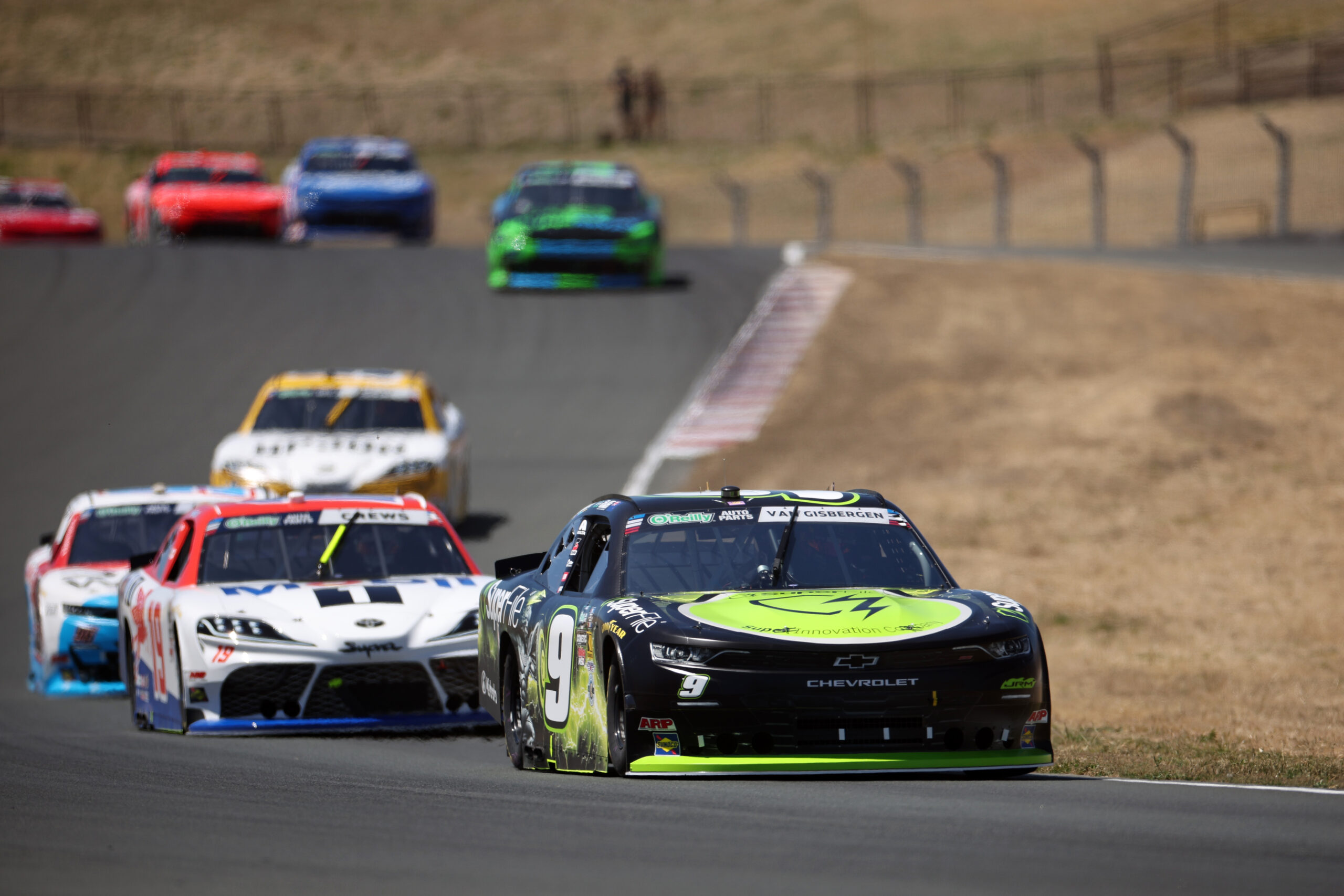
Spartanburg, SC – Jeremy Clements Racing is excited for the challenge of Watkins Glen International’s twists and turns this weekend, bringing a powerful lineup of partners to one of NASCAR’s premier road courses. All Weather Power Equipment debuts as the primary sponsor of the #51 Team Chevy and will shine a spotlight on Community First, featured on the hood as part of an effort to raise awareness for their work supporting law enforcement and safer communities.

New associate partners also joining the team include The McLemore Boys, The KFG Project, and Reymore Chevrolet. Plus, P&H Fencing and Alliance Driveaway Solutions.

The NASCAR O’Reilly Series The Mission at The Glen 200 is scheduled for Saturday, May 9th at 4:00 PM EST on the iconic 2.45-mile circuit.

“Man, I’m looking forward to going to Watkins Glen. I love going there. It is a fast road course with a lot of right-handers, so it will be a challenge, for sure. Clements said. 

 “It’s great to have All Weather Power Equipment on board at their home track and supporting Community First and the incredible work they do. I can’t thank Ed & Jackie (Horne) enough for everything they have done to support our team these last couple of years. We’ve been building momentum the last few weeks, and we’re looking to put together a strong run.” Clements finished saying. 

Also joining as yearly associate sponsors: Spartan Waste, Rapid Fired Pizza, Sherfick Companies, Elite Towing, Tools4painting, Zmax, Carolina Driveline, Matman Designs, The Racing Warehouse, Nordic Logistics, and Dialed In Focused Energy.

RACE PREVIEW

Track: Watkins Glen International 

Date: Saturday, May 9th, 2026

Broadcast Information: TV – 4:00 pm EST on The CW & MRN

FAST FACTS

Best Start 11th – 2019

Best Finish 10th – 2022

15th career start at Watkins Glen 

JCR TEAM 

Crew Chief: Matt Weber

Manufacturer: Chevrolet

ABOUT ALL WEATHER POWER

From the garage to the grid, All Weather Power Equipment keeps performance in high gear.
Family-owned and proudly based in Camillus, NY, All Weather Power Equipment has spent years helping homeowners and pros tackle every season head-on. Just like a championship race team, All Weather Power believes in top-tier performance, precision, and reliability. From snow throwers to zero-turn mowers, we keep New York running year-round.

ABOUT COMMUNITY FIRST 

Community First Project (C1P.org) is a philanthropic initiative dedicated to strengthening law enforcement’s ability to protect and serve their communities. Founded by retired Navy SEAL Andrew Sullivan, C1P is a service-disabled, veteran-owned nonprofit led by Tier-1 Special Operations veterans.

As law enforcement officers face increasingly complex and dangerous situations, many departments remain underfunded, undertrained, and underequipped—particularly when it comes to high-stress, high-threat scenarios such as active shooter incidents, domestic terrorism, and large-scale public safety events.

Community First Project addresses this critical gap by providing no-cost, realistic, scenario-based training designed to prepare officers for both routine encounters and high-risk emergencies. By equipping law enforcement with the skills and confidence to make split-second, life-saving decisions, C1P enhances both officer readiness and community safety.

Follow Jeremy and the team on all the Socials and stay updated on Race weekend.

X:  @JClement51 @JCR_Clements51 

Facebook: Jeremy Clements Racing 

Instagram:  @jclements51 @jeremyclementsracing

Live Casino Card Games Guide: Blackjack & Baccarat at Lucky World Online

Live dealer games have significantly changed the online casino experience by combining real-time interaction with professional dealers and immersive streaming technology. Instead of playing against automated systems, players now engage with real human dealers through live video feeds.

Platforms like Lucky World Online Philippines offer access to these live tables, allowing users to enjoy authentic casino card game experiences from anywhere. These games recreate the atmosphere of a physical casino while maintaining the convenience of online play.

For players looking to understand how these games work, this guide breaks down the rules, basic strategies, and key variations such as blackjack online, baccarat casino, and speed baccarat.

What Are Live Dealer Casino Games?

Live dealer casino games are online games hosted by real dealers in professional studios and streamed in real time. Players interact with the game through a digital interface while watching live action unfold.

Unlike standard digital games, live dealer formats use:

  • Real cards and tables
  • Professional human dealers
  • Live video streaming technology

This creates a more transparent and realistic experience compared to traditional RNG-based games like those powered by Random Number Generator.

At Lucky World Online, players can switch between different live tables and betting limits depending on their preferences.

Blackjack remains one of the most widely played casino card games worldwide due to its balance of luck and decision-making.

Basic Objective

The goal of blackjack is to get a hand value closer to 21 than the dealer without exceeding it.

Card Values:

  • Number cards = face value
  • Face cards (J, Q, K) = 10 points
  • Ace = 1 or 11 points

Gameplay Overview:

Each player receives two cards, and the dealer also receives two cards (one face-up, one hidden).

Players can choose to:

  • Hit – Take another card
  • Stand – Keep current hand
  • Double Down – Double bet and take one final card
  • Split – Separate matching cards into two hands

Basic Strategy Tips:

  • Stand on strong hands (17+)
  • Avoid unnecessary hits against weak dealer cards
  • Learn simple strategy charts for better decision-making

Playing blackjack online at Lucky World Online Philippines gives players access to real-time strategy decisions similar to physical casinos.

Baccarat Casino: Simple and Fast-Paced Gameplay

Baccarat is one of the easiest casino card games to learn, making it popular among beginners and high-stakes players alike.

Basic Rules

Players do not compete directly against each other. Instead, they bet on:

  • Player hand wins
  • Banker hand wins
  • Tie outcome

Each hand receives two cards, and the total closest to 9 wins.

Card Values:

  • Cards 2–9 = face value
  • 10, J, Q, K = 0 points
  • Ace = 1 point

Because of its simplicity, baccarat casino games are often favored by players who prefer quick decision-making and minimal complexity.

Speed Baccarat: Faster and More Dynamic Play

Speed baccarat is a faster version of traditional baccarat designed for players who prefer rapid gameplay.

Key differences include:

  • Shorter betting time
  • Faster card dealing
  • More rounds per session

The rules remain identical to standard baccarat, but the pace is significantly quicker, making it ideal for high-energy gameplay sessions on Lucky World Online Philippines.

Internal Guide for Beginners

If you are new to live casino platforms, you can also learn more about getting started here: https://blog.luckyworld.ph/casino-guide/playing-lucky-world-new-online-casino/

This guide helps explain how to register, navigate the platform, and begin playing safely before trying live dealer tables.

Tips for Playing the Live Casino Card Games

Whether you are playing blackjack online or baccarat casino games, applying simple habits can improve your overall experience.

1. Start Small

Begin with lower stakes until you are comfortable with gameplay mechanics.

2. Learn the Game Before You Play

Understanding rules helps you make better real-time decisions during live sessions.

3. Manage Your Spending Limits

Set clear spending limits before each session to avoid overspending.

4. Play on the Trusted Platforms

Using licensed platforms like Lucky World Online ensures a safer and more secure gaming environment.

Final Thoughts

Live dealer games bring a more realistic and interactive experience to online casinos. With real dealers, live streaming, and classic gameplay formats, players can enjoy the closest experience to a physical casino from their devices.

Games like blackjack, blackjack online, baccarat casino, and speed baccarat remain popular because they are easy to learn yet still offer strategic depth.

At Lucky World Online Philippines, players can access a wide range of live casino card game options designed for both beginners and experienced users.

By understanding the rules and applying simple strategies, players can enjoy a more informed and controlled gaming experience.

Trucking News on Fuel Prices, Regulations, and Industry Trends

Every filled-up warehouse, shelf, and shipment is backed by an entire system of trucks that work tirelessly to move business forward.

Trucking isn’t simply about moving goods. The industry is responsible for logistics management and for connecting manufacturers and consumers to ensure the movement of vital products across the nation.

As the transportation sector plays such a critical role in the economy, even minor market fluctuations can have drastic effects on carriers and fleet owners.

Modern transportation companies have no choice but to deal with issues related to diesel price fluctuations, freight rate uncertainty, compliance concerns for drivers and dispatchers, driver recruitment, increased operational costs, and much more.

That is why truckers always need to stay up-to-date and informed in order to maximize profits, reduce inefficiencies, and prevent problems. 

Here are the most important developments in the trucking industry that you must know about.

  1. Rising Diesel Prices Continue to Pressure Profit Margins

Fuel is one of the highest costs of trucking, and fluctuating diesel prices can turn a successful week into a tough week in no time at all. 

As fuel prices climb, each mile becomes more costly for owner-operators and small fleets operating on thinner profit margins.

This is why keeping up with trusted sources of trucking news is critical for carriers who wish to be prepared for sudden changes in pricing.

Carriers will need to be aware of changes in the diesel market, refinery issues, and regional price differences.

Fluctuating fuel costs can create issues for dispatchers handling multi-state trucking routes.

Since fuel prices are often affected by location, smart dispatching requires taking advantage of fuel stops in areas with less expensive fuel, while minimizing idle time that wastes fuel.

Even though carriers may have a good relationship with their customers, it doesn’t guarantee that they will not suffer losses from increasing fuel prices if rate adjustments are not frequent enough.

  1. Fuel Surcharges Help Protect Carrier Revenue

While many carriers use fuel surcharges to cover rising fuel costs, the programs may only prove efficient if implemented correctly. In most cases, the problem lies in outdated agreements regarding fuel surcharges used by fleets.

First of all, your break-even point needs to be taken into consideration. If you incur higher fuel costs than those that are covered by your base rates, fuel surcharges should fill this gap. Otherwise, you move freight without any profit, which is highly unprofitable.

Furthermore, brokers’ agreements need to be checked by dispatchers. Sometimes, brokers set fixed terms of agreements which do not account for changes in the diesel market. Therefore, it is better to negotiate better terms.

At last, the importance of transparency should be mentioned. Shippers will understand everything about fuel expenses in your company, so you should make no trouble communicating with them.

  1. FMCSA Regulations Are Becoming More Important

Compliance remains one of the biggest business risks in trucking. FMCSA updates can affect everything from driver qualification files to safety scores and roadside inspections. Missing even a simple requirement can lead to fines, delays, or insurance complications.

Recent focus areas include stricter review of crash reporting, medical certification tracking, and enforcement tied to electronic logging devices. Carriers also continue preparing for roadside inspection events where equipment and paperwork receive closer review.

Fleet managers should treat compliance as a daily responsibility, not an annual cleanup project. Driver files, maintenance logs, inspection reports, and hours-of-service records should always be current.

Dispatchers also play a major role here. Sending a driver with expired documentation or pushing unrealistic schedules can create compliance problems that damage the entire operation.

  1. Driver Shortages Still Affect Capacity and Service

Driver availability remains a major challenge across the industry. While freight demand may rise and fall, many carriers still struggle with hiring and retention, especially for long-haul and specialized operations.

The problem is often retention rather than recruitment. Drivers leave because of poor communication, inconsistent home time, delayed pay, or unrealistic dispatch expectations. Replacing experienced drivers costs far more than keeping them.

Carriers that invest in better onboarding, clear pay structures, and stronger relationships with dispatchers improve retention faster than those focused only on recruiting.

Dispatchers should also remember that communication drives trust. Drivers who feel respected and informed are more likely to stay, even during difficult market periods.

  1. Economic Trends Are Reshaping Freight Demand

The freight market is closely related to the general economic trends. Retail spending, consumer goods inventory, manufacturing, and construction all affect the volume of freight transported and its direction.

By 2026, freight recovery will be described by many experts as uneven. On the one hand, some industries will improve, whereas others will continue to underperform. For instance, infrastructure development may boost demand for flatbeds, whereas a retail industry slump will lower the volume of dry van freight shipments.

Therefore, carriers must develop a flexible strategy for their activities. The purchase of additional equipment, staff recruitment, and company growth must be based on actual needs and demands.

Monitoring economic indicators allows businesses to plan rather than respond after changes have already occurred. The best carriers will always be those that react to emerging trends early.

Final Thoughts 

Successful trucking requires more than simply ensuring that shipments arrive on schedule. There are other factors, such as fuel prices, freight rates, regulations, retaining drivers, and macroeconomic changes, which will affect your profitability daily. It is important to be aware of these issues if you want to keep your margins high.

The trucking world is ever-changing, and waiting too long to react might cost you a lot of money. 

Being in touch with what is going on in the trucking world is no longer simply beneficial but is also essential to operating a stable business. In the current freight environment, knowledge is one of the best assets you could have.

Charity Fundraising Ideas: The Power of Community Events to Make a Lasting Difference

pexels.com

Want to know the secret behind the most successful charities?

Events, not flashy ad campaigns or mega-corporate sponsorships. For years, community fundraisers have driven charitable giving and statistics show it. Recent industry research shows that 81% of donors attend nonprofit fundraising events, proving in-person community gatherings are one of the most effective methods to reach supporters.

Here’s the truth:

Attendance inspires higher levels of giving. Attendance equals caring. Attendance generates return visits.

In this article, you’ll discover the best charity fundraising ideas using community events.

Let’s get into it…

Inside this guide:

  1. Why Community Events Still Work So Well
  2. The Top Charity Fundraising Ideas For Community Events
  3. How To Plan A Community Event That Raises Real Money
  4. Common Mistakes To Avoid

Why Community Events Still Work So Well

Community events have a special kind of power that online campaigns just can’t match.

Face-to-face meetings inspire people. They create passion around your cause. They connect with like-minded people. Most importantly, they give you results.

That’s why community fundraisers still top the list of charity fundraising ideas. They also happen to be the most popular activity! In recent research from Enthuse, small localised fundraising activities like bake-offs and pub quizzes came out as the most planned activity, with 78% of charities saying they will run this type of event.

There are some pretty solid reasons community events work so well:

  • Trust builds quickly — Face-to-face meetings establish trust immediately.
  • Stories get told — Nothing beats hearing a real impact story in person.
  • Repeat donors are made — Event attendees often become lifelong supporters.

When you’re looking to raise money for something that matters, community events should be near the top of the list of charity fundraising ideas. They create momentum that keeps donations coming months after the event.

The Top Charity Fundraising Ideas For Community Events

Alright, here we go. Here are the ideas for community events that consistently generate the most funds.

Charity Walks & Fun Runs

Charity walks are classics for a reason. They are inexpensive to run. They’re easy for people to sign up for, and they provide amazing photo ops for your charity’s social media pages.

The best part is that most funds are secured before the event through sponsorship pledges. Candidates recruit friends, family and co-workers to support them. Sometimes even a small turnout can yield a huge payoff.

Community Bake Sales & Food Events

Never underestimate the power of food.

Bake sales, charity dinners and food festivals are among the easiest fundraising ideas for charity. Food fundraisers require minimal expense, but they draw crowds and earn decent money.

You can run them at:

  • Schools
  • Churches
  • Local parks
  • Community centres

The secret is to have more than just eating. Include live music, a raffle or even a guest speaker who can tell your story. Everyone comes for the cupcakes, but they stay for the passion.

Trivia Nights & Quiz Events

Trivia nights are huge these days and they’re one of the most enjoyable charity fundraising ideas.

Why are they so effective?

People enjoy competition. They enjoy socializing with friends. And they like feeling brainy while benefiting a charity. Hold it at your local bar or community center and charge teams a small entry fee. Throw in some extras like raffles and silent auctions.

Trivia nights done well can rake in thousands of dollars in an evening.

Charity Auctions & Galas

Want to solicit larger donations? Hold an auction or gala. They require more effort, but can be well worth it.

The hardest part is sourcing items to donate. Ask local restaurants for dinner certificates, hotels for getaway packages, artists for original pieces, and local businesses for their products/services. You’d be amazed how many businesses will donate if you simply ask. They receive exposure to your market and you receive items to auction. Everyone wins!

Community Sports Tournaments

Tournaments are a great way to unite a community. Nothing else compares to getting people together for a sporting event. Whether it’s a soccer tournament, golf day, or beach volleyball competition — people love it. Teams pay an entry fee, sponsors receive logo placement, and attendees purchase concessions.

How To Plan A Community Event That Raises Real Money

Planning your first community event can feel overwhelming. But it doesn’t have to be.

Start With A Clear Goal

Don’t plan a fundraising event until you know precisely why you’re raising money. Unclear objectives breed ambiguous outcomes. Determine a fundraising goal. Connect it to a tangible result — “Our goal is to raise $10,000 to provide 50 cataract surgeries.”

When people can see exactly where their money goes, they give more.

Build A Small Team

You can’t do this alone. Assemble a team of 4-6 volunteers to manage venue and logistics, sponsorships and donations, marketing, and day of event operations. A little goes a long way with just a passionate team.

Promote Like Crazy

This is why most events flop. They don’t advertise enough. Advertise through every avenue you can. Social media, email lists, local radio, community noticeboards, word of mouth. Start advertising a minimum of 6 weeks out. The sooner you start the better.

Make It Easy To Give

Don’t just expect people to bring cash on the day. Create lots of giving opportunities – online giving pages, QR codes and repeater sign ups. Make giving as easy as possible.

Common Mistakes To Avoid

Even great charity fundraising ideas can flop if you make these classic mistakes.

Mistake #1: No follow up

The event concludes and…..nothing. No thank you. No report. No invitation to donate again. This destroys your donor relationship.

Mistake #2: Hidden costs

Some events are so expensive to operate that little money is left over for the cause. Crunch the numbers first.

Mistake #3: Forgetting the story

If people don’t know exactly what their money does, they won’t give.

Final Thoughts

Hosting community events is still one of the best charity fundraising ideas. They help build trust, create connection, and generate large amounts of money.

Here’s the quick recap:

  • Pick an event type that fits your community
  • Set a clear, specific fundraising goal
  • Build a small but committed team
  • Promote early and often
  • Make giving simple

Begin as small as you need to. A simple bake sale or trivia night can turn into something big given time. Just start.

Why are motorcycle jeans becoming the preferred choice for urban riders and weekend tourers?

Motorcycle jeans are gaining popularity because they combine the protection typical of motorcycle gear with the look of everyday trousers. Many riders see this as a compromise that allows them to maintain safety without sacrificing comfort and style. What features determine the quality of these products, and are jeans suitable for longer journeys? Let’s look at this in more detail.

What technologies make motorcycle jeans safe?

Modern motorcycle jeans are advanced constructions that only resemble standard retail jeans on the outside. At their core are high-density materials and certified protectors. These are what safeguard your health in the event of an unexpected incident on the road.

Safety in motorcycle jeans is determined by:

  • Aramid fibres (e.g. Kevlar) – used as internal panels in the areas most exposed to abrasion (hips, seat area, knees);
  • single-layer technology – modern materials (such as Armalith), where protective fibres are directly woven into the denim structure. This ensures lightness while maintaining top safety standards;
  • CE Level 1 or 2 protectors – adjustable knee and hip protectors which, thanks to specialised designs, are thin, flexible, and almost invisible beneath the fabric;
  • reinforced safety seams – crucial for maintaining the integrity of the trousers during contact with the road surface.

It is worth noting that models recommended by experienced riders often feature stretch panels above the knees and in the lumbar area. This design prevents protectors from shifting when adopting an active riding position.

Why are jeans so comfortable for everyday use?

One of the main reasons for the growing popularity of motorcycle jeans from Rebelhorn is their comfort. Unlike typical riding gear, they do not require you to change once you reach your destination. You can walk into an office, restaurant, or cinema, and no one will realise you have just stepped off a motorcycle. And that’s only one of their advantages. Others include:

  • a natural look – they resemble classic jeans;
  • breathable materials that improve comfort on warmer days;
  • stretch fibres that enhance freedom of movement.

For this reason, motorcycle jeans are an ideal choice for city riding. They are also increasingly chosen by leisure riders who value comfort during stops.

Are motorcycle jeans suitable for longer journeys?

Bronco Women’s Motorcycle Jeans Washed Black

Although motorcycle jeans are mainly associated with urban riding, they are increasingly capable during weekend trips as well. Modern models offer solutions that improve comfort beyond the city.

If you are looking for versatility, pay attention to:

  • an ergonomic cut tailored to the riding position;
  • the ability to adjust protectors;
  • additional stretch panels in key areas;
  • material durability under intensive use;
  • connection zips or belt loops that allow them to be attached to a jacket.

Some manufacturers, such as Rebelhorn, are developing their models with technologies that enhance comfort and freedom of movement. Their quality is confirmed by a 5-year protection program. This provides support in the event of clothing damage during an accident, as well as special purchase conditions in case of theft.

Motorcycle jeans are an example of how rider apparel continues to evolve. For many users, they represent the perfect balance of safety, comfort, and everyday practicality.

Train Horn Air System Sizing: Tank Size, Compressor CFM & PSI Guide

Photo by depositphotos at https://depositphotos.com/

Train Horn Air System Sizing Guide: Choosing the Right Tank, Compressor, and Pressure

The single most common reason a train horn underperforms after installation is an undersized air system. The horn itself may be capable of 149 dB, but if the compressor cannot maintain adequate pressure or the tank runs out of air after one blast, you will hear a weak, pitch-dropping tone that bears no resemblance to an actual locomotive. This guide explains how to size your air system correctly based on the horn you are using. For interactive calculators covering tank volume, compressor recovery time, and decibel output estimates, see train-horn.com.

Understanding Operating Pressure Requirements

Every air horn is rated for a specific operating pressure range. Consumer-grade train horn kits typically operate at 80–120 psi. Authentic locomotive horns — including the Nathan AirChime K3LA, K5LA, and Leslie S-5T — are designed for 140–150 psi operating pressure and require a compressor and tank rated for this range. Operating a 150-psi-rated horn at only 100 psi will significantly reduce sound output: pressure and decibel output are not linearly related, but a 30–40% reduction in operating pressure can drop sound levels by 10–15 dB, which is a perceptible difference to the human ear.

This means the first step in sizing your system is confirming your horn’s rated operating pressure. Do not assume all train horns run at the same pressure — verify this in the manufacturer’s specification sheet before selecting a compressor or pressure switch.

Choosing the Right Air Tank Size

Air tank capacity is measured in gallons. The tank stores compressed air and allows the horn to be activated immediately without waiting for the compressor to build pressure in real time. The relationship between tank size and usable blasts depends on three variables: tank volume, operating pressure, and horn air consumption rate.

A rough industry rule of thumb for air horn systems: a 1-gallon tank at 150 psi provides approximately 2–3 short horn blasts (1 second each) before pressure drops below the minimum operating threshold. A 5-gallon tank at the same pressure provides approximately 10–15 short blasts. For a five-chime locomotive horn like the Nathan K5LA, which has a high air consumption rate due to its large diaphragm area, a minimum 3-gallon tank is recommended for reasonable street use. A 5-gallon tank is preferred for more demanding use cases.

Larger tanks also benefit from slower pressure drop during an extended blast. If you activate a 5-chime horn continuously for 3 seconds, a 1-gallon tank will show significant pressure drop mid-blast, causing the horn’s pitch and volume to fall off. A 5-gallon tank at 150 psi will sustain pressure much more consistently through the same 3-second activation.

Selecting the Right Compressor

Air compressors for vehicle horn systems are rated by maximum pressure (psi) and duty cycle. Duty cycle represents the percentage of time the compressor can operate before it must rest to prevent overheating. A 50% duty cycle compressor can run for 30 seconds and then must rest for 30 seconds. For street use, most horn setups require the compressor to run only intermittently (recharging after each horn use), so duty cycle is less critical than in commercial applications.

For a 150-psi system on a 3-gallon tank, a 12V compressor with a rated output of 150 psi and a flow rate of at least 1.5 CFM (cubic feet per minute) will recharge the tank in approximately 3–4 minutes from empty. Higher-flow compressors (2.5–3 CFM) will recharge in under 2 minutes. The Viair 380C and 444C are commonly referenced benchmarks in the 150-psi range, rated at 1.84 and 2.54 CFM respectively.

Pressure Switch Settings

The pressure switch is the automatic controller that starts and stops the compressor based on tank pressure. Standard configuration for a 150-psi system sets the cut-in pressure (compressor starts) at 110–120 psi and the cut-out pressure (compressor stops) at 145–150 psi. This differential ensures the tank is always within operating range without requiring the compressor to cycle on and off excessively.

Never exceed the compressor’s maximum rated pressure with your pressure switch setting. Running a compressor rated to 150 psi at a 160-psi cut-out will shorten motor life significantly and can damage the pressure vessel if the tank is not rated for the higher pressure. Always verify that your tank, compressor, airlines, and fittings all share a common maximum pressure rating that exceeds your operating pressure by at least 10%.

System Sizing Quick Reference

For a budget consumer kit at 120 psi: use a 1.5-gallon tank minimum, a compressor rated to 120 psi at 1 CFM or better, and a 110/120 psi pressure switch. For a mid-range 4-chime horn at 150 psi: use a 3-gallon tank, a Viair 380C-equivalent compressor, and a 120/150 psi pressure switch. For an authentic 5-chime locomotive horn like the Nathan K5LA at 150 psi: use a 5-gallon tank minimum, a Viair 444C-equivalent compressor, and a 120/150 psi pressure switch with a safety relief valve set at 165 psi.

Why Owning a Car Is Getting Pricier: Trends Drivers Need to Know in 2026

Photo by Erik Mclean on Unsplash

Owning a car in 2026 costs more than most drivers expect once they look beyond the monthly payment. According to AAA driving costs analysis, the average new vehicle now costs over $11,500 per year to own and operate, a figure that captures the full picture of car ownership costs, not just what drivers pay at the pump or the dealership.

Several cost categories are climbing simultaneously, which is what makes the current moment feel particularly tight for everyday drivers. Insurance premiums have surged in many markets, depreciation continues to erode vehicle value faster than many buyers anticipate, and financing costs remain elevated after years of rising interest rates. Fuel costs and maintenance and repairs round out the pressure points.

The Biggest Cost Increases Drivers Feel First

The table below shows the primary components of total cost of ownership and which are rising fastest heading into 2026:

Cost ComponentTrend in 2026
Insurance premiumsRising sharply
DepreciationElevated, especially EVs
Financing (loan interest)Still high
Fuel costsModerately elevated
Maintenance and repairsIncreasing steadily

No single line item tells the whole story. What makes 2026 feel different is that nearly every column in that table is moving in the same direction at once, stacking pressure on top of pressure before a driver has covered a single mile.

Why Car Prices Are Staying High in 2026

Even as inventory has gradually recovered at many dealerships, the price relief that buyers anticipated has been slow to arrive. Understanding why requires looking at both the macro forces shaping new car prices and the ripple effects those forces send into the used market.

Tariffs and Supply Pressure Keep Prices Elevated

The post-pandemic normalization that many buyers expected has been slower to materialize than anticipated. According to Cox Automotive and Kelley Blue Book, the average transaction price for a new vehicle has remained stubbornly high, hovering well above pre-2020 levels even as supply constraints have eased in some segments.

Tariffs have added a new layer of upward pressure in 2026. When import duties increase the cost of vehicles or their components, manufacturers typically pass those costs downstream, which means the sticker price rises regardless of demand conditions. Even when automakers introduce incentives to stimulate sales in slower segments, those discounts often offset only a portion of the underlying price increase.

The result is that car ownership costs start high before a single insurance bill or loan payment enters the picture.

Why Used Cars Are Not the Bargain They Once Were

Many shoppers turn to the used market expecting relief, but that calculation has become less straightforward. When new car prices stay elevated, used car prices follow, because trade-in values and wholesale auction prices respond to the same supply signals.

Cox Automotive data has consistently shown that used vehicle prices remain well above historical averages, particularly for late-model trucks and SUVs. Kelley Blue Book valuations reflect the same pattern, with retained value staying high in categories where new inventory is constrained. For buyers hoping the secondhand market offers an easy escape from elevated new car prices, the reality in 2026 is that both sides of the lot are expensive.

Insurance Is Turning Location into a Major Cost

Insurance has quietly shifted from a predictable background expense into one of the most consequential variables in total cost of ownership. Where a driver lives now shapes that number as much as what they drive.

Why Premiums Are Climbing Faster Than Many Budgets

Insurance has moved from a predictable background expense to one of the fastest-growing line items in total cost of ownership. Repair costs have climbed sharply as vehicles incorporate more sensors, cameras, and advanced driver-assistance technology, making even minor collisions far more expensive to fix.

Claims severity has followed the same trajectory. When the cost to settle each claim rises, insurers adjust premiums across entire risk pools, meaning drivers with clean records still absorb the increase. AAA’s cost data reflects this shift, showing insurance as a meaningfully larger share of annual car ownership costs than it was just a few years ago.

How State Differences Change the Ownership Math

What makes insurance particularly significant in 2026 is how dramatically it varies by location. A driver in a low-risk state might pay a fraction of what someone in a high-litigation or high-weather-risk state pays for identical coverage on the same vehicle.

State-level regulatory environments, accident rates, and weather exposure all shape what insurers charge, and those differences can add or subtract thousands of dollars annually. Research into the most expensive state to own a car shows that insurance premiums, when combined with local fuel costs and maintenance and repairs, shift the total cost of ownership picture considerably depending on where a driver lives.

Location, in other words, is not a side variable. For many drivers, it is one of the largest cost determinants in the entire ownership equation.

Loans Are Stretching Costs Far Beyond the Sale

Financing decisions made at the dealership can quietly become one of the most expensive parts of car ownership, often outpacing what buyers expect when they focus on keeping their monthly car payment low.

Stretching an auto loan over a longer term reduces what a driver pays each month, but it significantly increases the total interest paid over the life of the loan. The rise of the 84-month loan reflects exactly this tension. What was once an unusual financing option has become increasingly common as vehicle prices have climbed, leaving buyers trading long-term cost for short-term affordability.

That trade-off carries a second risk: negative equity. When a vehicle depreciates faster than the loan balance decreases, the driver owes more than the car is worth. This happens frequently in the early years of a long-term loan, and it creates a situation where selling or trading in the vehicle no longer clears the debt.

Depreciation compounds the problem further. A car losing value quickly while carrying a high loan balance leaves little financial flexibility if circumstances change. Treating financing as separate from total cost of ownership misses how deeply these elements interact. Interest paid over 84 months, combined with depreciation losses, can make a vehicle cost dramatically more than its sticker price ever suggested.

EVs Are Changing the Ownership Cost Equation

The conversation around car ownership costs in 2026 increasingly includes electric vehicles, and for good reason. As drivers reassess total cost of ownership rather than focusing on purchase price alone, the full-cycle comparison between electric and gas-powered vehicles has become far more relevant.

On the surface, EVs carry higher sticker prices in many segments. Over time, however, lower fuel costs and reduced maintenance and repairs expenses can offset a meaningful portion of that gap. Electric vehicles have fewer moving parts, which typically means fewer scheduled service visits and lower wear-related repair bills compared to combustion engines.

Fuel costs tell a similarly nuanced story. Charging an EV is generally cheaper than fueling a gas vehicle, though the actual savings depend heavily on local electricity rates and how many miles a driver covers annually. However, EVs are not universally cheaper to own. Depreciation has emerged as a notable concern, with some electric models losing value faster than comparable gas vehicles, and insurance costs can also run higher, narrowing the maintenance and fuel savings.

The honest answer is that EV economics in 2026 vary considerably based on driving habits, local incentives, electricity pricing, and the specific model chosen. For drivers doing the math on total cost of ownership, EVs deserve a place in that calculation, but the numbers need to reflect individual circumstances, not assumptions.

What Drivers Can Do to Soften the Hit

The trends discussed throughout this article are largely structural, but drivers still have meaningful room to manage how much those trends cost them personally. The most actionable starting point is shopping insurance premiums regularly rather than renewing automatically each year, since rates vary substantially between providers for identical coverage.

Modeling total cost of ownership before purchasing, not after, is equally important. That calculation should include financing length, depreciation rate for the specific model, and projected fuel and maintenance costs over the ownership period. A few choices consistently reduce long-run exposure:

  • Certified pre-owned vehicles often balance price and depreciation better than new models
  • Shorter auto loan terms reduce total interest paid, even when the monthly car payment feels tighter
  • Fuel-efficient models and, where the numbers work individually, electric vehicle options can lower operating costs over time

None of these eliminate the pressure described earlier, but they shift the ownership math in a more manageable direction.

The Affordability Squeeze Is About More Than Inflation

Car ownership costs have not risen because of one problem. They have risen because depreciation, insurance premiums, financing costs, fuel costs, and maintenance and repairs are all moving upward at the same time, compressing budgets from multiple directions simultaneously.

When those stacked expenses are measured against median household income rather than nominal vehicle prices, the inflation-adjusted costs of ownership look considerably steeper than headline figures suggest. The Bureau of Labor Statistics tracks several of these categories individually, and the combined trajectory points in the same direction.

For any driver approaching a purchase decision in 2026, total cost of ownership is the only figure that reflects what the vehicle will actually cost to keep.