RICK WARE RACING The Great American Getaway 400 Date: June 14, 2026 Event: The Great American Getaway 400 (Round 16 of 36) Series: NASCAR Cup Series Location: Pocono Raceway in Long Pond, Pennsylvania (2.5-mile triangle) Format: 160 laps, broken into three stages (30 laps/65 laps/65 laps)
Race Winner: Denny Hamlin of Joe Gibbs Racing (Toyota) Stage 1 Winner: Denny Hamlin of Joe Gibbs Racing (Toyota) Stage 2 Winner: Todd Gilliland of Front Row Motorsports (Ford)
RWR Finish:
● Cody Ware (Started 33rd, Finished 30th / Running, completed 159 of 160 laps)
RWR Points:
● Cody Ware (35th with 138 points)
Race Notes:
● Denny Hamlin won The Great American Getaway 400 to score his 64th career NASCAR Cup Series victory. It was his third win in a row, his fourth of the season, and his series-leading eighth at Pocono. His margin over second-place Tyler Reddick was 1.678 seconds.
● There were five caution periods for a total of 23 laps.
● Twenty-seven of the 38 drivers in the race finished on the lead lap.
● Reddick remains the championship leader after Pocono with a 19-point advantage over second-place Hamlin.
Sound Bites:
“We had some silver linings today. I mean, we turned our fastest laps of the race there at the end before we had some engine troubles. But we’ve had a whole month of good progress, from sorting things through at Dover, to the 600, Nashville, Michigan, and now here. Street-course racing next week should be a lot of fun. We had some success in last year’s street race in Chicago before the (brake) rotor blew, so we go into San Diego next week feeling good. I’m proud of our effort. We’re controlling the controllables.”– Cody Ware, driver of the No. 51 Rocket Doctor AI Chevrolet
Next Up:
The next event on the NASCAR Cup Series schedule is the inaugural Anduril 250 on Sunday, June 21 at Qualcomm Circuit on Naval Base Coronado in San Diego. The race begins at 4 p.m. EDT with live coverage provided by Prime Video and SiriusXM NASCAR Radio.
Repeat and First-Time “HSR Classic” Winners in Season-Opening Round of The 2026 HSR Classic Endurance Championship Presented by Mission Foods Saturday at Watkins Glen International
Reigning HSR Classic Endurance Champions David Agretelis and Co-Drivers Pierce Marshall and Eric Foss Score Repeat HSR Classic Watkins Glen 6 Hour Victories
First Time HSR Classic Endurance Championship Winners Ben Myers and Pawel Pulchaski Break Through in Run Groups C and B Respectively
WATKINS GLEN, New York (June 14, 2026) – Under clear skies and summer sunshine, the Fourth Annual HSR Watkins Glen Classic 6 Hour presented by Mission Foods delivered a full day of competition Saturday at Watkins Glen International, crowning the first winners of the 2026 HSR Classic Endurance Championship presented by Mission Foods season.
A pristine lineup of period correct vintage and historic machine from various sports car eras in the last 50 years took to the iconic Watkins Glen Grand Prix circuit throughout Saturday afternoon and into the early evening in four different divisions. Run Groups A/B, C and D each completed two race segments in a symbolic six hours of racing, with the combined results determining the overall winners in the championship-opening contest.
In Group A, heartbreak struck for Todd Treffert aboard the 1972 No. 141 901 Shop Porsche 911 S/T in Race 2 as an engine issue prematurely ended the 2025 Historic GT Endurance Champion’s day after he entered the segment leading and in contention for the group victory.
However, it was Treffert’s 901 Shop teammate David Agretelis – another Endurance Championship reigning titlist in Vintage GT – who stepped up to take the Group A win at The Glen for the second year in a row in his 901 Shop 1972 No. 66 Porsche 911 S/T.
Joining Agretelis on the podium in second place was the pairing of Craig Watkins and former Rolex 24 winner Johannes van Overbeek aboard the 901 Shop 1968 No. 46 Porsche 911 S/T.
Rounding out another all-901 Shop podium, John Deford and Brady Refenning guided the 1973 No. 57 Porsche 914/6 to a third-place finish after running near the front throughout the event, completing the Group A podium.
Run Group B, which ran simultaneously with Group A, saw Pawel Pulchaski rebound from an early spin and charge back into the lead and secure his first HSR Classic Endurance Championship victory in the bright orange No. 241 Klub Sport Racing 1973 Porsche 911 Carrera RSR. A former fencer at Penn State, Pulchaski’s run to the top step of the podium became a duel, as he battled Ricky Park in the 1973 No. 44 AJR Heritage Motorsports Porsche 911 RSR in Race 2.
Ultimately, Park finished second while familiar HSR Classic competitors and Colorado natives Alan Benjamin and Barry Waddell drove the 1912 No. 21 Porsche 964 Carrera Cup to third place in Group B.
In Run Group C, Ben Myers emerged victorious after charging through the pack in in one of the most convincing runs of the race. Racing to the front in the first segment, Myers then led every green-flag lap in Race 2 straight to the class win aboard his 901 Shop 2017 No. 29 Porsche 991.2 GT3 Cup. The victory marked Myers’ first career HSR Classic Win.
Another German marque joined the Myers Porsche on the podium as Shannon Herford guided the 2015 No. 515 Autometrics Mercedes-AMG GT3 to a pair of runner-up finishes in both race segments, securing second overall in Group C.
Consistency proved key for Michael Potapow and co-driver van Overbeek, who combined their efforts across both race segments to earn third-place honors aboard the No. 73 DAS Sport 2016 Porsche 991 RSR 4.0. The podium finish capped a busy day for van Overbeek, who recorded run group podium results in a pair of Classic 6 Hour divisions.
Finally, Group D concluded the action-packed day of Classic 6 Hour competition with an all-prototype field. Pierce Marshall and co-driver Eric Foss aboard their No. 01 Matador Motorsports 2017 Cadillac DPi battled Juan Gonzalez and Roberto Gonzalez, along with co-driver Butch Leitzinger, in the No. 81 Mission Foods 2017 Cadillac DPi, throughout both race segments.
After reigning Endurance Championship Modern Prototype Champions Marshall and Foss led the way at the conclusion of Race 1, the GMT Racing No. 81 got the upper hand in the closing laps of Race 2 to score the segment victory. However, it was Marshall and Foss who secured the overall Group D win on combined results aboard their No. 01 Matador Motorsports 2017 Cadillac DPi.
The win was the second for Marshall and Foss after also securing a 2024 Classic 6 title and came in the debut weekend for the team’s new No. 01 number and light gray livery, which will be featured throughout the remainder of the 2026 HSR Classic Endurance Championship season.
Leitzinger and the Gonzalez duo finished second overall while Bob Neapole and John Reisman completed the podium after securing a third-place finish in Race 2 aboard their No. 74 Hudson Historics 2020 Ligier JS P320.
NOTEWORTHY – Preceding the Classic 6 Hour on Saturday was the first race of the weekend for the accompanying HSR Watkins Glen Historics with the popular SascoSports International-American Challenge presented by Hoosier sprint.
Gary Moore, driving the Cobra Automotive 1966 No. 98 Shelby GT350, topped the field and led all eight laps to secure the overall victory. Moore took the lead on the opening lap from Treffert in his Porsche 911 S/T to secure top honors in the American category.
Foreshadowing the winning day ahead, Pulchaski charged from sixth to first aboard the No. 241 Klub Sport Racing 1973 Porsche 911 Carrera RSR to win the Porsche class. Pulchaski held off a pair of potent 901 Shop entries, with Agretelis finishing second in the No. 66 Porsche 911 and Treffert completing the podium in third following a chaotic opening lap start.
The International class featured a family affair as David Lebrun, in the 1988 No. 45 BMW E30/M3, held off brother Stephen Lebrun in the identical No. 47 entry to claim class honors. The sibling battle remained close throughout the race, with the DLS Racing teammates securing a one-two finish in class.
On-track action continues for the final day on Sunday with a full slate of HSR Watkins Glen Historics competition, including dual Grand Prix Classics feature race doubleheaders for HSR’s open-wheel divisions and a trio of one-hour endurance races. The endurance race trio includes a near back-to-back lineup of 60-minute contests featuring the B.R.M Legacy/Modern Enduro, the Mission GT Challenge Enduro presented by Pirelli and the HSR Prototype Challenge presented by Michelin Enduro.
About HSR: Historic Sportscar Racing (HSR) is the premier vintage and historic racing series in North America. It was formed in the mid-1970s with an inaugural event at Road Atlanta and became a part of International Motor Sports Association (IMSA) in 2022. There was one goal then and it remains true today: to celebrate and enjoy the racing cars from the past. As a “time machine” of sights and sounds, HSR provides a venue for competitors and spectators alike to share in the wonderful history and excitement created by the cars that competed at race tracks around the world. HSR currently sanctions eight vintage and historic racing events at some of the world’s most renowned race tracks, including Daytona International Speedway, Michelin Raceway Road Atlanta, Sebring International Raceway, Watkins Glen International and more. The complete schedule and full event information can be found on HSR’s website at www.HSRRace.com. Look for the HSR Channel on YouTube and follow HSR on Facebook at www.Facebook.com/HSRrace/, on Twitter X @HSR_race and on Instagram @HistoricSportscarRacing.
Denny Hamlin has now won three consecutive NASCAR Cup Series events for the first time in his career. His latest victorious feat occurred on Sunday, June 14, in the Great American Getaway 400 at Pocono Raceway in Long Pond, Pennsylvania.
The three-time Daytona 500 champion from Chesterfield, Virginia, led four times for 28 of 160-scheduled laps in an event where he qualified on pole position but lost the lead to Kyle Larson before the opening lap. Hamlin rallied by overtaking Larson to lead for the first time on Lap 25 and claim the first stage victory before he endured an event mired with various pit strategies and having to navigate his way back to the front.
After assuming the lead from John Hunter Nemechek at the start of the final stage period with 59 laps remaining, Hamlin made his final pit stop under green flag conditions with 38 laps remaining. As the laps dwindled and with nearly the entire field having made a pit stop before the event’s conclusion, Hamlin spent the event’s remainder reeling in teammate Christopher Bell as Bell, who pitted during an early caution at the start of the final stage period, was trying to stretch his fuel tank to the distance. Bell’s strategy backfired as Hamlin overtook Bell uncontested for the lead with five laps remaining. From there, Hamlin cruised to his third consecutive Cup victory in recent weeks and his unprecedented eighth at the Tricky Triangle circuit.
With on-track qualifying that determined the starting lineup occurring on Saturday, June 13, Denny Hamlin notched his third Cup pole position of the 2026 season with a pole-winning lap at 173.250 mph in 51.948 seconds. Hamlin shared the front row with Kyle Larson, the latter of whom qualified with the second-fastest lap at 173.067 mph in 52.003 seconds.
Before the event, the following names, including Brad Keselowski, Ryan Preece and Bubba Wallace, dropped to the rear of the field due to unapproved adjustments that were made to their respective entries. In addition, the event started two hours early at 1 p.m. ET due to a threat of rain.
When the green flag waved and the event commenced, Denny Hamlin and Kyle Larson dueled dead even in front of two stacked lanes through the frontstretch and the first turn. As the field fanned out entering Long Pond Straightaway, Larson used the inside lane through the Tunnel Turn to motor his No. 5 HendrickCars.com Chevrolet Camaro ZL1 entry in front of Hamlin. Daniel Suarez then used the outside lane to challenge and overtake Hamlin for the runner-up spot in Turn 3 as Larson led the first lap.
Over the next four laps, Larson stretched his early advantage to more than a second over Hamlin as Hamlin, who overtook Suarez for the runner-up spot, was half a second ahead of third-place Suarez. Behind, Chase Briscoe occupied fourth place in front of Ty Gibbs while Chris Buescher, William Byron, Erik Jones, John Hunter Nemechek and Ryan Blaney were racing in the top 10 ahead of Tyler Reddick, Alex Bowman, Zane Smith, Joey Logano and Austin Cindric, respectively. As the top-15 competitors were separated by nearly 11 seconds from one another, Larson maintained the lead by more than a second over Hamlin at the Lap 10 mark while Suarez trailed by more than two seconds.
Through the Lap 15 mark, Larson stabilized his advantage to more than a second over Hamlin while Suarez, Gibbs, Briscoe, Buescher, Byron, Jones, Nemechek and Blaney were racing in the top 10 ahead of Reddick, Zane Smith, Cindric, Bowman, Logano, Austin Hill, Carson Hocevar, AJ Allmendinger, Michael McDowell and Ricky Stenhouse Jr., respectively. Behind, Cole Custer, Christopher Bell, Chase Elliott, Ross Chastain and Riley Herbst were mired in the top 25 ahead of Josh Berry, Austin Dillon, Ty Dillon, Bubba Wallace and Shane van Gisbergen while Brad Keselowski, Ryan Preece, Todd Gilliland, Noah Gragson, Connor Zilisch, Cody Ware, Daniel Dye and Casey Mears followed suit in the 38-car field, respectively.
At the Lap 20 mark, Larson had his advantage decrease to six-tenths of a second over Hamlin while Gibbs was up into third place as he trailed by more than five seconds. Hamlin continued to reel in Larson over the next four laps before Hamlin dueled and led his first lap of the event on Lap 25. Hamlin’s move for the lead occurred as Casey Mears got in front of Larson entering the frontstretch. As Hamlin led the next lap, Bowman made a strategic pit stop under green on the previous lap, while Zane Smith and Reddick pitted on the following lap. Nemechek, Blaney and Cindric pitted on Lap 27 while Hamlin extended his lead to one-and-a-half seconds over Larson by Lap 28.
When the first stage period concluded on Lap 30, Hamlin notched his fifth Cup stage victory of the 2026 season. Larson settled in second place by two-and-a-half seconds while Gibbs, Briscoe, Buescher, Suarez, Byron, Jones, Logano and Austin Hill were scored in the top 10, respectively. By then, all of one of 38 starters were scored on the lead lap.
Under the first stage break period, Larson led a majority of the field to pit road for service while the rest, which included Nemechek, Reddick, Zane Smith, Blaney, Cindric and Bowman, all of whom pitted before the first stage’s conclusion, remained on the track. Following the pit stops, Hamlin exited pit road first ahead of Larson, Briscoe, Byron and Suarez.
The second stage period started on Lap 36 as Nemechek and Reddick occupied the front row. At the start, the two leaders dueled through the frontstretch and the first turn as the field fanned out to multiple lanes. Both remained side-by-side when they cycled back to the frontstretch as Reddick led the next lap. Reddick remained dead even with Nemechek over the next two laps before he used the outside lane in Turn 3 to clear Nemechek and lead the Lap 40 mark. As Reddick led by three-tenths of a second, Blaney and Zane Smith followed suit in third and fourth, respectively, while Hamlin used his four fresh tires to weave back to the top-five mark.
Then on Lap 40, the caution flew when Zane Smith, who was racing beneath Hamlin for third place, snapped sideways through the first turn and spun his No. 38 Long John Silver’s Ford Mustang Dark Horse entry down the track before he then hit the inside wall and was knocked out of contention. During this caution period, some, including Logano, McDowell, Bubba Wallace, Austin Dillon, Custer, Preece, Gilliland, Keselowski, Daniel Dye and Ty Dillon, pitted while the rest, led by Reddick, remained on the track.
The next restart on Lap 44 featured Reddick receiving a push from co-owner Hamlin to motor ahead of Nemechek and lead the field entering the first turn. Reddick led the next two laps over Nemechek, Hamlin, Byron and Blaney before the caution returned for a multi-car wreck that erupted entering the frontstretch. The trouble started when Austin Hill, who was racing in a tight three-wide situation with Shane van Gisbergen and Josh Berry within the top-20 mark, made slight contact with van Gisbergen. The contact resulted in van Gisbergen and Berry not having enough room, with Berry bouncing off the frontstretch’s outside wall and van Gisbergen getting turned. The incident sparked a multi-car wreck involving Noah Gragson, Brad Keselowski, Christopher Bell, Joey Logano, Bubba Wallace and Connor Zilisch.
During the latest caution period, the leader, Reddick, along with Hamlin, Byron, Elliott, Larson, Herbst, Ricky Stenhouse Jr., Bell, Blaney, Buescher, Austin Cindric, Alex Bowman, Gibbs and those involved in the carnage pitted while the rest, led by Nemechek, Briscoe and Jones, remained on the track.
As the event restarted under green on Lap 52, Nemechek motored his No. 42 Pye-Barker Toyota Camry XSE entry ahead of teammate Jones and Briscoe entering the first turn, and he led the next lap while the field behind fanned out and jostled for spots. Nemechek proceeded to lead the Lap 55 mark before he extended his lead to nine-tenths of a second over Briscoe on the Lap 60 mark, all while Jones, Hocevar, Chastain, Suarez, Elliott, McDowell, Hamlin and Reddick trailed in the top 10, respectively.
By Lap 70, Nemechek, who has maintained the lead since the Lap 52 mark, continued to lead by four-tenths of a second over Briscoe while Jones continued to race in third. By then, the top-three competitors were more than four seconds ahead of fourth-place Hocevar while fifth-place Elliott trailed by six seconds and Hamlin was up into seventh place ahead of Chastain and Suarez.
On Lap 75, pit strategies ensued as Suarez and Chastain pitted under green. Briscoe then pitted from the runner-up spot along with Hocevar and Bowman before Nemechek surrendered the lead to pit on Lap 78. Jones, who assumed the lead for a lap, pitted a lap later as Elliott cycled to the lead in front of Hamlin. At the event’s halfway mark on Lap 80, 31 of 38 competitors were scored on the lead lap as Elliott led Hamlin, Byron, Reddick, McDowell, Preece, Larson, Custer, Blaney and Gibbs in the top 10, respectively. Behind, Cindric, Buescher, Hill, Bell, Herbst, Stenhouse, Gilliland, Wallace, Cody Ware and Dye occupied the top-20 spots while Briscoe, Jones, Nemechek, Chastain and Suarez were mired back in the top-25 mark, respectively, following their green flag pit stops. In addition, Hocevar and Bowman were scored in 28th and 30th.
Then on Lap 89, Larson and Hill pitted under green. By then, Preece pitted a lap prior before the top-four competitors that included Hamlin, Elliott, Byron and Reddick, along with Buescher, pitted on Lap 90. Blaney, Gibbs, Herbst, Bell, Cindric and Wallace all pitted during the next three laps just before pit road became inaccessible for the field as the second stage period was nearing its conclusion. By then, Todd Gilliland cycled his No. 34 Love’s Ford Mustang Dark Horse entry to the lead as he was more than two seconds ahead of Briscoe and Nemechek.
When the second stage period concluded on Lap 95, Gilliland captured his first Cup career stage victory as he beat Briscoe to the start/finish line by more than a second. Briscoe settled in second ahead of Nemechek, Jones and Stenhouse while Chastain, Hocevar, Suarez, Hamlin and Elliott were scored in the top 10, respectively. During the second-stage break period, some, led by Gilliland and including Stenhouse, Chastain, Hocevar, Bowman, Austin Dillon, and AJ Allmendinger, pitted while the rest, led by Briscoe, Nemechek, and Jones, remained on the track.
With 59 laps remaining, the final stage period commenced as Briscoe and Nemechek occupied the front row. At the start, Briscoe, who started on the outside lane, went deep into the first turn. This allowed Nemechek, Hamlin and Jones to overtake Briscoe as Nemechek cycled back to the lead and led the first lap in front of the field that was jostling for spots. Nemechek continued to lead the next three laps before the caution flew as Casey Mears had a right-front wheel that detached in the second turn. During this caution period, some, including Suarez, Austin Dillon, Bell, Gilliland, Daniel Dye, Bowman, and Allmendinger, pitted while the rest, led by Nemechek, remained on the track.
The next restart with 50 laps remaining featured Hamlin duking against Nemechek through the frontstretch before the former used the inside lane to motor ahead through the first turn. As Hamlin led the next lap, he then proceeded to lead by nearly two seconds over Nemechek with 45 laps remaining. Three laps later, a trio of front-runners that included Briscoe, Jones and Buescher strategically pitted under green. Nemechek then pitted a lap later from the runner-up spot along with Preece and Austin Dillon before Elliott, Byron, Larson and Bowman, along with Cindric and Hill, pitted during the next lap, all while Hamlin continued to lead by more than seven seconds ahead of Reddick.
Then with 38 laps remaining, Hamlin surrendered the lead to pit under green. By then, Herbst and McDowell pitted, and Hamlin blended back on the track towards the top-15 mark while Reddick was leading. As Reddick continued to lead with 30 laps remaining, Chastain trailed in the runner-up spot by four seconds while Blaney, Gibbs and Suarez were scored in the top five ahead of Bell, Allmendinger, Cody Ware, Hamlin and Dye, with Hamlin trailing by 25 seconds. Meanwhile, Nemechek was strapped in 14th place behind Byron, teammate Jones was mired in 17th place behind Larson and Elliott, and Briscoe was racing in 19th place in front of Cindric.
With 25 laps remaining, Reddick surrendered the lead to pit under green along with Chastain and Cody Ware as Blaney cycled to the lead. Gibbs pitted from the runner-up spot a lap later before the leader, Blaney, and Suarez pitted with 23 laps remaining. By then, nearly the entire field made a pit stop as Bell, who is trying to stretch his fuel tank to the distance, cycled his No. 20 Rheem Toyota Camry XSE entry to the lead. Bell’s lead stood at more than 10 seconds over teammate Hamlin with 20 laps remaining while Byron, Nemechek, Larson, Jones, Buescher, Elliott, Reddick and Chastain were scored in the top 10, respectively.
Down to the final 15 laps of the event, Bell continued to lead by eight seconds over Hamlin while third-place Byron was only six-tenths of a second behind Hamlin. Meanwhile, Nemechek trailed the lead by 11 seconds in fourth place while Larson, Reddick, Jones, Buescher, Elliott and Chastain occupied the top-10 spots over Gibbs, Briscoe, Blaney, Cindric and Suarez, respectively. Despite losing four seconds of his lead over the next five laps, Bell retained the lead by more than four seconds over Hamlin as Hamlin was more than a second ahead of Byron.
Then with five laps remaining, Hamlin zipped past Bell and assumed the lead. As Hamlin stretched his advantage to more than two seconds over the following two laps, Byron and Reddick overtook Bell as Reddick started to challenge Byron for the runner-up spot.
When the white flag waved and the final lap started, Hamlin remained in the lead by more than two seconds over Reddick as Reddick overtook Byron for the runner-up spot while Bell pitted after he ran out of fuel. With a stable advantage in his favor, Hamlin smoothly navigated his No. 11 King’s Hawaiian Shake ‘Em Bites Toyota Camry XSE entry around the Tricky Triangle circuit for a final time before he cycled back to the frontstretch and claimed the checkered flag by more than a second over Reddick.
With the victory, Hamlin achieved his first-ever three-consecutive winning streak in a Cup season as he was coming off back-to-back victories at Nashville Superspeedway and Michigan International Speedway, respectively. The latest competitor to achieve the three-peat was Hamlin’s 23XI Racing competitor, Tyler Reddick, who won the first three events of the 2026 season.
By winning at Pocono, Hamlin notched his 64th NASCAR Cup Series career victory, which moved him into sole possession of ninth place on the all-time wins list and surpassed his late teammate, Kyle Busch. He also notched his series-leading eighth victory at Pocono, his fourth of the 2026 season and his first with his sponsor, King’s Hawaiian. Hamlin also recorded the 10th Cup victory of this season for Toyota and the fifth for Joe Gibbs Racing.
Hamlin’s eighth Cup Pocono victory this season occurred three days after the 20th anniversary of when he achieved his first Cup career win at Pocono (2006). Already elated with his team’s performance, Hamlin continues his recent hot summer stretch to reel in Tyler Reddick for the regular-season points lead and maintain his on-track momentum en route to his first elusive Cup Series championship when the Chase commences in early September.
Photo by Logan Allen for SpeedwayMedia.com.
“Finally, the King’s Hawaiian curse is over,” Hamlin said on the frontstretch on Prime Video. “I’m just so happy for this whole Joe Gibbs Racing team. This is a team effort. Giving me the fast cars. The pit crew is flawless right now. We just got it all going. [This year’s] certainly the best we’ve been. We come to the racetrack every week, knowing that we got a great shot to win. The team’s just doing an amazing job giving me exactly what I need in the car every single week. That’s why we’re winning.”
Tyler Reddick, who led 24 laps compared to Hamlin’s 28, outdueled William Byron to settle in the runner-up spot for his 10th top-five result of the 2026 season while Byron notched his third top-five result this season. Both competitors expressed mixed emotions over their top-three results, with Byron primarily satisfied with his highest on-track result thus far while Reddick was miffed in having his regular-season points lead trimmed down by co-owner Hamlin’s recent summer hot streak.
“It’s a bummer,” Reddick said. “I mean, if [Hamlin] wasn’t the winner, you could consider this a good day, but 35 points just aren’t enough right now. We knew qualifying was going to be tricky coming into this, and we just weren’t able to get stage points. I know we finished second, but scoring the points, we just didn’t get the job done.”
“I think this is probably the first time in four months that I’ve been able to drive the car this way and just be able to make moves and just have the balance stay with me,” Byron said. “[I] Just really appreciate everybody on our race team. The No. 24 group’s been working really hard and appreciate everyone back at Hendrick Motorsports, too, for working really hard and just trusting our tools and the things we can use. [It was] Just good to get this strong on the ovals. I feel like this is kind of back to what we’re used to, so this is great.”
John Hunter Nemechek, who led a race-high 42 laps, tied his career-best result in a Cup event by finishing in fourth place while Kyle Larson, who led the first 24 laps, settled in fifth place. Erik Jones, Chris Buescher, Ross Chastain, Ty Gibbs and Ryan Blaney completed the top 10 in the final running order. Meanwhile, Christopher Bell, who was in position of achieving his first Cup victory of this season by trying to stretch his fuel tank until he ran out prior to the final lap, ended up in 26th place.
There were 17 lead changes for 11 different leaders. The event featured five cautions for 23 laps. In addition, 27 of 38 starters finished on the lead lap.
Following the 16th event of the 2026 NASCAR Cup Series season, Tyler Reddick continues to lead the regular-season standings by 19 points over Denny Hamlin, 165 over Ryan Blaney, 195 over Chase Elliott and 198 over Ty Gibbs.
DENNY HAMLIN DELIVERS FIRST THREE-PEAT OF HIS CAREER Virginia-native adds to record-book, wins eighth race at Pocono Raceway
LONG POND, Penn. (June 14, 2026) – Denny Hamlin continues to add new milestones as he delivered his third straight NASCAR Cup Series victory for the first time in his career. Hamlin ran up front most of the day and passed his teammate Christopher Bell in the closing laps to claim his record-extending eighth Pocono Raceway victory. With the win, Hamlin has cut the points lead to Tyler Reddick to just 19 points with 10 races remaining in the regular season.
Tyler Reddick charged late to finish second to earn his series-leading 10th top-five finish, while it was another stellar day for LEGACY MOTOR CLUB. John Hunter Nemechek led 42 laps – the most of any driver. It is the most laps he has ever led in a single race. He tied his career-best finish of fourth, while his teammate Erik Jones continued his recent surge as he finished sixth. With the result, Jones is now in the provisional Chase field, giving Toyota currently seven Chase contenders.
Team Toyota has now won 10 of the first 16 races this season. Starting at the All-Star Race in Dover, Toyota drivers have now earned 13 of the last 15 podium positions.
TOYOTA RACING Post-Race Recap NASCAR Cup Series (NCS) Pocono Raceway Race 16 of 36 – 400 miles, 160 laps
TOYOTA FINISHING POSITIONS
1st, DENNY HAMLIN
2nd, TYLER REDDICK
3rd, William Bryon*
4th, JOHN HUNTER NEMECHEK
5th, Kyle Larson*
6th, ERIK JONES
9th, TY GIBBS
12th, CHASE BRISCOE
16th, RILEY HERBST
21st, BUBBA WALLACE
26th, CHRISTOPHER BELL
*non-Toyota driver
TOYOTA QUOTES
DENNY HAMLIN, No. 11 King’s Hawaiian Shake ‘Em Bites Toyota Camry XSE, Joe Gibbs Racing
Finishing Position: 1st
How stressful was the end of the race for you?
“I wasn’t really stressed about it, but I certainly didn’t know if the 20 (Christopher Bell) was going to be able to push the pace enough to hold us off. I knew the 24 (William Bryon) was closing, but I was kind of managing that gap a little bit, trying to save the front tire on my car, but this whole King’s Hawaiian team did amazing. I have to thank Toyota, National Debt Relief, Progressive, Bob’s Discount Furniture, Sport Clips, Coca-Cola, Jordan Brand, Yahoo, Shady Rays and Logitech G. It’s just been an amazing run. I’ve never been through anything like this.”
How important is the race car you have with all of the different strategies going on?
“It’s such a large part of it. Chris (Gayle, crew chief) is not afraid to put me in ninth and say you have to go and pass those cars now. Restarts have been a lot better over the last month, and we’ve gotten that a lot better. We just keep finding little areas that we need to improve and making them better and this is what you get.”
How special is Pocono Raceway to you?
“It is amazing. I just love coming here. When I came here yesterday morning, the infield was already packed. They just do such a great job at this race track of giving the fans such a great experience, and that is why it sells out. That’s why I love this race track. Not only because of the wins, because of the fans and how passionate they are.”
TYLER REDDICK, No. 45 SupplyHouse Toyota Camry XSE, 23XI Racing
Finishing Position: 2nd
What did you think about pitting long?
“It almost worked. When you go that long, it all kind of falls to how you catch cars. I think we definitely lost a second and a half there when we just took the tires and caught the 9 (Chase Elliott) and 17 (Chris Buescher). We definitely lost time; a couple spots there. Everyone is racing hard for track position. Some of it’s just bad luck, I guess, where you catch cars. It’s a bummer. I mean, if the 11 (Denny Hamlin) wasn’t the winner, you could consider this a good day for our SupplyHouse Toyota team. 35 points just aren’t enough right now. We knew qualifying was going to be tricky coming into this. We weren’t able to get stage points. I know we finished second, but scoring the points we did just didn’t get the job done.”
JOHN HUNTER NEMECHEK, No. 42 Pye-Barker Fire + Safety Toyota Camry XSE, LEGACY MOTOR CLUB
Finishing Position: 4th
What do you think about your day?
“Yeah, really solid day. Thankful for Pye-Barker, Toyota, LEGACY MOTOR CLUB – everyone is working really, really hard right now. It gives us the solidification that we are working in the right direction; we are working in the right areas. The last few weeks, both the 42 and the 43 have had good speed. It is nice to finally put a decent result on paper, but overall, it was nice to lead laps today and be able to run up front all day. I don’t know if we necessarily have had that type of day at LEGACY MOTOR CLUB yet and just hats off to all of the men and women at LEGACY MOTOR CLUB. Thankful for them, and just grateful to be here.”
“Yeah, it is nice for the 42 (John Hunter Nemechek) to finally get the result. They’ve been fast and haven’t been able to put the race together, so happy for them to get some momentum rolling. For our Dollar Tree Camry team, it was just a good day. It was clean, nothing great, nothing really bad. Just a good day. Everybody executed well. I thought we finished the best that we could. I thought we were a little bit better than the 5 (Kyle Larson) at the end, but it was just really hard to pass. Good to keep the momentum rolling. We’ve got two challenging weeks ahead in San Diego and Sonoma that we really have to hammer through and get a result out of both of them. Proud of the effort and hopefully we can keep it rolling.”
CHRISTOPHER BELL, No. 20 Rheem Toyota Camry XSE, Joe Gibbs Racing
Finishing Position: 26th
Did you start to believe that I think this might work out for us?
“I mean, I didn’t know what to think. I was just trying to stay open-minded and do my job inside of our Rheem Camry. Obviously, when they start telling me that we’re getting good gas mileage and we are in good position, I’m starting to get excited in there, but just wasn’t meant to be.”
But it was worth the gamble, right?
“Yeah, certainly. We were mired back in the 20s, and so I think it was an amazing gamble. The situation is so hard, because you don’t know if you are racing for the win, or if you are racing to finish the race, and so I didn’t stop shifting until about 10 to go – I left it in fifth – and then, I certainly could have given up more pace and fallen back and maybe finished outside of the top-10, and it would have been a net gain, but we ended up about where were going to be.”
How did you feel inside of the car?
“So, whenever the field got strung out, I felt fine. Running by myself, I felt like it was normal. Certainly, adverse conditions, when people were making quick moves on restarts or you get put three-wide, the car gets loose – those are very difficult. Under normal circumstances, I think I;m fine, but restarts were very difficult.”
About Toyota
Toyota (NYSE:TM) has been a part of the cultural fabric in North America for nearly 70 years, and is committed to advancing sustainable, next-generation mobility through our Toyota and Lexus brands, plus our more than 1,800 dealerships.
Toyota directly employs nearly 64,000 people in North America who have contributed to the design, engineering, and assembly of over 50 million cars and trucks at our 14 manufacturing plants. In 2025, Toyota’s plant in North Carolina began to assemble automotive batteries for electrified vehicles.
Turner holds a four-point lead in the WMX standings after two rounds.
MX Sports Pro Racing, Inc.
Australians Charli Cannon and Taylah McCutcheon Complete Overall Podium
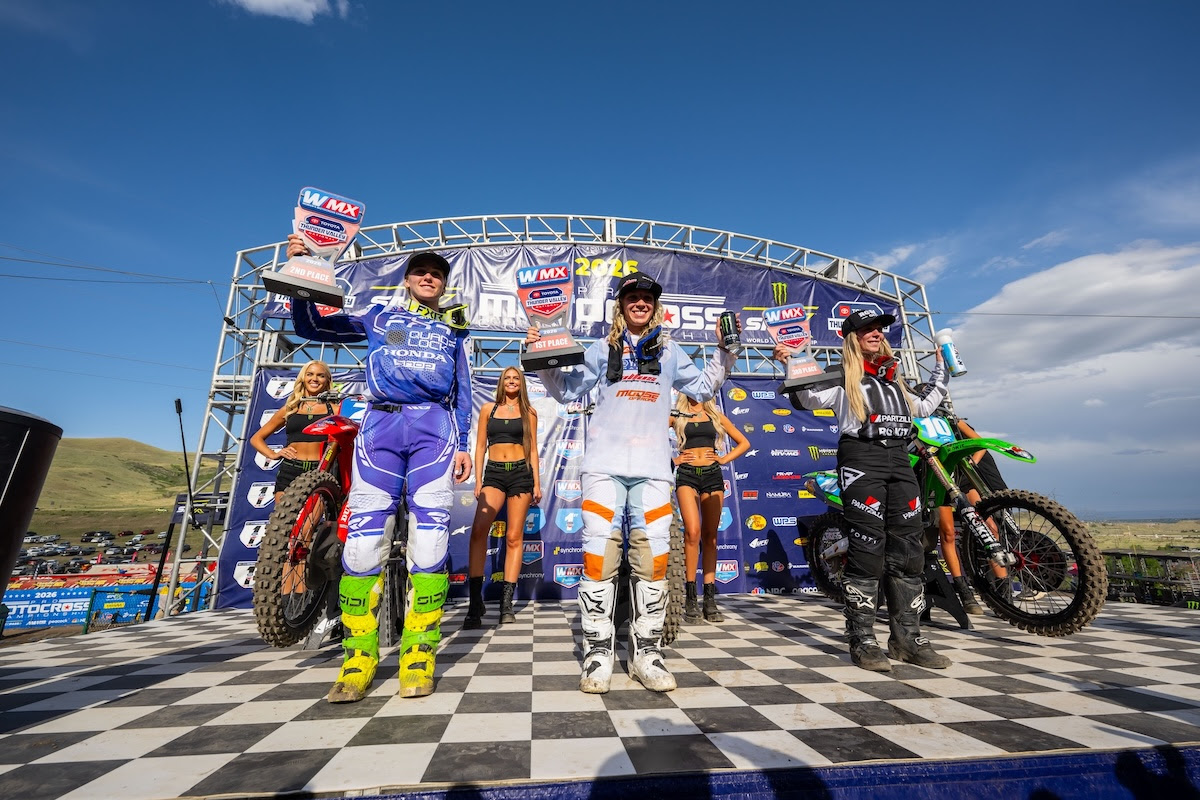
LAKEWOOD, Colo. (June 14, 2026) – The mile-high altitude of scenic Thunder Valley Motocross Park provided the setting for the second round of the 2026 Women’s Motocross Championship Powered by Synchrony (WMX), where athletes were put to the test with the dramatic elevation and a demanding racetrack at the Toyota Thunder Valley National Presented by American Petroleum Institute. For Altus Motorsports bLU cRU Yamaha’s Lachlan “Lala” Turner [#1] it was business as usual, as the reigning back-to-back champion continued her successful start in pursuit of the three-peat with a second straight 1-1 performance to open the season.
Timed Qualifying
The weekend started with an impressive initial statement from Quad Lock Honda’s Charli Cannon [#7], who set the pace in qualifying. The Australian laid down a blistering lap of 2:18.568, which placed her seven tenths clear of Turner (2:19.269) and set the tone for another potential showdown in the motos.
Moto 1 [12 Minutes + 1 Lap]
Friday’s opening moto began with the Australian duo of Partzilla Blaster Power PRMX Kawasaki’s Taylah McCutcheon [#10] and Cannon side-by-side exiting the first turn, with the holeshot edge going to McCutcheon. Behind them SLR Honda’s Mikayla Nielsen [#51] and Turner slotted into third and fourth, respectively.
Cannon took advantage of the opportunity to put some traffic between her and Turner, as the Honda rider charged into the lead early. Not long after, both Nielsen and Turner were also able to make their way around McCutcheon. Turner then went on the attack and was able to work her way around Nielsen for second before getting alongside Cannon as the pair launched off the finish line jump to begin the second lap. Turner took advantage of the momentum of an outside line to seize control of the moto.
Despite losing the lead, Cannon didn’t relent and made a counterattack to try and regain the position. She was able to get alongside Turner but ceded the position.
A couple laps later Cannon’s pursuit of the lead ended with a crash on the track’s uphill roller section. While she was able to remount quickly, losing just a single position to Nielsen, it allowed Turner to build an insurmountable advantage.
The lead trio appeared to be in line for another 1-2-3 finish from the top three riders in the championship, but Nielsen’s bike lost power as she took the white flag and would result in a DNF. That allowed Cannon to reclaim second, while McCutcheon moved up to third.
Out front, Turner cruised to a dominant moto win by a margin 27.8 seconds over Cannon. McCutcheon grabbed her first moto podium result in third, while reigning back-to-back FIM World Champion Lotte van Drunen [#401] finished fourth in her very first WMX moto aboard a stock Yamaha for HGS Slade Racing. Jordan Jarvis Racing Yamaha’s Jordan Jarvis [#301] rounded out the top five.
Following the moto, race officials reviewed a red cross flag infraction by Turner, which resulted in a 10-point penalty in the season standings but did not change the results of the moto.
Moto 2 [12 Minutes + 1 Lap]
Saturday’s second and deciding moto took place as the final race of the day for the Thunder Valley National, following a pair of motos for both the 450SMX and 250SMX classes. As a result, the WMX field was faced with a dramatically different racetrack than the first moto.
The moto began with a massive launch out the gate for Turner, who easily secured the holeshot and the early lead. Cannon followed closely in second, while McCutcheon started third.
The clear track allowed Turner to establish a considerable advantage early on, but that was erased when she lost traction with the rear tire and went down. She was able to remount quickly, but Cannon slipped by to take the lead just as Turner resumed aboard her Yamaha.
It didn’t take long for Turner to make up for her miscue as she tracked down Cannon on the same lap and went on to mirror her pass for the lead from Friday, this time positioning herself on the inside of the finish line jump to reclaim the top spot. Cannon fought back and kept Turner within striking distance, ready to take advantage of any opportunity that presented itself.
As the leaders sprinted away from the field, the battle for third heated up between McCutcheon and Nielsen, who fought her way forward from a seventh-place start. The Honda rider was patient and made the pass stick on the final lap.
Back up front, Turner inched away from Cannon on the final lap to complete the sweep of the motos by a margin of 2.7 seconds, with Nielsen able to rebound from her Friday heartbreak in a distant third.
Overall
For the second week in-a-row Turner completed a 1-1 effort, overcoming adversity along the way. It signified her seventh straight win dating back to last season.
Cannon, who suffered a shoulder injury in the crash on Friday, fought through discomfort to secure a sixth consecutive runner-up finish following a 2-2 effort.
In just her second WMX start, McCutcheon captured her first overall podium finish with 3-4 finishes, doing so while battling through tonsillitis.
van Drunen’s anticipated debut in the U.S. resulted in a fifth-place finish (4-6).
Turner and Cannon are separated by just four points in the championship standings, while McCutcheon has moved into third, 17 points out of the lead.
Emma Milesevic, Lal Lal, Victoria, Australia, Yamaha – 58
Ava Silvestri, Tahoe City, Calif., Husqvarna – 38
Lotte van Drunen, Gorinchem, The Netherlands, Yamaha – 34
Quotes
1st Place – Lachlan Turner | #1 Altus Motorsports bLU cRU Yamaha (1-1) “They prepped the entire track, so it was kind of like a skating rink out there. I keep making it hard on myself [with the tip overs] but it’s definitely fun for the crowd to watch. That [second moto] holeshot was amazing, it was so much better than [Moto 1]. I’m just so hyped.”
2nd Place – Charli Cannon | #7 Quad Lock Honda (2-2) “It’s become a pattern. I haven’t really been strong at the beginning of my motos, and [Turner] gets me. Then I get better towards the end. There’s a few things I did wrong that kind of ruined my flow and my intensity, but I kept in the fight. I was there; it just wasn’t my day today. Considering the weekend, 2-2 is okay. We’ll just keep chipping away to try and get that win.”
3rd Place – Taylah McCutcheon | #10 Partzilla Blaster Power PRMX Kawasaki (3-4) “This was hard. My lungs were on fire that whole moto. I just wanted it to be done. That was hard work, but my dad always told me to never give up. I didn’t and ended up on the box.”
The 2026 Women’s Motocross Championship Powered by Synchrony will continue next weekend with Round 3 from Pennsylvania’s famed High Point Raceway. The WMX will be a part of the UFO Plast High Point National with two days of racing. Moto 1 will take place on Friday, June 19, with Moto 2 alongside the Pro Motocross Championship on Saturday, June 20. Live coverage of the second moto can be seen on Peacock as part of the network’s live comprehensive coverage of High Point that begins at 10 a.m. PT / 1 p.m. ET.
For information about the Monster Energy SMX World Championship, please visit www.SuperMotocross.com and be sure to follow all of the new SMX social media channels for exclusive content and additional information on the latest news: Instagram: @supermotocross Facebook: @supermotocross X: @supermotocross YouTube: @supermotocross TikTok: @supermotocross
About the Women’s Motocross Championship The Women’s Motocross Championship (WMX), an AMA National Championship, features the world’s fastest female outdoor motocross racers. The 6-round series begins with the Hangtown Motocross Classic in June and concludes at the Ironman National in August. It includes stops at premier facilities across America, with events in California, Colorado, Pennsylvania, New York, Maryland and Indiana. These female racers compete in a two-moto format on machines ranging from 125cc to 250cc. The WMX series is managed by MX Sports Pro Racing, a West Virginia-based company and industry leader in power sports event production. For more information, please visit RaceWMX.com.
About MX Sports Pro Racing MX Sports Pro Racing, Inc., manages and produces the world’s premier motocross racing series – the Pro Motocross Championship sanctioned by AMA Pro Racing. MX Sports Pro Racing is an industry leader in off-road powersport event production and management, whose mission is to showcase the sport of professional motocross competition at events throughout the United States. Through its various racing properties, partnerships and affiliates, MX Sports Pro Racing, Inc., organizes events for thousands of racing athletes each year and attracts millions of motorsports spectators. Visit MXSportsProRacing.com for more information.
About the American Motorcyclist Association Founded in 1924, the AMA is a not-for-profit member-based association whose mission is to promote the motorcycle lifestyle and protect the future of motorcycling. As the world’s largest motorcycling rights and event sanctioning organization, the AMA advocates for riders’ interests at all levels of government and sanctions thousands of competition and recreational events every year. The AMA also provides money-saving discounts on products and services for its members. Through the AMA Motorcycle Hall of Fame in Pickerington, Ohio, the AMA honors the heroes and heritage of motorcycling. For more information, visit AmericanMotorcyclist.com. Not a member? Join the AMA today: AmericanMotorcyclist.com/membership/join.
About the Monster Energy SMX World Championship The Monster Energy SMX World ChampionshipTM is the premier off-road motorcycle racing series in the world that combines the technical precision of stadium racing with the all-out speed and endurance of outdoor racing. Created in 2022, the Monster Energy SMX World Championship Series combines the Monster Energy AMA Supercross Championship and AMA Pro Motocross Championship into a 28-round regular season that culminates in a season-ending SMX World Championship Playoffs. Visit SuperMotocross.com for more information.
About Synchrony Synchrony (NYSE: SYF) is a leading consumer financing company at the heart of American commerce and opportunity. From health to home, auto to retail, our Synchrony products have been serving the needs of people and businesses for nearly 100 years. We provide responsible access to credit and banking products to support healthier financial lives for tens of millions of people, enabling them to access the things that matter to them. Additionally, through our innovative products and experiences, we support the growth and operations of some of the country’s most respected brands, as well as more than 400,000 small and midsize businesses and health and wellness providers that Americans rely on. Synchrony is proud to be ranked as the country’s #1 Best Company to Work For® by Fortune magazine and Great Place to Work®. For more information, visit www.synchrony.com.
2026 Thunder Valley Legend honoree Ron Capps (left) is officially inducted by Bristol Motor Speedway & Dragway president Jerry Caldwell during pre-race ceremonies at the Super Grip NHRA Thunder Valley Nationals.
BRISTOL, Tenn. (June 14, 2026) – NHRA Funny Car legend Ron Capps became the 24th member of the prestigious Legends of Thunder Valley Sunday as he was inducted into Bristol Dragway’s hall of fame. He is only the third driver to be inducted while still a full-time driver.
Capps, 60, joins the exclusive club that also includes Don “The Snake” Prudhomme, “Big Daddy” Don Garlits, NHRA founder Wally Parks, John Force, Don Schumacher, Shirley Muldowney, Tony “The Sarge” Schumacher, Scotty Cannon, and last year’s inductee Del Worsham, to name a few.
During pre-race ceremonies, Capps was presented with the customary Legends of Thunder Valley plaque by Bristol Motor Speedway & Dragway president and general manager Jerry Caldwell. The accompanying signage showcasing his name in brilliant red was installed upon the grandstand Tribute Wall as part of the ceremony.
“It’s very rare that we induct an active driver, but you’re in rare company when you’re with Ron Capps,” Caldwell said. “The other two that have been inducted as active (full-time) drivers are John Force and Tony Schumacher.
“So we are thrilled to be able to induct someone who it’s kind of long overdue, but you’re also trying to see how much he’s going to accomplish and how many things he’s going to do. And eventually you have to say, ‘He’s going to keep going, but we need to induct him.’”
Capps has earned an incredible eight NHRA Funny Car victories during NHRA Thunder Valley Nationals competition over parts of three decades. The Carlsbad, Calif. driver claimed wins in 2001, 2006, 2012, 2017, 2018, 2022, 2023 and 2025. What’s most impressive, is that he’s won those races with a variety of different team owners and crew chiefs over the years, showing his versatility as a pilot of the challenging 12,000-plus horsepower short-wheel-base machine where the engine sits in front of the driver and the flip-up body closes down and latches before each 330-mph run down the dragstrip.
In addition to recently making the move to become his own team owner, Capps previously drove for a pair of the sport’s legends: Don “The Snake” Prudhomme and Don Schumacher. Both Prudhomme and Schumacher are already members of the Legends of Thunder Valley. His roster of all-star crew chiefs over the years have included Ed McCulloch, Rahn Tobler, John Medlen and Dean Antonelli.
In addition to his Bristol victories, Capps has also earned a Bristol runner-up finish to Matt Hagan in 2015 and a No. 1 Qualifying Award at Bristol in 2016. Capps also holds the Bristol Dragway track ET record at 3.884 seconds, set in June of 2016.
In his career, Capps is a three-time NHRA Funny Car World Champion and has scored 79 career Funny Car victories. He has career-best performances of 3.821 seconds (2024 Pomona, California) and 339.28 mph (2019 Reading, Pa.). With two victories this season, coming at Phoenix and Charlotte, Capps is the current Funny Car points leader in the NHRA Mission Foods Drag Racing Series.
“I read about Larry Carrier, all the history,” Capps said. “For me as a kid, I read more about the Pro Modified, Modified Production and Pro Stock history because back in that day that was big out here. It was all I read about as a kid.”
“When I got the call (from Bristol Dragway) I had to sit down,” Capps said. “I was like, ‘God, I can’t even believe I’m going to be up on that grandstand. I will retire and be old in a rocking chair someday watching NHRA and have grandkids running around and be as proud as ever to say, ‘I’m the second-winningest to a guy named John Force at everything, right? But I did win more than John at a certain place.’ And that place is Bristol. That’s probably the coolest feather in my cap for sure.”
LEGENDS OF THUNDER VALLEY
2026 – Ron Capps, Funny Car
2025 – Del Worsham, Funny Car / Top Fuel
2024 – Shirley Muldowney, Top Fuel
2023 – Tony Schumacher, Top Fuel
2022 – Don Prudhomme, Funny Car / Top Fuel
2021 – Scotty Cannon, Pro Mod / Funny Car
2019 – Ted Jones, promoter / drag racing visionary
2018 – Mark Oswald, Funny Car / Top Fuel
2017 – Doug Herbert, Top Fuel
2016 – John Force, Funny Car
2015 – Carl Moore, Bristol Dragway founder
2015 – Connie Kalitta, NHRA pioneer/Top Fuel/Funny Car
2014 – Don Schumacher, NHRA team owner / Funny Car pioneer
2013 – Warren Johnson, Pro Stock
2012 – Gene Fulton, Engine Builder
2011 – Jeff Byrd, Bristol President and GM / RJ Reynolds marketing
LE MANS, FRANCE (June 14, 2026) – Cadillac finished a strong fourth in the 94th running of the 24 Hours of Le Mans today. Having led large portions of the race in their Cadillac Hertz Team JOTA V-Series.R, Norman Nato, Will Stevens and Louis Deletraz were ultimately unlucky to be deprived of a well-deserved podium finish.
The Dex WTR Cadillac V-Series.R driven by Ricky Tayor, Jordan Taylor and Filipe Albuquerque finished ninth overall.
Local veteran Sébastien Bourdais, who shared a Cadillac Hertz Team JOTA V-Series.R with Earl Bamber and Jack Aitken, was leading at the midway point but suffered a power steering issue which brought the car into the garage minutes past the midway point. The team investigated and changed key components including the control unit.
The car resumed the race in P17 with over 11 hours remaining, but after further investigation it was deemed that the issue couldn’t be resolved and the car was retired at 8.00 am on Sunday morning.
The next WEC race is at 9:30 am (BRT) in Sao Paulo, Brazil on July 12 the Autódromo José Carlos Pacewith with the ROLEX 6 Hours of São Paulo.
The next IMSA GTP event is the Sahlen’s Six Hours of The Glen on June 25. The Six-Hour race starts at 12:10 pm EDT and will be streamed on Peacock and streamed on IMSAs YouTube page (outside United States). IMSA Radio will stream live audio coverage on XM 206, Channel 996 on the SiriusXM app and IMSA.com.
What they’re saying
No. 12 Cadillac Hertz Team JOTA V-Series.R:
Will Stevens: “It’s pretty disappointing to come away with fourth place. I think, honestly, we deserved more than that. With the pace we showed we should have been on the podium at least. But we were more in the mix than last year, which is a positive. But coming here we had higher hopes than the result we ended up with, so we can’t help but be disappointed. But we’ll come back again next year stronger.”
Norman Nato: “We knew coming into this week that we were going to be in a good position. The team has worked very hard and made some big improvements to the car compared to last year. We have the top speed we were missing before, and overall, the package is a step forward. I’m really enjoyed these 24 Hours. We’ve had some great battles out there with the BMW, the sister car and the Toyota, and that’s what we like. For the team and for the fans, it’s amazing to be in this position with a chance to fight for the win.”
Louis Deletraz: ”First of all, a huge thank you to Cadillac Racing and JOTA, all the crew, mechanics, engineers, for the hard work last ten days. Obviously, it’s a great result, but after leading so much of the race and being up front the whole week, it’s still disappointing for sure. But I think we did the maximum we could, the circumstances made it that way. We came here to fight for a win, we never gave up, and we’ll be back for more because we are hungry to win this race.
No. 38 Cadillac Hertz Team JOTA V-Series.R:
Sebastien Bourdais: “As we all know, Le Mans can be really cruel. We did everything we could and gave ourselves a chance. So big thanks to GM, JOTA and Cadillac and everybody involved. We had the car to win and the race decided otherwise so it’s a tough one to swallow, but that’s racing.”
Earl Bamber: “We had a great number 38 car and led a lot of the race, but unfortunately technical issues put us out, so it’s a shame.”
Jack Aitken: “A very sad way to end the weekend after such a strong event for us. It was looking really good. We led the race at various times and were quick. We were really in the fight with the rest of the field, but this is the race that brings out all the small weaknesses in a car and in the end, the power steering issue was not something you could really continue with. We tried everything we could to get the car back out, but we eventually decided against running the car. Really gutting for everyone on the 38 side, but as a team I think we can still be very proud of what we’ve achieved this year.”
No. 101 Cadillac Wayne Taylor Racing V-Series.R
Wayne Taylor: “We would have loved to be on a podium. This year at Le Mans, we arrived here and we were competitive throughout the weekend. I want to thank Cadillac and General Motors for all the effort and assistance and passion they put into this. They are real partners. The team was awesome, and we had no mechanical failures of the car during the entire week of practice and then qualifying and everything. Though we had issues during the race, the whole Cadillac team worked well with all three cars. Thanks to Dex, our commercial partner, and the drivers, and everybody on the team. It felt like a podium finish, because this team has only been here twice, and got everything right, made no mistakes.”
Jordan Taylor: “I think the result is a little disappointing, but I think there’s a lot of positives that we can take away from the whole week in Le Mans. I think, last year, our first year, we struggled a lot, just on pace, and obviously a lot to learn, and this year, we came back with a lot of knowledge, and I felt like we were really prepared for the event. We showed great speed the whole time, which was really exciting, you know, fighting at the front, and every practice, and every qualifying was exciting for the team, and for Cadillac. So, yeah, the race itself, we were kind of put on the back foot early with a poorly timed, full course yellow and then a couple of penalties in the morning, which took us off the lead lap for that safety car. So, unfortunate, but, yeah, good experience for everyone. I think we learned a lot that we can take back to the IMSA side and, you know, hopefully close out the IMSA side with some good results for Cadillac.”
Ricky Taylor: “It was another good learning weekend unfortunately. I think the full-course yellow, and a couple of penalties took us off the lead lap and once you lose a lap in WEC, it’s not like IMSA where you can play the yellows and come back, you are kind of stuck. Unfortunately, that was our story from about the early hours of the morning. But we had a good car and everyone at Cadillac did a nice job and it was nice driving with Jordan (Taylor) and Filipe (Albuquerque) again and having the guys here in Le Mans together. Now we’ll go to Watkins Glen and hopefully move on quickly.”
Jeromy Moore, Chief Engineer – Cadillac Racing: “I think overall we were pretty happy with our performance. We brought a competitive car to the battle and certainly had a chance to win it. But as always you don’t get selected to win Le Mans, Le Mans selects you. The guys performed well in the car, the crew and the staff, they did an amazing job. The competition was strong as always. I’m just happy that we could put up a fight for so long, almost down to the wire. So pretty happy, exhausted as always, but we’ll look forward to coming back even stronger next year.”
About General Motors
General Motors (NYSE:GM) is driving the future of transportation, leveraging advanced technology to build safer, smarter, and lower emission cars, trucks, and SUVs. GM’s Buick, Cadillac, Chevrolet, and GMC brands offer a broad portfolio of innovative gasoline-powered vehicles and the industry’s widest range of EVs, as we move to an all-electric future.
GM Motorsports, including the Cadillac Formula 1® Team develops and proves advanced technologies in the most demanding environments, accelerating innovation in performance, safety, efficiency, and electrification for its production vehicles. Cadillac Racing is one of the leading manufacturers in the IMSA and FIA World Endurance Championships (WEC). Chevrolet competes in single seaters in the US IndyCar series, and in NASCAR with multiple team partners and drivers. Corvette customer teams compete in GT series across the globe including IMSA and WEC. Learn more at GM.com.
Jo Shimoda Prevails in 250SMX Class After Another Unpredictable Afternoon
LAKEWOOD, Colo. (June 13, 2026) – The Pro Motocross Championship, sanctioned by AMA Pro Racing, headed to the Rocky Mountains for its third stop of the summer and Round 20 of the 2026 Monster Energy SMX World Championship, where the mile-high altitude of Thunder Valley Motocross Park provided one of the season’s most unique challenges. The Toyota Thunder Valley National Presented by American Petroleum Institute featured another captivating afternoon of racing, which saw Honda HRC Progressive’s Jett Lawrence [#1] put forth a statement performance with a pair of wire-to-wire motos to claim back-to-back wins and seize control of the 450SMX Class points lead. In the 250SMX Class, the unpredictability continued for the third straight race as Honda HRC Progressive’s Jo Shimoda [#30] became the third different winner in as many races, albeit without winning a moto. It signified Honda’s first sweep of class victories this season.
450SMX Class
Timed Qualifying
The most competitive qualifying session of the young season saw several riders put themselves in the mix for pole position. While Jett Lawrence topped the charts after the first session, it was his Honda HRC Progressive teammate and older brother Hunter [#96] who ultimately led the way at the end of the second session with a time of 2:01.727, which put him a half-second ahead of the 2:02.201 by Red Bull KTM Factory Racing’s Lucas Coenen [#104], the MXGP points leader who took advantage of an off weekend to make his Pro Motocross debut. Jett Lawrence’s 2:02.489 from the first session placed him third.
Moto 1 [30 Minutes + 2 Laps]
The opening moto of the afternoon got underway with Jett Lawrence out front with the holeshot over Monster Energy Yamaha Star Racing’s Cooper Webb [#2] and Hunter Lawrence, the championship leader. Lawrence pushed on the opening lap to get around Webb and looked to close in on his younger brother. Meanwhile, Monster Energy Yamaha Star Racing’s Haiden Deegan [#38] was able to climb his way up to third.
The Lawrences engaged in a spirited fight for the lead, with Jett able to keep Hunter at bay. For a moment Hunter appeared to have the pass made on his brother, but Jett responded immediately to prevent Hunter from completing it. That allowed Deegan to make it a three-rider battle. Deegan then made the pass for second and pressured for the lead for the first time this season. The highly anticipated showdown between Jett Lawrence and Deegan unfolded, to the roar of the crowd. While Deegan kept Lawrence honest, the gap between them soon stabilized as the moto reached its halfway point.
Deegan overcame a couple minor miscues to close back in on the lead and brought Hunter Lawrence with him to reignite the three-rider battle. However, with a little more than 12 minutes to go Deegan slid out and dropped to third. He then went down again a short time later and dropped to fourth, which allowed Coenen to take third.
The final 10 minutes turned into a Lawrence versus Lawrence affair, with Coenen gaining ground from third. The siblings traded momentum throughout various parts of the racetrack, which ultimately prevented Hunter from getting close enough to mount a challenge. As the clock wound down, Jett seemingly ended the threat and opened up a lead of more than three seconds, while Coenen settled into third.
As time ran out on the race clock Hunter Lawrence went down and remounted in third, which moved Coenen up to second. Lawrence reentered the race just ahead of Deegan to set up a last lap battle for the final podium spot.
As Jett Lawrence took the white flag he held a mere two second advantage over Coenen, who made one final push. In the end, Lawrence held on to take his third straight moto win by 1.4 seconds over the Belgian in his first ever gate drop. Hunter Lawrence followed in third, with Deegan fourth and Red Bull KTM Factory Racing’s Jorge Prado [#26] in fifth.
At the conclusion of the moto race officials reviewed an inside line that several riders used across multiple laps that took them beyond the track limits. The racing line was deemed illegal, and three riders were subsequently penalized for cutting the track, with each lap infraction taken into account. The top-finishing rider to receive a penalty was Hunter Lawrence, who was docked one position from third to fourth. Deegan was penalized seven positions, dropping him from fourth to 11th, while Prado received a two-position penalty, dropping from fifth to seventh. The updated top five following the penalties was 1. Jett Lawrence; 2. Coenen; 3. Monster Energy Kawasaki’s Garret Marchbanks [#36]; 4. Hunter Lawrence; 5. Rockstar Energy Husqvarna Factory Racing’s RJ Hampshire [#24].
Moto 2 [30 Minutes + 2 Laps]
Jett Lawrence completed off a sweep of the holeshots to begin the second moto with the lead ahead of his brother and Red Bull KTM Factory Racing’s Aaron Plessinger [#7]. As he looked to apply pressure on the lead, Hunter Lawrence went down. He remounted quickly but resumed deep in the top 10.
The clear track allowed Jett Lawrence to establish a two-second lead at the conclusion of the opening lap over Coenen, who quickly fought his way up to second. Plessinger settled into third. Meanwhile, Hunter Lawrence made an impressive recovery to fight back up to fifth place in a matter of a couple laps.
Jett Lawrence was able to stabilize the lead at about 3.5 seconds through the middle of the moto as Coenen strengthened his grasp of second. The fight for third saw Deegan methodically close in on Plessinger and successfully take the position. Hunter Lawrence followed into fourth several laps later.
As the lead duo continued on in their respective positions Hunter Lawrence was determined to complete his comeback from the early tip over. He closed in on Deegan and made a quick, aggressive move with less than two minutes to go to take over third. Moments later, he fell again, which gave the position back to Deegan. Lawrence resumed in fourth, but just ahead of Prado and Marchbanks.
Jett Lawrence completed a perfect afternoon by extending his moto win streak to four, taking the checkered flag 9.6 seconds ahead of Coenen. Deegan finished more than 30 seconds back in third, with Hunter Lawrence able to salvage fourth.
Overall
A pair of wire-to-wire performances and the 20th 1-1 result of his career gave Jett Lawrence his 26th win in 30 premier class starts. With back-to-back victories, he has also grabbed control of the 450SMX Class points lead. It’s his fourth straight win at Thunder Valley, where he remains unbeaten, and marks the sixth consecutive year Honda has claimed victory in Colorado.
Coenen’s Pro Motocross debut resulted in an impressive runner-up effort (2-2) as he’ll now return overseas to defend his lead in the MXGP championship. He’ll race once more this summer, at Southwick on July 11th.
Despite numerous bouts of adversity and the penalty in the first moto, Hunter Lawrence still secured a podium finish (4-4) to minimize the points lost in the championship.
A 14-point swing at Thunder Valley has moved Jett Lawrence atop the points standings with an eight-point lead over Hunter. Deegan remains third, 32 points out of the lead.
Results & Standings
450SMX Class Overall Results (Moto Finishes // Points)
Malcolm Stewart, Haines City, Fla., Husqvarna – 214
Quotes
1st Place – Jett Lawrence | #1 Team Honda HRC Progressive (1-1) “I felt a lot better in Moto 2, with a lot better lines and better flow. It was a really tricky track. It was a good 1-1 weekend and I’m happy with that. I’m getting more used to riding with my foot, but it wasn’t easy on a track like this. But it was still good enough for a 1-1.”
2nd Place – Lucas Coenen | #104 Red Bull KTM Factory Racing (2-2) “It was an amazing experience. I was able to get a good start [in Moto 2] and went from there. I’m so grateful for the team and everything they did to make this happen. The second moto was hectic with the lappers, but I’m racing against the best rider in the world. I can’t wait to come back [at Southwicjk], but we’ll go back [to MXGP] and try to win there.”
3rd Place – Hunter Lawrence | #96 Team Honda HRC Progressive (4-4) “It was a tough one today. I felt like my riding was really good, but I struggled with the connectivity of the track and my motorcycle. I struggled a lot more than I usually do in keeping the bike under me. All good, we’ll move on to the next one.”
250SMX Class
Timed Qualifying
The morning sessions kicked off with an impressive debut for Red Bull KTM Factory Racing’s Sacha Coenen [#109], the MX2 points leader from Belgium who joined his twin brother for a guest appearance and Pro Motocross debut. Coenen paced the field after the opening session but was surpassed by Monster Energy Yamaha Star Racing’s Cole Davies [#37], who led the way in the second session to top the overall classification with a time of 2:04.463. That was seven tenths ahead of Coenen (2:05.217), who also bettered his time in the second session.
Moto 1 [30 Minutes + 2 Laps]
The first moto began with Monster Energy Pro Circuit Kawasaki’s Seth Hammaker [#10], the championship leader, ahead of the pack with the holeshot ahead of Red Bull KTM Factory Racing’s Julien Beaumer [#13] and Monster Energy Yamaha Star Racing rookie Caden Dudney [#82] in third.
Hammaker and Beaumer battled for the lead throughout the opening laps, while Monster Energy Pro Circuit Kawasaki’s Nick Romano [#141] slotted into third. Up front, the KTM rider kept the pressure on his Kawasaki counterpart as Romano and Monster Energy Pro Circuit Kawasaki’s Levi Kitchen [#47] lurked behind them. Ten minutes into the moto the top four were separated by just three seconds.
As Hammaker slowly inched away his teammates went on the attack, as both Romano and Kitchen stormed past Beaumer to put the Kawasakis 1-2-3.
Hammaker maintained his hold of the lead as the top three settled in briefly, but just past the halfway point of the moto Kitchen picked up the pace and made the pass on Romano for second. With about 13 minutes left in the moto, Kitchen faced a 2.5 second deficit to his teammate. Behind them, Monster Energy Yamaha Star Racing’s Michael Mosiman [#23] made the pass on Romano for third.
Inside the final 10 minutes, the battle for the lead intensified as Kitchen closed in on Hammaker’s rear fender. Kitchen was the faster rider but found difficulty in finding the right lines on the rut-filled track to get alongside his teammate. This allowed Hammaker to keep Kitchen at bay and hold onto a slim lead. Kitchen lost touch briefly but made one final push after time ran out on the race clock. He closed in, found better lines, and made the move by Hammaker with two laps to go. As that unfolded a change for third also took place as Shimoda made the pass on Mosiman.
Once into the lead, Kitchen ran away from Hammaker and stormed to his second moto win of the season by 8.1 seconds for a Kawasaki 1-2 finish. Shimoda earned his second moto podium in third, with Romano fourth and Mosiman fifth.
Moto 2 [30 Minutes + 2 Laps]
The deciding second moto started with Coenen out front for the holeshot ahead of Romano and Rockstar Energy Husqvarna Factory Racing’s Ryder DiFrancesco [#34]. As the field entered the first turn, contact between Hammaker and Kitchen took the teammates to the ground with several other riders and dropped them deep in the field.
Out front, Romano gave a brief challenge to Coenen but almost went down, which allowed Coenen to secure the position and pull away from the field. Romano and DiFrancesco settled into second and third, respectively. As Coenen was able to open a lead of more than five seconds, DiFrancesco made the pass on Romano for second.
As the leaders settled in through the first 10 minutes of the moto the attention shifted to Kitchen and Hammaker as they looked to claw their way through the field. Kitchen gained significant ground and fought his way into the top 15, while Hammaker followed several positions behind, just inside the top 20.
Back up front, a battle for third started to take shape between Romano and Shimoda, which carried major implications in the overall standings. After several laps of patience Shimoda made his move with a little more than 10 minutes left in the moto, which was enough to put him in the winning position.
Further back, Kitchen continued his march forward and battled up to ninth place, while Hammaker made slower progress and moved up to 15th.
As time ran out on the race clock Shimoda closed in on DiFrancesco for second. He showed patience and made the move just before the final lap.
While a wild race unfolded behind him, Coenen dominated his second-ever moto and never faced a challenge after the opening lap. He took the win by 6.1 seconds over Shimoda, with DiFrancesco in third. Kitchen fought all the way up to eighth, while Hammaker finished just outside the top 10 in 12th.
Overall
Another wild afternoon of 250SMX Class racing saw Shimoda emerge victorious following 3-2 moto finishes. It’s the seventh win of the Japanese rider’s career and gives Honda four Thunder Valley wins in the past five years.
Kitchen’s resilient second moto salvaged a runner-up finish (1-8) and gives the Kawasaki rider back-to-back podiums.
Romano enjoyed a career breakthrough with the first overall podium finish of his career (4-5) in his 22nd career start. He’s the third different Monster Energy Pro Circuit Kawasaki rider to finish on the podium through the first three races.
Hammaker finished seventh overall (2-12) for his first finish off the overall podium this season.
Hammaker and Kitchen now sit tied atop the 250SMX Class standings with a share of the red plate. Shimoda now sits third, six points behind the teammates.
Results & Standings
250SMX Class Overall Results (Moto Finishes // Points)
Jo Shimoda, Suzuka, Japan, Honda (3-2 // 42)
Levi Kitchen, Washougal, Wash., Kawasaki (1-8 // 39)
1st Place – Jo Shimoda | #30 Honda HRC Progressive (3-2) “I just needed to start up front. I wasted too much energy in the first moto, so I didn’t have as much in the second moto. We still have a lot of things to work on but still got a win. Coming back from my [offseason] neck injury, this win means a lot. Let’s keep the ball rolling.”
2nd Place – Levi Kitchen | #47 Monster Energy Pro Circuit Kawasaki (1-8) “I just can’t put a day together. It was a bummer [to start Moto 2]. I got up and saw a red plate in front of me and realized I just need to beat this guy [Hammaker]. I just put my head down and charged. I wasn’t really happy with how it was going, but I gave it my all. We’ve just got to keep going and keep fighting.”
3rd Place – Nick Romano | #141 Monster Energy Pro Circuit Kawasaki (4-5) “This is so unreal. I don’t even know where to start. I want to thank my family, friends, and Mitch Payton for giving me this opportunity. I’ve been working for this my whole life and hope I can do it again next weekend.”
WMX
The third round of the 2026 Women’s Motocross Championship Powered by Synchrony also took place at Thunder Valley, with a pair of motos contested across Friday and Saturday. Reigning back-to-back series champion and current points leader Lachlan “Lala” Turner [#1] completed another 1-1 sweep of the motos aboard her Altus Motorsports bLU cRU Yamaha to secure a second straight win to open the season and her seventh in-a-row dating back to last season. Quad Lock Honda’s Charli Cannon [#7] once again finished in the runner-up spot (2-2), while Partzilla Blaster Power PRMX Kawasaki’s Taylah McCutcheon [#10] put Australians 2-3 with her first career podium result following 3-4 finishes.
Ava Silvestri, Tahoe City, Calif., Husqvarna (9-10 // 25)
The 2026 Pro Motocross Championship will continue next Saturday, June 20, with Round 21 of the SMX World Championship regular season and the East Coast debut from Pennsylvania’s famed High Point Raceway. The Father’s Day tradition that is the UFO Plast High Point National will shown live in its entirety on Peacock, beginning with Race Day Live at 7 a.m. PT / 10 a.m. ET, followed by coverage of the motos at 10 a.m. PT / 1 p.m. ET.
For information about the Monster Energy SMX World Championship, please visit www.SuperMotocross.com and be sure to follow all of the new SMX social media channels for exclusive content and additional information on the latest news: Instagram: @supermotocross Facebook: @supermotocross X: @supermotocross YouTube: @supermotocross TikTok: @supermotocross
About the Monster Energy SMX World Championship: The Monster Energy SMX World Championship™ is the premier off-road motorcycle racing series in the world that combines the technical precision of stadium racing with the all-out speed and endurance of outdoor racing. Created in 2022, the Monster Energy SMX World Championship Series combines the Monster Energy AMA Supercross Championship and the AMA Pro Motocross Championship into a 28-round regular season that culminates with the season-ending SMX World Championship Playoffs. Visit SuperMotocross.com for more information.
About Pro Motocross Championship: The Pro Motocross Championship features the world’s fastest outdoor motocross racers, competing aboard homologated bikes from one of seven competing manufacturers on a collection of the roughest, toughest tracks on the planet. Racing takes place each Saturday afternoon, with competition divided into two classes: one for 250cc machines, and one for 450cc machines. MX Sports Pro Racing, the industry leader in off-road powersports event production, manages the Pro Motocross Championship. For more information, visit ProMotocross.com.
About Monster Energy AMA Supercross Championship: Monster Energy AMA Supercross is the most competitive and highest-profile off-road motorcycle racing championship on the planet. Founded in America and sanctioned by the American Motorcyclist Association (AMA) since 1974. Over 17 weeks, Supercross attracts some of the largest and most impressive crowds inside the most recognizable and prestigious stadiums in North America to race in front of nearly one million live fans and broadcast to millions more worldwide. For more information, visit SupercrossLIVE.com.
About MX Sports Pro Racing, Inc.: MX Sports Pro Racing, Inc., manages and produces the world’s premier motocross racing series – the Pro Motocross Championship, sanctioned by AMA Pro Racing. MX Sports Pro Racing is an industry leader in off-road powersport event production and management, its mission is to showcase the sport of professional motocross competition at events throughout the United States. Through its various racing properties, partnerships and affiliates, MX Sports Pro Racing, Inc., organizes events for thousands of action sports athletes each year and attracts millions of motorsports spectators. Visit MXSportsProRacing.com for more information.
About Feld Motor Sports, Inc.: Feld Motor Sports, Inc. is the worldwide leader in producing and presenting specialized arena and stadium-based motorsports entertainment. Properties include Monster Jam®, Monster Energy AMA Supercross, and the Monster Energy SMX World Championship. Feld Motor Sports, Inc. is a subsidiary of Feld Entertainment, Inc. Visit monsterjam.com, SupercrossLIVE.com, and feldentertainment.com for more information.
LEXINGTON, Ohio (June 13, 2026) – Gastón Irazú led from the wave of the green all the way to the checkered during Formula 4 United States Championship’s (F4 U.S.) Race 1 at Mid-Ohio Sports Car Course. Carrying the momentum of his Road America sweep into this weekend‘s round, the Uruguayan driver locked in his third-consecutive win in the series.
Notes of Interest:
Gastón Irazú earned his third F4 U.S. win of 2026. Last year, Irazú won the title in Ligier Junior Formula Championship and moved up to F4 U.S. this season with assistance from the Champion’s Scholarship.
Caleb Campbell continues his streak with a second-place finish, marking his sixth podium of the season and extending his championship lead.
Cole Medeiros tied his career-best finish with his second podium of 2026.
After racing in the inaugural F4 U.S. race at Mid-Ohio in 2016, Austin Kaszuba (No. 34 Crosslink Motorsports Ligier JS F422) returned to the field today to finish sixth for Crosslink Motorsports.
After making its debut on July 2, 2016, F4 U.S. is celebrating its 10th Birthday this weekend at Mid-Ohio Sports Car Course—the same circuit where the series contested its first round.
Leading the field to the green as the polesitter, Irazú (No. 27 Elia Group / Baly / Canal 4 / Ancap / Champagne Racing Ligier JS F422) faced an early challenge from second-place starter Caleb Campbell (No. 68 Steele Auto Group / Kiwi Motorsport Ligier JS F422), but keeping a steady focus and consistent lap times, the Uruguayan was able to open a gap as the laps ticked by. As the race passed its halfway point, his two-second advantage was erased by a full-course caution, but the reigning Ligier JFC champion once again pulled away after the restart.
One of the best drives of the day came from Cole Medeiros (No. 77 MLT Motorsports Ligier JS F422), who had to roll off seventh after a five-spot grid penalty issued during qualifying. The MLT Motorsports driver had already reached the third position before the halfway point, but couldn’t complete the pass on Campbell before the checkered flag waved.
Crossing the line, it was Irazú, followed by Campbell and Medeiros.
“I’m really proud of my team,” said Irazú on the top step of the podium. “They gave me a really great car, so this win is for them. It feels really great. I want to thank my team, all my sponsors, my dad, my mom, my sister, my girlfriend, and all the people who give me the chance to compete.”
F4 U.S. will contest their final race of the Racing America at Mid-Ohio weekend tomorrow at 10:35 a.m. ET. Live timing and scoring will be available on the Race Monitor app, with additional news and updates posted on the series’ Facebook, Instagram and Twitter.
LEXINGTON, Ohio (June 13, 2026) – Edward Kennedy and Beckham Jacir claimed Ligier Junior Formula Championship (Ligier JFC) victories in Mid-Ohio’s Race 1 on Saturday. Kennedy’s dash through the field in the JFC Gen. 2 Class, paired with Jacir’s five-second lead in the JFC Gen. 1 Class clearly demonstrated the dominance of both drivers.
Notes of Interest:
Edward Kennedy took the Race 1 victory in the Ligier JFC Gen. 2 Class at Mid-Ohio to claim his fourth win of season.
Jack Speth retained the Ligier JFC Gen. 2 Class championship points lead with a runner-up finish, and holds a 22-point advantage following Race 1.
As the winner in the Ligier JFC Gen. 1 Class, Beckham Jacir crossed the finish line with a greater than five-second margin over his competition.
With a second-place result, Lazaro Bainotti finished on the podium for the fifth time this season.
AJ Abdullah captured his second podium of 2026 with a third-place finish in Race 1.
Tyler Wade (No. 9 Dante’s Inferno / Perlson LLP / Berg Racing Ligier JS F4) crossed the line fourth in class to score a career-best finish.
Beckham Jacir (No. 7 Stonica / Bell / OMP / P1DOKS / Behind the Wheel / Champagne Racing Ligier JS F4) led the field down the starting grid with Lazaro Bainotti (No. 11 Fundacion Fangio Rus seguros Cordoba deportes / Speed Factory Ligier JS F4) to his outside. With a great jump off the block, Jacir immediately took control of the race leaving Bainotti in his wake. In fact, the Champagne Racing driver had opened up more than a five-second gap before the Gen. 2 cars started to close in. Jacir continued to lead as the race neared the halfway point, but a safety car period bunched the field back up, giving the Gen. 2 cars another run at the overall race lead. With them completing the overtake when the race restarted, Jacir turned his focus to the Gen. 1 competition, steadily pulling away from the other cars in his class and taking the checkered flag with a 5.089-second advantage.
In the Ligier JFC Gen. 2 class, Kennedy (No. 30 MLT Motorsports Ligier JS F422) led the group down the starting grid, but a stall when the lights went out allowed Jack Speth (No. 07 Kiwi Motorsport Ligier JS F422) to take the early lead. Falling more than 12 seconds behind after the stall, Kennedy kept his focus forward and steadily chipped away at the gap while climbing through the field. Only 0.134-seconds behind Speth at the halfway mark, Kennedy completed the pass on Speth just before the safety car period, and then used the restart to overtake Jacir for the overall lead.
When the checkered flag waved, it was Kennedy and Speth, followed by Jacir, Bainotti and AJ Abdullah (No. 21 Freedom Detox / Grid State Digital / Berg Racing Ligier JS F4).
“It was a pretty good race for us,” said Jacir atop the podium. “The car was on rails the whole race—really, the whole weekend. We got a good start on used tires. I think we were the only ones on used tires in the front, so it was just building into that and having consistent laps. I was almost able to get the overall win—I was really hoping for that, but it’s all good. I can’t thank the team enough for giving me such an amazing car. All the guys at Champagne Racing are working nonstop, and working really well on the car. I also have to thank all my sponsors.”
“The race was really good,” Kennedy “The car was great. I just had a little rookie mistake on the start by stalling it, but we came back strong, so it was all good. Speth had really great pace and I was a little scared, but I ended up on top. I’d like to thank the whole MLT crew, my physical trainers and everyone for their support.”
Ligier JFC will contest a doubleheader tomorrow, as the lights go out at 9:15 a.m. and 2:05 p.m. ET for Races 2 and 3, respectively. Live timing and scoring is available on the Race Monitor app, with additional news and updates posted on the series’ Facebook, Instagram and Twitter.

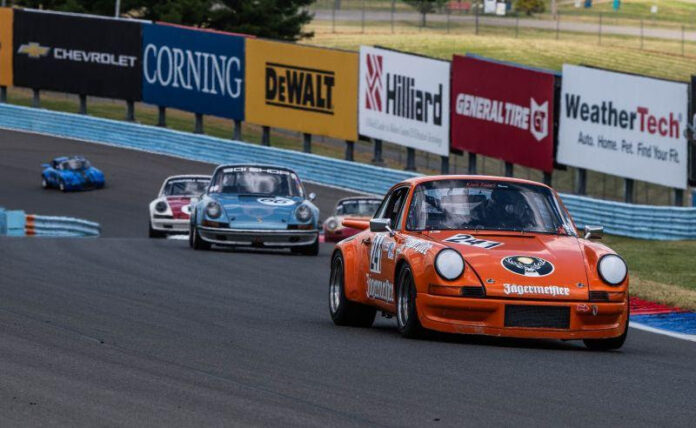
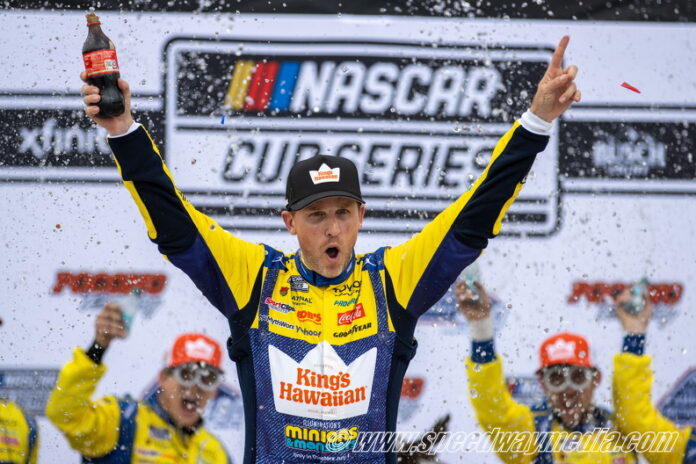
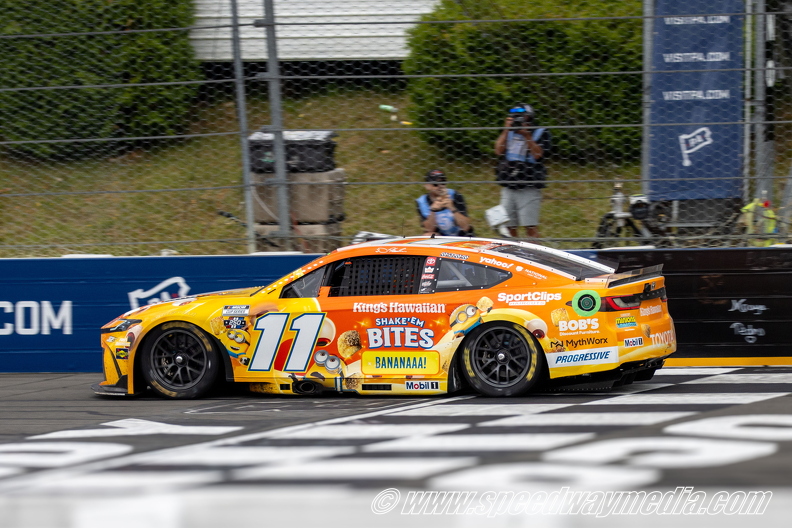
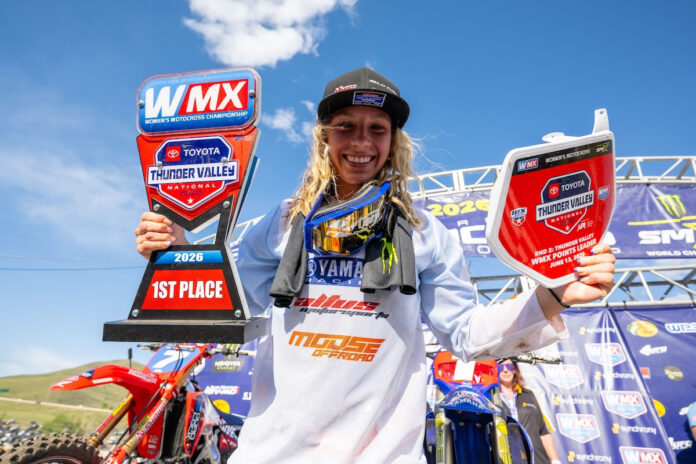
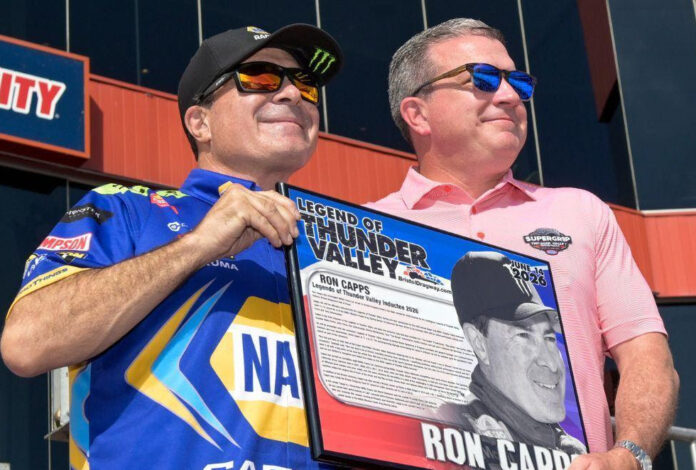
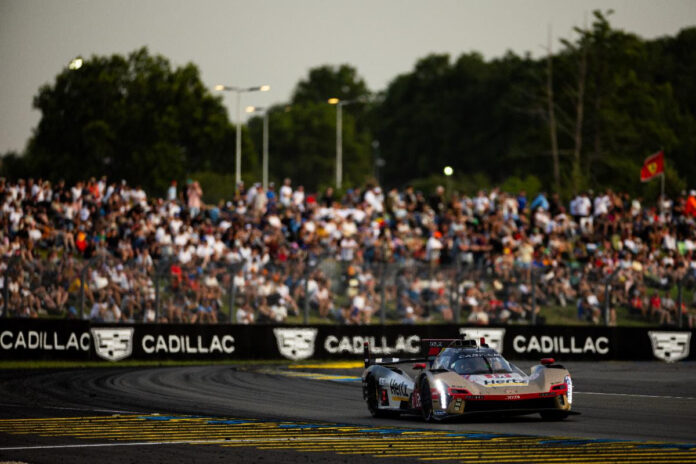
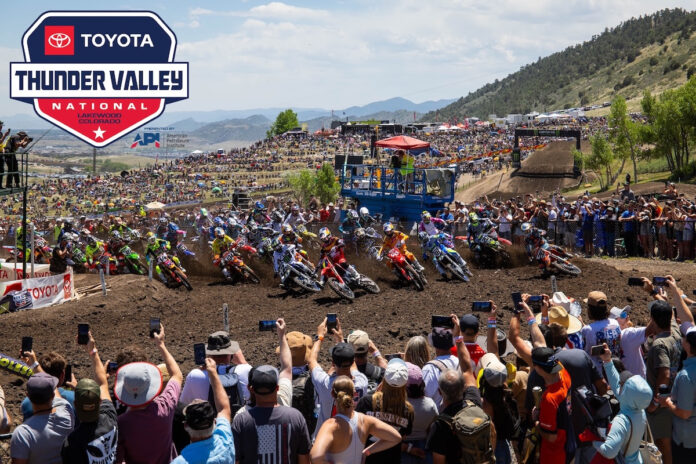
![Honda HRC Progressive’s Jett Lawrence [#1]](https://speedwaymedia.com/wp-content/uploads/2026/06/unnamed-4-3.jpg)