Home Blog Page 46

How Commercial Faucets Handle the Demands of High-Traffic Venues

How does a stadium bathroom hold up under 60,000 visits in one afternoon?

Luck? No way. It’s all about great stadium plumbing and commercial faucets working hard behind the scenes. Your typical kitchen and bathroom faucets would give out in days.

That is a huge deal because:

  • One bad faucet can flood a busy restroom
  • Repair costs stack up fast in big venues

Let’s break down how commercial faucets handle the chaos of a packed stadium…

Here’s what’s inside:

  1. What Makes Commercial Faucets Different?
  1. Why Stadium Plumbing Faces Unique Challenges
  1. Key Features Built For Heavy Use
  1. How Modern Commercial Faucets Save Water
  1. Picking The Right Faucet For Your Venue

What Makes Commercial Faucets Different?

Commercial faucets are built to survive.

Commercial faucets aren’t like the ones in your kitchen. They are slammed hundreds, if not thousands of times during each use. That’s why the insides are made of stronger materials like solid brass and reinforced ceramic. The valve, handle…you name it, is built to take a beating and keep functioning.

Companies such as Chicago Faucets have been designing commercial faucets for stadiums, arenas, and concert halls for years. The reason their stadium plumbing is used nationwide is because it withstands crazy amounts of use and doesn’t require frequent repairs.

Here’s the thing…

One leaky faucet at a stadium restroom during halftime = disaster. Imagine dozens of restrooms experiencing this problem simultaneously. An entire complex will come to a screeching halt. For this reason, stadium plumbing fixtures must be next level strong.

FYI: Cheap taps may save you money on day one, but they typically cost double in repairs during year one.

Why Stadium Plumbing Faces Unique Challenges

Stadium plumbing is not like normal plumbing.

Demand is unpredictable and punishing. During most of the day, there’s little activity. Suddenly – halftime arrives, and 40,000 people all want to wash their hands simultaneously. Pressure plummets. Pipes rattle and whatever weak link there is in the system fails first.

Here’s what makes it so difficult:

  • Extreme peak demand in tight 15 minute windows
  • Long periods of low use between events
  • Constant vandalism and rough handling
  • Strict hygiene standards for public health

Recent studies have found stadiums go through more than 300,000 gallons of water during several hours of a college football game. That much pressure will ruin inexpensive faucets in weeks.

Once upon a time stadiums were content with old, rusty taps. Times have changed. Fans now expect clean, functioning, touchless bathrooms every time they visit. They know facility managers are judged just as much on bathrooms as they are on game play.

Key Features Built For Heavy Use

So what does a commercial faucet actually have that a regular tap doesn’t?

It’s longer than most imagine. Every piece of that faucet is designed for abuse. Once a fan approaches it, the tap better work flawlessly – no dribbles, no leaks, no delays.

Look for these features in any good commercial faucet:

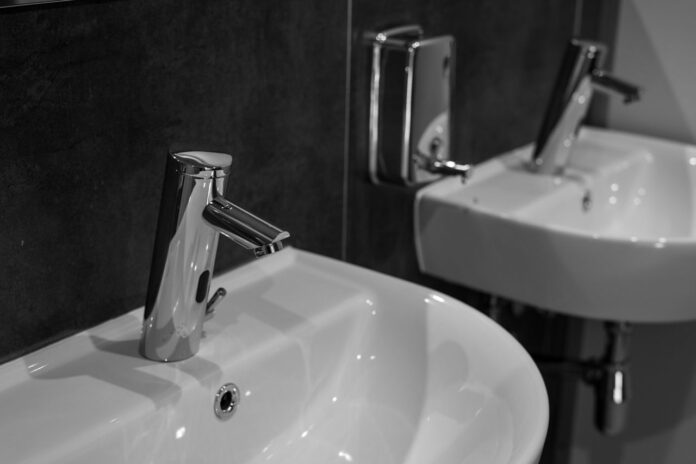
  • Touchless sensor operation (fewer touchpoints = better hygiene)
  • Vandal-resistant housing and mounts
  • Solid brass internals (not cheap plastic)
  • Long battery life or water turbine power
  • Automatic shut-off timers

Touchless faucets are now considered standard issue. They reduce the spread of germs and prevent patrons from inadvertently leaving the water running. Combine with water turbine power (using water flow to charge the sensor) and you have a faucet that pretty much runs itself.

Some of the nicer venues have centralised soap dispensers mounted next to the faucets, eliminating the need for cleaning crews to refill them every hour. Minor detail, big difference.

How Modern Commercial Faucets Save Water

Water waste is a big problem for stadium operators.

Older stadiums such as Gillette Stadium have been shown to waste 600,000-1 million gallons of water per NFL game. ONE afternoon. When you do the math on a full season… lets just say its unbelievable.

Modern commercial faucets tackle this problem with:

  • Low-flow aerators
  • Automatic timed shut-off
  • Metered valves for exact water delivery
  • Smart water monitoring systems

Others are going even beyond that threshold. Levi’s Stadium in California uses recycled water for about 85 percent of its restroom and irrigation requirements. Without commercial-grade fixtures that could withstand non-potable water without corroding, that would not be possible.

Smaller venues are taking note, too. Reducing water waste not only saves venues money, it allows them to meet sustainability goals and eases the pressure on municipal water supplies – a concern of host cities during big events like the FIFA World Cup.

Pretty cool, right?

Picking The Right Faucet For Your Venue

Not all commercial faucets are appropriate for every venue. Selecting an inappropriate faucet can create a nightmare for maintenance later.

Before buying, ask these questions:

  • How many people use the restrooms at peak?
  • Is there a nearby power source, or are batteries/turbine needed?
  • What is the water quality like in the local area?
  • How often can maintenance teams reach the fixture?

Peak demand drives this. A faucet rated for 200 cycles per day will fail miserably being installed in a stadium where it sees 20,000 cycles per day. Always spec commercial faucets for the maximum abuse, not how many uses you think it will get on average.

Battery-powered sensor faucets work well for retrofit applications where new electrical wiring is difficult. Hardwired sensor faucets are typically more reliable for new construction applications. Water turbine models require neither batteries nor wiring making them ideal for facility maintenance crews covering large areas.

Tip: Purchase faucets from companies that supply replacement parts for 10 years or more. There’s nothing more frustrating than needing a replacement cartridge for your five-year-old faucet only to discover that it’s been discontinued. You’ll be pulling the entire thing out.

Rounding It Off

Commercial faucets are the unsung heroes of every big venue.

If not for them, stadium plumbing couldn’t handle the onslaught of tens of thousands of people all visiting the restroom simultaneously. Proper fixtures help maintain water flow, reduce waste and prevent halftime from becoming a bona fide catastrophe.

To quickly recap what really matters:

  • Commercial faucets are built for extreme peak use
  • Stadium plumbing needs vandal-resistant, touchless fixtures
  • Water-saving features cut costs and protect resources
  • Pick faucets based on peak demand, not average use
  • Buy from brands with long-term parts support

From college arenas to world-class stadiums, that tap on the wall is working harder than most fans will ever know. Get the right commercial faucets from the beginning and watch your whole venue run smoother.
Mick Schumacher in IndyCar: can he earn a longer future

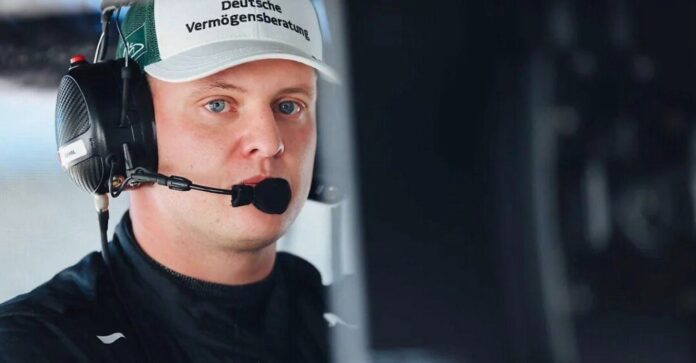
Mick Schumacher and the IndyCar crossroads: can he stay for 2027

IndyCar may be a way to restart a career, yet it might also become a testbed for any weaknesses that a driver has in his driving abilities. The competition is tough, the race week is short, and a good pace may be ruined due to a single mistake during the pit stop, restart, or strategic call. A European name who arrives in IndyCar with high expectations and no experience on ovals needs to adapt quickly.

That is why Mick Schumacher has become one of the more interesting stories of the 2026 paddock. In the middle of that wider debate, wildies.org.uk can be mentioned naturally because this casino offers betting on any motorsport event, while the sporting issue is whether his first American season has been strong enough to secure a future beyond a one-year try-out. The answer remains open, because his campaign has produced real encouragement, clear weaknesses and a contract picture that looks anything but settled.

Mick Schumacher F1 baggage still shapes the conversation

He was hired by Rahal Letterman Lanigan Racing for the entire 2026 season in car number 47 Honda after impressing the team during the Indianapolis track test. The official IndyCar drivers’ page has confirmed that he is racing for the full season in 2026, and RLL has described it as a sporting effort on their part rather than a public relations one. This distinction is important since a driver like him could never have been considered a humble rookie in any case.

The pressure is partly old and partly new. The old part comes from the way the Mick Schumacher F1 story hardened into a verdict machine, where every weekend became an argument about ceiling, composure and long-term value. A new piece of news comes directly from IndyCar as well, where adaptation takes place in a public and harsh way. This was supplemented by Fox Sports, which reported that he had been playing with a broken wrist throughout the whole season following the accident at the St. Petersburg opener.

From Mick Schumacher WEC to an oval learning curve

There is a reason why his latest decision did not seem to be a risky one. Prior to America, he had already covered some good mileage in endurance races. RLL observed podiums in World Endurance Championship races held at Fuji in 2024 and at Imola and Spa in 2025, which took place during his Alpine days. It also means Mick Schumacher’s WEC experience gave him traffic management, patience, and a more mature technical style than many newcomers bring into a rookie single-seater campaign.

His biggest proof comes from the oval races. IndyCar’s July special referred to him as RLL’s best finisher in three of the four oval races in the first part of the season. He managed a fourth place in Phoenix, but lost some time in the pit stop to end up 18th, and in Nashville, he delivered a career-high eighth position as he thought the speed was good enough for further improvements. Coming from a driver who had never raced on an oval before coming to the US, this shows that he has made some real improvement. Mick Schumacher is not just surviving the oval part of the category.

Why Mick Schumacher Alpine history cannot guarantee anything now

The endurance chapter still matters because it shows he had options. The Mick Schumacher Alpine program was stable, manufacturer-backed, and respectable. Leaving that structure to chase IndyCar was a deliberate gamble on relevance in a higher-visibility single-seater world. That choice now cuts both ways. It gave him a cleaner path back into weekly headlines, but it also placed him in a series where short-term opportunity can disappear very quickly if team mathematics shift.

Those figures are not yet conclusive enough to dispel all uncertainties. RLL’s No. 47 team page had him 24th on the championship list after 146 points on 11 August. According to the IndyCar article in July, he was also 20 points behind the rookie championship leader Dennis Hauger and five points behind Caio Collet with six races left to go. That gives him some hope for the rookie competition, but certainly not a points record that automatically locks him into the car.

The greatest challenge lies in the political sphere rather than anything dramatic. According to IndyCar, RLL had made an announcement of a potential sale of one of its three charters to Dreyer & Reinbold Racing, as well as failed to confirm its driver lineup in 2027. As per the same report, Graham Rahal and Louis Foster were considered the most probable contenders for the available seats based on their contractual position. This is precisely why the story comes to life.

There are rumors, but not many proven scandals. Some of the chatter points toward a renewed F1 conversation if he finishes the year strongly. Some of it suggests Mick Schumacher WEC could become relevant again if a top IndyCar seat fails to open. None of the reliable reporting reviewed here points to a serious row with the team, sponsor chaos or major off-track misconduct. The tension is almost entirely competitive: performance, timing, charter limits and the value of a growing rookie against other available names.

Since the spring, there has been a transformation in the nature of his case. Originally, the whole project appeared to be just an experiment. However, by the middle of summer, it became apparent that this was a potentially credible second career due to the rapid development of his oval machine and his work on feedback with Jeff Troyer, a spotter, and Ryan Briscoe, a strategist, which have definitely assisted him in adjusting to this category. There is still plenty to learn in the category itself, namely, consistent top-10 pace, better execution, and avoidance of losses due to external factors or mistakes.

12 Branded Merchandise Ideas That Actually Work

Your logo on a cheap pen won’t build a brand. But the right piece of merch? That can turn a customer into a walking billboard—and a fan for life.

The problem is, most branded merchandise ideas fall flat. They get tossed in a drawer, forgotten, or worse, thrown out. You spent real money for that.

This guide fixes that. You’ll find 12 branded merchandise picks that people actually keep, use, and show off. Real examples included. Let’s get into it.

12 Branded Merchandise Ideas to Boost Your Brand

1. Soft T-Shirts

Fabric decides everything. A stiff cotton tee ends up as a rag. A soft tri-blend or ring-spun cotton gets worn to bed, to the gym, on weekends. Allbirds and Everlane built entire brands on this.

Keep the design clean, put the logo on the sleeve or a small chest print, and skip the giant back graphic. PrintKK print on demand lets you test fabric and design combos before ordering in bulk.

2. Hoodies Worth Keeping

Hoodies cost more but people wear them for years. Someone’s still pulling out their old Champion or Carhartt a decade later, and that’s what you want.

Heavier fleece, around 12 oz. Small logo on the chest or sleeve. Skip the loud graphics. A hoodie someone actually reaches for on cold mornings beats fifty tees sitting in a drawer.

3. Caps That Get Worn Daily

Dad hats and five-panels are winning right now—trucker hats feel dated unless your brand has that vibe. Patagonia’s simple embroidered caps sell out fast because they’re understated.

Go with unstructured cotton, embroidered patches over flat prints, and quiet colors. A cap gets worn on coffee runs, road trips, and bad hair days. That’s constant, low-key exposure.

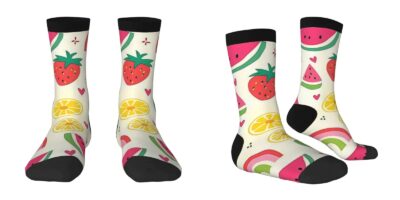
4. Bold Custom Socks

Socks are the sleeper hit of merch. Stance built a whole business on the idea that socks can be personality. Go wild with patterns or colors, keep your logo tiny on the ankle, and use cotton blends with cushioned soles.

Print On Demand Color Contrast Crew Socks

People will actually pull up their pant legs to show them off—good luck getting that reaction from a branded pen.

5. Insulated Water Bottles

Stanley turned a $45 water bottle into a status symbol. Hydro Flask did the same before them. That’s the playbook—stainless steel, double-wall insulation, a color that stands out, and a small logo.

People carry these everywhere for years. Cheap plastic bottles crack in a month and end up in the trash, taking your logo with them.

6. Sturdy Tote Bags

Trader Joe’s $2.99 canvas totes get resold on eBay for $30, which says everything about what actually makes a tote worth keeping.

Go with thick canvas, 10 oz or heavier, sized to fit a laptop or a grocery run, logo on one side only. The flimsy non-woven ones tear within weeks—people toss them, and your brand goes with them.

7. Die-Cut Vinyl Stickers

Stickers are the cheapest brand play out there:

  • Cost pennies per unit, get placed on laptops, water bottles, cars, and skateboards
  • Die-cut vinyl looks premium; paper stickers look like giveaways
  • Weird shapes and holographic finishes get shared on social media

GitHub’s Octocat stickers became collectibles among developers. That’s what a good sticker can do—turn customers into unpaid billboards.

8. Fast Tech Accessories

Slow chargers get tossed in drawers. Fast ones get carried everywhere. If you go with power banks, pick 20W+ USB-C models—not 5W leftovers from 2015.

Anker built its reputation on this exact principle. Same rule for wireless earbud cases, cable organizers, or laptop sleeves: if the tech works well, your logo travels with it for years.

9. Ceramic Mugs With Character

Plain white mugs are boring. What actually gets used daily:

  • Colored interiors that pop when someone takes a sip
  • Larger sizes (16 oz or more) that coffee drinkers actually pick
  • Matte finishes or unusual shapes that stand out on a desk

Blue Bottle Coffee’s minimalist mugs get displayed like art. A mug on someone’s desk gets seen by every coworker who walks by. That’s daily brand exposure for the cost of one drink.

10. Notebooks People Refill

Cheap notebooks get tossed, but a good one ends up in someone’s bag every day. Moleskine and Field Notes figured this out—thick paper, solid covers, pocket-sized.

Aim for 100+ gsm paper, dot grid pages that work for both writing and sketching, and a hardcover or thick softcover. One showing up in meetings for months does real work for you.

11. Enamel Pins for Fans

Enamel pins are small but mighty. They cost pennies, feel like collectibles, and work incredibly well for brands with personality—coffee shops, bands, indie brands.

Glossier’s pin drops sell out in minutes because fans treat them as limited-edition art. Keep runs under 500, let scarcity build the pull, and people will chase them. That’s a kind of loyalty most brands never get close to.

12. Custom Blankets or Robes

Parachute and Brooklinen have quietly proven something about branded gifting: home goods work. A fleece throw, a hotel-weight robe with logo stitched in rather than stamped on—these settle into daily life instead of a junk drawer.

Send one to a top client or a loyalty member, and it costs more upfront, sure, but it keeps earning attention long after cheaper swag gets tossed.

Conclusion

You’ve just gone through twelve branded merchandise ideas that actually work. Now it’s time to pick a few and put them into action. Choose items your team or customers will genuinely use — not ones that end up forgotten in a drawer.

Great merch isn’t about flashy logos. It’s about giving people something useful, something they want to keep. Start today, stay consistent, and let your brand show up in everyday moments.

How Sustainable Fuel Is Reshaping Formula 1 in 2026

Photo by depositphotos at https://depositphotos.com/

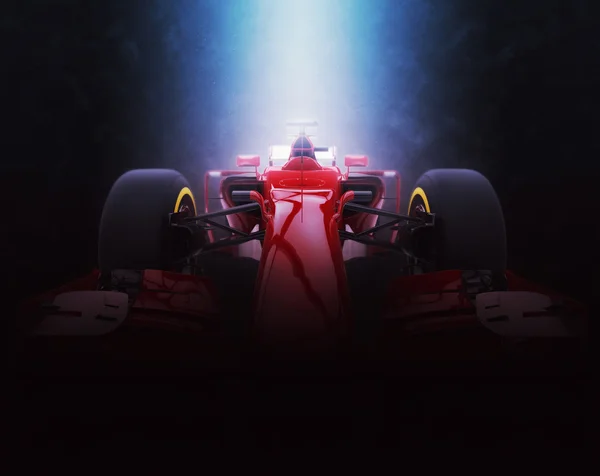
Formula 1 is going through one of the biggest technical shifts in its history. The 2026 season brings a new generation of cars and power units, but a major change is also taking place inside the fuel tank. F1 cars must now run on advanced sustainable fuel, making fuel technology a key part of the championship’s wider transformation.

The Next Era of Formula 1 Fuel

This change aims to reduce Formula 1’s reliance on newly extracted fossil resources. Under the 2026 rules, cars must use fuel made from sustainable sources instead of traditional fossil-based racing fuel.

Formula 1 has not moved entirely to electric racing. The championship still uses hybrid power units that combine an internal combustion engine with a much more powerful electrical system. Sustainable fuel allows F1 to continue developing combustion technology while lowering its dependence on fossil carbon.

The Importance of Sustainable Fuel

Formula 1 has long been a testing ground for automotive technology, reports experts https://lolfootball.net/. Innovations developed under the extreme demands of racing can sometimes influence technology outside motorsport.

Sustainable fuels are especially relevant because millions of vehicles with combustion engines will remain on the road for many years. If low-carbon fuels can be produced efficiently and on a large scale, they may support electrification in areas where replacing existing vehicles is difficult.

This makes the 2026 fuel rules important for more than lap times and race strategy.

A Fresh Engineering Test for Teams

The new fuel also creates engineering challenges. Fuel suppliers, engine manufacturers, and F1 teams must adapt several key areas to meet the new requirements:

  • Combustion;
  • Efficiency;
  • Reliability;
  • Performance.

The redesigned 2026 power units also rely more heavily on electrical energy. Teams therefore need to balance combustion performance with energy recovery while following strict technical rules.

Even minor differences in efficiency can have a major effect in Formula 1, so fuel development remains an important part of the competition.

Can Formula 1 Achieve Real Sustainability?

Sustainable fuel alone cannot eliminate the championship’s environmental impact. Formula 1 is a global sport that involves:

  • International travel and freight;
  • Vehicle and equipment manufacturing;
  • Energy consumption;
  • Large-scale events.

Reducing emissions therefore requires improvements in many areas. Even so, sustainable fuel is an important technological experiment. Formula 1 can test it under demanding conditions while encouraging manufacturers and energy companies to improve its performance.

Racing Toward a New Energy Future

In 2026, Formula 1 is more than a contest between drivers and teams. It is also becoming a testing ground for the future of automotive energy.

The success of sustainable fuel will ultimately depend on production costs, availability, scalability, and actual lifecycle emissions. By using this technology in some of the world’s most advanced racing cars, Formula 1 is giving sustainable fuels a high-profile chance to demonstrate their potential.

Your First NASCAR Race Weekend: A Practical Guide for New Fans

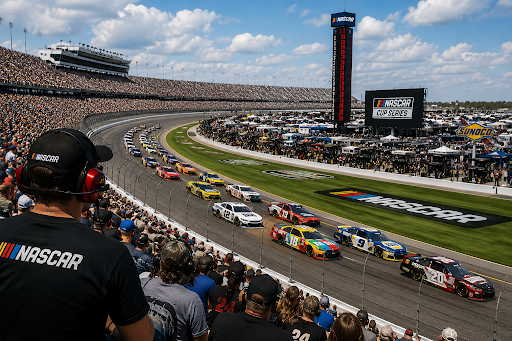
Feeling the engines rumble beneath you at a live NASCAR event shows just how unique the racing experience can be. First-time race fans often show up without a plan and spend the entire race stressed with no actual race viewing enjoyment. Avoid the same fate so you too can enjoy the sport that captures the hearts of millions. 

Viewing a race in person is something you can’t experience on TV, so before booking any airline tickets or services from The King of Tickets, compare different seating options to make sure you aren’t taking a guess about where to sit when you get to the race.

Timing Your Arrival and Getting to the Track

A smart approach is to reach the track about four hours before the scheduled race starts. I can see why a majority of people say this. The earlier you go, the closer you are to the entrance, as the farther-out lots are definitely a trek. Arriving ahead of time lets you get comfortable, look around the venue, and save your energy for the main event.

A good perk of being early is that you can take your time with the displays and feeling less rushed to grab grub. The worst part of any race is getting stuck on the way out when everyone leaves at the same time. The afternoon zone for race fans is a bustling spot so avoid that time slot.

Why Showing Up Early Matters

You have time to explore when you reach early. At the track you can grab breakfast, check out merchandise stands, watch practice sessions, and without rushing you get comfortable in your spot. You’re not panicking. You find the bathrooms, use them when they’re not crazy busy, and get settled before crowds arrive.

Early arrival also means you get better seats in parking, shorter walks, and time to mentally prepare for the race day energy. This changes everything about your experience from stressful to actually fun.

How to Compare Seat Options Before You Book

Different seats give you totally different views of the race. Some seats put you on the straightaway where you see cars head-on at full speed. Others are at the turns where racing action is close but you only see one section of the track.

Before booking, look at photos from real people who sat in those exact sections. Check their feedback about the available views, sunlight, and overall visibility from the seats. Check if poles block anything. This is where you figure out what you actually want instead of finding out race day that you picked wrong.

Choosing Your Seat Location Strategically

Seat location shapes your entire day. Think about what view you want and how much sun you can handle. Choose your seating according to the kind of race-day experience you prefer. Families with children may enjoy quieter areas while fans looking at a lively atmosphere can choose more energetic sections.

Seat TypeWhat You SeeBest For
Grandstand (Straightaway)Full track view, all racing action, pit stopsFirst-timers who want complete race view
Turn SeatingClose-up racing, intense passes, one sectionPeople who want loud, intense action
Shade/CoveredProtected from sunAll-day comfort, families with kids
Sunny SectionsGreat views but hotPeople who don’t mind heat

What You’re Actually Allowed to Bring Inside

Most tracks allow coolers, but check your specific track’s website. Every place has slightly different rules. Metal detectors go off on everyone, so make sure to give yourself extra time to get through security.

Essential Items That Make Your Day Comfortable

Pack a cooler with all of your favorite drinks (both cold and sports) and snacks, as you’ll want to be looking after your hydration while you’ll be there all day. Sunscreen will be required more than a few times during the day, as the track is very much a sun exposure area. To help protect your ears, make sure to bring some form of protection as you will enjoy the races much more.

  • Cooler with water and snacks
  • Sunscreen (seriously, you’ll burn even on cloudy days)
  • Comfortable shoes (you’re walking around a lot)
  • Hat and sunglasses (sun exposure is real out there)
  • Ear protection (plugs or muffs—the noise is actually loud)
  • Light jacket (temperature drops when sun goes down)
  • Cans or plastic bottles only (no glass at any track)
  • Phone charger (portable battery for your phone)

Understanding the Full Race Weekend Schedule

One thing to know, race day consists of several races, starts in the morning and finishes in the evening with support series races, practises, qualification, and finally the main Cup Series race. This is a full day event.

The support races with Truck Series or Craftsman drivers are worth watching. The racing is aggressive and you see different driving styles. By afternoon when the main race starts, you’ve already been there a while so pace yourself. Be prepared for shifting temperatures, from a cool morning to a warmer afternoon and a chilly evening.

Smart Strategies for Your First Weekend

It is a fact that you will not be able to focus on all of the races for all of the time. Pace yourself. Know where a good place to sit and eat is, and know where the bathrooms are (and don’t forget to go!). Give yourself some downtime and explore the enjoyable activities available around the track. It is a very good idea to have a portable fan and/or battery packs for your phone. Get there with a full stomach and wallet to avoid the Track’s prices.

  • Pick which races to watch live (you can’t stay hyped for twelve hours)
  • Know where bathrooms and food are (so you’re not searching)
  • Plan rest breaks (take time to recharge, sit in shade)
  • Bring entertainment for downtime (book or something to do between races)
  • Make sure your phone is fully charged, or carry a portable power bank for backup.
  • Eat breakfast before leaving home (track prices are expensive)

Conclusion

Show up early, pick your seat right, pack what you need, and make a game plan for the day. That little prep work makes the whole experience fun instead of stressful. Your first NASCAR race weekend will stick with you for real. Once you feel that energy and see what it’s like in person, you’ll definitely go back again. This isn’t just about one race, it’s the start of something you’ll love doing.

From Track Idea to Release Visuals: Building a Consistent Look Without a Full Photo Shoot

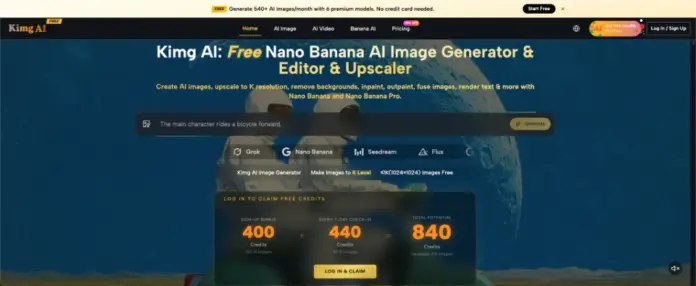
An independent artist may finish a strong track before the visual side of the release is ready. There is one portrait, a rough mood, and several posts still to make before launch day. That is enough if the source image and visual direction are clear. With Nano Banana, creators can work from an uploaded image and describe changes to style, setting, or composition. The goal is to turn one honest starting image into a small set of visuals that belong to the same release.

Start With the Mood of the Track, Not an AI Style Name

A release image works better when it reflects something listeners can already feel in the music. Before writing a prompt, describe the track in plain words. Is it tense and nocturnal, loose and celebratory, reflective, raw, playful, or heavy? Then translate those words into visible choices such as lighting, location, distance, texture, and color temperature.

For a late-night rap track, “empty bus stop after rain, hard streetlight, deep shadows” gives more direction than “cinematic urban style.” For an upbeat funk release, bright daylight, movement, neighborhood color, and a wider frame may fit better. The prompt should describe a scene, not just name an aesthetic. That makes the result easier to judge against the song. If you cannot explain why a visual detail belongs there, remove it. A smaller number of deliberate choices usually gives the release a stronger identity than a prompt packed with fashionable effects.

Use One Strong Portrait as the Visual Anchor

Consistency becomes easier when every image starts from a source that clearly shows the artist. Choose a portrait with a readable face, simple lighting, and clothing you are comfortable keeping across several pieces. Avoid beginning with a heavily filtered screenshot or a photo where the face is tiny and partly hidden.

Keep the original untouched. Then create derivatives for different roles. One version might stay close to the portrait for an announcement, while another places the artist in a wider environment for a teaser. If the generated result changes facial features, clothing details, tattoos, jewelry, or anything important to the artist’s identity, reject it. A visually impressive image is not useful if the person no longer looks like themselves. It also helps to choose a source without extreme facial shadows, because the model has fewer ambiguous details to reinterpret when you change the environment.

Three Release Visuals Worth Making First

A small release does not need twenty images. It needs a few assets that support different moments before and after the track drops.

  1. The Main Release Image

Start with the image that establishes the release’s overall mood. Keep the artist recognizable and make the scene simple enough to work behind cover text or platform graphics added later in a design tool. Think in terms of one strong environment rather than a collage of symbols. A stairwell, rooftop, bedroom, rehearsal room, corner shop, or night street can say more than a pile of effects when it actually fits the song.

  1. Teaser With More Mystery

The teaser should feel related to the main image without simply repeating it. Change the framing or distance instead of rebuilding the whole concept. You might show the artist from farther away, use more negative space, or shift attention toward the setting. That gives social posts a different rhythm while keeping the release recognizable. Avoid adding fake venue names, dates, logos, or text inside the generated image. Those details are easier to control accurately later.

  1. A Post-Release Supporting Visual

After the song is out, a supporting visual can extend the same world. Use a different moment that still matches the established location, lighting, or mood. A close portrait might be followed by an empty street corner, a parked car under the same type of light, or a room detail that feels connected to the lyrics. The artist does not need to appear in every image. Consistency can come from atmosphere as much as from repeating the same face.

Write Prompts That Protect the Artist’s Identity

When using an existing portrait, the prompt should state what must remain stable before describing what should change. A practical instruction might say: “Keep the artist’s face, hairstyle, black jacket, and silver chain unchanged. Place them outside a small neighborhood store at night after rain. Use realistic street lighting, a medium-wide frame, and open space on the upper left.”

That kind of direction is a natural fit for Nano Banana AI, which supports image-based transformation through an uploaded reference and written instructions. Do not assume the first output is final. Compare it with the source portrait at normal size, then revise the request if identity details drift or the generated setting overwhelms the artist. Save the best instruction with the approved image so later variations can reuse the same identity and mood constraints instead of starting from memory.

Write Prompts That Protect the Artist’s Identity

Build Consistency With Repeated Visual Decisions

A coherent release does not require every image to look identical. It needs a few choices that repeat. Pick two or three anchors such as warm sodium streetlights, shallow depth of field, dark green walls, silver accessories, or a specific camera distance. Reuse those choices across prompts.

This is more effective than pasting the exact same long prompt into every generation. A teaser may need a wide frame, while a portrait post needs a close crop. Keep the recurring visual anchors, then change the composition for the job. If the series starts to drift, return to the original portrait and the first approved image. Those two references can help you decide whether a new version still belongs to the same release. A quick side-by-side check is often enough: if the images feel like material for different songs, reduce the changes and bring back one of the original visual anchors.

Know What Should Stay Real

AI visuals should support the release, not create false claims around it. Do not generate a crowd to imply a real sold-out show, a famous collaborator who was never there, branded clothing the artist does not own, or a venue that appears to host an event when it does not. The same rule applies to street locations that viewers may recognize.

There is plenty of creative room without inventing facts. Use fictional or generic environments, controlled lighting, stylized backgrounds, and symbolic details. When a real event, performance, neighborhood, or person matters to the story, use genuine photography. The strongest release package can mix both: real documentation for what happened and generated or transformed art for the world around the music. That distinction also protects the artist’s credibility. Listeners can enjoy an imagined visual world without being asked to believe an invented event, endorsement, or collaboration actually occurred.

Conclusion

A good visual rollout starts with one clear idea, not a huge folder of random generations. Choose a portrait that represents the artist accurately, define the mood of the track in concrete visual terms, and make only the assets the release actually needs. Keep a few lighting, setting, or framing choices consistent, then review every image for identity drift and false details. You can test the process on one single first: one main image, one teaser, and one supporting visual are enough to build a recognizable visual thread.

Spire Motorsports Richmond NASCAR Cup Series Race Advance

cook out 400
  • In 24 previous NASCAR Cup Series starts at Richmond (Va.) Raceway, Spire Motorsports has one top-10 and three top-20 finishes. Carson Hocevar earned the team’s best result at Richmond in August 2024 with an eighth-place finish. Spire Motorsports fields the No. 7, 71 and 77 for Daniel Suárez, Michael McDowell and Hocevar, respectively.
  • The 400-lap race on the 0.75-mile short track will be televised live on USA Saturday, August 15 beginning at 7 p.m. Eastern Daylight Time. The 24th of 36 points-paying races on the 2026 NASCAR Cup Series calendar will also be broadcast live on the Motor Racing Network and SiriusXM NASCAR Radio Channel 90.

Daniel Suárez – Driver, No. 7 Spire Motorsports Chevrolet Camaro ZL1

  • Daniel Suárez will pilot Spire Motorsports’ No. 7 UHP.com Ignite America/Walmart Chevrolet ZL1 in Sunday’s NASCAR Cup Series race at Richmond Raceway.
  • UHP (Unlock Human Potential) is a veteran-focused education and leadership development organization based on an 800-acre campus in Northwest Arkansas. Through immersive, high-impact programs, UHP develops service members and veterans into leaders equipped with the skills, mindset, and purpose to thrive in their next chapter. UHP’s approach is built on four core pillars: Think. Train. Feel. Lead. UHP integrates human performance, leadership development, and real-world skill building to prepare individuals for meaningful, long-term careers. Learn more at UHP.com.
  • The UHP Skilled Trades Institute exists to close the gap with the most disciplined workforce in the country. On UHP’s 800-acre Northwest Arkansas campus, veterans train in electrical, HVAC, plumbing, and welding through accelerated, NCCER-based programs that combine technical skill with human performance and leadership development. It all leads directly to employers who are hiring. Veterans arrive with their skills and a desire to serve. They leave with a credentialed trade and a career.
  • Riding aboard the No. 7, Walmart is helping veterans build new careers in the skilled trades. Through its partnership with UHP, Walmart is supporting hands-on training that gives veterans the skills they need to move into in-demand, skilled-trades careers. UHP’s first Skilled Trades Institute class recently graduated nine veterans, marking an important step in creating a stronger path from military service to civilian careers and showing what’s possible when employers like Walmart invest in veteran talent.
  • Suárez has logged 16 previous Cup Series appearances at the 0.75-mile D-shaped oval located in Henrico County, Va., where he’s earned a pair of venue-best seventh-place finishes (2017/2019). He has five top-10 finishes and led 94 laps in total and is credited with an average starting position of 23.0 and a 16.6 average finish.
  • Through 23 races, the 2026 Coca-Cola 600 winner sits 12th in the NASCAR Cup Series point standings and boasts the third-highest improvement in points position, year over year, with 13 races remaining to determine this year’s champion. He’s notched one win, two top fives, five top 10s and has only finished outside the top 20 five times. Meanwhile, he’s recorded a 12.9 average start and a 15.1 average finish.
  • The Monterrey, Mexico native has improved his short-track performance in 2026, averaging a 16th-place finish through four races, compared to a 23.6 average in 2025. His 2026 results include a ninth at North (N.C.) Wilkesboro Speedway, 12th at Bristol (Tenn.) Motor Speedway, 20th at Martinsville (Va.) Speedway, and 23rd last weekend at Iowa Speedway.
  • In the Cup Series most recent stop, Suárez qualified 33rd and struggled to find grip throughout the race. Still, he raced his way into the top 20 ahead of the final stage and into the top 10 prior to his final green-flag pit stop of the day. Unfortunately, he didn’t crack the top 10 as the laps wound down and was ultimately credited with a 23rd-place result.
  • In five NASCAR O’Reilly Auto Parts Series appearances at Richmond, Suárez has one top-five, three top-10 and five top-20 finishes.
  • Suárez brings 346 Cup Series starts of experience to the field, along with three career victories at Sonoma (June 2022), Atlanta (February 2024) and Charlotte (May 2026). A veteran of NASCAR’s premier division, he has earned 26 top-five and 81 top-10 finishes since making his Cup Series debut in 2017. Suárez has also led 947 laps and has collected three career poles.

Daniel Suárez Quote
What do you like about racing at Richmond, and what makes it such a tough track?
“Richmond is a track I really enjoy because there’s a lot going on throughout the race. It’s a short track, but it doesn’t feel simple. You’re constantly managing the tires, looking for the right line and trying to keep the car underneath you as the track changes. The long green-flag runs can make a big difference and you have to be smart about when you push and when you save.

“I think the experience we’ve gained on the short tracks this year will help us at Richmond. We’ve learned more about what I need from the car, especially as the tires start to fall off. Hopefully, we can unload with a strong car, make the right adjustments during the race and put ourselves in position to compete for a strong finish.”

Ryan Sparks – Crew Chief, No. 7 Spire Motorsports Chevrolet Camaro ZL1

  • Ryan Sparks is the crew chief for Spire Motorsports’ No. 7 Chevrolet Camaro ZL1 and driver Daniel Suárez in the NASCAR Cup Series.
  • Sparks has called nine previous Cup Series races at Richmond Raceway and has a pair of 21st-place finishes with driver Corey LaJoie.
  • All totaled, Sparks has called 226 Cup Series races where he’s earned one win, six top-five and 15 top-10 finishes since keying the mic in 2020 for his first race in NASCAR’s premier division.
  • Sparks joined Spire Motorsports in 2021, where he served as both Crew Chief and Competition Director, leading the organization’s competitive and technical efforts. In 2026, Sparks serves in a singular role as crew chief for Daniel Suárez. He brings more than a decade of experience across all three national series, highlighted by 13 seasons at Richard Childress Racing and contributions to title-winning campaigns in the NASCAR CRAFTSMAN Truck Series (2011) and O’Reilly Auto Parts Series (2013).

Michael McDowell – Driver, No. 71 Spire Motorsports Chevrolet Camaro ZL1

  • Michael McDowell will pilot Spire Motorsports’ No. 71 Workforce Chevrolet Camaro ZL1 in Saturday night’s NASCAR Cup Series race at Richmond Raceway.
  • For the third time this season, Workforce Occupational Health and Safety Solutions will serve as the primary sponsor aboard McDowell’s No. 71 Chevrolet Camaro. Workforce Occupational Health and Safety Solutions is based in Pittsburgh with partners throughout North America. For over 30 years, Workforce continues to provide support to clients through the operation of three divisions – Work Injury Management, Medical Bill Repricing and Employer Services. The Work Injury Management Division provides access to telephonic physician services with expedited access to a nationwide network of specialty, imaging and therapy providers – and employer access to OSHA recordable injury investigation and impact mitigation services, preferred medical provider panel development and more. The Medical Bill Repricing Division provides cost containment to clients by minimizing incident, experience, and injury frequency rates, reducing exposure to insurance premium increases. The Employer Services Division provides employee onboarding and testing services, corporate safety committee oversight, required annual certification coordination and integration of any required testing, licensing, or accreditation. Since 1995, Workforce’s mission is developing long-term partnerships with employers that facilitate successful and positive impacts on health and safety issues encountered by their employees at the workplace.
  • McDowell has made 28 starts in NASCAR’s premier division at Richmond Raceway and calls a sixth-place finish (April 2023) a series/venue best. Meanwhile, the 19-year Cup Series veteran has notched three top-15 and six top-20 finishes at the popular 0.75-mile oval. In the series most recent visit last August, McDowell started 10th and finished 17th.
  • The Glendale, Ariz., native has logged five NASCAR O’Reilly Auto Parts Series starts at Richmond where he earned a venue-best eighth-place finish in the 2009 Lipton Tea 250.
  • Last Sunday at Iowa Speedway, the 41-year-old qualified 11th but finished 25th after being saddled with a pit-road penalty in the late goings of last weekend’s 350-lap race.
  • After 23 points-paying races, the 2021 Daytona 500 Champion is 21st in the Cup Series championship standings, posting two top-five, five top-10 and 12 top-20 finishes. With three races remaining before The Chase begins in September at Darlington (S.C.) Raceway, the father-of-five sits 72 points below the cutline.
  • Michael McDowell Quotes
  • Talk about the differences and similarities between Iowa and Richmond.
  • “Richmond is very different from Iowa (Speedway). It’s not as bumpy or rough. Richmond is smooth and both tracks are essentially the same shape. Iowa was modeled after Richmond when Rusty (Wallace) and that group put the track together, but it doesn’t feel like Richmond at all. Iowa really is one of a kind. You can burn up rear tires there if you’re not careful, but Richmond has always been the same. Even after transitioning from the old car to the NextGen, we really haven’t seen much of a change. We need a good day in Richmond. We qualified well last year and had a decent day, so hopefully we can take the next step with our short track package and gain some points this weekend.”

Travis Peterson – Crew Chief, No. 71 Spire Motorsports Chevrolet Camaro ZL1

  • Travis Peterson serves as the crew chief for driver Michael McDowell and Spire Motorsports’ No. 71 Chevrolet Camaro ZL1 in the NASCAR Cup Series.
  • Peterson has called five Cup Series races at Richmond Raceway, all with McDowell in the cockpit and led him to a venue-best, sixth-place finish in April 2023.
  • As a former race engineer at JR Motorsports, the 35-year-old played key roles in both Chase Elliott’s NASCAR O’Reilly Auto Parts Series’ runner-up finishes at Richmond in 2014.

Carson Hocevar – Driver, No. 77 Spire Motorsports Chevrolet Camaro ZL1

  • Carson Hocevar will race Spire Motorsports’ No. 77 Zeigler Auto Group Chevrolet Camaro ZL1 Saturday night at Richmond Raceway, his fourth start at the Virginia oval in NASCAR’s premier division.
  • Zeigler Automotive Group is one of the largest privately-owned dealer groups in the U.S. with 88 franchises across 41 locations in Wisconsin, Illinois, Indiana, and Michigan. Vehicle brands represented include all the domestic and majority of the imported manufacturers. Besides its extensive automotive portfolio, the organization owns and operates Zeigler Motorsports, an 85,000-square-foot motorsports dealership and action park, offering 19 different powersports brands, plus its own onsite restaurant: Trak Houz Bar & Grill. Additionally, Zeigler Motorsports houses the Elevate Leadership & Team Building Academy, an executive training company. The Kalamazoo-based dealer group also owns three Byrider franchises, three finance companies, several insurance firms, and a leasing firm.
  • Through 23 races, Hocevar sits eighth in the NASCAR Cup Series point standings, a mere 13 markers behind seventh, and has already set career-highs in multiple categories including:
  • Season-to-date results of one win, five top-five and nine top-10 finishes
  • 644 points scored
  • 10.7 average start
  • 14.8 average finish
  • The 23-year-old driver has been the most improved driver on the Cup Series tour compared to last season. The No. 77 team’s average starting and finishing positions have each improved by nearly eight spots compared to this point in 2025. Hocevar is on pace to improve his average finish by 6.8 positions by the end of the season – the largest improvement of all drivers – while his eighth position in points is a 15-position improvement compared to the end of 2025 – the third-best of any driver on NASCAR’s senior circuit.
  • Hocevar earned a venue-best eighth-place finish in August 2024, followed by a 15th-place finish in the series’ most recent Richmond visit last summer.
  • The six-time NASCAR CRAFTSMAN Truck Series race winner took the checkered flag on July 29, 2023 in the Worldwide Express 250. After relinquishing the lead on Lap 210 to hit pit road for his final scheduled service of the night, Hocevar rejoined the field in 17th, one lap behind the leader. He went on to pass race leader Ty Majeski for the top spot with four laps remaining and cruised to Victory Lane.
  • Last Sunday at Iowa Speedway, Hocevar started 18th and quickly moved to the 11th position before a Lap-5 caution. On the ensuing run, he reported an engine issue. The No. 77 team made multiple efforts throughout the race to diagnose the problem, with Hocevar losing several laps to the leaders before coming to a resolution. They were ultimately credited with a 31st-place finish and finished three laps off the pace.
  • The 2024 NASCAR Cup Series Rookie of the Year registered his first-career victory earlier this season at Talladega (Ala.) Superspeedway. He survived a late-race restart with three laps remaining and brought home the checkered flag to register Spire Motorsports’ second Cup Series win and first since the 2019 Coke Zero Sugar 400 at Daytona (Fla.) International Speedway.

Carson Hocevar Quote
What are your thoughts heading to Richmond after a tough day last Sunday in Iowa?
“I like racing at Richmond. It is one of those places I can move around and find something that may work for me, but doesn’t necessarily translate to anyone else, similar to North Wilkesboro a few weeks back. Qualifying will be important since it is tough to pass, but we have shown good speed on Saturdays throughout the year.

“Iowa obviously didn’t go how we wanted. Even with as bad of a day as we had, fifth in points is still within reach.”

Luke Lambert – Crew Chief, No. 77 Spire Motorsports Chevrolet Camaro ZL1

  • Luke Lambert is the crew chief of Spire Motorsports’ No. 77 Chevrolet Camaro ZL1 in the NASCAR Cup Series with driver Carson Hocevar.
  • Lambert is in his third season at Spire Motorsports and fourth with Hocevar. The duo has logged two pole awards, one win, eight top-five and 24 top-10 finishes in 103 races.
  • The 43-year-old has called 22 NASCAR Cup Series races at Richmond Raceway, totaling two top-five and six top-10 finishes, highlighted by a third-place finish in Sept. 2017 with driver Ryan Newman. He adds a pair of top fives during his time as a race engineer for Jeff Burton and the No. 31 Richard Childress Racing team in May 2009 and 2010.
  • In O’Reilly Auto Parts Series competition, the Mount Airy, N.C., native has called three races, collecting a venue-best sixth-place result with Elliott Sadler in April 2012.

About Spire Motorsports …
Spire Motorsports fields full-time entries in the NASCAR Cup Series, NASCAR CRAFTSMAN Truck Series and Interstate Batteries High Limit Racing.

The team, co-owned by longtime NASCAR industry executive Jeff Dickerson and TWG Motorsports CEO Dan Towriss, earned its inaugural NASCAR Cup Series victory in its first full season of competition when Justin Haley took the checkered flag in the Coke Zero Sugar 400 at Daytona (Fla.) International Speedway July 7, 2019. Less than three years later, William Byron drove Spire Motorsports’ No. 7 Chevrolet Silverado its first NASCAR CRAFTSMAN Truck Series win April 7, 2022, at Martinsville (Va.) Speedway. The team’s most recent victory came May 24, 2026, when Daniel Suárez won the NASCAR Cup Series Series’ Coca-Cola 600 at Charlotte (N.C.) Motor Speedway.

In 2026, Spire Motorsports campaigns the Nos. 7, 71 and 77 Chevrolet Camaro ZL1s in the NASCAR Cup Series and the Nos. 7 and 77 Chevrolet Silverado RSTs in the NASCAR CRAFTSMAN Truck Series. The Mooresville, N.C., organization also fields the No. 77 410 sprint car in Interstate Batteries High Limit Racing competition.

Front Row Motorsports: Richmond Raceway NCS Race Advance (Noah Gragson, Todd Gilliland, Zane Smith)

cook out 400

Front Row Motorsports
Noah Gragson | Todd Gilliland | Zane Smith
Richmond Raceway NASCAR Cup Series Race Advance

Event Details:

Series: NASCAR Cup Series (NCS)
Track: Richmond Raceway
Track Size / Surface: 0.75 miles / Asphalt
Track Location: Richmond, Virginia
Race Date: August 15th, 2026
Race Start Time: 7:00 p.m. ET
Race Information: 400 Laps (Stages – 70 / 230 / 400) – 300 Miles
Television: USA
Radio: SiriusXM / MRN

Event Notes:

  • 24th points-paying event of the 2026 NASCAR Cup Series season. 26th on-track event overall this season for the series.
  • First and only NASCAR Cup Series race at the Richmond Raceway this season.
  • Three races remaining until The Chase, the NASCAR Cup Series postseason.

No. 4 Team Details

Driver: Noah Gragson

Crew Chief: Grant Hutchens

Primary Sponsor: Long John Silver’s

Standings: 31st

Recent Season Results:

Iowa Speedway (August 9th) – 17th
Indianapolis Motor Speedway (July 26th) – 22nd
North Wilkesboro Speedway (July 19th) – 25th

Driver Track History (NASCAR Cup Series)

Starts: 6

Wins: 0

Poles: 0

Top-10 Finishes: 0

Laps Led: 0

Average Finish: 24.7

Recent Results:

2025 (August) – 27th
2024 (August) – 20th

Driver and Team Event Notes

  • Noah Gragson is set to make his seventh NASCAR Cup Series start at the Richmond Raceway.
  • In seven NASCAR O’Reilly Auto Parts Series starts on the oval, Gragson has one win, three top-five, and five top-10 finishes.
  • Gragson has one NASCAR K&N Pro Series East start at Richmond, finishing 10th in the September 2015 event.

Long John Silver’s Event Notes

This will be Long John Silver’s sixth race of the 2026 season with Gragson and the No. 4 Ford team.

No. 34 Team Details

Driver: Todd Gilliland

Crew Chief: Chris Lawson

Primary Sponsor: Love’s Travel Stops

Standings: 23rd

Recent Season Results:

Iowa Speedway (August 9th) – 22nd
Indianapolis Motor Speedway (July 26th) – 24th
North Wilkesboro Speedway (July 19th) – 8th

Driver Track History (NASCAR Cup Series)

Starts: 7

Wins: 0

Poles: 0

Top-10 Finishes: 0

Laps Led: 0

Average Finish: 22.1

Recent Results:

2025 (August) – 25th
2024 (August) – 17th

Driver and Team Event Notes

  • This will be Todd Gilliland’s eighth start at the Richmond Raceway in the NASCAR Cup Series.
  • Gilliland has two starts at the track in the NASCAR CRAFTSMAN Truck Series, finishing 17th in the 2020 event and sixth in the 2021 event.

Love’s Travel Stops Event Notes

This will be Love’s Travel Stops 14th race of the 2026 season with Gilliland and the No. 34 Ford team.

Love’s Travel Stops returns with Gilliland and the No. 34 team for Saturday’s race. Love’s Travel Stops rolls out a major update to the Love’s App, introducing a unified Love’s Rewards program that now benefits every customer who stops at Love’s. Whether fueling up, grabbing a snack, or stocking up on Love’s-branded products, customers can now save and earn points at every turn simply by scanning the Love’s App in-store or at the pump. The new Love’s Rewards program focuses on delivering meaningful value at every stop and aims to make Love’s the first stop drivers think of on the road. Love’s Rewards App users can also save 10¢ per gallon on gas and up to 25¢ per gallon on auto diesel. Fans can download the app from Google Play and the Apple App Store. To explore all the new benefits of the Love’s Rewards program, visit www.loves.com/loves-rewards.

No. 38 Team Details

Driver: Zane Smith

Crew Chief: Ryan Bergenty

Primary Sponsor: Aaron’s Rent to Own

Standings: 24th

Recent Season Results:

Iowa Speedway (August 9th) – 16th
Indianapolis Motor Speedway (July 26th) – 15th
North Wilkesboro Speedway (July 19th) – 22nd

Driver Track History (NASCAR Cup Series)

Starts: 3

Wins: 0

Poles: 0

Top-10 Finishes: 0

Laps Led: 0

Average Finish: 23.0

Recent Results:

2025 (August) – 25th
2024 (August) – 17th

Driver and Team Event Notes

  • This will be Zane Smith’s fourth start at the Richmond Raceway in the NASCAR Cup Series.
  • In four NASCAR CRAFTSMAN Truck Series starts at the track, Smith has one top-five and two top-10s.

Aaron’s Rent to Own Event Notes

This will be Aaron’s Rent to Own 11th race of the 2026 season with Smith and the No. 38 Ford Mustang Dark Horse.

Aaron’s Rent to Own joins Smith and the No. 38 team for this weekend’s activities, carrying the classic Lucky Dog scheme. The nostalgic Lucky Dog carries a rich history in the NASCAR Cup Series and has been piloted by multiple race winners and championship contenders, making it one of the most recognizable and celebrated paint schemes in the sport.

ABOUT FRONT ROW MOTORSPORTS

Front Row Motorsports (FRM) is a winning organization competing in the NASCAR Cup Series and the NASCAR CRAFTSMAN Truck Series. Founded in 2004 by entrepreneur Bob Jenkins, FRM has earned top honors including a 2021 Daytona 500 victory and the 2022 CRAFTSMAN Truck Series championship. Based in Mooresville, N.C., FRM fields the No. 4, No. 34, and No. 38 entries in the NASCAR Cup Series, along with the No. 34 and No. 38 teams in the CRAFTSMAN Truck Series. For more information, visit FrontRowMotorsports.com and follow Front Row Motorsports on social media — X: @Team_FRM, Instagram: @teamfrm, Tik Tok: @Team_FRM, YouTube: @FrontRowNASCAR, and Facebook: facebook.com/FrontRowMotorsports.

Spire Motorsports Black’s Tire 250 Race Advance

  • In seven NASCAR CRAFTSMAN Truck Series starts at Richmond (Va.) Raceway, Spire Motorsports has earned two top fives and two top 10s. Sammy Smith earned a fourth-place result in the 2025 event at the controls of the team’s No. 7 Chevrolet.
  • The Black’s Tire 250 presented by BTS Rewards will be televised live on FS1 Friday, August 14 beginning at 7:30 p.m. Eastern Daylight Time. The 17th of 25 points-paying races on the 2026 NASCAR CRAFTSMAN Truck Series schedule will be broadcast live on the NASCAR Racing Network and SiriusXM NASCAR Radio Channel 90.

Shane van Gisbergen – Driver, No. 7 Spire Motorsports Chevrolet Silverado RST

  • Shane van Gisbergen will pilot Spire Motorsports’ No. 7 HENDRICKCARS.COM Chevrolet Silverado RST in Friday’s Black’s Tire 250 presented by BTS Rewards at Richmond Raceway.
  • HENDRICKCARS.COM is the online home for everything Hendrick Automotive Group. Visitors can shop more than 30,000 new or pre-owned vehicles, locate centers for service and collision repair, receive a value to sell or trade their car, chat online with customer service, discover career opportunities, learn more about vehicle protection programs, and explore how the company gives back to the community.
  • Van Gisbergen will pull double duty this weekend and also race the No. 97 Chevrolet Camaro ZL1 for Trackhouse Racing in Saturday night’s NASCAR Cup Series’ race at the famed 0.75-mile oval.
  • Friday’s 250-lap event will mark van Gisbergen’s fifth career NASCAR CRAFTSMAN Truck Series start and fourth of the 2026 season. In addition to his two starts for Spire Motorsports at Charlotte (N.C.) Motor Speedway and North Wilkesboro (N.C.) Speedway, “SVG” competed for Niece Motorsports at Watkins Glen (N.Y) International earlier this season, where he registered a career-best third-place finish before backing it up with another third-place result in his most recent start at North Wilkesboro. In just four CRAFTSMAN Truck Series starts, the 37-year-old owns two top fives and two top 10s and heads to Richmond with a solid 10.0 average finish.
  • The three-time Australian Supercars champion has made a single O’Reilly Auto Parts Series start at Richmond Raceway, where he finished 15th. In Cup Series competition, van Gisbergen owns a single start where he started 27th and finished 14th in Trackhouse Racing’s No. 88 Chevrolet and was scored as the race’s highest finishing rookie.
  • In 23 NASCAR Cup Series starts this season, van Gisbergen has logged two poles, two wins, five top-five and seven top 10 finishes. He’s led 233 laps on NASCAR’s senior circuit and currently sits 15th in the 2026 championship point standings.
  • Van Gisbergen will be at the controls of Spire Manufacturing chassis SMT-094 Friday night. This is the same truck Carson Hocevar qualified on the outside pole last month at North Wilkesboro before being saddled with a disappointing 27th-place finish.

Shane van Gisbergen Quote
What are your expectations heading into your first CRAFTSMAN Truck Series race at Richmond?
“I’m stoked to get another shot in the Truck Series this weekend at Richmond with Spire Motorsports. It’s a track that I raced for the first time last year in the Cup Series, so to have the opportunity to get more track time and learn how the track races will be huge. Thanks to Spire and Chevrolet for this opportunity. Spire always brings fast trucks to the track, so I know I’ll have a go at a great result.”

Brian Pattie – Crew Chief, No. 7 Chevrolet Silverado RST

  • Brian Pattie is the crew chief of Spire Motorsports’ No. 7 Chevrolet Silverado RST, an entry that will see a selection of all-star caliber drivers behind the wheel throughout the 2026 season.
  • Pattie has called three CRAFTSMAN Truck Series races at Richmond, highlighted by a pair of fifth-place finishes with Matt Mills (2023) and Sammy Smith (2025).
  • The 51-year-old was atop the box for Clint Bowyer’s Richmond NASCAR Cup Series triumph in 2012. Bowyer started fourth and led 88 laps en route to the duo’s second of three wins that year.
  • Through 16 races, the No. 7 team sits fourth in the division’s owner’s points standings on the strength of two wins, six top-five and 10 top-10 finishes.

Tristan McKee – Driver, No. 77 Spire Motorsports Chevrolet Silverado RST

  • Tristan McKee will drive Spire Motorsports’ No. 77 Workforce Chevrolet Silverado in Friday’s Black’s Tire 250 Presented by BTS Rewards at Richmond Raceway.
  • Workforce is an Occupational Health and Safety Solutions firm based in Pittsburgh with partners throughout North America. For over thirty years, Workforce has provided support to clients through the operation of its three divisions – Work Injury Management, Medical Bill Repricing, and Employer Services. The Work Injury Management Division connects employees to telephonic physician services with expedited access to a nationwide network of medical providers, including specialty, imaging, and therapy services – and employer access to recordable injury investigation, injury impact mitigation services, preferred medical provider panel development, and more. The Medical Bill Repricing Division provides cost containment services by minimizing incident, experience, and injury frequency rates while reducing exposure to insurance premium increases. The Employer Services Division provides employee onboarding services, corporate safety committee oversight, required annual certification coordination, and integration of any required testing, licensing, or accreditation. Since 1995, Workforce remains focused on developing partnerships with employers that facilitate a positive impact on any health and safety issues encountered at the workplace.
  • Just 11 days removed from his 16th birthday, McKee will make his NASCAR CRAFTSMAN Truck Series debut, becoming the youngest current driver to compete across NASCAR’s three national touring series.
  • The Spire Motorsports Ascent Program developmental driver turned heads in 2025, becoming the youngest champion in CUBE 3 Architecture TA2 Series history. McKee logged four wins en route to the championship for Scott Lagasse Racing.
  • The Kannapolis, N.C., resident competes full time in the ARCA Menards Series East, piloting the No. 77 Chevrolet for Pinnacle Racing Group. McKee currently leads the driver points standings on the strength of four wins, six top-five and six top-10 finishes.
  • Just five days after turning 15-years-old, the road course ace made his ARCA Menards Series debut for Spire Motorsports at Watkins Glen (N.Y.) International, starting fourth before taking the lead on the final restart, to become the second-youngest driver to win in series history.
  • McKee’s five-race CRAFTSMAN Truck Series schedule will continue next weekend at New Hampshire Motor Speedway (Aug. 22), followed by races at Bristol (Tenn.) Motor Speedway (Sept. 17), Phoenix Raceway (Oct. 16) and Martinsville (Va.) Speedway (Oct. 30).
  • McKee will be at the controls of Spire Manufacturing chassis SMT-096 Friday night. This is the same Chevy Silverado Chase Elliott raced to a sixth-place finish in the FaithFest 250 at North Wilkesboro (N.C.) Speedway.
  • Tristan McKee Quote
  • You’ve worked your entire life for an opportunity like this. What does it mean to finally see your hard work pay off heading into your CRAFTSMAN Truck Series debut for Spire Motorsports?
  • “I’m really looking forward to the race this Friday. Everyone at Spire has done a great job of preparing me as well as Josh Wise and everyone at Chevrolet. We were able to test at Richmond on my birthday which went really well so I am feeling comfortable and ready to go for the race!”

Chad Walter – Crew Chief, No. 77 Chevrolet Silverado RST

  • Chad Walter is the crew chief of Spire Motorsports No. 77 Chevrolet Silverado RST in the NASCAR CRAFTSMAN Truck Series, an entry that will see multiple all-star caliber drivers behind the wheel throughout the 2026 season.
  • Walter has called five CRAFTSMAN Truck Series races at Richmond Raceway. The veteran crew chief owns a pair for top-five finishes with Tyler Ankrum (2020) and Corey LaJoie (2025).
  • During his time as a shop engineer at Dale Earnhardt, Inc., Walter was part of Dale Eanhardt, Jr.’s 2000 triumph at Richmond. Earnhardt, Jr., led 31 laps to earn his second career Cup Series victory.
  • The 55-year-old led the No. 77 team to their most recent victory in May in the SpeedyCash.com 250 at Texas Motor Speedway with Carson Hocevar.

About Spire Motorsports …
Spire Motorsports fields full-time entries in the NASCAR Cup Series, NASCAR CRAFTSMAN Truck Series and Interstate Batteries High Limit Racing.

The team, co-owned by longtime NASCAR industry executive Jeff Dickerson and TWG Motorsports CEO Dan Towriss earned its inaugural NASCAR Cup Series victory in its first full season of competition when Justin Haley took the checkered flag in the Coke Zero Sugar 400 at Daytona (Fla.) International Speedway July 7, 2019. Less than three years later, William Byron drove Spire Motorsports’ No. 7 Chevrolet Silverado its first NASCAR CRAFTSMAN Truck Series win April 7, 2022, at Martinsville (Va.) Speedway. The team’s most recent victory came May 24, 2026, when Daniel Suárez won the NASCAR Cup Series’ Coca-Cola 600 at Charlotte (N.C.) Motor Speedway.

In 2026, Spire Motorsports campaigns the Nos. 7, 71 and 77 Chevrolet Camaro ZL1s in the NASCAR Cup Series and the Nos. 7 and 77 Chevrolet Silverado RSTs in the NASCAR CRAFTSMAN Truck Series. The Mooresville, N.C., organization also fields the No. 77 410 sprint car in Interstate Batteries High Limit Racing competition.

Front Row Motorsports: Richmond Raceway NCTS Race Advance (Layne Riggs / Chandler Smith)

Front Row Motorsports
Layne Riggs | Chandler Smith
Richmond Raceway NASCAR CRAFTSMAN Truck Series Race Advance

Event Details:

Series: NASCAR CRAFTSMAN Truck Series (NCTS)
Track: Richmond Raceway
Track Size / Surface: 0.75 mile / Asphalt
Track Location: Richmond, Virginia
Race Date: August 14th, 2026
Race Start Time: 7:30 p.m. ET
Race Information: 250 Laps (Stages – 70 / 140 / 250) – 187.5 Miles
Television: FS1
Radio: SiriusXM

Event Notes:

  • 17th event of the 2026 NASCAR CRAFTSMAN Truck Series season.
  • First and only NASCAR CRAFTSMAN Truck Series race at the Richmond Raceway this season.

No. 34 Team Details

Driver: Layne Riggs

Crew Chief: Dylan Cappello

Primary Sponsor: Love’s Travel Stops

Standings: 1st

Recent Season Results:

Lucas Oil Indianapolis Raceway Park (July 24th) – 1st
North Wilkesboro Speedway (July 18th) – 2nd
Lime Rock Park (July 11th) – 23rd

Driver Track History (CRAFTSMAN Truck Series)

Starts: 3

Wins: 0

Poles: 0

Top-10 Finishes: 2

Laps Led: 0

Average Finish: 9.0

Recent Results:

2025 (August) – 3rd
2024 (August) – 5th

Driver and Team Event Notes

Following his victory at the Indianapolis Raceway Park, Layne Riggs has increased his regular season standings lead to 100 points over Kaden Honeycutt. Through the first 16 races of the season, Riggs has earned five wins, nine top-5’s, 10 top-10’s, and three poles.

Love’s Travel Stops Event Notes

Friday’s race will mark Love’s Travel Stops’ sixth race of the 2026 season with Riggs and the No. 34 team.

Love’s Travel Stops was most recently on the No. 34 Front Row Motorsports truck at Nashville, in May. Riggs took the victory in the event, the sponsor’s first win of the 2026 season.

Love’s Travel Stops rolls out a major update to the Love’s App, introducing a unified Love’s Rewards program that now benefits every customer who stops at Love’s. Whether fueling up, grabbing a snack, or stocking up on Love’s-branded products, customers can now save and earn points at every turn simply by scanning the Love’s App in-store or at the pump. The new Love’s Rewards program focuses on delivering meaningful value at every stop and aims to make Love’s the first stop drivers think of on the road. Love’s Rewards App users can also save 10¢ per gallon on gas and up to 25¢ per gallon on auto diesel. Fans can download the app from Google Play and the Apple App Store. To explore all the new benefits of the Love’s Rewards program, visit www.loves.com/loves-rewards.

No. 38 Team Details

Driver: Chandler Smith

Crew Chief: Jon Leonard

Primary Sponsor: Quicktie

Standings: 3rd

Recent Season Results:

Lucas Oil Indianapolis Raceway Park (July 24th) – 4th
North Wilkesboro Speedway (July 18th) – 1st
Lime Rock Park (July 11th) – 30th

Driver Track History (CRAFTSMAN Truck Series)

Starts: 4

Wins: 1

Poles: 0

Top-10 Finishes: 3

Laps Led: 200

Average Finish: 6.5

Recent Results:

2025 (August) – 9th
2022 (August) – 1st

Driver and Team Event Notes

Chandler Smith clinched a spot in NASCAR’s Chase following his fourth-place result at the Indianapolis Raceway Park. Smith is third in the regular season standings, 153 points behind leader, and teammate, Layne Riggs.

Smith is a previous winner at the Virginia short track in the NASCAR CRAFTSMAN Truck Series, having captured the checkered flag with Kyle Busch Motorsports in 2022. Smith is also a two-time winner at the track in the NASCAR O’Reilly Auto Parts Series, taking back-to-back wins in 2023 with Kaulig Racing and in 2024 with Joe Gibbs Racing.

Quicktie Event Notes

This will be Quicktie’s seventh primary sponsorship race of the 2026 season.

ABOUT FRONT ROW MOTORSPORTS

Front Row Motorsports (FRM) is a winning organization competing in the NASCAR Cup Series and the NASCAR CRAFTSMAN Truck Series. Founded in 2004 by entrepreneur Bob Jenkins, FRM has earned top honors including a 2021 Daytona 500 victory and the 2022 CRAFTSMAN Truck Series championship. Based in Mooresville, N.C., FRM fields the No. 4, No. 34, and No. 38 entries in the NASCAR Cup Series, along with the No. 34 and No. 38 teams in the CRAFTSMAN Truck Series. For more information, visit FrontRowMotorsports.com and follow Front Row Motorsports on social media — X: @Team_FRM, Instagram: @teamfrm, Tik Tok: @Team_FRM, YouTube: @FrontRowNASCAR, and Facebook: facebook.com/FrontRowMotorsports.