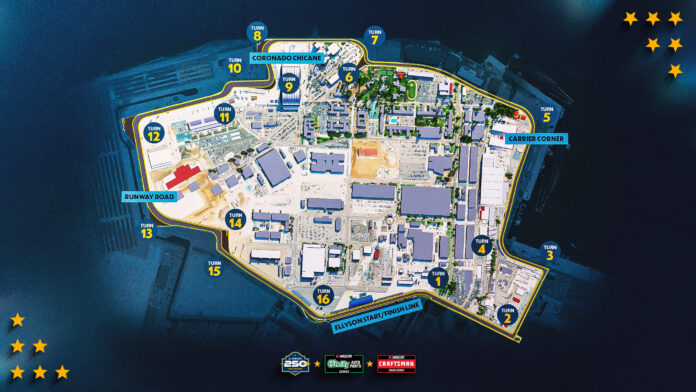
TRACK – Naval Base Coronado (3.4-mile street course) NOAPS RACE – United Rentals Driven to Serve 250 (60 laps / 204 miles) TUNE IN – CW, MRN, SiriusXM Channel 90 at 5:00 p.m. (ET)
Carson Kvapil
No. 1 – Patriotic Bass Pro Shops Chevrolet
Kvapil 2026 NOAPS Stats
Starts: 17
Wins: 0
Top 5s: 4
Top 10s: 9
Laps Led: 55
Avg. Finish: 13.6
Points: 7th
Coming off his ninth top-10 finish of the season at Pocono Raceway, Carson Kvapil heads to the highly anticipated San Diego Street Course this weekend, racing on Naval Base Coronado.
In eight NASCAR O’Reilly Auto Parts Series career starts on road courses, Kvapil has recorded one top-five and two top-10s..
Kvapil enters the weekend tied for sixth in the NOAPS standings through 17 races, trailing fifth place by 24 points.
This weekend, Bass Pro Shops returns as the primary partner with a special patriotic paint scheme commemorating America 250 while racing takes place at Coronado.
Carson Kvapil
“This is definitely going to be a very unique weekend. We have been working hard in the sim the last few weeks to make sure we are ready when we hit the track on Friday afternoon. Hopefully we can keep the car clean all race and be in contention for a good finish when it’s all said and done. I’m honored to have the opportunity to race on Naval Base Coronado this weekend.”
Justin Allgaier
No. 7 Patriotic BRANDT Professional Agriculture Chevrolet
Allgaier 2026 NOAPS Stats
Starts: 17
Wins: 5
Top 5s: 12
Top 10s: 14
Laps Led: 457
Avg. Finish: 7.5
Points: 1st
Justin Allgaier enters this weekend at Coronado as the winner of the previous two NOAPS events, having taken the checkered flag at Nashville Superspeedway and Pocono.
Additionally, through 17 races thus far in 2026, Allgaier sits atop the point standings with a 250-point cushion above the field and currently leads the NOAPS in wins (five), top-fives (12) and top-10s (14).
In 68 starts in his NOAPS career on road courses, Allgaier has earned a combined three wins, 19 top-fives and 41 top-10s.
Two of Allgaier’s three NOAPS wins on road courses came with JR Motorsports, as the veteran driver went to Victory Lane in 2018 at Mid-Ohio Sports Car Course and Road America.
Justin Allgaier
“This weekend definitely offers a unique challenge. Racing on an active naval base is something I never thought I would say, but I’m really looking forward to getting there this weekend. Based off of the sim, it is going to be a wild weekend, but I know that Andrew (Overstreet, crew chief) and everyone on this BRANDT Professional Agriculture team will be ready to embrace the unpredictable. We’ve had really strong cars on road courses this season, and I know we will be just as good again on Saturday. Hopefully we can keep this positive momentum going and have a great day.”
Sammy Smith
No. 8 Arby’s Cheesesteak Chevrolet
Smith 2026 NOAPS Stats
Starts: 17
Wins: 0
Top 5s: 5
Top 10s: 9
Laps Led: 17
Avg. Finish: 10.8
Points: 8th
Sammy Smith will head to San Diego to tackle the terrain of Coronado. In two road course starts this season, Smith has earned a best finish of third at Circuit Of The Americas
Smith has 25 road course starts with the NOAPS and of those, he has earned six top-five and 12 top-10 finishes. His best finishes of third have come at COTA (2026), the Charlotte ROVAL (2025), Portland International Raceway (2024), and Watkins Glen International (2022, 2025).
Smith will share the passenger side name rail with a family-friend, Commander Mark Stone (RET). The Smith family wanted to honor Stone for his service as a highly decorated U.S. Navy Seal.
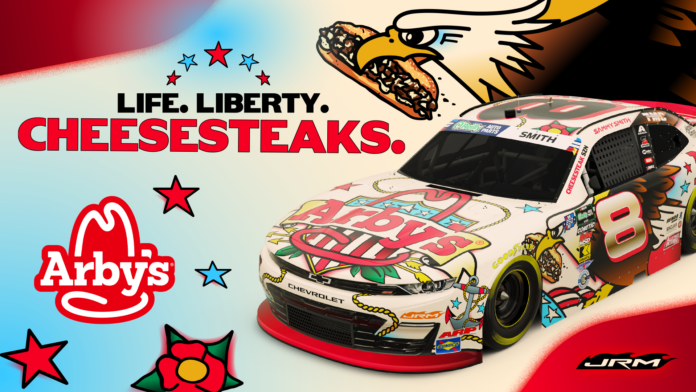
The No. 8 Arby’s Chevrolet will carry a new paint scheme with a tattoo look that celebrates America’s 250th Anniversary and Arby’s launch of its Cheesesteak made with 100% Angus steak, white American Cooper® Cheese, thick-cut caramelized onions, and served on an authentic Amoroso’s® sesame seed sub roll.
Sammy Smith
“I’m looking forward to the new challenge of the circuit on the Naval Base Coronado. It’s fun to switch it up and try new tracks every once in a while. It puts us drivers on a somewhat level playing field since none of us have raced it in person yet. Racing on a military base is an experience that I’ll never forget, it’s an honor to have the opportunity. Can’t wait to get there, promote Arby’s delicious Cheesesteak, and meet the servicemen and women at Coronado.”
Rajah Caruth returns to the No. 88 HENDRICKCARS.COM Chevrolet this weekend as the NASCAR O’Reilly Series heads to the inaugural San Diego Street Course.
Caruth will sport a special throwback paint scheme for Saturday’s event at Coronado, with the design serving as a tribute to JRM’s first paint scheme, driven by Mark McFarland in 2006.
Caruth heads to San Diego with momentum after a strong seventh-place finish at Pocono, moving him to within just eight points of the NASCAR O’Reilly Series playoff cut line.
Saturday’s event will mark Caruth’s third road course start for JRM and his first career start on a street course.
Rajah Caruth
“Any time you get the opportunity to race somewhere completely new, it’s exciting. San Diego is going to be a different challenge than anything we’ve seen this season, so the focus will be on learning quickly and taking care of the car. I’m also really looking forward to running the throwback paint scheme. The car looks awesome, and I want to thank HENDRICKCARS.COM for giving us the opportunity to do something special and pay tribute to an important part of JR Motorsports’ history.”
JRM Team Updates
JR Motorsports on Road-Courses: JR Motorsports will make its first start at Naval Base Coronado in Saturday’s inaugural United Rentals Driven to Serve 250 on the 3.4-mile, 16-turn San Diego street circuit. All-time on non-oval tracks in NOAPS, JRM has totaled 291 starts, 19 wins, 80 top-fives, and 156 top-10s with an average finish of 13.1.
Souvenir Rig: JRM drivers Carson Kvapil, Justin Allgaier, Sammy Smith and Rajah Caruth will be signing autographs at the JR Motorsports / HMS WB + AB souvenir rig on Saturday, June 20, from 9:00 a.m. to 9:30 a.m. PT, followed by an Arby’s Autograph Session from 11:30 a.m. to 12 p.m. PT.
Rising star to drive the iconic No. 21 Ford Mustang beginning in 2027
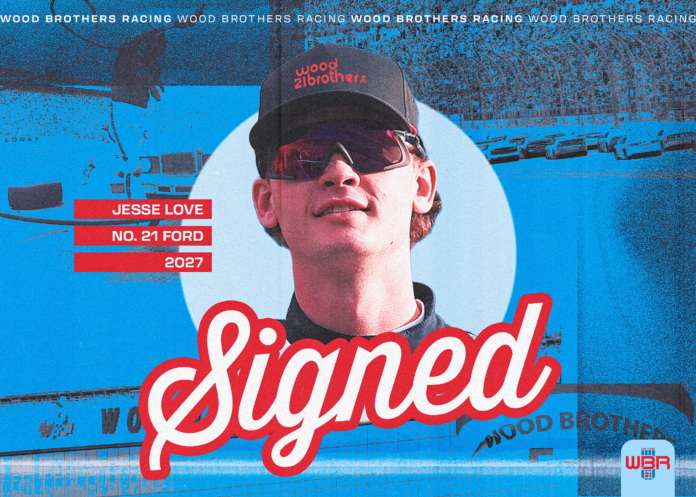
STUART, Va. (June 17, 2026) – Jesse Love, the 2025 NASCAR O’Reilly Auto Parts Series champion, will pilot the famed No. 21 Ford Mustang for Wood Brothers Racing in the NASCAR Cup Series beginning in 2027, the team announced today.
Love will add his name to the long list of accomplished drivers who have competed for the Wood Brothers when he takes over the No. 21 beginning with the 2027 DAYTONA 500 at Daytona International Speedway.
The Menlo Park, California, native has established himself as one of NASCAR’s brightest young stars. After becoming the youngest champion in ARCA Menards Series history with his first ARCA Menards Series West title at age 16, Love went on to capture the 2023 ARCA Menards Series championship before making the jump to the O’Reilly Auto Parts Series.
There, he earned Rookie of the Year honors in 2024 before capturing the series title in 2025. Love has also made seven Cup Series starts and is currently competing for a second consecutive O’Reilly Auto Parts Series title.
“Driving the No. 21 for Wood Brothers Racing is truly an honor,” said Love. “This team has played such an important role in NASCAR history, and the drivers who have sat behind the wheel of this car are some of the greatest our sport has ever seen. I’m incredibly grateful to everyone at Wood Brothers Racing, Team Penske and Ford Racing for believing in me – I’m excited to get to work, continue learning from the people around me and compete at the highest level.”
Wood Brothers Racing is NASCAR’s longest-running active team and one of the winningest organizations in series history. The team surpassed the 100-win mark in NASCAR’s premier series during the 2025 season and has celebrated victories with legendary drivers such as David Pearson, Cale Yarborough, Neil Bonnett, A.J. Foyt and others. The organization also enjoys a technical alliance with Team Penske and continues to receive support from Ford Racing.
“Jesse has accomplished a lot at a young age,” said Jon Wood, president of Wood Brothers Racing. “He’s demonstrated the ability to win races, compete for championships and handle the expectations that come with racing at a high level. We’re looking forward to giving him the opportunity to take the next step in his career with the No. 21 team.”
The 21-year-old driver currently sits second in the O’Reilly Auto Parts Series standings, where he remains in contention for a second consecutive championship.
Additional details regarding the No. 21 team’s plans for the 2027 Cup Series season will be announced at a later date.
About Wood Brothers Racing
Founded in 1950 by Hall of Famer Glenn Wood in Stuart, Virginia, Wood Brothers Racing holds a special place in NASCAR history as the sport’s longest-running team. Over eight decades, the team has earned 101 victories in the NASCAR Cup Series, along with over 120 poles, and remains proud of its longstanding relationship with Ford Motor Company, fielding only Ford products since its inception. Glenn’s brother, Leonard Wood, played a key role in shaping modern racing by developing the techniques behind today’s pit stops. With a rich legacy rooted in innovation and tradition, Wood Brothers Racing continues to honor its heritage while adapting for the future as it competes in the Cup Series.
For founders who run lean, internet-first businesses, money increasingly moves in stablecoins before it ever touches a bank. Kolo, a crypto Visa card and wallet that runs inside mobile apps and Telegram, is one of the tools built around that reality: a business can top up with USDT over the TRC20 network and spend on a Visa card anywhere it is accepted.
The appeal for entrepreneurs is less about ideology and more about operations. Paying an overseas developer, covering a SaaS subscription billed in dollars, or settling an ad spend invoice often means juggling currency conversions, bank holds and multi-day transfers. A crypto card for business collapses much of that into a single balance the team can spend from.
WHY ARE ENTREPRENEURS LOOKING AT CRYPTO CARDS FOR BUSINESS SPENDING?
Small and family businesses that sell or hire across borders feel the cost of the traditional rails most. Banks and card networks commonly add foreign-exchange and cross-border fees on international transactions, and wires can take days to clear. For a founder operating on tight cash flow, that spread and delay compound across every contractor payment and software bill.
HOW DOES A CRYPTO CARD FOR BUSINESS WORK?
A crypto card is a Visa or Mastercard funded from a crypto balance rather than a bank account. At checkout, the provider converts the stablecoin to local currency automatically, so the vendor sees an ordinary card payment. Visa is accepted at more than 130 million merchant locations worldwide, which is why most crypto cards run on its network.
On Kolo, a business funds a crypto Visa card by sending USDT over the TRC20 network, where transfers typically cost under $1 regardless of the amount. Virtual cards and mobile apps are available, and the wallet runs as a Telegram mini-app, so there is no separate application for the team to install. Kolo also offers dedicated business cards so a company can spend from a shared stablecoin balance instead of reconciling personal cards and reimbursements.
HOW DO FOUNDERS PAY GLOBAL CONTRACTORS WITH USDT?
Many distributed teams already settle contractor invoices in USDT because it arrives in minutes and avoids correspondent-bank friction. A card extends the same balance to everyday business spending — hosting, tools, travel, hardware — without a separate cash-out step. The practical workflow is to keep an operating balance in USDT, fund the card as needed, and let conversion happen at the point of sale. For founders who also want to spend personally from crypto, the same provider often covers both.
WHAT SHOULD A SMALL BUSINESS CHECK BEFORE CHOOSING?
Four things. Fees — the all-in cost of loading and converting, not the headline price. Funding network — a card that accepts USDT over TRC20 keeps top-ups cheap at any size. Coverage — confirm issuance in the country where the business is based; Kolo issues in 60+ countries including Mexico and other Latin American markets, though the United States is not supported. And controls — whether business cards, spend limits, and multiple cards for staff are available. Bookkeeping still applies: every card transaction should be recorded like any other business expense, and local tax rules on crypto continue to apply.
FREQUENTLY ASKED QUESTIONS
– Can a business spend USDT without a bank account?
Yes. A USDT-backed crypto card for business converts the stablecoin balance to local currency at checkout, so a company can pay vendors and expenses at any Visa merchant without first cashing out to a bank.
– How do entrepreneurs top up a crypto card with USDT?
On Kolo, funds are sent as USDT over the TRC20 network to the wallet; the balance then becomes spendable on the linked Visa card, online or in-store.
– Are there business or B2B crypto cards?
Yes. Kolo and Wirex both offer business cards, letting a team spend from a shared balance rather than relying on personal cards and reimbursements.
– Which countries can get a crypto card like Kolo?
Kolo issues cards in more than 60 countries, including Mexico and other Latin American markets; the United States is not currently supported.
The Meats Go Full Throttle, Partnering with JR Motorsports and NASCAR for the Inaugural Race Weekend
MOORESVILLE, N.C. (June 17, 2026) – JR Motorsports unveiled the patriotic Arby’s scheme that will be run by Sammy Smith and the No. 8 Chevrolet in the NASCAR O’Reilly Auto Parts Series event on the Coronado Street course at the Naval Base Coronado this weekend. This new scheme pays homage to America’s 250th birthday and celebrates the newest Arby’s menu offering: Angus Cheesesteak, made with 100% Angus steak, white American Cooper® Cheese, thick-cut caramelized onions and served on an authentic Amoroso’s® sesame seed sub roll. Along with that, this new look will feature many patriotic elements, including references to the U.S. Navy.
“Arby’s has been an amazing partner of JRM and they’re really going all in which makes it so much fun for us drivers,” said Smith. “Racing on the naval base is going to be a once in a lifetime opportunity that I’m looking forward to, especially with this one-of-kind paint scheme that ties in the Navy and Arby’s new cheesesteaks.”
Earlier this week, Arby’s kicked off race weekend in unforgettable fashion by teaming up with influencer Robby Berger. Strapped into a real fighter jet, Berger took the first bites 30,000 feet in the air, proving this sandwich delivers the greatest combination of steak and cheese. See more here.
In addition to their new-look No. 8 Chevrolet, Arby’s will take over the Race to the Base with track signage that stretches from Turn 15 to Victory Lane, an activation footprint in the fan zone between Turns 10 and 11, media integrations for both the NOAPS and NASCAR Cup Series races with broadcast partners The CW and Amazon, a live broadcast of the Dale Jr. Download post-race Saturday evening and special digital offers. Arby’s activation space will include full daily programming with special appearances, live music, merch and other surprise drops. Additionally, be on the lookout out for official schedules and special digital offers on Arby’s social channels.
“Last summer, we launched a limited-time cheesesteak to great fanfare at NASCAR’s Chicago Street Race. Not only have we brought it back, we’ve made the cheesesteak a permanent menu for fans to enjoy every day, and we took the opportunity to make it even better with authentic Cooper Cheese and Amoroso’s sesame sub roll used in Philadelphia,” said Jeff Baker, Chief Marketing Officer at Arby’s. “There’s no better place to celebrate our new cheesesteak than as the Official Cheesesteak of NASCAR San Diego, with our friends at JR Motorsports and fans around the country as a proud sponsor of NASCAR’s first-ever military base event.”
If you aren’t able to catch the action in person, you can watch Smith and the No. 8 Arby’s patriotic Chevrolet take the green flag at the Naval Base Coronado on Saturday, July 20 on The CW, MRN, and SiriusXM NASCAR Radio Channel 90.
Arby’s, founded in 1964, is a leading destination for high-quality meat-crafted sandwiches, with more than 3,500 restaurants in six global markets. Arby’s is part of the Inspire Brands family of restaurants. For more information, visit Arbys.com and InspireBrands.com.
ABOUT JR MOTORSPORTS:
JR Motorsports is the racing operation co-owned by NASCAR Hall of Fame member and 15-time Most Popular Driver Dale Earnhardt Jr., Kelley Earnhardt Miller and NASCAR Hall of Famer Rick Hendrick. Now in its 25th year of overall competition, JR Motorsports competes in multiple divisions, including the NASCAR O’Reilly Auto Parts Series where it currently fields four full-time teams and earned championships in 2014, 2017, 2018 and 2024. The company also owns seven titles in regional Late Model divisions with consecutive championships in 2022-23 and a prized national title in 2020. To learn more about the organization, its drivers and its sponsorship opportunities, visit www.jrmracing.com.
All three of NASCAR’s top divisions will compete on an active United States military base for the first time this weekend at San Diego’s Qualcomm Circuit at Naval Base Coronado. The brand-new street course is the longest track on this year’s schedule at 3.4 miles, featuring 16 turns. Additionally, the street course will also have a star-spangled backdrop to celebrate the 250th anniversary of the United States Navy.
Wet or dry, they are ready to race. If required, teams in all three series also have Goodyear’s wet-weather tires available; the same tire specification is used on both sides of the car.
The NASCAR Craftsman Truck Series kicks off the weekend on Friday at 7 p.m. ET for the Navy 250 (50 laps / 170 miles) on FS1.
On Saturday, the NASCAR O’Reilly Auto Parts Series United Rentals Driven to Serve 250 (60 laps / 204 miles) will begin at 5 p.m. ET on the CW Network.
Then on Sunday, the NASCAR Cup Series Anduril 250 (75 laps / 255 miles) will begin at 4 p.m. ET on Prime.
Distance: 255 miles (75 Laps) Stage 1 (Ends on Lap 20) Stage 2 (Ends on Lap 40) Final Stage (Ends on Lap 75)
Distance: 204 miles (60 Laps) Stage 1 (Ends on Lap 15) Stage 2 (Ends on Lap 30) Final Stage (Ends on Lap 100)
Distance: 170 miles (50 Laps) Stage 1 (Ends on Lap 12) Stage 2 (Ends on Lap 24) Final Stage (Ends on Lap 50)
The Driver Picks for Anduril 250 at Qualcomm Circuit at Naval Base Coronado
Shane van Gisbergen
Chase Elliott
Tyler Reddick
Christopher Bell
Kyle Larson
About the Naval Base Coronado
The Naval Base Coronado is home to 17 squadrons, three aircraft carriers, four SEAL Teams, Navy Expeditionary Combat Command squadrons, and other air, surface, and subsurface commands. Notable commands include Commander Naval Air Forces, Naval Surface Force Pacific, Commander Naval Special Warfare, and the Fleet Readiness Center Southwest. For more information about Naval Base Coronado and its tenant commands, visit cnrsw.cnic.navy.mil/Installations/NAVBASE-Coronado and follow Naval Base Coronado on Facebook.
The series information for the weekend at the Qualcomm Circuit at Naval Base Coronado
NASCAR Cup Series
Race: Anduril 250 (75 laps / 255 miles) Track: Qualcomm Circuit at Naval Base Coronado (3.4-mile road course) Date/Time: Sunday, June 21, 4 p.m. ET TV/Radio: Prime, MRN, SiriusXM NASCAR Radio, HBO Max Tire: Goodyear Racing Eagle Tire Code: D-5242 Previous Usage in 2026: COTA, Watkins Glen International Tire Circumference: 2,279 mm (89.7 in.) Recommended Minimum Inflation: LF – 24 psi, RF – 26 psi, LR – 21 psi, RR – 21 psi Total Dry Weather Sets: 9 (5 new race / 1 qualifying transfer to race / 3 practice) Total Wet Weather Sets: 6 (4 new race / 1 qualifying transfer to race / 1 practice)
NASCAR O’Reilly Auto Parts Series
Race: United Rentals Driven to Serve 250 (60 laps / 204 miles) Track: Qualcomm Circuit at Naval Base Coronado (3.4-mile road course) Date/Time: Saturday, June 20, 5 p.m. ET TV/Radio: CW, MRN, SiriusXM NASCAR Radio Tire: Goodyear Racing Eagle Tire Code: D-6166 Previous Usage in 2026: COTA, Watkins Glen International Tire Circumference: 2,240 mm (88.2 in.) Recommended Minimum Inflation: LF – 24 psi, RF – 26 psi, LR – 17 psi, RR – 17 psi Total Dry Weather Sets: 6 (3 new race / 1 qualifying transfer to start race / 2 practice) Total Wet Weather Sets: 4 (2 new race / 1 qualifying transfer to start race / 1 practice)
NASCAR Craftsman Truck Series
Race: Navy 250 (50 laps / 170 miles) Track: Qualcomm Circuit at Naval Base Coronado (3.4-mile road course) Date/Time: Friday, June 19, 7 p.m. ET TV/Radio: FS1, NASCAR Racing Network, SiriusXM NASCAR Radio Tire: Goodyear Racing Eagle Tire Code: D-6166 Previous Usage in 2026: St. Petersburg, Watkins Glen International Tire Circumference: 2,240 mm (88.2 in.) Recommended Minimum Inflation: LF – 24 psi, RF – 26 psi, LR – 17 psi, RR – 17 psi Total Dry Weather Sets: 6 (3 new race / 1 qualifying transfer to start race / 2 practice) Total Wet Weather Sets: 4 (2 new race / 1 qualifying transfer to start race / 1 practice)
SALT LAKE CITY (June 17, 2026) – Six months after a controversial runner-up finish during January’s 64th running of The Rolex 24 at Daytona, Magnus Racing will return to IMSA competition with victory as the lone goal. With the upcoming Sahlen’s Six Hours of the Glen serving as the last missing major milestone victory for the team, two-time series champion and team returnee Mario Farnbacher will return for the event.
“Mario is a great asset and proven winner to the team,” stated Magnus Racing team owner and driver John Potter. “Even though we’re on a limited schedule, we come to every race with the intention of winning, so when evaluating our options for Watkins Glen, Mario’s success and experience made sense. We’re happy to have him back.”
After winning successive IMSA GTD-category championships in 2019 and 2020, Mario actually drove with the team in 2021, taking part in The Rolex 24 at Daytona as the team’s fourth driver, where a series of issues would take the team just out of the top-10. Beyond championships, Mario has also won twice at Watkins Glen, including in an Aston Martin in 2024.
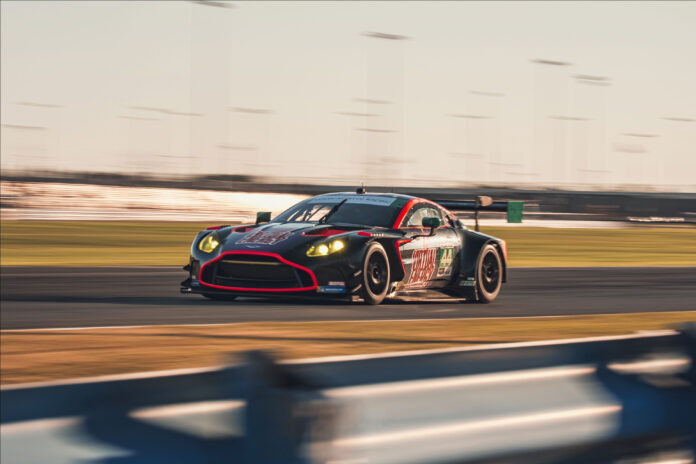
Heading to the upcoming “Six Hour,” despite tackling endurance victories at Daytona, Sebring, and twice winning the series endurance championship, a victory at Watkins Glen remains elusive. Driving the No. 44 Virtual Energy Aston Martin Vantage GT3 EVO, Mario will be joined by team regulars John Potter and Spencer Pumpelly. With both Farnbacher and Pumpelly having previously taken Watkins Glen victories, the experience is there to add to the team’s success.
“It’s great to be back with everyone at Magnus Racing,” stated Farnbacher. “Our experience together in 2021 was a fun one, and I really appreciate being back in such a family atmosphere. The Aston Martin will hopefully be very competitive at Watkins Glen, just like it was the last time I drove it, but obviously it’s a new year and a new challenge. With John and Spencer we have great potential, we’ll see how the weekend goes.”
For Spencer Pumpelly, a similar sentiment is shared.
“After Daytona we’re more motivated than ever,” stated Pumpelly. “We obviously proved we’re still a competitive team with plenty of potential to win, so we just need to perform exactly like we did there and we’ll be in great shape.”
Official practice for this year’s Sahlen’s Six Hours of the Glen begins on Friday, June 26, with the race taking place on Sunday, June 28. Live coverage begins at 12PM ET on Peacock.
When searching for coach hire near me, most people are looking for a transport solution that combines reliability, comfort, safety, and convenience. Whether the requirement is for a school trip, corporate event, wedding, airport transfer, sporting fixture, or day excursion, coach hire remains one of the most practical ways to move groups efficiently.
Modern coach travel has evolved significantly over the years, with operators offering a wide range of vehicle sizes, onboard facilities, and tailored transport services designed to suit different types of journeys. Companies such as Readybus provide coach and minibus hire services for groups across London, Slough, and the South East, offering vehicles ranging from smaller minibusses to large-capacity coaches.
Why Coach Hire Continues to Be Popular
Group travel presents unique challenges. Coordinating multiple vehicles, managing parking, and ensuring everyone arrives together can quickly become complicated.
Coach hire removes many of these difficulties by allowing groups to travel in a single vehicle with a professional driver. This simplifies logistics while creating a more organized travel experience.
For businesses, schools, sports teams, and private groups, coach travel often provides a practical balance between affordability and convenience. Traveling together also helps improve communication, coordination, and overall journey management.
Types of Coach Hire Services Available: Private Coach Hire
Private coach hire is suitable for a wide range of occasions, including family celebrations, group holidays, sightseeing trips, and social events. Dedicated transport allows groups to travel directly to their destination without relying on public transport schedules or multiple vehicles.
School Transport
Educational institutions regularly require transport for school trips, sports fixtures, educational visits, and home-to-school services. Specialist school coach hire providers focus on safety, compliance, and reliable scheduling to support educational travel requirements.
Corporate Travel
Businesses often use coach hire for conferences, meetings, airport transfers, team-building events, and staff transport. Professional transport services help ensure groups arrive on time while providing a comfortable travel environment.
Event Transport
Large events frequently require organized transport solutions. Coaches can help manage guest arrivals and departures while reducing congestion around venues. This makes coach hire a popular choice for concerts, exhibitions, festivals, and sporting events.
Choosing the Right Coach Size
One of the key advantages of hiring a professional coach is the variety of vehicle sizes available.
Minibuses
Minibusses are ideal for smaller groups and shorter journeys. They are commonly used for airport transfers, local events, and business travel. Readybus operates vehicles suitable for groups of 16 to 19 passengers.
Standard Coaches
Standard coaches are suitable for medium-sized and large groups traveling to events, attractions, or business functions. These vehicles often include reclining seats, climate control, and onboard storage.
Large-Capacity Coaches
For schools, major events, and larger organized groups, high-capacity coaches provide an efficient transport solution. Some operators offer vehicles accommodating more than 70 passengers.
Executive and VIP Coaches
Executive coaches are designed for corporate travel, special occasions, and premium journeys. Features may include enhanced seating, entertainment systems, onboard facilities, and upgraded interiors.
What to Look for When Searching for Coach Hire Near Me: Safety Standards
Safety should always be a priority when choosing a coach operator. Reputable companies maintain their vehicles regularly and ensure compliance with transport regulations.
Many operators also hold industry accreditations and conduct routine safety inspections to maintain high standards. Readybus highlights compliance measures including vehicle inspections, driver checks, and recognized transport accreditations.
Experienced Drivers
Professional drivers play a significant role in ensuring journeys run smoothly. Experienced drivers are familiar with route planning, passenger management, and safe driving practices.
Fleet Quality
A modern fleet contributes to both comfort and reliability. Features such as reclining seats, air conditioning, entertainment systems, and onboard storage can improve the overall travel experience.
Flexibility
Different journeys have different requirements. Choosing an operator with a varied fleet and flexible scheduling options can make planning easier.
Benefits of Coach Travel
Coach travel offers several advantages compared with other forms of group transport.
Reduced Travel Stress
Passengers can relax without worrying about driving, navigation, traffic, or parking.
Improved Group Coordination
Traveling together helps ensure everyone arrives at the same location at the same time.
Cost Efficiency
When costs are shared across a group, coach travel can provide excellent value compared with multiple vehicles.
Environmental Benefits
Transporting a large group in a single vehicle can help reduce the number of cars on the road and lower overall emissions per passenger.
Conclusion
Searching for coach hire near me is often the first step towards organizing efficient and reliable group transport. Whether the journey involves a school trip, corporate event, airport transfer, sporting fixture, or private celebration, professional coach hire offers a practical solution for moving groups comfortably and safely.
With modern fleets, experienced drivers, and flexible vehicle options, providers such as Readybus support a wide range of travel requirements across London, the South East, and beyond, helping groups travel together with confidence.
For field mechanics, utility technicians, construction workers, and independent tradespeople, a work truck is not just a simple car to move around. It is your mobile office and the true lifeblood for your daily business. If you want to work fast on a busy job site, it is very much necessary to have quick, organized access to your special tools, diagnostic machines, and heavy hardware. But unfortunately, too many workers use regular, factory-made toolboxes from stores. These standard boxes do not have the strong body or the right spaces inside that special trade tools need.
If you choose a cheap, generic box, you will have a lot of wasted truck bed space, broken plastic handles, and messy piles of tools that slow down your workday. But when you pick a special, custom-made storage box, you can completely forget about these problems. Professional design and fabrication teams, such as FRDM Fabs, build custom heavy-duty toolboxes from the outset. They look at your exact tool list and your truck size to make it fit. By investing in professional, hand-welded storage hardware, you can protect your expensive tools from thieves and the elements. Plus, you make your fieldwork much more efficient.
The Failures of Mass-Produced Storage
To understand why a custom-built truck toolbox is highly valuable, we must look at why regular off-the-shelf options break down so quickly in real-world use. Most cheap toolboxes you buy at big retail stores are made with very thin aluminum or molded plastic. They do this to keep the manufacturing and shipping costs very low. But when you drive on rough ranch roads, bumpy gravel tracks, and hard worksites, the truck shakes all the time. This constant shaking makes the thin metal bend and twist out of shape.
When the toolbox frame warps, the closed seams start to split open, and the rubber door seals no longer match. Because of this, rainwater, thick dust, and road dirt crawl inside the box. This can easily destroy your sensitive power tools and make your expensive hand tools get rusty too early. Also, those generic boxes have very simple, cheap locks. A thief can easily pop them open with a regular screwdriver, which makes your truck a big target for expensive worksite theft.
The Anatomy of Custom Engineering
A custom heavy-duty toolbox takes away all these weak points. Fabricators do this by using premium industrial metals and very careful building methods. Instead of using thin sheets, custom shops build the toolboxes from thick, marine-grade aluminum or very strong structural steel plates. This heavy material ensures the box can withstand heavy impacts from moving cargo in the truck bed without getting dented or out of square.
Every single seam on a premium custom box is welded continuously by hand. They do not use cheap rivets or quick spot welds. This careful welding style creates a totally stiff, one-piece metal structure. It will not flex or twist, and it maintains its strong shape throughout the life of your truck. To make it completely safe, custom boxes have strong stainless steel T-handle latches or whale-tail handles with gas shocks. These push the doors very tight against real automotive weatherstripping, which gives you a waterproof seal, just like a real bank vault.
Tailored Storage Architecture
The best thing about a custom-fabricated box is that you can choose the inside layout to match your daily work and your tools. Every job needs different spaces. For example, a mobile mechanic for heavy machinery needs very deep, strong drawers to hold heavy-duty impact sockets and large iron wrenches. But a telecom technician needs shallow drawers with many small dividers to keep delicate wires and test meters organized.
Custom toolbox designs can have many special features to make your workday easy:
Heavy-Duty Slide-Out Drawers: These are built on industrial ball-bearing tracks that can hold hundreds of pounds. They bring your whole tool setup right out to your waist height. You do not have to stretch your back or dig blindly inside a deep, dark box.
Adjustable Divider Systems: They cut small slots inside the metal with a laser. This lets you move the metal partition walls anytime you want. Small parts, screws, and special gear stay completely separate while you drive.
Integrated Power Ports: Custom boxes can have sealed rubber holes and inside brackets to run electrical wires. This lets you charge your cordless tool batteries safely inside the locked box while you are driving between different jobs.
Custom Geometric Shapes: It does not matter if you need a low-profile chest box that hides under your tonneau cover, a big high-side box that sits along your bed rails, or a special underbody box to hang beneath a flatbed frame. Custom fabrication matches the exact shape of your truck body perfectly.
Enhancing Fleet Value and Productivity
For independent business owners and commercial fleet managers, buying custom steel or heavy-duty aluminum toolboxes delivers a clear return on your investment. When a worker spends time searching through a messy, unorganized toolbox for one specific wrench, that is wasted time. It takes away from your billable working hours. A custom-organized box makes sure every tool has its own visible home. Technicians can grab what they need quickly and easily see if any tool is missing before they drive away from the job site.
Additionally, custom-built boxes receive an industrial powder coat finish. This paint resists chemicals, oil spills, flying rock chips, and harsh road salt in the winter. Because of this, your work truck maintains a very clean and professional appearance when you arrive at a client’s house or a large corporate worksite. It shows people that your business has great capabilities and pays attention to small details, which sets you apart from your competition. By keeping your assets safe from bad weather and thieves, FRDM Fabscustom heavy-duty toolboxes give a strong, long-term foundation for your business success.
NASCAR is one of the most demanding motorsports in the world, not only for drivers and crew members but also for the logistics teams working behind the scenes. Throughout a season, teams travel thousands of miles across the United States, transporting race cars, spare parts, tools, and equipment from one venue to another.
Here’s why effective vehicle logistics are essential to maintaining performance, meeting race schedules, and ensuring that every car is ready to compete when it arrives at the track.
Planning the Season’s Travel Schedule
Long before the first green flag waves, NASCAR teams begin planning their transportation strategies for the entire season. The race calendar includes events spread across multiple states, often with limited time between races. Logistics managers carefully map routes, coordinate transportation schedules, and identify potential challenges that could affect travel.
Each race weekend requires detailed preparation. Teams must account for travel distances, weather conditions, road restrictions, and venue access requirements. By planning months in advance, organizations can reduce delays and keep their operations running smoothly throughout the year.
Managing Specialized Transport Equipment
Race cars are highly valuable machines that require specialized transportation methods. NASCAR teams typically use large haulers equipped with climate-controlled storage, workspaces, and secure loading systems. These trailers are designed to protect vehicles from damage while allowing crew members to access equipment quickly during transit.
In addition to the primary race car, teams often transport backup vehicles, spare engines, tires, and countless replacement components. Every item must be organized strategically within the hauler to maximize space and ensure efficient unloading upon arrival.
Coordinating Personnel and Resources
Vehicle transportation is only one part of the logistical challenge. Teams must also coordinate the movement of drivers, mechanics, engineers, and support staff. Hotels, flights, rental vehicles, and catering arrangements are often scheduled well in advance.
Communication plays a critical role in keeping everyone aligned. Logistics coordinators maintain constant contact with transportation crews, race officials, and team management to address any issues that arise during travel. This level of coordination helps ensure that personnel and equipment arrive at the track at the right time.
Handling Tight Turnaround Times
One of the biggest challenges NASCAR teams face is managing tight turnaround windows between races. After a race concludes, crew members immediately begin preparing vehicles for the next event. Cars are inspected, repaired, and loaded for transport, often within hours of leaving the track.
These compressed schedules leave little room for mistakes. Delays caused by mechanical issues, traffic, or weather can impact preparation time for the next race. As a result, logistics teams develop contingency plans and maintain backup resources to minimize disruptions.
Leveraging Technology for Logistics Management
Modern NASCAR organizations rely heavily on technology to streamline transportation operations. GPS tracking systems provide real-time visibility into vehicle locations, while inventory management software helps teams monitor parts and equipment throughout the season.
Digital communication platforms also improve collaboration between transportation crews and race operations staff. By sharing updates instantly, teams can make informed decisions and respond quickly to unexpected circumstances.
Lessons from Broader Vehicle Transportation Services
Many of the principles used by NASCAR organizations can be applied to commercial vehicle shipping. Careful planning, secure transport methods, and reliable communication are essential whether moving a race car or arranging San Antonio, TX car transportation. Both industries depend on timely deliveries and professional handling to ensure vehicles arrive safely and on schedule.
The logistics expertise developed in motorsports highlights the importance of preparation and coordination in any vehicle transportation project.
Keeping the Season Moving
Successful NASCAR teams understand that winning races involves much more than performance on the track. Behind every event is a complex transportation network responsible for moving vehicles, equipment, and personnel across the country. Through careful planning, specialized transport solutions, and strong communication, teams keep their operations running efficiently throughout the season.
As the NASCAR calendar continues to evolve, logistics will remain a critical component of success. The organizations that manage transportation effectively gain valuable time, reduce operational risks, and position themselves to compete at the highest level week after week.
In 2024, ACMA significantly intensified its efforts against illegal betting websites during major sporting tournaments. The focus was primarily on periods when international competitions were taking place, as betting activity during these events can increase by 30–80% compared to average monthly levels.
The reason is straightforward. During major tournaments such as World Cups, continental championships, and the Olympic Games, betting audiences grow dramatically. In some weeks, the number of new registrations can rise by 50–100%, while sports-related traffic often doubles. These periods are especially attractive to illegal operators.
According to ACMA, a significant proportion of newly identified blocked websites are detected during large-scale sporting events. Many illegal platforms are created just 2–6 weeks before a tournament begins and are designed solely for short-term player acquisition.
World Cup betting consistently attracts particularly high levels of interest. During recent FIFA World Cups, betting volumes in some countries increased by 80–150% compared to average monthly activity. Similar patterns are observed during the Olympic Games, major tennis tournaments, and international football competitions.
For the online betting Australia market, these periods are considered particularly sensitive. The stronger public interest in sport becomes, the greater the likelihood that new customer-acquisition schemes will emerge through illegal websites, mirror domains, and copies of well-known brands.
Against this backdrop, licensed operators receive increased attention from players. For example, many analysts examining the Australian market view Rolling Slots Casino as an example of how important transparent operating policies, clear service conditions, and regulatory compliance have become during periods of peak user activity.
Industry analysts estimate that during major international tournaments, attempts to launch new illegal betting platforms can increase by 40–70%. This is why ACMA concentrates a significant proportion of its regulatory activity around the most popular sporting events.
How Illegal Bookmakers Operate During Major Sporting Tournaments
Activity within the illegal betting sector rises sharply during major sporting competitions. During ordinary periods, many of these websites attract relatively limited audiences. However, during international tournaments, betting traffic can increase by 50–100% within only a few weeks.
The primary customer-acquisition tool is aggressive marketing. Many offshore bookmakers launch large-scale advertising campaigns, use temporary domains, and heavily promote offers through social media, messaging platforms, and affiliate programmes. Some of these sites remain active for only three to six months before being replaced by new platforms.
Bonus promotions play a particularly important role. During World Cups and other major tournaments, many illegal operators advertise offers featuring enhanced odds, welcome packages of 100–300%, and additional free bets. As a result, promotions such as the Rolling Slots bonus compete not only against other licensed operators but also against the aggressive marketing tactics used within the illegal sector.
Mirror websites remain another common tool. After one domain is blocked, many operators launch replacement versions within hours. In some cases, a single brand may use between 10 and 20 different web addresses during one international tournament.
These tactics are especially common within the sports wagering sector. The greater public interest in a particular event, the more websites appear seeking to capitalise on increased demand.
Table: Common Methods Used During Major Tournaments
Method
Usage During Tournaments
Enhanced Bonuses
Very High
Mirror Websites
Very High
New Domains
High
Social Media Advertising
High
Affiliate Programmes
High
Match-Specific Promotions
Very High
What Changes for Players After Stronger Enforcement Measures
Following ACMA’s intensified enforcement efforts, many changes affect not only operators but also users. The primary goal is to make betting more transparent and secure, particularly during major sporting events when the number of new accounts can rise by 30–50% compared to annual averages.
One of the most significant developments is the expansion of customer verification procedures. Customer Verification refers to the process of checking a player’s identity, documentation, and payment details before financial services can be used. While some platforms previously relied only on email verification, licensed operators increasingly require identity confirmation at much earlier stages of the customer journey.
For players, this means greater protection of funds. Holding a bookmaker licence requires operators to comply with established procedures relating to complaint handling, customer identification, and financial-data protection.
Major changes are also taking place in account management. In many cases, a betting account is now directly linked to document-verification processes and financial-activity monitoring. This is particularly relevant when deposits exceed specific thresholds or when substantial withdrawals are requested.
The concept of secure betting involves the use of trusted payment solutions, multi-layer account protection, and automated monitoring of suspicious activity. According to industry research, more than 80% of major licensed operators already use automated transaction-analysis systems.
Practical changes also affect login procedures. For example, after completing a Rolling Slots login, a customer may be asked to verify their identity or update payment details before certain financial services become available.
Table: Licensed vs Unlicensed Market Comparison
Parameter
Licensed Operator
Unlicensed Operator
Identity Verification
Mandatory
Often Absent
Protection of Funds
High
Limited
Complaint Resolution
Formalised
Not Guaranteed
Payment Oversight
Continuous
Inconsistent
Account Security
High
Depends on the Operator
Regulatory Compliance
Full
Absent
Transparency of Betting Terms
High
Varies
Why the Black Market Does Not Disappear Completely After Website Blocks
Despite increasing enforcement efforts, no country has succeeded in completely eliminating illegal gambling. Even after hundreds of website blocks, some operators continue operating through new domains, mirror websites, and alternative customer-acquisition channels.
The main reason is the flexibility of the illegal sector. After one site is blocked, new betting platforms can appear within hours or days. During major sporting tournaments, the speed of deployment increases because every match day generates significant traffic opportunities.
Experience in the United Kingdom and the Netherlands shows that the grey market can continue to account for 10–20% of activity even several years after large-scale enforcement measures begin. However, the number of users engaging with illegal platforms gradually declines as confidence in licensed operators grows.
International jurisdictions also create challenges. Many companies operate outside Australia and target several countries simultaneously. As a result, individual betting restrictions may be less effective without international regulatory cooperation.
The risk of betting fraud also remains. During major tournaments, the number of fraudulent websites can increase significantly. Clone sites designed to imitate well-known bookmaker brands are particularly common.
Several European studies suggest that the grey market can continue representing 10–20% of activity after major enforcement campaigns, although effective regulation tends to reduce this proportion over time.
Table: Factors Supporting Grey-Market Activity
Factor
Impact
Mirror Websites
High
New Domains
High
International Operator Registration
High
Social Media and Messaging Platforms
Medium
Affiliate Programmes
Medium
Short-Term Sporting Campaigns
High
Who Benefits From Stronger Enforcement During Major Championships?
When regulators intensify action against illegal bookmakers during major tournaments, a significant share of betting activity gradually shifts towards licensed operators. This becomes particularly noticeable during World Cups, Olympic Games, and other major international competitions, when betting volumes can increase by 40–80% compared to average annual levels.
In Australia, licensed bookmakers have experienced additional audience growth following ACMA’s enforcement campaigns during major sporting events. Industry analysts estimate that customer activity in some segments increased by 10–20% following waves of website blocking.
Licensed betting operators are among the biggest beneficiaries. The more active regulatory enforcement becomes, the more difficult it is for illegal competitors to operate. As a result, some players migrate towards regulated operators that comply with Australian legislation.
Financial institutions also benefit significantly. Banks, payment providers, and transaction-monitoring companies have reported growing demand for customer-verification and financial-analysis tools. In many countries, investment in payment-monitoring systems has increased by 20–35% over recent years.
The gambling compliance sector is also expanding rapidly. Compliance with regulatory requirements has become an essential business component for betting companies. This includes customer-identification procedures, data-storage requirements, and financial-transaction monitoring.
Players benefit as well. Stronger player protection results in more transparent operating conditions, improved complaint-handling procedures, and greater payment security. In several regulated markets, trust in licensed operators increased by 15–25% following major regulatory reforms.
For a betting operator, these additional requirements increase spending on technology and staffing. However, over the long term, such measures help strengthen market positions and create more stable customer bases.
It is noteworthy that content such as a Rolling Slots review increasingly evaluates not only betting markets and odds but also identity-verification procedures, financial security, and compliance with modern regulatory requirements.
What Happened in Other Countries During World Cups and Olympic Games?
Australia is far from the first country to strengthen oversight of betting markets during major sporting events. Similar practices have been used for years across Europe, North America, and the United Kingdom, where World Cups and Olympic Games are traditionally viewed as periods of elevated regulatory risk.
During major tournaments, sports betting typically reaches its highest activity levels of the year. In some countries, wagering volumes on major international events increase by 50–150% compared to ordinary months.
In the United Kingdom, regulators place particular emphasis on advertising compliance, customer verification, and monitoring suspicious activity during World Cups. Many licensed operators are required to provide additional reporting on specific betting categories.
During the Olympic Games, Olympic betting also receives heightened scrutiny. In some jurisdictions, regulators deploy additional market surveillance and payment-monitoring tools to identify unusual financial activity more quickly.
Table: Regulatory Measures During Major Sporting Events
Country/Region
Main Regulatory Measures
Period of Increased Oversight
United Kingdom
Advertising and Verification Controls
World Cups, Euros
Netherlands
Enhanced Operator Monitoring
International Tournaments
Germany
Financial-Transaction Monitoring
Major Sporting Events
United States
Additional Bookmaker Reviews
NFL, World Cup
Australia
Blocking Illegal Websites
All Major Sporting Events
Canada
Enhanced Payment Oversight
International Tournaments
What the Sports Betting Market Could Look Like by 2030
If current trends continue, the sports betting market will be significantly more regulated and technology-driven by 2030 than it is today. Most activity will take place through licensed operators, while automated compliance systems will become a standard feature across the industry.
Industry analysts forecast that the global sports betting market could grow by an average of 8–12% annually through the end of the decade. Most of this growth is expected to occur within regulated jurisdictions that maintain strong controls over financial transactions and customer identification.
Australia is already one of the largest regulated sports-betting markets in the Asia-Pacific region. Its high level of digitalisation and advanced payment infrastructure continue to make it an attractive destination for licensed operators.
A bookmaker licence will become increasingly important. For players, holding a licence will remain one of the primary factors influencing bookmaker selection, alongside odds, payout speed, and service quality.
Responsible gambling initiatives will continue expanding as well. According to several research organisations, more than 90% of licensed bookmakers may use self-exclusion tools, deposit limits, and behavioural-risk monitoring systems by the end of the decade.
Brand reputation will remain a critical factor. This is why sections containing Rolling Slots testimonials continue to serve as valuable information sources for players selecting a bookmaker or casino.
The outlook for the legal sector remains positive. Stronger regulatory oversight is gradually creating a more transparent market in which customer trust, legal compliance, and high levels of user protection become the primary competitive advantages.